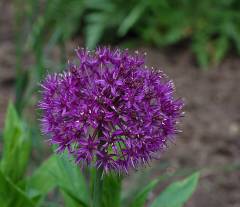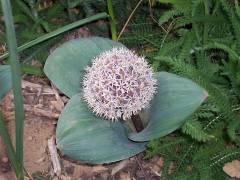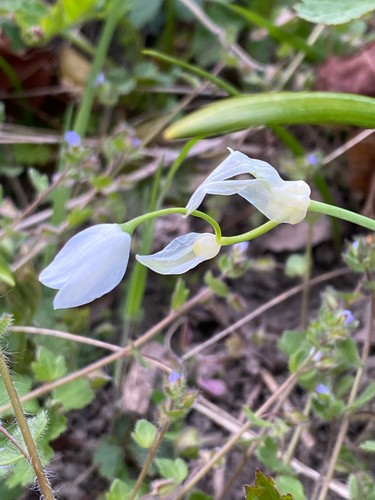
Allium, Genus, sativum, Species, 'German Extra Hardy', Cultivar,
- Genus & species
- Cultivar
German Extra Hardy Garlic
Central Asia (Tien Shan mountains of present-day Kyrgyzstan and Kazakhstan); 'German Extra Hardy' is a porcelain-type hardneck cultivar of eastern European origin
Overview
Allium sativum 'German Extra Hardy' is a hardneck (ophioscorodon) garlic cultivar in the amaryllis family (Amaryllidaceae), classified in the porcelain garlic group — the hardiest and most cold-tolerant garlic group in commercial cultivation. Bulbs are 2-2.5 inches (5-6 cm) in diameter, round, enclosed in a thick, tight white papery wrapper with 4-6 large, plump cloves per bulb. Individual cloves are 1-1.5 inches (2.5-4 cm) long, with a tan to pinkish inner skin. Flavour is strong, hot, and pungent when raw, mellowing to a rich, full garlic flavour when roasted. The porcelain group carries the fewest cloves per bulb (4-7) but the largest individual clove size among garlic types — making porcelain cultivars the easiest to peel and prepare. As a hardneck type, the species produces a flower stalk (scape) in late spring that curls into a loop before straightening. Scapes are harvested at the loop stage and used as a culinary vegetable with a mild garlic flavour. The cultivar tolerates winter temperatures to -30°F (-34°C) or below when mulched — the 'Extra Hardy' designation reflects this extreme cold tolerance. The species requires 6-8 weeks of vernalisation (temperatures below 40°F / 4°C) for proper bulb division. Cloves are planted in autumn and harvested the following July. Storage life is 5-7 months under cool, dry conditions (55-60°F / 13-15°C, 60% humidity) — longer than most hardneck types. Susceptible to white rot (Stromatinia cepivora), basal plate rot, and garlic bloat nematode.
Native Range
Allium sativum is native to Central Asia, likely originating in the Tien Shan mountains of present-day Kyrgyzstan and Kazakhstan. 'German Extra Hardy' is a porcelain-type hardneck cultivar maintained in North American garlic collections, likely of eastern European origin.Suggested Uses
Grown in home vegetable gardens across zones 3-8 as a reliable, cold-hardy garlic. The large cloves are easy to peel and portion. The strong flavour suits roasting (whole bulb roasted at 400°F / 200°C for 40 minutes), sautéing, and raw use in dressings and marinades. In the Pacific Northwest, planting takes place in October for July harvest — the mild, wet winters and long spring days suit hardneck garlic production. Scapes are a valued secondary harvest in June.How to Identify
Appearance
Size & Dimensions
Height1'6" - 2'
Width/Spread4" - 6"
Bloom Information
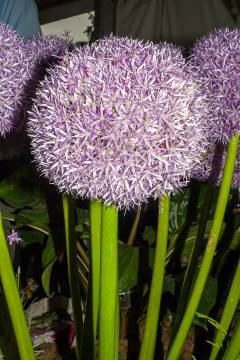
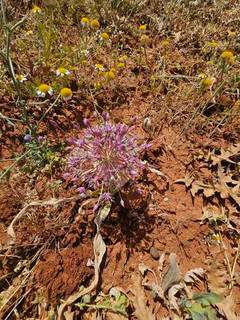
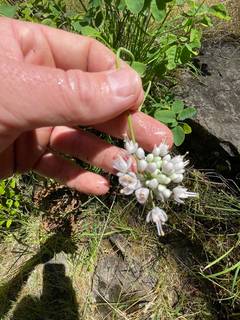
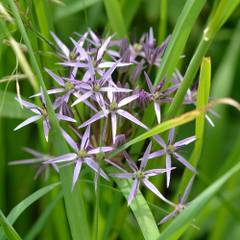
Hardneck garlic produces a flower scape from late May through June that coils into a loop, then straightens and forms a cluster of bulbils (miniature cloves) at the tip. True flowers are rarely produced — reproduction is vegetative via cloves and bulbils. Scapes are harvested at the loop stage (early June) for culinary use; removing scapes redirects energy to bulb enlargement, increasing bulb size by 10-25%.
Detailed Descriptions
Foliage Description
Grey-green, flat, strap-shapedGrowing Conditions
Sun Requirements
Requires 6-10 hours of direct sunlight daily
• Full Sun: 6+ hours of direct sunlight
• Partial Shade: 3-6 hours of direct sunlight
• Full Shade: Less than 3 hours of direct sunlight
Care & Maintenance
Care Guide
Individual cloves are planted in autumn, 4-6 weeks before hard ground freeze — mid-September to late October in zones 3-5, October-November in zones 6-8. Cloves are planted 2-3 inches (5-8 cm) deep, pointed end up, 6 inches (15 cm) apart, in rows 12 inches (30 cm) apart. Full sun, fertile well-drained soil, pH 6.0-7.0. Mulching with 4-6 inches (10-15 cm) of straw or leaves after planting insulates against freeze-thaw cycles and suppresses spring weeds. Shoots emerge through mulch in early spring. Irrigation is 1 inch (2.5 cm) per week from spring green-up through early June. Watering stops 2-3 weeks before harvest. Side-dressing with nitrogen in early spring supports steady growth. Harvest occurs when lower 3-4 leaves have browned but 4-5 green leaves remain (typically early to mid-July). Curing takes place by hanging in a shaded, well-ventilated location for 3-4 weeks before trimming.Pruning
Flower scapes are removed when they form a full loop (typically early June) — snapped or cut at the point where the scape emerges from the leaf whorl. Scape removal is the single most reliable way to increase bulb size. Harvested scapes are used in stir-fries, pesto, and as a grilled vegetable.Container Growing
Suitable for container growing
Minimum container size: 3 gallons