Image 1 of 11
1 / 11
Plant Reference
Allium, Genus, 'Globemaster', Cultivar,
- Genus
- Cultivar
globemaster onion
Hybrid of garden origin; parent species from Iran, Turkey, and Central Asia
Overview
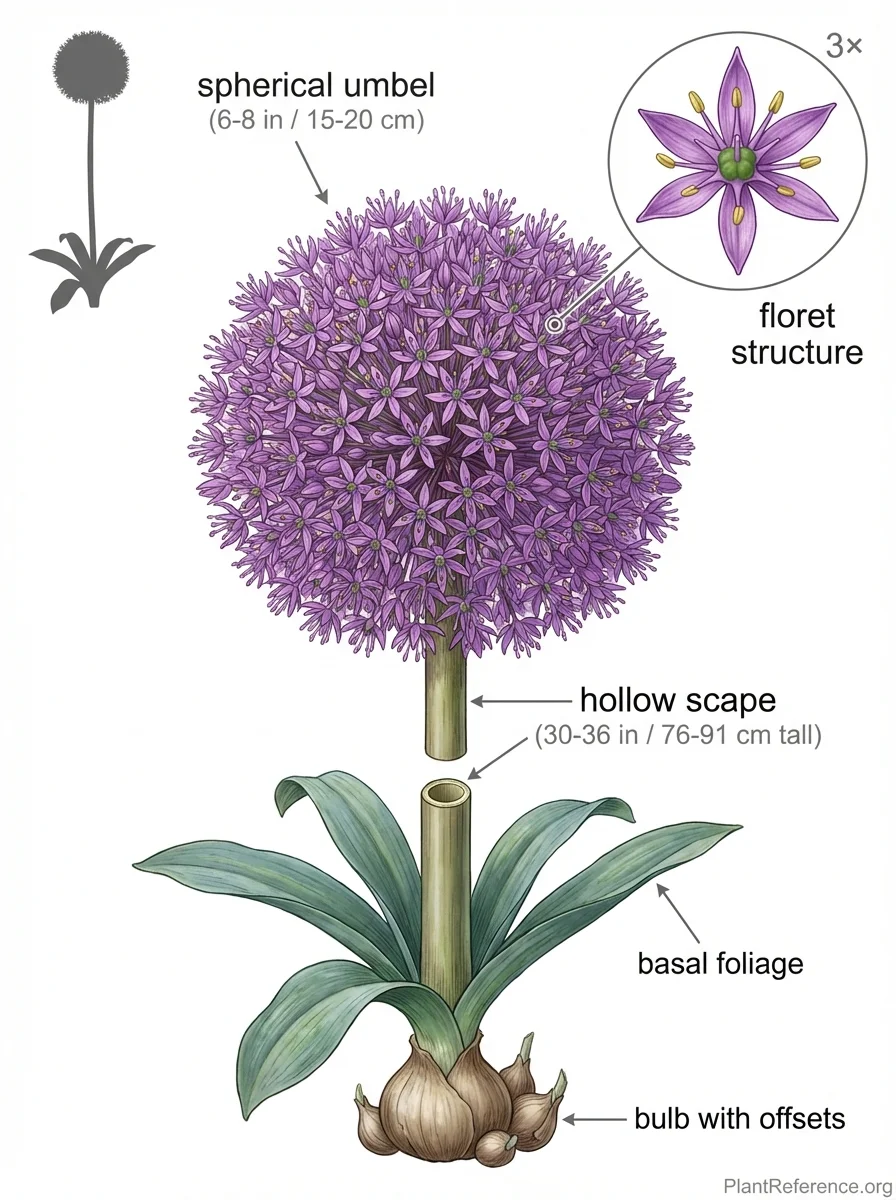
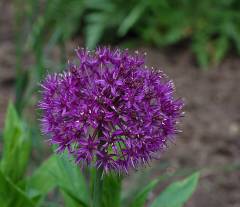
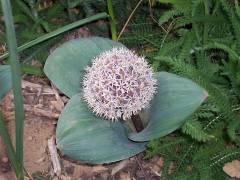
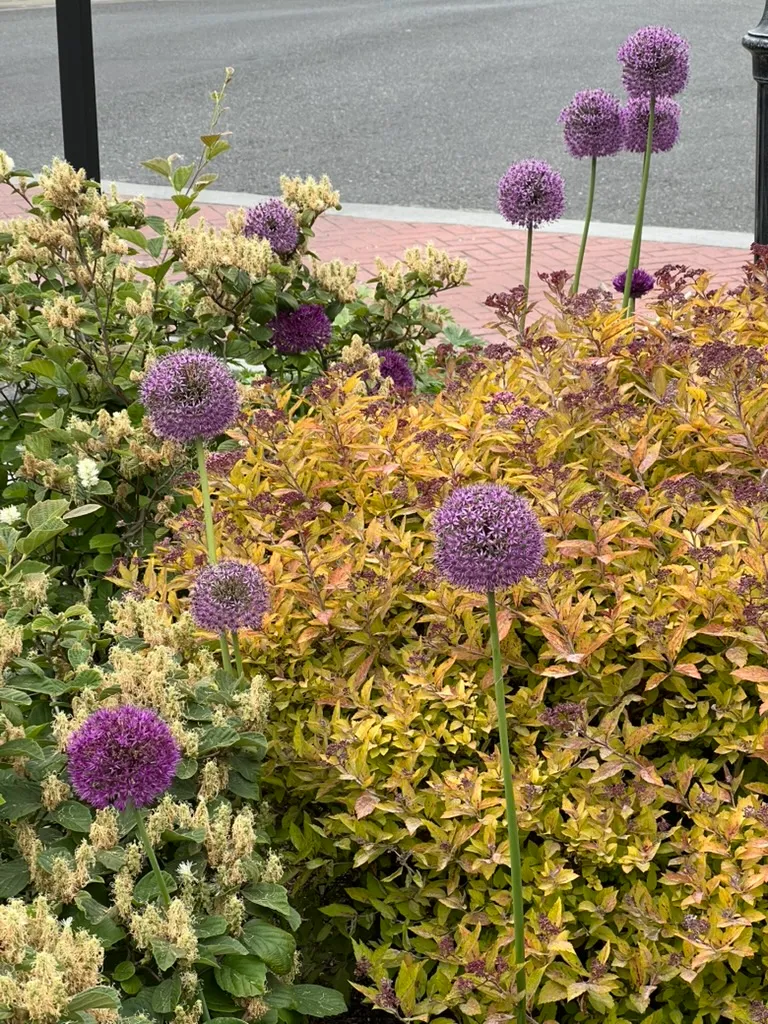
Allium 'Globemaster' is a sterile hybrid bulb, thought to be A. macleanii crossed with A. christophii, grown for its dense spherical flower heads. It reaches 30-36 inches (75-90 cm) tall and 12-18 inches (30-45 cm) wide. Each stiff upright stalk carries a rounded umbel 6-10 inches (15-25 cm) across, packed with dozens of small star-shaped florets in deep violet to pinkish-purple, each floret about 0.5 inch (1.3 cm) wide. Blue-green strap-shaped basal leaves grow 12-18 inches (30-45 cm) long. Bloom runs May to July for roughly 5 weeks. The basal foliage yellows and withers as the flower stalk emerges, so the leaves look tattered at peak bloom; setting the bulbs among later-emerging perennials or grasses hides the fading foliage. Being sterile, the plant sets no viable seed and does not self-sow. The dried seed heads hold their round shape into summer and fall. Bulbs are set 6-8 inches (15-20 cm) deep in autumn and need sharp drainage, since wet winter soil rots the bulb. Crushed foliage carries an onion scent that deters deer and rabbits. All parts are toxic to cats and dogs because of thiosulfate compounds, which cause hemolytic anemia. Hardy in zones 4-8, it grows at a moderate rate in full sun.
Native Range
A hybrid of garden origin. Its parent species come from Iran, Turkey, and other parts of Central Asia.Suggested Uses
Grown in mixed borders, perennial beds, and containers of at least 5 gallons (19 L), spaced 12-18 inches (30-45 cm) apart. The dried seed heads add structure to the late-season garden. Foliage is toxic to pets, and the plant is hardy in zones 4-8.How to Identify
Appearance
Size & Dimensions
Height2'6" - 3'
Width/Spread1' - 1'6"
Colors
Bloom Information
Blooms late spring into early summer, May to July, for about 5 weeks. Deep violet to pinkish-purple florets form a spherical umbel 6-10 inches (15-25 cm) across. Bees and butterflies visit the flowers. The plant is sterile and sets no seed, though the dried heads persist for months.
Detailed Descriptions
Flower Description
Deep violet to pinkish-purple star-shaped florets about 0.5 inch (1.3 cm) wide, packed into a dense spherical umbel 6-10 inches (15-25 cm) acrossFoliage Description
Blue-green, strap-shaped, basal, 12-18 inches (30-45 cm) long and 2-3 inches (5-7 cm) wide; yellows and withers as the flower stalk emergesGrowing Conditions
Sun Requirements
Requires 6-12 hours of direct sunlight daily
• Full Sun: 6+ hours of direct sunlight
• Partial Shade: 3-6 hours of direct sunlight
• Full Shade: Less than 3 hours of direct sunlight
Care & Maintenance
Care Guide
Grow in full sun with 6 or more hours of direct light. Set bulbs 6-8 inches (15-20 cm) deep in fall in well-drained soil at pH 6.5-7.5, since wet winter soil rots the bulb. Once the foliage dies down the bulb tolerates dry summer conditions, and the yellowing leaves at bloom time are masked by neighboring plants. All parts are toxic to cats and dogs. Deer tend to pass over the onion-scented foliage. Hardy in zones 4-8.Pruning
Cut spent flower stalks at ground level after bloom, or leave the dried heads standing for structure into fall. Let the basal foliage yellow and wither on its own, since it feeds the bulb for the next season; cutting green leaves lowers the following year's bloom.Pruning Schedule
Prune: July–August
summer
Container Growing
Suitable for container growing
Minimum container size: 5 gallons
Toxicity Warning
Toxic to cats and dogs if eaten; cats are especially susceptible, and raw, cooked or concentrated plant material can damage red blood cells and cause anaemia.Planting Guide
Planting Methods & Timing
Planting Method
transplant
Botanical Flashcard