Allium, Genus, cristophii, Species,
- Genus & species
star of Persia
Central Asia (Turkey, Iran, Afghanistan)
Overview
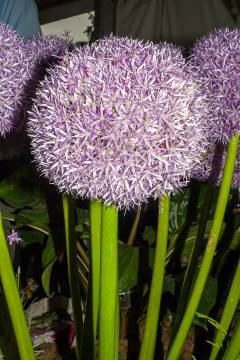
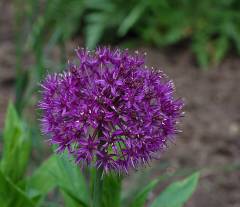
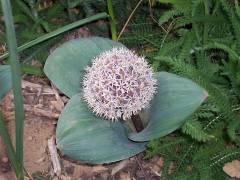
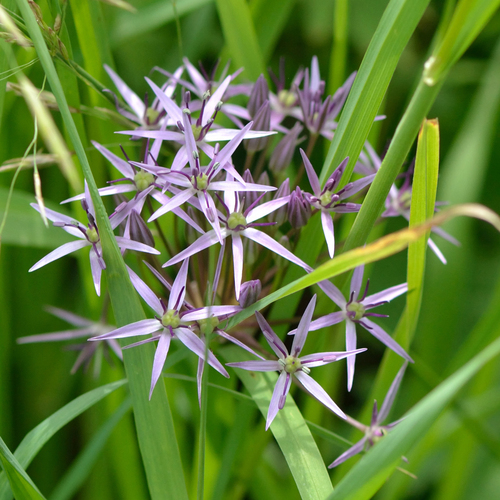
Allium cristophii is a bulbous perennial reaching 12–24 inches (30–60 cm) tall and 8–12 inches (20–30 cm) wide, growing from a round bulb 1–2 inches (2.5–5 cm) in diameter. Basal leaves are strap-shaped, 6–12 inches (15–30 cm) long and 1–2 inches (2.5–5 cm) wide, gray-green with hairy undersides. Foliage begins to yellow and die back before or during bloom, often appearing withered by the time flowers open fully. Flower umbels are spherical, 6–10 inches (15–25 cm) in diameter, composed of 50–80 individual star-shaped flowers on wiry pedicels 2–3 inches (5–8 cm) long. Flowers are metallic violet-purple with a silvery sheen. Bloom occurs May through June, with individual umbels lasting 2–3 weeks. Dried seed heads retain their spherical structure through summer and into fall, persisting for several months. Plants self-seed moderately in well-drained soils. Bulbs require a dry summer dormancy period and rot in soils that remain wet from July through September. Foliage is short-lived and creates a gap in the planting by late May; interplanting with later-emerging perennials masks the dying leaves.
Native Range
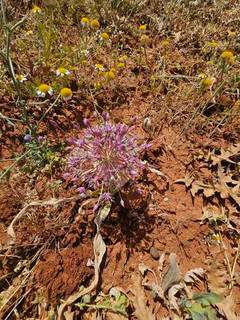
Native to central Asia, found in Turkey, Iran, and Afghanistan. Grows on dry, rocky slopes and steppe grasslands at 3,000–6,000 feet (900–1,800 m) elevation in areas with hot, dry summers and cold winters.Suggested Uses
Commonly planted in perennial borders, gravel gardens, and dry Mediterranean-style plantings at 8–10 inch (20–25 cm) spacing in groups of 5–10. Interplant with later-emerging perennials such as Perovskia or Nepeta to mask dying foliage. Not suited to irrigated summer beds, heavy clay soils, or sites without summer drainage.How to Identify
Appearance
Size & Dimensions
Height1' - 2'
Width/Spread8" - 1'
Bloom Information
Flowers May through June in zones 4–8. Individual umbels last 2–3 weeks; dried seed heads persist through summer and fall. In zone 8, bloom may begin in late April. Foliage yellows and dies back during or before bloom, which is characteristic of the species and does not indicate stress.
Detailed Descriptions
Foliage Description
Gray-green, strap-shaped, hairy on the undersidesGrowing Conditions
Sun Requirements
Requires 6-12 hours of direct sunlight daily
• Full Sun: 6+ hours of direct sunlight
• Partial Shade: 3-6 hours of direct sunlight
• Full Shade: Less than 3 hours of direct sunlight
Care & Maintenance
Care Guide
Plant bulbs 4–6 inches (10–15 cm) deep in fall (September–October) in well-drained soil. Bulbs require dry summer dormancy and rot in soils that remain wet from July through September. Water during active spring growth; withhold irrigation after foliage dies back. No fertilization is needed in average garden soils. Self-seeds moderately in loose, well-drained soils. Bulbs naturalize over time, producing offsets that increase colony size over 3–5 years. Bulb rot is the primary cause of loss in heavy clay or irrigated summer beds.Pruning
Allow foliage to die back naturally; do not remove leaves until fully brown, typically by late May or early June. Dried flower heads can be left in place through summer and fall for structural interest or removed in July–August. No other pruning is required. Divide congested bulb clumps every 5–6 years in fall.Pruning Schedule
Prune: July–August
summer
Container Growing
Suitable for container growing
Minimum container size: 3 gallons