Allium, Genus, ×, Hybrid, 'Ambassador', Cultivar,
- Genus
- Hybrid
- Cultivar
ambassador allium
Garden hybrid; likely parentage involves {Allium stipitatum} and {A. macleanii}, both central Asian
Overview
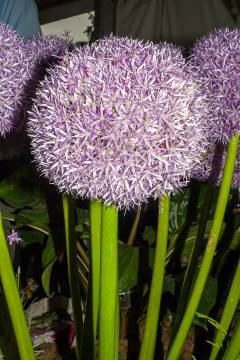
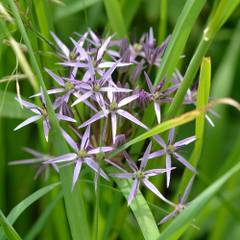
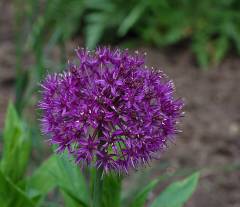
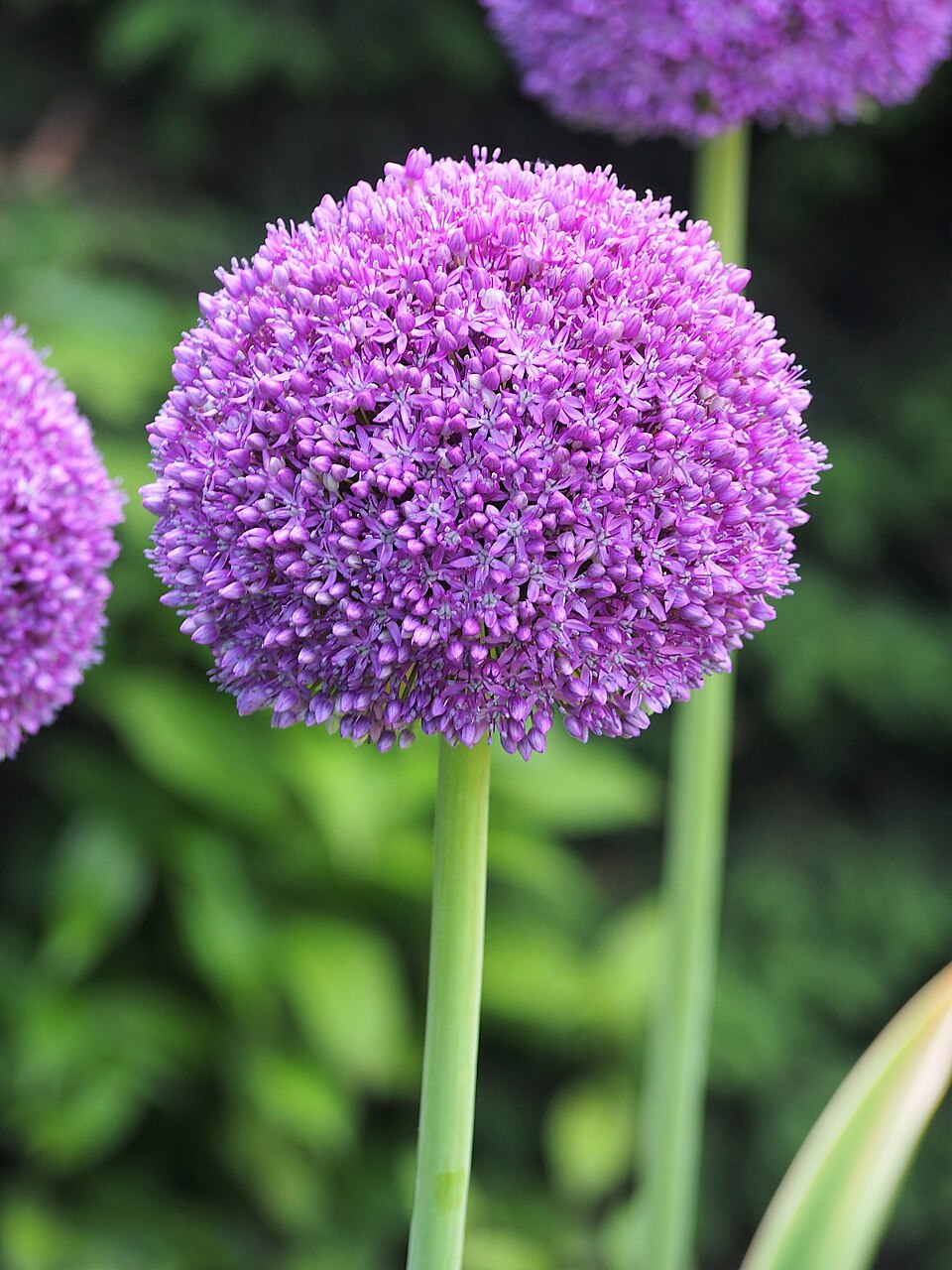
Allium × 'Ambassador' is a tall ornamental allium hybrid in the Amaryllidaceae family, producing dense spherical umbels 6–8 inches (15–20 cm) in diameter on sturdy stems 36–48 inches (90–120 cm) tall — roughly 50% larger umbels than Allium × 'Globemaster' and 25% taller stems than typical A. hollandicum cultivars. Individual star-shaped florets are deep violet-purple and open over a 3–4 week period from late May into early July. Flowering peaks 2–3 weeks later than Allium × 'Globemaster', extending the ornamental allium season into early summer. Broad, strap-shaped green basal leaves emerge in early spring and begin to die back as flowering peaks, leaving bare stems below the large globes. The dried seed heads keep their spherical form through summer. Bulbs are large, 3–4 inches (8–10 cm) in diameter, and require deep planting at 6–8 inches (15–20 cm). The tall, leafless stems sit isolated without companion plantings around the base. Bulb rot during wet summer dormancy is the main cause of loss in regions with summer rainfall above 6 inches (150 mm). Bulbs multiply slowly. All parts contain organosulphur compounds toxic to dogs, cats, and other pets if ingested.
Native Range
Allium × 'Ambassador' is a garden hybrid of uncertain exact parentage, likely involving A. stipitatum and A. macleanii. Both parent species are native to central Asia, particularly the mountains of Iran, Afghanistan, and the Pamirs.Suggested Uses
Used as a tall vertical accent in mixed borders where the oversized purple globes rise above mid-height companions. Planted in groups of 3–7 for large-scale displays. Cut stems hold well in water, and dried seed heads carry over to floral design. Container culture requires deep pots of 7 gallons (26 L) or more with well-draining media.How to Identify
Appearance
Size & Dimensions
Height3' - 4'
Width/Spread8" - 10"
Bloom Information
Detailed Descriptions
Foliage Description
Green, broad, strap-shapedGrowing Conditions
Sun Requirements
Requires 6-10 hours of direct sunlight daily
• Full Sun: 6+ hours of direct sunlight
• Partial Shade: 3-6 hours of direct sunlight
• Full Shade: Less than 3 hours of direct sunlight
Care & Maintenance
Care Guide
Plant bulbs 6–8 inches (15–20 cm) deep and 10–12 inches (25–30 cm) apart in fall. Full sun and well-drained soil are required for reliable performance. Water during active spring growth, then withhold irrigation after foliage dies back; wet summer conditions cause bulb rot. Fertilization is unnecessary. Allow foliage to yellow naturally to feed the large bulb for the following year. Interplant with mid-height perennials 18–24 inches (45–60 cm) tall to mask bare lower stems during and after bloom.Pruning
Allow foliage to die back naturally. Remove dead foliage at ground level when fully brown. Dried flower heads may be left for summer interest or removed in late summer. No other pruning is needed.Pruning Schedule
Prune: July–August
summer
Container Growing
Suitable for container growing
Minimum container size: 7 gallons