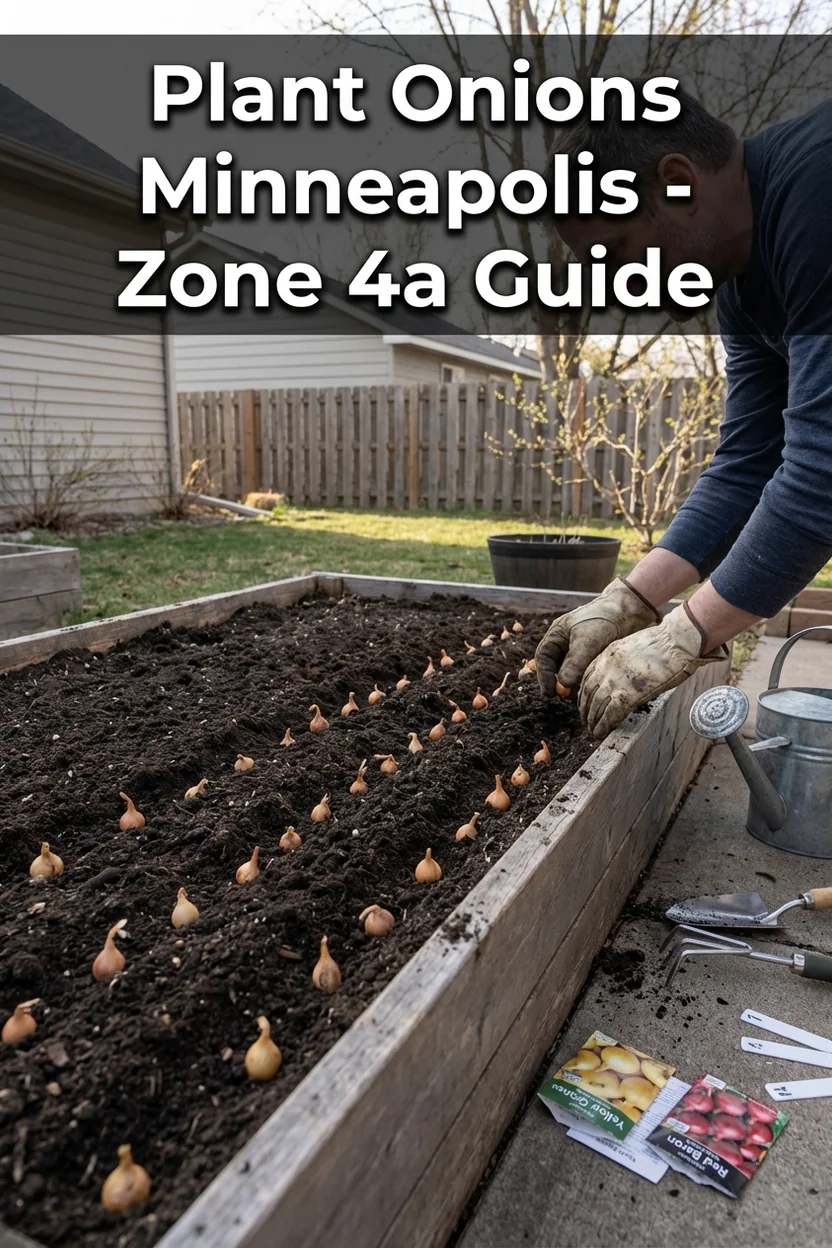
When to Plant Onions in Minneapolis: Complete Guide + Best Varieties for Zone 4a
Pets & Toxicity
Recorded toxicity for plants linked in this guide. An unknown status is not a safety assessment.
Toxic to pets: Walla Walla sweet onion, red wing storage onion, yellow sweet Spanish onion and 4 moreDetailsHide
Allium cepa 'Walla Walla' — Toxicity Warning
Toxic to cats and dogs if eaten; cats are especially susceptible, and raw, cooked or concentrated plant material can damage red blood cells and cause anaemia.View Allium cepa 'Walla Walla' plant profileAllium cepa 'Red Wing' — Toxicity Warning
Toxic to cats and dogs if eaten; cats are especially susceptible, and raw, cooked or concentrated plant material can damage red blood cells and cause anaemia.View Allium cepa 'Red Wing' plant profileAllium cepa 'Yellow Sweet Spanish' — Toxicity Warning
Toxic to cats and dogs if eaten; cats are especially susceptible, and raw, cooked or concentrated plant material can damage red blood cells and cause anaemia.View Allium cepa 'Yellow Sweet Spanish' plant profileAllium sativum 'Music' — Toxicity Warning
Toxic to cats and dogs if eaten; cats are especially susceptible, and raw, cooked or concentrated plant material can damage red blood cells and cause anaemia.View Allium sativum 'Music' plant profileAllium cepa 'Copra' — Toxicity Warning
Toxic to cats and dogs if eaten; cats are especially susceptible, and raw, cooked or concentrated plant material can damage red blood cells and cause anaemia.View Allium cepa 'Copra' plant profileAllium cepa 'Patterson' — Toxicity Warning
Toxic to cats and dogs if eaten; cats are especially susceptible, and raw, cooked or concentrated plant material can damage red blood cells and cause anaemia.View Allium cepa 'Patterson' plant profileAllium fistulosum 'Evergreen Hardy White' — Toxicity Warning
Toxic to cats and dogs if eaten; cats are especially susceptible, and raw, cooked or concentrated plant material can damage red blood cells and cause anaemia.View Allium fistulosum 'Evergreen Hardy White' plant profile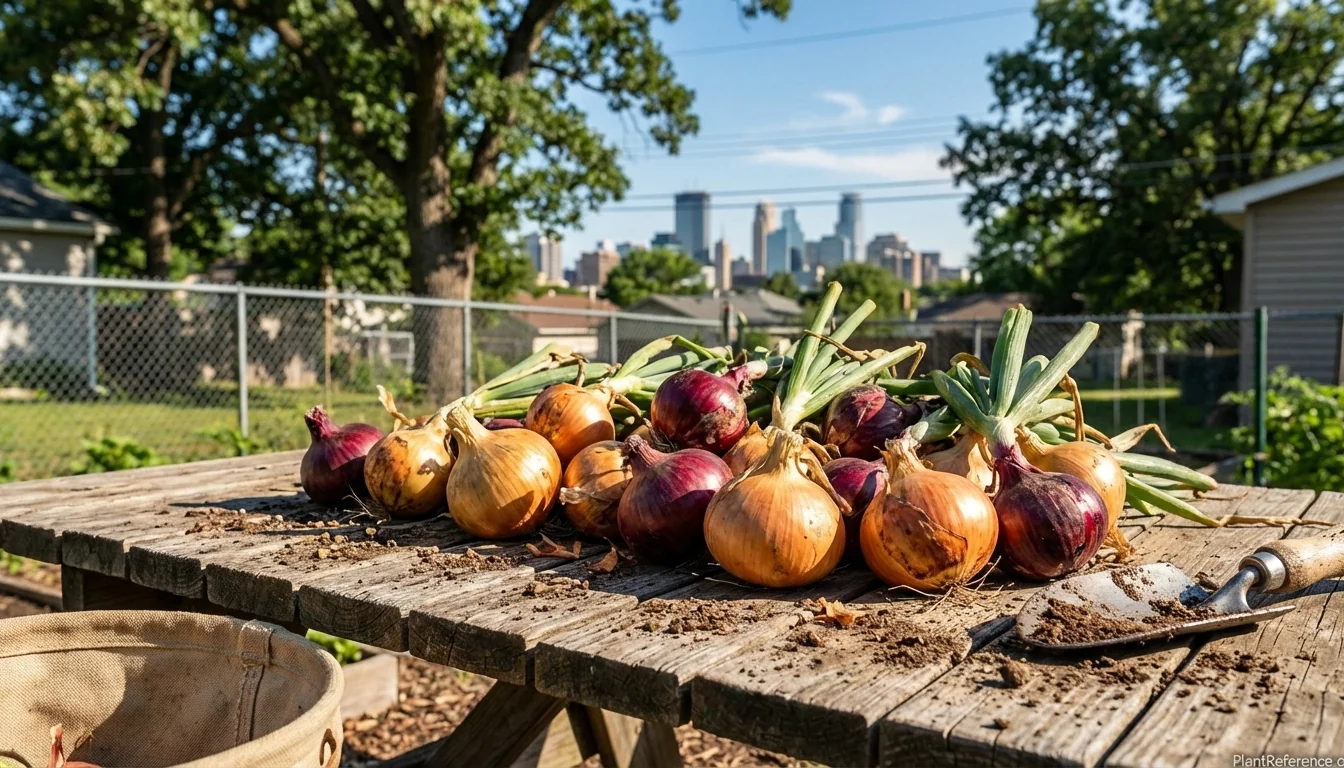
— Image © Plant Reference 2026
I've been growing onions in Minnesota for forty years, and I'll tell you what works in Minneapolis: plant them early, choose long-day varieties, and don't fuss over them too much. These aren't houseplants—they're workhorses that thrive in our northern climate when you give them what they need.
Best Onion Varieties for Minneapolis' Climate
Minneapolis sits at 45°N latitude, which means you absolutely must plant long-day onions. These varieties need 14-16 hours of daylight to trigger bulb formation—exactly what our Minnesota summers provide. Plant the wrong type, and you'll get massive green tops but tiny bulbs that won't store.
The science is simple: onions grow leaves until the day length hits their genetic trigger point, then they switch to bulbing. Short-day onions (designed for Texas and Georgia) will never bulb here because our days get too long too fast. They'll bolt and flower instead of making bulbs.
Variety | Days to Maturity | Best For | Notes for Minneapolis |
|---|---|---|---|
110-125 days | Sweet eating, early harvest | Cold hardy, can overwinter with protection | |
105-120 days | Long-term storage | Excellent keeper, 8-10 months storage | |
110-120 days | Large bulbs, good storage | Heat tolerant for hot summers | |
104-110 days | Premium storage | Industry standard for storage | |
110-120 days | Storage, disease resistance | Pink root resistant | |
60-70 days | Green onions, winter hardy | Survives Zone 4a winters |
For Fresh Eating: 🌿Allium cepa 'Walla Walla' is your best bet. These sweet onions produce massive bulbs with mild flavor perfect for grilling and fresh eating. They store poorly (only 1-2 months), so eat them first.
For Storage: 🌿Allium cepa 'Red Wing' and 🌿Allium cepa 'Copra' are the champions. Properly cured, they'll keep in your basement until next spring. The higher sulfur content that makes them pungent also acts as a natural preservative.
For Continuous Harvest: 🌿Allium fistulosum 'Evergreen Hardy White' bunching onions survive our winters under snow cover. Plant once, harvest for years.
Specific Planting Dates for Minneapolis
Here's what forty years of Minneapolis gardening has taught me about timing. Our last frost hits around May 14, but onions can handle light frost just fine. In fact, they prefer cool weather for establishing their root systems.
Spring Planting Schedule: - April 15-30: Plant onion sets and transplants (soil workable, 4 weeks before last frost) - March 15-30: Start seeds indoors if growing from seed - October 10-15: Plant garlic cloves for next year's harvest
The key is getting them in early enough to build substantial leaf growth before our longest days in June trigger bulbing. Each leaf becomes a ring in the final bulb—more leaves mean bigger onions.
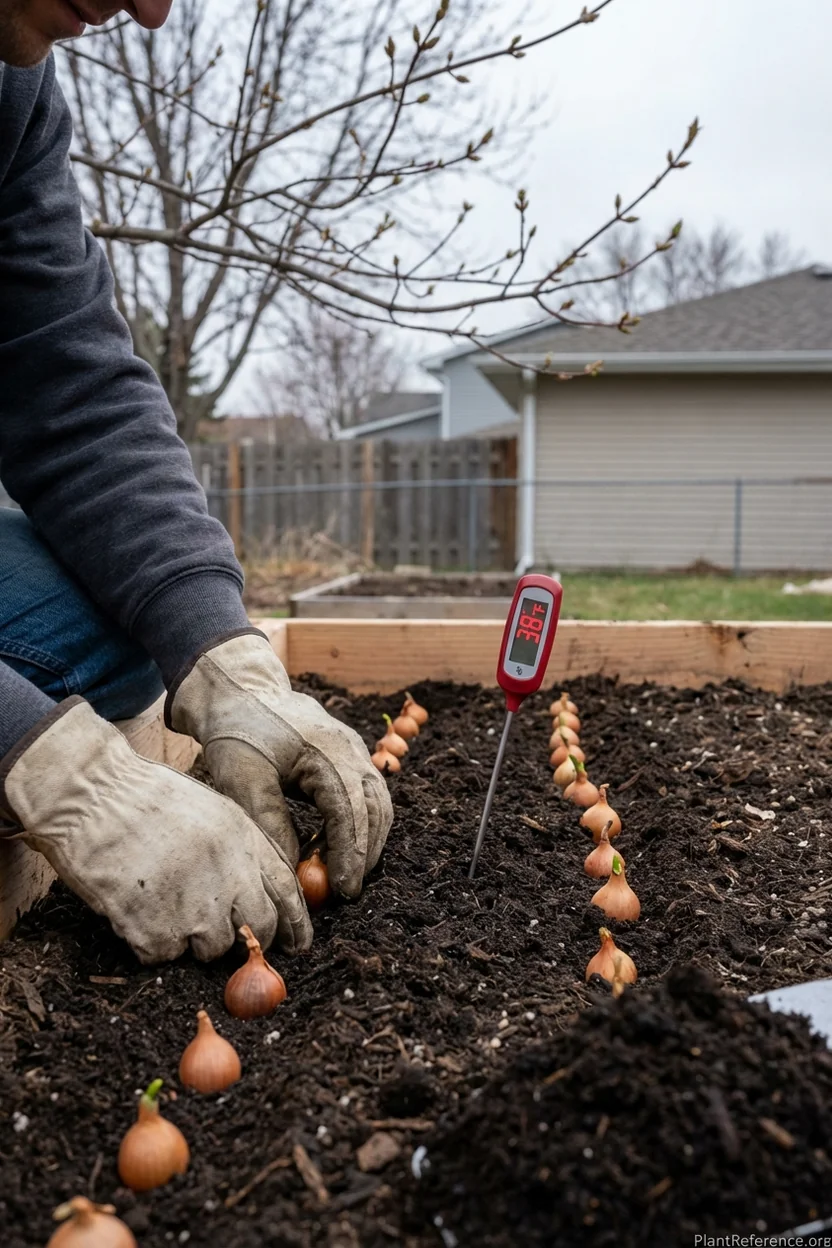
Soil Temperature Guidelines: Plant when soil reaches 35°F consistently. Our Minneapolis soil typically hits this temperature by mid-April, even if air temperatures fluctuate. Use a soil thermometer pushed 2 inches deep at 8 AM for accurate readings.
Why Not Earlier? I've tried March plantings in mild years, but frozen soil and ice storms often damage sets. April 15 is the sweet spot—early enough for maximum growing time, late enough to avoid the worst spring weather.
Fall Garlic Planting: Plant garlic October 10-15, about 4-6 weeks before ground freezes solid. Garlic needs 4-8 weeks of cold temperatures (below 40°F) to develop proper clove formation. Without this cold period, you get a solid bulb instead of separated cloves.
Complete Growing Guide for Minneapolis
Soil Preparation: Minneapolis clay soil needs amendment. Work in 2-3 inches (5-7 cm) of compost or aged manure each fall. Onions need well-draining soil—they'll rot in our spring clay if you don't improve drainage.
Test soil pH in early April. Onions prefer 6.0-6.8 pH. Our Minneapolis soil tends toward neutral (7.0), so you might need sulfur to lower it slightly. Apply sulfur in fall so it has time to work.
Planting Technique:
For Sets: Push small onion sets (smaller than a dime) into soil until just the tip shows. Space them 4 inches (10 cm) apart in rows 12 inches (30 cm) apart. Large sets tend to bolt in our spring temperature swings.
For Transplants: Trim roots to 2 inches, tops to 4 inches. Plant so the white part is just covered with soil. Water gently but thoroughly.
Fertilizing Schedule: - At planting: Work 2-3 inches (5-7 cm) compost into soil - Early May: Side-dress with 10-10-10 fertilizer, 2 tablespoons per foot of row - Mid-June: Final nitrogen application before bulbing starts - Stop feeding when you see soil cracking around bulb bases (bulbing has started)
Late nitrogen feeding creates thick necks that won't cure properly for storage. When you see that soil cracking, fertilizer time is over.
Watering Strategy: Onions need consistent moisture but excellent drainage. In Minneapolis, spring rains usually handle early watering needs. Supplement during dry spells with 1 inch (2.5 cm) per week.
Critical period: Stop watering when tops begin yellowing naturally (usually late July). Excess moisture during curing ruins storage quality.
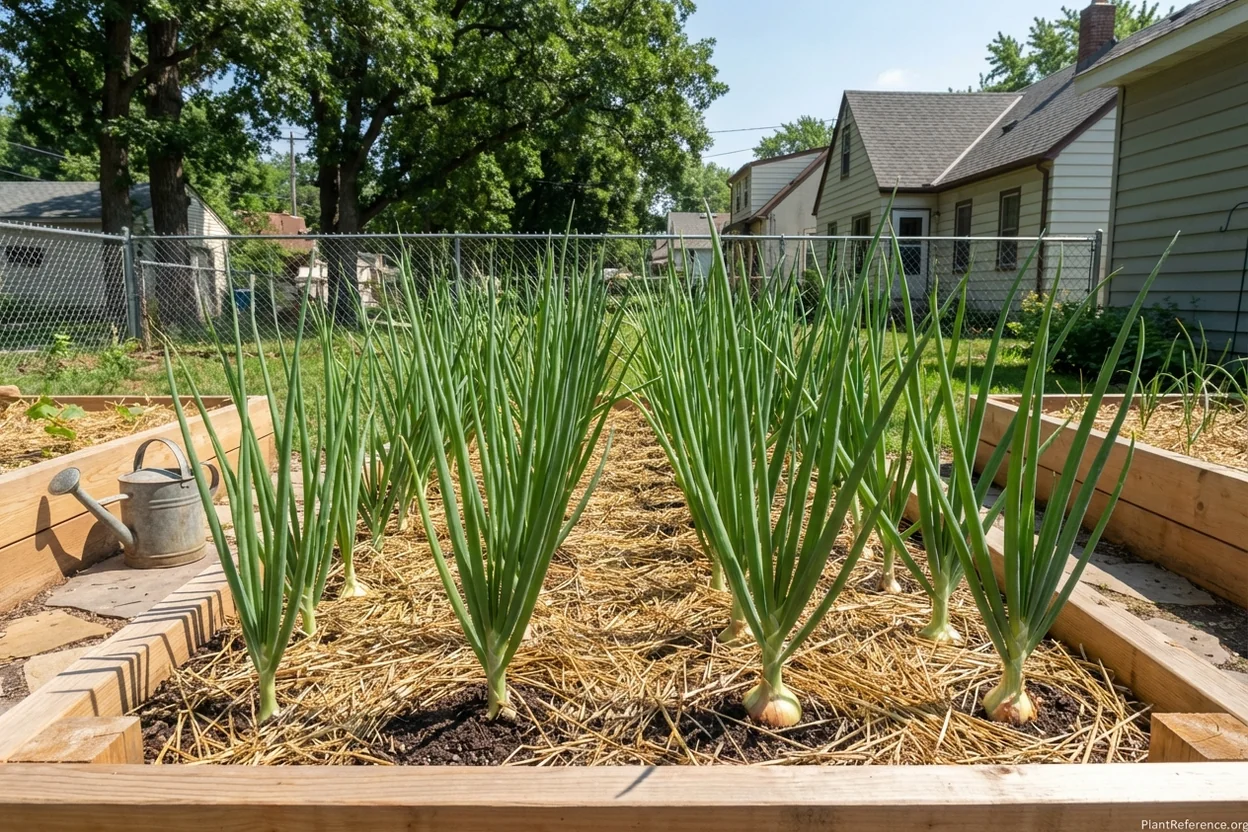
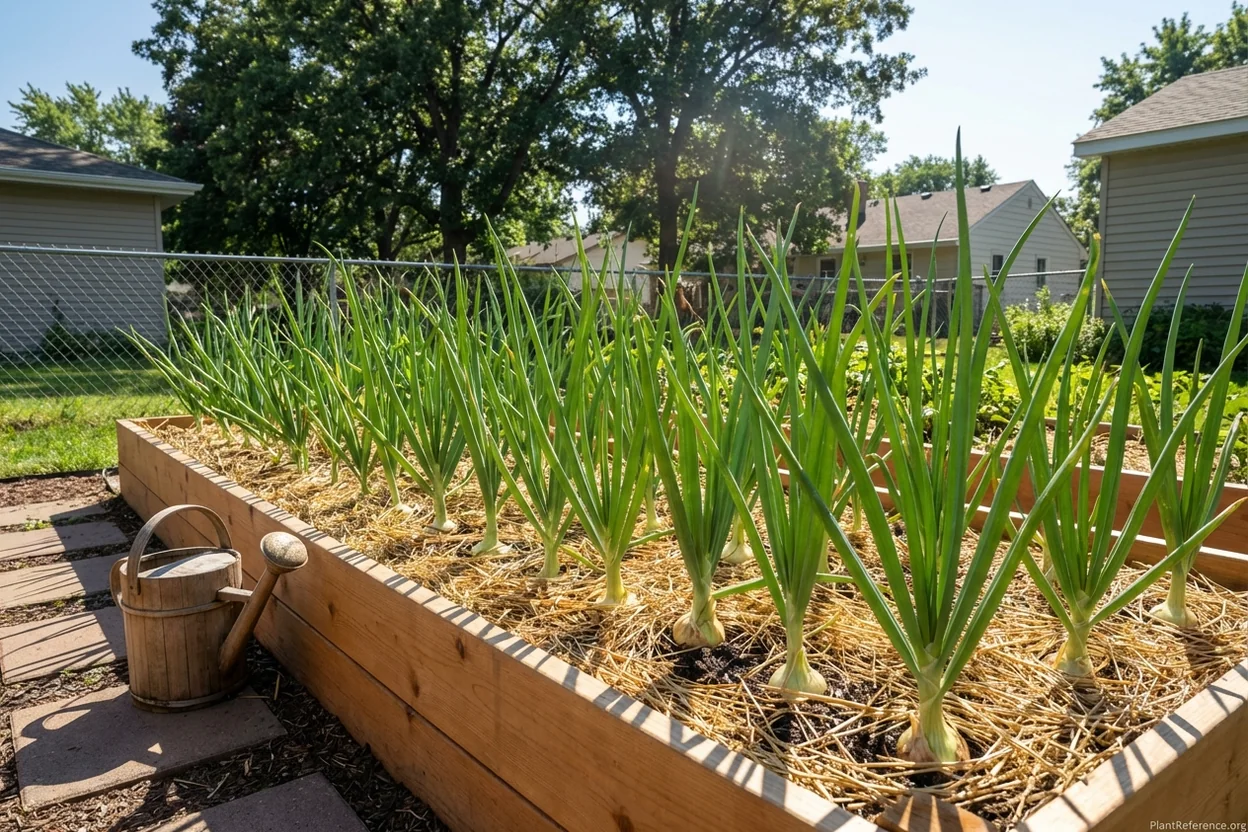
Weed Control: Onions have shallow roots and don't compete well with weeds. Cultivate shallowly (1 inch (2.5 cm) deep maximum) to avoid damaging roots. Mulch with straw after plants are 6 inches (15 cm) tall to suppress weeds and conserve moisture.
Cultivate weekly until plants are 6 inches (15 cm) tall
Apply 2-inch (5 cm) straw mulch around mid-June
Hand-pull weeds near onion stems to avoid root damage
Stop cultivation once bulbing begins (soil starts cracking)
Troubleshooting Minneapolis-Specific Problems
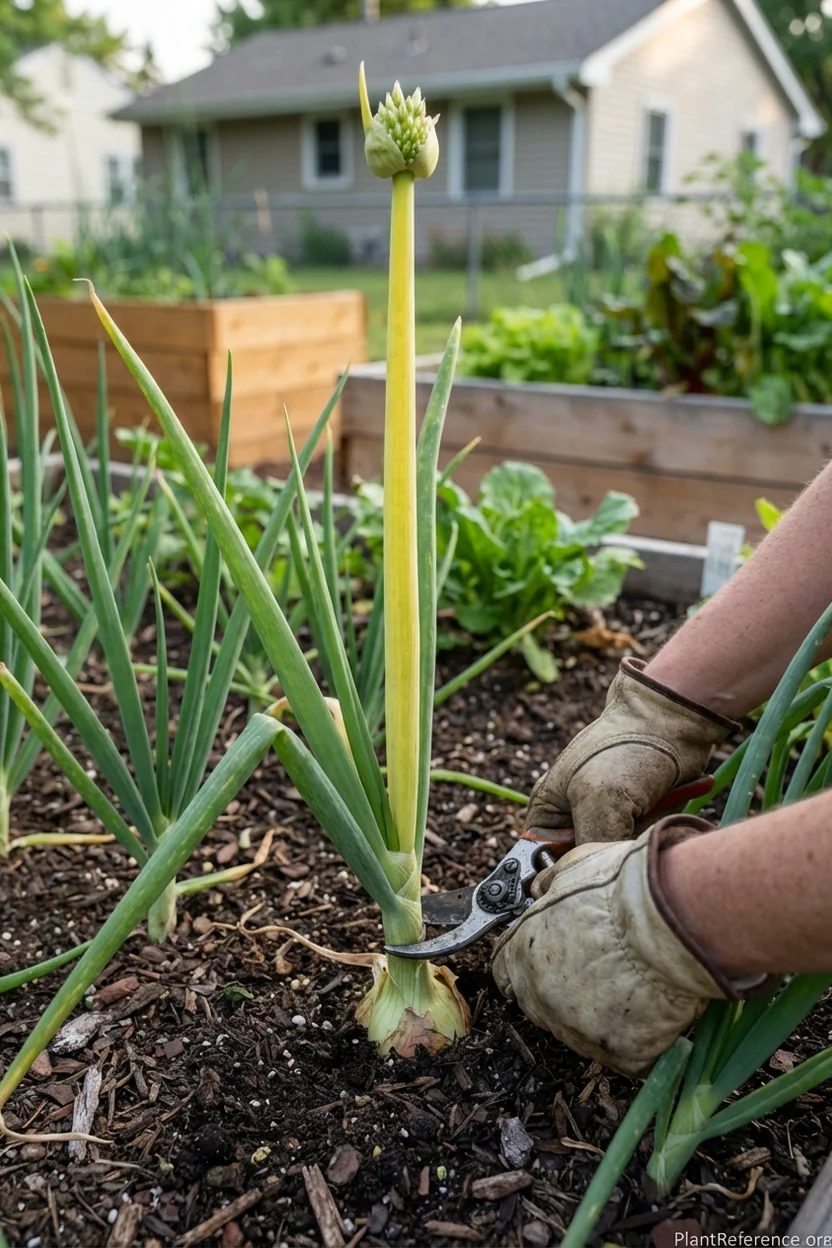
Bolting (Premature Flowering): This happens when onions get confused by our spring temperature swings. Large sets (bigger than a dime) are especially prone to bolting when hit by late cold snaps followed by warm weather.
Signs: Hard flower stalk shoots up through the center of the plant in May or June. Solution: Cut the flower stalk immediately, but expect smaller bulbs and poor storage. Prevention is better—use small sets and avoid planting too early.
Small Bulbs Despite Good Growing: Usually means you planted short-day or intermediate-day varieties by mistake. These will never bulb properly at our 45°N latitude. The plants look healthy but produce marble-sized bulbs.
Solution: Check your seed packets or set labels. Only buy from reputable suppliers who properly label day-length requirements.
Thick Necks That Won't Cure: Caused by too much nitrogen late in the season or overwatering near harvest time. The neck stays green and thick instead of drying down to a tight seal.
These onions won't store—eat them fresh. For next year, stop fertilizing in mid-June and reduce watering when tops start yellowing naturally.
Onion Maggot Damage: More common in areas with previous onion plantings. Adult flies lay eggs at soil level; larvae tunnel into bulbs causing rot and wilting.
Prevention: Rotate onion planting areas. Don't plant in the same spot more than once every 3-4 years. Clean up all plant debris in fall.
Thrips (Silvery Leaf Streaks): These microscopic insects cause silvery streaking on leaves and can stunt bulb development. More problematic during hot, dry summers.
Control: Spray with neem oil or insecticidal soap in early morning or evening. Overhead watering can physically remove thrips from plants.
Harvest & Storage
When to Harvest: Harvest when 50-75% of tops have fallen over naturally. This usually happens in late August to early September in Minneapolis, about 110-125 days after planting.
Don't bend the tops over yourself—let them fall naturally. Premature lodging stops the flow of nutrients to the bulb and creates a weak point that won't cure properly.
Harvesting Process:
Choose a dry day with no rain forecast for 2-3 days
Loosen soil with a fork, being careful not to nick bulbs
Lift bulbs gently, shaking off excess soil
Leave roots and tops attached for initial drying
Curing for Storage: Proper curing is critical for long-term storage, especially important for our Minnesota winters when fresh vegetables are expensive.
Lay bulbs in single layers on screens or hang in mesh bags in a warm (75-80°F (24-27°C)), dry, well-ventilated area. Our garage with fans works perfectly. Cure for 2-4 weeks until outer skins are papery and necks are completely dry.
Storage Conditions: Store cured onions at 32-40°F (0-4°C) with 60-70% humidity. Our Minnesota basements are often perfect. Avoid storing with potatoes—they release moisture and ethylene gas that makes onions sprout.
Properly cured and stored 🌿Allium cepa 'Red Wing' and 🌿Allium cepa 'Copra' will keep until March or April, providing homegrown onions through our long winter.
Garlic Harvest (Planted Previous Fall): Harvest garlic in late June to early July when lower leaves brown but 5-6 green leaves remain. Cure like onions but in shadier, cooler conditions. Well-cured hardneck garlic stores 4-6 months.
→ Johnny's Selected Seeds Red Wing Onion Sets ($12-18) - Premium storage onion perfect for Minnesota
Premium F1 hybrid red storage onion specifically bred for northern climates. Produces uniform globe-shaped bulbs with excellent storage potential (8-10 months when properly cured). Strong disease resistance including pink root tolerance. Requires long-day conditions (14+ hours) making it perfect for Minneapolis latitude. Deep red interior rings maintain color through storage. Sets are sized smaller than dime to prevent bolting.
Frequently Asked Questions
Reading about plants and recognising them are different skills. These three build the second.
- Daily PlantIdentify the day’s mystery plant from a close-up photograph.
- Keyed OutWork a dichotomous key, lead by lead, to name a hidden specimen.
- Name That PlantName a specimen from botanical clues dealt hardest first.
Free to play, no account needed
Amanda came to gardening through an unexpected route—after developing chronic pain from rheumatoid arthritis in her late 20s, she started researching adaptive gardening techniques that would allow her to continue growing plants without aggravating her condition. Now based in Minneapolis, she writes about accessible gardening, raised bed designs for people with mobility challenges, and ergonomic tools that reduce strain. Amanda completed a certificate in sustainable urban agriculture and volunteers with a nonprofit that builds accessible community gardens. She grows vegetables, herbs, and flowers in waist-high raised beds she designed herself. Her writing focuses on practical solutions that work for real people with real limitations—whether that's arthritis, limited mobility, or just a bad back.