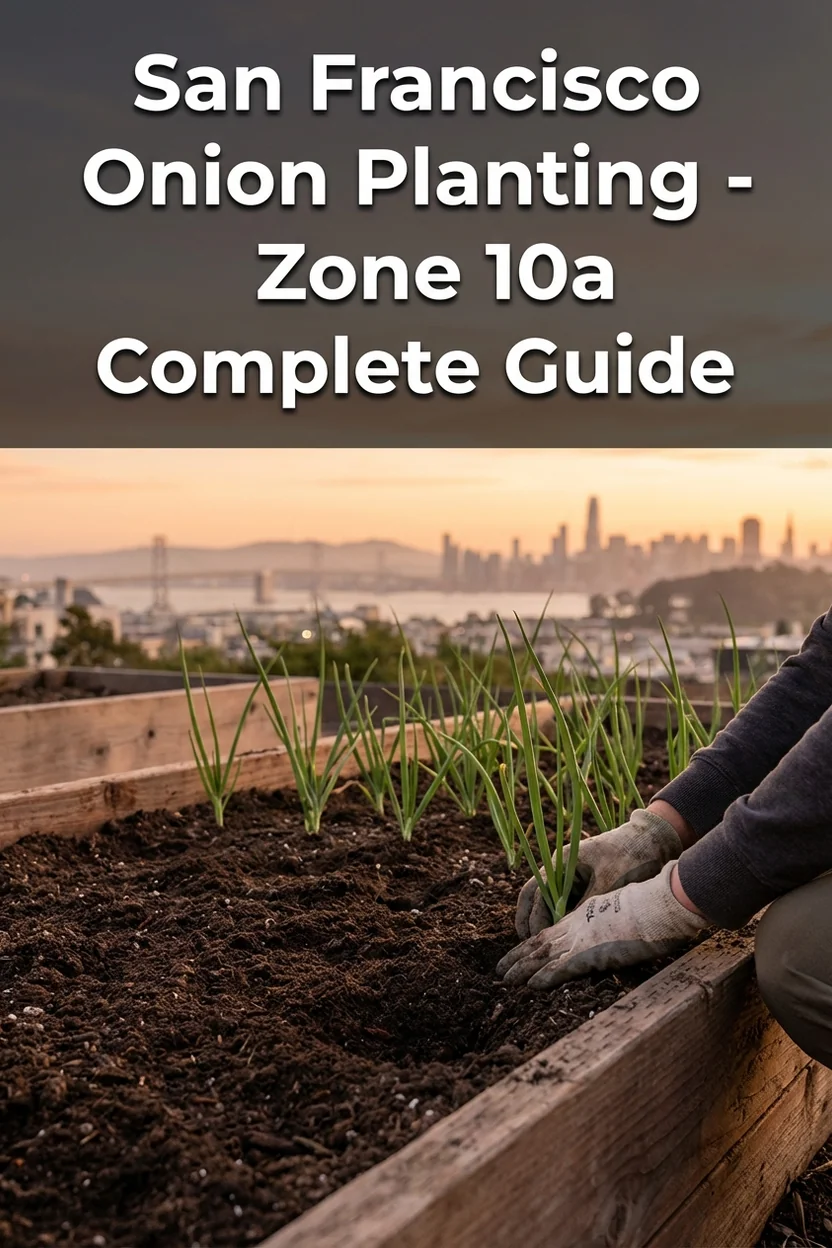
When to Plant Onions in San Francisco: Complete Guide + Best Varieties for Zone 10a
Pets & Toxicity
Recorded toxicity for plants linked in this guide. An unknown status is not a safety assessment.
Toxic to pets: Granex onion, Texas super sweet onion, yellow sweet Spanish onion and 8 moreDetailsHide
Allium cepa 'Granex' — Toxicity Warning
Toxic to cats and dogs if eaten; cats are especially susceptible, and raw, cooked or concentrated plant material can damage red blood cells and cause anaemia.View Allium cepa 'Granex' plant profileAllium cepa 'Texas Super Sweet' — Toxicity Warning
Toxic to cats and dogs if eaten; cats are especially susceptible, and raw, cooked or concentrated plant material can damage red blood cells and cause anaemia.View Allium cepa 'Texas Super Sweet' plant profileAllium cepa 'Yellow Sweet Spanish' — Toxicity Warning
Toxic to cats and dogs if eaten; cats are especially susceptible, and raw, cooked or concentrated plant material can damage red blood cells and cause anaemia.View Allium cepa 'Yellow Sweet Spanish' plant profileAllium sativum 'California Early' — Toxicity Warning
Toxic to cats and dogs if eaten; cats are especially susceptible, and raw, cooked or concentrated plant material can damage red blood cells and cause anaemia.View Allium sativum 'California Early' plant profileAllium fistulosum — Toxicity Warning
Toxic to cats and dogs if eaten; cats are especially susceptible, and raw, cooked or concentrated plant material can damage red blood cells and cause anaemia.View Allium fistulosum plant profileAllium cepa 'Red Creole' — Toxicity Warning
Toxic to cats and dogs if eaten; cats are especially susceptible, and raw, cooked or concentrated plant material can damage red blood cells and cause anaemia.View Allium cepa 'Red Creole' plant profileAllium cepa 'Australian Brown' — Toxicity Warning
Toxic to cats and dogs if eaten; cats are especially susceptible, and raw, cooked or concentrated plant material can damage red blood cells and cause anaemia.View Allium cepa 'Australian Brown' plant profileAllium cepa 'Yellow Granex' — Toxicity Warning
Toxic to cats and dogs if eaten; cats are especially susceptible, and raw, cooked or concentrated plant material can damage red blood cells and cause anaemia.View Allium cepa 'Yellow Granex' plant profileAllium cepa 'Super Star' — Toxicity Warning
Toxic to cats and dogs if eaten; cats are especially susceptible, and raw, cooked or concentrated plant material can damage red blood cells and cause anaemia.View Allium cepa 'Super Star' plant profileAllium cepa 'Red Candy Apple' — Toxicity Warning
Toxic to cats and dogs if eaten; cats are especially susceptible, and raw, cooked or concentrated plant material can damage red blood cells and cause anaemia.View Allium cepa 'Red Candy Apple' plant profileAllium cepa 'Walla Walla' — Toxicity Warning
Toxic to cats and dogs if eaten; cats are especially susceptible, and raw, cooked or concentrated plant material can damage red blood cells and cause anaemia.View Allium cepa 'Walla Walla' plant profile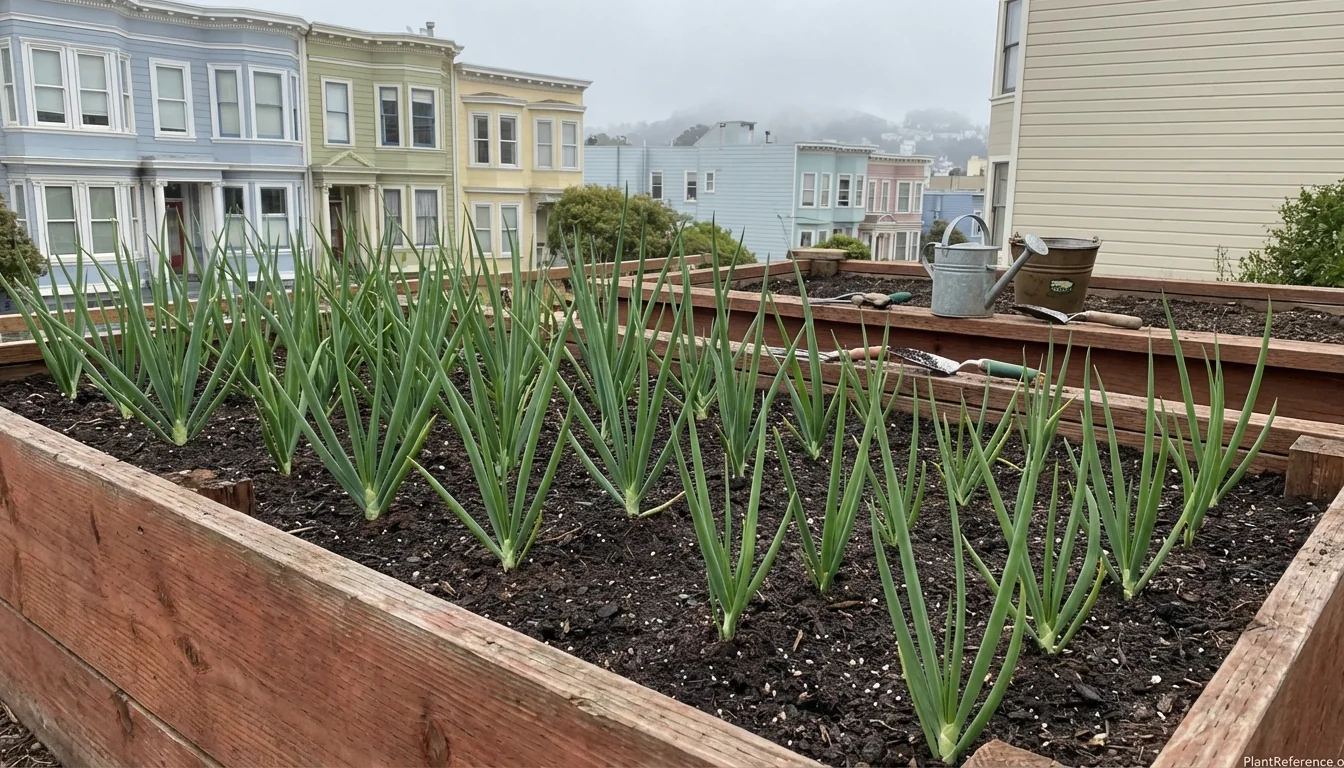
— Image © Plant Reference 2026
San Francisco's unique Zone 10a coastal climate creates both opportunities and challenges for onion cultivation. Unlike most of California, the Bay Area's cool summers and mild winters require a specialized approach to timing and variety selection.
Plant onions in San Francisco September through November for Zone 10a. Use intermediate-day varieties for best bulb formation in coastal conditions.
Best Onion Varieties for San Francisco's Climate
San Francisco's latitude of 38°N places it in the transition zone between intermediate-day and short-day onions. However, the coastal marine climate with cool summers (rarely exceeding 75°F) creates unique growing conditions that favor specific varieties.
The key to success lies in understanding how San Francisco's climate affects bulb formation. While the city receives sufficient daylight hours (14.5 hours at summer solstice) to trigger long-day varieties, the consistently cool temperatures slow growth and can prevent proper bulbing in varieties requiring heat accumulation.
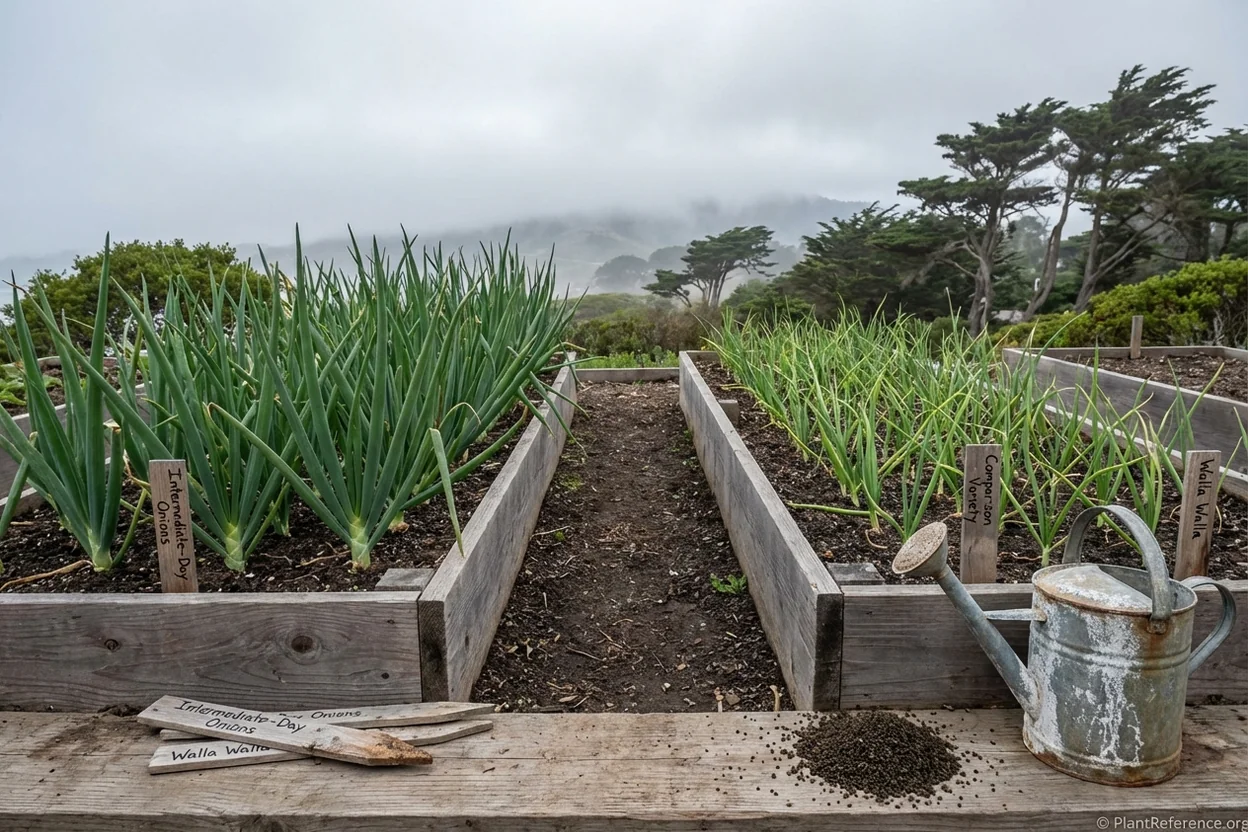
Recommended Varieties for San Francisco
Variety | Days to Maturity | Best For | Notes for San Francisco |
|---|---|---|---|
85-100 days | All-purpose storage | Intermediate-day hybrid perfect for coastal climate | |
95-110 days | Hot, spicy flavor | Short-day variety adapted to mild winters | |
95-115 days | Long-term storage | Excellent keeper, handles cool summers | |
85-95 days | Sweet, mild flavor | Short-day variety for fall planting | |
100-115 days | Large bulbs | Intermediate-day with good fog tolerance | |
90-105 days | Fresh eating | Red intermediate-day with sweet flavor |
🌿Allium cepa 'Candy' (KAN-dee)** stands out as the most reliable variety for San Francisco conditions. This intermediate-day hybrid (12-14 hour requirement) performs consistently in the Bay Area's cool summers and produces large, well-formed bulbs even when temperatures remain below 70°F for extended periods.
🌿Allium cepa 'Red Creole' (KREE-ole)** offers excellent pungency and adapts well to San Francisco's mild winter planting window. As a short-day variety (10-12 hour requirement), it bulbs reliably during the spring daylight increase and tolerates the city's frequent summer fog.
Varieties to Avoid
Long-day varieties like 🌿Allium cepa 'Walla Walla' and 🌿Allium cepa 'Yellow Sweet Spanish' consistently underperform in San Francisco. These varieties require both long daylight hours and warm temperatures (75-85°F) to achieve proper bulbing—conditions rarely met in the Bay Area's marine climate.
Specific Planting Dates for San Francisco
San Francisco's nearly frost-free climate (last frost January 14, first frost December 14) allows for flexible planting timing, but optimal results require strategic scheduling around the city's unique weather patterns.
Fall Planting Window (Primary Recommendation)
Optimal timing: September 15 - November 30
Fall planting takes advantage of San Francisco's warmest months (September-October) for initial establishment while avoiding the challenging summer fog season. Plants establish strong root systems during the mild fall and winter, then put on vigorous top growth during spring before bulbing in late spring to early summer.
September 15-30: Best for transplants, soil still warm from summer
October 1-31: Ideal window for both transplants and sets
November 1-30: Final planting opportunity before growth slows
December: Emergency planting possible but growth will be very slow
Spring Planting Window (Alternative)
Timing: February 1 - April 15
Spring planting works in San Francisco but faces the challenge of establishing plants before the onset of summer fog, which can stress young onions and reduce bulb size.
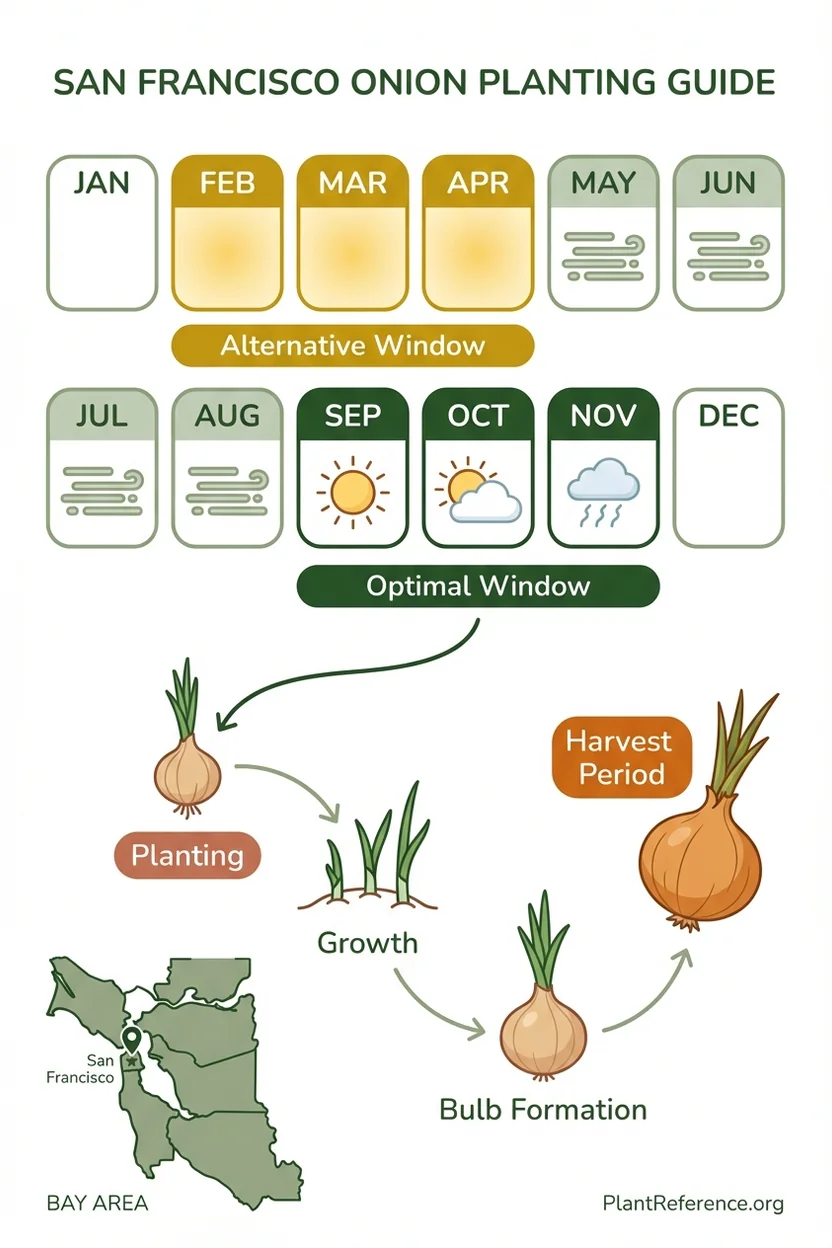
Calculating Your Specific Dates
For intermediate-day varieties planted in fall:
Plant transplants: October 1-15
Expected bulbing trigger: March 15-April 1 (12-14 hours daylight)
Harvest readiness: May 15-June 15 (85-115 days from planting)
For short-day varieties planted in fall:
Plant transplants: September 15-October 15
Expected bulbing trigger: February 15-March 15 (10-12 hours daylight)
Harvest readiness: April 15-May 30 (75-95 days from planting)
Complete Growing Guide for San Francisco
San Francisco's marine Mediterranean climate requires modified techniques compared to inland California growing. Success depends on working with the city's unique microclimate patterns rather than against them.
Soil Preparation
San Francisco's naturally occurring soils range from sandy near the coast to clay in interior valleys. Most residential areas have been modified with fill, creating challenging growing conditions that require amendment.
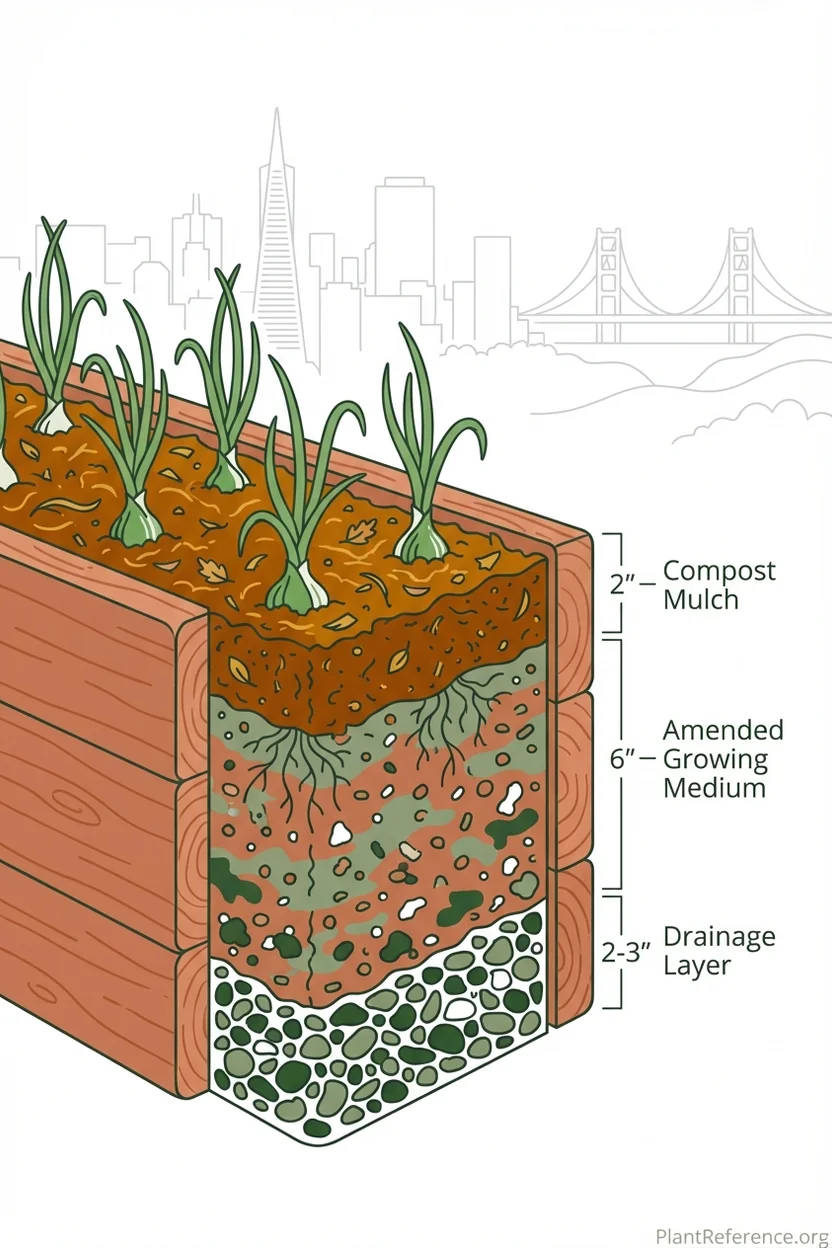
Drainage is critical in San Francisco's clay-heavy soils, especially during the rainy season (November-March). Onions will rot in waterlogged conditions common to many Bay Area gardens.
Test soil pH: Target 6.0-6.8 for optimal nutrient availability
Add 2-3 inches compost: Improves drainage in clay, water retention in sand
Incorporate coarse sand: Mix 1:1 with clay soil to prevent waterlogging
Create raised beds: 6-8 inches minimum height for drainage
Apply lime if needed: Bay Area soils often run acidic from marine influence
Planting Techniques
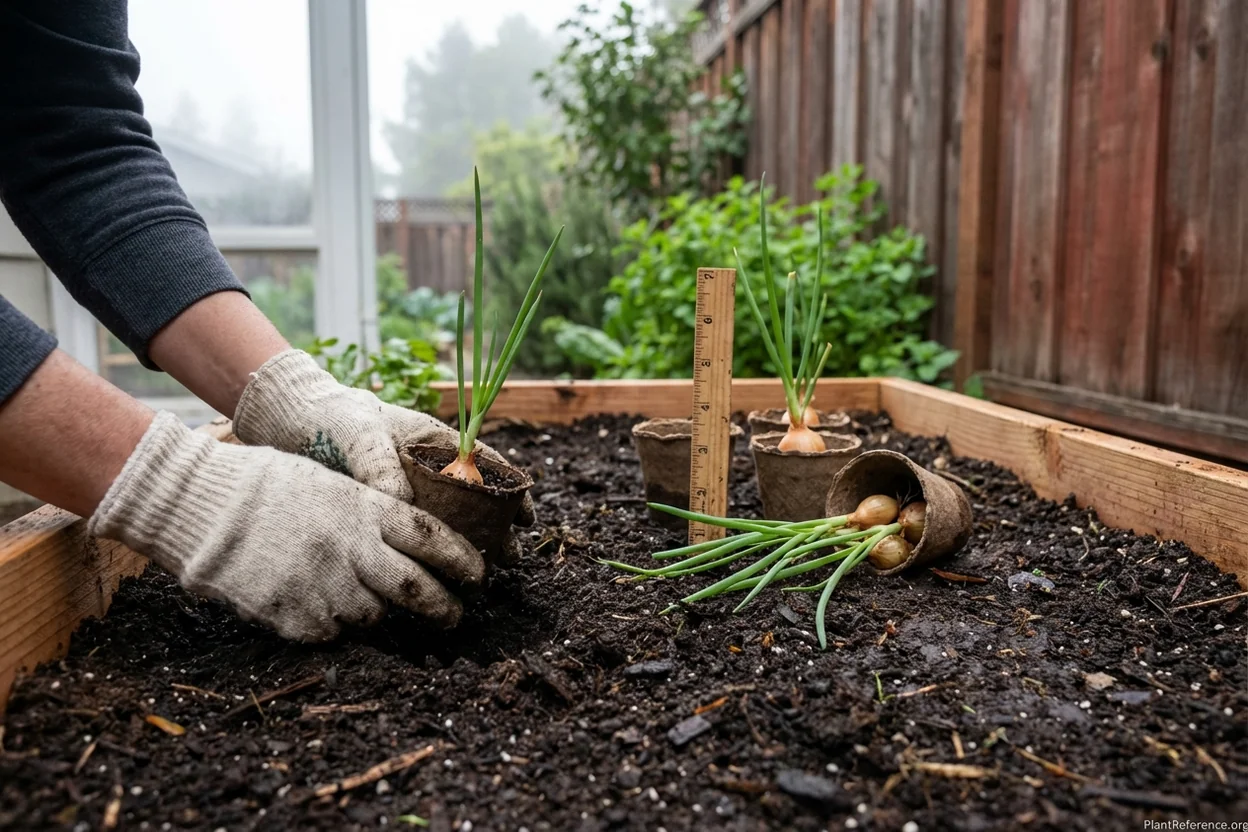
Transplants are strongly recommended over sets in San Francisco. The city's cool summer temperatures favor plants with established root systems that can maximize the brief warm growing windows.
Space plants 4-6 inches apart in rows 12 inches apart. Closer spacing in San Francisco's cool climate produces smaller but more numerous bulbs, often preferable for kitchen use.
Fertilization Schedule
San Francisco's cool temperatures slow nutrient uptake, requiring a modified fertilization approach compared to warmer regions.
Pre-planting (September):
Apply 2-4-2 organic fertilizer at 2 pounds per 100 square feet
Mix kelp meal into soil: 1 pound per 100 square feet for micronutrients
Add fish bone meal: 3 pounds per 100 square feet for phosphorus
Monthly feeding (October-February):
Apply liquid fish emulsion every 3-4 weeks during active growth
Side-dress with compost in December and February
Avoid high-nitrogen fertilizers after March 1 to prevent thick necks
Watering Management
San Francisco's distinct wet and dry seasons require adaptive irrigation strategies. The city receives 90% of annual precipitation between November and April, creating waterlogged conditions followed by summer drought stress compounded by fog.
Wet season (November-April): Focus on drainage rather than irrigation. Cover beds with clear plastic during extended rainy periods to prevent root rot.
Dry season (May-October): Deep, infrequent watering works best. Apply 1 inch per week through drip irrigation or soaker hoses to avoid wetting foliage during foggy conditions.
Troubleshooting San Francisco-Specific Problems
Fog Stress and Poor Bulb Development
San Francisco's summer fog creates unique growing challenges rarely encountered elsewhere. Persistent fog blocks photosynthesis, cools soil temperatures, and maintains high humidity that encourages fungal diseases.
Symptoms: Small bulbs despite adequate growing time, pale or yellowing foliage during summer months, failure to bulb properly.
Solutions:
Choose fog-tolerant intermediate-day varieties like 🌿Allium cepa 'Candy'
Plant in raised beds to improve soil temperature
Use clear row covers during persistent fog periods (June-August)
Provide afternoon wind protection to reduce desiccation stress
Increase potassium fertilization to improve plant stress tolerance
Clay Soil Drainage Issues
Much of San Francisco sits on heavy clay soil that becomes waterlogged during winter rains, causing onion bulbs to rot before maturity.
Symptoms: Soft, mushy bulbs, yellowing from bottom up, stunted growth during rainy season.
Solutions:
Build raised beds minimum 8 inches high
Add coarse sand (not fine sand) at 1:1 ratio with existing soil
Install French drains in chronically wet areas
Plant on mounds 4-6 inches high even within raised beds
Consider container growing in problem areas
Thrips and Pest Pressure
San Francisco's mild climate allows pest populations to overwinter and build up to damaging levels, particularly thrips that cause silvery streaking on onion foliage.
Integrated management:
Release beneficial insects like minute pirate bugs in early spring
Use reflective mulch to confuse thrips during critical growing periods
Apply insecticidal soap every 2 weeks during heavy infestations
Avoid overhead watering which spreads thrips between plants
Remove plant debris promptly to eliminate overwintering sites
Wind and Salt Exposure
Coastal gardens face persistent winds and salt spray that can desiccate onion foliage and stunt growth.
Protection strategies:
Install windbreaks using bamboo screening or shade cloth
Position beds on east side of structures for morning sun protection
Rinse plants weekly with fresh water to remove salt accumulation
Choose wind-tolerant varieties with shorter, sturdier foliage
Mulch heavily to reduce soil moisture loss from wind
Harvest & Storage
San Francisco's onion harvest typically occurs May through July, depending on variety and planting date. The city's cool, dry summers provide excellent curing conditions once the rainy season ends.
Harvest Timing
Begin checking for harvest readiness when 25% of tops begin to yellow and fall over naturally. In San Francisco's cool climate, this process occurs gradually over 2-3 weeks rather than all at once.
Harvest indicators:
Outer leaves yellowing from tips downward
Necks beginning to soften and bend
Bulbs feeling firm when gently squeezed
Outer papery skin beginning to form
Never force tops over by stepping on them or bending manually. This damages the neck and creates entry points for storage rots.
Curing Process
San Francisco's naturally low humidity and warm, dry summers from July-September create ideal curing conditions.
Field curing (recommended for San Francisco):
Pull bulbs on a sunny morning after 2-3 days without rain
Lay on soil surface with tops covering bulbs to prevent sunscald
Leave 24-48 hours in field if weather is dry and warm
Move to protected area if fog or rain threatens
Protected curing:
Spread in single layers on screens or hang in mesh bags
Provide good air circulation with fans if necessary
Maintain temperature 75-85°F during 2-4 week curing period
Avoid areas with morning fog infiltration
Storage varieties like 🌿Allium cepa 'Australian Brown' can be stored 6-8 months in San Francisco's stable indoor temperatures. Sweet varieties should be used within 2-3 months.
Frequently Asked Questions
Reading about plants and recognising them are different skills. These three build the second.
- Daily PlantIdentify the day’s mystery plant from a close-up photograph.
- Keyed OutWork a dichotomous key, lead by lead, to name a hidden specimen.
- Name That PlantName a specimen from botanical clues dealt hardest first.
Free to play, no account needed
David is a software engineer who got into gardening after buying a fixer-upper in the Sunset District with a neglected backyard. San Francisco's microclimates fascinated him—he quickly learned that what grows three blocks away might not work in his fog belt yard. David now maintains a productive vegetable garden despite the marine layer, growing cool-season crops almost year-round and experimenting with season extension techniques. He volunteers at a local community garden and writes about urban food growing, microclimate gardening, and the particular challenges of Bay Area conditions. His approach is methodical—he keeps detailed notes and isn't afraid to share what didn't work.