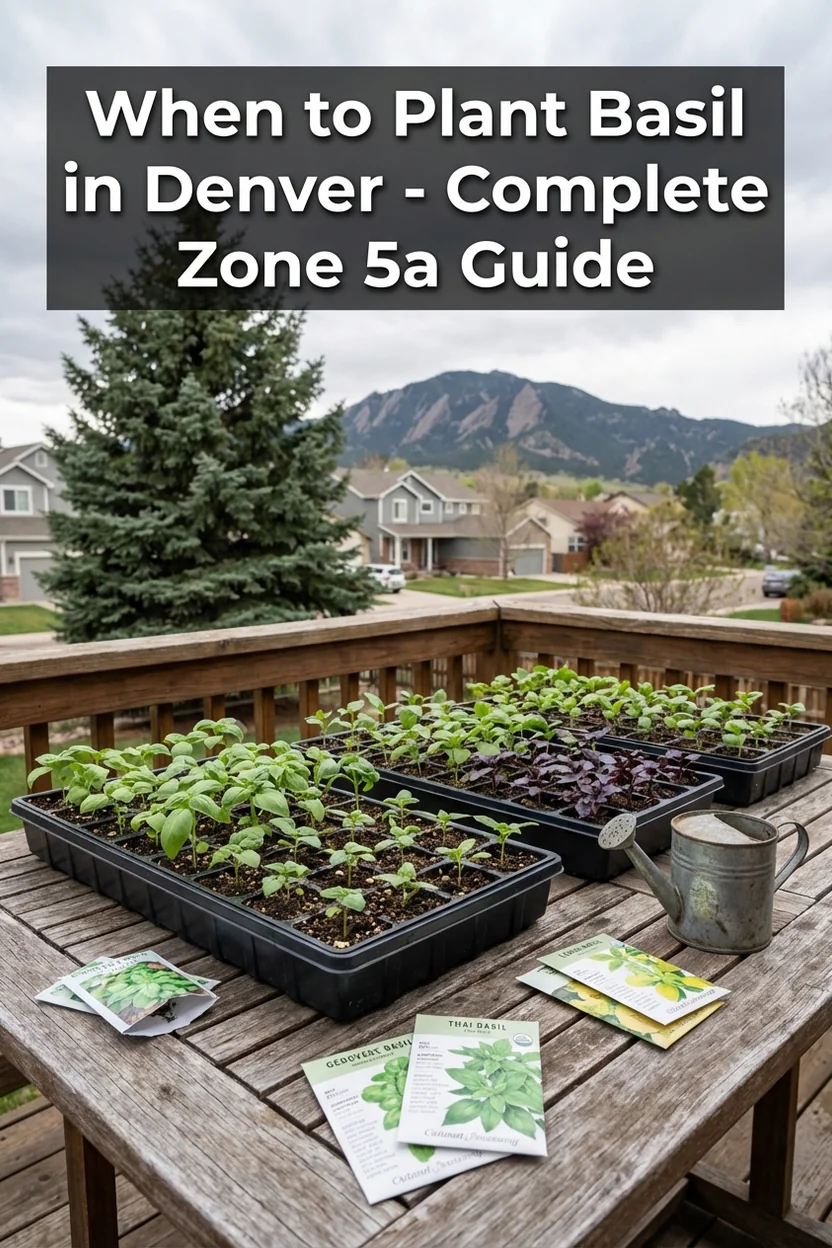
When to Plant Basil in Denver: Complete Guide + Best Varieties for Zone 5a
Pets & Toxicity
Recorded toxicity for plants linked in this guide. An unknown status is not a safety assessment.
No linked plant is recorded as toxicDetailsHide
Ocimum basilicum 'Purple Ruffles' — Toxicity
Non-toxicView Ocimum basilicum 'Purple Ruffles' plant profile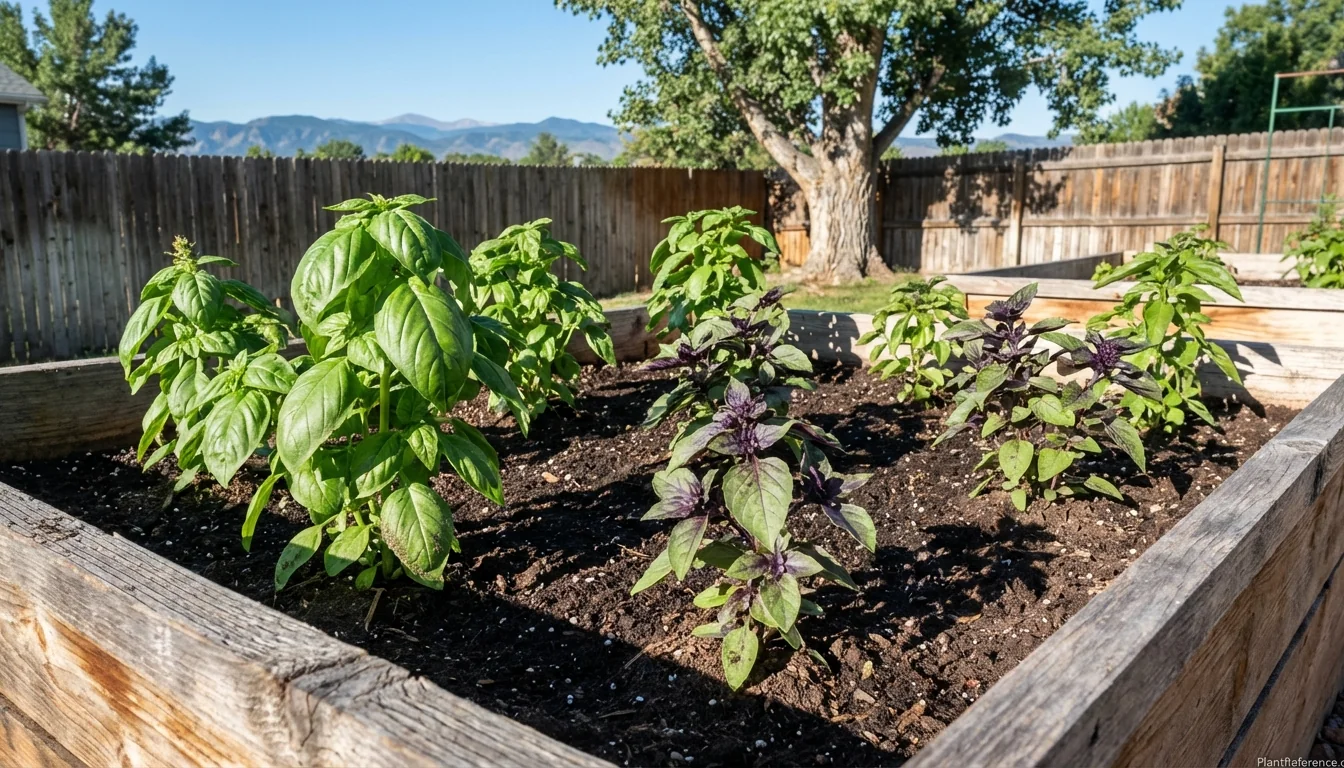
— Image © Plant Reference 2026
Growing basil in Denver's Zone 5a presents unique challenges that I've navigated for over forty years of mountain gardening. The key to success isn't just timing—it's understanding how our high altitude, intense UV, and dramatic temperature swings affect these heat-loving herbs.
Best Basil Varieties for Denver's Zone 5a Climate
Denver's elevation at 5,280 feet creates growing conditions unlike anywhere else in the country. Our intense UV radiation, dry air, and sudden temperature drops require careful variety selection for successful basil cultivation.
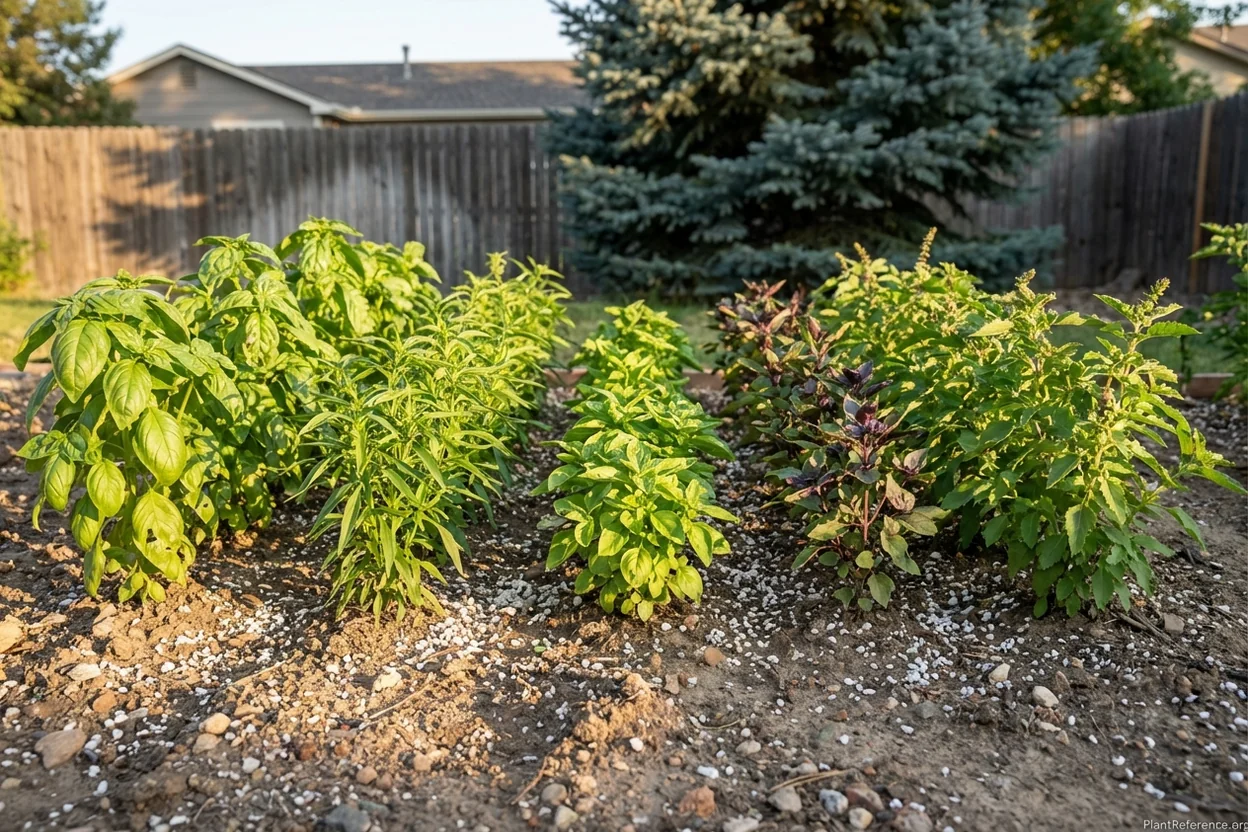
High-Altitude Adapted Varieties
🌿Ocimum basilicum 'Genovese' remains the most reliable performer in Denver's conditions. Its large, succulent leaves handle our intense UV better than delicate varieties, and it tolerates the 30-40 degree temperature swings common in spring and fall.
🌿Ocimum basilicum 'Thai' actually thrives in Denver's dry air, developing more concentrated essential oils than in humid climates. The narrow leaves resist wind damage, crucial when those afternoon thunderstorms roll off the mountains.
🌿Ocimum basilicum 'Purple Ruffles' performs exceptionally well in Colorado's high UV environment. The anthocyanins that create the purple color actually protect the plant from our intense sunlight—these varieties often fade to green in cloudier climates but maintain vibrant color here.
Varieties to Approach Cautiously
🌿Ocimum basilicum 'Lemon' struggles with Denver's rapid temperature changes. This variety bolts quickly when stressed, and our unpredictable spring weather often triggers premature flowering.
🌿Ocimum tenuiflorum (Holy Basil) faces challenges in our short growing season. While it's technically hardy to our zone, the 148-day growing window doesn't provide enough time for substantial harvest unless you're willing to bring containers indoors.
Variety | Days to Maturity | Best For | Notes for Denver |
|---|---|---|---|
60-75 days | Pesto, cooking | Most reliable in altitude, UV-tolerant | |
65-85 days | Stir-fries, curries | Thrives in dry air, concentrated oils | |
70-80 days | Garnish, vinegars | UV protection from anthocyanins | |
60-75 days | Teas, desserts | Quick to bolt in temperature swings | |
60-90 days | Medicinal teas | Container-only for season control |
Specific Planting Dates for Denver Gardeners
After four decades of Denver gardening, I've learned that our last frost date of May 10 is just the beginning of safe basil timing. Soil temperature matters more than air temperature for these tropical plants.
Indoor Seed Starting Schedule
March 15-30: Start seeds indoors using heat mats to maintain 75°F soil temperature. Denver's dry air helps prevent damping-off disease that plagues more humid regions.
Week 1-2: Germination occurs in 5-10 days with proper heat. Keep seedlings under grow lights—our variable spring weather can't be trusted for consistent sunlight through windows.
Week 4-6: Begin hardening off process, but watch Denver's notoriously unpredictable April weather. A sudden snowstorm can set you back weeks if seedlings get chilled.
Transplant Timing
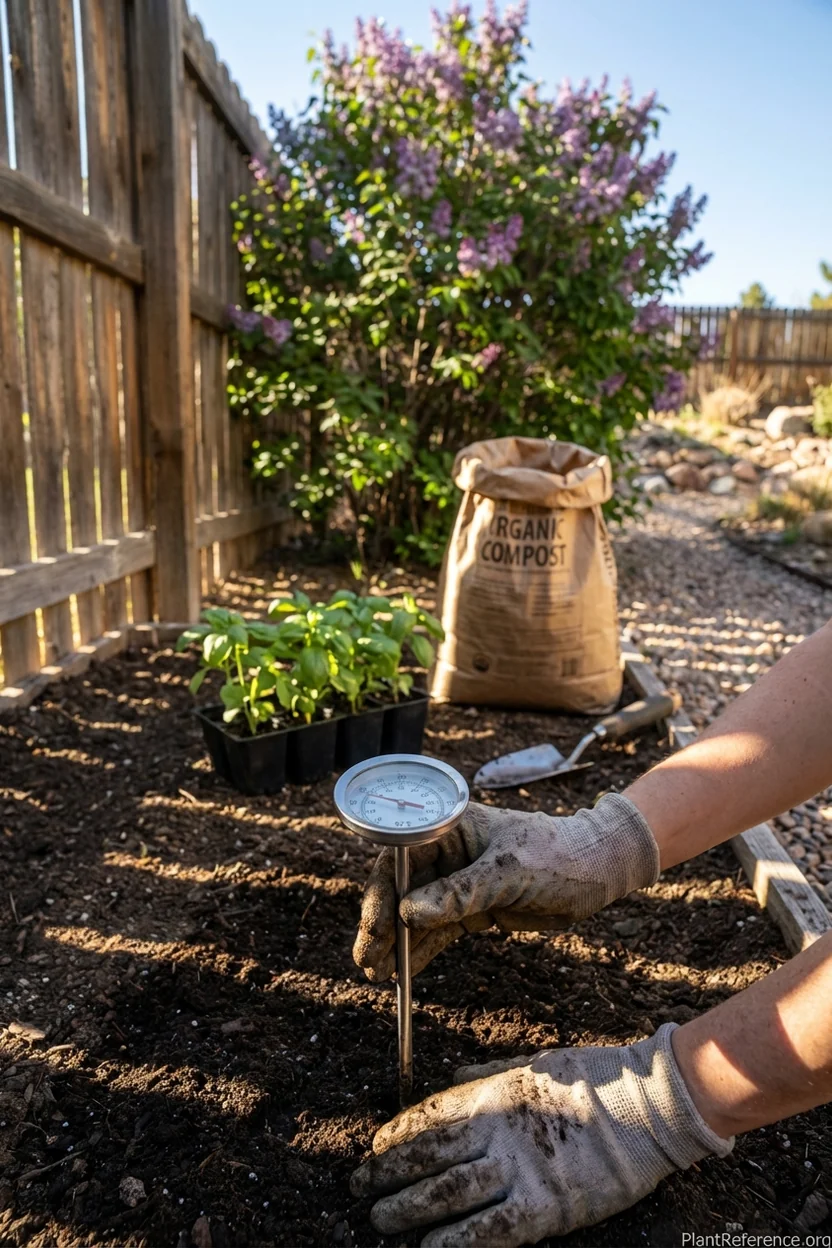
May 10-15: Earliest safe transplant window, but check soil temperature with a thermometer. Even if air temperature reaches 70°F during the day, soil below 60°F will shock basil roots.
May 15-25: Optimal transplant window when soil has warmed consistently and nighttime lows stay above 50°F. This timing allows maximum growing season utilization.
Direct Seeding Strategy
Late May to early June: Direct seeding becomes viable only after consistent warm weather. In Denver's unpredictable climate, direct seeding is risky—one late cold snap will kill emerged seedlings.
Succession Planting: Plant a second crop in mid-June for fresh basil through September. Our early October frost date allows enough time for a 60-day variety to mature.
Complete Growing Guide for Denver's High Altitude
Denver's 5,280-foot elevation creates unique growing challenges that affect every aspect of basil cultivation. Understanding these factors makes the difference between struggling plants and abundant harvests.
Soil Preparation for High Altitude
Our alkaline clay soil (typically pH 7.5-8.0) requires significant amendment for basil success. I mix equal parts native soil, compost, and coarse sand to create proper drainage while lowering pH to basil's preferred 6.0-7.0 range.
Amendment Strategy:
Add 2-3 inches of aged compost annually
Incorporate sulfur to gradually lower pH
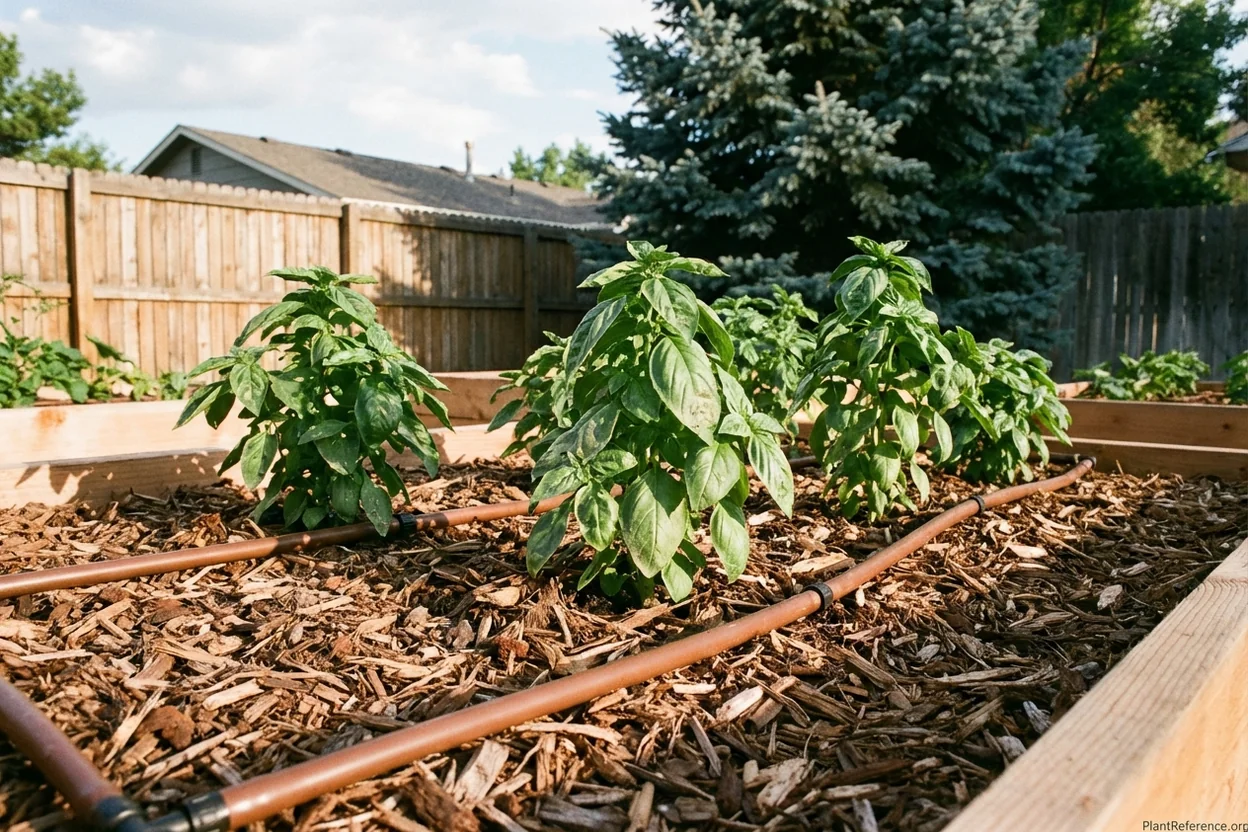
Create raised beds for improved drainage and soil warming
Mulch with organic material to retain moisture in our dry climate
Managing Denver's Intense UV
At our elevation, UV radiation is approximately 25% stronger than at sea level. While this benefits purple basil varieties, it can stress tender varieties like 🌿Ocimum basilicum 'Lemon'.
UV Protection Methods:
Plant basil on the east side of taller plants (tomatoes, peppers) for afternoon shade
Use shade cloth (30% shade) during the hottest part of summer
Maintain consistent soil moisture—drought stress amplifies UV damage
Avoid reflective mulches that intensify light exposure
Water Management in Arid Conditions
Denver's average annual precipitation of 15 inches means consistent irrigation is essential. However, our low humidity also means water evaporates quickly from both soil and plant surfaces.
Irrigation Strategy:
Drip irrigation prevents water waste and keeps foliage dry
Water deeply but less frequently to encourage deep root development
Monitor soil moisture at 4-6 inches deep—surface appearance deceives in dry climates
Mulch heavily to retain soil moisture and moderate temperature swings
Wind Protection Strategies
Denver's location east of the Continental Divide exposes gardens to strong chinook winds and sudden thunderstorm downdrafts. Basil's succulent stems break easily in wind.
Wind Management:
Install windbreaks using lattice panels or fabric screens
Plant basil in protected locations near structures or established vegetation
Stake tall varieties like 🌿Ocimum tenuiflorum early in the season
Choose compact, sturdy varieties over tall, delicate types
Troubleshooting Denver-Specific Basil Problems
Four decades of Denver gardening has taught me that our unique climate creates predictable problems—and fortunately, predictable solutions.
Problem: Sudden Wilting in Healthy Plants
Cause: Rapid temperature drops, even above freezing, shock basil's tropical metabolism.
Solution: Cover plants with row covers when temperatures are forecast to drop below 50°F, even in summer. Keep covers handy from May through September.
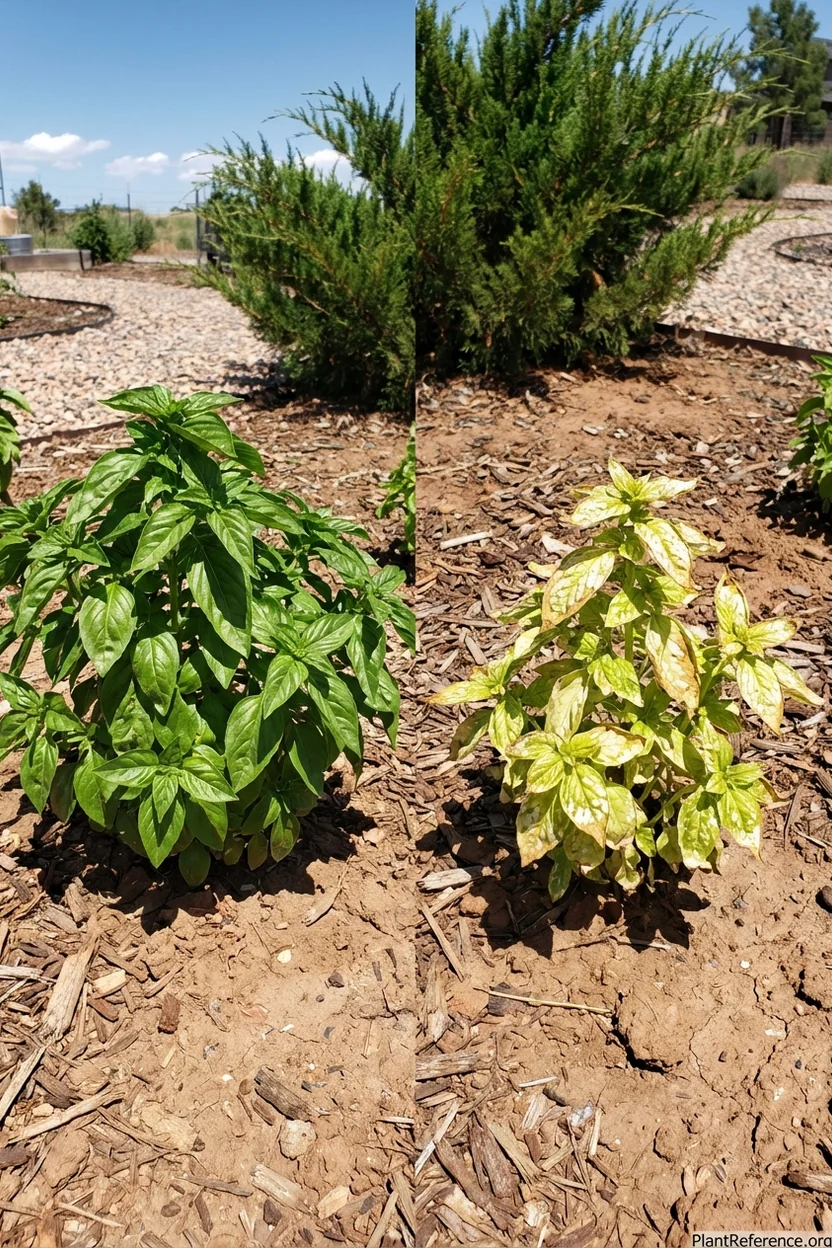
Problem: Leaves Turning White or Pale
Cause: Sunscald from intense UV, often combined with heat stress.
Solution: Provide afternoon shade using shade cloth or taller companion plants. Ensure consistent soil moisture—drought stress amplifies sun damage.
Problem: Stunted Growth Despite Good Conditions
Cause: Alkaline soil (pH above 7.5) prevents nutrient uptake.
Solution: Test soil pH and amend with sulfur or organic matter. Raised beds filled with amended soil bypass this problem entirely.
Problem: Early Bolting (Flowering)
Cause: Temperature stress from Denver's dramatic day-night temperature swings (often 30-40°F difference).
Solution: Choose bolt-resistant varieties like 🌿Ocimum basilicum 'Genovese'. Harvest regularly to prevent seed formation. Use row covers during temperature extremes.
Problem: Poor Germination from Direct Seeding
Cause: Dry surface soil and temperature fluctuations prevent consistent germination.
Solution: Stick with transplants in Denver's challenging conditions. If direct seeding, use shade cloth and frequent light watering until germination occurs.
Harvest & Storage in Colorado's Dry Climate
Denver's low humidity affects both when and how to harvest basil for maximum flavor and storage life. Our dry air can be advantageous—or problematic—depending on your methods.
Optimal Harvest Timing
Harvest in early morning after dew evaporates but before the heat intensifies essential oil volatilization. In Denver's intense sun, oils begin evaporating by mid-morning.
Cutting Technique:
Cut stems just above a leaf node to encourage branching
Take no more than one-third of the plant at any harvest
Pinch flower buds immediately—they appear quickly in stress conditions
Storage Methods for Arid Climates
Denver's 15-20% humidity creates unique preservation challenges. Fresh basil wilts rapidly, but dried basil retains exceptional flavor due to concentrated oils.
Fresh Storage:
Store cut stems in water like flowers, covered with plastic bags
Refrigerate with stems in water—our dry air causes rapid dehydration
Use within 3-4 days maximum in Colorado conditions
Drying Methods:
Air drying works exceptionally well in Denver's dry climate
Hang bundles in shaded, well-ventilated areas—avoid direct sun
Complete drying occurs in 5-7 days versus 10-14 days in humid climates
Store dried basil in airtight containers to prevent reabsorption of moisture
Freezing Techniques:
Blanch leaves for 15 seconds, ice bath, pat dry, and freeze
Freeze whole leaves on cookie sheets, then store in freezer bags
Make pesto without cheese and freeze in ice cube trays for easy portions
Frequently Asked Questions
Reading about plants and recognising them are different skills. These three build the second.
- Daily PlantIdentify the day’s mystery plant from a close-up photograph.
- Keyed OutWork a dichotomous key, lead by lead, to name a hidden specimen.
- Name That PlantName a specimen from botanical clues dealt hardest first.
Free to play, no account needed
Nathan is a garden designer in Denver who focuses on water-wise plantings adapted to Colorado's Front Range climate. He grew up in Nebraska, studied environmental science in college, and fell into garden design after spending summers working at a native plant nursery in Fort Collins. Denver's climate is genuinely challenging—low humidity, intense UV, alkaline clay soil, and wild temperature swings that can go from 70°F to snow in 24 hours. Nathan designs gardens that handle all of that without supplemental irrigation once established. He writes about xeric gardening, native plant selection for the Front Range, and the practical realities of high-altitude growing.