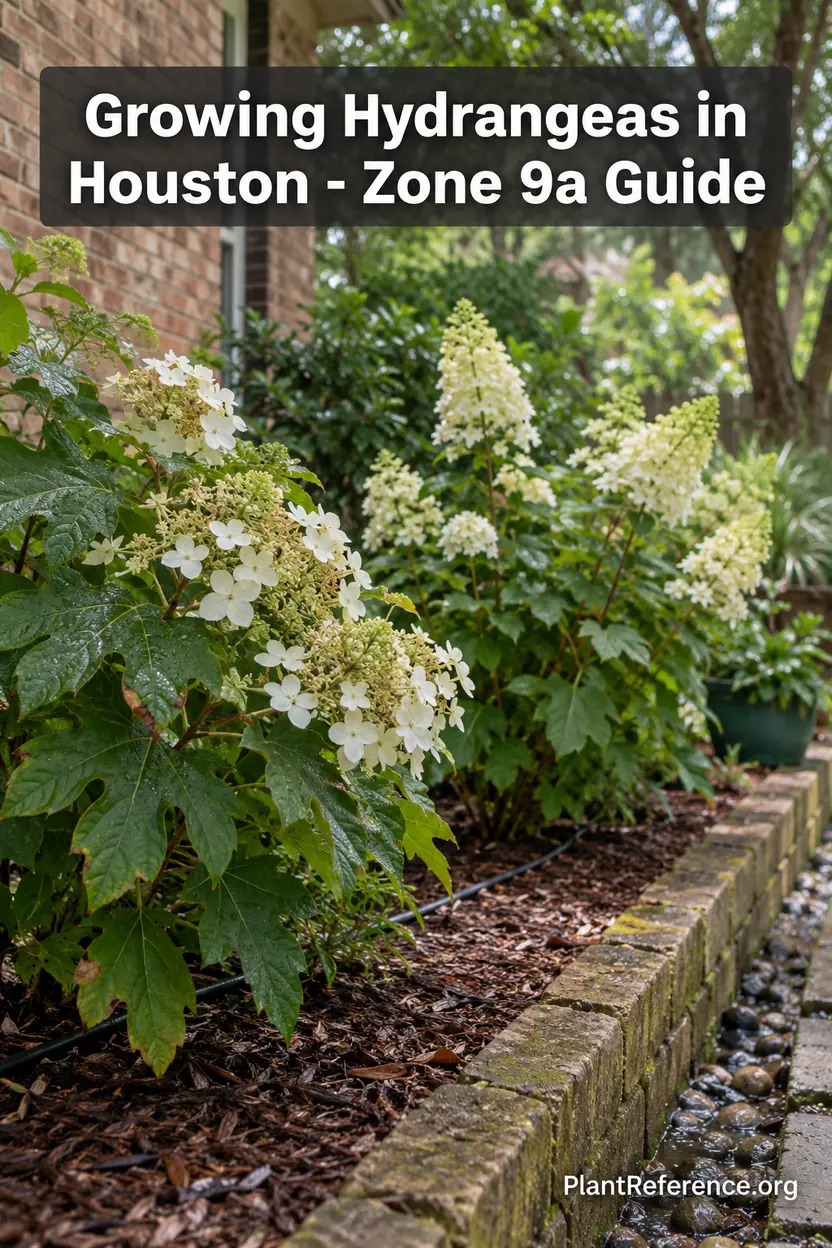
Growing Hydrangeas in Houston: Zone 9a Guide
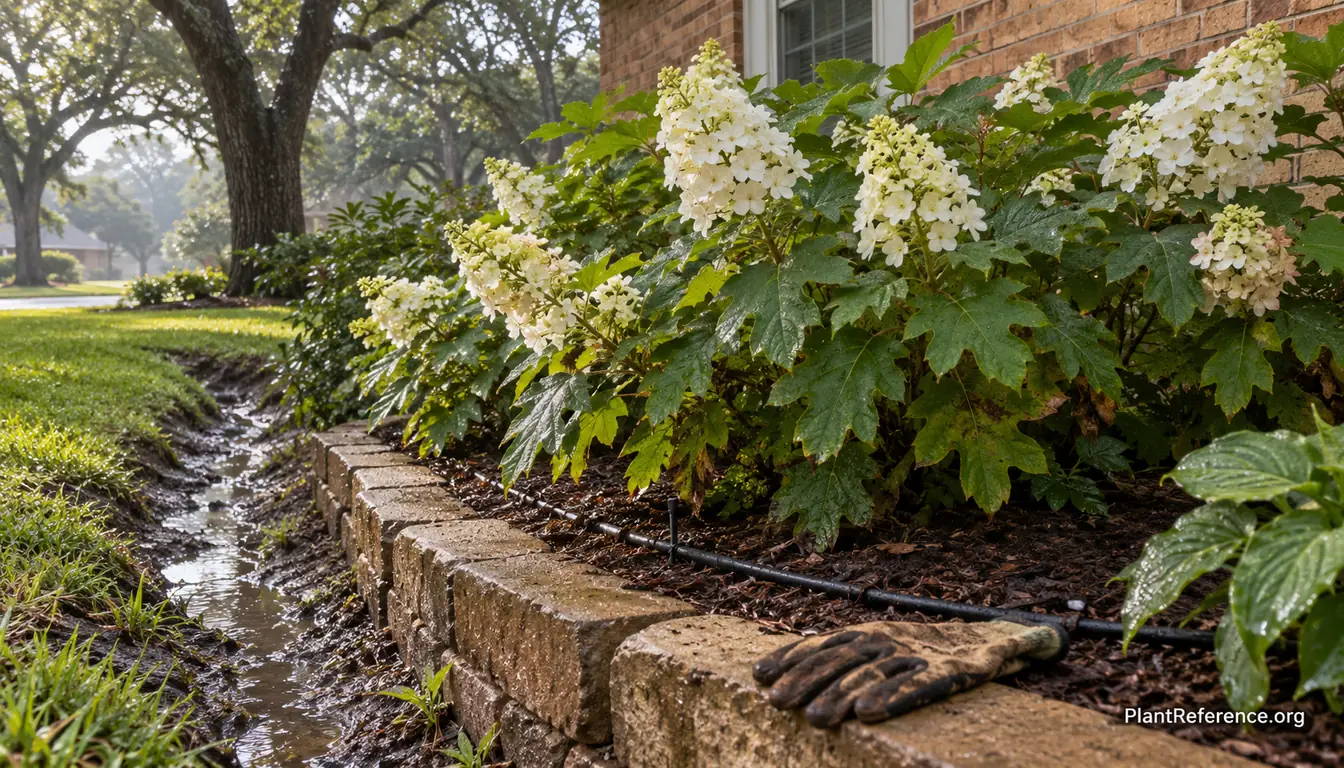
— Image © PlantReference.org 2026
Pets & Toxicity
Recorded toxicity for plants linked in this guide. An unknown status is not a safety assessment.
Toxic to pets: oak-leaf hydrangea, alice oakleaf hydrangea, Panicle hydrangea and 5 moreDetailsHide
Hydrangea quercifolia — Toxicity Warning
Toxic to pets and humansView Hydrangea quercifolia plant profileHydrangea quercifolia 'Snow Queen' — Toxicity
Non-toxicView Hydrangea quercifolia 'Snow Queen' plant profileHydrangea quercifolia 'Alice' — Toxicity Warning
Toxic to pets and humansView Hydrangea quercifolia 'Alice' plant profileHydrangea paniculata — Toxicity Warning
Toxic to pets and humansView Hydrangea paniculata plant profileHydrangea paniculata 'Limelight' — Toxicity Warning
Toxic to petsView Hydrangea paniculata 'Limelight' plant profileHydrangea arborescens 'Incrediball' — Toxicity Warning
Toxic to petsView Hydrangea arborescens 'Incrediball' plant profileHydrangea macrophylla — Toxicity Warning
Toxic to pets and humansView Hydrangea macrophylla plant profileHydrangea macrophylla 'BloomStruck' — Toxicity Warning
Toxic to pets and humansView Hydrangea macrophylla 'BloomStruck' plant profileHydrangea macrophylla 'Endless Summer' — Toxicity Warning
Toxic to pets and humansView Hydrangea macrophylla 'Endless Summer' plant profileHouston can grow hydrangeas, but it is one of the least forgiving major cities for them. Zone 9a cold is not the problem. Summer nights stay warm, humidity remains high, tropical rain can saturate clay, and bright heat drives water loss between storms. The successful approach is narrow and practical: raise the root zone, provide morning light and afternoon shade, choose heat-tolerant species, and treat leaf sanitation as routine maintenance.
Species identification comes first because bloom wood, mature size, sun tolerance, and disease response differ. Hydrangea Types Explained: Pruning, Color & Care Guide provides the framework. In Houston, oakleaf hydrangea is the strongest starting point, panicle hydrangea works in a protected bright site, and classic bigleaf hydrangea belongs only in the coolest available microclimate.
Best Hydrangea Varieties for Houston
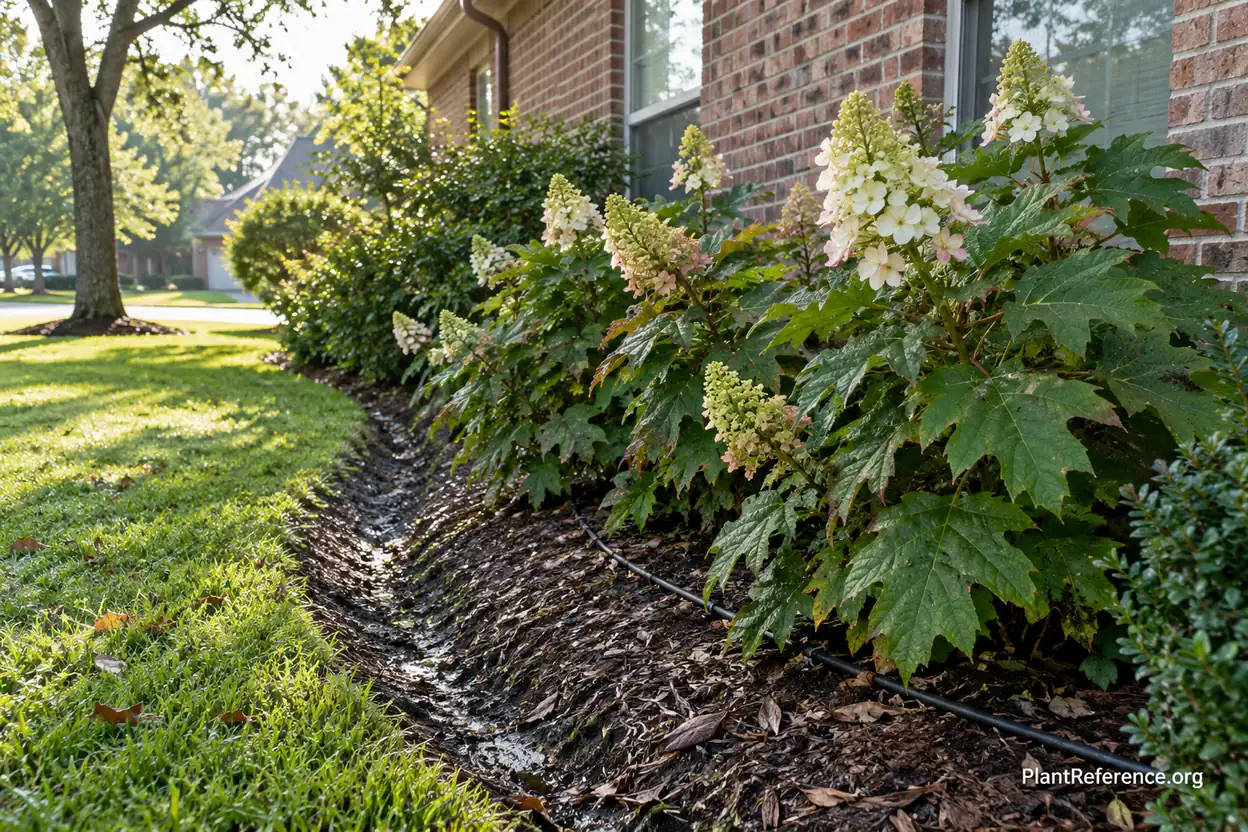
Oakleaf hydrangea 🌿Hydrangea quercifolia is the most defensible choice. It is native to the Southeast, tolerates heat after establishment, and offers peeling bark plus autumn color even when summer flowers fade quickly. It still fails in standing water, so place it on a broad mound or raised bed rather than in the low point where storm runoff collects.
Hydrangea quercifolia 'Ruby Slippers' stays near 3-4 feet (90-120 cm), with white flowers aging to rose and a compact frame that is easier to shade. 🌿Hydrangea quercifolia 'Snow Queen' reaches 5-6 feet (1.5-1.8 m) and carries upright flowers on a larger shrub. 🌿Hydrangea quercifolia 'Alice' can reach 8-12 feet (2.4-3.7 m), so reserve it for a woodland edge with real space and drainage.
Panicle hydrangea 🌿Hydrangea paniculata tolerates more sun and broader soil conditions than bigleaf types, but Houston heat exceeds the “full sun” described on many national plant tags. Hydrangea paniculata 'Little Lime' grows 3-5 feet (90-150 cm), fits beneath high shade, and flowers on new wood. 🌿Hydrangea paniculata 'Limelight' reaches 6-8 feet (1.8-2.4 m) and needs a deep, cool root zone. Both require shade from the late afternoon. Panicle Hydrangea Guide: Limelight, Little Lime & More helps match size to the site.
Smooth hydrangea Hydrangea arborescens can work in bright shade with moving air. 🌿Hydrangea arborescens 'Incrediball' grows around 4-5 feet (1.2-1.5 m), blooms on current-season growth, and has stronger stems than many older selections. Its broad leaves wilt readily in heat, so consistent root moisture is essential without saturating the bed.
Bigleaf hydrangea 🌿Hydrangea macrophylla is the high-maintenance option. 🌿Hydrangea macrophylla 'BloomStruck' grows 3-4 feet (90-120 cm) and flowers on old and new wood, giving it another chance after spring damage. 🌿Hydrangea macrophylla 'Endless Summer' reaches about 3-5 feet (90-150 cm) with familiar mophead flowers. Both need early morning sun, deep afternoon shade, generous spacing, steady moisture, and weekly leaf inspection.
Houston soils vary, but color-changing bigleaf flowers may shift according to pH and available aluminum. Only bigleaf and mountain hydrangeas change this way; white, panicle, smooth, and oakleaf flowers do not. Follow How to Change Hydrangea Color: Blue, Pink & Purple instead of adding acid or aluminum blindly.
Variety | Mature Size | Best Setting | Houston Notes |
|---|---|---|---|
Hydrangea quercifolia 'Ruby Slippers' | 3-4 ft (90-120 cm) | Raised shaded bed | Best compact choice; drainage remains critical |
5-6 ft (1.5-1.8 m) | Large woodland edge | Upright flowers and strong seasonal structure | |
Hydrangea paniculata 'Little Lime' | 3-5 ft (90-150 cm) | Bright morning shade | New-wood bloom; protect from western heat |
6-8 ft (1.8-2.4 m) | Large protected border | Needs room, airflow, and deep irrigation | |
4-5 ft (1.2-1.5 m) | Cool open shade | Strong stems but high summer water demand | |
3-4 ft (90-120 cm) | Coolest sheltered site | Highest disease and moisture-management demand |
Containers can move away from heat and flooded ground, but they warm and dry quickly. Use at least a 20-25 gallon (76-95 L) container for a compact shrub, with multiple unobstructed drainage holes. Hydrangeas in Pots: Container Care & Winter Protection explains why pot size and root-zone insulation matter.
Specific Planting Dates for Houston
The city data places Houston in Zone 9a, with an average last frost near February 15 and first frost near December 1. The long frost-free season does not create a long planting season. Hydrangeas establish best when cool air reduces leaf demand while roots continue growing.
The preferred window is November 1 through February 15. November planting uses warm soil and cooler air. December and January planting give roots months before summer, provided the bed drains after winter rain. Finish by mid-February when possible. March planting is risky because a small root system soon faces rising humidity and heat.
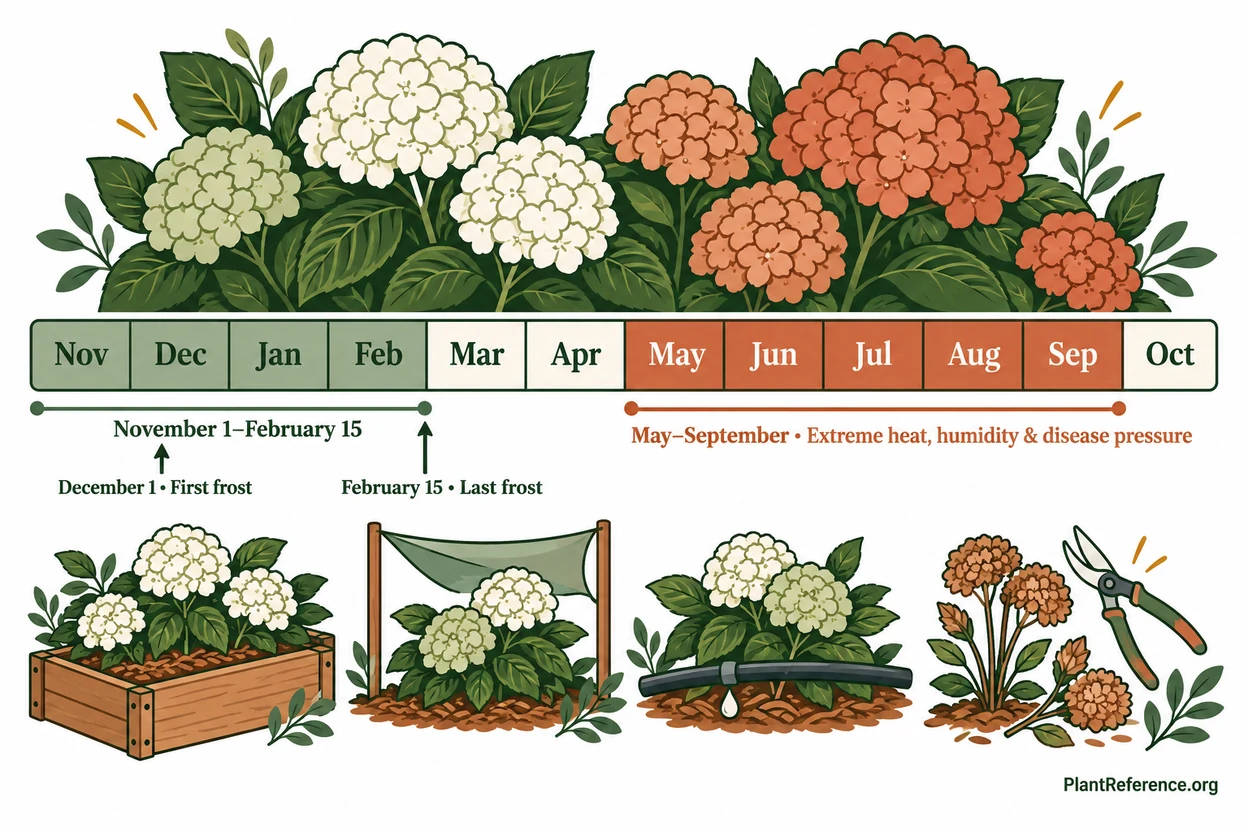
Use this schedule:
October: Test drainage, soil pH, and irrigation coverage before planting.
November 1-February 15: Complete new planting and transplanting.
February 16-March 15: Plant only in a prepared raised bed with reliable care.
May-September: Avoid transplanting and inspect leaves at least weekly.
October-November: Remove diseased debris and prepare cool-season sites.
Before December 1: Renew mulch while keeping stems and crowns uncovered.
Do not install a discounted shrub during a summer heat wave. Hold it in bright shade where the container can be checked daily, then plant in November. Moving established hydrangeas in summer removes roots exactly when the canopy demands maximum water.
Complete Growing Guide for Houston
Choose Moving Air and Morning Light
An east or northeast exposure is the safest. Give bigleaf and smooth types two to four hours of morning sun; oakleaf and panicle types can take four to six hours if roots stay cool. All benefit from shade by early afternoon. Avoid west-facing brick, fences, pool decking, and air-conditioner exhaust.
Shade must not become stagnant enclosure. Warm wet leaves support Cercospora, anthracnose, and powdery mildew. High tree canopy or open-sided shade is better than a narrow courtyard with no air movement. Space shrubs at mature width and keep access around them for cleanup. Plan a Perennial Garden That Blooms Spring to Fall can help layer companions without packing the hydrangea canopy.
Raise Roots Above Heavy Clay
Houston clay holds water like a basin. Compost improves structure over time, but compost inside one deep hole does not create drainage. Build a broad mound or raised bed 8-12 inches (20-30 cm) high where stormwater can move away. If the neighborhood floods, choose a site above the normal water path; a slightly raised planting hole inside a flooded yard is not enough.
Dig two to three times wider than the root ball and no deeper. Set the root flare 1-2 inches (2.5-5 cm) above the finished grade, roughen smooth clay walls, and backfill mostly with native soil. Spread 1-2 inches (2.5-5 cm) of compost across the whole bed and blend it into the upper 6-8 inches (15-20 cm). Poor Drainage in Raised Beds: Causes and Fixes for Waterlogged Soil explains the water-and-air balance.
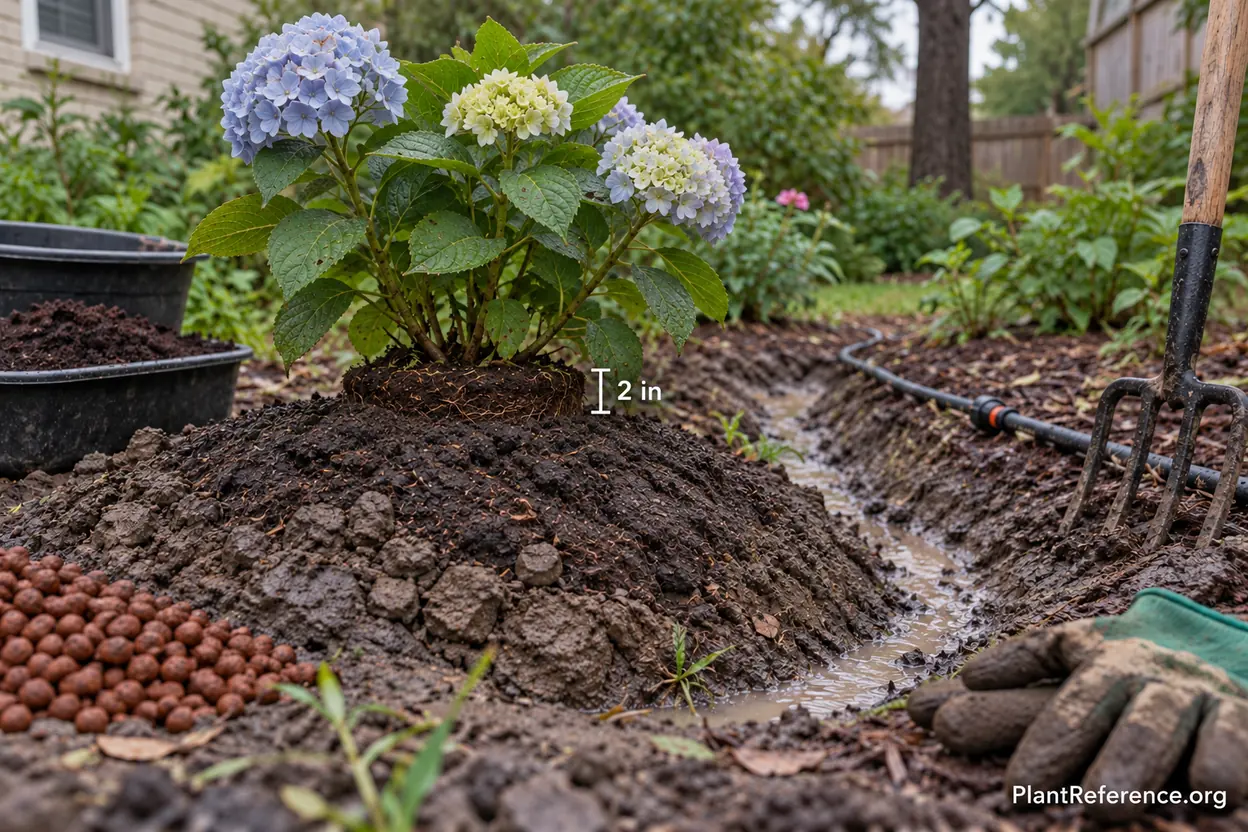
Expanded shale can create durable pore space when blended across a clay bed, but it is not a magic layer beneath the root ball. Never place gravel only at the bottom of a planting hole; the abrupt texture change can perch water above it. Grade, bed height, and a broad improved zone do the real work.
Water Around Storms, Not by Habit
Hydrangeas generally use 1-2 inches (2.5-5 cm) of water weekly, but Houston may receive that amount in one storm and then turn hot and dry. Use drip irrigation beneath mulch and check soil before every cycle. Arrange emitters across the full root zone rather than beside the stems.
Probe soil 2-3 inches (5-8 cm) deep at multiple points. If it is wet, do not irrigate because leaves are drooping. Afternoon wilt that resolves by dawn often reflects heat. Persistent morning wilt in wet clay points toward oxygen-starved roots; persistent wilt in dry soil needs slow, deep watering.
Apply 2-3 inches (5-8 cm) of aged hardwood mulch, leaving 3 inches (8 cm) open around stems. Mulch reduces splash, evaporation, and soil-temperature swings. After a tropical downpour, pull mulch aside at one point and confirm the bed is draining rather than assuming the raised surface is dry.
Build a Disease-Prevention Routine
Water foliage only when rinsing pests, and do that early enough for leaves to dry. Avoid overhead irrigation as the normal method. Thin crossing growth selectively, remove fallen spotted leaves, and disinfect pruners after cutting diseased tissue. High-nitrogen fertilizer creates soft crowded growth and worsens the problem; apply a balanced slow-release product in late winter only if a soil test or weak growth supports it.
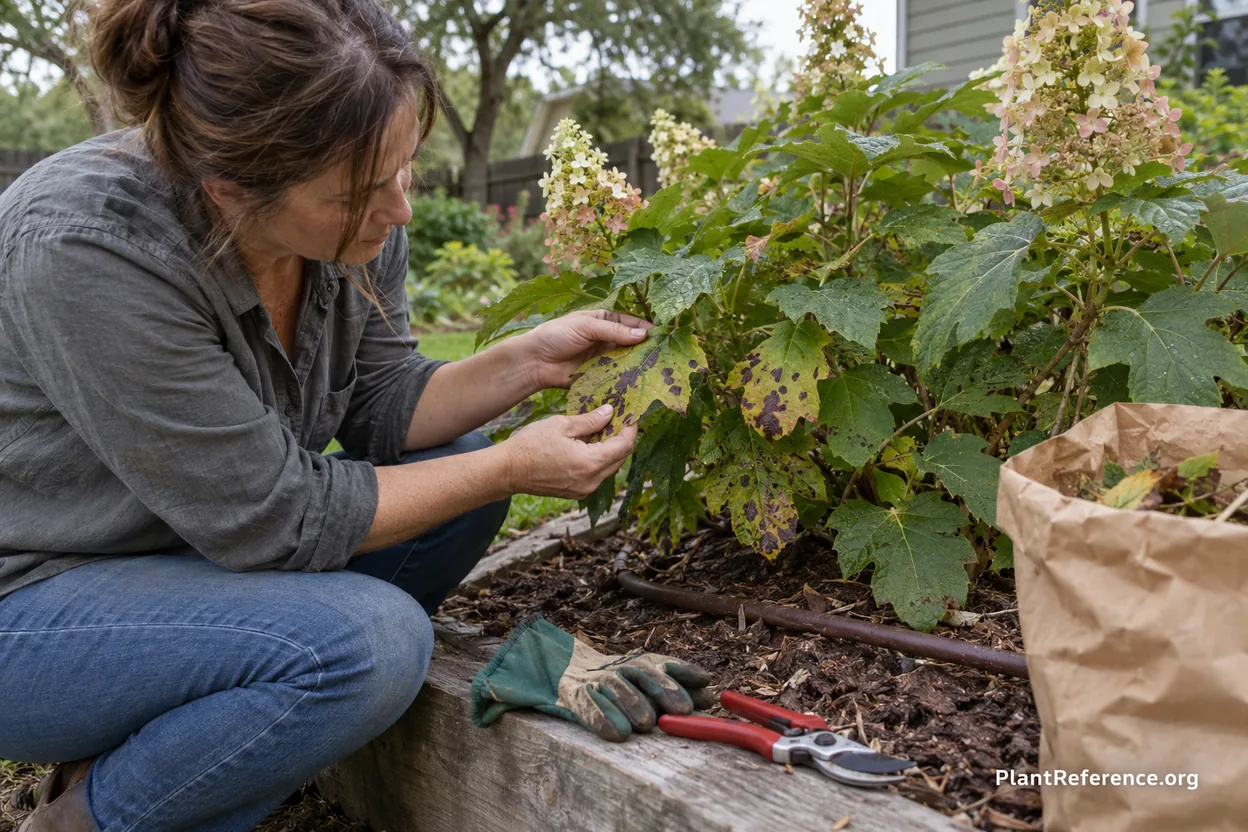
Fungicides protect clean tissue but do not restore spotted leaves. If disease has repeatedly caused early defoliation, identify the disease and choose a product labeled for hydrangea and that pathogen. Follow current directions, rotate modes of action when advised, and combine treatment with sanitation and airflow.
Troubleshooting Houston-Specific Problems
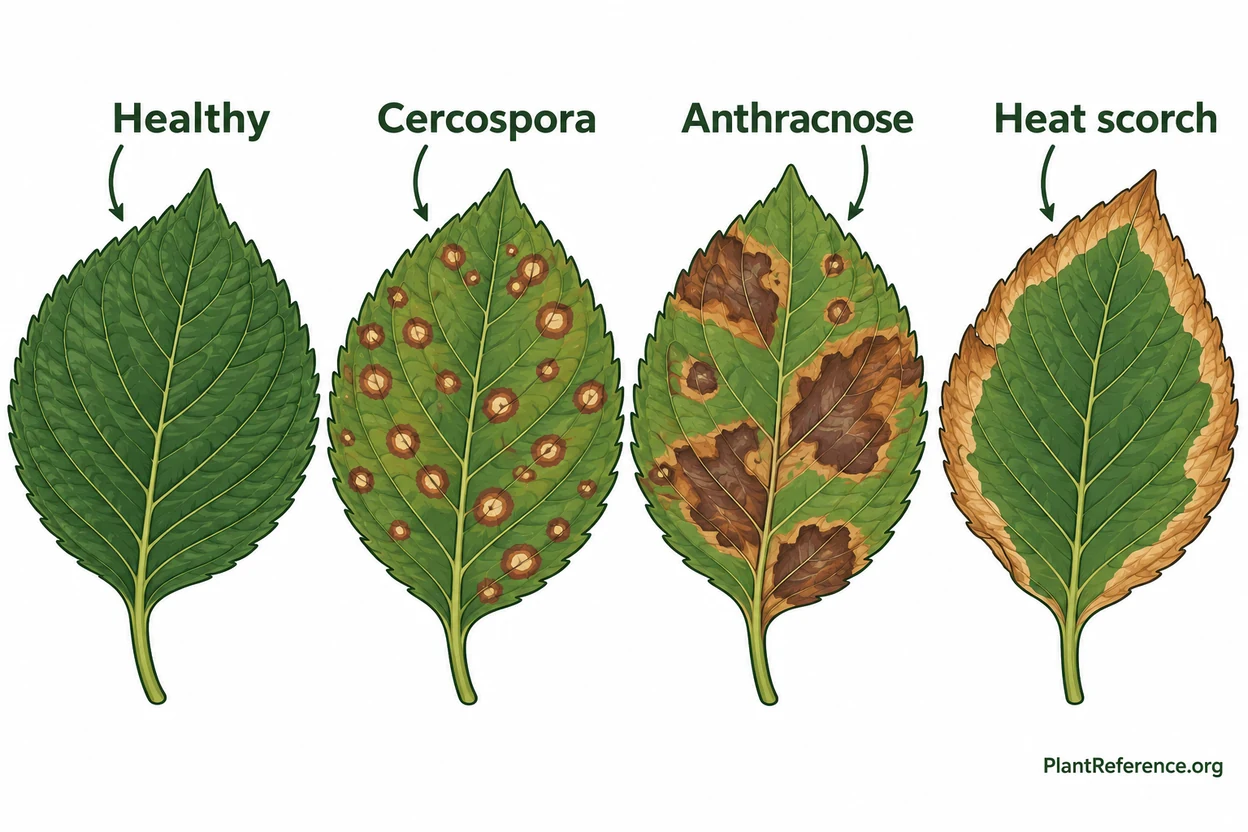
Cercospora produces small purple-brown spots with pale centers, usually beginning on lower leaves. Anthracnose often creates larger irregular brown lesions that can affect leaves and flowers. Powdery mildew forms a pale dusty coating. Hydrangea Leaves Turning Brown: Causes and Solutions helps separate these patterns from scorch and water stress.
Root rot causes wilt despite wet soil, yellowing, stalled growth, and dark soft roots. Oakleaf hydrangea is especially intolerant of poor drainage. Stop irrigation, inspect beside the root ball, and correct grade during cool weather. A fungicide drench cannot rescue a shrub that repeatedly sits in standing water.
Heat scorch forms crisp tan edges on leaves facing sun or reflected radiation. Confirm root moisture, add afternoon shade, and extend mulch. Flooding the bed every evening makes root health worse. The solution is lower leaf temperature plus functional soil, not permanently wet clay.
Aphids gather on soft growth, scale can crust stems, and spider mites produce pale stippling during a hot dry interval. Begin with inspection, hand removal, or a targeted water rinse. Neem products can injure foliage in strong heat, so use them only under label conditions and test a small area first.
If a leafy shrub will not flower, check species, pruning, light, and fertilizer. Bigleaf and oakleaf hydrangeas carry most buds on old wood, while panicle and smooth types bloom on new wood. Hydrangea Not Blooming? 7 Causes and the Old Wood Fix separates these causes, and How to Prune Hydrangeas: Old Wood vs New Wood Guide prevents repeat mistakes.
Pruning, Flowers, and Seasonal Cleanup
Prune panicle and smooth hydrangeas lightly in late winter before growth begins. Remove weak crossing stems and keep a sturdy framework. Prune bigleaf and oakleaf plants immediately after flowering, or restrict work to dead and damaged branches. Hard winter cuts on old-wood types remove the next flower display.
Cut flowers early in the morning when sepals feel slightly papery. Take 12-18 inch (30-45 cm) stems with clean bypass pruners, remove leaves below the waterline, and place stems in a clean bucket immediately. For drying, stand mature stems in 1-2 inches (2.5-5 cm) of water and let it evaporate in a cool room away from direct sun.
Houston cleanup is ongoing rather than purely autumnal. Collect heavily spotted leaves whenever they fall, and do not compost badly diseased debris. After major storms, check for broken stems, blocked emitters, displaced mulch, and standing water. Renew mulch when the soil surface becomes exposed.
Leave healthy oakleaf foliage and sound flower heads when they add structure, but sanitation comes first where disease has been severe. How to Prepare Perennial Gardens for Winter by Species helps coordinate cleanup across the border. Clean, dry, and lightly oil pruners after the final major work period.
Frequently Asked Questions

Reading about plants and recognising them are different skills. These three build the second.
- Daily PlantIdentify the day’s mystery plant from a close-up photograph.
- Keyed OutWork a dichotomous key, lead by lead, to name a hidden specimen.
- Name That PlantName a specimen from botanical clues dealt hardest first.
Free to play, no account needed
Tagged with
Aisha manages a small tropical nursery on the east side of Houston, specializing in plants that can handle the Gulf Coast's humidity, heat, and unpredictable flooding. She studied horticulture in college and worked at a wholesale grower before opening her own operation. Growing up, her parents kept a kitchen garden with okra, bitter gourd, and curry leaf plants—a tradition she's continued. Houston's subtropical climate lets her grow things most of the country can't, but it also means dealing with fungal issues, standing water, and summers where it's too hot for even tomatoes. Aisha writes about tropical and subtropical plant care, humidity management, and working with heavy clay soils.