Hydrangea Not Blooming? 7 Causes and the Old Wood Fix
Pets & Toxicity
Recorded toxicity for plants linked in this guide. An unknown status is not a safety assessment.
Toxic to pets: bigleaf hydrangea, oak-leaf hydrangea, Mountain hydrangea and 5 more (8 linked plants checked)DetailsHide
Hydrangea macrophylla — Toxicity Warning
Toxic to pets and humansView Hydrangea macrophylla plant profileHydrangea quercifolia — Toxicity Warning
Toxic to pets and humansView Hydrangea quercifolia plant profileHydrangea paniculata — Toxicity Warning
Toxic to pets and humansView Hydrangea paniculata plant profileHydrangea macrophylla 'Endless Summer' — Toxicity Warning
Toxic to pets and humansView Hydrangea macrophylla 'Endless Summer' plant profileHydrangea macrophylla 'BloomStruck' — Toxicity Warning
Toxic to pets and humansView Hydrangea macrophylla 'BloomStruck' plant profileHydrangea paniculata 'Quick Fire' — Toxicity Warning
Toxic to pets and humansView Hydrangea paniculata 'Quick Fire' plant profileHydrangea arborescens 'Incrediball' — Toxicity Warning
Toxic to petsView Hydrangea arborescens 'Incrediball' plant profile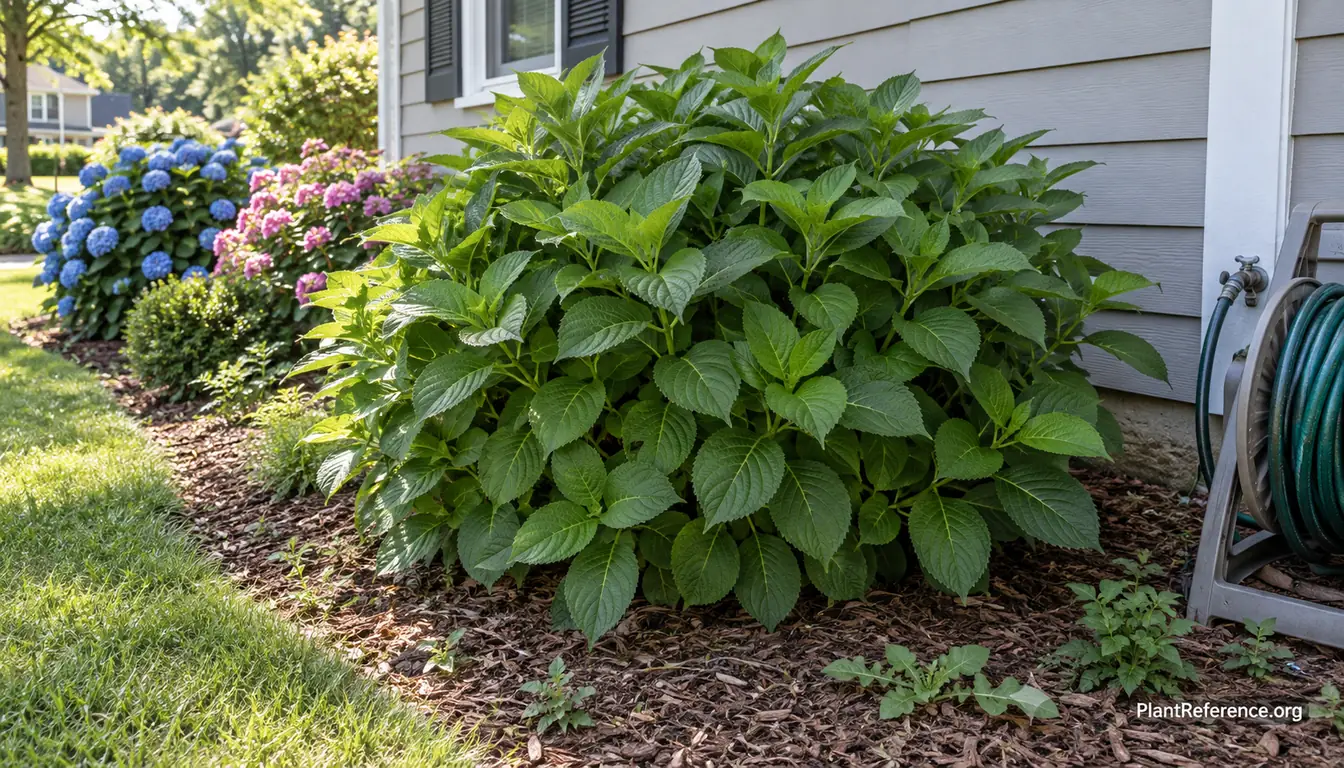
— Image © PlantReference.org 2026
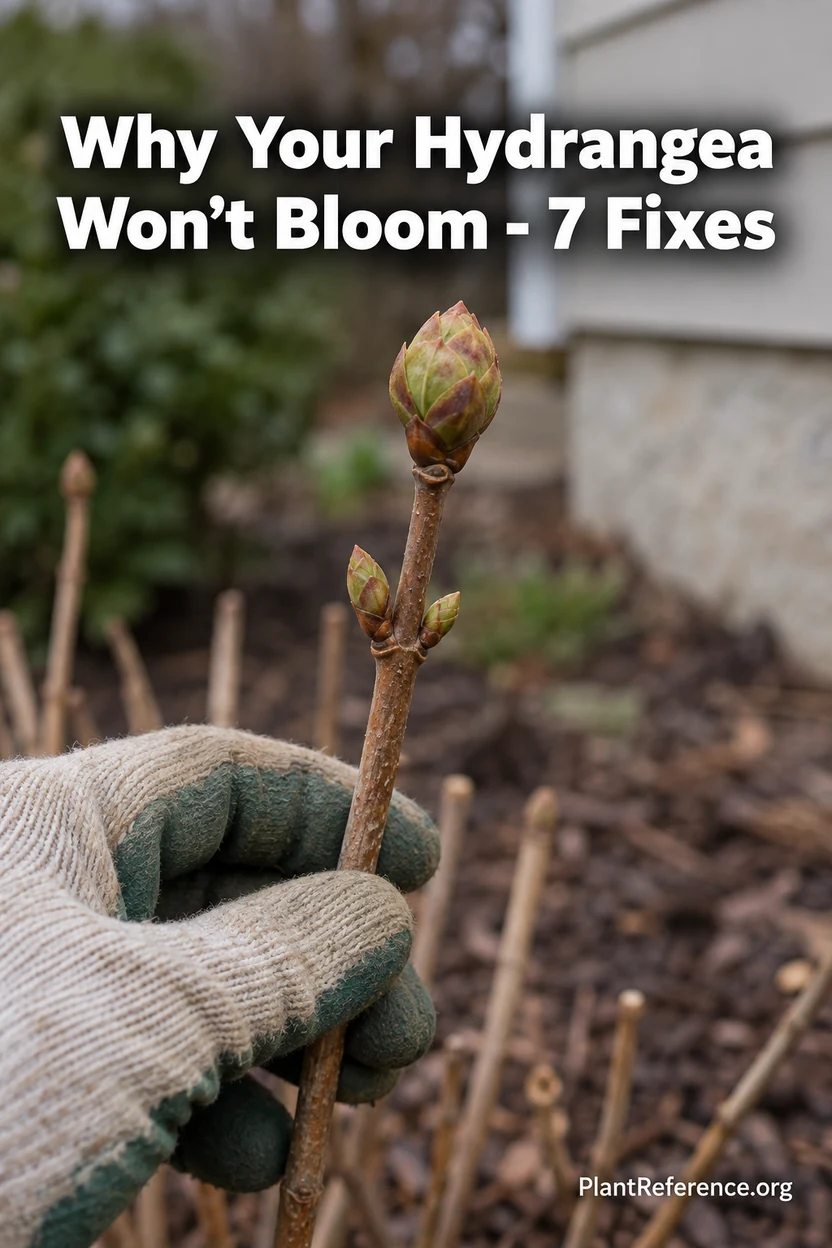
Your hydrangea is green, healthy, and big. It just won't flower. I get this question more than any other hydrangea problem, and nine times out of ten the answer is the same: the flower buds were gone before summer ever started. Here's how to find out what took them and how to get your hydrangea blooming again.
Step One: Figure Out Which Hydrangea You Have
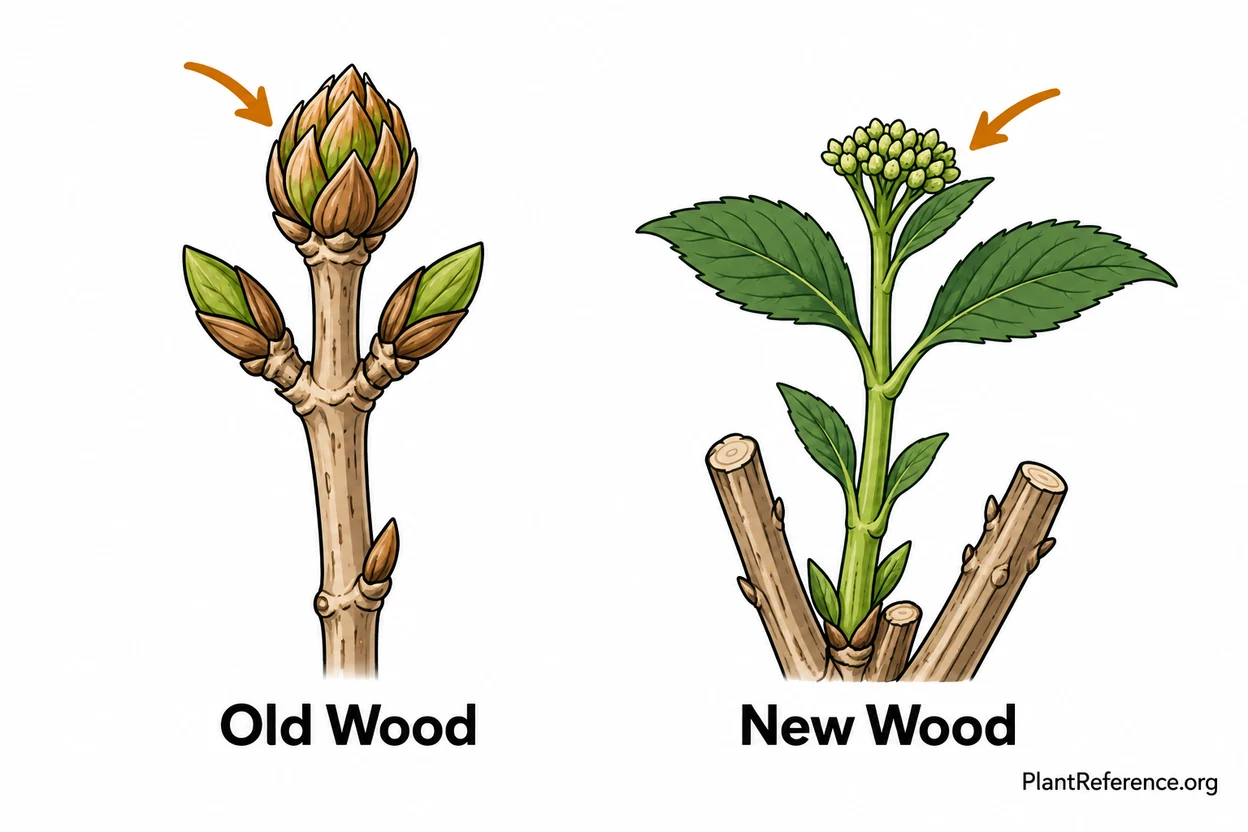
Stop guessing and identify the plant. Every diagnosis below depends on one question: does your hydrangea bloom on old wood or new wood?
Old-wood bloomers form next summer's flower buds on stems that grew this year. Those buds sit on the plant all fall and winter. New-wood bloomers don't make buds until spring growth starts, so they flower on stems that are only weeks old.
Species | Bloom Wood | How to Recognize It |
|---|---|---|
Bigleaf 🌿Hydrangea macrophylla (mak-roh-FIL-uh) | Old (rebloomers: old + new) | Thick glossy leaves, round mophead or flat lacecap flowers, blue or pink |
Oakleaf 🌿Hydrangea quercifolia (kwer-sih-FOH-lee-uh) | Old | Deeply lobed oak-shaped leaves, peeling cinnamon bark |
Mountain 🌿Hydrangea serrata (ser-AY-tuh) | Old | Smaller leaves, mostly lacecap flowers, compact habit |
Panicle 🌿Hydrangea paniculata (pan-ik-yoo-LAY-tuh) | New | Cone-shaped white flowers aging to pink |
Smooth Hydrangea arborescens (ar-bor-ESS-enz) | New | Thin matte leaves, big round white or pink heads |
If you have a panicle or smooth hydrangea that won't bloom, skip ahead to shade and nitrogen. Pruning, winter, and frost almost never stop those two. If you have a bigleaf, oakleaf, or mountain hydrangea, keep reading in order. Still unsure what you're looking at? The approach in How to Identify Any Plant: A Beginner's Guide to Leaves, Flowers, and Stems will get you there.
Cause 1: You Pruned Off the Flower Buds
This is the number one controllable reason a hydrangea is not blooming. Someone tidied the shrub in fall or cut it back in spring, and the flower buds went into the yard waste bin.
Bigleaf and oakleaf hydrangeas start setting next year's buds in late summer. Any pruning after about August removes them. A spring "cleanup" that shortens every stem does the same thing.
The fix: Put the pruners down. Prune old-wood hydrangeas only right after they finish blooming in summer, and only enough to shape them. In spring, cut out stems that are truly dead and nothing else. Scratch the bark with a fingernail; green underneath means alive, so leave it. The logic is the same one rose growers use with once-blooming climbers, covered in How to Prune Roses: When and How to Prune Every Type of Rose.
Rebloomers like 🌿Hydrangea macrophylla 'Endless Summer' and 🌿Hydrangea macrophylla 'BloomStruck' can flower on new wood too, but the old-wood flush is the big show. Don't prune those either, beyond dead wood and spent flowers.
Cause 2: Winter Killed the Buds
You didn't touch the plant, and it still didn't bloom. In zones 5 and 6, that's usually winter bud kill.
Bigleaf hydrangea flower buds die when temperatures hold below about 0°F (-18°C) during dormancy. The shrub survives because its roots are protected underground. It leafs out from the base, looks perfectly healthy, and produces no flowers because every bud sat above the snow line on dead stem tips.
The giveaway: in spring, new leaves come from low on the stems or from the ground, while the upper stems stay bare and brittle.
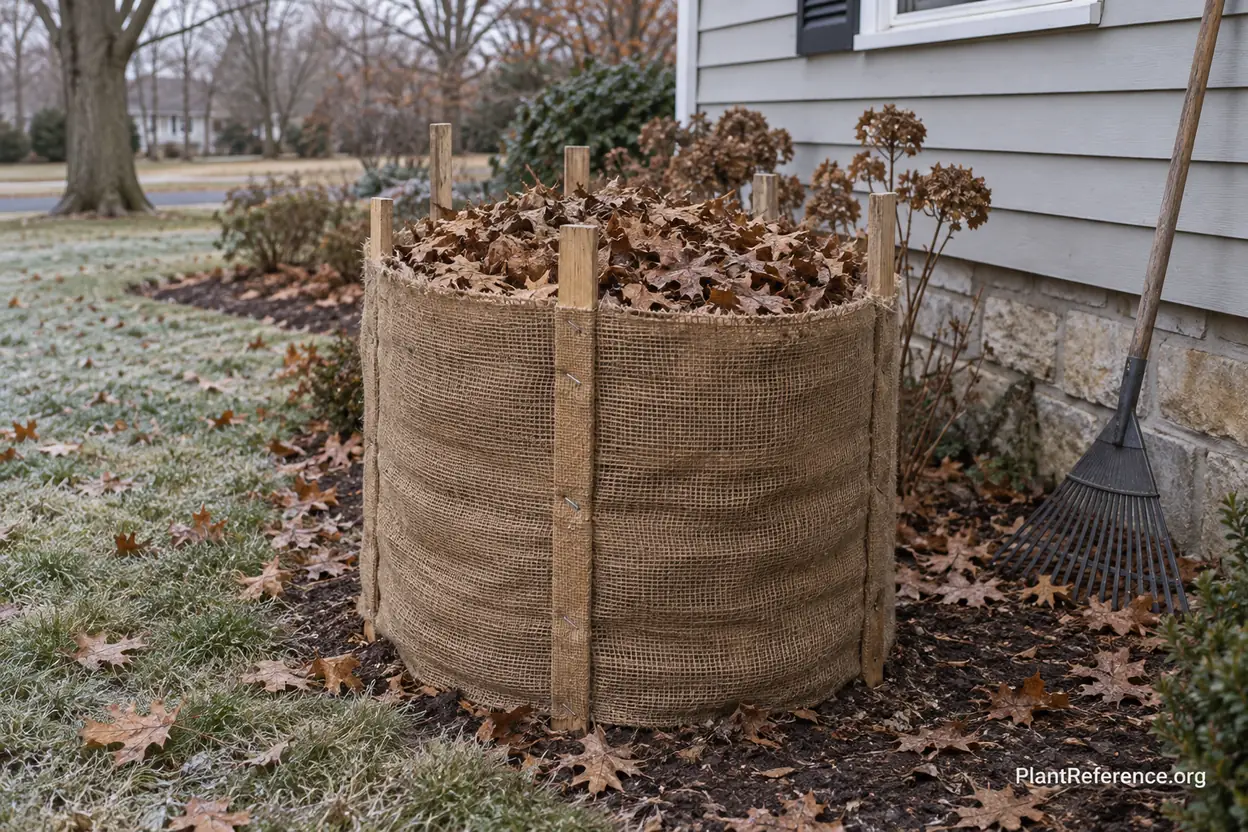
The fix: Protect the buds next winter. After the leaves drop in late fall, build a cage of chicken wire or burlap around the shrub, about 12 inches (30 cm) wider than the plant, and fill it with dry shredded leaves. Pull it off in spring once hard freezes are over. The overall timing mirrors the approach in How to Prepare Perennial Gardens for Winter by Species.
Cause 3: A Late Spring Frost Hit
Your buds made it through winter, started to swell and push green in April, and then a cold night hit. Swelling buds are far more tender than dormant ones. A single night around 28°F (-2°C) can blacken them.
Look for buds and new shoot tips that turned black or brown and mushy right after a cold snap. The plant will push new leaves from lower buds, but the flowers are gone for the season on non-reblooming types.
The fix: Watch the forecast from the time buds break until your last frost date. Throw a frost cloth or an old bedsheet over the shrub on any night forecast to drop below 32°F (0°C), and pull it off the next morning. Planting on the east side of a house helps too, because morning sun is gentler after a frost than a sudden hit of afternoon heat.
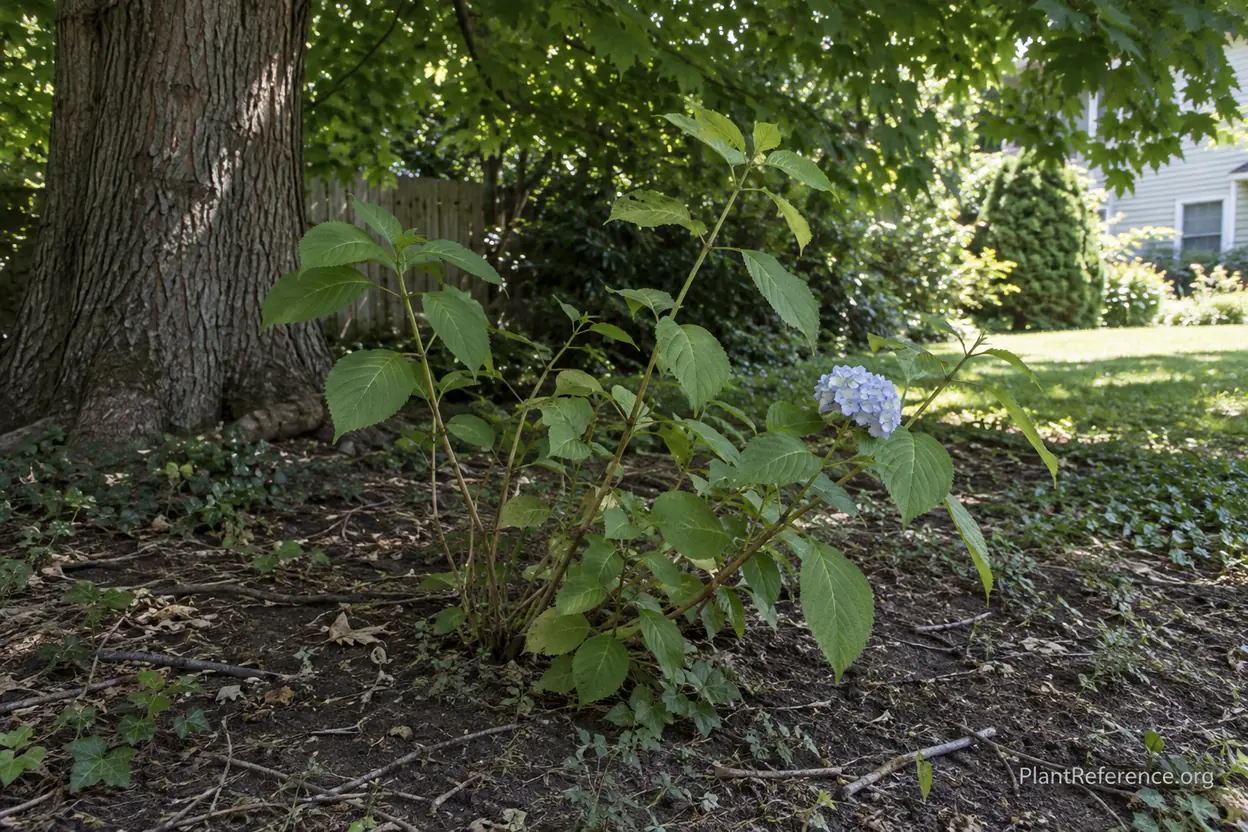
Cause 4: Too Much Shade
Hydrangeas are sold as shade plants, and that's only half true. Most need at least 3-4 hours of direct sun, ideally morning sun, to set a good crop of flowers. In deep shade you get big leaves and few or no blooms.
This one applies to every species, including panicle and smooth hydrangeas. Trees grow, so a hydrangea that bloomed well 10 years ago may now be sitting in full shade.
The fix: Thin overhead branches to let in more light, or move the shrub in early spring or fall to a spot with morning sun and afternoon shade. Panicle hydrangeas can take full sun in most of the country. If the spot is truly shady, plant something built for it; Best Perennials for Shade: 12 Species That Thrive has good options.
Cause 5: Too Much Nitrogen
If you feed your hydrangea with lawn fertilizer, or it sits next to a lawn that gets fed four times a year, you're pushing leaves at the expense of flowers. Nitrogen drives leafy growth. Too much of it and the shrub puts its energy into foliage.
Signs: dark green, oversized leaves, long soft stems, and few flowers even in good light.
The fix: Stop feeding for a season. Going forward, use a single light application of a balanced or low-nitrogen fertilizer in spring and nothing after midsummer. Keep lawn fertilizer spreaders away from shrub beds. A basic soil test tells you whether you're actually short on anything; the testing steps in Raised Bed Soil pH Problems: Testing, Adjusting, and Maintaining Balance work for any bed. Daylilies suffer the same problem, as explained in Why Your Daylilies Stopped Blooming (And How to Fix It).
Cause 6: Deer Ate the Buds
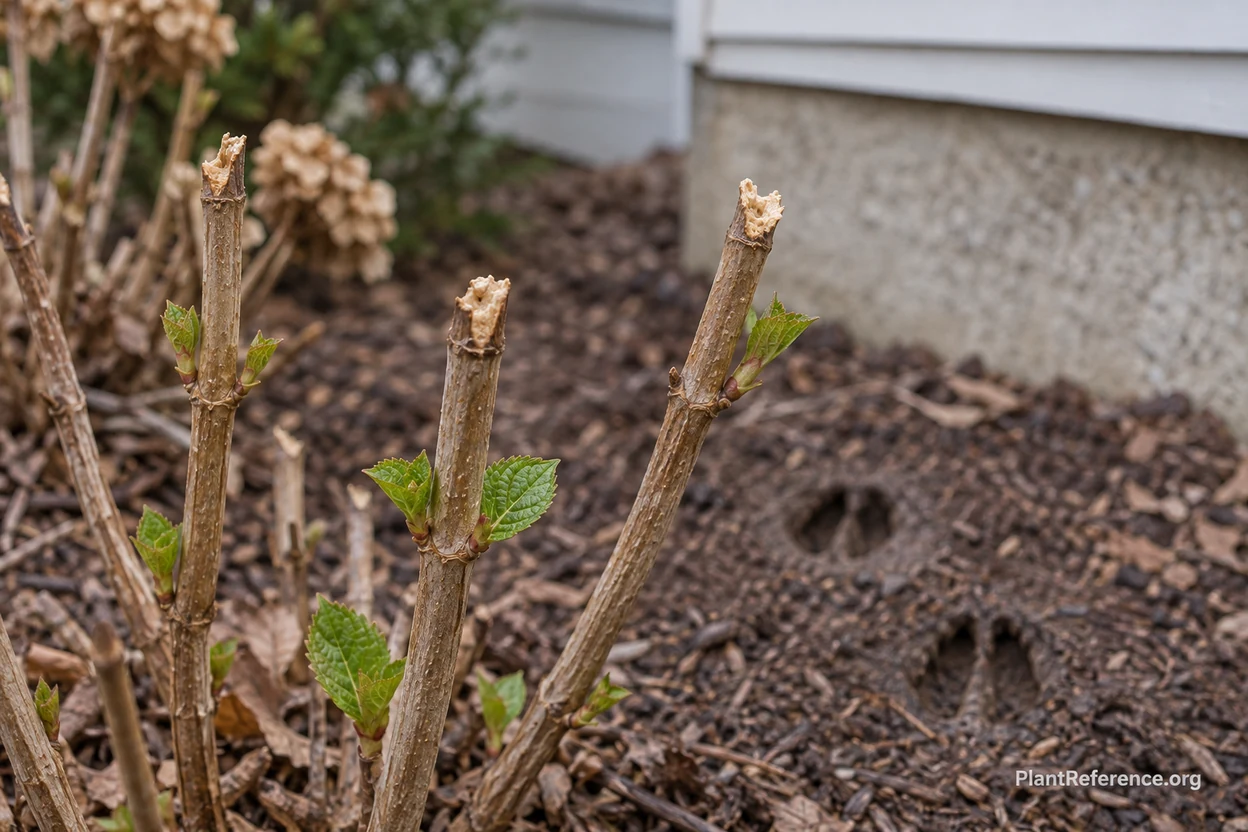
Deer love hydrangeas, and they love them most in late winter and early spring when little else is green. On an old-wood hydrangea, a deer nipping off the top 6 inches (15 cm) of each stem takes every flower bud with it.
Look for ragged, torn stem ends at about knee to chest height instead of clean cuts. Rabbits leave clean, angled cuts lower down.
The fix: Fence or cage the shrub from late fall through spring, or use a rotating program of repellent sprays. Deer pressure also shapes what you plant nearby; see Deer-Resistant Perennials: A Zone-by-Zone Planting Guide.
Cause 7: Wrong Hydrangea for Your Climate
Here's the one nobody at the garden center tells you. In zones 4 and 5, a traditional bigleaf hydrangea will lose its buds most winters no matter how well you care for it. Reblooming cultivars help, but in cold climates their new-wood flowers are usually a handful of smaller heads in late summer, not the June show you saw on the tag.
The fix: Plant the right shrub. 🌿Hydrangea paniculata 'Limelight', 🌿Hydrangea paniculata 'Quick Fire', and 🌿Hydrangea arborescens 'Incrediball' are hardy to zone 3 and bloom on new wood, so they flower every single year regardless of winter, frost, or pruning mistakes. If you want blue or pink color in a cold climate, Hydrangea serrata 'Tuff Stuff' has far hardier buds than most bigleaf cultivars.
How to Get Blooms Next Year
Work through this list and you'll have covered almost every cause:
Identify the species and confirm whether it blooms on old or new wood.
Stop all pruning on old-wood types except dead stems and spent flowers.
Protect bigleaf buds with a leaf-filled cage in zones 5 and 6.
Cover swelling buds on frosty spring nights.
Make sure the shrub gets at least 3-4 hours of morning sun.
Cut back on nitrogen and keep lawn fertilizer out of the bed.
Fence or repel deer from late fall through spring.
Be patient with newly planted shrubs, too. A hydrangea planted this year may spend its first season building roots and bloom lightly or not at all. The same slow start shows up in other long-lived plants, as covered in Why Your Peonies Won't Bloom: The 5 Most Common Causes.
Frequently Asked Questions
Reading about plants and recognising them are different skills. These three build the second.
- Daily PlantIdentify the day’s mystery plant from a close-up photograph.
- Keyed OutWork a dichotomous key, lead by lead, to name a hidden specimen.
- Name That PlantName a specimen from botanical clues dealt hardest first.
Free to play, no account needed
Tagged with
TJ stumbled into plant parenthood when a coworker gave him a neglected pothos. That single plant sparked an obsession that led him to quit his corporate marketing job and start a plant care service for busy professionals in Chicago. TJ maintains over 150 plants for residential clients and runs monthly plant swap meetups at local coffee shops. He's self-taught through YouTube, plant forums, and plenty of expensive mistakes (RIP to his variegated monstera). TJ specializes in troubleshooting common houseplant problems and is known for his blunt, no-BS advice: "Your plant isn't dying because Mercury is in retrograde—you're overwatering it." He's particularly skilled with finicky tropical plants like fiddle leaf figs and calatheas.