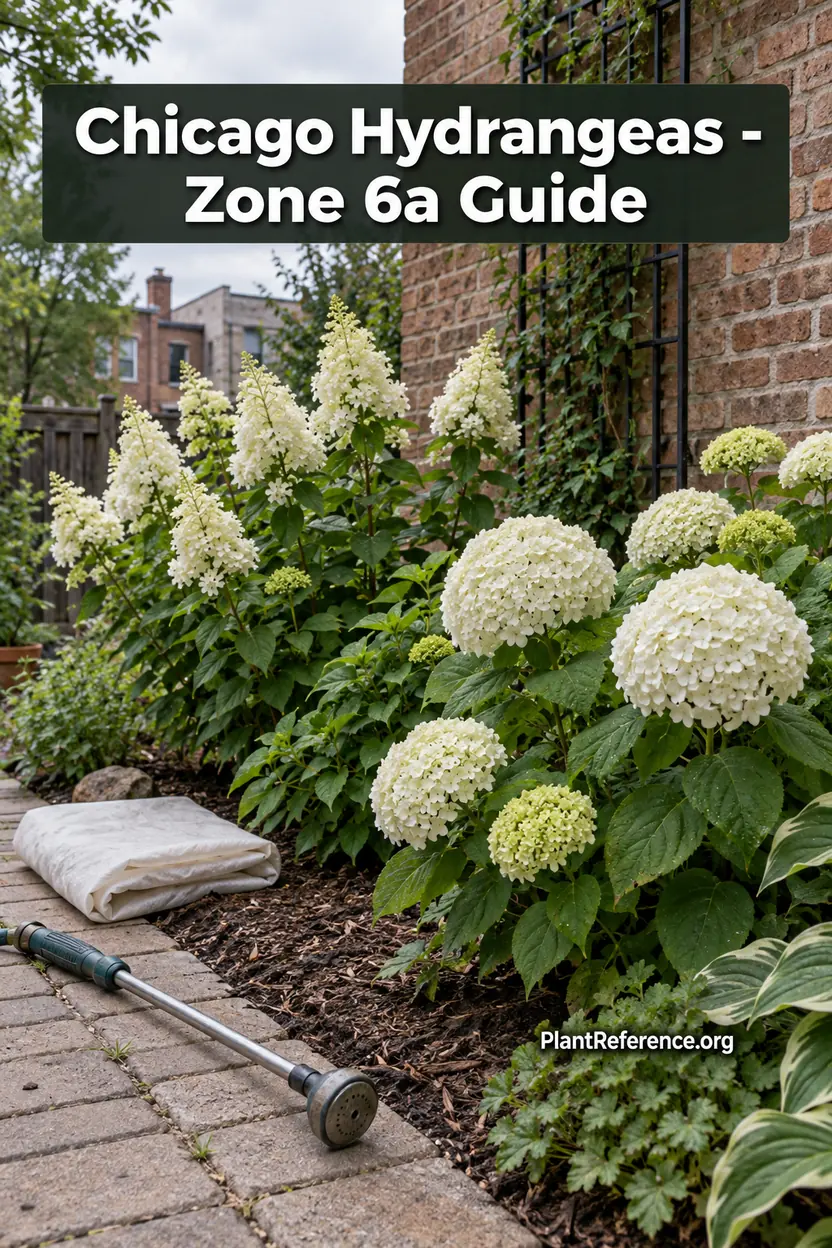
Growing Hydrangeas in Chicago: Zone 6a Guide
Pets & Toxicity
Recorded toxicity for plants linked in this guide. An unknown status is not a safety assessment.
Toxic to pets: Panicle hydrangea, Quick Fire Panicle Hydrangea, Limelight PeeGee hydrangea and 3 moreDetailsHide
Hydrangea paniculata — Toxicity Warning
Toxic to pets and humansView Hydrangea paniculata plant profileHydrangea paniculata 'Quick Fire' — Toxicity Warning
Toxic to pets and humansView Hydrangea paniculata 'Quick Fire' plant profileHydrangea paniculata 'Limelight' — Toxicity Warning
Toxic to petsView Hydrangea paniculata 'Limelight' plant profileHydrangea arborescens 'Incrediball' — Toxicity Warning
Toxic to petsView Hydrangea arborescens 'Incrediball' plant profileHydrangea arborescens 'Annabelle' — Toxicity Warning
Toxic to pets and humansView Hydrangea arborescens 'Annabelle' plant profileHydrangea macrophylla 'Endless Summer' — Toxicity Warning
Toxic to pets and humansView Hydrangea macrophylla 'Endless Summer' plant profile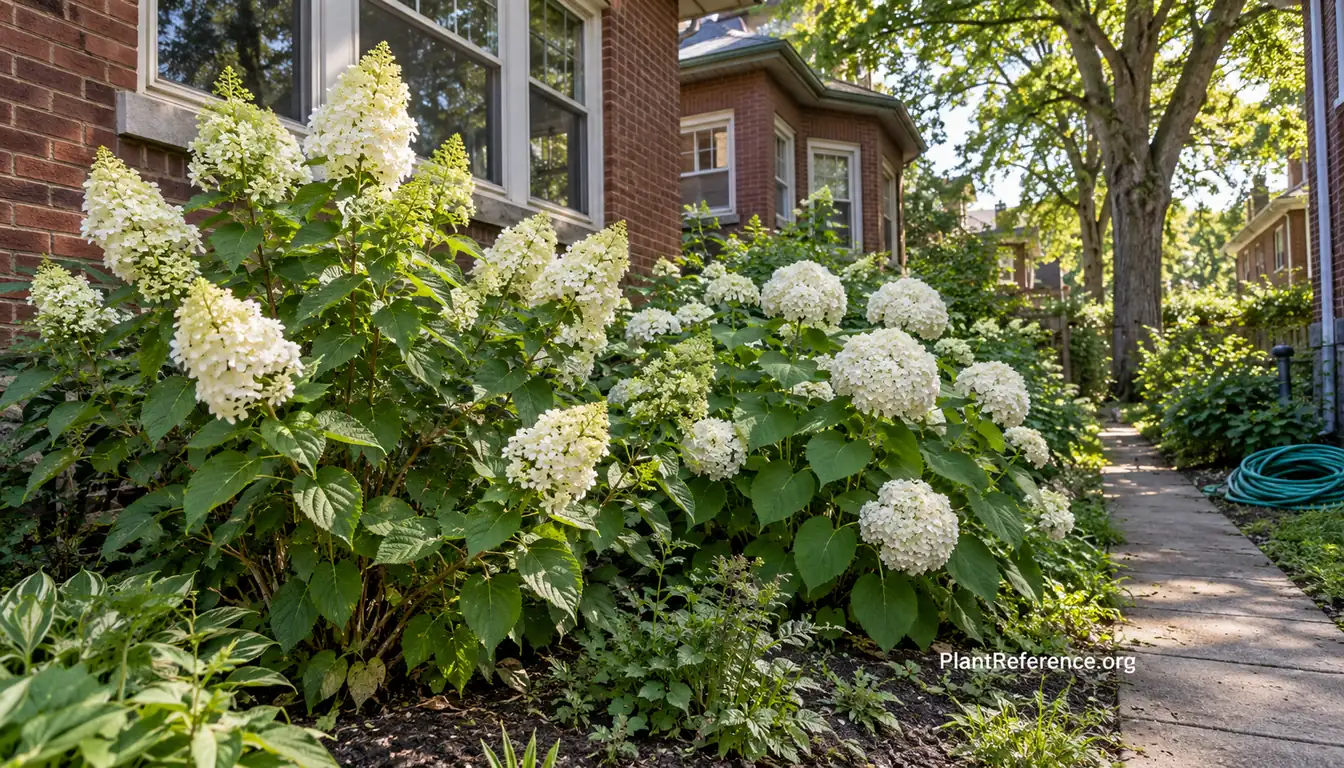
— Image © PlantReference.org 2026
Growing hydrangeas in Chicago is a long game, and the first decision matters most: choose shrubs whose flower buds match a Zone 6a winter. Panicle and smooth hydrangeas form flowers on new spring growth, so a hard winter or late freeze does not erase the entire display. Bigleaf and oakleaf types can work in protected corners, but their old-wood buds need more patience and protection.
Illinois gardeners can use May 10 and October 15 as average frost anchors, giving roughly 158 frost-free days. Those dates help time planting and frost protection, but they are not promises. Lake Michigan, dense neighborhoods, open western suburbs, and low pockets create different microclimates within the same city.
Best Hydrangea Varieties for Chicago
The panicle hydrangea 🌿Hydrangea paniculata (hy-DRAN-jee-uh pan-ik-yoo-LAY-tuh) is the most dependable group for sunny Chicago gardens. It is hardy through Zone 3, flowers on new wood, and handles urban heat better than bigleaf types. The smooth hydrangea Hydrangea arborescens (hy-DRAN-jee-uh ar-bor-ESS-enz) is also cold-hardy and performs well with morning sun or bright shade.
Chicago sits near the point where gardeners can try a broader palette without pretending every choice is equally reliable. Hydrangea Types Explained: Pruning, Color & Care Guide explains the bloom-wood difference that separates consistent flowers from a shrub that produces leaves after every winter.
Variety | Mature size | Bloom reliability | Best Chicago use |
|---|---|---|---|
6–8 ft (1.8–2.4 m) | Excellent | Earliest panicle display | |
6–8 ft (1.8–2.4 m) | Excellent | Hedge or large specimen | |
Hydrangea paniculata 'Little Lime' | 3–5 ft (0.9–1.5 m) | Excellent | Foundation or mixed border |
Hydrangea paniculata 'Bobo' | 2–3 ft (60–90 cm) | Excellent | Low border or large pot |
4–5 ft (1.2–1.5 m) | Excellent | Strong-stem round flowers | |
3–5 ft (0.9–1.5 m) | Excellent | Classic shade-edge planting | |
Hydrangea quercifolia 'Ruby Slippers' | 3–4 ft (0.9–1.2 m) | Good in shelter | Fall foliage and bark |
Hydrangea serrata 'Tuff Stuff' | 2–3 ft (60–90 cm) | Moderate | Protected lacecap accent |
3–5 ft (0.9–1.5 m) | Variable | Sheltered experiment |
Reliable panicle hydrangeas
🌿Hydrangea paniculata 'Quick Fire' starts earlier than many panicle selections, useful when spring runs late and fall arrives abruptly. White flowers age through pink-red, though temperature and bloom maturity affect the final color. At 6–8 feet (1.8–2.4 m), it needs an honest amount of room.
🌿Hydrangea paniculata 'Limelight' is the steady hedge and specimen choice. Its lime-white panicles age cream and often blush pink, and the woody framework holds a strong landscape presence. Do not plant it under a low window and expect pruning to keep it at 3 feet (90 cm). Panicle Hydrangea Guide: Limelight, Little Lime & More compares full-size and compact options.
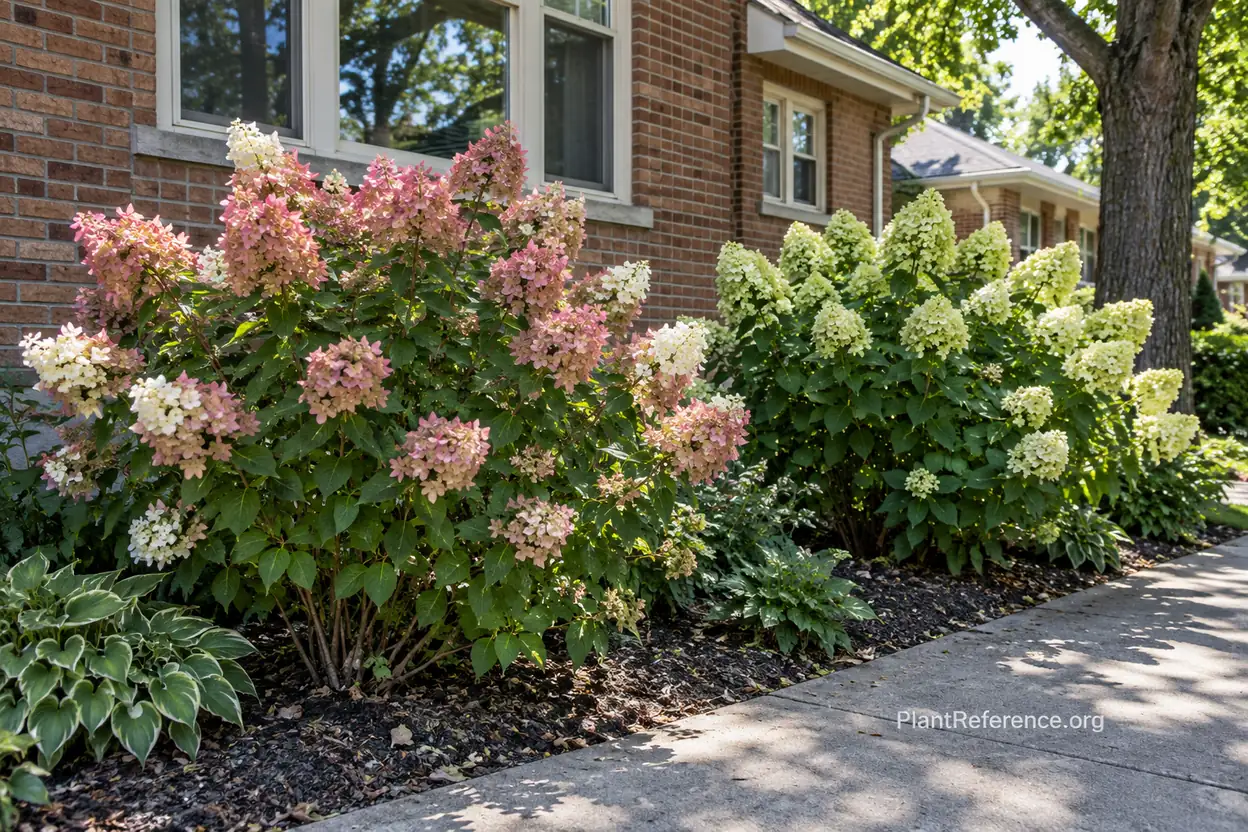
Hydrangea paniculata 'Little Lime' fits a medium foundation bed at 3–5 feet (0.9–1.5 m), while Hydrangea paniculata 'Bobo' stays around 2–3 feet (60–90 cm). Both retain the new-wood advantage. Containers expose roots to colder air, so an in-ground Hydrangea paniculata 'Bobo' is easier to overwinter than the same shrub in a decorative pot.
Smooth hydrangeas for bright shade
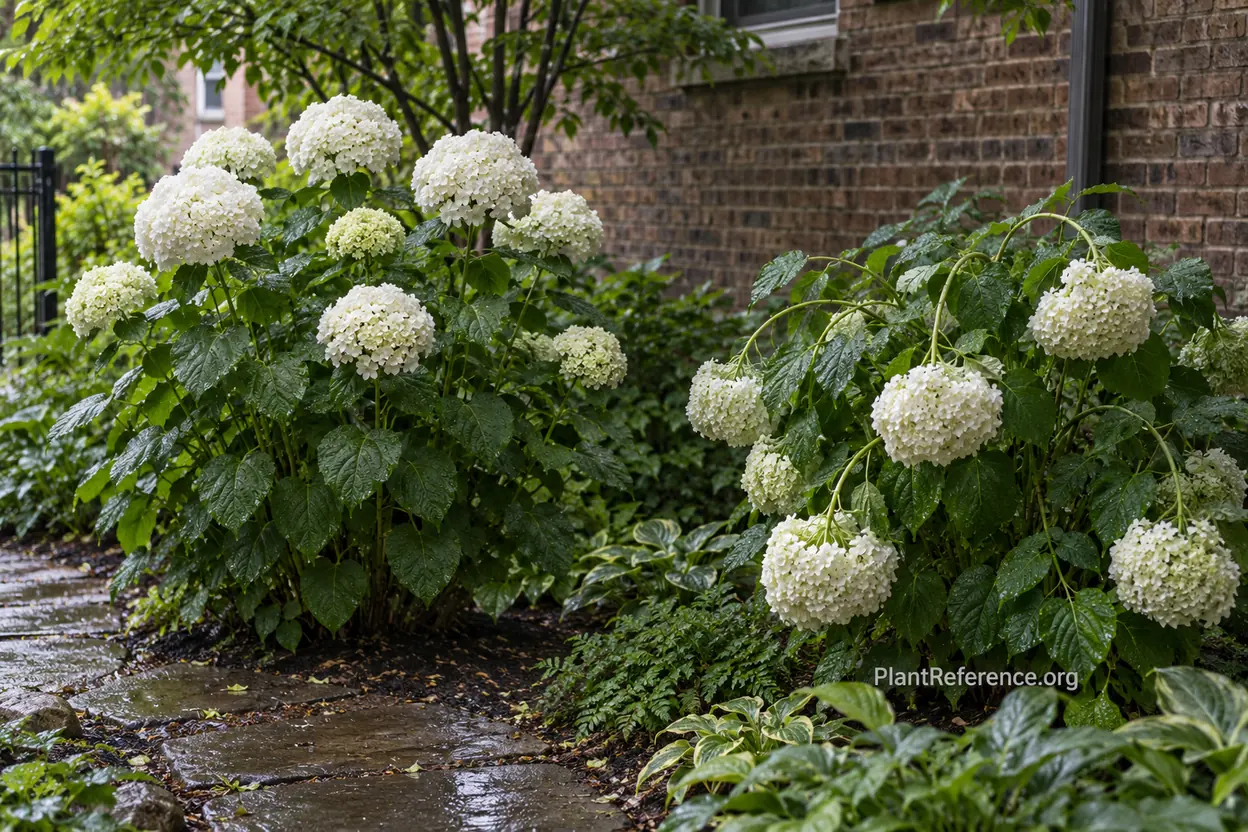
🌿Hydrangea arborescens 'Incrediball' produces broad white heads on stronger stems than older selections. It handles the east side of a house or filtered afternoon light well. 🌿Hydrangea arborescens 'Annabelle' offers the classic Chicago-area snowball look but often bends after heavy rain, so install a low support before its spring growth fills out.
Protected-site choices
Hydrangea quercifolia 'Ruby Slippers' adds lobed foliage, deep fall color, peeling bark, and compact size. Oakleaf hydrangeas bloom on old wood, so place this one away from exposed wind and avoid fall or spring pruning. It also dislikes waterlogged clay.
Hydrangea serrata 'Tuff Stuff' provides lacecap flowers on a naturally compact mountain hydrangea. Its buds are hardier than many bigleaf selections, and it can flower on old and new growth, but a protected east-facing site still improves the odds.
🌿Hydrangea macrophylla 'Endless Summer' is the familiar reblooming experiment. It can survive Zone 6a and flower on both old and new wood, yet a warm March followed by an April freeze may kill swelling buds. New-wood flowers can arrive later and in smaller numbers. Soil chemistry can shift suitable flowers from pink toward blue, as explained in How to Change Hydrangea Color: Blue, Pink & Purple, but chemistry cannot replace dead buds.
Specific Planting Dates for Chicago
Plant container-grown hydrangeas from April 20 through May 31, once soil is workable and drains after rain. The May 10 last-frost date is an average, not permission to ignore the forecast. Greenhouse-grown shrubs with tender leaves need 5–7 days of hardening and overnight protection when temperatures approach freezing.
The preferred fall window is August 25 through September 15. That leaves about a month before the October 15 first-frost anchor for new roots to establish in warm soil. Fall installation works best with hardy panicle or smooth hydrangeas; save marginal bigleaf planting for spring.
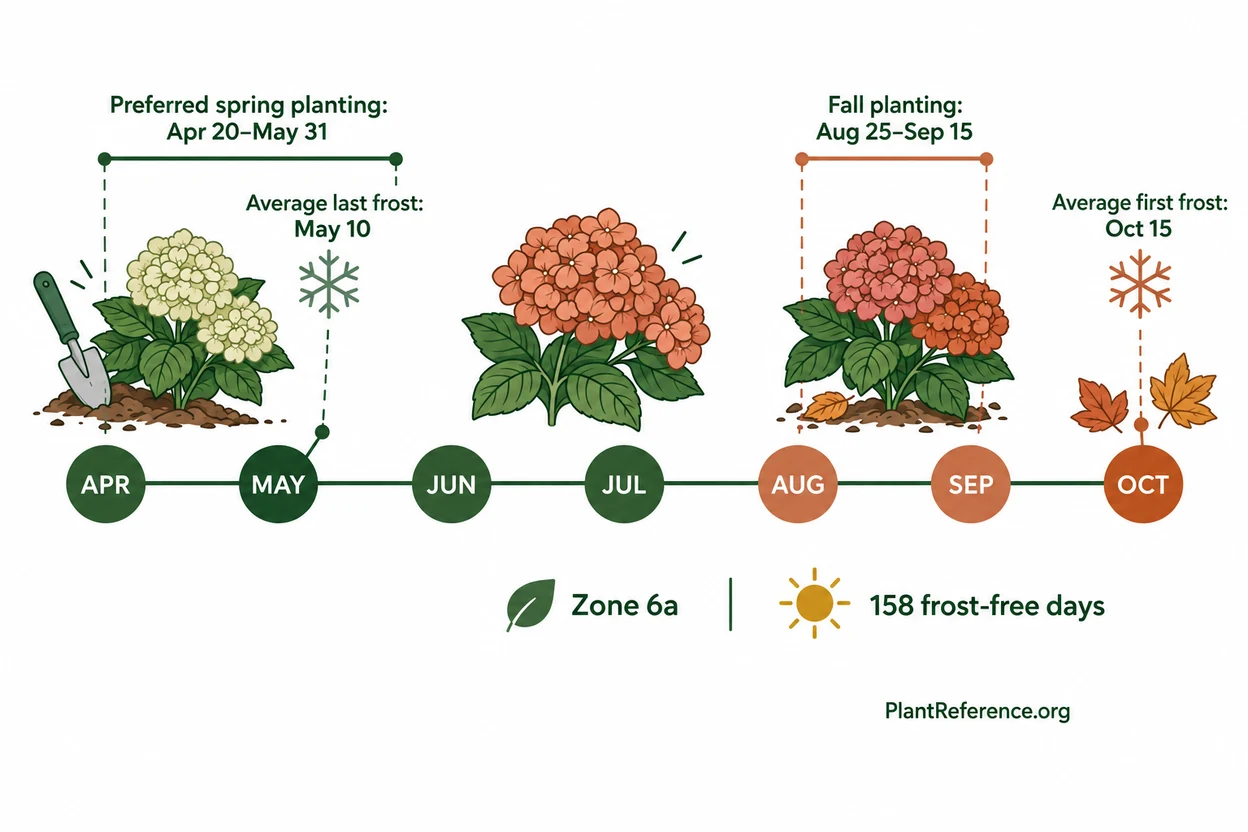
Use the dates this way:
April 20–May 31: main planting window after soil becomes workable.
May 10: average last-frost anchor for protecting tender nursery foliage.
June through August: monitor moisture during heat and lakefront wind changes.
August 25–September 15: early fall window for hardy shrubs.
October 15: average first-frost anchor; water during dry weather until soil freezes.
Do not install a shrub in saturated clay simply because the calendar says May. Waiting a week for soil to drain is easier than correcting a buried crown and suffocating roots. Likewise, a well-watered September planting may establish better than a May shrub neglected during a hot June.
Complete Growing Guide for Chicago
Read the microclimate first
Lake Michigan moderates temperatures near the shore, while inland neighborhoods may warm earlier in spring and cool more sharply at night. Brick walls store heat, open alleys funnel wind, and low yards collect cold air. Watch your own site through one season instead of assuming every Zone 6a corner behaves alike.
Panicle hydrangeas flower best with six or more hours of sun. Give afternoon shade to smooth, mountain, and bigleaf types, especially beside reflective paving or south-facing masonry. Deep shade produces soft growth and fewer flowers, while harsh western sun increases leaf scorch and water demand.
Keep plants several feet from salted sidewalks and plowed snow piles. Salt-laden meltwater burns shallow roots and worsens clay structure. A broad bed with a slight surface grade away from pavement performs better than a narrow strip trapped between concrete.
Plant high enough in clay soil
Much of Chicago has dense or disturbed urban soil that drains unevenly. Dig a hole two to three times wider than the root ball but no deeper. Set the root flare level with or 1 inch (2.5 cm) above the surrounding grade, then backfill mostly with native soil. A heavily amended pocket can collect water like a bucket.
If water remains in a test hole for a full day, correct the grade or choose another location. Do not solve standing water by burying the root ball under a mound of loose soil. Hydrangeas like steady moisture, not oxygen-starved roots.
Apply 2–3 inches (5–8 cm) of shredded hardwood mulch over the root zone and keep it 3–4 inches (8–10 cm) from stems. That broad layer moderates urban heat, slows evaporation, and prevents mower damage without trapping moisture at the crown.
Water consistently without keeping soil wet
Provide roughly 1–2 inches (2.5–5 cm) of total water per week during active growth, adjusting for rain, sun, wind, and soil. New plants need closer attention for two seasons. Water slowly across the root zone in the morning, then check 3–4 inches (8–10 cm) beneath the mulch before repeating.
A soaker hose keeps leaves drier than an overhead sprinkler and works well along a hedge. Test the far end for even output and move the line when the root zone expands. Timers are convenient, but they cannot tell when a thunderstorm already saturated the bed.
Afternoon droop during a hot spell may disappear by morning and does not always call for more water. Persistent morning wilt, yellowing, and wet soil point toward drainage trouble. Hydrangea Leaves Turning Brown: Causes and Solutions separates drought, scorch, saturation, and leaf-spot symptoms.
Prune after identifying the species
Prune panicle and smooth hydrangeas in late winter or early spring. They flower on new growth, so removing dead, weak, crossing, or badly placed stems does not sacrifice the coming season. Leave a sturdy framework instead of cutting every stem to the ground; old branches support new shoots and spread the flower load.
Do not prune Hydrangea quercifolia 'Ruby Slippers' in spring or fall except to remove confirmed dead wood. Do the same with Hydrangea serrata 'Tuff Stuff' and 🌿Hydrangea macrophylla 'Endless Summer' until live buds show what survived. How to Prune Hydrangeas: Old Wood vs New Wood Guide is the safe decision tree when labels are missing.
Clean bypass pruners between diseased shrubs and stop forcing the tool when a stem exceeds its capacity. A clean cut heals more predictably than crushed wood. Several light annual cuts usually beat one drastic correction on a shrub planted too close to a path.
Feed modestly and protect late growth
Use a soil test before trying to change pH or adding fertilizer. A balanced slow-release feeding in early spring may support weak growth, but excess nitrogen produces leaves and long stems rather than flowers. Stop fertilizing by early July so new tissue can harden before winter.
Bigleaf color depends on available aluminum and pH, not coffee grounds or nails. Even a perfectly adjusted soil cannot overcome winter-killed flower buds. Start with reliable bloom, then consider color management.
Handle late frost and winter wind
Chicago often warms early enough to swell old-wood buds, then freezes again. Keep breathable frost cloth ready through mid-May for Hydrangea serrata 'Tuff Stuff', 🌿Hydrangea macrophylla 'Endless Summer', and newly leafed nursery plants. Support the cloth on stakes so it does not press directly on tender tips, anchor the edges, and remove it after temperatures recover.
After the soil cools in late fall, refresh mulch to 3–4 inches (8–10 cm) over the root zone without covering stems. A burlap screen can reduce wind exposure around a marginal shrub. Do not wrap plastic tightly around branches; trapped moisture and sunny winter days create a poor microclimate.
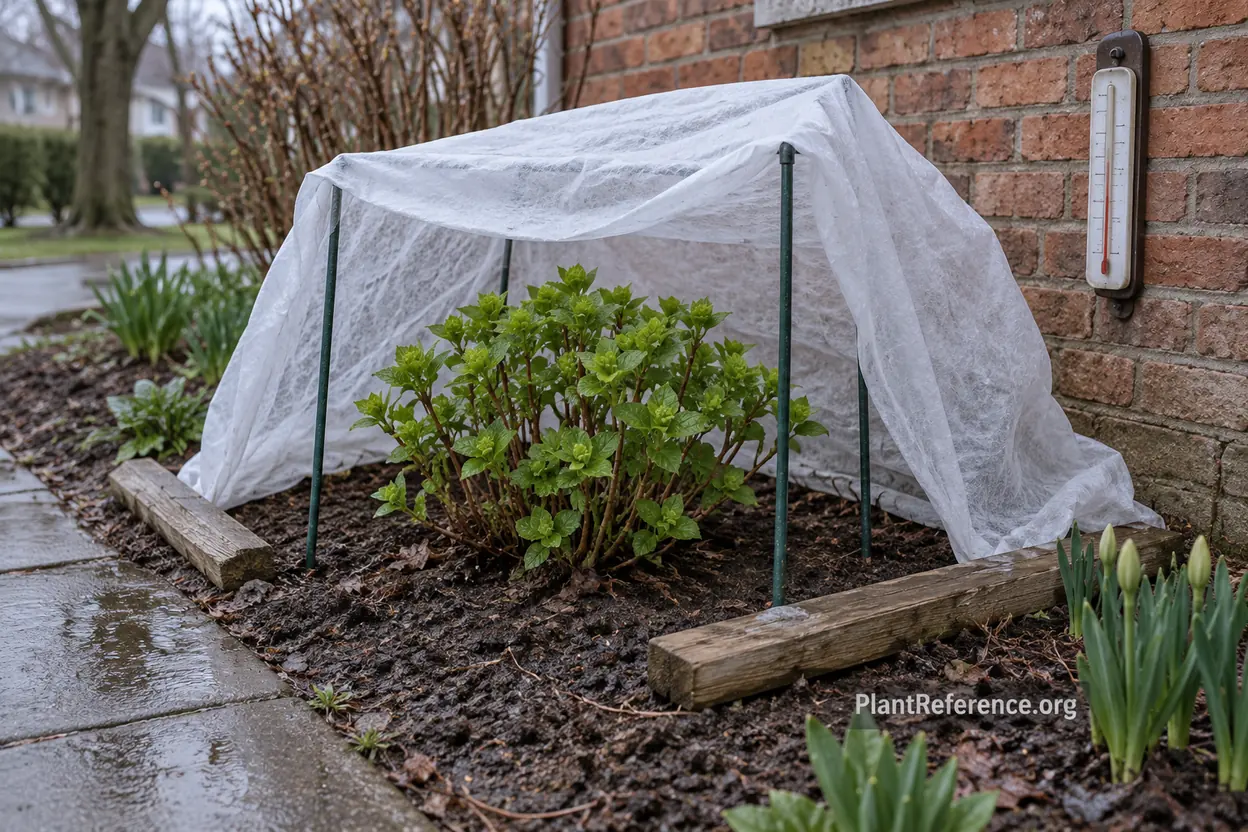
Containers need extra protection because exposed roots freeze faster than in-ground roots. Move pots into an unheated garage or sheltered area after dormancy, or insulate and group them against a protected wall. Hydrangeas in Pots: Container Care & Winter Protection gives zone-based options.
Troubleshooting Chicago Hydrangea Problems
A leafy shrub that never blooms
Identify the species before changing fertilizer. A bigleaf or oakleaf hydrangea may lose flower buds to winter or a late spring freeze while its roots remain healthy. A panicle or smooth hydrangea is more likely to be too young, too shaded, overfed, or repeatedly browsed.
Do not prune first and investigate later. Hydrangea Not Blooming? 7 Causes and the Old Wood Fix walks through the most common causes without treating every hydrangea alike. Why Your Hydrangea Won't Bloom (And the One Mistake Almost Everyone Makes) provides another useful check when pruning history is unclear.
Blackened tips after an April freeze
Wait several days before cutting. Green tissue and swelling buds lower on the stem may still be alive. New-wood panicle and smooth types usually replace damaged shoots, though bloom may start later. Old-wood types can lose the first flush even when the shrub recovers.
Brown edges beside pavement
Reflected heat, dry soil, winter salt, and compacted roots can all produce brown margins. Pull mulch aside and check soil moisture below the surface. If the bed is wet, do not add irrigation. Redirect salty snow storage next winter and flush the root zone only after drainage is confirmed.
Purple-brown leaf spots in humid weather
Chicago’s summer humidity supports Cercospora leaf spot, especially where fallen leaves remain and overhead watering keeps foliage wet. Remove heavily spotted debris, water at soil level, and thin only enough to improve airflow. Avoid stripping a stressed shrub of most of its leaves.
Flopping flowers after storms
🌿Hydrangea arborescens 'Annabelle' often bends when rain loads its large flower heads. Install a discreet support ring early, or replace it over time with 🌿Hydrangea arborescens 'Incrediball' if upright form matters. Avoid hard pruning and heavy nitrogen, both of which encourage long, soft stems.
Persistent wilt in wet clay
Wilt does not always mean thirst. If leaves remain limp in the morning while soil is wet, inspect the crown, drainage, and planting depth. Redirect downspouts and stop automatic irrigation until the bed drains. Root decline becomes harder to reverse once dark, soft tissue spreads into the crown.
Harvesting Flowers and Winter Storage
Cut mature hydrangea flowers after morning dew dries. Choose stems with firm petals beginning to feel papery; very fresh flowers collapse during drying. Place cut stems in water immediately and use clean pruners rather than pulling branches.
🌿Hydrangea paniculata 'Limelight' and 🌿Hydrangea arborescens 'Annabelle' dry particularly well. For water drying, place stems in 1–2 inches (2.5–5 cm) of water and let it evaporate naturally. For air drying, strip lower leaves and hang small bundles in a dark, ventilated room.
Leave some panicle heads for winter structure if branches are sturdy and the bed does not border a busy walkway. Remove weak or broken flowers after heavy snow, working only when stems are flexible. Mark low shrubs before deep snow and keep shovel piles away from crowns. How to Prepare Perennial Gardens for Winter by Species helps coordinate the hydrangea bed with the rest of the garden.
Frequently Asked Questions
Reading about plants and recognising them are different skills. These three build the second.
- Daily PlantIdentify the day’s mystery plant from a close-up photograph.
- Keyed OutWork a dichotomous key, lead by lead, to name a hidden specimen.
- Name That PlantName a specimen from botanical clues dealt hardest first.
Free to play, no account needed
Tagged with
Pat has been gardening in Milwaukee for over thirty years, through every kind of Wisconsin weather. She worked as a school librarian and started gardening seriously when her kids were small—she wanted them to know where food came from. Now retired, she's a certified Master Gardener and runs the plant sale at her local garden club every spring. She specializes in cold-hardy perennials, native wildflower meadows, and the art of getting a vegetable garden producing in Wisconsin's short but intense growing season. Pat is practical and patient—she's seen enough Wisconsin winters to know that gardening here is a long game, and she writes with the steady confidence of someone who's been doing this a long time.