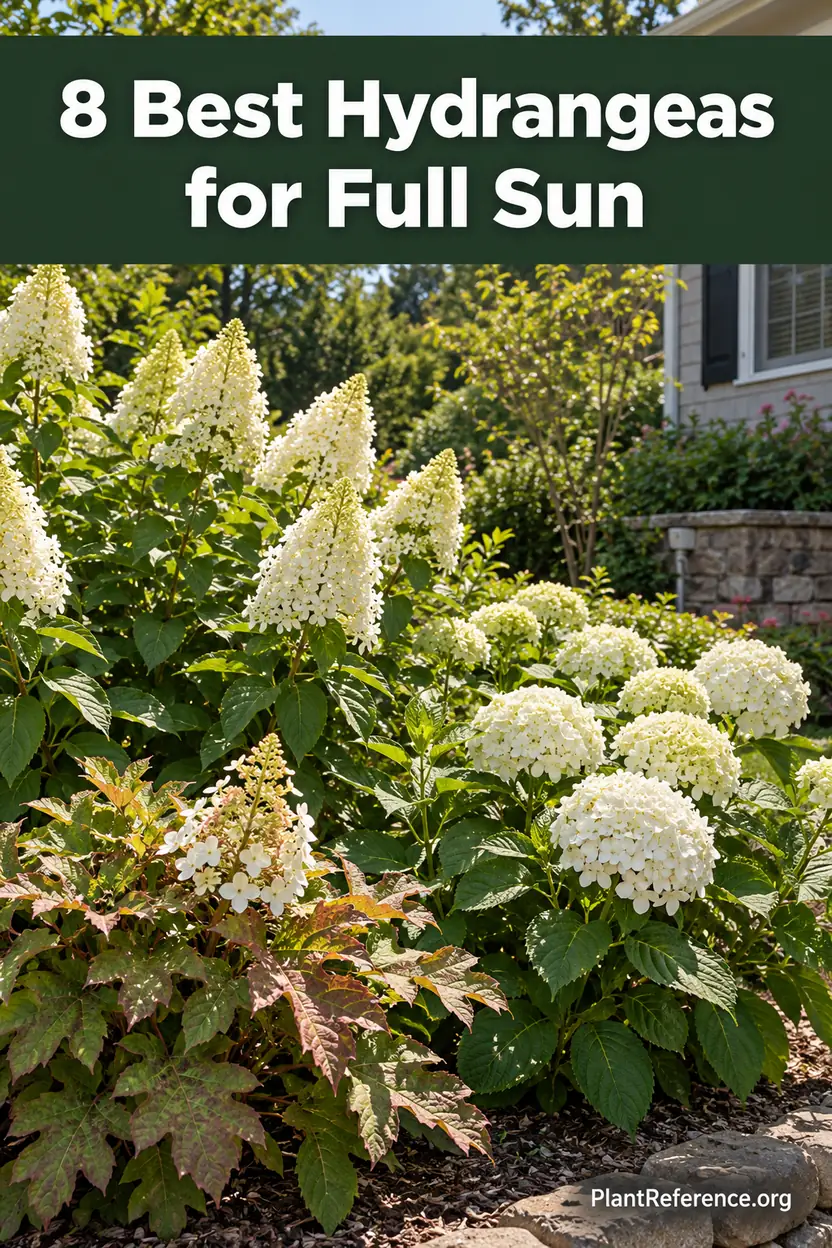
Best Hydrangeas for Full Sun: 8 Reliable Varieties
Pets & Toxicity
Recorded toxicity for plants linked in this guide. An unknown status is not a safety assessment.
Toxic to pets: Limelight PeeGee hydrangea, Quick Fire Panicle Hydrangea, Fire Light Hydrangea and 5 moreDetailsHide
Hydrangea paniculata 'Limelight' — Toxicity Warning
Toxic to petsView Hydrangea paniculata 'Limelight' plant profileHydrangea paniculata 'Quick Fire' — Toxicity Warning
Toxic to pets and humansView Hydrangea paniculata 'Quick Fire' plant profileHydrangea paniculata 'Fire Light' — Toxicity Warning
Toxic to pets and humansView Hydrangea paniculata 'Fire Light' plant profileHydrangea paniculata — Toxicity Warning
Toxic to pets and humansView Hydrangea paniculata plant profileHydrangea quercifolia — Toxicity Warning
Toxic to pets and humansView Hydrangea quercifolia plant profileHydrangea arborescens 'Incrediball' — Toxicity Warning
Toxic to petsView Hydrangea arborescens 'Incrediball' plant profileHydrangea arborescens 'Annabelle' — Toxicity Warning
Toxic to pets and humansView Hydrangea arborescens 'Annabelle' plant profileHydrangea macrophylla — Toxicity Warning
Toxic to pets and humansView Hydrangea macrophylla plant profile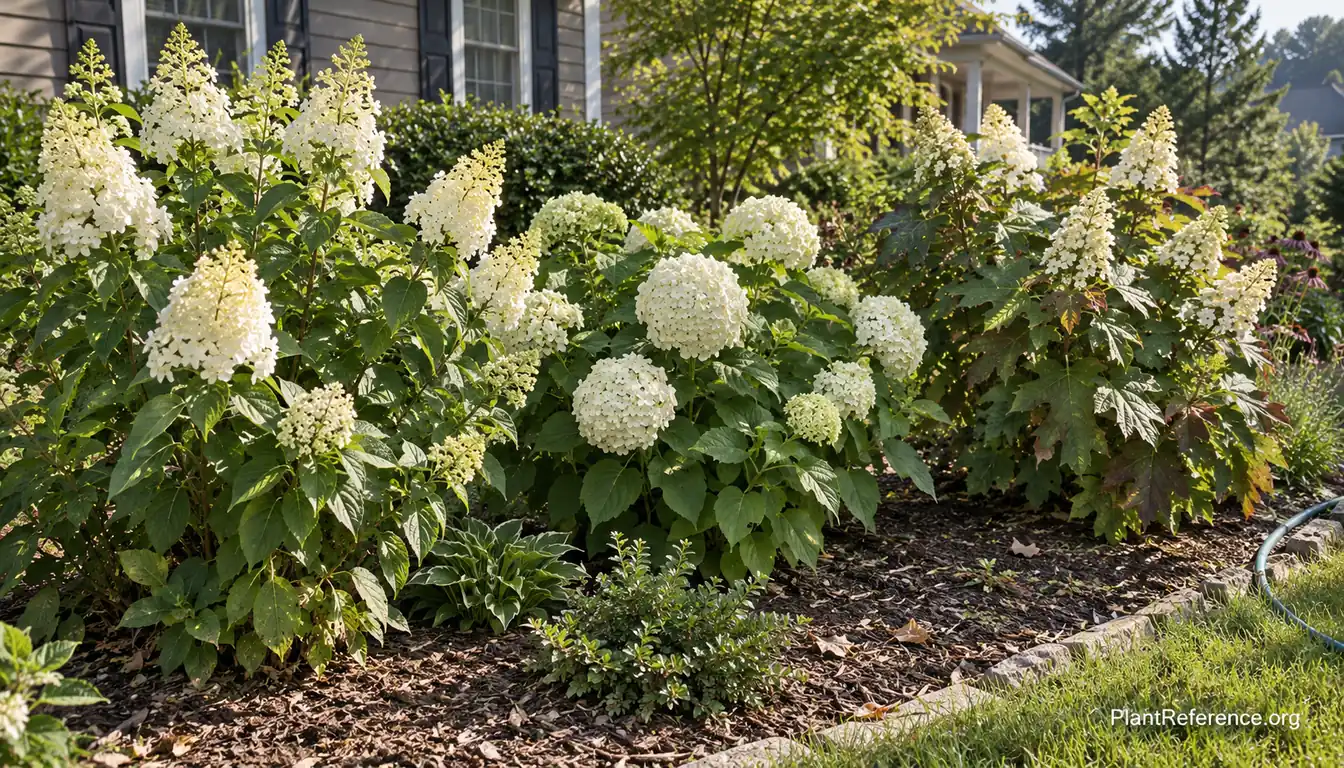
— Image © PlantReference.org 2026
The best hydrangeas for full sun are usually panicle hydrangeas, not bigleaf mopheads. 🌿Hydrangea paniculata 'Limelight', 🌿Hydrangea paniculata 'Quick Fire', and 🌿Hydrangea paniculata 'Fire Light' combine new-wood flowering with broad cold hardiness and better sun tolerance. Even these need drainage and reliable moisture; “sun tolerant” never means “happy in baked, dry soil.”
What Full Sun Means for Hydrangeas
Full sun generally means six or more hours of direct light, but those hours are not equal everywhere. Six hours in a cool coastal garden can be gentler than four hours of late-afternoon exposure in Dallas or Phoenix. Start by mapping when sunlight reaches the bed, not merely counting brightness.
Panicle hydrangea 🌿Hydrangea paniculata (hy-DRAN-jee-uh pan-ik-yoo-LAY-tuh) handles the broadest sunny range. Smooth hydrangea Hydrangea arborescens can flower well with sun and dependable water. Oakleaf hydrangea 🌿Hydrangea quercifolia tolerates sun in suitable zones but rejects chronically wet roots. Hydrangea Types Explained: Pruning, Color & Care Guide compares the species.
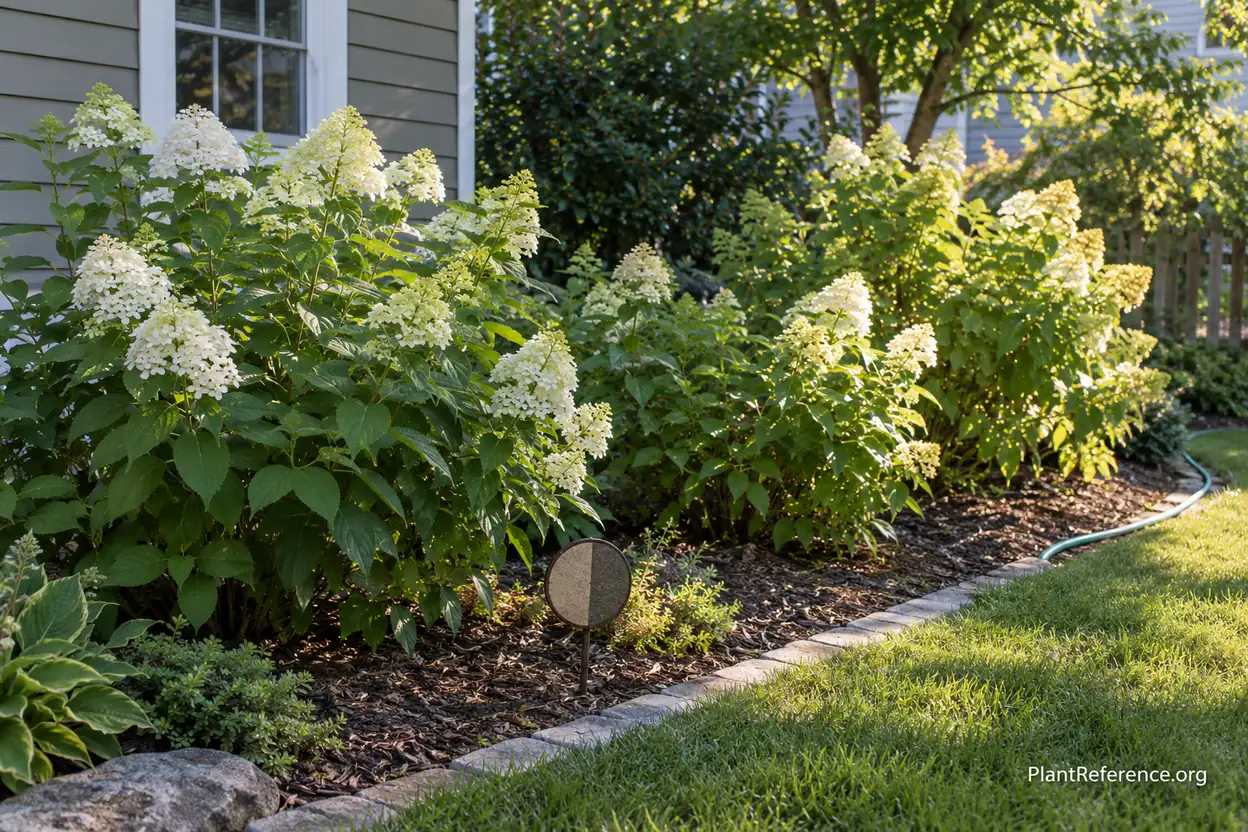
Rank | Variety | Mature size | Sun strengths | Main caution |
|---|---|---|---|---|
1 | 6–8 ft (1.8–2.4 m) | Reliable panicle type; strong landscape presence | Too large for tight foundations | |
2 | 6–8 ft (1.8–2.4 m) | Earlier bloom; broad seasonal color progression | Needs room for full form | |
3 | 6–8 ft (1.8–2.4 m) | Large flowers and sturdy framework | Color development varies with weather | |
4 | Hydrangea paniculata 'Pinky Winky' | 6–8 ft (1.8–2.4 m) | Bicolor panicles and upright habit | Not a compact selection |
5 | Hydrangea paniculata 'Little Lime' | 3–5 ft (0.9–1.5 m) | Smaller form with panicle reliability | Still needs root-zone moisture |
6 | Hydrangea paniculata 'Bobo' | 2–3 ft (60–90 cm) | Compact border and container option | Can be overwhelmed by taller neighbors |
7 | 4–5 ft (1.2–1.5 m) | Rounded flowers with improved stem strength | Wilts faster when sunny soil dries | |
8 | Hydrangea quercifolia 'Ruby Slippers' | 3–4 ft (0.9–1.2 m) | Compact form, fall foliage, heat tolerance | Avoid saturated soil and extreme exposure |
Top Three Full-Sun Hydrangeas
1. 🌿Hydrangea paniculata 'Limelight' — best overall
🌿Hydrangea paniculata 'Limelight' is the easiest recommendation when you have the space. Its lime-white flowers age toward cream and blush, and its 6–8 foot (1.8–2.4 m) frame works as a specimen, informal hedge, or back-of-border anchor. Because it flowers on new wood, winter damage to old flower buds is not the same limitation faced by bigleaf hydrangeas.
Design-wise, the plant has visual weight. Do not squeeze it below a window or into a 3-foot (90 cm) gap and plan to prune your way out of the mistake. Panicle Hydrangea Guide: Limelight, Little Lime & More covers the species in detail.
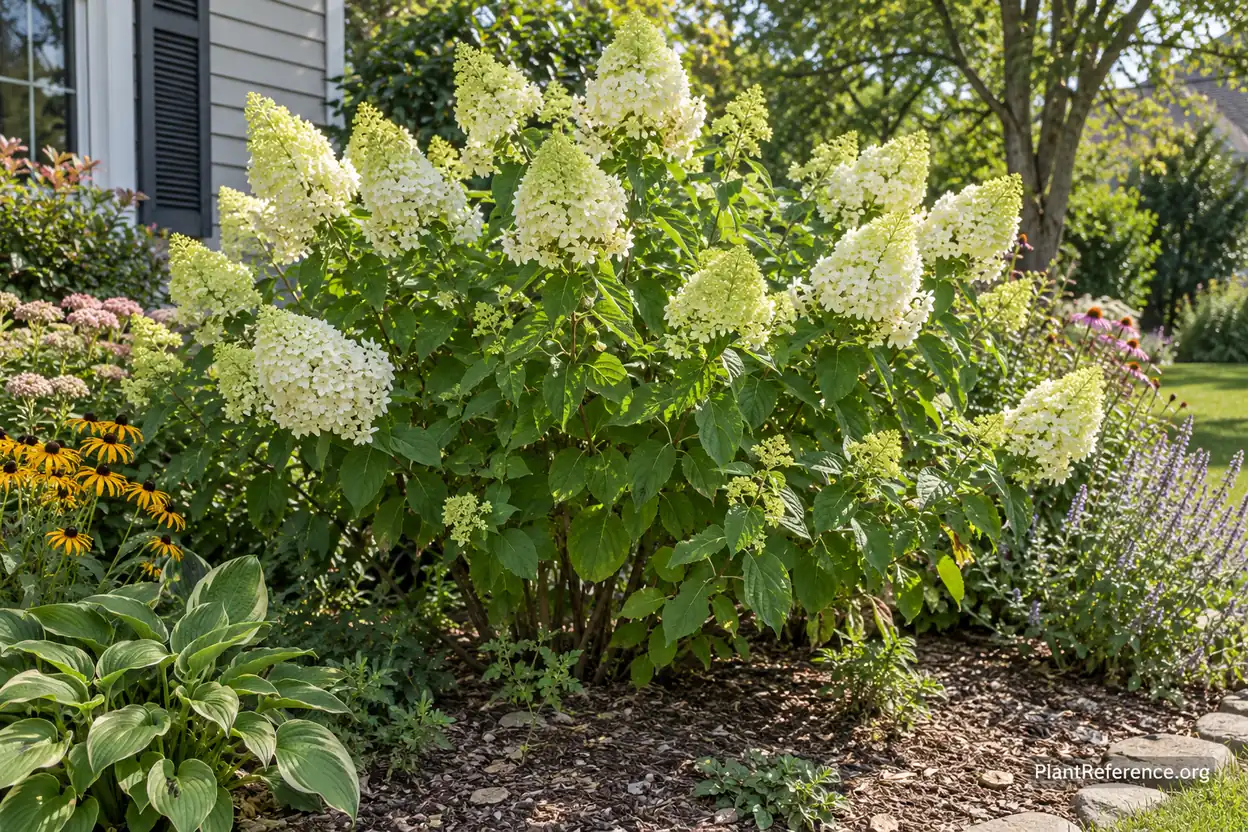
2. 🌿Hydrangea paniculata 'Quick Fire' — best early bloom
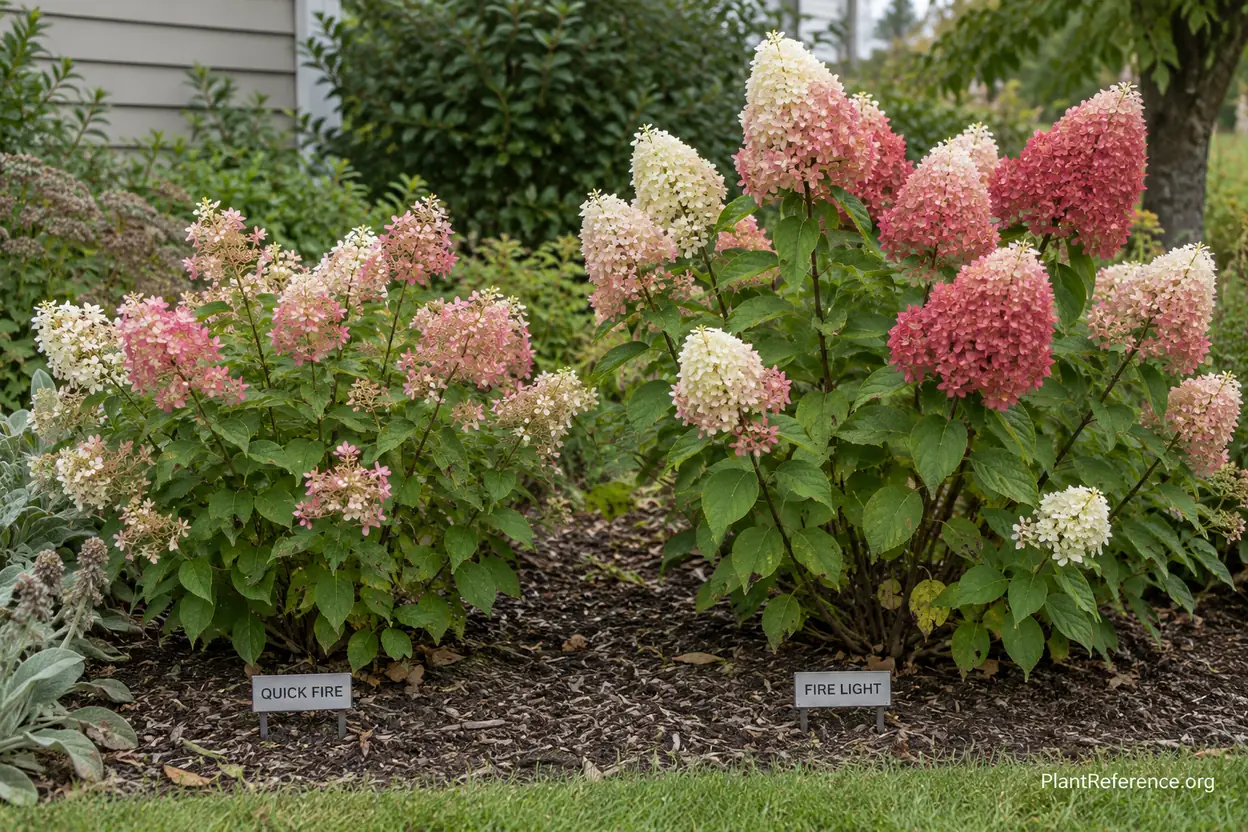
🌿Hydrangea paniculata 'Quick Fire' opens earlier than many panicle selections, extending the hydrangea season. Flowers start light and age toward deeper pink-red tones. Choose it when early bloom matters and the 6–8 foot (1.8–2.4 m) size fits your plan.
Earlier flowering does not mean drought-proof. Establish the root system with deep, measured watering and mulch kept clear of stems. If foliage develops dry margins, Hydrangea Leaves Turning Brown: Causes and Solutions helps separate scorch from disease.
3. 🌿Hydrangea paniculata 'Fire Light' — best bold color shift
🌿Hydrangea paniculata 'Fire Light' brings large panicles on sturdy stems, with white flowers aging toward pomegranate-red under favorable conditions. Weather affects color, so buy it for structure and flower form first. A catalog photograph cannot guarantee the exact autumn shade in your yard.
Compact Panicle Hydrangeas for Sunny Spaces
4. Hydrangea paniculata 'Pinky Winky' — best bicolor display
Hydrangea paniculata 'Pinky Winky' produces a two-tone effect as older florets color while newly opening florets remain pale. It belongs in the large group, not the compact group despite the playful name. Use it where the mature framework can breathe.
5. Hydrangea paniculata 'Little Lime' — best medium compact choice
Hydrangea paniculata 'Little Lime' gives smaller gardens the broad look and color progression associated with its larger relative, typically in a 3–5 foot (0.9–1.5 m) footprint. It fits mixed borders and large containers better, though container roots require additional heat and winter planning. See Hydrangeas in Pots: Container Care & Winter Protection.
6. Hydrangea paniculata 'Bobo' — best smallest panicle
At roughly 2–3 feet (60–90 cm), Hydrangea paniculata 'Bobo' works near paths, in low borders, and in large containers. Its compact scale makes flower coverage look dense. Keep taller plants from shading or physically swallowing it as the border matures.
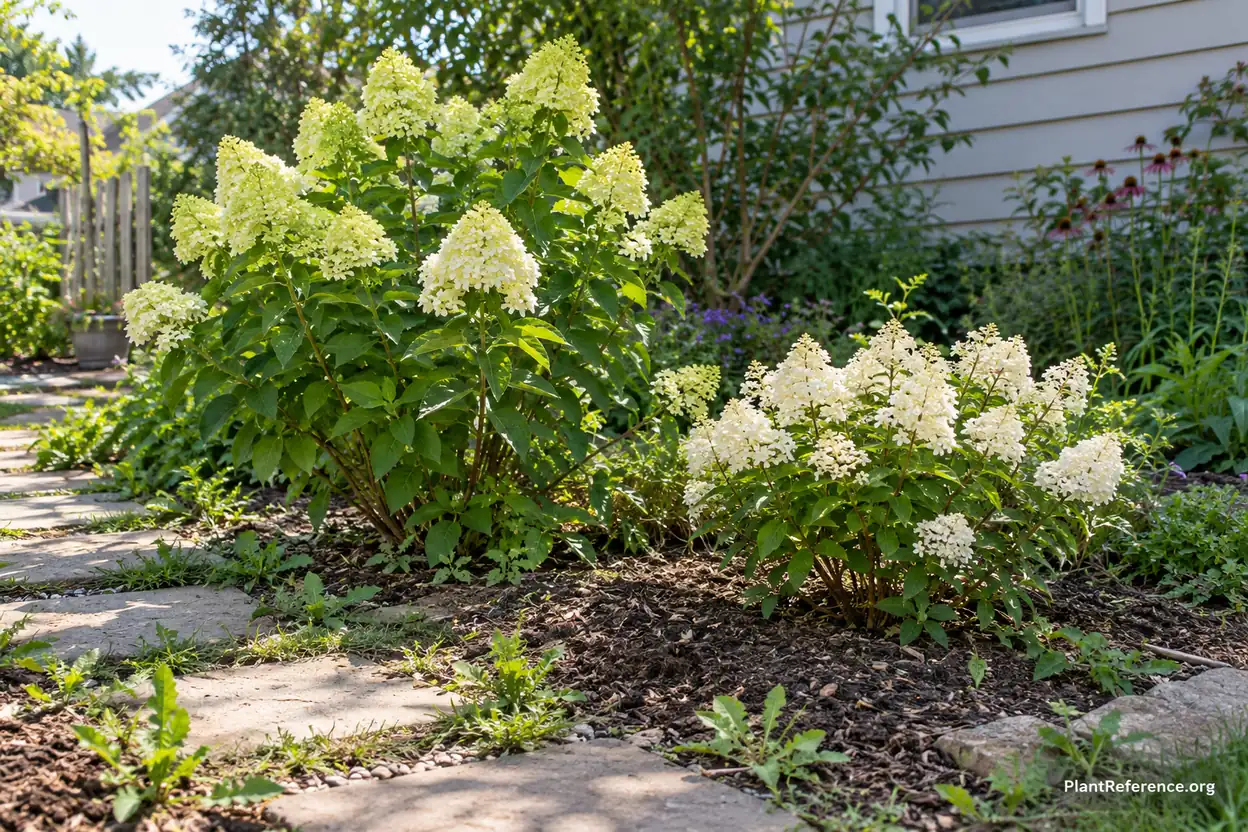
All panicle selections flower on new wood. Late-winter pruning can shape them, but do not cut simply because the plant was put in a space too small for its genetics. How to Prune Hydrangeas: Old Wood vs New Wood Guide explains the safe timing.
Smooth and Oakleaf Hydrangeas for Sun
7. 🌿Hydrangea arborescens 'Incrediball' — best rounded white flowers
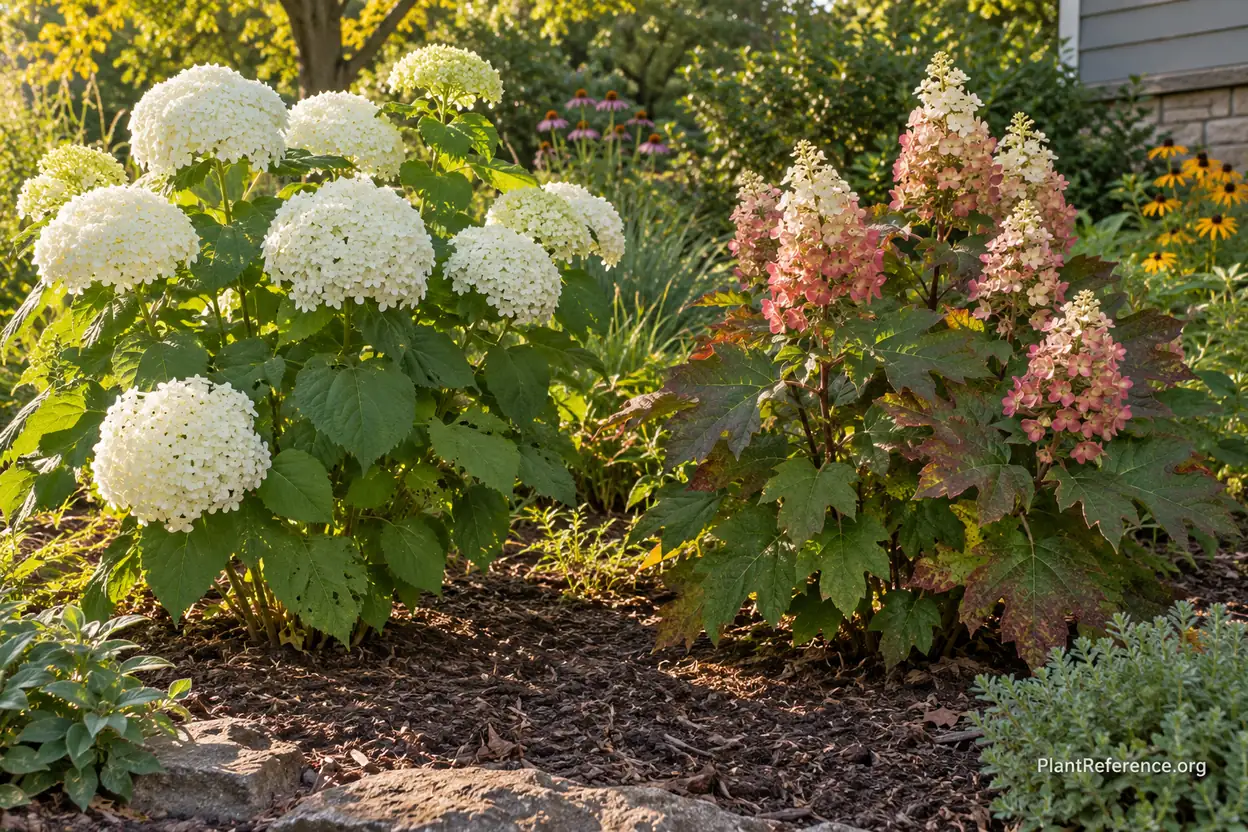
🌿Hydrangea arborescens 'Incrediball' offers large rounded white heads on stronger stems than the classic 🌿Hydrangea arborescens 'Annabelle'. It tolerates sunny sites when the soil remains evenly moist and drained. In hot regions, afternoon protection can preserve foliage quality and reduce daily wilt.
That moisture requirement matters. A sprinkler schedule that keeps the surface wet while deeper soil swings between saturation and drought is not consistency. Use the symptom checks in Why Your Hydrangea Is Wilting (Even When Watered).
8. Hydrangea quercifolia 'Ruby Slippers' — best fall foliage
Hydrangea quercifolia 'Ruby Slippers' combines compact stature, flowers aging from white toward rose, and oak-shaped leaves that develop strong fall color. It is a design-forward choice where you want more than summer bloom. It handles sun with adequate establishment moisture but dislikes waterlogged soil.
Bigleaf hydrangea 🌿Hydrangea macrophylla ranks poorly for exposed full sun in hot climates. Its large leaves scorch and wilt readily when heat and moisture demand exceed root supply. If blue or pink mopheads are the goal, choose morning sun with afternoon shade and use How to Change Hydrangea Color: Blue, Pink & Purple for color chemistry.
Choose the Right Hydrangea for Your Region
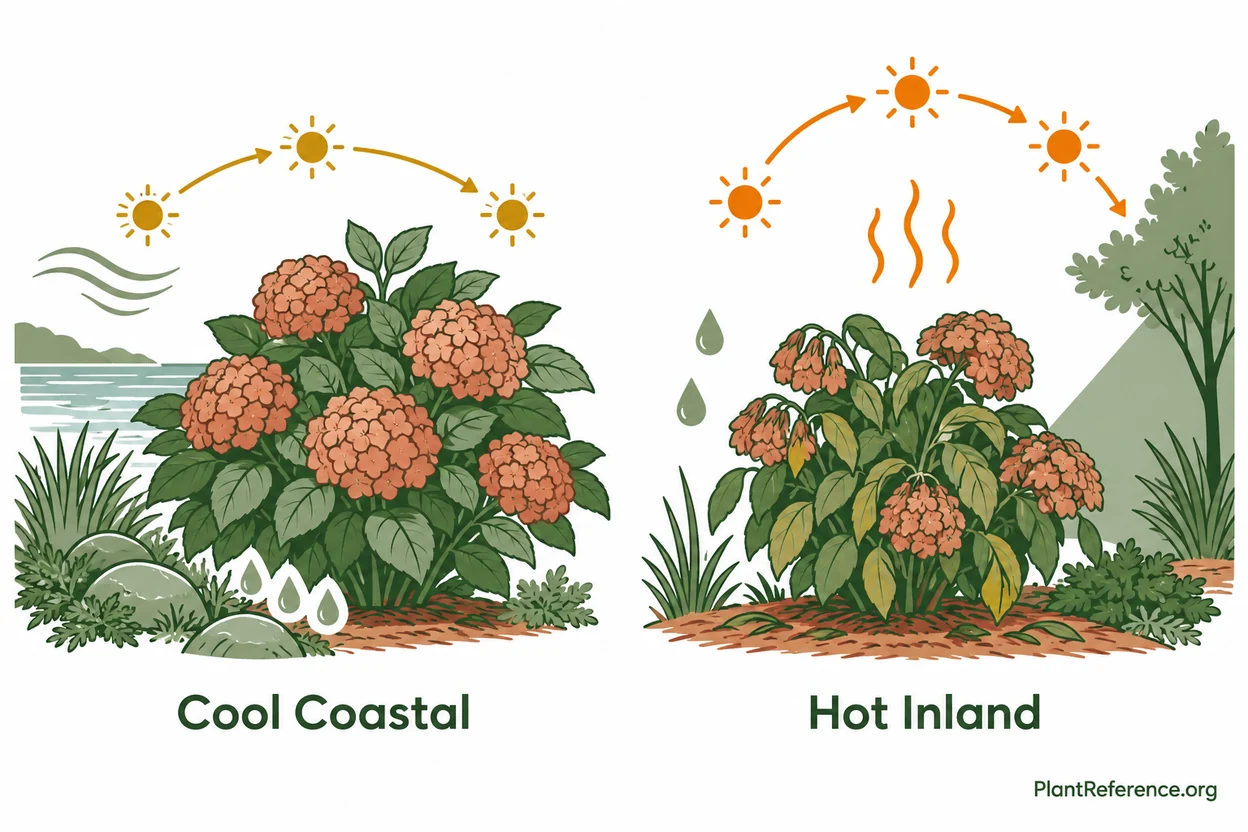
In Portland or coastal New England, a full-sun bed can be workable for a wider range because air and soil temperatures are moderated. In Dallas, Atlanta, or an inland western valley, protect even tolerant hydrangeas from the hardest afternoon exposure and plan irrigation before planting.
Cool coastal climates: prioritize drainage and adequate bloom light.
Cold zones 3–5: use panicle or smooth hydrangeas for reliable new-wood flowering.
Humid zones 7–8: preserve airflow and avoid repeatedly wetting foliage.
Hot inland climates: favor morning sun and afternoon protection.
Every region: match mature width before buying the plant.
Cold reliability and sun tolerance overlap but are not identical. Hydrangea Not Blooming? 7 Causes and the Old Wood Fix explains why a leafy shrub can miss flowers after bud damage, while panicle and smooth selections reset their bloom on new growth.
Plan water delivery before installation, mulch 2–3 inches (5–8 cm) deep while keeping it off stems, and give roots a full establishment period. If soil drains poorly, correct that first; Poor Drainage in Raised Beds: Causes and Fixes for Waterlogged Soil provides the diagnostic logic.
The best buy is not the plant with the most dramatic tag. It is the hydrangea whose mature size, bloom wood, heat tolerance, and moisture demand match the conditions you actually have.
Frequently Asked Questions
Reading about plants and recognising them are different skills. These three build the second.
- Daily PlantIdentify the day’s mystery plant from a close-up photograph.
- Keyed OutWork a dichotomous key, lead by lead, to name a hidden specimen.
- Name That PlantName a specimen from botanical clues dealt hardest first.
Free to play, no account needed
Tagged with
Helen is an interior plant stylist in Los Angeles who works with restaurants, offices, and residential clients to select and maintain indoor plants. She studied design in college and got into plants when a client asked her to "green up" a mid-century modern home. Helen's expertise sits at the intersection of design and plant care—she thinks about light, scale, texture, and color, but she also knows which plants will actually survive in a given space. She's killed enough fiddle leaf figs in dark corners to know better. Helen maintains her own collection of over 80 houseplants in her apartment and writes about indoor plant selection, styling, and the practical side of keeping plants alive in interior environments.