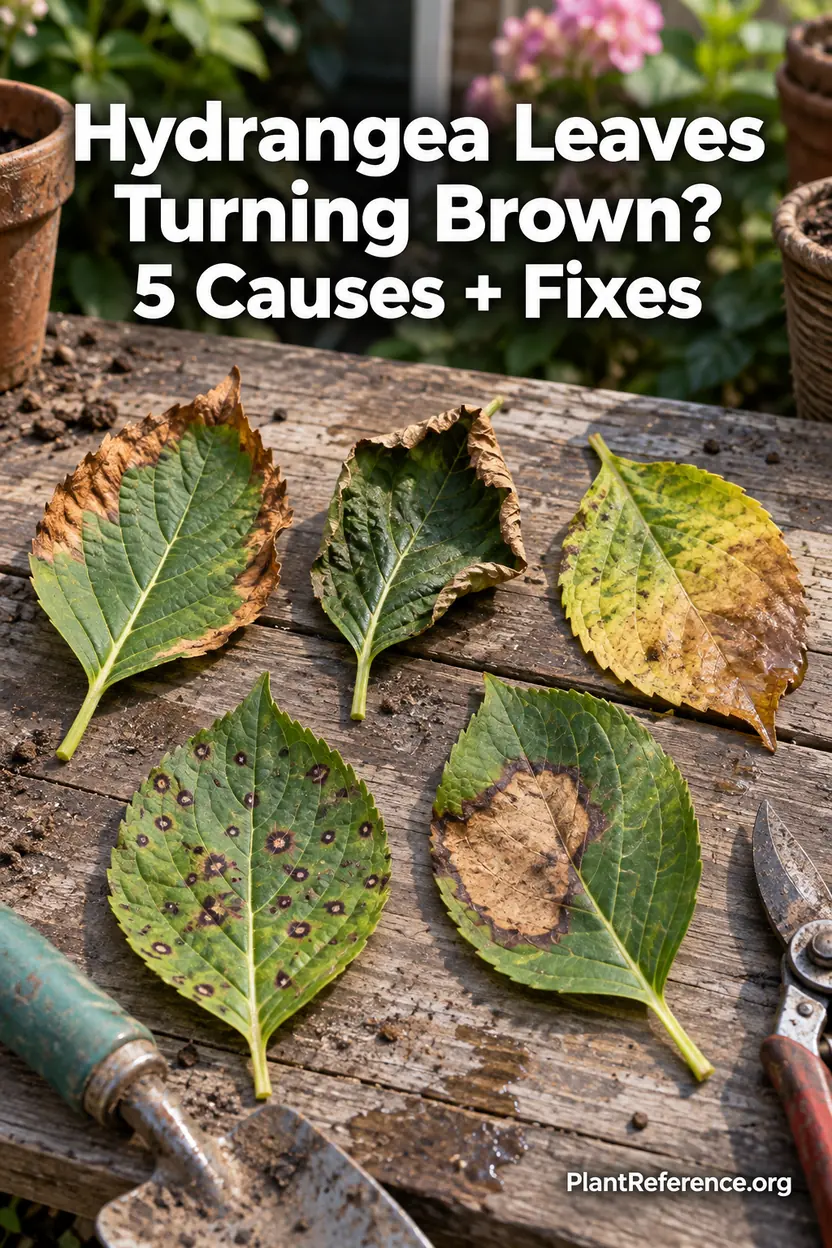
Hydrangea Leaves Turning Brown: Causes and Solutions
Pets & Toxicity
Recorded toxicity for plants linked in this guide. An unknown status is not a safety assessment.
Toxic to pets: bigleaf hydrangea (1 linked plant checked)DetailsHide
Hydrangea macrophylla — Toxicity Warning
Toxic to pets and humansView Hydrangea macrophylla plant profile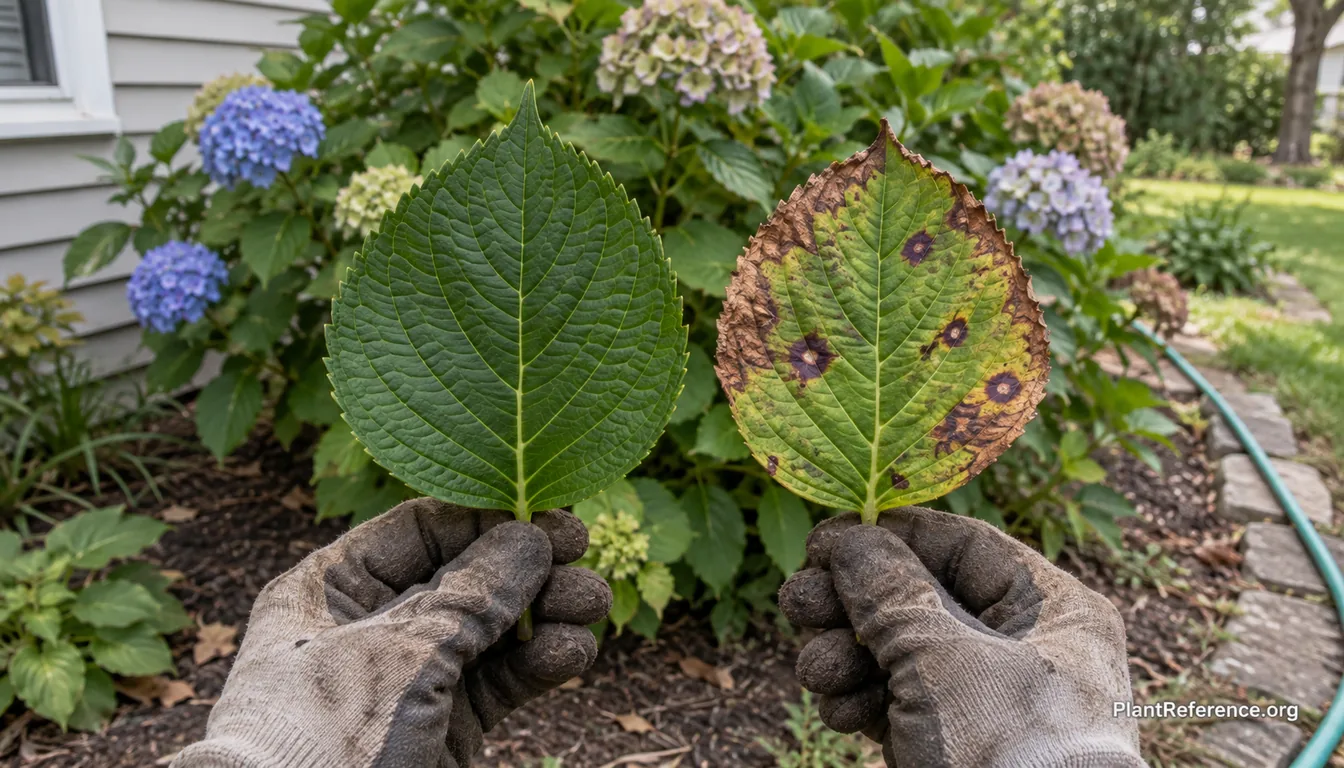
— Image © PlantReference.org 2026
Hydrangea leaves turning brown are giving you a clue, not a diagnosis. Crisp edges on the sunniest side usually mean scorch; widespread dry margins point to drought; soft brown tissue with yellowing suggests saturated roots; and defined spots indicate disease. Look at the pattern, check the soil, and then act. Throwing more water or fungicide at every brown leaf can make the real problem worse.
Hydrangea Leaves Turning Brown: Diagnose the Pattern
Start with the whole shrub, then inspect one leaf. The bigleaf hydrangea 🌿Hydrangea macrophylla (hy-DRAN-jee-uh mak-roh-FIL-uh) often scorches in hot afternoon sun, but the same plant can also develop fungal spots during humid, wet weather. Where the damage begins tells you more than the color alone.
Brown-leaf pattern | Most likely cause | Soil clue | First move |
|---|---|---|---|
Crispy tan edges, worst on exposed leaves | Leaf scorch | Moist or briefly dry | Add afternoon shade and mulch |
Dry edges plus limp leaves across the shrub | Underwatering | Dry 3-4 inches (8-10 cm) deep | Water slowly at root level |
Soft brown margins with yellow leaves | Overwatering or poor drainage | Wet for days | Stop watering and check drainage |
Small round purple-brown spots with pale centers | Cercospora leaf spot | Often normal | Remove debris and keep leaves dry |
Large irregular brown lesions on leaves or flowers | Anthracnose | Often wet during warm weather | Prune infected tissue and sanitize tools |
Test moisture 3-4 inches (8-10 cm) deep because a dry crust can hide wet clay. The drainage principles in Poor Drainage in Raised Beds: Causes and Fixes for Waterlogged Soil apply here too. If the root zone is wet, do not add water.
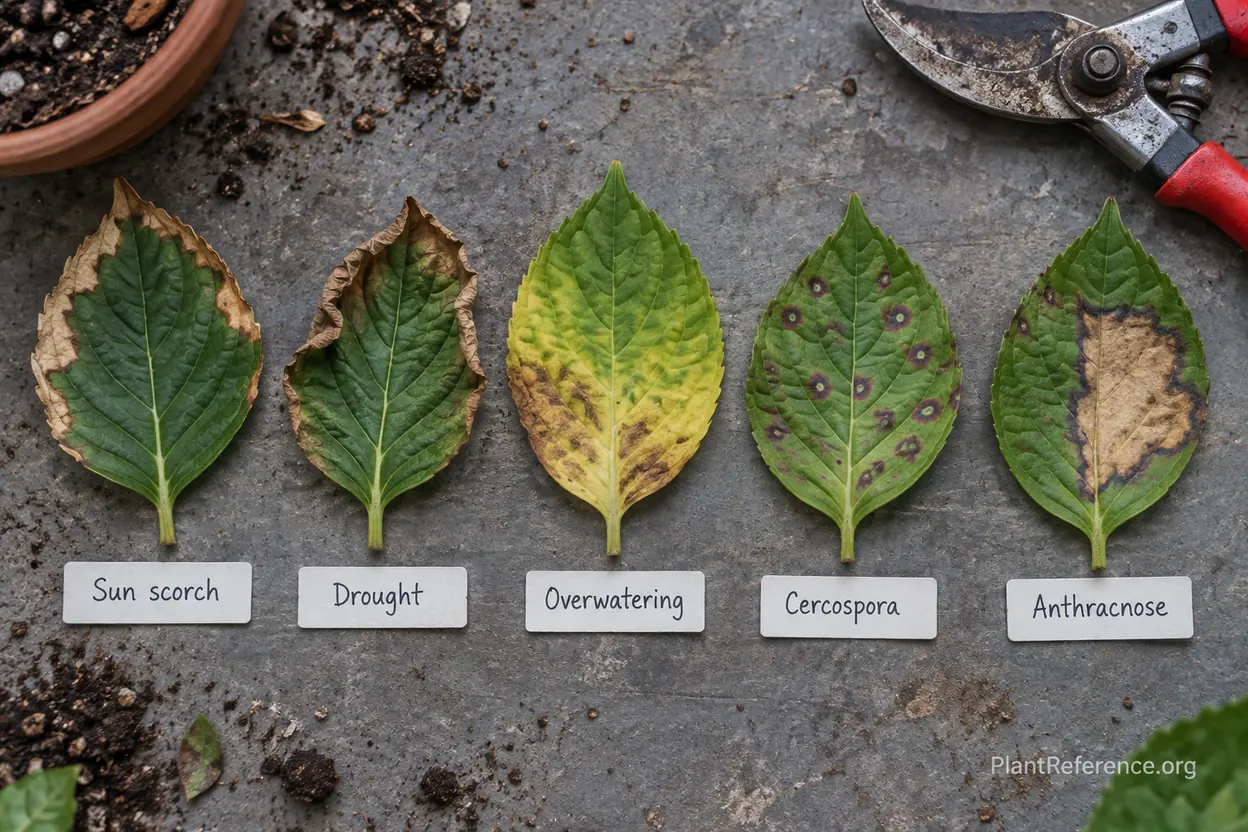
Leaf Scorch: Crispy Brown Edges on the Sunny Side
Leaf scorch looks dry and papery. It starts at tips or margins on the south- or west-facing side, while interior leaves stay greener. Reflected heat from brick or pavement can intensify it.
This is common on 🌿Hydrangea macrophylla, which favors morning sun. A well-watered shrub can still scorch when leaves lose moisture faster than roots replace it. Afternoon wilt that disappears by morning is heat stress, not proof of dry soil.
Apply 2-3 inches (5-8 cm) of mulch without touching stems. Use 30-40% shade cloth during heat waves or plan a cool-season move. Best Perennials for Shade: 12 Species That Thrive can help build a cooler companion planting.
Brown tissue will not recover. Keep partly green leaves, remove mostly dead ones, and judge the fix by new growth over the next 7-14 days.
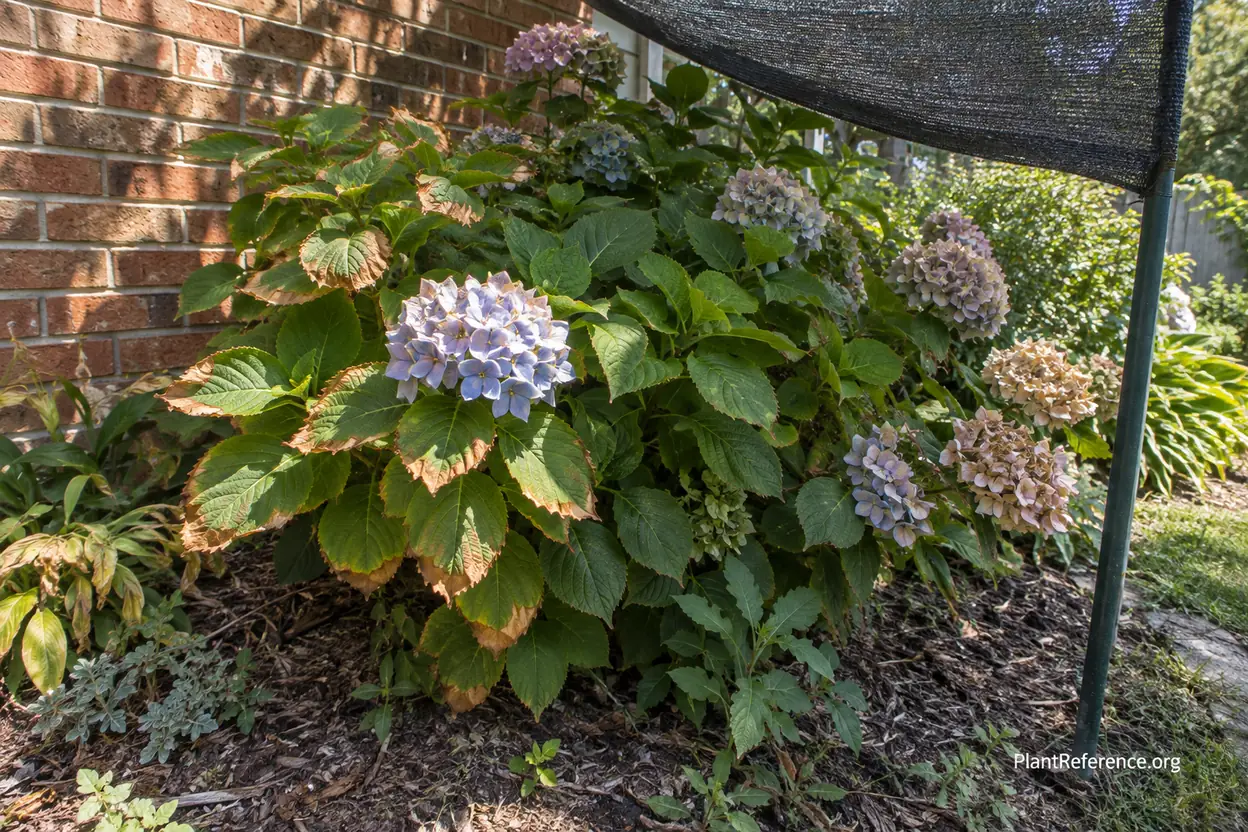
Water Stress: Underwatering vs Overwatering
Underwatering creates brittle margins, widespread droop, and dry soil below the surface. New shrubs and plants beneath mature trees are vulnerable; How Much Soil Do Urban Trees Actually Need? The Root Volume Guide explains that root competition.
Water at soil level to 6-8 inches (15-20 cm) deep. Established shrubs often need 1-2 inches (2.5-5 cm) weekly from rain and irrigation, adjusted for weather and soil. Raised Bed Irrigation Systems: Watering Solutions for Consistent Growth shows root-zone delivery options that keep foliage dry.
Overwatered leaves yellow as margins turn soft brown, and the shrub may wilt in wet soil. Saturated roots lack oxygen, so a waterlogged plant can look thirsty. More water accelerates the decline.
Use this check before changing the schedule:
Dry soil plus brittle edges: water deeply, then recheck moisture in 24 hours.
Wet soil plus yellowing and soft brown tissue: pause irrigation and improve drainage.
Moist soil plus afternoon-only wilt: wait until morning before deciding the plant needs water.
Wet soil plus persistent wilt, stem dieback, or a sour smell: inspect roots for rot and correct the site.
If water pools, redirect runoff or move the shrub in cool weather. The dense-layer fixes in Fix PNW Garden Drainage: Glacial Till, Hardpan & Raised Beds apply beyond that region. Do not fertilize until roots recover.
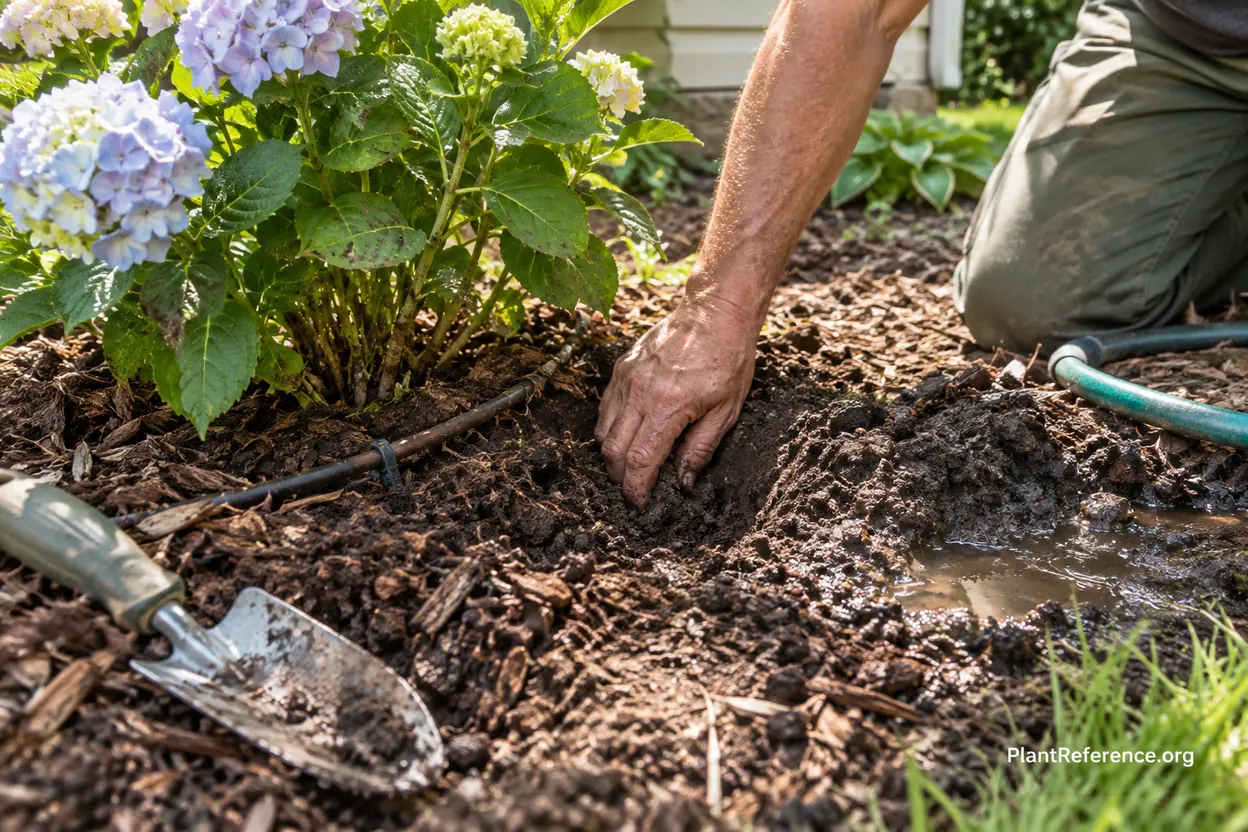
Cercospora Leaf Spot: Small Purple-Brown Circles
Cercospora begins on older lower leaves as small purple-brown circles with tan or gray centers. Spots multiply in warm humidity and may merge as leaves yellow and drop. Moderate infections rarely kill established shrubs.
The fungus survives in leaf debris. Remove fallen leaves, thin crowded neighbors, and water the soil instead of the canopy. Plan a Perennial Garden That Blooms Spring to Fall offers layout principles for better airflow.
Remove the worst leaves without defoliating the shrub, bag infected debris, and clean pruners between plants. A labeled protectant may reduce new infections before wet weather, but it cannot erase spots. Confirm the label permits hydrangea use and lists the diagnosed disease; follow its rate, timing, and safety directions.
Large irregular patches or marked flowers fit anthracnose better. Do not spray on a guess.
Anthracnose: Large Brown Lesions on Leaves and Flowers
Anthracnose makes larger irregular lesions with dark borders. They may cross veins, merge, and mark flowers as well as leaves. Warm, wet, slow-drying conditions favor infection.
Cut badly affected leaves and flowers with clean bypass pruners. Remove debris, stop evening overhead watering, and keep mulch off stems. These cleanup habits also support How to Prepare Perennial Gardens for Winter by Species.
If symptoms spread despite sanitation, photograph both sides of a fresh leaf and ask your cooperative extension service for diagnosis. That is safer than stacking treatments on a guess.
Aging flowers naturally brown. Disease is more likely when fresh flower tissue develops expanding spots beside similarly marked leaves.
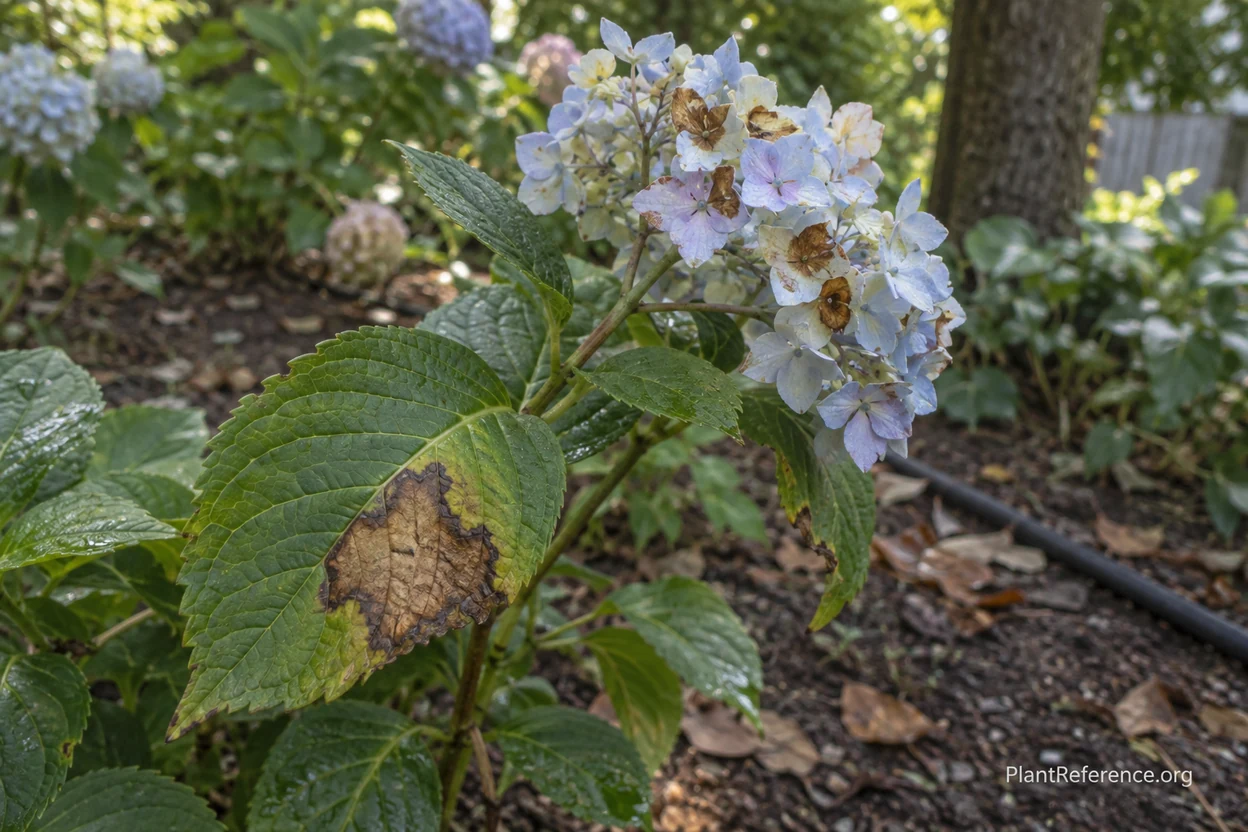
A 48-Hour Recovery Plan for Brown Hydrangea Leaves
Photograph the damage, then check moisture 3-4 inches (8-10 cm) deep in three places around the drip line. Compare leaf undersides, exposed growth, and shaded foliage before acting.
Use this order of operations:
Correct an obvious water problem without flooding dry soil or abruptly excavating wet roots.
Move temporary containers out of harsh afternoon sun or add temporary shade for an in-ground shrub.
Remove only mostly dead or heavily infected leaves, then sanitize the tool.
Clear fallen foliage and switch irrigation from overhead spray to soil level.
Mark one damaged leaf and watch new growth for 7-14 days before escalating treatment.
The clean-cut principles in How to Prune Roses: When and How to Prune Every Type of Rose transfer, but hydrangea timing differs. Avoid major reshaping because late cuts can remove next year's buds.
Seek help for wilt in moist soil, sunken stems, black mushy roots, or rapidly spreading spots. For yellowing between green veins, test soil first; Raised Bed Soil pH Problems: Testing, Adjusting, and Maintaining Balance explains why blind fertilizing can miss the cause.
Judge recovery by healthy new leaves, not by old damage disappearing. Your job is to keep the next leaf green.
Frequently Asked Questions
Reading about plants and recognising them are different skills. These three build the second.
- Daily PlantIdentify the day’s mystery plant from a close-up photograph.
- Keyed OutWork a dichotomous key, lead by lead, to name a hidden specimen.
- Name That PlantName a specimen from botanical clues dealt hardest first.
Free to play, no account needed
Tagged with
TJ stumbled into plant parenthood when a coworker gave him a neglected pothos. That single plant sparked an obsession that led him to quit his corporate marketing job and start a plant care service for busy professionals in Chicago. TJ maintains over 150 plants for residential clients and runs monthly plant swap meetups at local coffee shops. He's self-taught through YouTube, plant forums, and plenty of expensive mistakes (RIP to his variegated monstera). TJ specializes in troubleshooting common houseplant problems and is known for his blunt, no-BS advice: "Your plant isn't dying because Mercury is in retrograde—you're overwatering it." He's particularly skilled with finicky tropical plants like fiddle leaf figs and calatheas.