Image 1 of 4
Plant Reference
1 / 4
Crataegus, Genus, laevigata, Species, 'Paul's Scarlet', Cultivar,
- Genus & species
- Cultivar
Paul's scarlet hawthorn
Parent species {Crataegus laevigata} native to Europe; the cultivar 'Paul's Scarlet' (synonym 'Coccinea Plena') originated as a sport found in a hedge in Hertfordshire, England, around 1858
Overview
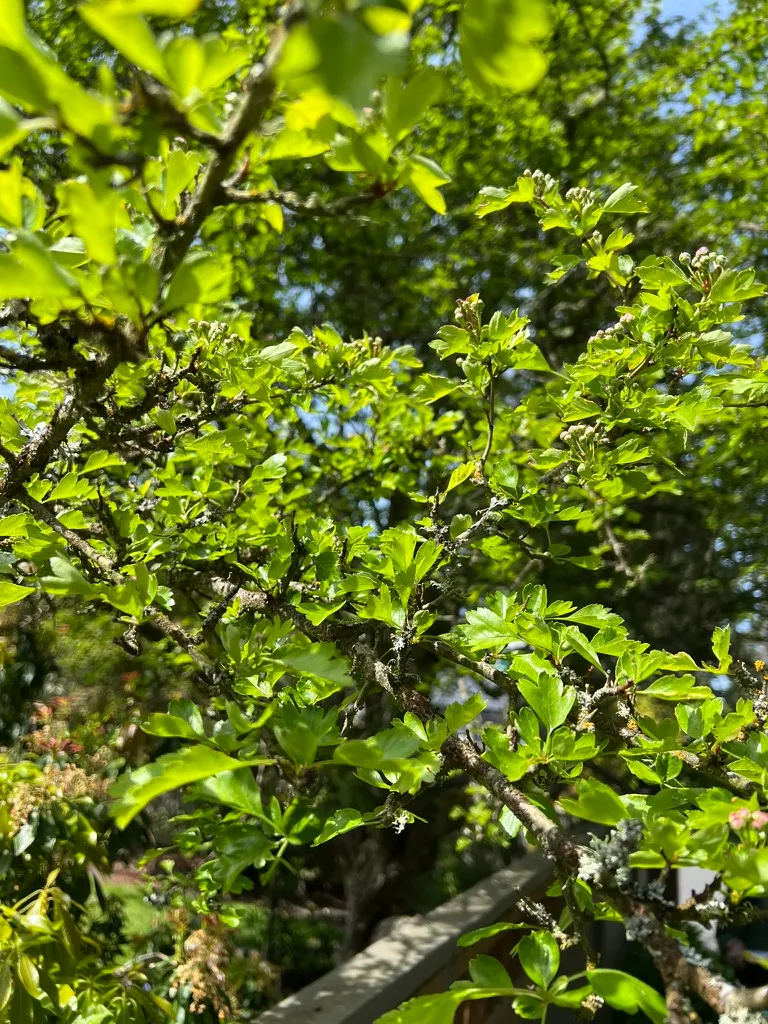
Crataegus laevigata 'Paul's Scarlet' is a small deciduous tree cultivar in the family Rosaceae, reaching 15-20 feet (4.5-6 m) tall and wide with a spreading rounded canopy. The cultivar is selected for vivid scarlet-red fully double flowers 0.5-0.75 inch (1.3-2 cm) across borne in dense flat-topped corymbs 3-4 inches (7-10 cm) across in May. Leaves are 3-5 lobed, glossy medium green, and 1-2 inches (2.5-5 cm) wide. Thorns 0.5-1 inch (1.3-2.5 cm) long occur along the stems. The fully double flowers are largely sterile and few to no haws (fruit) develop — a contrast with the abundant red fruit of single-flowered hawthorns. The cultivar originated as a sport found in a hedge in Hertfordshire, England, around 1858 and has been propagated clonally since. Fire blight (Erwinia amylovora) is the main disease limitation and causes sudden branch dieback with blackened scorched-looking foliage that can move from a small infection point to large branches within a single growing season; cedar-hawthorn rust (Gymnosporangium spp.) and hawthorn leaf blight also affect the cultivar. The tree tolerates urban conditions, alkaline soil including chalk, wind, and coastal exposure. The lack of fruit reduces wildlife value but also reduces seasonal litter beneath the canopy. Some people perceive the flower fragrance as musky or unpleasant because the Crataegus flower scent contains trimethylamine.
Native Range
Crataegus laevigata (the parent species) is native to Europe, where it grows in hedgerows, woodland margins, and scrubland alongside its relative C. monogyna. The cultivar 'Paul's Scarlet' arose in cultivation as a sport found in a Hertfordshire hedge around 1858 and does not occur in wild populations. C. laevigata itself is naturalized in parts of North America but is not currently classified as invasive in the same way as C. monogyna.Suggested Uses
Planted as a small specimen tree, street tree, or hedgerow component at 15-20 foot (4.5-6 m) spacing. The vivid scarlet double spring bloom and tolerance of urban conditions, alkaline chalk soils, wind, and coastal exposure make the cultivar suited to challenging street-tree positions where many other small flowering trees struggle. Combined with spring-flowering bulbs at the base for layered seasonal interest in zones 4-8. Not suited to landscapes where wildlife fruit value is wanted (the cultivar produces few haws), positions in known fire blight outbreak zones where annual pressure makes the tree a maintenance burden, high-traffic pedestrian pathways where the sharp thorns conflict with regular contact, or sites near Juniperus virginiana in regions where cedar-hawthorn rust is a recurring concern.How to Identify
Appearance
Size & Dimensions
Height15' - 20'
Width/Spread15' - 20'
Bloom Information
Vivid scarlet-red fully double flowers 0.5-0.75 inch (1.3-2 cm) across open in dense flat-topped corymbs 3-4 inches (7-10 cm) across in May, averaging 3 weeks of bloom. Flowers are bee-pollinated and moderately fragrant, with the Crataegus scent perceived as musky by some people because it contains trimethylamine. The double flowers are largely sterile and few to no haws develop on the cultivar.
Detailed Descriptions
Flower Description
vivid scarlet-red; fully double; 0.5-0.75 inch (1.3-2 cm) across; borne in dense flat-topped corymbs 3-4 inches (7-10 cm) acrossFoliage Description
glossy medium green; 3-5 lobed leaves 1-2 inches (2.5-5 cm) wide; turns yellow-green in fallGrowing Conditions
Sun Requirements
Requires 4-8 hours of direct sunlight daily
• Full Sun: 6+ hours of direct sunlight
• Partial Shade: 3-6 hours of direct sunlight
• Full Shade: Less than 3 hours of direct sunlight
Care & Maintenance
Care Guide
Plant in well-drained soil with a pH of 6.0-7.5 in full sun to part shade; tolerated soil types include loam, clay, chalk, and sand. The cultivar tolerates urban conditions, alkaline chalk soils, wind, and coastal salt exposure. Water weekly through the first 1-2 growing seasons; established trees are drought-tolerant. Fire blight (Erwinia amylovora) is the main disease concern — affected branches are removed 12 inches (30 cm) below the visible infection point, with pruning tools disinfected between cuts to prevent transferring the bacteria to healthy wood. Cedar-hawthorn rust appears as orange spots on leaves where Juniperus virginiana is nearby because the pathogen requires both genera to complete its life cycle. Pruning is done in late winter (February-March) for structural work or after flowering (June) for shaping. Sharp thorns at the stem nodes cause puncture wounds during handling.Pruning
Pruning is done in late winter (February-March) for structural work or after flowering in June for light shaping. Dead, crossing, and inward-growing branches are removed at the branch collar. Fire blight-affected branches are removed 12 inches (30 cm) below the visible infection point and pruning tools are disinfected with 70% isopropyl alcohol or a 10% bleach solution between cuts to prevent transferring the bacteria to healthy wood. Sharp thorns 0.5-1 inch (1.3-2.5 cm) long along the stems cause frequent puncture wounds during handling of pruning debris.Pruning Schedule
J
F
M
A
M
J
J
A
S
O
N
D
early springsummer