Image 1 of 20
1 / 20
Plant Reference
Crataegus, Genus, monogyna, Species,
- Genus & species
common hawthorn
Europe, western Asia, and North Africa; hedgerows, woodland margins, and scrubland; naturalized and classified as invasive in the Pacific Northwest of North America
Overview
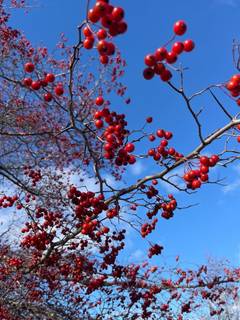
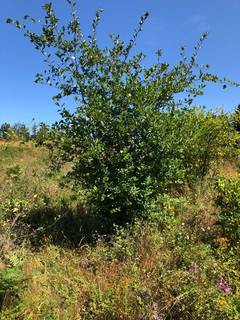
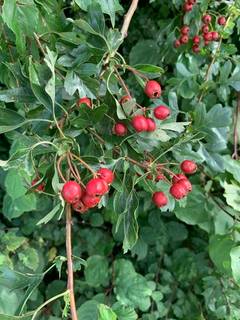
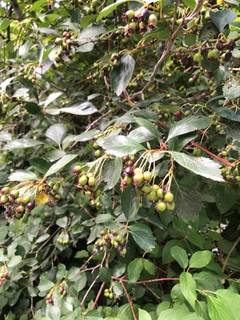
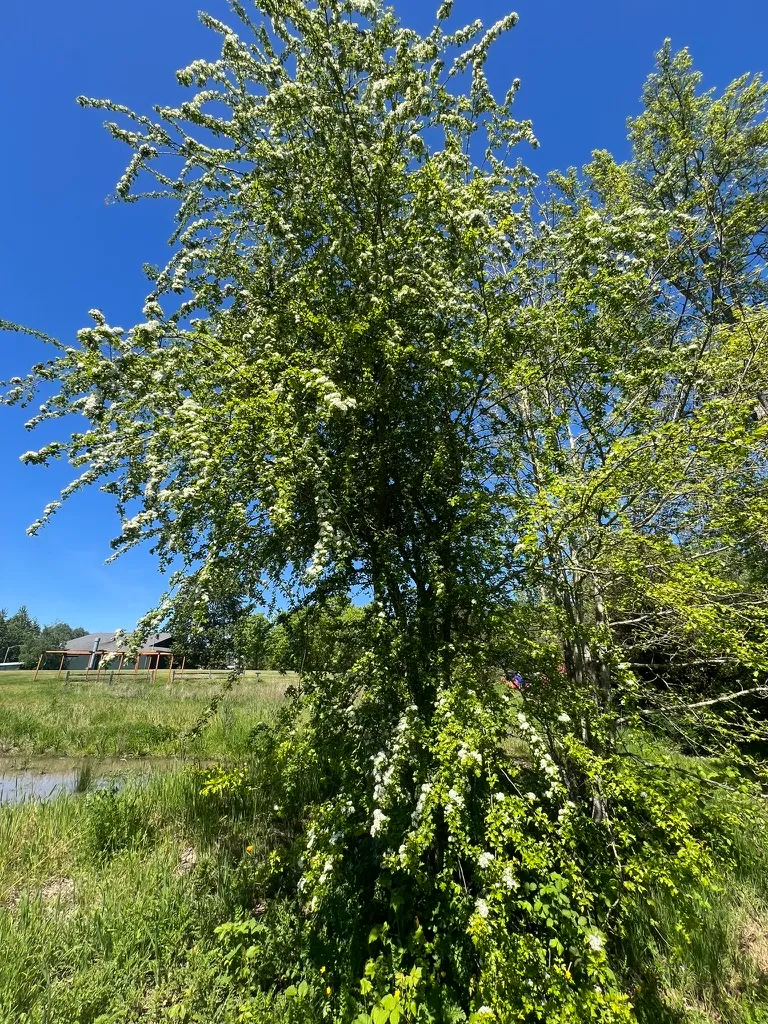
Crataegus monogyna is a deciduous tree in the family Rosaceae, reaching 15-25 feet (4.5-7.5 m) tall and 15-20 feet (4.5-6 m) wide with an upright rounded habit. Native to Europe, western Asia, and North Africa, the species is the traditional hedgerow plant of the British Isles where thousands of miles of C. monogyna hedges line agricultural fields. White single flowers 0.4 inch (10 mm) across open in dense flat-topped corymbs 2-3 inches (5-7 cm) across in May — the May bloom timing is the source of the common name 'May tree'. Leaves are deeply 3-7 lobed, glossy mid-green, and 0.75-2 inches (2-5 cm) wide. Dark red single-seeded haws 0.3-0.5 inch (8-13 mm) ripen in September and persist into winter — the single-seeded fruit is the source of the species epithet (monogyna = one seed). Thorns 0.5-1 inch (1.3-2.5 cm) long occur along the stems. The species is classified as invasive in the Pacific Northwest of North America, where bird-dispersed haws produce abundant seedlings in disturbed sites, riparian corridors, and oak woodlands; planting is regulated in those regions. The flower fragrance contains trimethylamine and is perceived as musky or fishy by some people. Fire blight (Erwinia amylovora) causes branch dieback. The species ranks high for adaptability among broadleaf trees in cultivation and tolerates a wide soil range from alkaline chalk to heavy clay, exposed windy sites, coastal conditions, and air pollution. Haws are edible and are used in jellies, syrups, and country wines.
Native Range
Crataegus monogyna is native to Europe, western Asia, and North Africa, where it grows in hedgerows, woodland margins, scrubland, and rocky open ground. The species has been planted as a hedgerow tree in the British Isles since at least the medieval period and remains the dominant component of traditional agricultural hedges across Britain and Ireland. The species has naturalized in many regions outside its native range, including parts of North America, Australia, and New Zealand, and is classified as invasive in the Pacific Northwest of North America where bird-dispersed seeds establish in oak woodlands, riparian corridors, and disturbed pasture.Suggested Uses
Planted as a hedgerow tree, dense thorny barrier hedge, specimen tree, and wildlife garden component at 15-20 foot (4.5-6 m) spacing for tree forms or 12-18 inches (30-45 cm) apart for tight thorny hedges. The dense thorny growth makes an impenetrable barrier hedge that excludes livestock and large herbivores — the basis of the traditional English hedgerow system. Edible haws are used in jellies, syrups, and country wines. Combined with Prunus spinosa and Rosa canina in mixed native British hedge plantings outside of invasive-status jurisdictions. Not suited to planting in the Pacific Northwest of North America or other regions where the species is regulated as invasive, positions adjacent to oak woodlands or riparian corridors in those regions where seedling escape is a documented concern, or high-traffic pedestrian pathways where the sharp thorns conflict with regular contact.How to Identify
Appearance
Size & Dimensions
Height15' - 25'
Width/Spread15' - 20'
Bloom Information
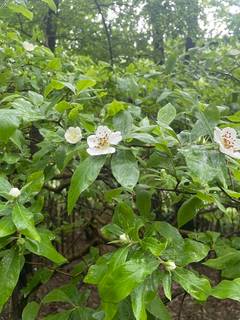
Dense white single flowers 0.4 inch (10 mm) across open in flat-topped corymbs 2-3 inches (5-7 cm) across in May, averaging 3 weeks of bloom. Flowers are bee- and butterfly-pollinated and moderately fragrant, with the scent perceived as musky or fishy by some people because it contains trimethylamine. Dark red single-seeded haws 0.3-0.5 inch (8-13 mm) long ripen in September and persist on the branches into winter.
Detailed Descriptions
Flower Description
white; single; 0.4 inch (10 mm) across; borne in dense flat-topped corymbs 2-3 inches (5-7 cm) across; the flower scent contains trimethylamine and is perceived as musky or fishy by some peopleFoliage Description
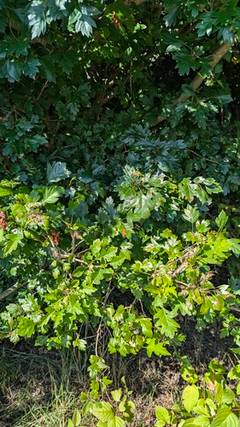
glossy mid-green; deeply 3-7 lobed leaves 0.75-2 inches (2-5 cm) wide; turns yellow in fallGrowing Conditions
Sun Requirements
Requires 3-8 hours of direct sunlight daily
• Full Sun: 6+ hours of direct sunlight
• Partial Shade: 3-6 hours of direct sunlight
• Full Shade: Less than 3 hours of direct sunlight
Care & Maintenance
Care Guide
Plant in well-drained soil with a pH of 6.0-8.0 in full sun to part shade; tolerated soil types include loam, clay, chalk, sand, and rocky ground. The species tolerates exposed windy sites, coastal salt exposure, alkaline chalk, heavy clay, and air pollution — broad site tolerance accounts for its widespread use in challenging hedgerow and reclamation positions. Water weekly through the first 1-2 growing seasons; established trees are very drought-tolerant. Fire blight (Erwinia amylovora) is the main disease concern in the species — affected branches are removed 12 inches (30 cm) below the visible infection point with pruning tools disinfected between cuts. The species is classified as invasive in the Pacific Northwest of North America and planting is regulated in those jurisdictions; local invasive-species regulations govern whether the species is legal to plant in a given area. Sharp thorns at the stem nodes cause puncture wounds during handling. Bird-dispersed haws produce abundant volunteer seedlings in nearby gardens and natural areas, and seedlings are removed when they appear to limit unwanted spread.Pruning
Hedge plantings are pruned in summer (July-August) after flowering to maintain size and shape, and structural pruning is done in late winter (February-March) on tree-form specimens. The species tolerates hard shearing and produces dense thorny regrowth that makes a solid barrier hedge. Fire blight-affected branches are removed 12 inches (30 cm) below the visible infection point and pruning tools are disinfected with 70% isopropyl alcohol or a 10% bleach solution between cuts to prevent transferring the bacteria to healthy wood. Sharp thorns 0.5-1 inch (1.3-2.5 cm) long along the stems cause frequent puncture wounds during handling of pruning debris.Pruning Schedule
Prune: February–March & July–August
summerearly spring