Crataegus, Genus, douglasii, Species,
- Genus & species
black hawthorn
Western North America (British Columbia to northern California and east to northern Rockies — Montana, Wyoming; streams, moist meadows, forest edges, and open woodlands from sea level to 7,000 feet / 2,100 m)
Overview
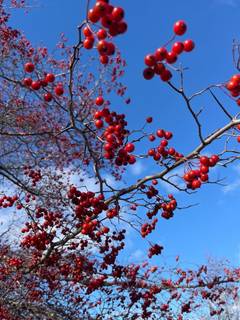
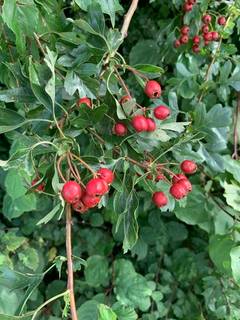
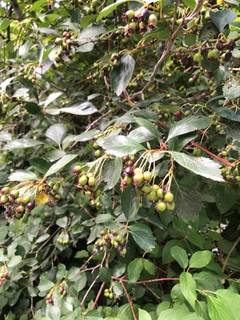
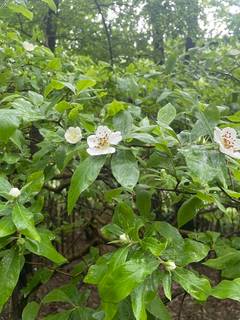
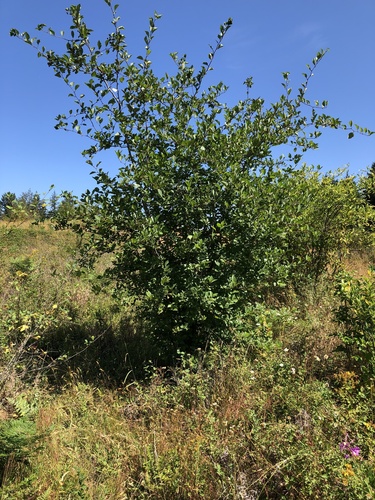
Crataegus douglasii is a small to medium rounded to broadly spreading deciduous tree or large shrub in the rose family (Rosaceae) reaching 15–30 feet (4.5–9 m) tall with a spread of 15–25 feet (4.5–7.5 m). This is the native hawthorn of the Pacific Northwest and northern Rocky Mountain region. Mature trunks develop dark gray to reddish-brown bark with shallow longitudinal furrows. Branches carry thorns 0.5–1 inch (1–2.5 cm) long, which are shorter than the thorns of most other hawthorn species in cultivation. Leaves are broadly ovate 1–3 inches (2.5–8 cm) long, dark glossy green with shallow lobes, turning yellow to orange in fall. Corymbs of small white flowers open in May–June, followed by clusters of small black to dark purple pomes 0.3–0.5 inch (8–12 mm) in diameter — a fruit color uncommon among hawthorns, which typically carry red fruit. The black fruit separates this species from every other hawthorn in this collection. Growth rate is moderate. Hardy to zone 3. Soil and moisture tolerance is broad, and the species tolerates seasonal wet conditions that most hawthorns cannot manage. Open-site populations form thickets through root suckering, which suits the species to naturalized and wildlife plantings. Fire blight (Erwinia amylovora) is a disease concern.
Native Range
Crataegus douglasii is native to western North America, from British Columbia to northern California and east to the northern Rockies (Montana, Wyoming), where it occurs along streams, in moist meadows, at forest edges, and in open woodlands from sea level to 7,000 feet (2,100 m).Suggested Uses
Grown as a specimen tree, wildlife hedge, or naturalized planting at 12–18 foot (3.6–5.5 m) spacing. Black pomes feed cedar waxwings, robins, and thrushes through late summer and fall. Native plant gardens, restoration plantings, and riparian buffers in the Pacific Northwest match the species native-habitat role. The thorny dense branching structure carries nesting cover value for small songbirds, which benefits bird-oriented garden designs. Informal hedge use at 4–6 foot spacing produces a thicket barrier within 6–8 years. Formal clipped landscapes are not suitable given the thorn hazard and the suckering colony-forming habit that resists tidy maintenance.How to Identify
Appearance
Size & Dimensions
Height15' - 30'
Width/Spread15' - 25'
Bloom Information
Corymbs of small white flowers open in May–June on the previous season's wood. Clusters of small black to dark purple pomes 0.3–0.5 inch (8–12 mm) in diameter ripen in August–September and persist into early winter before bird dispersal. Bloom duration is 2–3 weeks. The pomes are edible but mealy in texture; wildlife consumption is the primary fruit role.
Detailed Descriptions
Flower Description
White; small corymbs 1-2 inches acrossFoliage Description
Dark glossy green, broadly ovate 1-3 inches long with shallow lobes; yellow to orange in fallGrowing Conditions
Sun Requirements
Requires 4-10 hours of direct sunlight daily
• Full Sun: 6+ hours of direct sunlight
• Partial Shade: 3-6 hours of direct sunlight
• Full Shade: Less than 3 hours of direct sunlight
Care & Maintenance
Care Guide
Grows in full sun to partial shade in moist well-drained soil at pH 5.5–8.0, tolerating loam and clay. Hardy to zone 3. Soil tolerance is broad — clay, alkaline, and seasonally wet conditions are all handled, which places the species above most hawthorns in site adaptability. Established plants tolerate drought. Root-suckering habit produces thickets in open sites; sucker removal maintains a single-trunked tree form when a specimen is wanted. Fire blight (Erwinia amylovora) is the main disease concern; overhead irrigation is avoided and affected branches are removed with sterilized pruning tools to slow spread. Cedar-hawthorn rust (Gymnosporangium species) can develop where junipers are planted nearby and contribute to the disease cycle. The thorns on branches and trunk are sharp enough to puncture skin and protective gear; hand protection during pruning or site work is a standard practice when the species is installed in landscape positions.Pruning
Pruning is done in late winter (February–March) while the plant is dormant. Dead, crossing, or diseased branches are removed with sterilized tools. Training to a single leader during the first 5–7 years produces a tree form; allowing multi-stem growth produces a thicket-forming large shrub form. Root suckers are removed at the base to prevent thicket formation when a specimen-tree form is desired. Thorns on branches are sharp and require thick protective gloves during pruning work.Pruning Schedule
Prune: February–March
winter