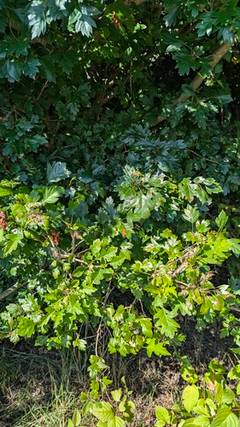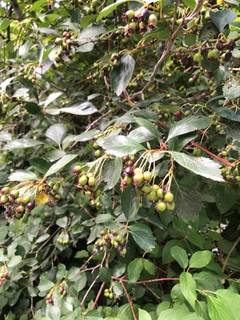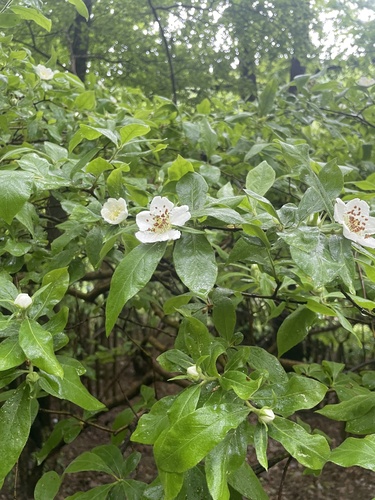
Crataegus, Genus, germanica, Species,
- Genus & species
medlar
South-eastern Europe, Caucasus, south-western Asia
Overview
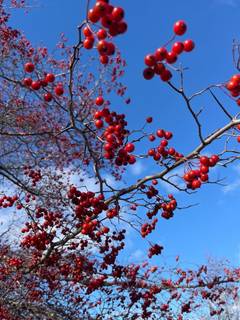
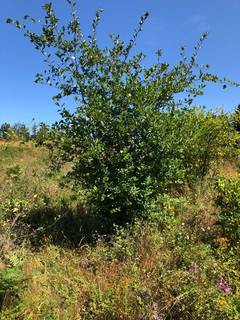
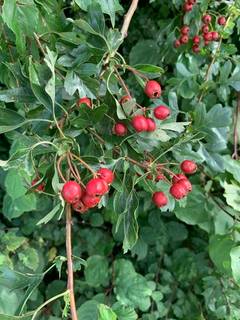
Crataegus germanica, the medlar, is a small deciduous tree or large shrub in the rose family (Rosaceae), reaching 10–20 feet (3–6 m) tall with a low, spreading, often crooked crown. The dark green leaves are oblong to lance-shaped, 3–6 inches (8–15 cm) long, downy beneath, and turn yellow to russet-brown in autumn. In late spring it bears solitary white flowers 1–2 inches (3–5 cm) across, each with five broad petals and a ring of reddish anthers. The fruit is a rounded russet-brown pome about 1–2 inches (2.5–5 cm) wide with a wide, open end framed by the persistent sepals, hard and sour until softened by frost or storage. After this softening, called bletting, the flesh becomes brown, sweet, and pulpy and is eaten raw or made into jelly. Trees are long-lived and slow-growing, often with twisted branches and, in wild forms, short thorns. They grow in sun or light shade on most well-drained soils. Heavy clay, waterlogging, and deep shade reduce growth and fruiting.
Native Range
Native to south-eastern Europe, the Caucasus, and south-western Asia, where it grows in woodland and scrub. It has been cultivated across Europe since antiquity and is naturalised in hedgerows and woods well beyond its native range.Suggested Uses
Crataegus germanica is grown as a small ornamental and fruiting tree in gardens, orchards, and hedgerows, where its spreading crown, spring flowers, and autumn colour suit informal and edible plantings. The bletted fruit is eaten raw or used in jellies, fruit cheeses, and preserves.How to Identify
Appearance
Size & Dimensions
Height10' - 20'
Width/Spread10' - 20'
Bloom Information
The white flowers open singly in May to early June after the leaves expand. Each flower is 1–2 inches (3–5 cm) across and is pollinated by bees and other insects. The fruit develops through summer and is picked in late autumn, then softened by frost or storage before eating.
Detailed Descriptions
Foliage Description
dark greenGrowing Conditions
Sun Requirements
Requires 5-10 hours of direct sunlight daily
• Full Sun: 6+ hours of direct sunlight
• Partial Shade: 3-6 hours of direct sunlight
• Full Shade: Less than 3 hours of direct sunlight
Care & Maintenance
Care Guide
Crataegus germanica grows in full sun to light shade on moist but well-drained, fertile soil and tolerates a wide pH range. Young trees are watered through their first few summers, after which they are fairly drought-tolerant. The species is hardy and self-fertile, so a single tree sets fruit without a pollination partner. It is often grafted onto hawthorn, pear, or quince rootstocks to control size. Trees fruit within three to five years of planting and crop more heavily in warm, sunny positions. Fireblight and leaf spot can affect trees in some areas.Pruning
Pruning is light and done in winter when the tree is dormant, removing dead, crossing, or crowded branches to keep an open framework. Grafted trees may send up suckers from the rootstock, which are removed at the base. Little routine pruning is needed once the shape is formed.Pruning Schedule
Prune: December–February
winter
Container Growing
Suitable for container growing
Minimum container size: 15 gallons