Crataegus, Genus, mordenensis, Species,
- Genus & species
Morden hawthorn
Hybrid of garden origin; bred Morden Research Station, Manitoba, Canada
Overview
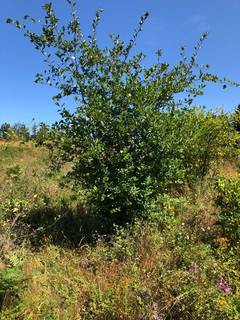
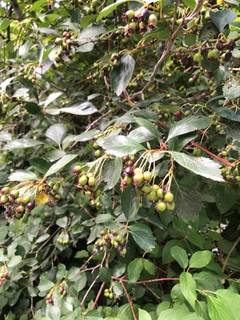
Crataegus × mordenensis is a small, rounded to broadly spreading, deciduous tree reaching 15–20 feet (4.5–6 m) tall with a spread of 12–18 feet (3.6–5.5 m). The cultivar is a hybrid between C. laevigata and C. succulenta, bred at the Agriculture Canada Morden Research Station in Manitoba for cold hardiness and ornamental value in prairie climates where most flowering trees fail. The two commercial cultivars—'Toba' (1935) and 'Snowbird' (1979)—carry double flowers: 'Snowbird' opens pure white from pink buds, while 'Toba' opens white and ages to pink over several days. The double-flowered forms carry little to no fruit, eliminating the autumn fruit-drop mess typical of single-flowered hawthorns but also forfeiting most wildlife value. A nearly thornless habit is a significant safety advantage over C. crus-galli (cockspur) and C. phaenopyrum (Washington hawthorn), whose 1–3 inch (2.5–8 cm) thorns are hazardous in pedestrian areas. Leaves are ovate to elliptic, 2–3 inches (5–8 cm) long, dark glossy green with irregular lobes. Fall color is yellowish to orange. Growth rate is moderate. Cold hardiness extends to USDA zone 3 (−40°F / −40°C), a range that covers the Canadian prairies and northern Great Plains where many flowering tree options are unavailable. Fire blight (Erwinia amylovora) is a significant disease concern—this hybrid is notably susceptible and cultivars planted in humid summer climates with heavy fire-blight pressure often decline over 10–15 years.
Native Range
Crataegus × mordenensis is a hybrid of garden origin (C. laevigata × C. succulenta). C. laevigata is native to Europe; C. succulenta is native to central and eastern North America. Bred at the Agriculture Canada Morden Research Station, Manitoba, Canada, with 'Toba' released in 1935 and 'Snowbird' in 1979.Suggested Uses
Planted as a specimen tree in residential gardens, parks, and along streets at 10–14 foot (3–4.2 m) spacing. The near-thornless habit and absence of messy fruit fit the cultivar to high-traffic areas where other hawthorns would be hazardous or require cleanup. Functions as a street tree, patio tree, and border specimen. The cold hardiness to zone 3 places this among the workable flowering-tree options for Canadian prairie provinces and the northern Great Plains where spring-bloom choices are few. Regions with heavy fire-blight pressure—humid-summer climates in the eastern United States—are a poor fit and trees there typically decline within 15 years. The absence of fruit limits value for songbirds and mammals that use the red haws of fruiting hawthorns.How to Identify
Appearance
Size & Dimensions
Height15' - 20'
Width/Spread12' - 18'
Bloom Information
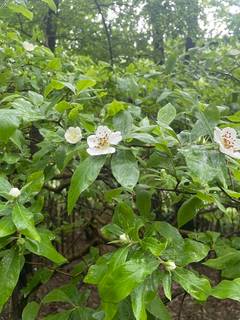
Corymbs of double white flowers—opening from pink buds in 'Snowbird' or aging from white to pink in 'Toba'—open in May–June. Double-flowered cultivars produce little to no fruit since the extra petals replace reproductive structures. Bloom duration is 2–3 weeks.
Detailed Descriptions
Flower Description
Double white, opening from pink buds or aging to pinkFoliage Description
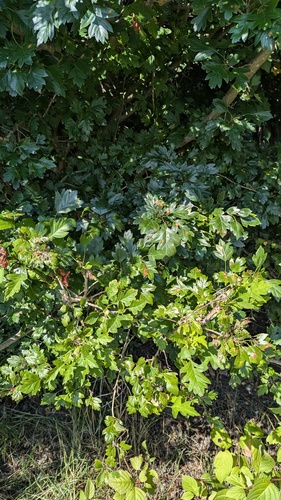
Dark glossy green, ovate, irregularly lobedGrowing Conditions
Sun Requirements
Requires 6-12 hours of direct sunlight daily
• Full Sun: 6+ hours of direct sunlight
• Partial Shade: 3-6 hours of direct sunlight
• Full Shade: Less than 3 hours of direct sunlight
Care & Maintenance
Care Guide
Plant in full sun in average, well-drained soil. The tree tolerates clay, alkaline, and nutrient-poor soils. Cold hardiness extends to zone 3, supporting planting in climates where many flowering tree options are unavailable. Fire blight is a serious concern—this hybrid is notably susceptible. Overhead irrigation spreads the bacteria through water splash onto open flowers, so drip or soaker-hose irrigation at the root zone reduces infection rates. Fire-blight-affected branches are cut out promptly, 8–12 inches (20–30 cm) below visible blackened tissue, with tools sterilized between each cut in 10% bleach or 70% isopropyl alcohol to prevent tool-to-tree transmission. Cedar-hawthorn rust occurs in regions where Juniperus virginiana is present as an alternate host. The near-thornless habit makes this safer for residential and public landscapes than thorny species.Pruning
Pruning is done in late winter. Dead, crossing, or diseased branches are removed at the base of the affected limb. The rounded form develops naturally on its own. Fire-blight-affected branches require prompt removal during the growing season when infection is identified, since delay allows the pathogen to move further into healthy wood.Pruning Schedule
Prune: February–March
winter