Crataegus, Genus, phaenopyrum, Species,
- Genus & species
washington thorn
Eastern United States — mid-Atlantic through the Midwest; stream banks, forest margins, and open woodlands
Overview
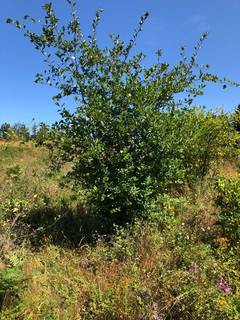
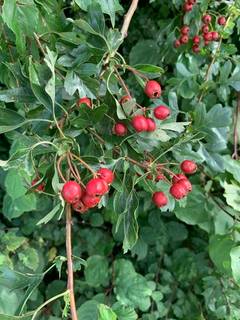
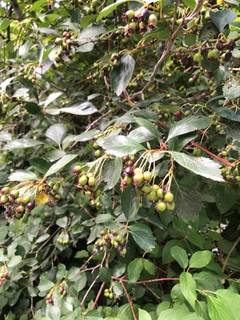
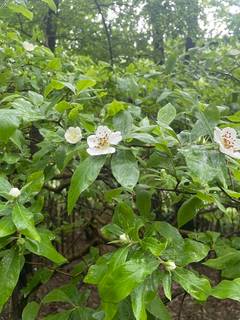
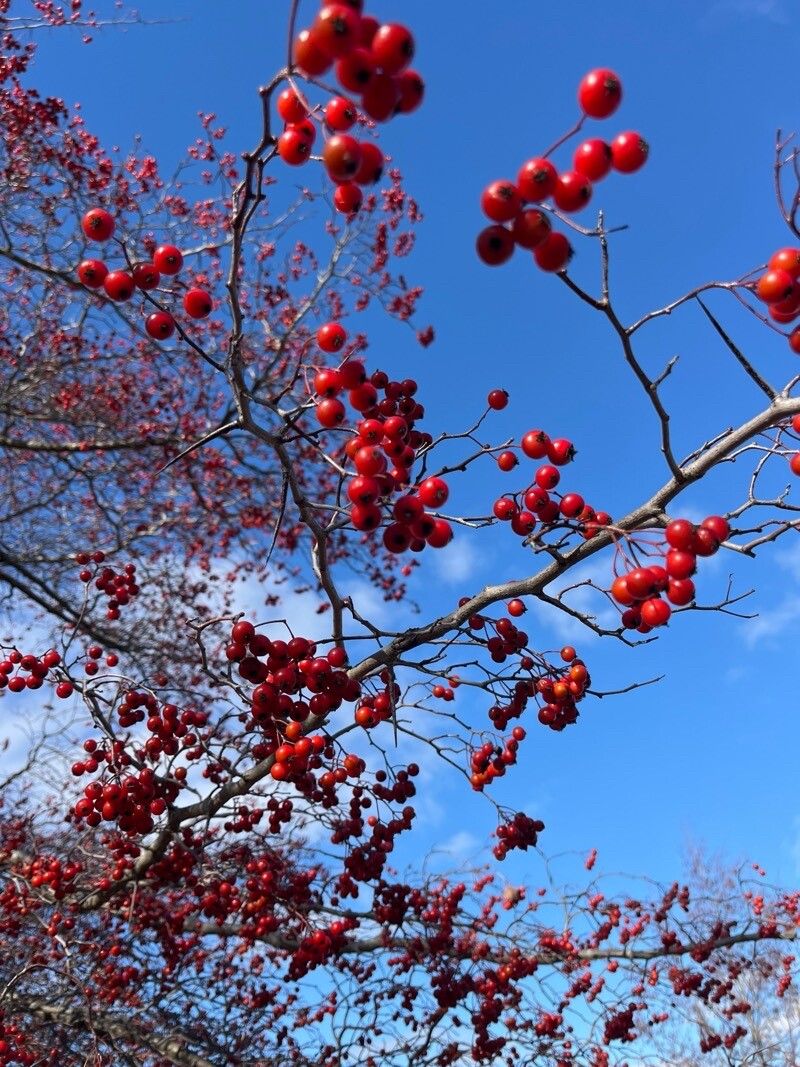
Crataegus phaenopyrum is a small deciduous tree in the family Rosaceae native to the eastern United States, reaching 20-30 feet (6-9 m) tall and 20-25 feet (6-7.5 m) wide with an upright rounded canopy. White single flowers 0.5 inch (1.3 cm) across open in flat-topped corymbs 2-3 inches (5-7 cm) across in May and June. Leaves are glossy dark green, 3-lobed with a distinctly maple-like outline, and 1.5-3 inches (4-7 cm) wide — the maple-like leaf shape separates this species from most other cultivated hawthorns, which carry shallowly lobed or unlobed foliage. Fall foliage turns orange, red, and scarlet across the same tree and the species carries brighter fall color than most other cultivated hawthorns. Dense clusters of small glossy red-orange haws 0.25 inch (6 mm) across ripen in October and persist on the branches through winter, providing food for songbirds and visual interest after leaf drop. Thorns are 1-3 inches (2.5-7 cm) long — longer and sharper than the thorns of most other cultivated hawthorn species — and the thorniness is the central handling consideration for the species in residential landscapes. Fire blight (Erwinia amylovora) and cedar-hawthorn rust (Gymnosporangium spp.) are the disease concerns, although C. phaenopyrum carries higher resistance to both than C. crus-galli and several other native hawthorns. The species tolerates urban conditions, clay soils, and air pollution.
Native Range
Crataegus phaenopyrum is native to the eastern United States from the mid-Atlantic states west through the Midwest, where it grows on stream banks, forest margins, and open woodlands. The species range extends from southern New England south through Virginia and west to Missouri.Suggested Uses
Planted as a small specimen tree, street tree, or thorny barrier hedge component at 20-25 foot (6-7.5 m) spacing. The persistent red-orange winter haws, brilliant orange-to-scarlet fall foliage, and native range across the eastern U.S. make the species suited to native plant gardens, woodland-edge plantings, and bird-attracting landscapes from zones 3-8. Combined with Aronia arbutifolia, Viburnum prunifolium, and Itea virginica in mixed eastern native plantings. Not suited to pedestrian-traffic positions where the long sharp thorns conflict with regular contact, sites near Juniperus virginiana in regions where cedar-hawthorn rust is recurring, or properties in known fire blight outbreak zones where annual pressure makes the tree a maintenance burden.How to Identify
Appearance
Size & Dimensions
Height20' - 30'
Width/Spread20' - 25'
Bloom Information
White single flowers 0.5 inch (1.3 cm) across open in flat-topped corymbs 2-3 inches (5-7 cm) across in May and June, averaging 2 weeks of bloom. Flowers are bee-pollinated and lightly fragrant. Small glossy red-orange haws 0.25 inch (6 mm) across ripen in October and persist in dense clusters on the branches through winter, providing food for songbirds and visual interest after leaf drop.
Detailed Descriptions
Flower Description
white; single; 0.5 inch (1.3 cm) across; borne in flat-topped corymbs 2-3 inches (5-7 cm) acrossFoliage Description
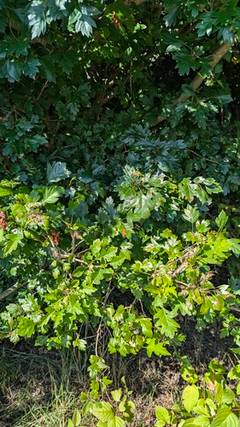
glossy dark green; 3-lobed (maple-like) leaves 1.5-3 inches (4-7 cm) wide; turns orange, red, and scarlet in fallGrowing Conditions
Sun Requirements
Requires 6-10 hours of direct sunlight daily
• Full Sun: 6+ hours of direct sunlight
• Partial Shade: 3-6 hours of direct sunlight
• Full Shade: Less than 3 hours of direct sunlight
Care & Maintenance
Care Guide
Plant in well-drained soil with a pH of 5.5-7.5 in full sun; tolerated soil types include loam and clay. The species tolerates urban conditions, compacted soils, clay, and air pollution. Water weekly through the first 1-2 growing seasons; established trees are drought-tolerant. Fire blight (Erwinia amylovora) and cedar-hawthorn rust (Gymnosporangium spp.) are the disease concerns — affected branches are removed 12 inches (30 cm) below the visible infection point with pruning tools disinfected between cuts to prevent transferring the bacteria to healthy wood. The species carries higher disease resistance than C. crus-galli and several other native hawthorns. Pruning is done in late winter (February-March). Thorns are 1-3 inches (2.5-7 cm) long — longer than those of most other cultivated hawthorns — and they cause significant puncture wounds during handling, with the species not suited to high-traffic positions where the thorns will reach pedestrians.Pruning
Pruning is done in late winter (February-March) before bud break. Dead, crossing, and damaged branches are removed at the branch collar, and a strong central leader is developed in young trees through corrective pruning over the first 5-7 years after planting. Fire blight-affected branches are removed 12 inches (30 cm) below the visible infection point and pruning tools are disinfected with 70% isopropyl alcohol or a 10% bleach solution between cuts to prevent transferring the bacteria to healthy wood. Long sharp thorns 1-3 inches (2.5-7 cm) long along the stems cause severe puncture wounds during handling of pruning debris, and eye protection is the routine work-clothing for the task in addition to stout gloves.Pruning Schedule
Prune: February–March
early spring