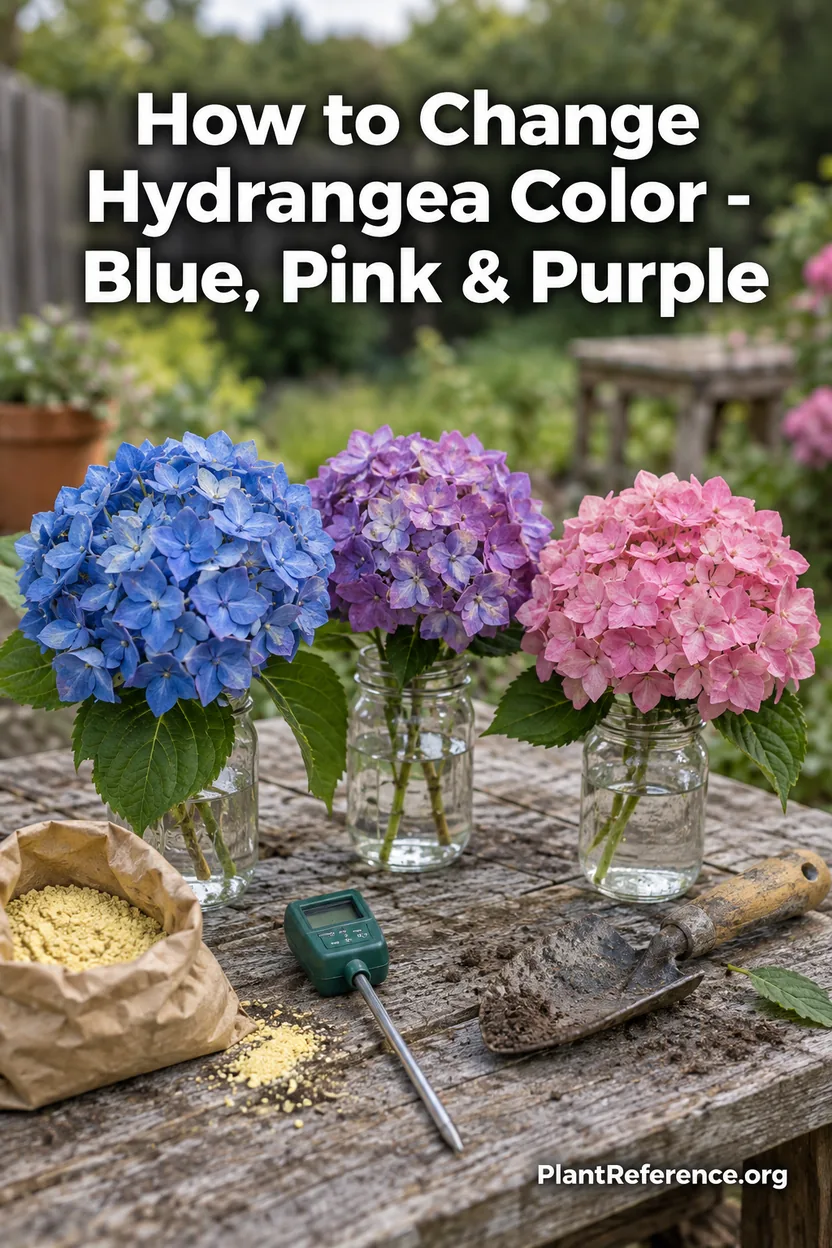
How to Change Hydrangea Color: Blue, Pink & Purple
Pets & Toxicity
Recorded toxicity for plants linked in this guide. An unknown status is not a safety assessment.
Toxic to pets: bigleaf hydrangea, Mountain hydrangea, endless summer hydrangea and 2 more (5 linked plants checked)DetailsHide
Hydrangea macrophylla — Toxicity Warning
Toxic to pets and humansView Hydrangea macrophylla plant profileHydrangea macrophylla 'Endless Summer' — Toxicity Warning
Toxic to pets and humansView Hydrangea macrophylla 'Endless Summer' plant profileHydrangea macrophylla 'BloomStruck' — Toxicity Warning
Toxic to pets and humansView Hydrangea macrophylla 'BloomStruck' plant profileHydrangea serrata 'Blue Billow' — Toxicity Warning
Toxic to pets and humansView Hydrangea serrata 'Blue Billow' plant profile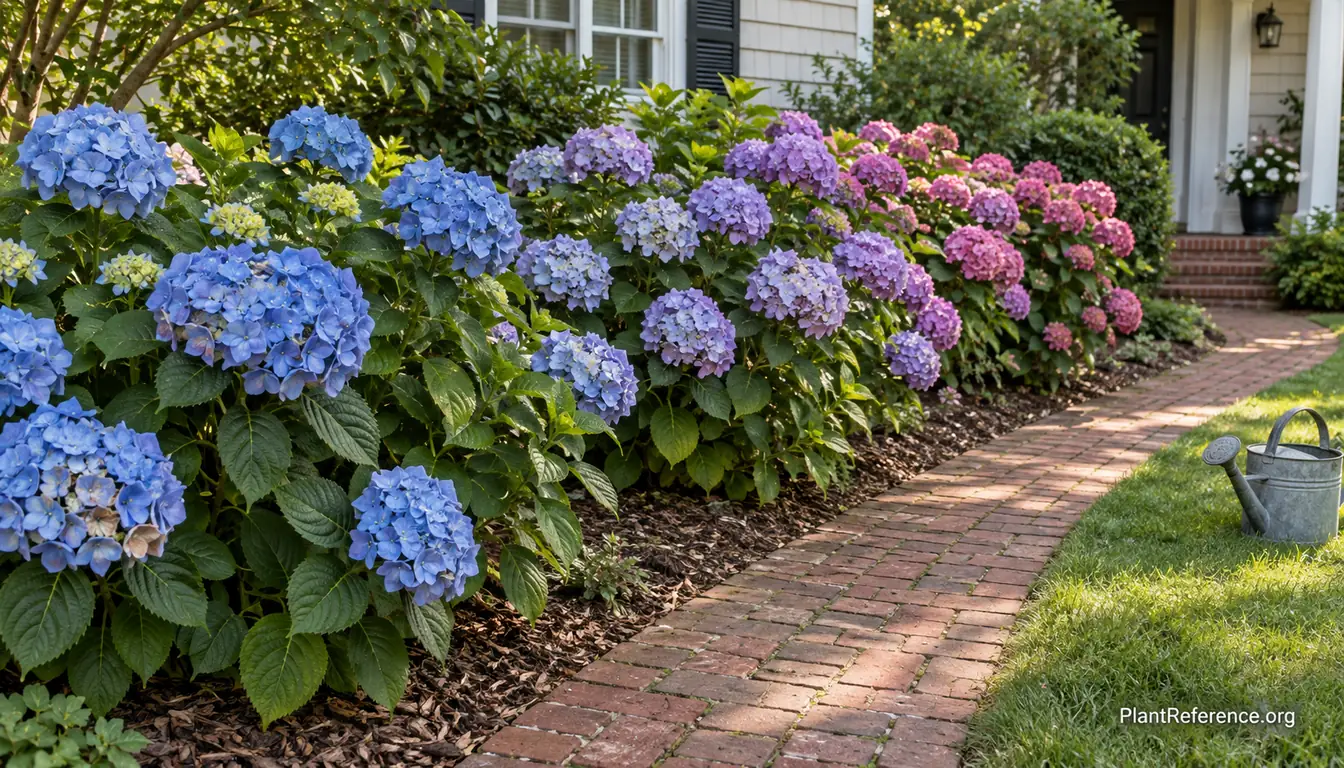
— Image © PlantReference.org 2026
Few garden transformations feel as much like magic as watching a pink hydrangea turn blue. The good news is that it is not magic at all, and once you understand the chemistry, you can learn how to change hydrangea color predictably. This guide explains what drives blue, pink, and purple flowers, which hydrangeas respond, and the exact steps for each color.
The Science Behind Hydrangea Color
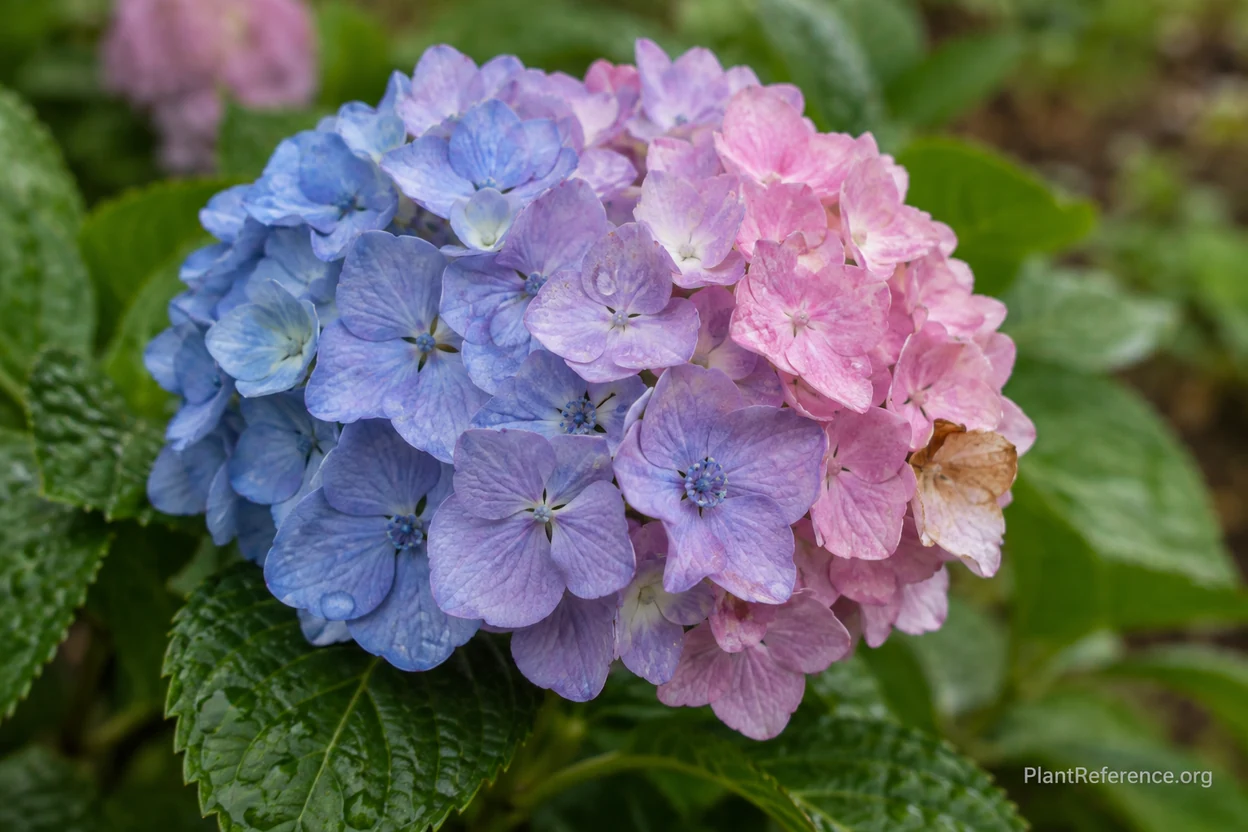
The color of a bigleaf hydrangea flower comes from its sepals, the showy structures most people call petals. Those sepals contain an anthocyanin pigment called delphinidin-3-glucoside. On its own, this pigment appears pink to red. When aluminum ions reach the sepal tissue, they bind with the pigment and with helper compounds in the cell, and the complex reflects blue instead.
So the real question is not "how do I make my hydrangea blue?" but "how do I get aluminum into the flower?" Most garden soils contain plenty of aluminum. It is locked into clay minerals and only dissolves into a form roots can absorb when soil turns acidic.
That is where pH comes in:
pH 4.5-5.5 (acidic): aluminum dissolves, roots absorb it, and flowers turn blue
pH 5.5-6.2 (mildly acidic): a limited supply of aluminum produces purple, lavender, or mauve
pH 6.5-7.5 (neutral to slightly alkaline): aluminum precipitates out of solution, and flowers turn pink
Phosphorus is the second lever. Phosphorus binds aluminum into insoluble aluminum phosphate, both in the soil and inside the plant. A high-phosphorus fertilizer can therefore keep flowers pink even in moderately acidic soil, while a low-phosphorus fertilizer lets available aluminum do its work. If you want to go deeper into how pigments and flower parts relate, the Flower Identification Guide: Petals, Shape & Color Explained covers the basics of sepals, petals, and color.
Target Color | Soil pH | Aluminum Status | Amendments | Fertilizer Type |
|---|---|---|---|---|
Blue | 4.5-5.5 | Available | Elemental sulfur, aluminum sulfate | Low phosphorus |
Purple / mauve | 5.5-6.2 | Partly available | Small, controlled sulfur doses | Balanced, moderate phosphorus |
Pink | 6.5-7.5 | Locked up | Garden lime (dolomitic or calcitic) | Higher phosphorus |
Which Hydrangeas Can Change Color?
This is where many gardeners lose a year of effort. Only two species respond to soil chemistry: bigleaf hydrangea, 🌿Hydrangea macrophylla (hy-DRAN-jee-uh mak-roh-FIL-uh), and its close relative mountain hydrangea, 🌿Hydrangea serrata (hy-DRAN-jee-uh ser-AY-tuh). Both mophead and lacecap forms of bigleaf hydrangea change color.
Cultivars known for strong color response include 🌿Hydrangea macrophylla 'Nikko Blue', the classic mophead that turns vivid blue in acidic soil, and reblooming cultivars such as 🌿Hydrangea macrophylla 'Endless Summer', 🌿Hydrangea macrophylla 'BloomStruck', and the lacecap Hydrangea macrophylla 'Twist-n-Shout'. Among mountain types, 🌿Hydrangea serrata 'Blue Billow' gives cold-climate gardeners a hardier route to blue flowers.
These hydrangeas do not change color with pH:
Panicle hydrangeas such as 🌿Hydrangea paniculata 'Limelight': their pink and red tones come from flower aging and cool nights
Smooth hydrangeas such as 🌿Hydrangea arborescens 'Annabelle' and Hydrangea arborescens 'Invincibelle Spirit II': pink smooth types are genetically pink
Oakleaf hydrangeas such as Hydrangea quercifolia 'Ruby Slippers': flowers age from white to rose regardless of soil
Climbing hydrangea: flowers stay white
White bigleaf cultivars: they lack the pigment that aluminum acts on, so they stay white
If you are not sure which species you have, check the leaves. Bigleaf hydrangeas have large, thick, glossy, coarsely toothed leaves; mountain hydrangeas have smaller, narrower, finely toothed leaves. The guide How to Identify Any Plant: A Beginner's Guide to Leaves, Flowers, and Stems explains the leaf features to look for.
Test Your Soil Before You Change Anything
Every successful color change starts with a soil pH reading. Without one, you are guessing at how much amendment to use, and overshooting in either direction can harm the plant.
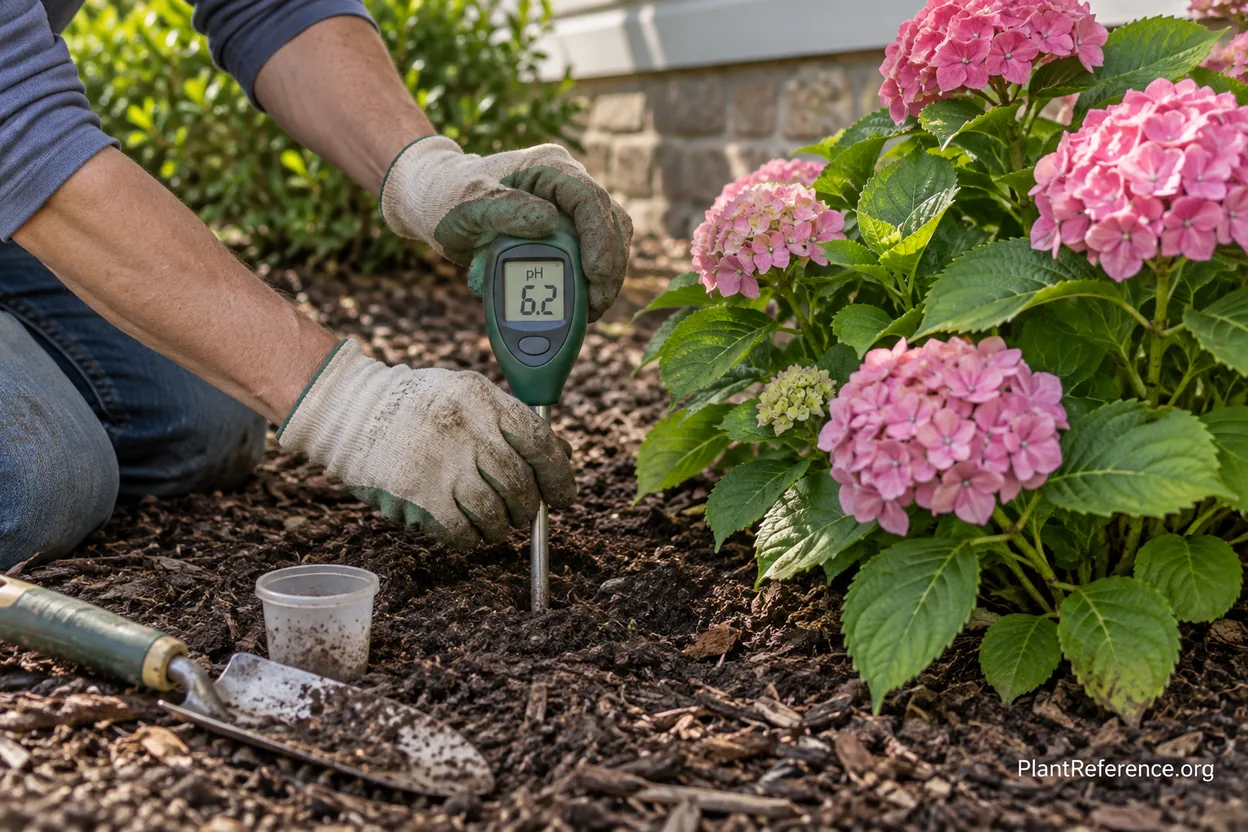
You have two options. A home pH meter or test kit gives a quick reading and is useful for tracking progress over months. A lab soil test through your county extension service gives a precise pH plus lime or sulfur recommendations for your soil texture, and it costs little. Take samples from the root zone at 4-6 inches (10-15 cm) deep, at several points around the drip line, and mix them together.
Soil texture matters as much as the starting pH. Sandy soil changes pH quickly with small doses, while clay soil resists change and needs more amendment. The same principles apply in any bed, and Raised Bed Soil pH Problems: Testing, Adjusting, and Maintaining Balance walks through testing and adjusting in detail.
Also look around your planting site. Hydrangeas planted against a concrete foundation or beside a concrete walk often bloom pink because lime leaches from the concrete and raises pH. Hard, alkaline tap water can do the same over time.
How to Turn Hydrangeas Blue
Turning pink flowers blue is the easier direction, because most soils already contain aluminum. You only need to make it available.
Step 1: Lower the Soil pH
Elemental sulfur is the slow, steady tool. Soil bacteria convert it into sulfuric acid over several months, so apply it in fall or early spring well ahead of bloom. As a rough guide, lowering pH by one unit takes about 1/2 pound per 100 square feet (about 0.25 kg per 9 m²) in sandy soil and 1-2 pounds per 100 square feet (0.5-1 kg per 9 m²) in loam or clay. Your soil test recommendation should override these estimates. Spread it over the root zone, scratch it lightly into the top inch of soil, and water it in.
Step 2: Supply Aluminum Directly
Aluminum sulfate works faster because it both acidifies soil and adds aluminum. A commonly recommended drench is 1 tablespoon (about 15 ml) dissolved in 1 gallon (3.8 L) of water, applied to moist soil around an established plant in spring. Repeat every 4 weeks, three or four times through the growing season.
Be careful here. Aluminum sulfate can burn roots if applied to dry soil or at higher rates, and too much aluminum is toxic to plants. Water the plant well the day before, never exceed label rates, and stop once flowers turn blue and your pH reads in the target range.
Step 3: Choose a Low-Phosphorus Fertilizer
Use a fertilizer low in phosphorus and relatively high in potassium, or a product formulated for acid-loving plants. Avoid bone meal and high-phosphorus "bloom booster" products, which lock up the aluminum you just made available.
Step 4: Mulch With Acidic Organic Matter
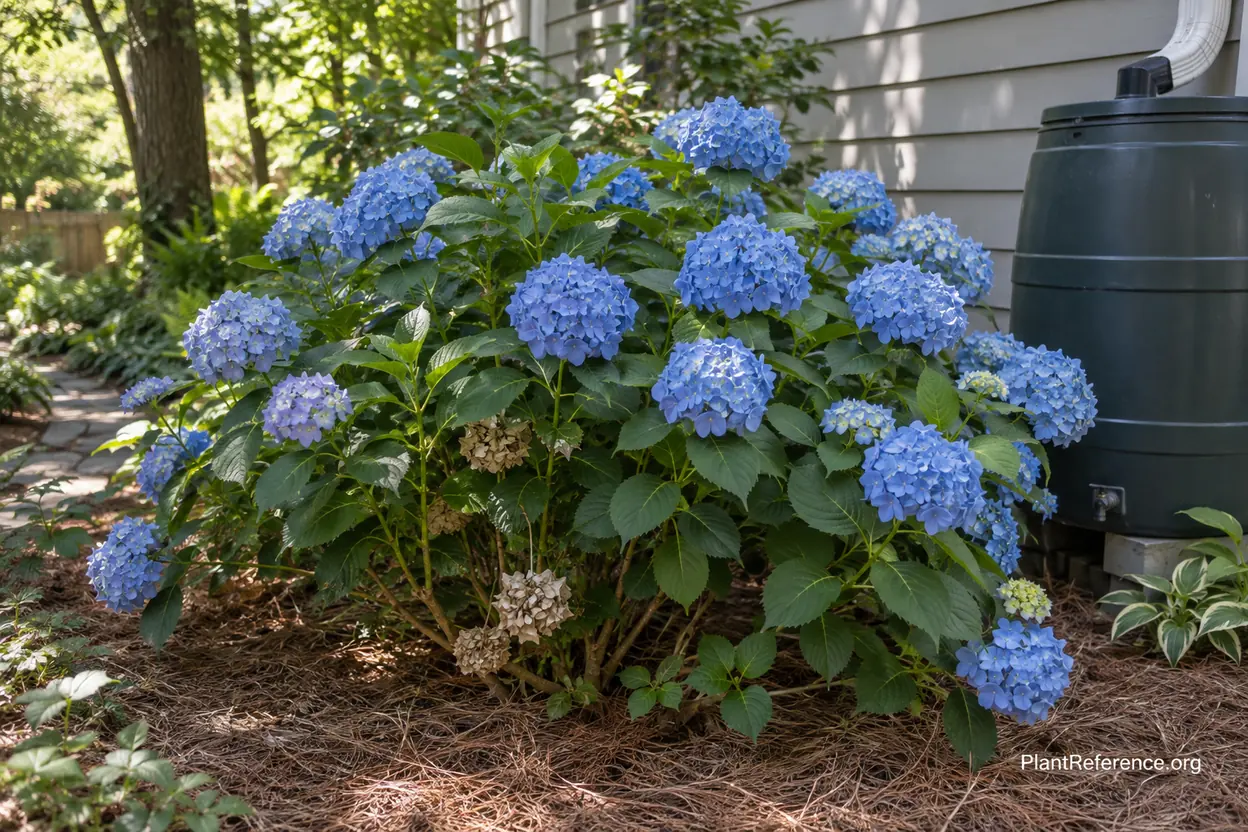
Pine needles, pine bark, and composted oak leaves help keep the surface slightly acidic as they break down. Use 2-3 inches (5-7.5 cm) of mulch, pulled a few inches back from the stems.
Step 5: Water With Rain When You Can
If your tap water is hard and alkaline, rainwater from a barrel helps maintain low pH. Gardeners in naturally acidic regions often get blue flowers with no effort at all, as explained in Why Pacific Northwest Soil Is Acidic + How to Fix It.
How to Turn Hydrangeas Pink
Turning blue flowers pink is harder, because you are trying to lock away aluminum that is already present and, in acidic regions, working against the natural chemistry of your soil. It is possible, but plan on patience and regular maintenance.
Step 1: Raise the Soil pH With Lime
Garden lime (calcium carbonate) or dolomitic lime (calcium plus magnesium carbonate) raises pH gradually. Rough rates to raise pH by one unit run about 3 pounds per 100 square feet (1.4 kg per 9 m²) in sandy soil and 5-7 pounds per 100 square feet (2.3-3.2 kg per 9 m²) in loam or clay. Apply in fall so it has months to react before spring growth. Aim for pH 6.5-7.0 and do not push much past 7.5, where iron becomes unavailable and leaves turn yellow between the veins.
Step 2: Use a Higher-Phosphorus Fertilizer
Phosphorus binds aluminum into forms the plant cannot use. A balanced or phosphorus-leaning fertilizer applied in spring supports pink color alongside lime.
Step 3: Avoid Acidifying Inputs
Skip pine needle mulch, aluminum-containing products, and fertilizers labeled for acid-loving plants. Use a neutral mulch such as shredded hardwood.
Step 4: Consider a Container or Raised Bed
In strongly acidic native soil, it may be easier to grow a pink hydrangea in a container or raised bed filled with a neutral mix. Best Soil Mix for Raised Beds: Creating the Perfect Growing Medium offers a good starting framework for a neutral, well-drained blend.
How to Get Purple Hydrangeas
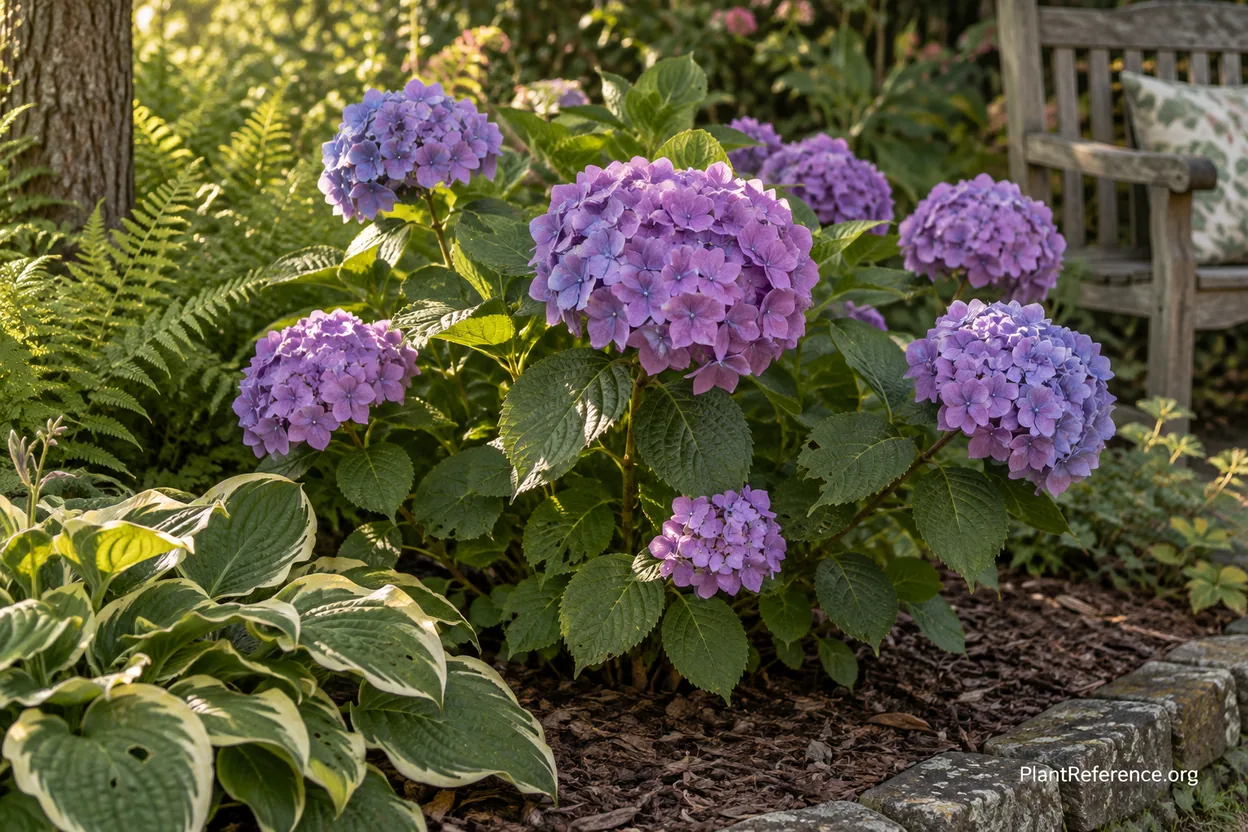
Purple, lavender, and mauve hydrangeas occur in the transition zone between pink and blue, at roughly pH 5.5-6.2. Many gardeners get purple by accident when a pink plant is partway through turning blue, or when a blue plant sits in soil that is slowly drifting upward.
Getting purple on purpose takes a light hand. Test pH, then apply small, split doses of sulfur, about a quarter of the rate you would use for blue, and retest every few months. Use a balanced fertilizer rather than a strongly low- or high-phosphorus product. Expect some variation: you will often see blue, purple, and pink florets on the same shrub, particularly where the root zone extends into soils with different pH.
Some cultivars naturally lean purple in mildly acidic soil. Lacecaps such as Hydrangea macrophylla 'Twist-n-Shout' often show attractive two-tone effects, with purple fertile centers and pink or blue outer florets.
Changing Hydrangea Color in Containers
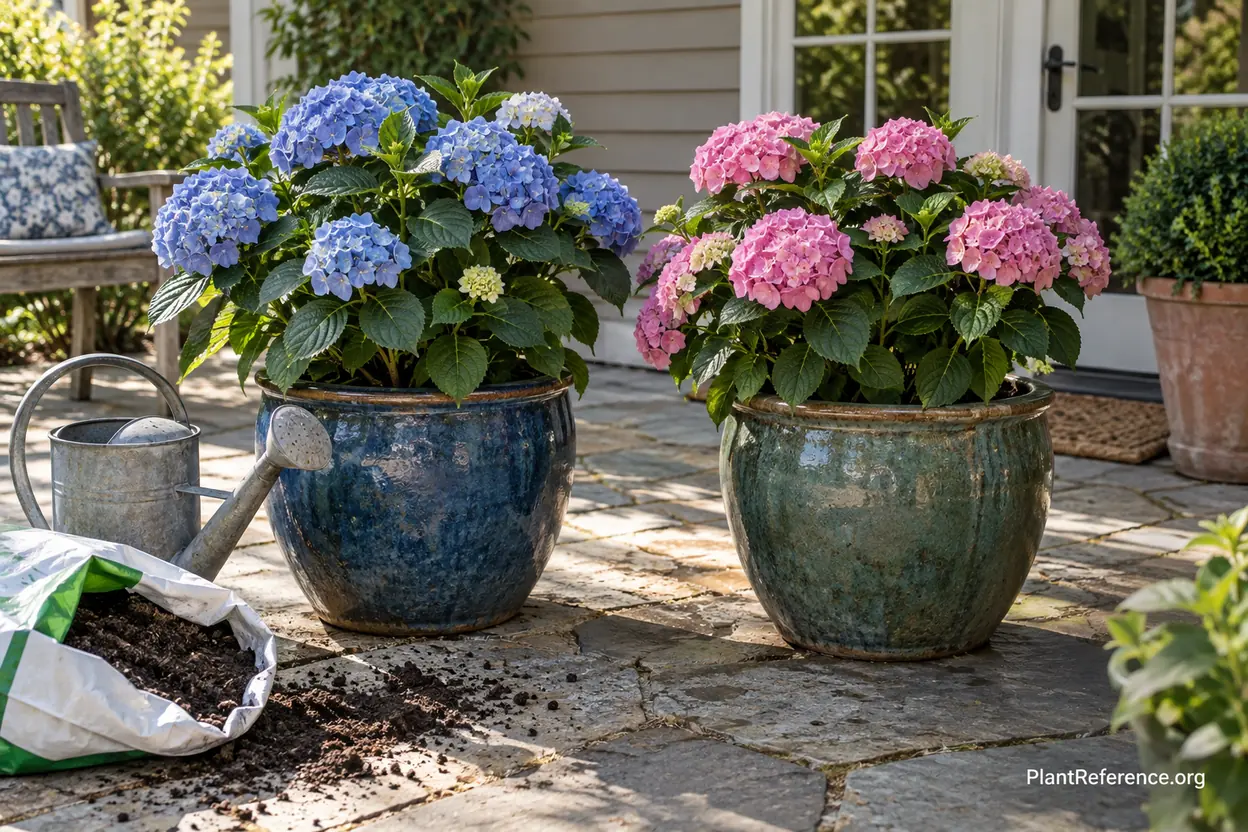
Containers give you the most control over hydrangea color, because you choose the growing medium from the start and it holds a limited volume of soil.
For blue flowers, start with a potting mix formulated for acid-loving plants, which typically contains peat or pine bark and sits near pH 5.0-5.5. Avoid mixes with added lime or superphosphate. Feed with a low-phosphorus fertilizer and apply the aluminum sulfate drench described above at the same rate, but water thoroughly first because container roots burn more easily.
For pink flowers, use a standard, lime-amended potting mix near pH 6.5 and a phosphorus-leaning fertilizer. Because containers leach nutrients with every watering, check pH twice a season and adjust.
Container hydrangeas also need at least a 16-18 inch (40-45 cm) pot and daily watering in summer heat. In cold climates, their roots need winter protection, since roots in a pot freeze far more easily than roots in the ground; the timing principles in How to Prepare Perennial Gardens for Winter by Species apply here as well.
Timeline: How Long Color Change Takes
Hydrangea color change is slow because the plant has to absorb aluminum (or stop absorbing it) and move it into flower tissue as the flowers develop. Open flowers generally do not change color after they have fully developed. You are adjusting next season's blooms, and sometimes the ones after that.
Timing | What to Do | What to Expect |
|---|---|---|
Fall | Apply sulfur (blue) or lime (pink) based on soil test | Slow soil reaction begins over winter |
Early spring | Retest pH; start aluminum sulfate drenches for blue | Buds and leaves emerging; no color change yet |
Late spring to early summer | Continue drenches every 4 weeks; fertilize by target color | First flowers may show mixed or transitional color |
Midsummer | Retest pH; stop amendments once target reached | Partial change common in year one |
Following summer | Maintain with annual testing and light applications | Fuller, more consistent color |
Set realistic expectations. Pink to blue often shows noticeable results within one season using aluminum sulfate. Blue to pink commonly takes two seasons in acidic regions. Large, established plants with extensive root systems change more slowly than young plants.
Hydrangea Color Myths That Waste Your Time
Garden folklore around hydrangea color is persistent. Here are the claims worth ignoring:
Burying pennies or rusty nails turns flowers blue. Copper and iron do not supply aluminum, and the quantities involved are negligible. This is the most common myth and it does not work.
Coffee grounds reliably turn hydrangeas blue. Used grounds are close to neutral and add organic matter, but they will not shift pH enough to change color on their own.
Any hydrangea can change color. Only bigleaf and mountain hydrangeas respond; panicle, smooth, oakleaf, climbing, and white cultivars do not.
Color change is instant. Flowers already open will not change; new flowers reflect the chemistry present while they develop.
Pink is the natural color and blue is forced. Neither is more natural; each reflects the soil the plant is growing in.
Hydrangeas also combine beautifully with other shade-tolerant plants once you settle on a color. For companions that suit the part-shade conditions bigleaf hydrangeas prefer, see Best Perennials for Shade: 12 Species That Thrive, and for color pairing principles, Perennial Combinations That Look Good Together. Gardeners in maritime climates will find regional context in the Pacific Northwest Gardening Guide: Climate, Soil & Plant Selection.
Frequently Asked Questions
Reading about plants and recognising them are different skills. These three build the second.
- Daily PlantIdentify the day’s mystery plant from a close-up photograph.
- Keyed OutWork a dichotomous key, lead by lead, to name a hidden specimen.
- Name That PlantName a specimen from botanical clues dealt hardest first.
Free to play, no account needed
Tagged with
Sarah earned her doctorate in plant biology and spent time working in botanical garden education before transitioning to freelance writing and consulting. Now based in Portland, Oregon, she teaches plant identification workshops at local community centers and maintains a modest collection of over 60 houseplants in her small apartment. Sarah specializes in helping beginners understand plant science without the jargon—her approach focuses on practical observation over theory. She's killed her fair share of fiddle leaf figs and finally cracked the code on keeping them alive.