Image 1 of 14
1 / 14
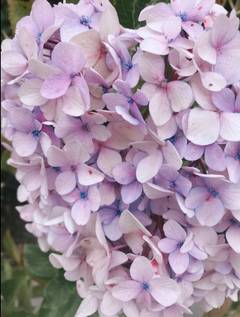
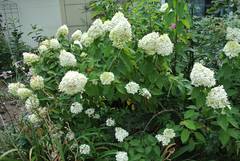
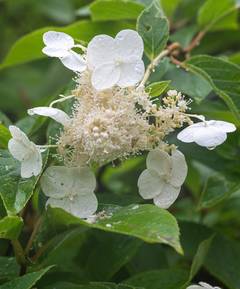
Species photo — your cultivar may vary
© magabyrd, some rights reserved (CC-BY-NC) · iNaturalist
Hydrangea, Genus, macrophylla, Species, 'BloomStruck', Cultivar,
- Genus & species
- Cultivar
BloomStruck Hydrangea
horticultural cultivar; species native to Japan and Korea
Overview
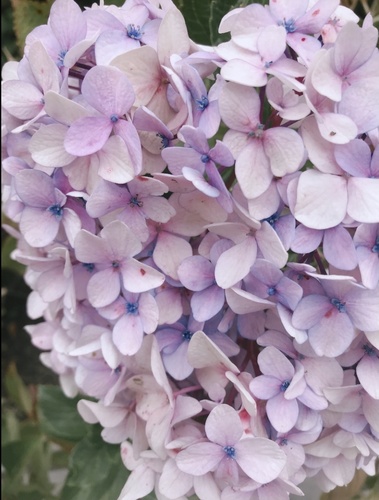
Hydrangea macrophylla 'BloomStruck' is a deciduous shrub forming a rounded mound 3-4 feet (90-120 cm) tall and wide. Stems and leaf petioles are tinted deep burgundy-red, contrasting with dark green ovate leaves 4-6 inches (10-15 cm) long with serrate margins. Mophead flower clusters 5-7 inches (12-18 cm) across appear from late spring through fall on both old and new wood, producing a second flush after winter dieback or summer pruning. Sterile florets dominate each cluster; flower color shifts with soil chemistry, holding rose-pink tones at pH 6.5 and higher and violet-purple to blue-purple at pH 6.0 and below. Foliage turns reddish-bronze in fall before dropping. Stems return to the ground after winter dieback in zones 4-5 but rebloom from new growth the same summer. Flower buds on old wood may be lost at temperatures below 18°F (-8°C) after dehardening; rebloom on new wood compensates within 6-8 weeks of bud break. Mature size is reached within 2-3 growing seasons.
Native Range
The species H. macrophylla is native to coastal forests and lowland mountain valleys of southern Japan and South Korea, growing on moist slopes and forest edges from sea level to 1,500 feet (450 m) elevation. 'BloomStruck' is a horticultural cultivar in the Endless Summer reblooming series and has no wild native range.Suggested Uses
Used in foundation plantings spaced 36-42 inches (90-105 cm) apart, mixed shrub borders, and as a low summer hedge. Compact mature size suits container culture in pots of at least 10 gallons (38 L) with consistent moisture. In zones 4-5, plants are typically sited where late spring frosts are uncommon, since flower buds on old wood may be killed below 18°F (-8°C) after dehardening.How to Identify
Appearance
Size & Dimensions
Height3' - 4'
Width/Spread3' - 4'
Bloom Information
Initial bloom occurs from June through July on previous-season stems in zones 6-9, with reblooming on current-season growth from August through September and continuing until first frost in mild climates. In zones 4-5 where old wood typically dies back, bloom begins in mid-July on new growth and continues 8-10 weeks. Individual mophead clusters last 4-6 weeks before fading to muted antique tones. Flower color depends on soil pH and aluminum availability rather than bloom timing.
Detailed Descriptions
Flower Description
rose-pink at pH >=6.5; violet-purple to blue-purple at pH <=6.0Foliage Description
dark green with burgundy-red petioles; reddish-bronze in fallGrowing Conditions
Sun Requirements
Requires 4-6 hours of direct sunlight daily
• Full Sun: 6+ hours of direct sunlight
• Partial Shade: 3-6 hours of direct sunlight
• Full Shade: Less than 3 hours of direct sunlight
Care & Maintenance
Care Guide
Water demand is high during the first growing season, with 1-2 deep waterings per week needed to establish a 12-18 inch (30-45 cm) deep root system; established plants use about 1 inch (2.5 cm) of water per week and wilt within hours during heat above 85°F (29°C). A 2-3 inch (5-8 cm) layer of organic mulch over the root zone moderates soil temperature and reduces moisture loss. Aluminum sulfate applied at 1 cup per 10 square feet (240 mL per 1 m²) each spring lowers soil pH and shifts flower color toward purple and blue; garden lime at the same rate raises pH and shifts color toward rose-pink. Powdery mildew, leaf spot, and Cercospora develop in humid sites with poor air circulation but rarely cause defoliation. Plants live 15-25 years in zones 4-7 with consistent moisture.Pruning
Reblooming on both old and new wood means flowering occurs whether stems are pruned in late winter or left intact. Standard pruning consists of removing dead stems at ground level in late winter; removal of live stems reduces but does not eliminate first-flush bloom. Spent flower clusters are often deadheaded at the first node below the cluster in mid-summer to promote a stronger second flush.Pruning Schedule
Prune: February–March
winterearly spring
Container Growing
Suitable for container growing
Minimum container size: 10 gallons