Growing Hydrangeas in Boston: Zone 6b Guide
Pets & Toxicity
Recorded toxicity for plants linked in this guide. An unknown status is not a safety assessment.
Toxic to pets: bigleaf hydrangea, Panicle hydrangea, Limelight PeeGee hydrangea and 4 moreDetailsHide
Hydrangea macrophylla — Toxicity Warning
Toxic to pets and humansView Hydrangea macrophylla plant profileHydrangea paniculata — Toxicity Warning
Toxic to pets and humansView Hydrangea paniculata plant profileHydrangea paniculata 'Limelight' — Toxicity Warning
Toxic to petsView Hydrangea paniculata 'Limelight' plant profileHydrangea paniculata 'Quick Fire' — Toxicity Warning
Toxic to pets and humansView Hydrangea paniculata 'Quick Fire' plant profileHydrangea arborescens 'Incrediball' — Toxicity Warning
Toxic to petsView Hydrangea arborescens 'Incrediball' plant profileHydrangea macrophylla 'Endless Summer' — Toxicity Warning
Toxic to pets and humansView Hydrangea macrophylla 'Endless Summer' plant profileHydrangea macrophylla 'Nikko Blue' — Toxicity Warning
Toxic to pets and humansView Hydrangea macrophylla 'Nikko Blue' plant profile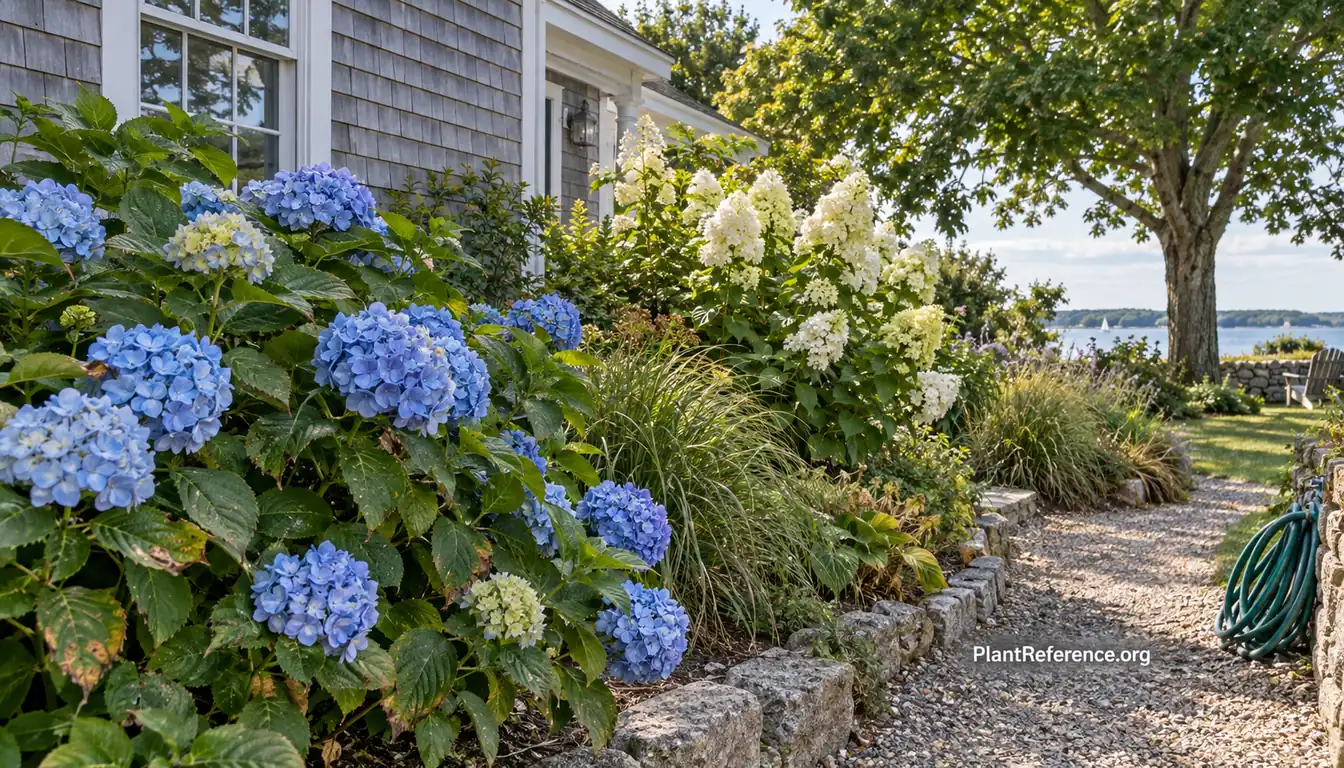
— Image © PlantReference.org 2026
Growing hydrangeas in Boston starts with accepting that the harbor, dense city blocks, sheltered courtyards, and western suburbs do not share one winter. Panicle and smooth hydrangeas bloom reliably on new growth across the region. Bigleaf hydrangeas can deliver the classic blue New England look near the coast, but exposed inland gardens need sheltered placement and realistic expectations for old-wood buds.
Massachusetts gardeners can use April 20 and October 20 as average frost anchors, creating roughly 183 frost-free days. Those dates guide planting and spring protection; they do not erase a late nor’easter or a warm March followed by an April freeze. A durable garden layers dependable new-wood shrubs with protected old-wood accents.
Best Hydrangea Varieties for Boston
Bigleaf hydrangea 🌿Hydrangea macrophylla (hy-DRAN-jee-uh mak-roh-FIL-uh) creates the blue and pink mopheads associated with coastal New England. Its roots are hardy in Zone 6b, but flowers depend on overwintering old-wood buds unless the cultivar reblooms. Panicle hydrangea 🌿Hydrangea paniculata (hy-DRAN-jee-uh pan-ik-yoo-LAY-tuh) and smooth hydrangea Hydrangea arborescens (hy-DRAN-jee-uh ar-bor-ESS-enz) rebuild flower buds on new shoots each spring.
The right mix depends on exposure more than a single regional label. Hydrangea Types Explained: Pruning, Color & Care Guide explains bloom wood and species identification before you choose a cultivar.
Variety | Mature size | Bloom reliability | Best Boston setting |
|---|---|---|---|
6–8 ft (1.8–2.4 m) | Excellent | Inland hedge or specimen | |
6–8 ft (1.8–2.4 m) | Excellent | Early panicle display | |
Hydrangea paniculata 'Little Lime' | 3–5 ft (0.9–1.5 m) | Excellent | Compact foundation bed |
4–5 ft (1.2–1.5 m) | Excellent | Bright shade and strong stems | |
3–5 ft (0.9–1.5 m) | Good in shelter | Reblooming coastal accent | |
4–6 ft (1.2–1.8 m) | Variable inland | Classic sheltered mophead | |
Hydrangea serrata 'Tuff Stuff' | 2–3 ft (60–90 cm) | Good | Compact lacecap alternative |
Hydrangea quercifolia 'Ruby Slippers' | 3–4 ft (0.9–1.2 m) | Good | Four-season foliage and bark |
Reliable structure for inland gardens
🌿Hydrangea paniculata 'Limelight' supplies a broad 6–8 foot (1.8–2.4 m) framework, lime-white flowers, and seed heads that hold into winter. Its new-wood bloom makes it dependable when exposed buds elsewhere are damaged. Give it the space to mature instead of planting it below a low window.
🌿Hydrangea paniculata 'Quick Fire' opens earlier and ages from white toward pink-red. Hydrangea paniculata 'Little Lime' brings a similar panicle form to a 3–5 foot (0.9–1.5 m) shrub. Panicle Hydrangea Guide: Limelight, Little Lime & More compares their scale and pruning needs.
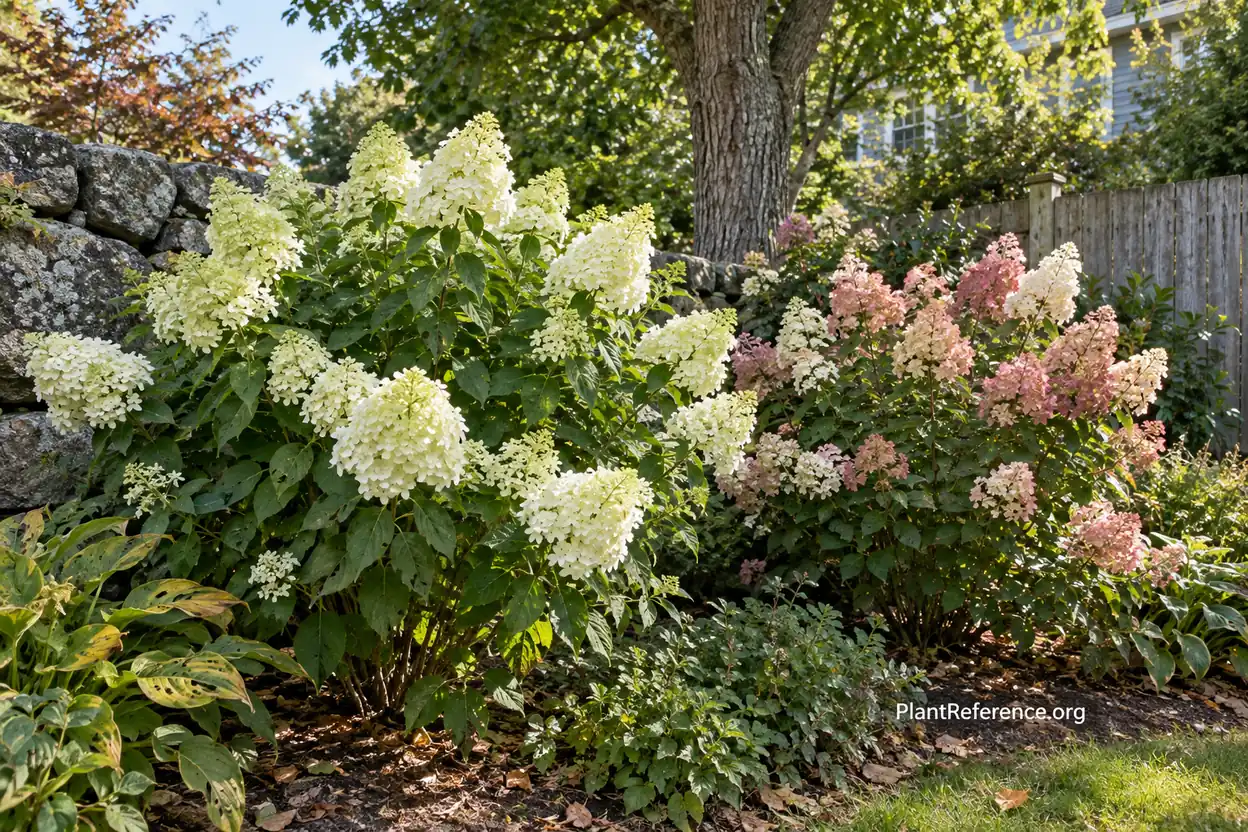
🌿Hydrangea arborescens 'Incrediball' fits bright shade and produces rounded white heads on stronger stems than older smooth selections. It reaches about 4–5 feet (1.2–1.5 m) and blooms after winter from new growth. It is a useful bridge between a formal mophead look and cold-climate reliability.
Coastal and sheltered color
🌿Hydrangea macrophylla 'Endless Summer' can flower on old and new wood, providing a second chance after moderate bud loss. It still performs best out of northwest wind, away from reflected afternoon heat, and where spring warmth does not force buds too early. New-wood flowers may arrive later than the first flush.
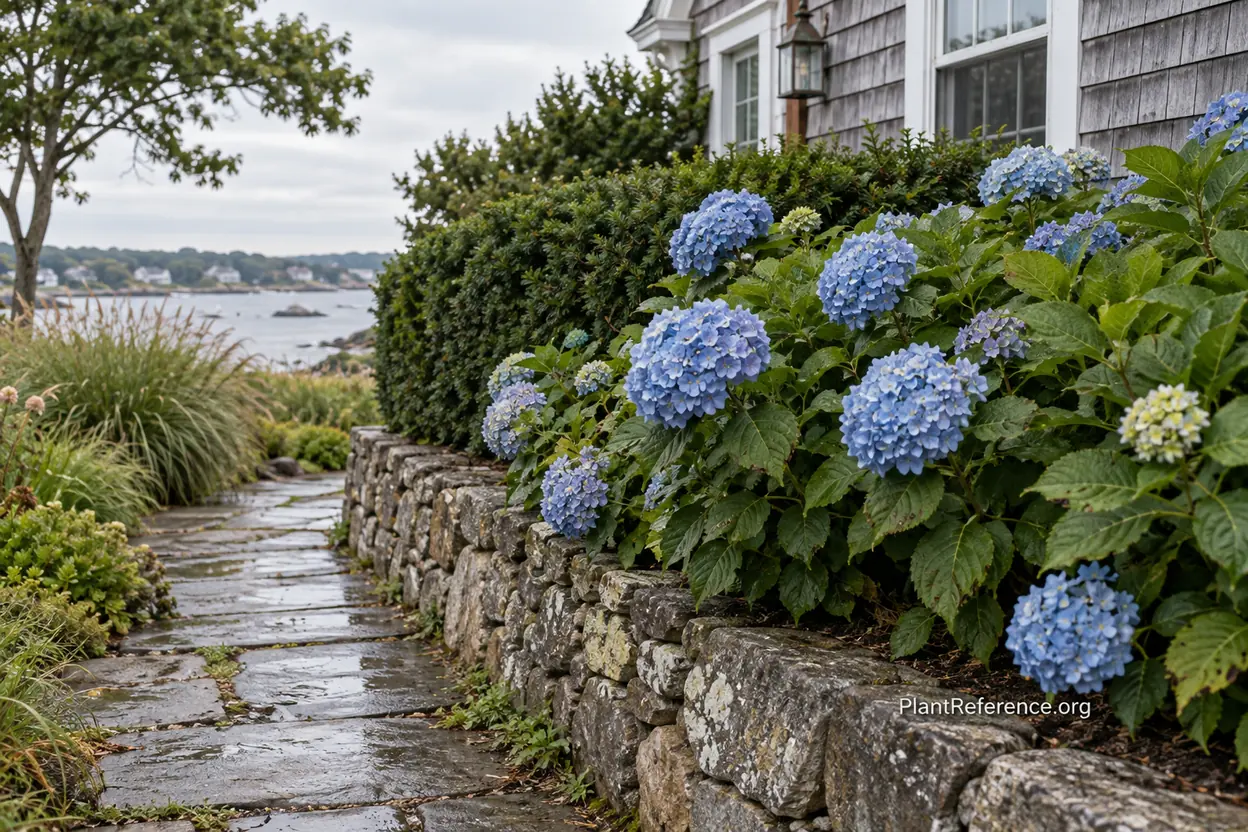
🌿Hydrangea macrophylla 'Nikko Blue' offers the classic mophead display but relies on old wood. Near Boston Harbor or on the Cape, moderated winter lows improve the odds. A few miles inland on an exposed slope, the same plant may leaf out beautifully and produce no flowers.
Hydrangea serrata 'Tuff Stuff' is a smaller lacecap option with hardier buds and old-plus-new-wood flowering. Hydrangea quercifolia 'Ruby Slippers' adds lobed foliage, red fall color, peeling bark, and compact white-to-rose flowers. Both reward a protected site, but neither should replace a dependable panicle backbone in a windswept landscape.
Only bigleaf and mountain hydrangeas shift blue or pink with aluminum availability and soil pH. How to Change Hydrangea Color: Blue, Pink & Purple covers testing and adjustment; white panicle and smooth flowers will not turn blue.
Specific Planting Dates for Boston
Plant hardy container-grown hydrangeas from April 15 through May 31, once the soil has thawed and drains without smearing. April 20 is the average last-frost anchor, but tender nursery leaves still need protection during a late cold night. Harden greenhouse-grown plants outside for 5–7 days before installation.
The fall window runs from September 1 through September 25. That leaves about three to seven weeks before the October 20 first-frost anchor while soil remains warm enough for root growth. Use spring for marginal bigleaf cultivars and fall for established panicle, smooth, or oakleaf plants.
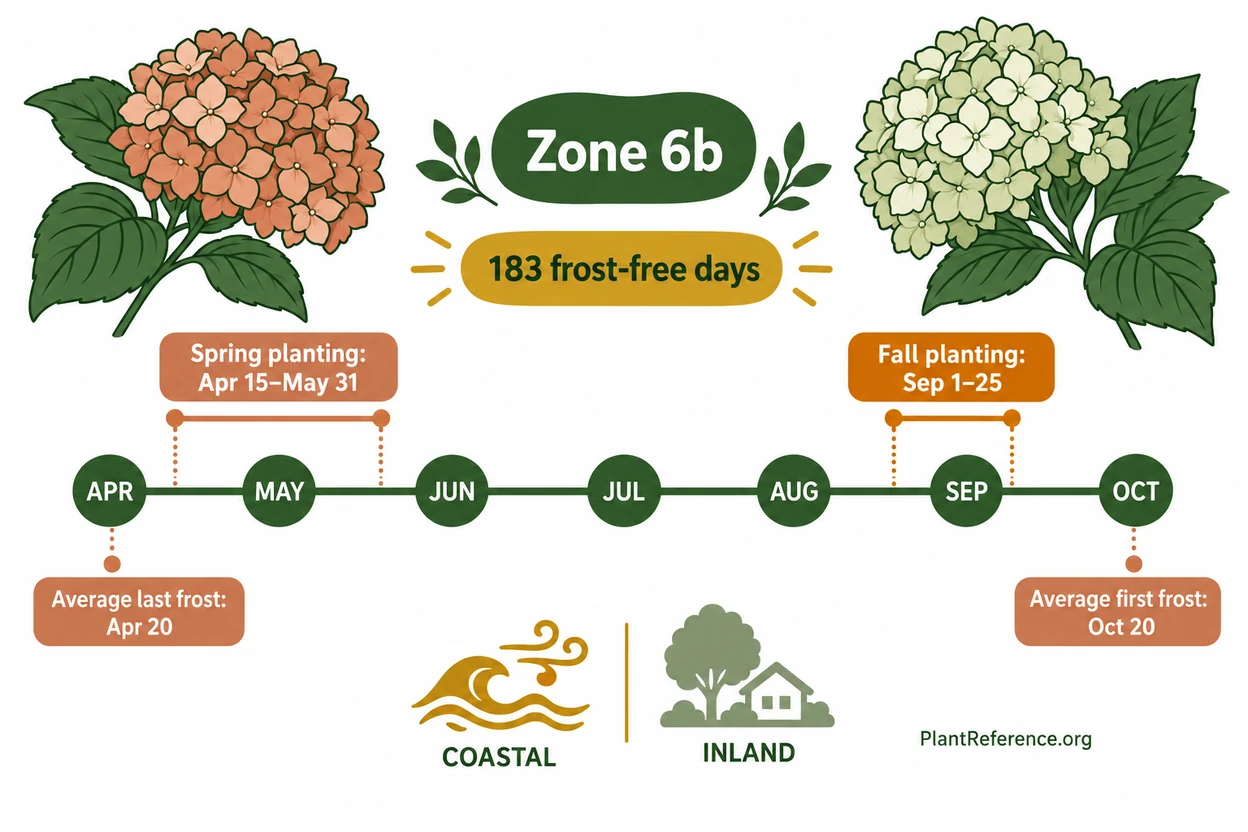
Use the seasonal anchors this way:
April 15–May 31: preferred spring installation after workable soil returns.
April 20: average last frost; protect tender leaves and swelling old-wood buds.
June through August: monitor moisture during heat, wind, and irregular rain.
September 1–25: early fall planting for hardy, well-rooted shrubs.
October 20: average first frost; water during dry weather until soil freezes.
Avoid planting during a July heat wave or immediately before a coastal storm. A shrub installed into saturated soil can suffer as much as one allowed to dry. The calendar narrows risk; the actual bed conditions make the final decision.
Complete Growing Guide for Boston
Map exposure through all four seasons
A sheltered east-facing foundation receives morning sun and protection from drying winter wind. A south-facing masonry wall warms early, which can help roots but also push old-wood buds before the last freeze. A north-facing wall suits climbing or shade-tolerant hydrangeas but may delay flowering.
Panicle hydrangeas need about six hours of sun for the strongest stems and best bloom. Bigleaf, mountain, smooth, and oakleaf types usually prefer morning sun with afternoon shade. Near the coast, salt spray and wind can burn leaves; move shrubs behind a fence or evergreen screen rather than trying to replace damaged water with constant irrigation.
Plan for winter appearance. Hydrangea quercifolia 'Ruby Slippers' holds sculptural bark and fall foliage, while 🌿Hydrangea paniculata 'Limelight' carries dried panicles above snow. A bed with only summer mopheads loses its structure after the flowers fade.
Build drainage around stone and compacted soil
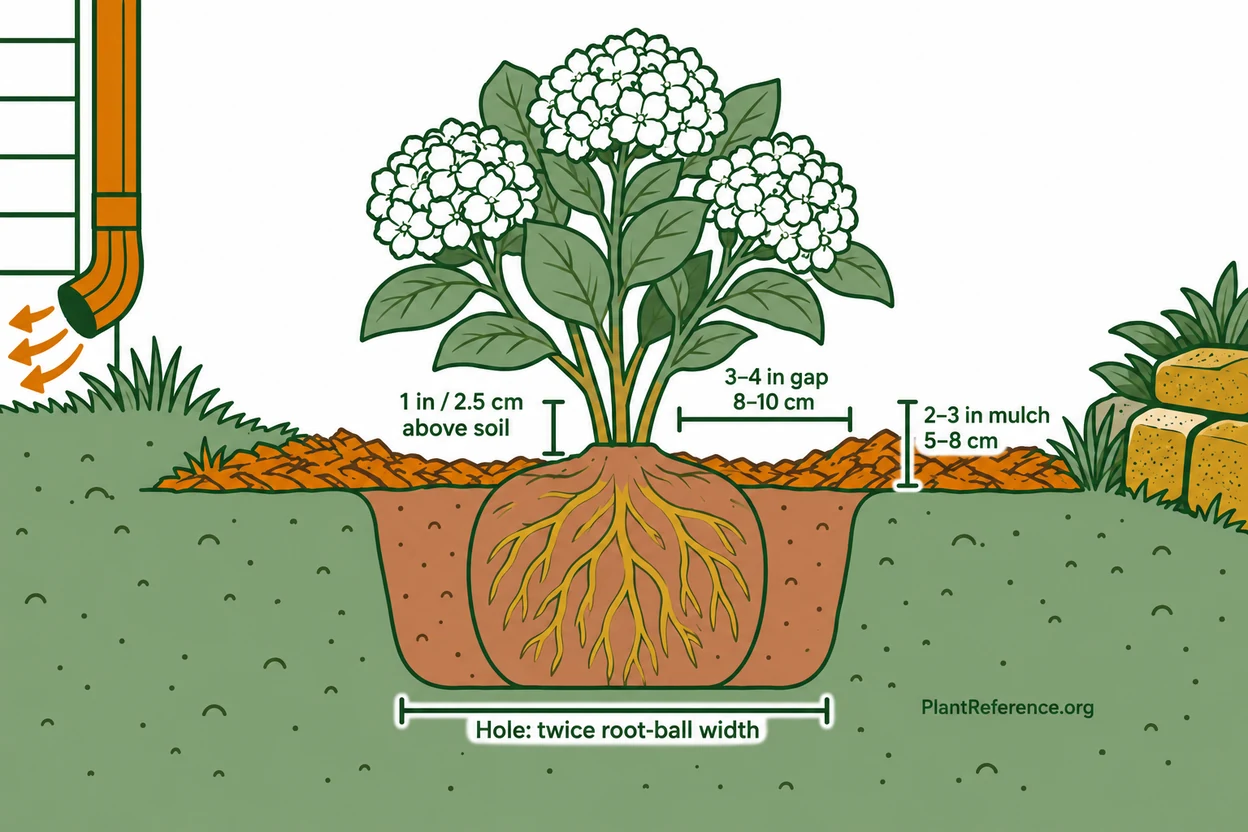
Urban fill, glacial soils, and construction compaction create abrupt drainage changes. Dig a hole two to three times wider than the root ball but no deeper. Set the root flare level with or 1 inch (2.5 cm) above grade and backfill mostly with native soil.
Do not fill a clay pocket with soft compost and peat; the contrast can trap water around roots. If a test hole stays full after a day, change the grade, build a broad raised area, or choose a different site. Keep downspout and sump discharge away from the crown.
Spread 2–3 inches (5–8 cm) of aged bark or hardwood mulch over the root zone and leave 3–4 inches (8–10 cm) clear around stems. Mulch moderates moisture and freeze-thaw changes without hiding a buried crown.
Water evenly, especially near the coast
Provide about 1–2 inches (2.5–5 cm) of total water weekly during active growth, adjusted for rain, sun, wind, and soil. Coastal wind increases evaporation even when the air feels cool. Water slowly across the root zone in the morning and check 3–4 inches (8–10 cm) beneath mulch before repeating.
A soaker hose helps along a hedge, but test pressure and distribution on a sloped site. Automatic timers should pause after meaningful rain. If leaves droop on a hot afternoon and recover by morning, the plant may not need more water; persistent morning wilt deserves a drainage check.
Continue watering through dry autumn weather until the ground freezes. Well-hydrated roots and stems tolerate winter drying better. Disconnect and drain hoses before repeated freezes.
Prune for bloom and winter structure
Prune panicle and smooth hydrangeas in late winter or early spring. Remove dead, crossing, and weak wood, then shorten only where the mature design requires it. Leaving a well-spaced framework supports new shoots and dried winter flowers.
Do not prune 🌿Hydrangea macrophylla 'Nikko Blue' in spring or fall except to remove confirmed dead wood. Treat 🌿Hydrangea macrophylla 'Endless Summer', Hydrangea serrata 'Tuff Stuff', and Hydrangea quercifolia 'Ruby Slippers' conservatively because old stems carry the earliest buds. How to Prune Hydrangeas: Old Wood vs New Wood Guide provides the full decision rule.
Clean cuts matter in humid weather. Use sharp bypass pruners, disinfect them after diseased tissue, and move to a larger tool when stems exceed hand-pruner capacity. Hard pruning cannot compensate for a shrub planted in the wrong scale.
Feed lightly and manage flower color separately
Use a soil test before adding lime, sulfur, or fertilizer. A balanced slow-release feeding in early spring may help weak plants, but too much nitrogen creates leaves and soft stems. Stop fertilizing by mid-July so new growth can harden before winter.
Color adjustment applies only to responsive bigleaf and mountain flowers. Acidic soil and available aluminum favor blue; higher pH and unavailable aluminum favor pink. Adjust gradually and retest rather than scattering household scraps.
Protect buds without sealing the shrub
After the soil cools, refresh mulch to 3–4 inches (8–10 cm) across the root zone. On exposed sites, place a burlap wind screen several feet from old-wood shrubs. Breathable frost fabric supported above swelling buds helps during a short April cold snap.
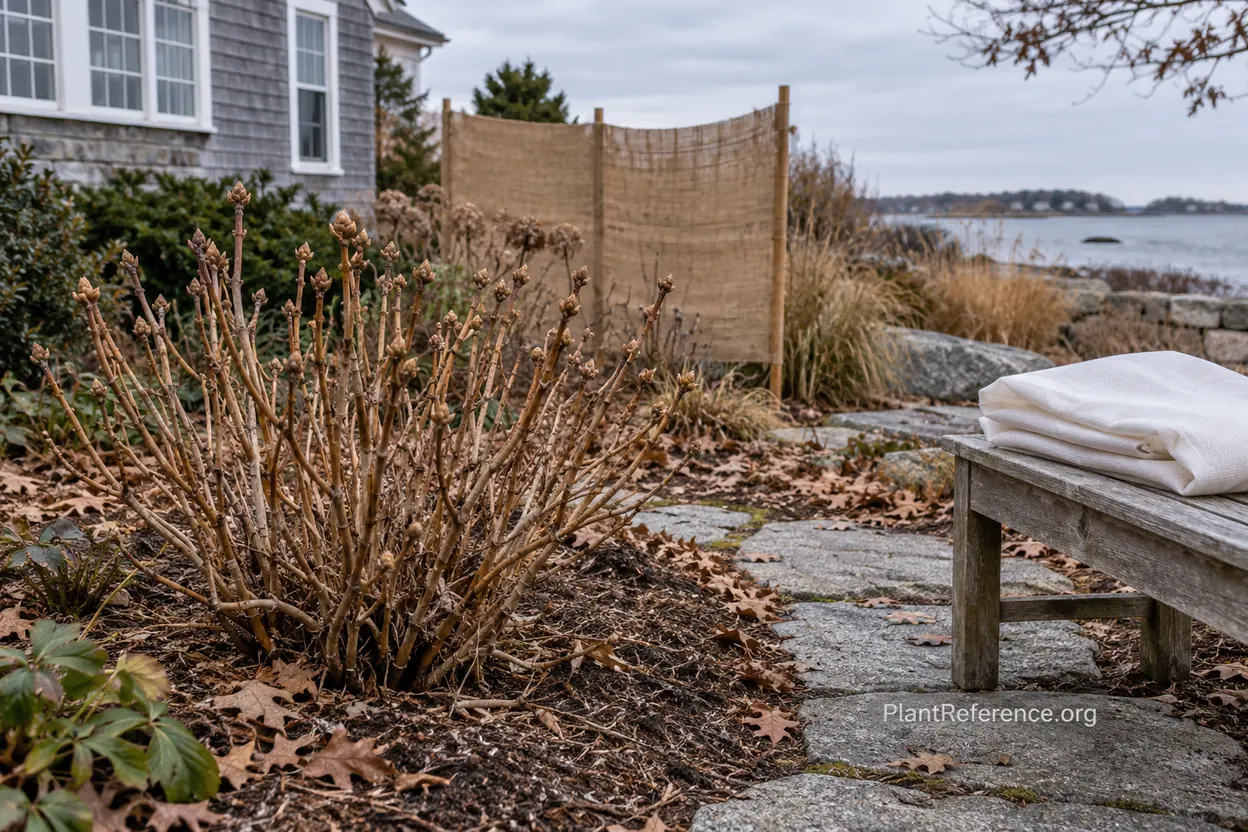
Do not wrap plastic tightly around branches. Sunny winter days heat sealed plastic, while trapped moisture encourages damage. Container roots need separate insulation or an unheated protected space; Hydrangeas in Pots: Container Care & Winter Protection explains those options.
Troubleshooting Boston Hydrangea Problems
Leaves without flowers
Identify the species and inspect pruning history first. A leafy 🌿Hydrangea macrophylla 'Nikko Blue' likely lost buds to winter, late frost, or pruning. A panicle or smooth hydrangea is more likely too shaded, overfed, young, or browsed. Hydrangea Not Blooming? 7 Causes and the Old Wood Fix provides a structured diagnosis.
Do not assume coastal shelter eliminates risk. One warm week followed by freezing wind can damage swollen buds even after a mild winter. Why Your Hydrangea Won't Bloom (And the One Mistake Almost Everyone Makes) reinforces why species identification comes first.
Brown edges on the harbor side
Wind, salt spray, dry soil, and reflected heat create similar scorched margins. Check soil moisture below mulch and note whether injury faces the prevailing wind. Rinse salt from foliage with fresh water after a spray event, then improve the windbreak rather than flooding the root zone. Hydrangea Leaves Turning Brown: Causes and Solutions separates scorch from disease.
Wilt in wet ground
Hydrangeas wilt from root oxygen loss as well as drought. Persistent morning droop, yellow leaves, and saturated soil point to drainage trouble. Redirect runoff, stop irrigation, and expose a buried root flare. Do not add fertilizer to a stressed root system.
Blackened buds after a spring freeze
Wait a week before pruning. Lower buds may still be alive, and new-wood species can replace damaged shoots. Old-wood bigleaf flowers may be reduced, but rebloomers can set a later flush if the season stays favorable.
Storm-bent branches
Wet snow and nor’easter wind load broad flowers and long stems. Site large panicles away from paths, leave a balanced framework, and remove broken branches with clean cuts after the storm. Shake loose snow only while stems remain flexible; frozen wood snaps easily.
Harvesting Flowers and Winter Storage
Cut flowers after morning dew dries, choosing heads with firm, papery sepals rather than soft fresh petals. Place stems in water immediately. 🌿Hydrangea paniculata 'Limelight' and mature bigleaf flowers dry especially well once their color begins to age.
For water drying, stand stems in 1–2 inches (2.5–5 cm) of water and let it evaporate. For air drying, remove lower leaves and hang small bundles in a dark, ventilated room. Freshly opened mopheads tend to collapse, so wait until the texture changes.
Leave some panicle and oakleaf flowers for winter silhouette, but remove any that repeatedly strike a walkway or bend weak branches. The goal is structure, not neglect. How to Prepare Perennial Gardens for Winter by Species helps coordinate cleanup across the whole Massachusetts border.
Frequently Asked Questions
Reading about plants and recognising them are different skills. These three build the second.
- Daily PlantIdentify the day’s mystery plant from a close-up photograph.
- Keyed OutWork a dichotomous key, lead by lead, to name a hidden specimen.
- Name That PlantName a specimen from botanical clues dealt hardest first.
Free to play, no account needed
Tagged with
Kevin is a landscape contractor in the Boston area who specializes in cold-climate perennial gardens and hardscaping. He studied landscape design and worked at a prominent nursery on the North Shore before starting his own design-build firm. Kevin's gardens are built to handle New England weather—freeze-thaw cycles, nor'easters, late springs, and heavy snow loads. He's particularly interested in native perennials and shrubs that provide four-season interest without constant maintenance. Kevin writes about cold-hardy plant selection, winter garden structure, and building landscapes that look good even in February.