Hydrangea, Genus, quercifolia, Species, 'Alice', Cultivar,
- Genus & species
- Cultivar
alice oakleaf hydrangea
Overview
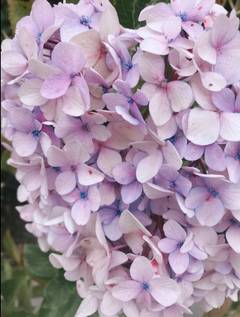
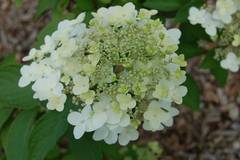
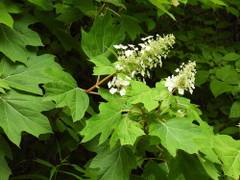
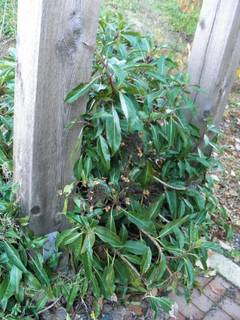
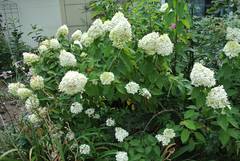
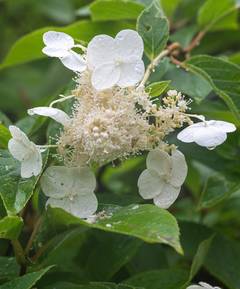
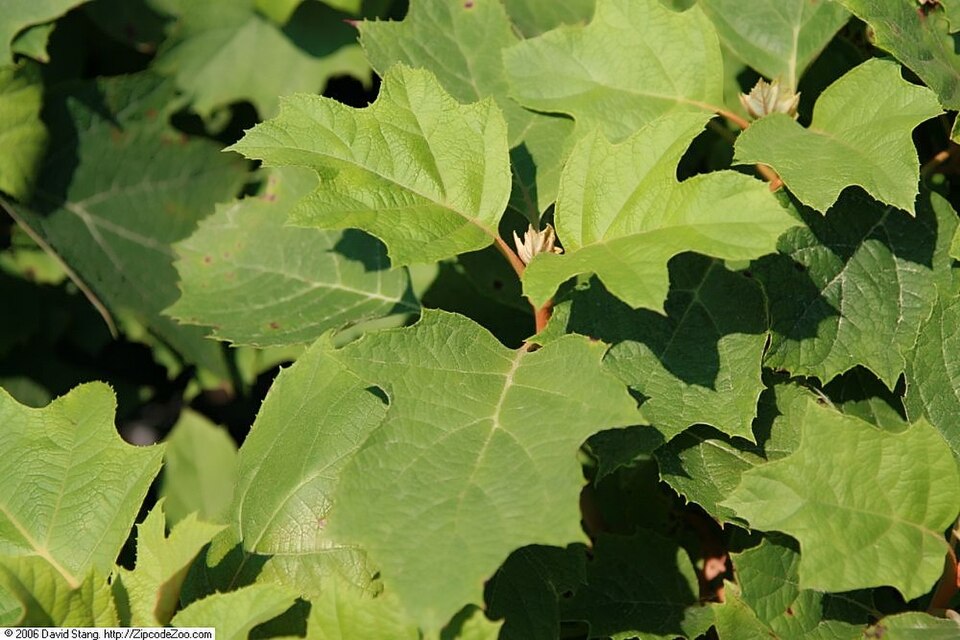
Hydrangea quercifolia 'Alice' is a deciduous oakleaf hydrangea reaching 10-12 feet (3-3.7 m) tall and 10-12 feet (3-3.7 m) wide at maturity, larger than most other H. quercifolia cultivars. Stems are stout, upright at the base and arching above, with cinnamon-brown exfoliating bark on second-year growth. Leaves are deeply lobed in oak-leaf form, 8-12 inches (20-30 cm) long, dark green and matte through summer, turning red-burgundy to deep purple in autumn and persisting on the plant into early winter in zones 7-9. Conical flower panicles reach 10-14 inches (25-35 cm) long and 4-6 inches (10-15 cm) wide at the base, opening pure white in early summer and aging to dusty pink by late summer. Flowering occurs on old wood, so spring frost damage to overwintering buds reduces the season's bloom. Foliage tolerates more sun than H. macrophylla cultivars but scorches in afternoon sun in zones 8-9. Mature size limits placement to large beds, woodland edges, or as a single specimen rather than tight foundation plantings.
Native Range
Hydrangea quercifolia is native to the southeastern United States, occurring in moist hardwood forests, ravines, and stream banks from North Carolina south to Florida and west to Louisiana, at elevations below 1,500 feet (450 m). 'Alice' is a cultivated selection introduced from the University of Georgia breeding program in 1986 and has no wild populations.Suggested Uses
Used in woodland gardens, large mixed shrub borders, and as a specimen at 10-12 foot (3-3.7 m) spacing to allow full mature spread. The four-season profile of summer panicles, autumn foliage, winter bark, and spring leaf emergence supports specimen placement at the edge of woodland or against evergreen backdrops. Mature size precludes container culture except in very large planters (40-gallon / 150-liter or larger) with regular root pruning.How to Identify
Appearance
Size & Dimensions
Height10' - 12'
Width/Spread10' - 12'
Bloom Information
Conical panicles open in late May to early June in zones 7-8 and continue through July, with sepals aging from white to pink over 4-6 weeks. In zones 5-6, initial bloom is delayed to mid-June and may not reach the antique pink stage before frost. Total display continues 6-8 weeks before sepals dry on the plant and persist through winter as papery brown panicles.
Detailed Descriptions
Flower Description
white aging to dusty pinkFoliage Description
dark green, turning red-burgundy to purple in fallGrowing Conditions
Sun Requirements
Requires 4-6 hours of direct sunlight daily
• Full Sun: 6+ hours of direct sunlight
• Partial Shade: 3-6 hours of direct sunlight
• Full Shade: Less than 3 hours of direct sunlight
Care & Maintenance
Care Guide
Spring or fall plantings establish in moist, well-drained soil amended with compost; the species tolerates a wider pH range (5.0-7.5) than bigleaf hydrangea and does not change flower color with pH. Water 1 inch (2.5 cm) per week through the first two growing seasons; established plants tolerate short droughts but lose lower leaves and reduce next-year bloom in extended dry spells. A 3-inch (7.5 cm) layer of organic mulch retains moisture and moderates soil temperature in summer. Dappled sun to morning sun produces fall foliage color in red-burgundy and deep purple tones; deep shade reduces fall color to dull yellow. Powdery mildew develops in late summer in stagnant, humid air; cosmetic damage only. Root rot occurs in soils that hold standing water through winter.Pruning
Prune in late winter or early spring before new growth emerges, removing only dead or damaged stems. Because flowers form on old wood, summer pruning removes the next year's flower buds and is generally avoided. Spent panicles can be cut at any time; leaving them through winter retains the dried panicles as part of the winter framework alongside the cinnamon exfoliating bark.Pruning Schedule
Prune: February–March
winterearly spring
Container Growing
Minimum container size: 40 gallons