Best Native Plants for Midwest Prairie Gardens
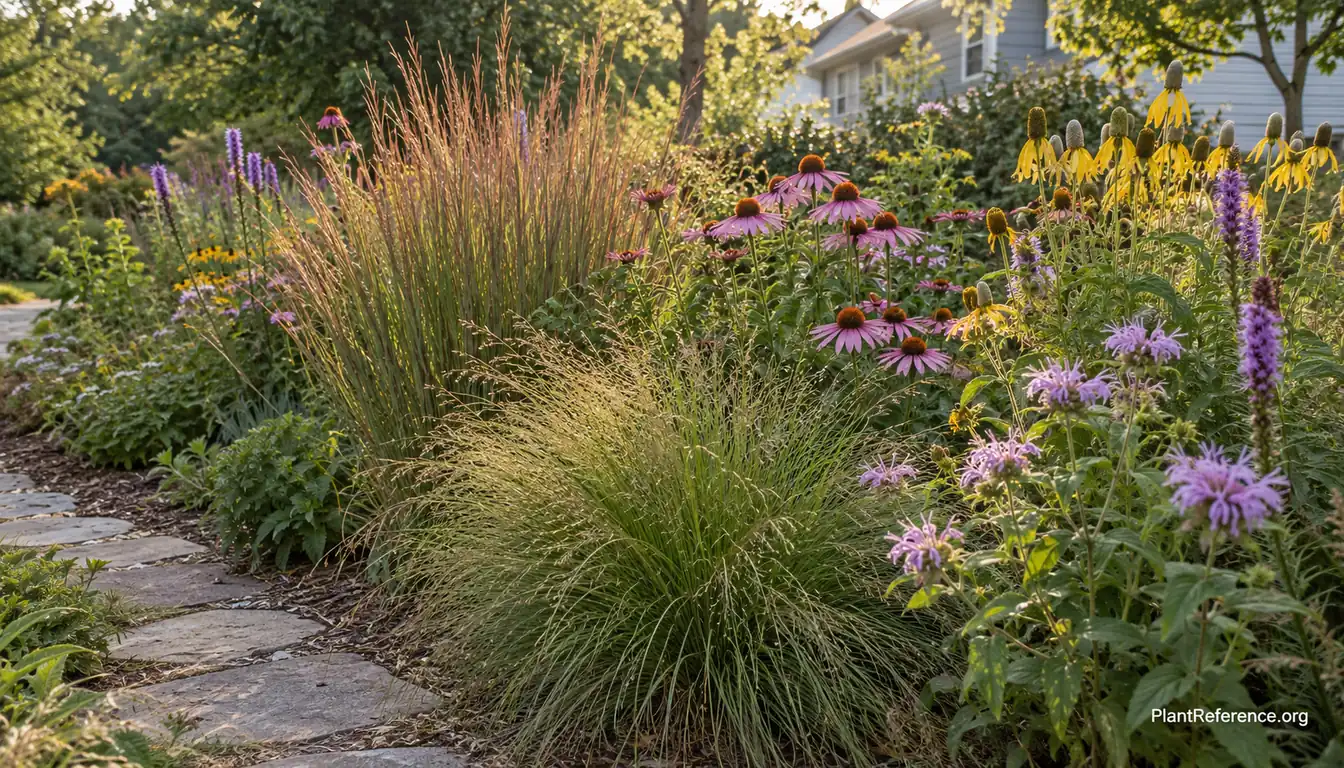
— Image © PlantReference.org 2026
Pets & Toxicity
Recorded toxicity for plants linked in this guide. An unknown status is not a safety assessment.
Toxic to pets: butterfly weed, prairie starDetailsHide
Asclepias tuberosa — Toxicity Warning
Toxic to pets and humans (cardiac glycosides — cardenolides — at moderate concentration; less toxic than other milkweed species but still toxic if ingested in quantity)View Asclepias tuberosa plant profileA Midwest prairie garden is not simply a bed filled with native wildflowers. The most convincing and resilient plantings borrow prairie structure: a repeating framework of warm-season grasses, broad colonies of compatible flowers, and enough density to cover soil. For a manageable home design, begin with roughly four parts grass to one part flowering forbs by stem count, then adjust the visible balance as you learn which plants thrive on your site.
Start With a Prairie Matrix, Not a Plant Collection
Small prairie gardens need a framework more than dozens of species. Repeating grasses tie the bed together and support flower stems. Flowers then read as purposeful drifts instead of isolated dots. This is the same principle behind Perennial Combinations That Look Good Together, translated into a North American grassland community.
The classic reference point is about 80 percent grass stems and 20 percent forb stems. That ratio describes structure, not the percentage of flowers you see at midsummer. A mature clump of prairie dropseed can contribute many fine stems while leaving visual room for coneflowers. In a small planting, start a little more flower-forward if desired, but repeat at least one or two grasses across every section. A grass matrix also helps prevent tall forbs from leaning after storms.
Choose short, clump-forming grasses near paths and in beds smaller than 500 square feet (46 square metres). Prairie dropseed 🌿Sporobolus heterolepis makes a fine-textured mound, and sideoats grama 🌿Bouteloua curtipendula forms tidy tufts with distinctive seed flags. Little bluestem 🌿Schizachyrium scoparium is taller but stays narrow, turns copper in autumn, and supplies cover and host value for wildlife. Reserve switchgrass 🌿Panicum virgatum for the back of a generous bed or a moist, erosion-prone edge; many forms are too forceful for the front walk.
Read the soil before choosing plants. After a soaking rain, observe whether water drains within a day or lingers. Sandy or gravelly ground suits drought-tolerant species; heavy low ground calls for plants that accept periodic saturation. Measure direct sun in midsummer. Most prairie species need at least six hours. If trees cast shifting shade, use the woodland approach in Best Native Plants for Eastern Woodland Gardens rather than forcing full-sun prairie plants into weak light.
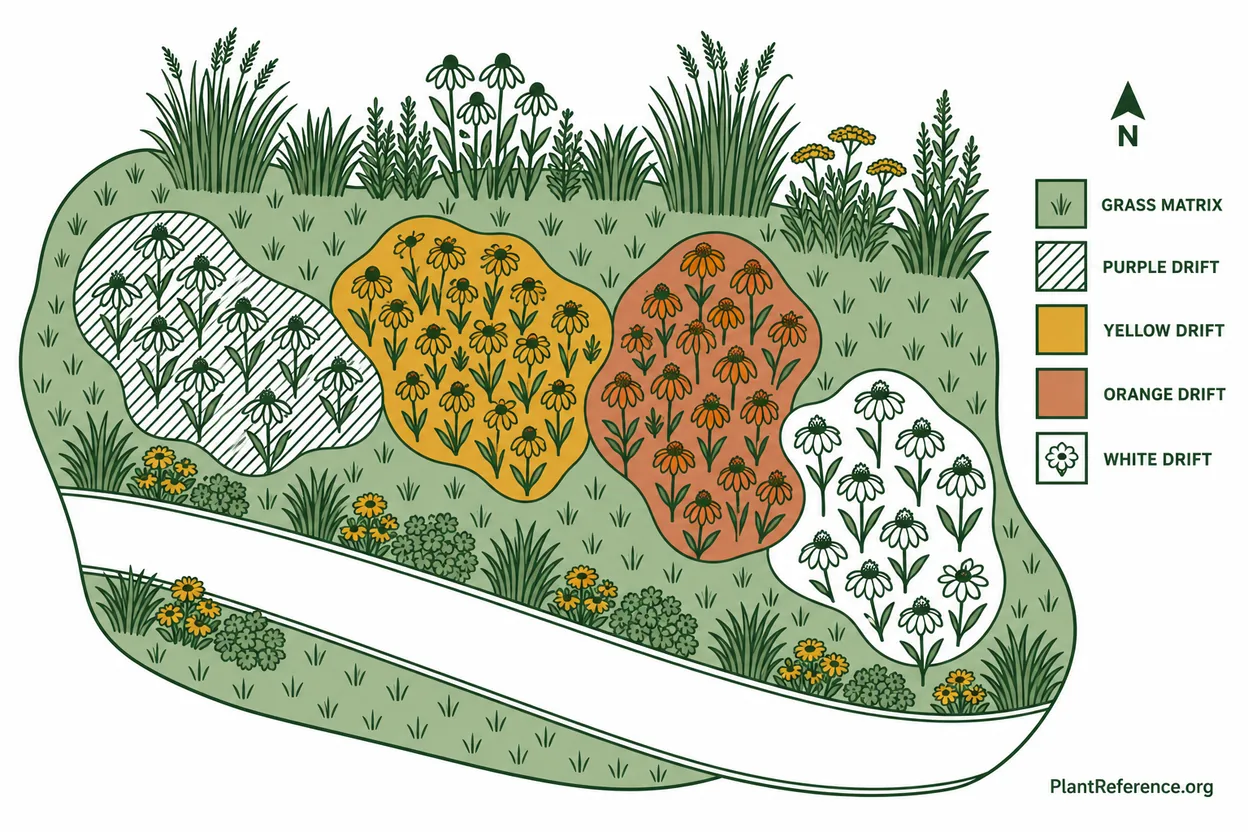
Draw the planting as a set of connected patches. Let the grass matrix run through all of them, then repeat each major flower in three or more places. A drift might contain five to nine plugs spaced 12–18 inches (30–45 cm) apart. Keep the shortest plants along paths, medium plants through the center, and bold or tall species toward the back. Leave narrow access routes so you can weed without stepping on young crowns.
Choose 12 Dependable Midwest Prairie Natives
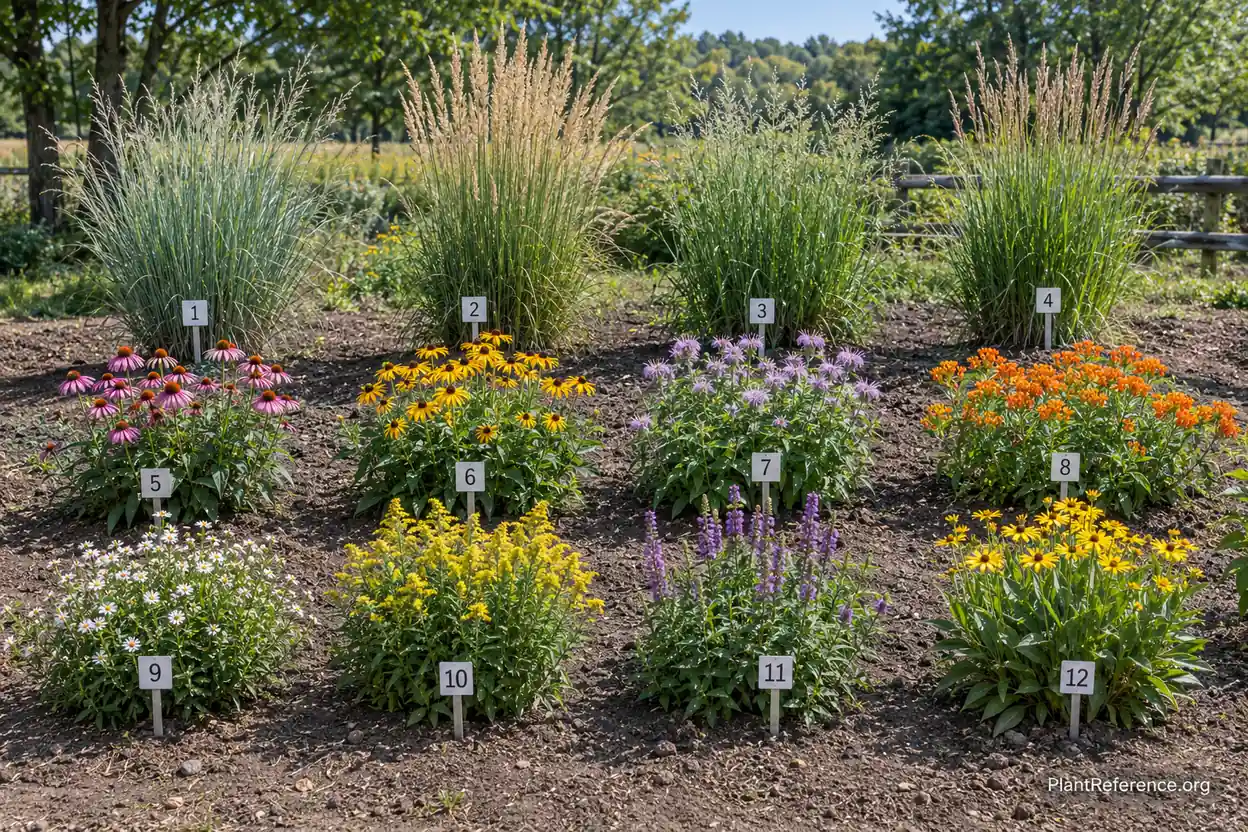
The following twelve plants create a practical core palette. They are not interchangeable: some prefer dry uplands, some accept average garden loam, and switchgrass handles more moisture. Use the table to eliminate poor matches before buying. Mature size varies with soil fertility, water, and local ecotype, so verify provenance and final dimensions with a regional native nursery.
No. | Native plant | Typical height | Best moisture | Main garden job |
|---|---|---|---|---|
1 | Prairie dropseed 🌿Sporobolus heterolepis | 2–3 ft (0.6–0.9 m) | Dry to medium | Fine-textured matrix grass |
2 | Sideoats grama 🌿Bouteloua curtipendula | 2–3 ft (0.6–0.9 m) | Dry to medium | Short grass and seed interest |
3 | Little bluestem 🌿Schizachyrium scoparium | 2–4 ft (0.6–1.2 m) | Dry to medium | Upright structure and fall color |
4 | Switchgrass 🌿Panicum virgatum | 3–6 ft (0.9–1.8 m) | Medium to moist | Backdrop and runoff capture |
5 | Butterfly weed 🌿Asclepias tuberosa | 1–3 ft (0.3–0.9 m) | Dry to medium | Early-summer orange bloom |
6 | Purple prairie clover 🌿Dalea purpurea | 1–3 ft (0.3–0.9 m) | Dry to medium | Nitrogen-fixing summer flower |
7 | Purple coneflower 🌿Echinacea purpurea | 2–4 ft (0.6–1.2 m) | Medium | Long summer bloom and seedheads |
8 | Gray-headed coneflower 🌿Ratibida pinnata | 3–5 ft (0.9–1.5 m) | Dry to medium | Airy yellow midsummer flowers |
9 | Wild bergamot 🌿Monarda fistulosa | 2–4 ft (0.6–1.2 m) | Dry to medium | Pollinator-rich lavender bloom |
10 | Dense blazing star 🌿Liatris spicata | 2–5 ft (0.6–1.5 m) | Medium to moist | Vertical late-summer accent |
11 | Showy goldenrod Solidago speciosa | 2–5 ft (0.6–1.5 m) | Dry to medium | Gold late-season nectar |
12 | New England aster 🌿Symphyotrichum novae-angliae | 3–6 ft (0.9–1.8 m) | Medium to moist | Purple autumn finale |
Prairie dropseed 🌿Sporobolus heterolepis is my first matrix choice for a refined bed. Its arching leaves form separated mounds rather than a running sod, and its airy flower stalks do not hide neighboring blooms. Give each plant room to reach about 2 feet (60 cm) wide. In rich, frequently watered soil it may become looser, so do not improve a lean site simply because conventional garden advice says to add compost everywhere.
Sideoats grama 🌿Bouteloua curtipendula handles dry slopes and lean soil. Its oatlike flowers hang from one side of each stem and catch low light. Little bluestem 🌿Schizachyrium scoparium supplies stronger vertical form, blue-green summer foliage, copper fall color, and winter seed fluff. Both are warm-season grasses, so they emerge later than cool-season lawn grass. Mark their crowns during the first spring to avoid pulling them as weeds.
Switchgrass 🌿Panicum virgatum can root deeply and slow runoff, which makes it useful on a broad swale or at the lower edge of a planting. It includes upland and lowland ecotypes, however, and mature height differs substantially. Use locally appropriate straight species material when ecological value is the priority. In a narrow foundation bed, choose a shorter grass instead of trying to restrain a vigorous switchgrass clump every year.
Butterfly weed 🌿Asclepias tuberosa brings concentrated orange color to dry, sunny ground. Its deep taproot makes established plants drought-tolerant but reluctant to move, so place plugs carefully. Purple prairie clover 🌿Dalea purpurea threads rosy-purple flower heads through short grasses and contributes to soil nitrogen cycling without behaving like a fertilizer application. Both work well near a hot south-facing path where heavier-soil plants may struggle.
Purple coneflower 🌿Echinacea purpurea and gray-headed coneflower 🌿Ratibida pinnata are high-value summer flowers. Purple coneflower forms broad, sturdy blooms and prominent seedheads. Gray-headed coneflower produces fluttering yellow rays around a tall central cone, adding movement without a heavy mass. Plant them in drifts large enough for pollinators to find easily; Best Perennials for Pollinators: Bees & Butterflies explains why repeated floral resources outperform scattered single plants.
Wild bergamot 🌿Monarda fistulosa fills the middle layer with lavender flowers and aromatic foliage. Give it airflow and avoid overhead watering late in the day to reduce powdery mildew pressure. Dense blazing star 🌿Liatris spicata sends purple spikes upward from the top down, an unusual flowering sequence that pairs well with rounded coneflowers. Site it in average to moist soil rather than the driest gravel crest.
Showy goldenrod Solidago speciosa provides late gold without the running behavior associated with some other goldenrods. New England aster 🌿Symphyotrichum novae-angliae extends nectar into autumn but can tower in rich ground. Put it behind shorter plants or pinch stems once in late spring when they reach 12–18 inches (30–45 cm), never repeatedly through summer. Goldenrod pollen is heavy and insect-carried; windborne ragweed, not goldenrod, is the usual seasonal allergy culprit.
Build a Bloom Sequence From Spring Through Fall
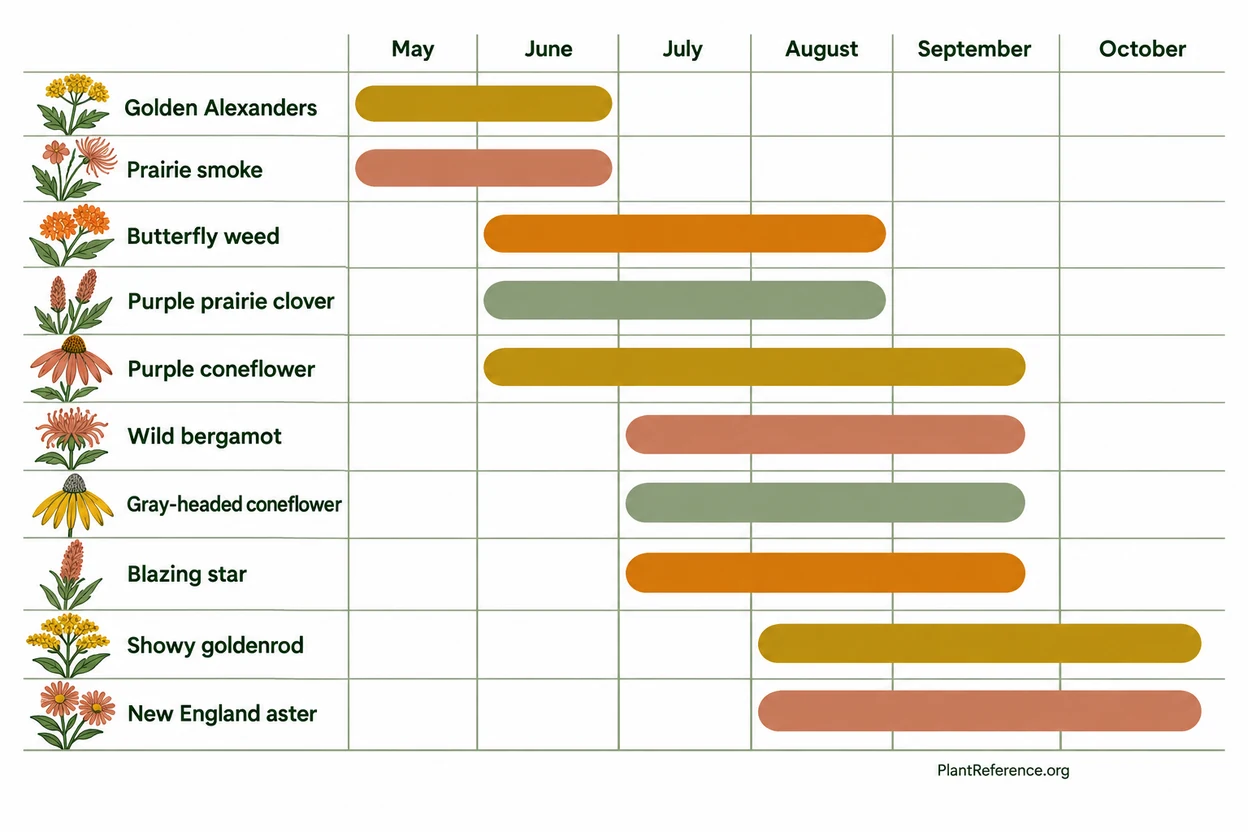
A prairie garden should feed insects and hold attention longer than one spectacular month. Create a bloom chart before planting and make sure at least two species are open in each part of the season. The exact dates move with latitude, weather, and local ecotypes, so think in overlapping windows rather than calendar promises. Plan a Perennial Garden That Blooms Spring to Fall offers a broader method you can adapt to native plants.
The core palette above begins strongly in early summer. To cover late spring, add a modest number of regionally native companions such as golden Alexanders 🌿Zizia aurea in average soil or prairie smoke 🌿Geum triflorum on a dry edge. These early plants can occupy openings while warm-season grasses are still waking. Keep them in repeated groups, not as single specimens that disappear visually after flowering.
Early to midsummer belongs to butterfly weed 🌿Asclepias tuberosa, purple prairie clover 🌿Dalea purpurea, purple coneflower 🌿Echinacea purpurea, and wild bergamot 🌿Monarda fistulosa. Overlap their colors rather than placing them in isolated blocks. Orange butterfly weed can stitch together purple coneflower and prairie clover; the grasses provide a quiet background that keeps the combination from becoming chaotic. For coneflower-specific care, see How to Grow Coneflowers (Echinacea) That Feed Pollinators.
Midsummer into early fall is carried by gray-headed coneflower 🌿Ratibida pinnata, dense blazing star 🌿Liatris spicata, showy goldenrod Solidago speciosa, and New England aster 🌿Symphyotrichum novae-angliae. Let at least one golden flower overlap the first asters. This bridge is more useful than a bed that turns entirely purple in September. Leave fading coneflower heads standing so their silhouettes connect the summer and autumn displays.
Pollinators use flowers more efficiently when several plants of one species bloom together. A small drift offers a larger visual and scent target than isolated dots. Where room permits, place five to seven plugs of the same forb in a loose patch, then repeat the patch elsewhere. Avoid planting every species in equal quantities. Choose three dominant flowers, three supporting flowers, and a few accents to create a readable rhythm.
Install Plugs or Seed With Realistic Expectations
Plugs buy speed and control. You know which plant goes where, dense spacing suppresses weeds sooner, and a composed garden can look intentional during its first full season. The tradeoff is cost: a plug planting for 250 square feet (23 square metres) may approach $750, depending on plant size, spacing, and source. Plugs are particularly sensible near a front walk, in a small yard, or wherever neighbors need to recognize a garden rather than a weedy restoration.
Seed is dramatically less expensive. A suitable native mix for the same 250 square feet (23 square metres) might cost around $16 before site preparation, but establishment commonly takes two to four years. Seeded species do not emerge evenly, and weeds can be hard to distinguish from desired seedlings. Seed is strongest for larger areas where budget matters more than immediate composition. Buy a mix designed for your soil and region, not a generic packet dominated by quick annual color.
Clear perennial weeds before either method. Smothering with opaque material through a full growing season can work on lawn, while repeated shallow cultivation may help on open soil. Do not till aggressive rhizomatous weeds into hundreds of pieces. Test a small patch if bindweed, quackgrass, Canada thistle, or another persistent perennial is present. A prairie planting will not outcompete an established infestation during its vulnerable first year.
For plugs, plant in spring after the soil can be worked or in early fall with at least six weeks for rooting before hard freeze. Water the pots first. Dig holes no deeper than the root balls, tease circling roots lightly, and set crowns level with the surrounding soil. Space most matrix grasses and medium forbs 12–18 inches (30–45 cm) apart. Water the whole root zone, then label enough plants that you can identify emerging foliage next spring. When to Plant Perennials: Season-by-Season Timing helps refine timing around local weather.
For seed, follow supplier directions because many prairie species require cold, moist stratification. A late-fall dormant sowing lets winter provide that treatment naturally. Mix tiny seed with damp sand or another inert carrier for even broadcasting, divide both seed and site into halves, and sow once in each direction. Press seed into firm soil with a roller or board; do not bury it deeply. Good seed-to-soil contact matters more than a cosmetic topdressing.
Use a light, temporary mulch only if the seed supplier recommends it. Clean weed-free straw can reduce erosion, but a thick layer blocks light and hides seedlings. On slopes, erosion-control blanket must have wildlife-safe netting and enough open area for plants to emerge. Avoid routine fertilizer. Prairie plants evolved in relatively lean conditions, and added nitrogen often benefits weeds or makes tall species floppy.
Water, Weed, and Cut Back During Establishment
New plugs need consistent moisture even when the mature species are drought-tolerant. Water deeply after planting, then check the soil 2–3 inches (5–8 cm) down. During the first four to six weeks, water when that layer approaches dry rather than by a rigid calendar. Reduce frequency as roots expand. In the second season, water only through extended drought unless moisture-loving species show stress. A slow soaker hose can deliver water below foliage, but check distribution with a trowel.
Seeded prairie care is different. Irrigation may help on a small site, yet frequent shallow sprinkling also germinates weeds. Follow the seed producer's establishment plan and adjust for rainfall. During the first year, mow or string-trim the stand whenever growth reaches about 12 inches (30 cm), cutting it back to 6–8 inches (15–20 cm). This keeps annual weeds from shading slower prairie seedlings. Never scalp low enough to damage developing crowns.
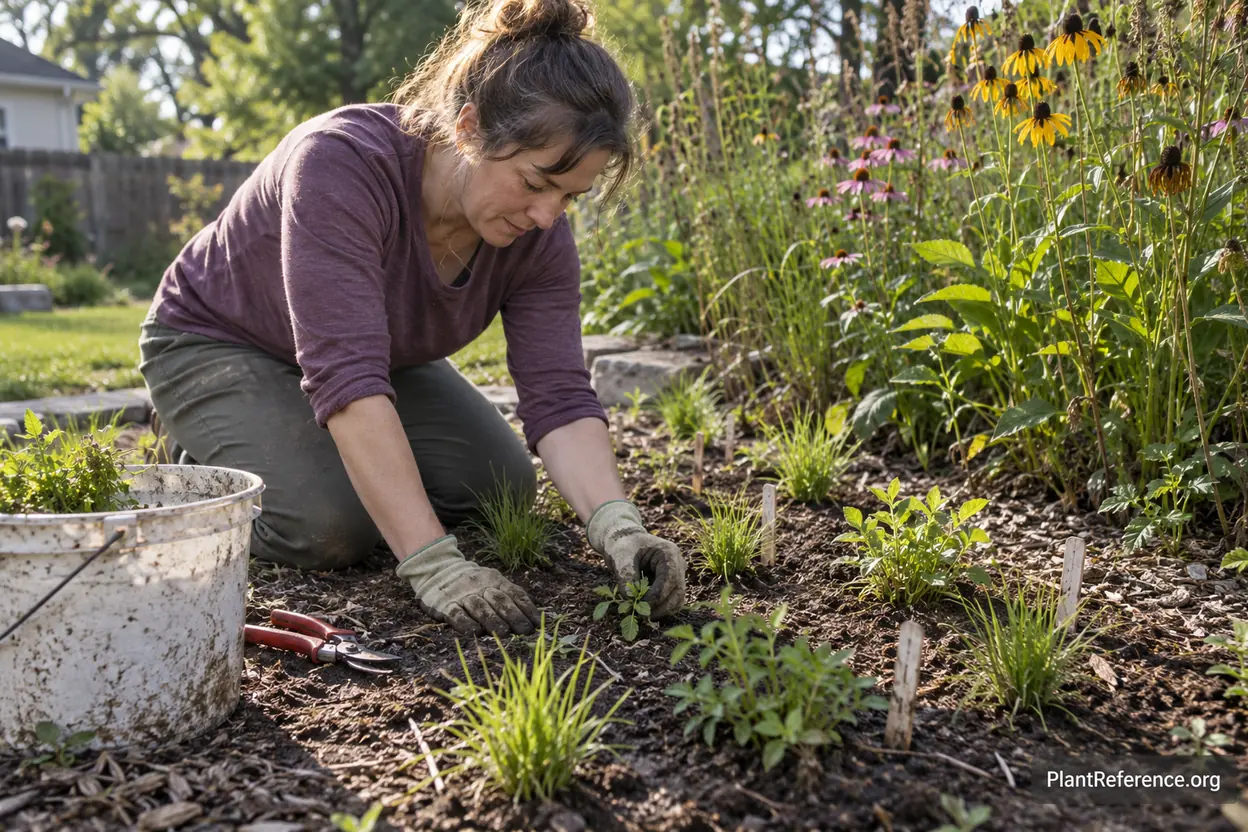
Weeding is the main work for three seasons. Walk the planting every week or two from spring through early fall. Pull weeds before they set seed, removing roots when the soil is moist. Cut an unknown plant at ground level rather than pulling it if you might disturb nearby plugs; photograph and identify it first. Keep a narrow mown edge or a simple border so the prairie looks deliberate while the interior develops.
Do not bury the planting under fresh bark each year. A thin 1–2 inch (2.5–5 cm) layer between new plugs can help during the first season, but keep mulch off crowns and allow it to disappear as plants fill in. Shredded hardwood mulch is less likely to roll than large nuggets. In a seeded area, skip bark entirely because it blocks germination and complicates mowing.
Leave stems standing through winter. They hold seed, create shelter, catch snow, and preserve the structure that makes grasses valuable. Cut back in late winter or early spring before strong new growth. Work in stages rather than clearing everything in one day, and leave some sturdy stems 12–18 inches (30–45 cm) tall for cavity-nesting insects. When to Cut Back Perennials in Fall (And What to Leave) explains the ecological value of restraint.
Divide only when a clump develops a dead center, overwhelms neighbors, or is needed to expand a drift. Prairie dropseed 🌿Sporobolus heterolepis is slow and resents unnecessary disturbance. Wild bergamot 🌿Monarda fistulosa expands faster and may need editing. Move divisions in cool spring weather, water them as new transplants, and consult How to Divide Perennials: A Species-by-Species Guide before cutting crowns with unfamiliar structure.
Solve Flopping, Gaps, and Aggressive Spread
Tall plants flop when they receive too much shade, rich fertilizer, excess water, or insufficient support. First correct the cause. Move shade-sensitive plants, stop fertilizing, and repeat short grasses around vulnerable stems. A temporary ring can rescue one season, but redesigning the matrix is better than staking every plant forever. Pinch New England aster 🌿Symphyotrichum novae-angliae once in late spring if necessary; do not shear the entire planting into uniform domes.
Gaps are invitations to weeds. In the first two seasons, fill persistent openings with divisions or additional plugs matched to the exact moisture. Extend prairie dropseed 🌿Sporobolus heterolepis through a dry opening, or use dense blazing star 🌿Liatris spicata where soil stays moderately moist. A gap caused by roof runoff needs drainage correction before more plants. Use the moisture meter as a diagnostic aid, not a substitute for digging and observing soil texture.
Some native plants spread beyond their assigned patches. That behavior can be valuable in a restoration and frustrating beside paving. Cut unwanted seedlings when small, deadhead selected plants before seed ripens, and install a mown transition strip rather than plastic root barrier. Keep the most mobile species away from property lines. Showy goldenrod Solidago speciosa is usually better behaved in a designed bed than strongly rhizomatous goldenrods, but even clump-formers can seed where conditions suit them.
Deer pressure varies by neighborhood and season. Aromatic wild bergamot 🌿Monarda fistulosa is often browsed less than tender asters, but no prairie plant is deer-proof. Protect new plugs with temporary fencing until roots establish and monitor damage. A varied matrix recovers better than a bed built around one favorite food. See Deer-Resistant Perennials: A Zone-by-Zone Planting Guide for broader deterrence strategies.
If the design feels untidy, strengthen its frame instead of replacing natives. Add a crisp path, repeat one grass along the edge, consolidate scattered flowers into larger drifts, and remove volunteer plants from the first 12 inches (30 cm) beside paving. These cues make ecological complexity legible. The approach can replace part of a thirsty lawn; Lawn Alternatives That Actually Work: 5 Options Beyond Grass compares that decision with other low-mow options.
The third year is the fair point for judging success. By then, compatible plants should cover most soil, repeated grasses should hold the composition, and flowers should overlap from late spring into autumn. Replace failures with plants that already succeed in the same micro-site. A prairie garden improves through observation and editing, not through one perfect shopping list.
Frequently Asked Questions

Reading about plants and recognising them are different skills. These three build the second.
- Daily PlantIdentify the day’s mystery plant from a close-up photograph.
- Keyed OutWork a dichotomous key, lead by lead, to name a hidden specimen.
- Name That PlantName a specimen from botanical clues dealt hardest first.
Free to play, no account needed
Tagged with
Pat has been gardening in Milwaukee for over thirty years, through every kind of Wisconsin weather. She worked as a school librarian and started gardening seriously when her kids were small—she wanted them to know where food came from. Now retired, she's a certified Master Gardener and runs the plant sale at her local garden club every spring. She specializes in cold-hardy perennials, native wildflower meadows, and the art of getting a vegetable garden producing in Wisconsin's short but intense growing season. Pat is practical and patient—she's seen enough Wisconsin winters to know that gardening here is a long game, and she writes with the steady confidence of someone who's been doing this a long time.