Panicum, Genus, virgatum, Species,
- Genus & species
switchgrass
North America (southern Canada south through the United States, Mexico, and the Caribbean); a dominant species of the historic tallgrass prairie ecosystem and a component of the eastern deciduous forest understory and meadow margins.
Overview
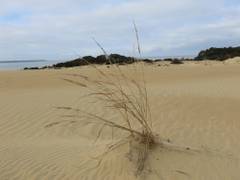
Panicum virgatum is a native North American warm-season ornamental grass in the true grass family (Poaceae) growing 36-60 inches (90-150 cm) tall and 24-36 inches (60-90 cm) wide and forming a strongly upright vase-shaped clump. The species is a true grass (a member of Poaceae, the family of cereal crops including wheat, corn, rice, and oats) and uses the C4 photosynthesis pathway that warm-season grasses share — the C4 pathway concentrates carbon dioxide in specialized bundle-sheath cells around the leaf vasculature and uses the concentrated CO2 to drive higher photosynthetic rates at high temperatures and low water availability than the C3 pathway used by cool-season grasses; the C4 advantage explains why switchgrass thrives in hot summer conditions where cool-season grasses (fescue, bluegrass) decline. Blue-green to medium green narrow blades hold upright through the season, and airy delicate panicles of pink-tinged to reddish-bronze flowers emerge from July through September, creating a haze of color above the foliage. The fall foliage color is the species' signature: the entire plant transforms to brilliant gold, orange, or yellow depending on the cultivar selection, producing an autumn display that sits at the top of the ornamental grass color range. In winter, the dried tan-beige foliage and persistent seed panicles remain standing, providing winter structural interest and bird food (juncos, sparrows, and finches work the seed heads through the dormant season). Switchgrass is a keystone species of the historic North American tallgrass prairie, having historically covered vast areas from southern Canada to Mexico in dense stands across millions of acres of presettlement grassland; the species was reduced to roadside and ditch-edge fragments by 19th-century plow agriculture, and contemporary native-prairie restoration plantings re-establish switchgrass populations across former agricultural land. The deep fibrous root system reaches 10 feet (3 m) into the soil profile, which makes established plants strongly drought-tolerant and the species useful for preventing soil erosion on slopes and in stormwater management plantings. The species tolerates a substantial range of soils — sand, clay, wet-bottom, dry-ridge, acidic, alkaline — making it among the more adaptable native grasses available for difficult planting positions. The species is also grown commercially as a biofuel feedstock and forage crop, with the high biomass production per acre and the warm-season C4 growth rate making it economically viable for both purposes. Named cultivars are available in a range of mature heights (from compact 30-inch cultivars like Cape Breeze to tall 72-inch cultivars like Cloud Nine), foliage colors (blue-green like Heavy Metal, red-tipped like Shenandoah, dark blue-green like Northwind), and fall color intensity. Deer avoid the tough fibrous foliage that the species shares with most warm-season grasses.
Native Range
Panicum virgatum is native to North America, with a continuous range from southern Canada (Ontario, Quebec, the Maritime provinces) south through the United States and Mexico into the Caribbean. The species is a dominant component of the historic tallgrass prairie ecosystem of the central United States (Iowa, Illinois, Kansas, Nebraska, Oklahoma) where dense switchgrass stands historically covered millions of acres before 19th-century plow conversion to agricultural cropland. The species also occurs in the eastern deciduous forest understory at meadow margins and in the southeastern coastal plain in pine-savanna and longleaf-pine ecosystems, making the native range one of the broadest in North American native grasses. Native-prairie restoration plantings across the central states re-establish switchgrass populations on former agricultural land, often as the dominant grass component of a multi-species tallgrass prairie restoration mix.Suggested Uses
Used in prairie and meadow plantings, as a tall screen or hedge along property lines, in rain gardens and bioswales for stormwater management, on slopes for erosion control, and in container plantings of 7 gallons (26 liters) or larger as a vertical accent. The four-season display (summer flowers, fall color, winter structure, spring renewal) gives the species year-round garden interest, which is a feature of relatively few perennial plant choices. The deep 10-foot root system suits the species to slopes where surface-rooted ground covers fail to hold soil, and to wet-to-dry transition zones where shallow-rooted perennials struggle with the alternating moisture conditions. Named cultivars are selected for specific height, foliage color, and fall color intensity for site-specific design needs.How to Identify
Appearance
Size & Dimensions
Height3' - 5'
Width/Spread2' - 3'
Bloom Information
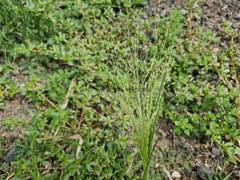
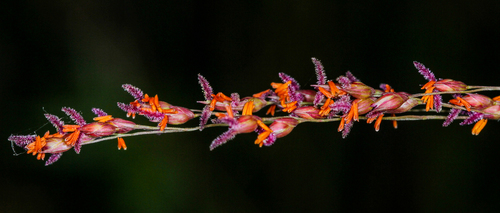
Airy pink-tinged to reddish-bronze panicles 12-18 inches (30-45 cm) long open above the foliage from July through September across an 8-week active flowering window. The panicle architecture produces a haze-like cloud effect at viewing distance rather than the dense plumes of Miscanthus or the bottlebrush spikes of Pennisetum. Pollination is by wind (the standard pollination mode for Poaceae grasses), and the seed heads persist through fall and winter as a structural feature and as a food source for granivorous birds. The dried tan-beige seed panicles remain visually intact through the dormant season and supply the principal winter visual interest from the species in zones 5-8 where the foliage browns and the seed heads stay intact through January.
Detailed Descriptions
Flower Description
Airy pink-tinged to reddish-bronze panicles 12-18 inches (30-45 cm) long held above the foliage on slender stems, with the panicle architecture producing a haze-like cloud effect rather than the dense plumes of Miscanthus or the bottlebrush spikes of PennisetumFoliage Description
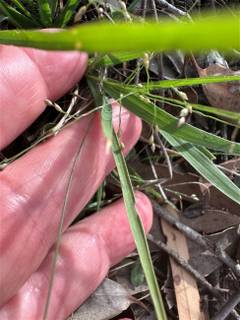
Blue-green to medium green; narrow upright blades 0.25-0.5 inch (6-12 mm) wide forming a vase-shaped clump, with the strongly upright leaf carriage being characteristic of the species and separating it from arching ornamental grasses like Miscanthus and PennisetumGrowing Conditions
Sun Requirements
Requires 6-12 hours of direct sunlight daily
• Full Sun: 6+ hours of direct sunlight
• Partial Shade: 3-6 hours of direct sunlight
• Full Shade: Less than 3 hours of direct sunlight
Care & Maintenance
Care Guide
Plant in full sun with at least 6 hours of direct light. The species tolerates a wide range of soils — sand, clay, wet-bottom, dry-ridge, acidic, or alkaline — and the broad soil tolerance is one of the species' principal cultivation advantages. Fertilization is omitted because lean conditions produce the sturdiest upright growth; high soil fertility produces leggy stems that flop in late summer and fall. Watering is during establishment only because the deep 10-foot fibrous root system makes established plants strongly drought-tolerant. Foliage and seed panicles are left standing through fall and winter for ornamental value and for winter bird food. All growth is cut to 4-6 inches (10-15 cm) above ground in late February through March before new spring growth emerges from the crown; the cutback is the only seasonal maintenance the species needs. Cutting too early in fall removes the winter visual interest and reduces the bird-forage value, so the cutback is timed to late winter rather than late fall.Pruning
All growth is cut to 4-6 inches (10-15 cm) above ground in late February through March before new spring growth emerges from the crown. Foliage and seed panicles are left standing through fall and winter; cutting back in fall removes the winter visual interest and the bird-forage value of the persistent seed heads. One annual cutback is the only seasonal maintenance the species needs.Pruning Schedule
Prune: March
early spring
Container Growing
Suitable for container growing
Minimum container size: 7 gallons