Panicum, Genus, amarum, Species,
- Genus & species
bitter panicgrass
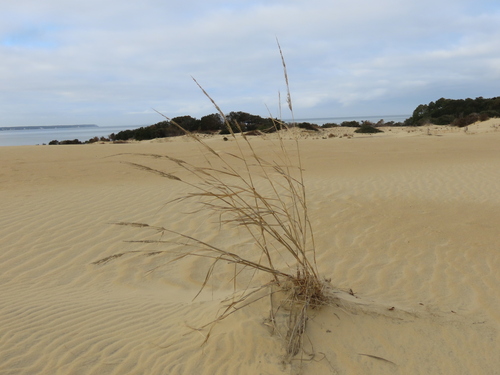
Eastern North America: Atlantic and Gulf coastal dunes and barrier islands from Connecticut south to Texas
Overview
Panicum amarum is a native dune grass of the Atlantic and Gulf coasts, growing 48-72 inches (120-180 cm) tall and 36-48 inches (90-120 cm) wide. The species name 'amarum' means 'bitter', describing the foliage taste that deters grazing. Blue-gray to steel-blue wide upright waxy leaves (the bluest foliage among native North American grasses) create a bold architectural presence. The waxy leaf coating (glaucous bloom) that produces the blue color also protects against salt spray, sand abrasion, and desiccating coastal winds. Reddish-purple airy panicles in late summer age to golden-tan. The coastal dune origin gives this species wide tolerance for salt, sand, drought, and wind, conditions that kill most ornamental grasses. The upright non-flopping habit gives strong vertical structure. Warm-season grass. Sandy well-drained soil essential; rots in clay or wet conditions. Deer avoid the bitter foliage.
Native Range
Panicum amarum is native to eastern North America, on Atlantic and Gulf coastal dunes and barrier islands from Connecticut south to Texas.Suggested Uses
Used in coastal gardens, dune stabilization, seaside landscaping, and as a blue architectural accent. The bluest native grass for salt-tolerant situations. Not for clay or wet-soil gardens. The native dune grass.How to Identify
Appearance
Size & Dimensions
Height4' - 6'
Width/Spread3' - 4'
Bloom Information
Detailed Descriptions
Flower Description
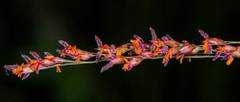
Reddish-purple aging to tan; in large open airy paniclesFoliage Description
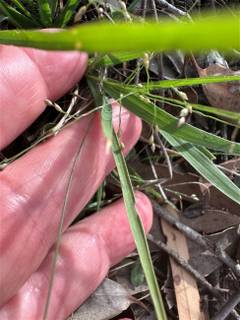
Blue-gray to steel-blue; wide upright waxyGrowing Conditions
Sun Requirements
Requires 6-12 hours of direct sunlight daily
• Full Sun: 6+ hours of direct sunlight
• Partial Shade: 3-6 hours of direct sunlight
• Full Shade: Less than 3 hours of direct sunlight
Care & Maintenance
Care Guide
Sited in full sun. Sandy well-drained soil. Salt, wind, and drought tolerant. Not suited to clay or wet soil. Cut to 6 inches in late winter.Pruning
Left standing through winter. Cut to 6 inches in late February-March.Pruning Schedule
Prune: February–March
early spring