Geum, Genus, triflorum, Species,
- Genus & species
prairie smoke
Western and central North America from Yukon to northern New Mexico
Overview
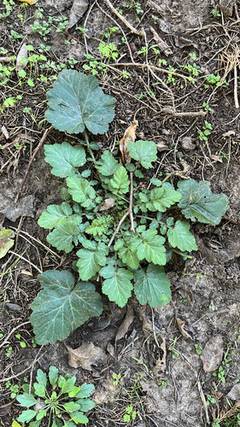
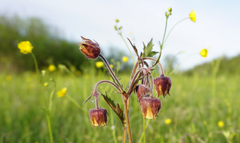
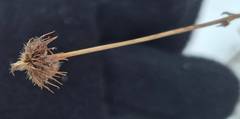
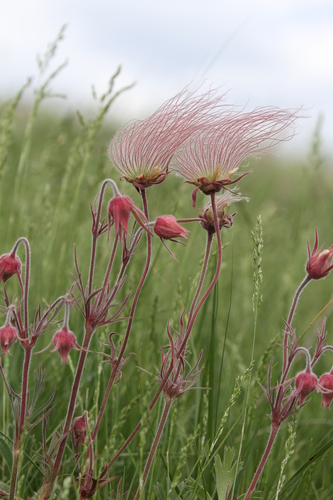
A low clump-forming evergreen perennial reaching 6-12 inches (15-30 cm) tall during flowering and 12-18 inches (30-45 cm) wide, growing from a stout woody crown. Leaves pinnately compound with 7-19 deeply toothed leaflets 0.5-1.5 inches (1.5-4 cm) long, persistent through winter; foliage may flush red-purple in cold weather. Flowering stems carry typically three nodding bell-shaped flowers per stem; sepals deep maroon-red and persistent, petals creamy-pink and shorter than the sepals. After fertilization, styles elongate into 1-2 inch (2.5-5 cm) feathery pink-purple tails that lift the seed head upright and form a smoke-like haze that persists on the plant for 4-6 weeks. Plants flower April through June and the seed display extends into July. Stands persist 8-12 years on suitable sites and gradually expand by short rhizomes to form patches of 2-3 feet (60-90 cm) across.
Native Range
Native to North America from western Canada (Yukon to Manitoba) south through the western and central United States to northern New Mexico, Arizona, and northern California, with isolated populations in the upper Great Lakes region. Found in dry prairies, montane meadows, gravel slopes, and sagebrush-pine ecotones from sea level to 11,000 feet (3,350 m).Suggested Uses
Planted in dryland meadow plantings, native rock gardens, and slope plantings within zones 3-9 at 12-18 inch (30-45 cm) spacing. Mixes with bunchgrasses, Penstemon, and Eriogonum in xeric prairie plantings. Grows in containers of at least 3 gallons (11 L) with coarse drainage and full sun.How to Identify
Appearance
Size & Dimensions
Height6" - 1'
Width/Spread1' - 1'6"
Bloom Information
April through June across the species' wide range, with peak flowering in May. Lower-elevation populations bloom from late March; alpine populations may flower into early July. Individual flowers last 7-10 days; the persistent seed-plume stage adds 4-6 weeks of pink-purple haze on the stems beyond the flower phase. Cool springs extend the flower phase by 1-2 weeks.
Detailed Descriptions
Flower Description
Creamy-pink petals with maroon-red sepals; pink-purple seed plumesFoliage Description
Mid-green; red-purple in cold weatherGrowing Conditions
Sun Requirements
Requires 6-10 hours of direct sunlight daily
• Full Sun: 6+ hours of direct sunlight
• Partial Shade: 3-6 hours of direct sunlight
• Full Shade: Less than 3 hours of direct sunlight
Care & Maintenance
Care Guide
Plants benefit from supplemental water during the first growing season; established stands tolerate 4-6 weeks of drought once roots reach 12 inches (30 cm) deep. Crown rot develops on poorly drained sites or where mulch contacts the woody crown. Plants are evergreen in zones 4-7 and benefit from light shade in zones 8-9 to reduce summer heat stress. Powdery mildew is rare. Stands persist 8-12 years on suitable sites; division every 5-7 years on heavy clay maintains vigor where rosettes thin from the center.Pruning
Spent seed plumes can be cut at the base in July after the feathery display fades, but plants are commonly left untrimmed through winter as the dry plumes persist into autumn. Tattered winter foliage is removed in early spring as new growth emerges. Hard cutback into the woody crown delays flowering by 4-6 weeks.Pruning Schedule
Prune: March & July
summerearly spring
Container Growing
Suitable for container growing
Minimum container size: 3 gallons