Geum, Genus, macrophyllum, Species,
- Genus & species
large-leaved avens
Circumboreal — North America (Alaska to Newfoundland, south through the mountain ranges), Europe, and Asia; moist meadows, forest edges, streambanks, and disturbed moist ground
Overview
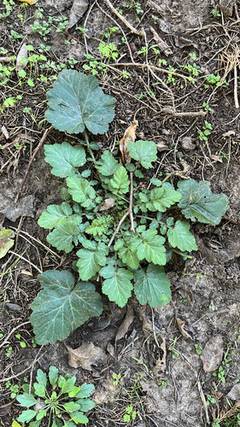
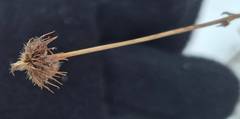
Geum macrophyllum is an upright deciduous perennial reaching 12-40 inches (30-100 cm) tall and 12-18 inches (30-45 cm) wide. Large pinnately compound basal leaves bear several small lateral leaflets and a markedly enlarged round terminal leaflet 1.5-4 inches (4-10 cm) across — the disproportion in leaflet size is the source of the specific epithet (macrophyllum = large-leaved). Bright yellow five-petaled flowers 0.5-0.75 inch (13-19 mm) with numerous yellow stamens appear on branching stems above the basal foliage from May through July over 8 weeks. Spherical burr-like seed heads 0.5-0.75 inch (13-19 mm) develop after petal drop, with persistent hooked styles that catch on fur and clothing — a textbook example of epizoochorous (animal-carried) seed dispersal. Native to circumboreal regions across northern North America, Europe, and Asia. Found in moist meadows, at forest edges, on stream banks, and in disturbed moist ground. Self-seeds freely in moist sites, with 30+ seedlings per parent plant possible by the second year if seed heads are not removed. Foliage turns yellow in fall. Spreads slowly by short rhizomes in addition to seed. Non-toxic. Hardy in USDA zones 3-9.
Native Range
Circumboreal — North America from Alaska to Newfoundland and south through the mountain ranges, plus Europe and Asia. Found in moist meadows, at forest edges, on stream banks, and in disturbed moist ground. Common at low to mid elevations across the Pacific Northwest.Suggested Uses
Used in moist native plant gardens, woodland edges, rain gardens, and meadow plantings, spaced 12-18 inches (30-45 cm). The hooked seed burrs catch on socks and pet fur, which is relevant where the plant is sited near paths or seating areas. Self-seeds freely in moist conditions.How to Identify
Appearance
Size & Dimensions
Height1' - 3'4"
Width/Spread1' - 1'6"
Bloom Information
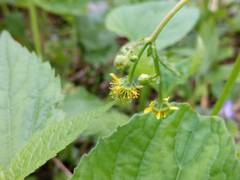
Bright yellow five-petaled flowers 0.5-0.75 inch (13-19 mm) with numerous yellow stamens appear on branching stems from May through July. Total bloom period extends 8 weeks in moist sites and may be reduced to 4-5 weeks in drier conditions. Bee-pollinated. Spherical burr-like seed heads with hooked styles follow.
Detailed Descriptions
Flower Description
Bright yellow, five petals 0.5-0.75 inch (13-19 mm) with numerous yellow stamens; held on branching stems above the basal foliage; May-July; followed by spherical burr-like seed heads 0.5-0.75 inch (13-19 mm) with hooked styles that catch on fur and clothingFoliage Description
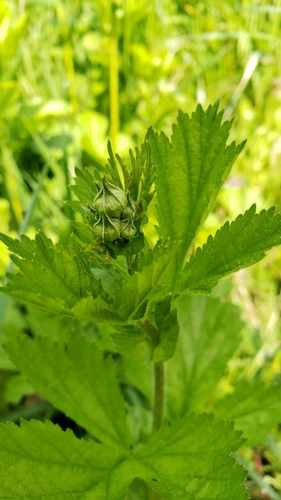
Medium green; large pinnately compound basal leaves with several small lateral leaflets and a markedly enlarged round terminal leaflet 1.5-4 inches (4-10 cm) across — the disproportion in leaflet size is the diagnostic feature (macrophyllum = large-leaved); stem leaves smaller and simpler; turns yellow in fallGrowing Conditions
Sun Requirements
Requires 3-8 hours of direct sunlight daily
• Full Sun: 6+ hours of direct sunlight
• Partial Shade: 3-6 hours of direct sunlight
• Full Shade: Less than 3 hours of direct sunlight
Care & Maintenance
Care Guide
Grows in part sun to full sun with 3-8 hours direct light. Tolerates clay, loam, and silt at pH 5.0-7.5; performs better in moist soils than in droughty ground. Hardy in USDA zones 3-9. Self-seeds freely; expect 30+ volunteer seedlings per parent plant if seed heads are left through fall. Foliage is occasionally browsed by deer. Non-toxic.Pruning
Deadhead in late summer (August) to reduce self-seeding and limit the spread of burr-like seed heads on clothing and pet fur. Cut back winter-damaged foliage in February or early March before new growth emerges. No other pruning needed.Pruning Schedule
Prune: February & August
summerearly spring