Native Plants for Specialist Bees in the Northeast
— Image © PlantReference.org 2026
Pets & Toxicity
Recorded toxicity for plants linked in this guide. An unknown status is not a safety assessment.
No linked plant is recorded as toxicDetailsHide
A general pollinator border can be full of flowers and still miss the bees with the narrowest diets. Many native specialist bees collect pollen from one plant genus, family, or closely related group. Adults may sip nectar elsewhere, but females need the right pollen to provision their nests. If the host plant is absent when the bee emerges, a colorful garden is not enough.
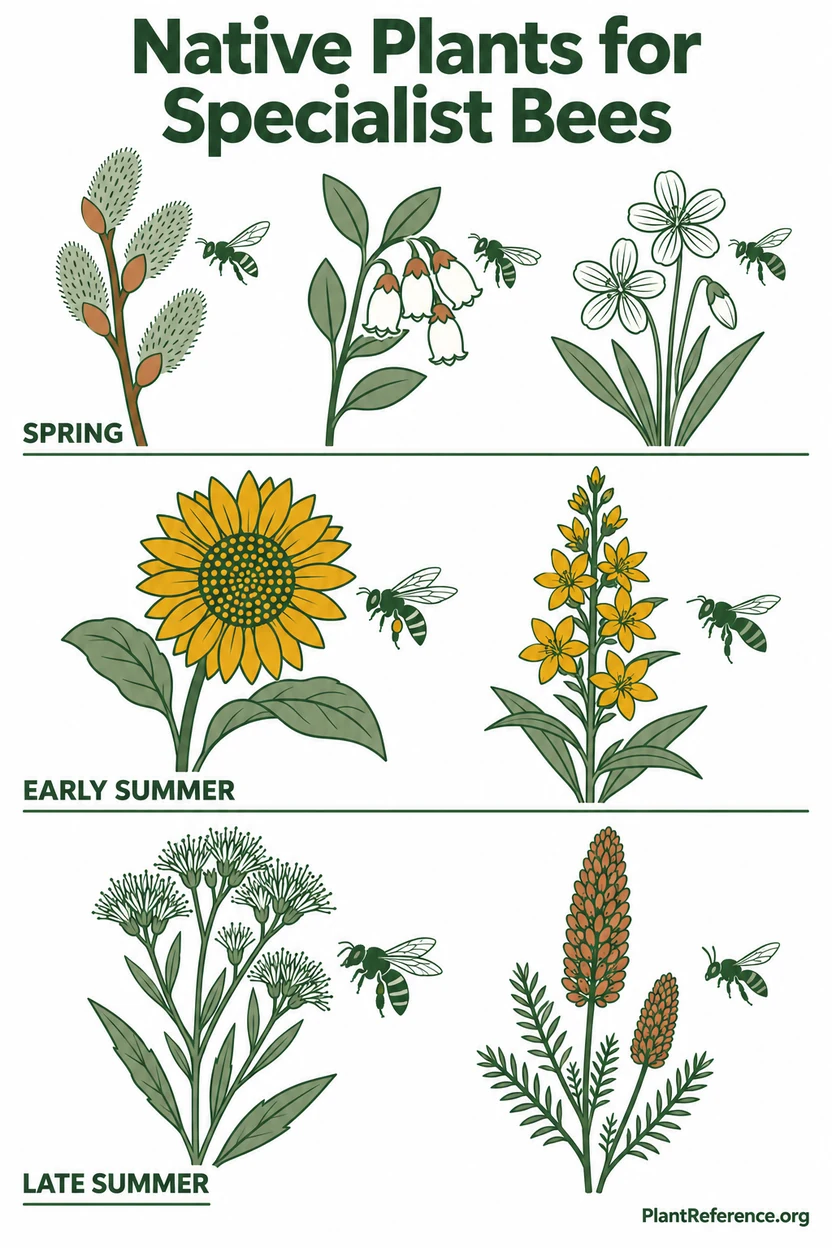
That makes host-plant matching the most important design decision in a specialist-bee garden. In the Northeast, a practical sequence begins with willow catkins, blueberries, and spring beauty, then moves through sunflowers, loosestrife, ironweed, and prairie clover. Together, these groups create a long flowering relay while serving bees such as Andrena andrenoides, Andrena carolina, Andrena erigeniae, Andrena helianthi, Macropis nuda, Melissodes denticulatus, and Xenoglossa albata.
Why Specialist Bees Need Their Host Plants
A pollen specialist is not simply a bee with a favorite flower. Its relationship with a host lineage is often physiological and behavioral: the female recognizes particular floral signals, handles a flower in a characteristic way, and can digest that pollen successfully. A bed of unrelated ornamentals cannot replace the missing host, even when those flowers attract abundant honey bees and bumble bees.
Specialization also ties the bee's annual schedule to bloom time. A willow-associated bee must emerge as catkins shed pollen. A sunflower specialist appears much later, when composite flower heads open. The garden therefore needs both the correct plants and overlapping bloom windows. This seasonal approach complements the broader advice in Best Perennials for Pollinators: Bees & Butterflies, but it starts with the most constrained insects first.
Specialist planting still benefits generalists. A drift of 🌿Helianthus divaricatus can feed numerous insects while giving sunflower specialists the pollen they require. That is why host plants are efficient choices: they solve a rare bee's bottleneck without creating an exclusive garden.
Host-plant group | Representative Northeast plant | Specialist bee association | Main bloom window | Best garden position |
|---|---|---|---|---|
Willow | Andrena andrenoides | Early spring | Moist edge or sunny swale | |
Blueberry | Andrena carolina | Mid- to late spring | Acidic shrub border | |
Spring beauty | Andrena erigeniae | Early to mid-spring | Deciduous shade | |
Sunflower | Andrena helianthi | Mid- to late summer | Dry, sunny border | |
Yellow loosestrife | Lysimachia ciliata | Macropis nuda | Early to midsummer | Moist meadow edge |
Ironweed | Melissodes denticulatus | Late summer | Moist, sunny back border | |
Prairie clover | Xenoglossa albata | Midsummer | Dry, lean, sunny soil |
Seven Host-Plant Groups for Northeast Gardens
1. Willow for the Earliest Pollen
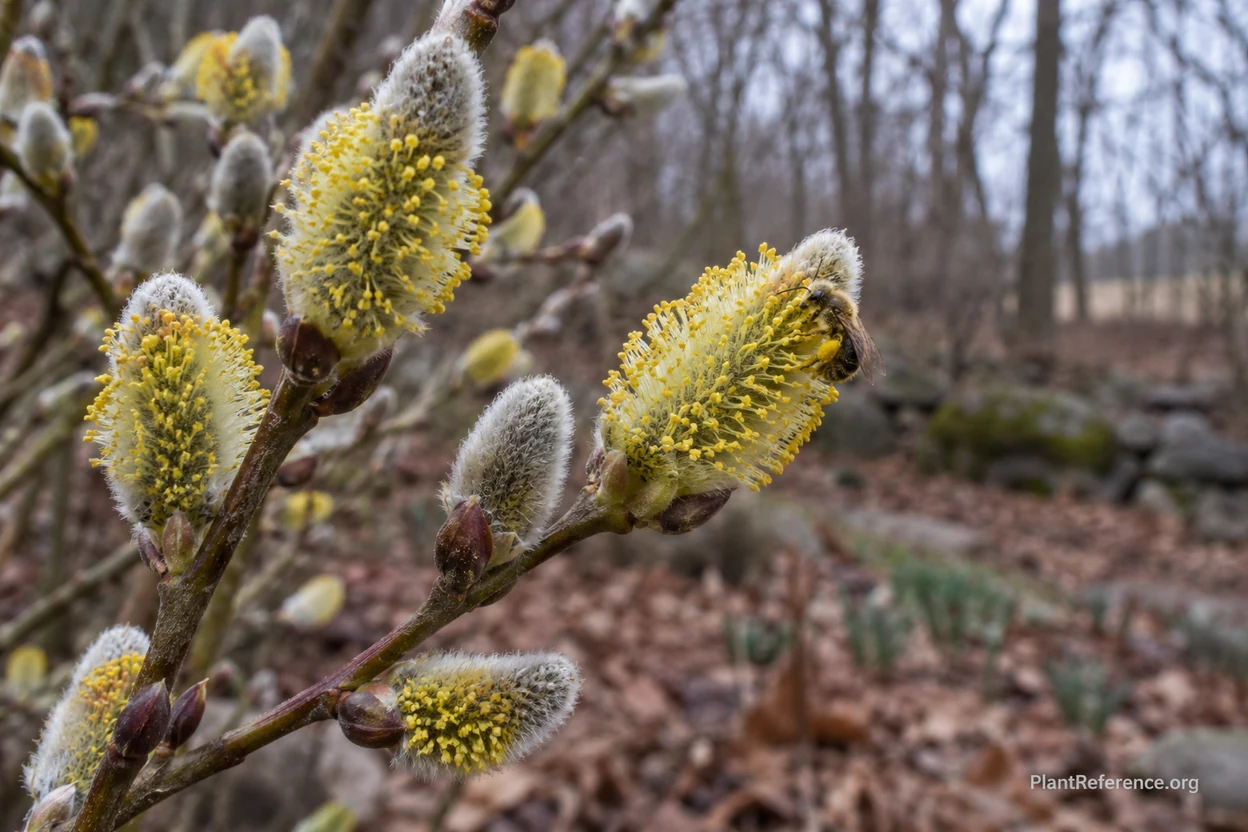
Willows are foundational because they flower before most herbaceous perennials. 🌿Salix discolor, commonly called pussy willow, fits a damp sunny edge, rain-garden shoulder, or pond margin. It is a shrub rather than a tidy front-border perennial, so give it enough room and prune only with a clear purpose. The pollen-bearing plants are especially valuable; when buying, ask the nursery whether the selection produces pollen-rich male catkins.
Pair willow with later hosts rather than expecting one shrub to carry the season. Its role is to open the calendar. Gardeners with limited space can place it beyond the formal bed, where its early catkins remain accessible but its mature size does not crowd smaller plants.
2. Blueberry for Spring Shrub Structure
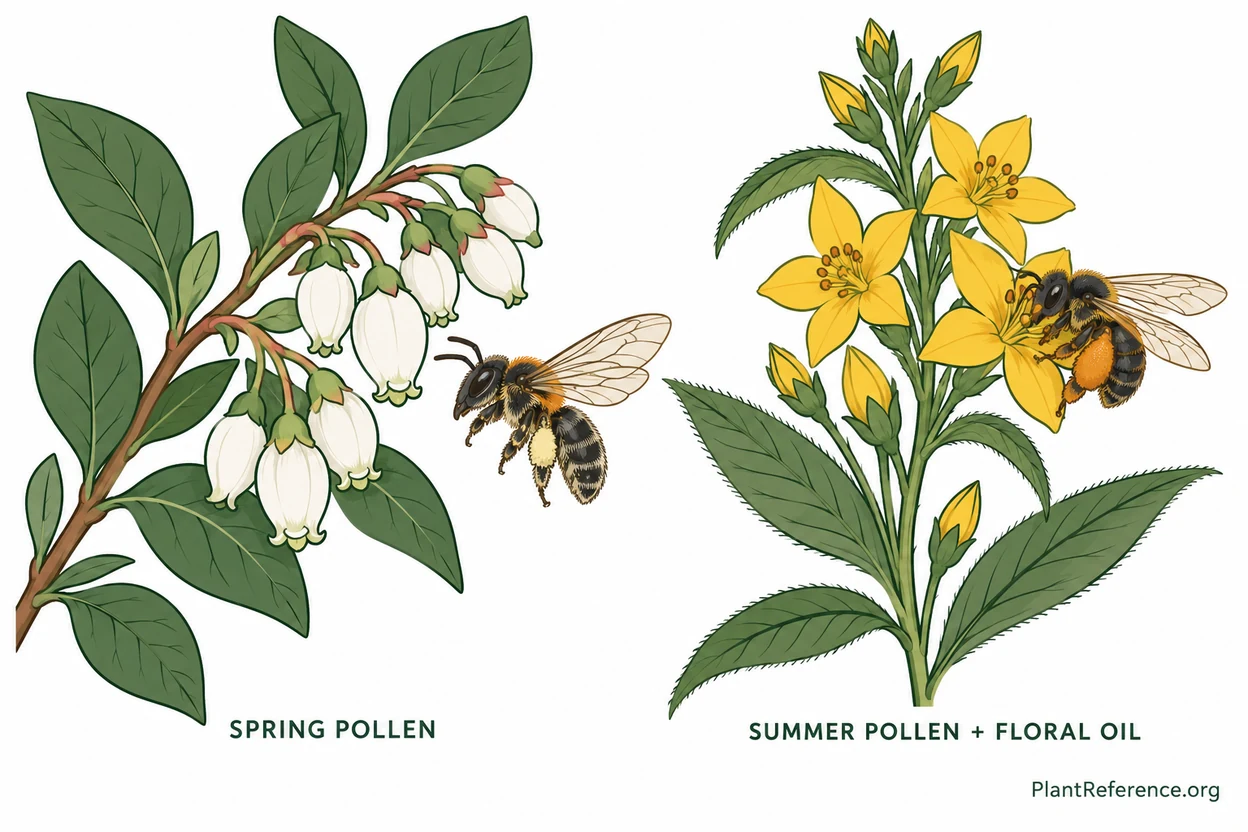
Highbush blueberry, 🌿Vaccinium corymbosum, combines wildlife value, edible fruit, and spring flowers. Its urn-shaped blossoms suit bees that can manipulate or vibrate the flower effectively, including the blueberry-associated Andrena carolina. Use at least two compatible blueberry plants when fruit production matters, and site them in acidic, well-drained soil.
Blueberries perform poorly when planted into alkaline ground and treated like ordinary shrubs. Test first, then build a bed around the result. A 2- to 3-inch (5- to 8-cm) layer of pine fines or shredded bark helps conserve moisture, but keep mulch several inches away from stems. If your garden already includes ornamental perennials, the seasonal sequencing ideas in Plan a Perennial Garden That Blooms Spring to Fall help connect blueberry bloom to summer hosts.
3. Spring Beauty for the Woodland Floor
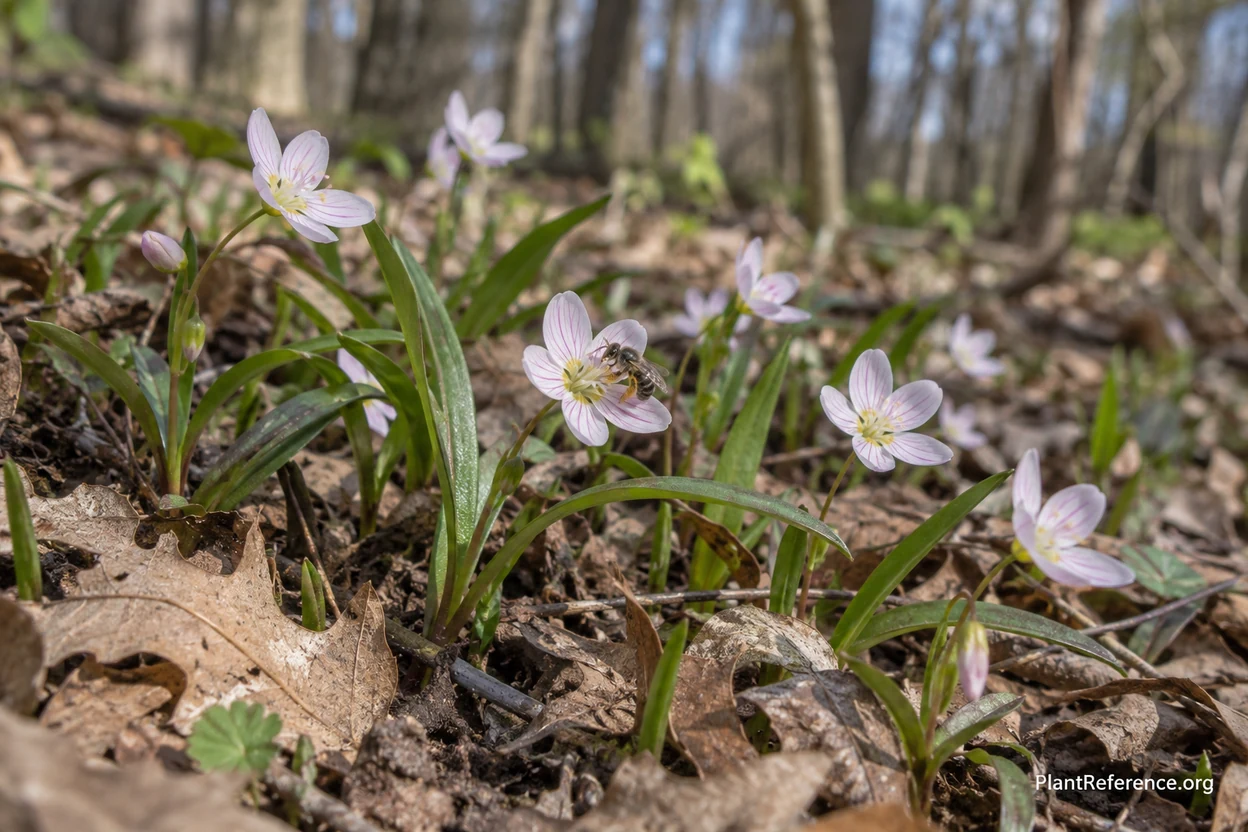
🌿Claytonia virginica is a small spring ephemeral with pale, pink-striped flowers. It grows, blooms, and stores energy before a deciduous canopy closes. Its specialist, Andrena erigeniae, tracks this brief window. A few isolated plants are fragile; a spreading colony creates a dependable patch that both bee and gardener can find.
Plant dormant corms or nursery-grown plants beneath open deciduous trees, along an undisturbed woodland edge, or among later-emerging shade perennials. Avoid aggressive raking in this zone. The foliage disappears after seed set, but the plant is not dead. Mark the patch so summer digging does not destroy the corms.
4. Sunflower for a Summer Pollen Platform
Native sunflowers turn a single bloom into a dense landing platform of many disk florets. Woodland sunflower, 🌿Helianthus divaricatus, handles dry edges and bright open shade, while other locally native 🌿Helianthus spp. species suit wetter or sunnier sites. Their extended display supports Andrena helianthi and many generalist visitors.
Allow enough width for the species you choose; several spread by rhizomes. Place a colony where expansion is useful, or edge it annually. The cultural details in How to Grow Coneflowers (Echinacea) That Feed Pollinators are a helpful comparison for managing another composite-flowered native, though coneflowers do not replace the specific sunflower host relationship.
5. Yellow Loosestrife for Oil-Collecting Bees
Native yellow loosestrifes in the genus Lysimachia have a remarkable connection with Macropis bees. Females collect floral oils as well as pollen, using those oils in nest construction and larval provisions. Fringed loosestrife, Lysimachia ciliata, prefers moist soil and can fit a swale, stream edge, or rain-garden transition.
Do not confuse native yellow-flowered Lysimachia with invasive purple loosestrife. Check the complete scientific name when purchasing. Plant a substantial patch so the floral-oil resource is easy to locate, and keep the root zone evenly moist during establishment.
6. Ironweed for the Late-Summer Gap
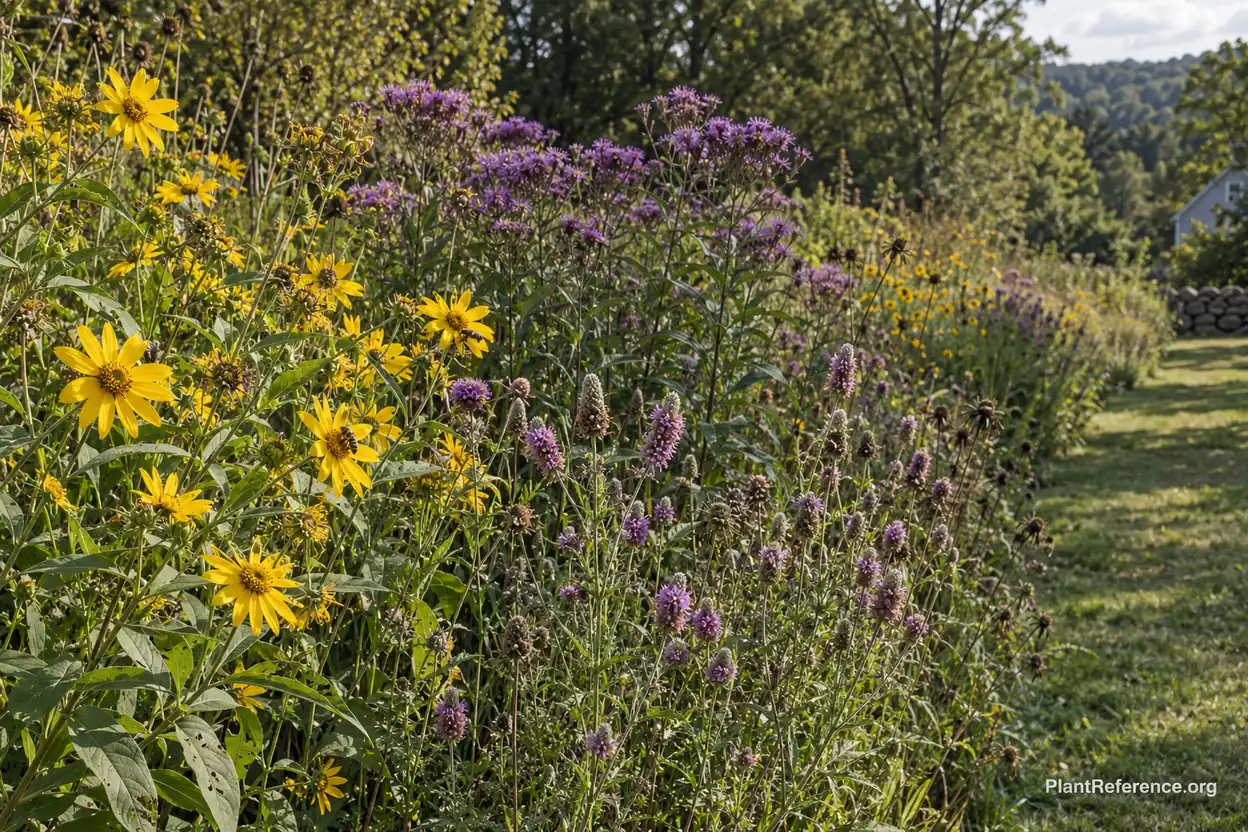
New York ironweed, 🌿Vernonia noveboracensis, produces saturated purple flower clusters when many spring plants are long finished. It is a tall, moisture-tolerant perennial well suited to the back of a sunny border or the upper edge of a wet meadow. Its relationship with Melissodes denticulatus gives it special importance, while butterflies and other bees also use the flowers.
In fertile soil, stems may grow taller than expected. Use neighboring grasses and sturdy perennials for support, or cut stems back by roughly one-third in late spring if a shorter plant is essential. Do not cut the whole clump after flowering; standing stems add winter structure and potential nesting material. When to Cut Back Perennials in Fall (And What to Leave) explains why a delayed cleanup benefits more than the flower display.
7. Prairie Clover for Dry, Lean Ground
Purple prairie clover, 🌿Dalea purpurea, is the dry-site specialist in this plan. Its fine foliage, upright purple flower spikes, and deep roots suit gravelly, sandy, or lean sunny soil. It performs badly in a rich, wet bed where taller neighbors overwhelm it. That preference makes it valuable on a hot slope or drought-prone strip that cannot support willow or ironweed.
Use prairie clover in repeated groups rather than as a single specimen. Pair it with low grasses that leave light around the crown. For distinguishing true grasses from grasslike companions, use Grass vs Sedge vs Rush: How to Tell Them Apart.
Build a Specialist-Bee Planting Plan
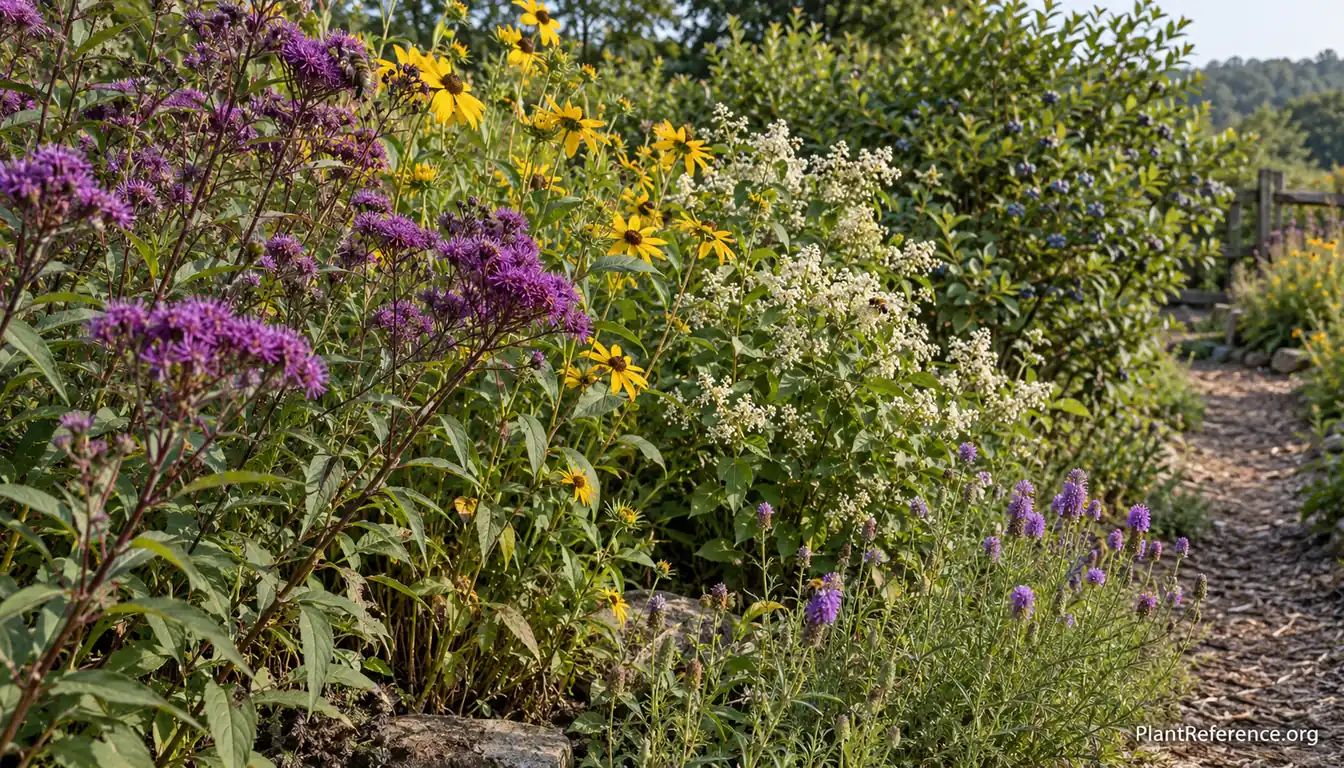
Start with site conditions, not a shopping list. Map sun, soil moisture, drainage, and existing canopy. Then assign each host to the niche it already prefers: willow to the wet edge, blueberry to acidic soil, spring beauty under deciduous shade, loosestrife and ironweed to moist sun, and sunflower or prairie clover to the drier border.
Next, design for visibility. A bee searching a landscape is more likely to encounter a patch than an isolated flower. As a practical residential target, repeat each small perennial in clumps roughly 3 to 5 feet (0.9 to 1.5 m) across where space allows. Shrubs can stand individually if their mature crowns create a large floral display. Arrange several clumps within sight of one another instead of scattering one of everything.
Protect existing native host plants before buying replacements.
Choose species native to your part of the Northeast, not merely to the continent.
Plant at least three seasonal layers: early spring, late spring, and summer.
Repeat host plants in readable clumps and let successful colonies expand.
Keep bloom within easy flight distance of bare soil, stems, and leaf litter.
Avoid insecticides, including systemic products applied before purchase.
A clean planting matrix can still look intentional. Use repeated host plants as anchors, then fill gaps with compatible natives. Perennial Combinations That Look Good Together offers visual principles for repetition and contrast. If deer browse heavily, compare the risk and protection strategies in Deer-Resistant Perennials: A Zone-by-Zone Planting Guide; no host plant is useful if every flower bud is eaten.
Planting and Establishment
Spring and early fall are usually the easiest planting periods for container-grown Northeast perennials, but the right timing depends on moisture and root development. When to Plant Perennials: Season-by-Season Timing helps weigh those tradeoffs. Water deeply after planting, then check the root zone rather than judging the surface. Most new perennials need about 1 inch (2.5 cm) of water per week from rainfall and irrigation during active establishment, adjusted for soil and weather.
Mulch can reduce weeds, but a uniform deep blanket works against ground-nesting bees and small spring ephemerals. Keep a 2-inch (5-cm) layer around new shrubs where moisture conservation matters, leave designated patches of firm bare mineral soil, and use natural leaf litter beneath deciduous trees. Never mound mulch against crowns or trunks.
For spreading hosts, divide only when a colony is vigorous and large enough to spare sections. Follow clean-tool and seasonal guidance in How to Divide Perennials: A Species-by-Species Guide. Let spring beauty reproduce undisturbed rather than repeatedly moving its corms.
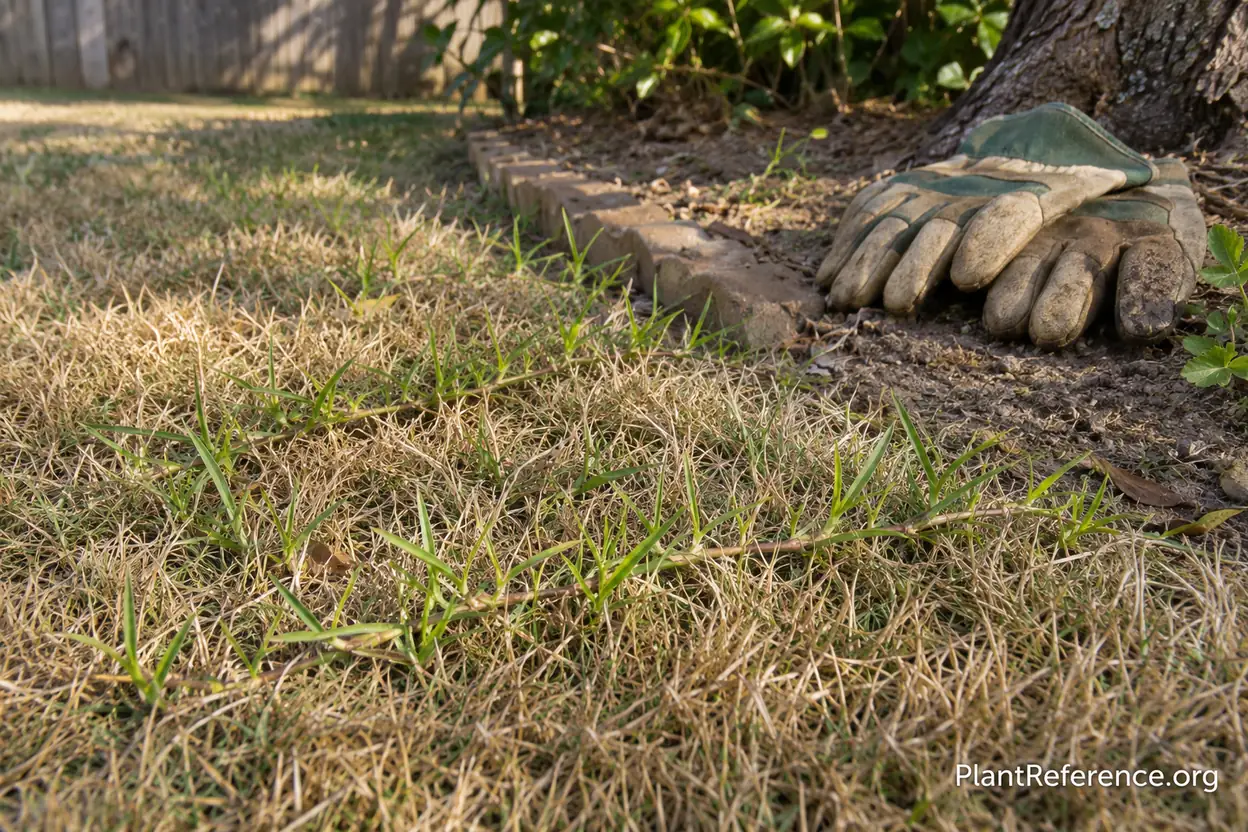
During the first season, weed by hand before weeds seed. Learn the host seedlings so they are not pulled accidentally. In a converted lawn, remove turf thoroughly; the options in Lawn Alternatives That Actually Work: 5 Options Beyond Grass can help decide whether to replace an entire area or create linked habitat islands.
Maintain the Whole Bee Habitat
Flowers solve only the food requirement. Most native bees nest in the ground, and others use pithy or hollow stems, wood cavities, or existing holes. Reserve sunny, well-drained patches of bare or sparsely vegetated soil. Do not cover every square foot with landscape fabric, stone, or heavy mulch. Leave some broken stems standing 12 to 24 inches (30 to 60 cm) high through winter and into spring.
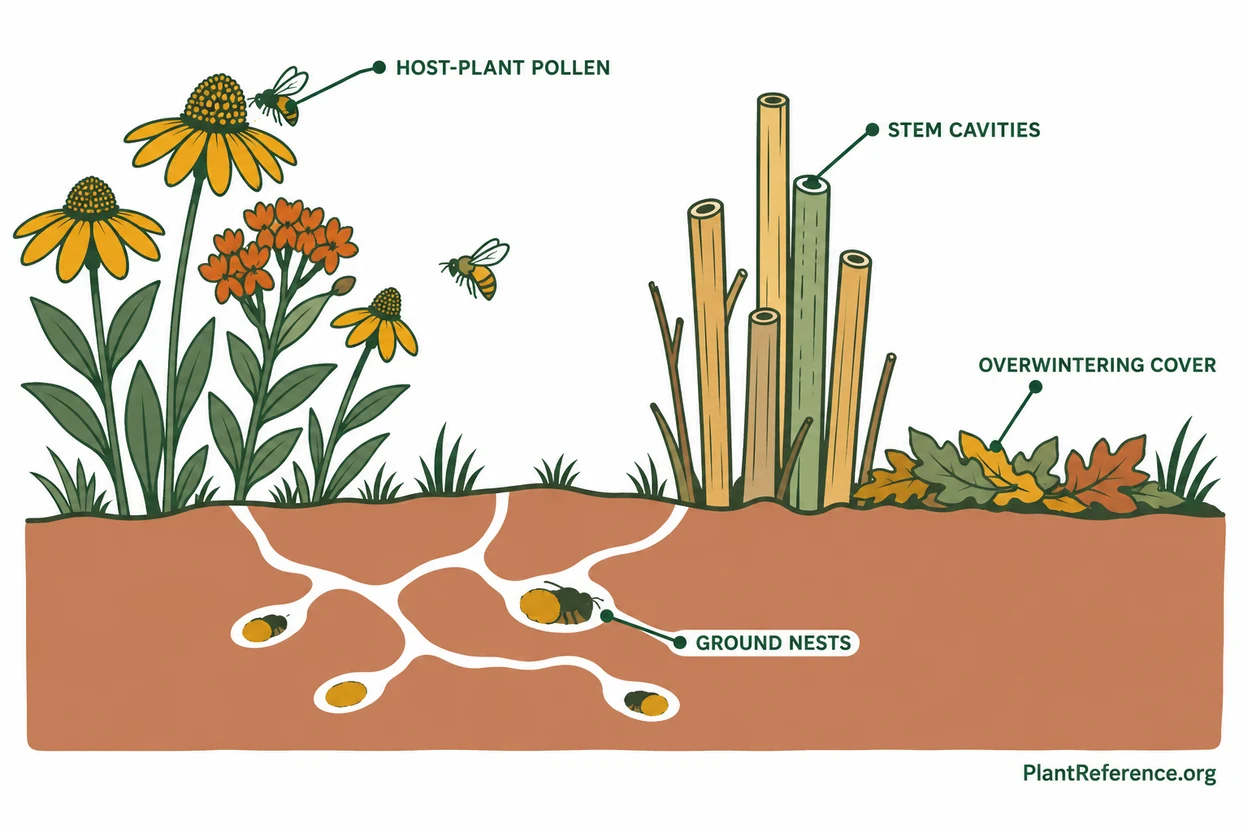
Delay intensive cleanup until several warm spring days have passed. Remove only material that truly obstructs paths or smothers crowns. Cut old stems into short pieces and place them loosely at the back of the garden so insects can finish emerging. A slightly untidy edge is a functioning habitat, not a maintenance failure.
Provide shallow water with stones for footing, but empty and scrub containers regularly to avoid mosquitoes. Skip bee hotels unless you can clean or replace nesting materials; poorly maintained hotels can concentrate parasites and disease. Natural stems distributed through the planting are often simpler.
Finally, observe. Record which host flowers open, which bees visit, and where nesting activity appears. If a specialist plant blooms but no target bee arrives, keep the plant: small populations can be difficult to notice, and habitat becomes more valuable as neighboring yards add native patches. The goal is not a one-season spectacle. It is a stable network of the right pollen, safe nests, and undisturbed seasonal transitions.
Frequently Asked Questions
Reading about plants and recognising them are different skills. These three build the second.
- Daily PlantIdentify the day’s mystery plant from a close-up photograph.
- Keyed OutWork a dichotomous key, lead by lead, to name a hidden specimen.
- Name That PlantName a specimen from botanical clues dealt hardest first.
Free to play, no account needed
Tagged with
Kevin is a landscape contractor in the Boston area who specializes in cold-climate perennial gardens and hardscaping. He studied landscape design and worked at a prominent nursery on the North Shore before starting his own design-build firm. Kevin's gardens are built to handle New England weather—freeze-thaw cycles, nor'easters, late springs, and heavy snow loads. He's particularly interested in native perennials and shrubs that provide four-season interest without constant maintenance. Kevin writes about cold-hardy plant selection, winter garden structure, and building landscapes that look good even in February.