Helianthus, Genus, divaricatus, Species,
- Genus & species
woodland sunflower
Overview
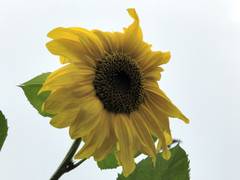
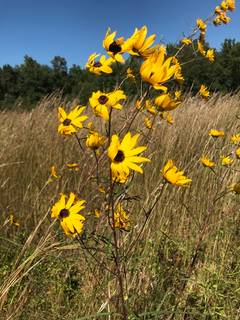
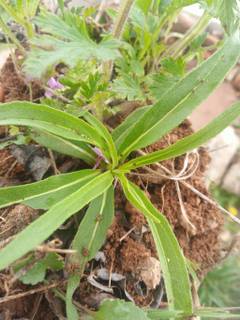
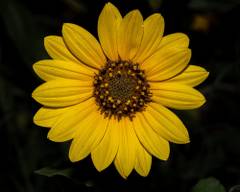
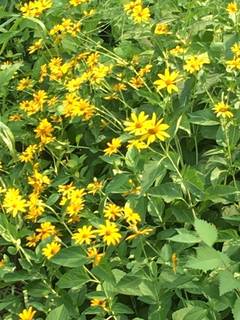
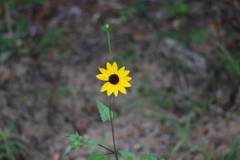
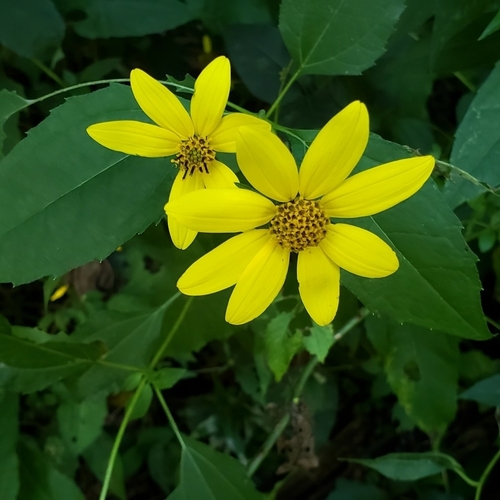
Helianthus divaricatus is a colony-forming perennial sunflower 2-6 feet (60-180 cm) tall, spreading by slender rhizomes into broad stands. The smooth, often reddish stems carry opposite, nearly stalkless leaves that spread stiffly outward at wide angles, the trait behind the name divaricatus. The leaves are lance-shaped, 3-6 inches (7.5-15 cm) long, rough to the touch, three-veined from the base, with a broad rounded base and a tapering tip. From mid to late summer, yellow flower heads 1.5-2.5 inches (4-6 cm) across open at the stem tips, each with 8-15 ray florets around a yellow central disk. The heads turn to follow available light and draw bees and butterflies. Seeds ripen by fall and feed birds. It grows in dry to medium open woods, woodland edges, savannas, and clearings across eastern and central North America, holding up in part shade where many sunflowers will not bloom. The rhizomes knit dry banks but also let stands spread. One trade-off is that strong colonies crowd out smaller neighbors and may need edging to stay in bounds.
Native Range
Native to eastern and central North America, from Quebec and Ontario south to Florida and west to the Great Plains. It grows in dry open woods, woodland edges, savannas, glades, and clearings, often on sandy or rocky soils.Suggested Uses
Used in native and pollinator gardens, woodland edges, meadows, and dry shade plantings, and for erosion control on banks. It is grown massed as a ground-layer sunflower and as nectar and seed for wildlife.How to Identify
Appearance
Size & Dimensions
Height2' - 6'
Width/Spread2' - 4'
Bloom Information
Detailed Descriptions
Foliage Description
Medium green, roughGrowing Conditions
Sun Requirements
Requires 4-8 hours of direct sunlight daily
• Full Sun: 6+ hours of direct sunlight
• Partial Shade: 3-6 hours of direct sunlight
• Full Shade: Less than 3 hours of direct sunlight
Care & Maintenance
Care Guide
Grows in full sun to part shade in dry to medium, well-drained sandy, loamy, or rocky soils at pH 5.5-7.5, and tolerates drought, poor ground, and dry shade. It blooms in part shade where many sunflowers need full sun and grows leggy in deep shade. Hardy in zones 3-8, it dies back in winter and resprouts from rhizomes in spring. It needs little water or feeding and spreads steadily underground. Dividing in spring or fall keeps colonies in check and renews vigor.Pruning
Maintenance is minimal. Stems can be cut back by half in early summer to lower height and reduce flopping, and spent stalks are cut to the ground in late fall or left for birds. Rhizomes are edged or divided to control spread.Pruning Schedule
Prune: June & November
summerfall