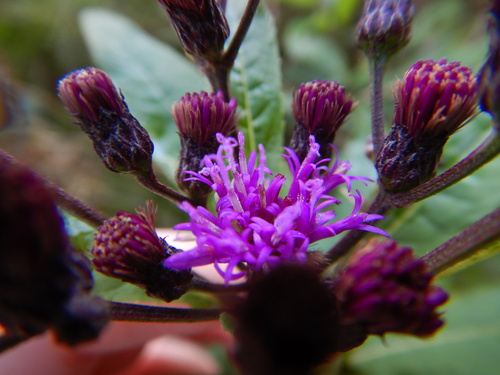
Vernonia, Genus, noveboracensis, Species,
- Genus & species
New York ironweed
Eastern North America — from Massachusetts south to Georgia and west to Mississippi, in moist meadows and streambanks
Overview
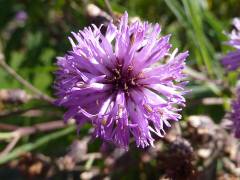
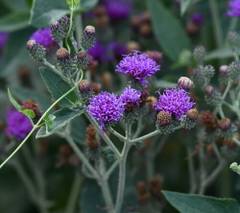
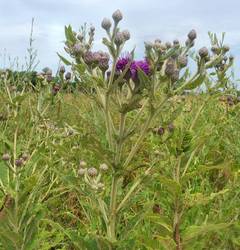
Vernonia noveboracensis is New York ironweed — the native wildflower with the deepest, most saturated purple of any North American species, growing 48–72 inches (120–180 cm) tall and 24–36 inches (60–90 cm) wide. Deep violet-purple flat-topped to domed flower clusters from August through October — the purple is so intense and saturated it appears almost electric, deeper than any aster, coneflower, or other native purple. The 'ironweed' name has two origins: the rust-colored (iron-colored) seed heads that follow the flowers, and the iron-hard tough stems that are nearly impossible to break by hand. The species name 'noveboracensis' means 'of New York'. Moist meadows and streambanks. Tall — may flop in rich soil; pinch back in June to reduce height and increase bushiness. Major late-season pollinator plant — swallowtail butterflies are especially attracted. Hardy to zone 4. Deer avoid the foliage.
Native Range
Vernonia noveboracensis is native to eastern North America — from Massachusetts south to Georgia and west to Mississippi.Suggested Uses
Used in native meadows, pollinator gardens, and wet-site plantings. The deepest purple native wildflower. Pair with goldenrod (gold + purple = the iconic native fall combination). The ultimate purple for native gardens.How to Identify
Appearance
Size & Dimensions
Height4' - 6'
Width/Spread2' - 3'
Colors
Bloom Information
Detailed Descriptions
Flower Description
Deep violet-purple, in flat-topped to domed clusters — the deepest, most saturated purple of any native wildflowerFoliage Description
Dark green, lance-shaped, toothedGrowing Conditions
Sun Requirements
Requires 5-10 hours of direct sunlight daily
• Full Sun: 6+ hours of direct sunlight
• Partial Shade: 3-6 hours of direct sunlight
• Full Shade: Less than 3 hours of direct sunlight
Care & Maintenance
Care Guide
Plant in full sun. Moist soil. Pinch back in June if height reduction is needed. Hardy to zone 4. Major pollinator plant.Pruning
Pinch or cut back by one-third in June to reduce height and increase branching. Cut to ground after frost or in early spring. Leave seed heads for birds.Pruning Schedule
Prune: March & June
summerearly spring