Image 1 of 5
1 / 5
Plant Reference
Solanum, Genus, lycopersicum, Species, 'Sungold', Cultivar,
- Genus & species
- Cultivar
Sungold cherry tomato
Cultivar developed in Japan (Tokita Seed Company); parent species native to western South America
Overview
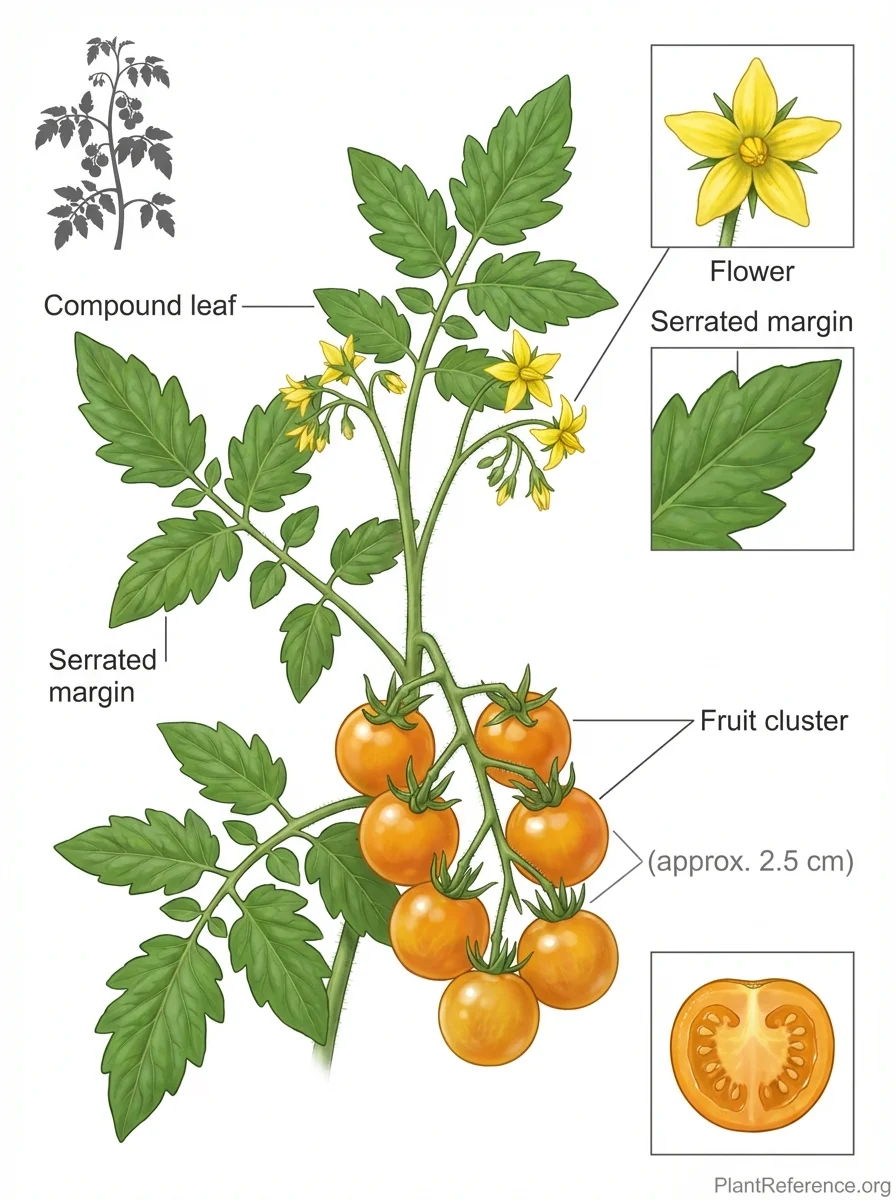
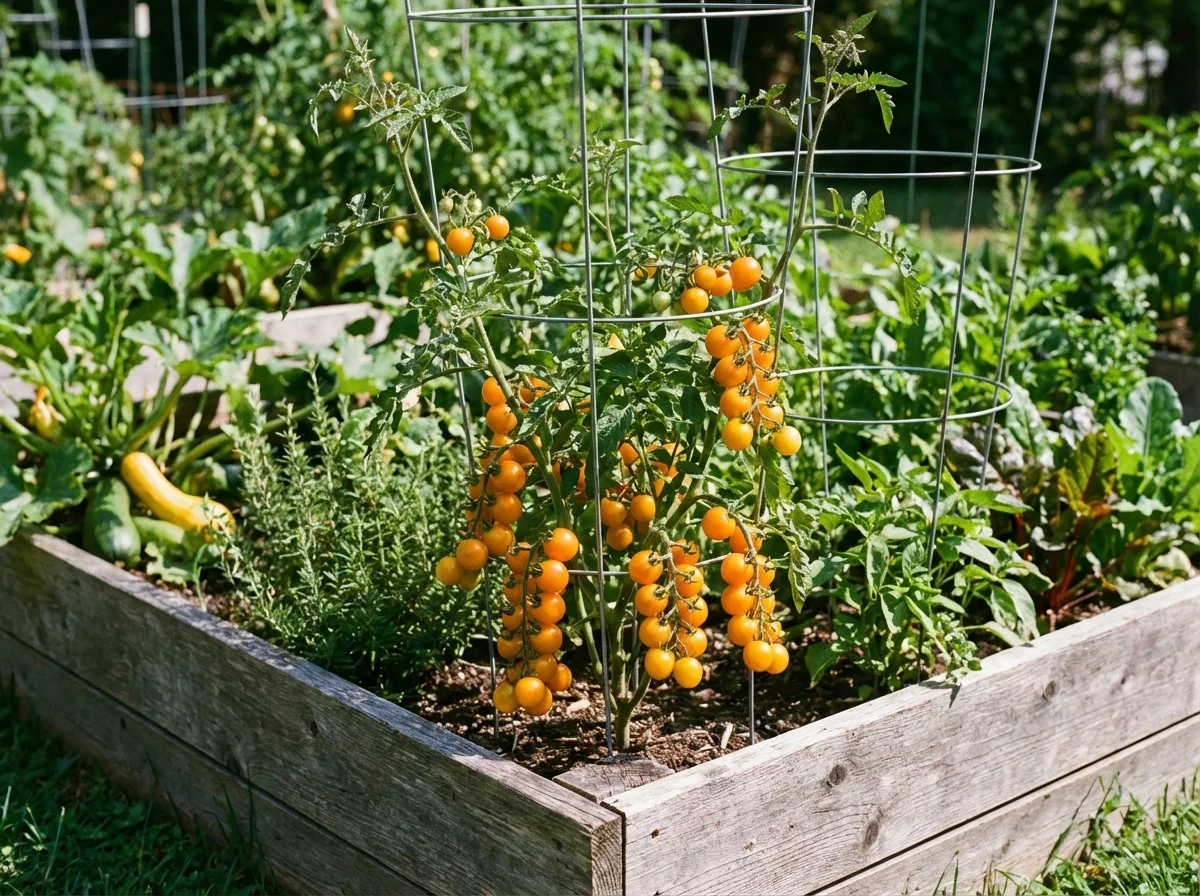
Solanum lycopersicum 'Sungold' is Sungold cherry tomato, an indeterminate F1 hybrid growing 72–96 inches (180–240 cm / 6–8 feet) on stakes or cages. Plants carry prolific clusters of golden-orange cherry tomatoes 1–1.25 inches (2.5–3 cm) with high sugar content and a tangerine-like sweetness, maturing in 55–65 days from transplant. Bright yellow flowers in clusters of 6–12. Indeterminate growth continues producing until frost. The cultivar is an F1 hybrid developed by Tokita Seed Company in Japan. The golden-orange color comes from beta-carotene rather than the red lycopene of standard tomatoes. A single plant can produce 200+ fruit per season — high yield compared with most cherry-tomato cultivars. The skin is thin and splits readily after rain or irregular watering, so the fruit is harvested promptly when ripe; the fruit drops when overripe. Saved seed from an F1 hybrid does not grow true to type. Seed is started indoors 6 weeks before the last frost. All green parts contain solanine and are toxic to pets and humans in quantity; ripe fruit is non-toxic. Full sun (6+ hours). Tender annual. Growth rate is fast. Family Solanaceae.
Native Range
'Sungold' is an F1 hybrid developed by Tokita Seed Company, Japan. The parent species Solanum lycopersicum is native to western South America (Peru and Ecuador).Suggested Uses
Grown in vegetable gardens, raised beds, and large containers of 5 gallons (19 L) or larger with staking or caging. The high fruit count per plant (200+ per season) and long indeterminate cropping window from 55 days through frost suit continuous-harvest home gardens. Thin skin makes the cultivar suited to fresh eating rather than shipping or long storage. F1 hybrid — saved seed does not grow true. Green parts are toxic. Tender annual.How to Identify
Appearance
Size & Dimensions
Height6' - 8'
Width/Spread3' - 4'
Bloom Information
Flowers from June through October. Bright yellow 5-petaled flowers in clusters of 6–12 open continuously on the indeterminate vine. Self-pollinating, with flower vibration from bees increasing fruit set. Fruit matures 55–65 days from transplant, and new clusters open through the season until frost.
Detailed Descriptions
Flower Description
Bright yellow; 5-petaled; 0.5 inch (12 mm) across; in clusters of 6–12Foliage Description
Medium to dark green; pinnately compound with serrated leaflets; aromatic when brushedGrowing Conditions
Sun Requirements
Requires 6-10 hours of direct sunlight daily
• Full Sun: 6+ hours of direct sunlight
• Partial Shade: 3-6 hours of direct sunlight
• Full Shade: Less than 3 hours of direct sunlight
Care & Maintenance
Care Guide
Plant outdoors after all frost risk has passed in full sun (6+ hours direct sunlight) in rich moist well-drained loamy soil at pH 6.0–6.8. Seed is started indoors 6 weeks before the last frost date and transplanted deep to develop adventitious roots along the buried stem. Indeterminate growth to 6–8 feet requires staking or caging at planting. Consistent deep watering (1–2 inches per week) reduces skin splitting; irregular watering after dry spells causes fruit to crack. Saved seed from this F1 hybrid does not grow true to type, so fresh seed is purchased each year. Green foliage and stems contain solanine and are toxic to pets and humans in quantity. Tender annual — the plant is killed by the first frost.Pruning
Suckers (side shoots from leaf axils) are removed weekly through the season to maintain single-stem or two-stem training and air circulation. Lower leaves below the first fruit truss are removed to reduce soil-splash disease transmission. The main stem is topped 4–6 weeks before first frost to redirect energy to ripening existing fruit. Staking or caging is required. Fruit is harvested promptly as it ripens because it drops when overripe.Pruning Schedule
Prune: June–September
summerfall
Container Growing
Suitable for container growing
Minimum container size: 5 gallons
Toxicity Warning
Toxic to petsPlanting Guide
Planting Methods & Timing
Planting Method
transplant
Indoor Start
6 weeks before last frost
Direct Sow Timing
Not recommended: the warm-season requirement and 55-65 day fruit window make direct sowing impractical in Pacific Northwest growing seasons; transplants are the standard.
Days to Maturity
55–65 days
Plant Spacing
24 inches
Botanical Flashcard