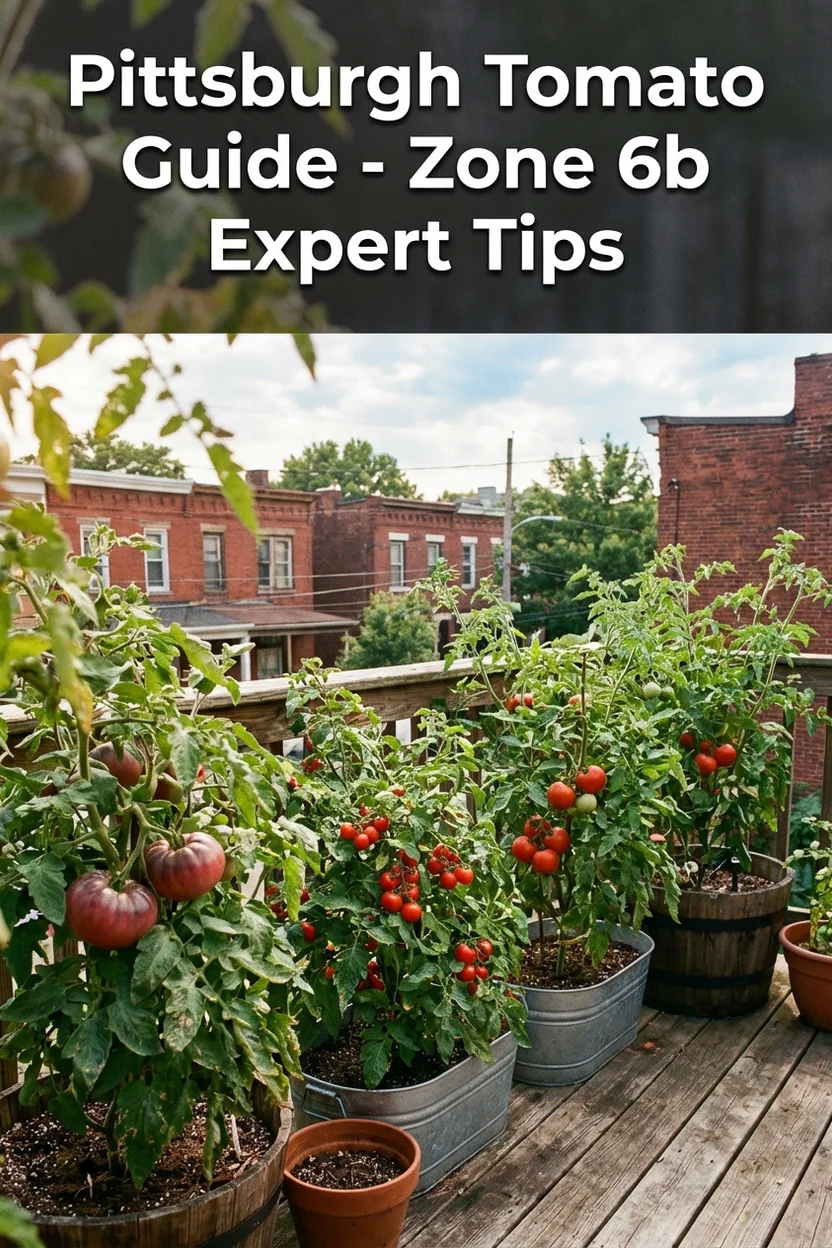
When to Plant Tomatoes in Pittsburgh: Complete Zone 6b Guide
Pets & Toxicity
Recorded toxicity for plants linked in this guide. An unknown status is not a safety assessment.
Toxic to pets: early girl tomato, Stupice tomato, cherokee purple tomato and 3 moreDetailsHide
Solanum lycopersicum 'Early Girl' — Toxicity Warning
Toxic to petsView Solanum lycopersicum 'Early Girl' plant profileSolanum lycopersicum 'Stupice' — Toxicity Warning
Toxic to petsView Solanum lycopersicum 'Stupice' plant profileSolanum lycopersicum 'Cherokee Purple' — Toxicity Warning
Toxic to petsView Solanum lycopersicum 'Cherokee Purple' plant profileSolanum lycopersicum 'Sungold' — Toxicity Warning
Toxic to petsView Solanum lycopersicum 'Sungold' plant profileSolanum lycopersicum 'San Marzano' — Toxicity Warning
Toxic to petsView Solanum lycopersicum 'San Marzano' plant profileSolanum lycopersicum 'Brandywine' — Toxicity Warning
Toxic to petsView Solanum lycopersicum 'Brandywine' plant profile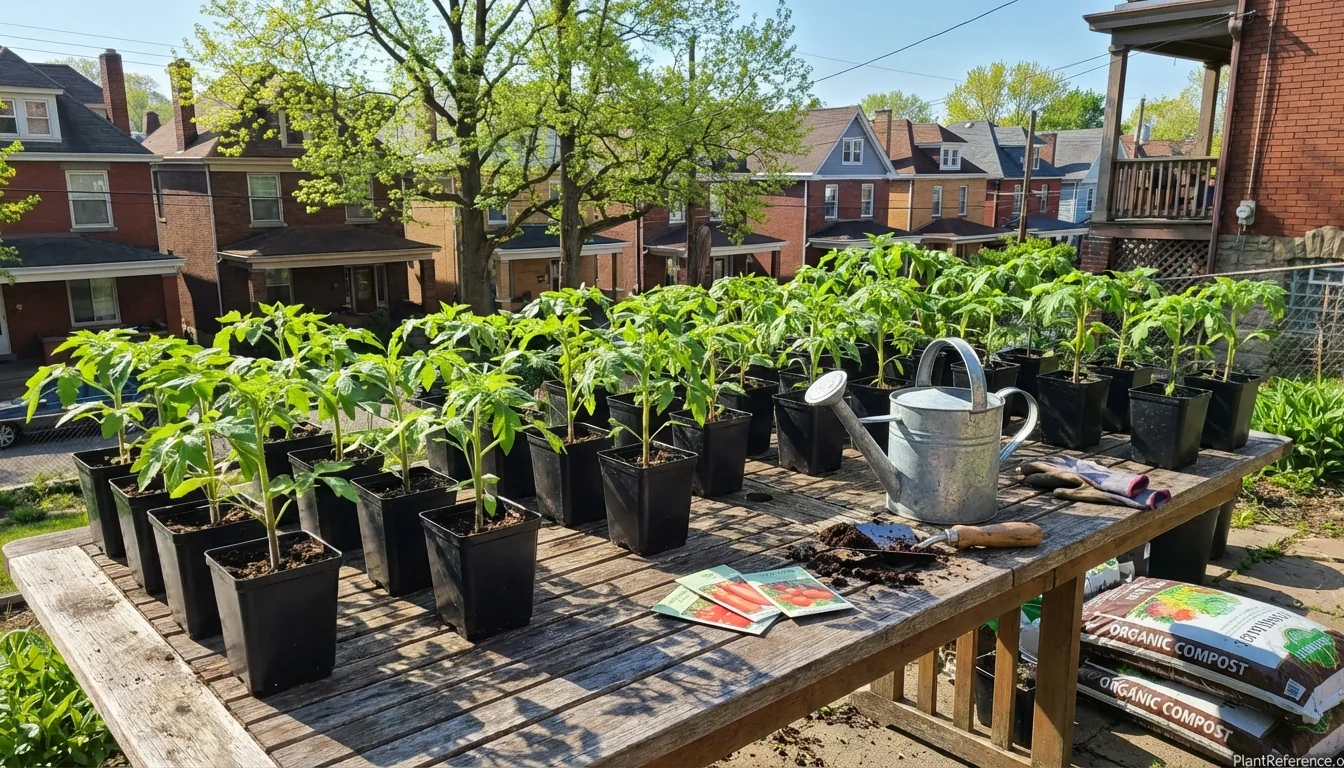
— Image © Plant Reference 2026
Pittsburgh's Zone 6b climate offers tomato growers a generous 178-day growing season, but success depends on choosing the right varieties and timing your planting correctly. The last frost date of April 24 and first frost on October 19 create an ideal window for both early and late-season varieties.
Best Tomato Varieties for Pittsburgh's Zone 6b Climate
Pittsburgh's moderate climate with cool springs and warm summers favors varieties that can handle temperature fluctuations while producing consistently through the growing season. The key is selecting cultivars that capitalize on the 178-day frost-free period while managing the humidity and occasional temperature swings typical of western Pennsylvania.
Early Season Champions
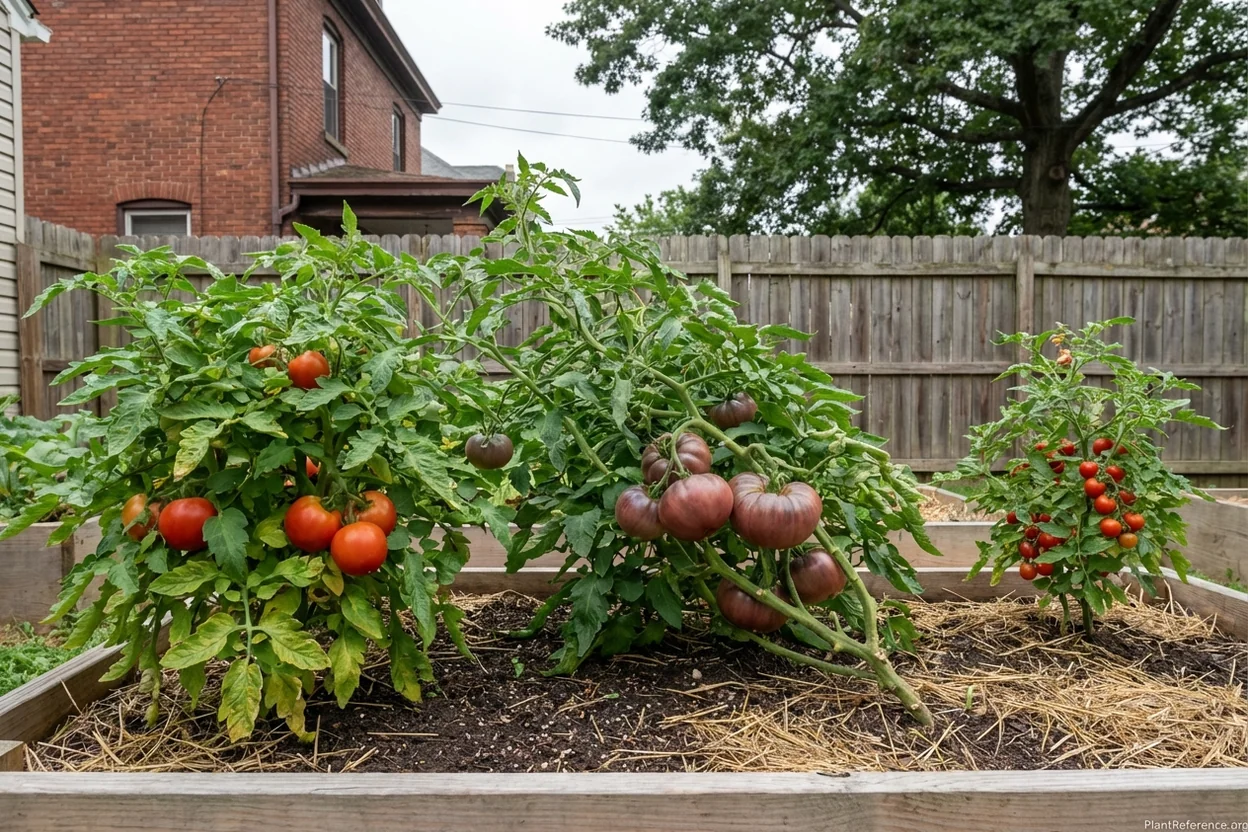
🌿Solanum lycopersicum 'Early Girl' (ly-ko-PER-sih-kum) dominates Pittsburgh gardens for good reason. This F1 hybrid sets fruit at lower temperatures than most varieties, crucial for Pittsburgh's sometimes-cool May nights. Maturing in just 50-62 days from transplant, it provides reliable harvests before summer heat peaks.
🌿Solanum lycopersicum 'Stupice' proves equally valuable for Pittsburgh's climate. This Czech heirloom handles cool conditions exceptionally well and continues producing through temperature fluctuations that stop other varieties. Its 52-60 day maturity makes it ideal for maximizing the growing season.
Mid-Season Powerhouses
🌿Solanum lycopersicum 'Cherokee Purple' thrives in Pittsburgh's moderate summers, producing large, complex-flavored fruits throughout July and August. While requiring 75-90 days to mature, Pittsburgh's long season accommodates this timing perfectly.
🌿Solanum lycopersicum 'Sungold' cherry tomatoes excel in the region's variable conditions. The hybrid vigor and disease resistance package (F, T, V) handle Pittsburgh's humid summers while producing sweet, crack-resistant fruit.
Late Season Performers
🌿Solanum lycopersicum 'San Marzano' varieties work well for Pittsburgh's processing needs, maturing in 78-85 days with excellent flavor for canning before the October 19 first frost.
🌿Solanum lycopersicum 'Brandywine' requires careful management but rewards Pittsburgh growers with exceptional flavor. Plant only if you can provide consistent care through the 80-100 day maturation period.
Variety | Days to Maturity | Best For | Notes for Pittsburgh |
|---|---|---|---|
52-60 days | Cool weather tolerance | Excellent for unpredictable springs | |
50-62 days | Reliable early harvest | Sets fruit in cool conditions | |
55-65 days | Sweet cherry tomatoes | Handles humidity well | |
75-90 days | Heirloom flavor | Perfect for 178-day season | |
78-85 days | Processing/sauce | Great for canning | |
80-100 days | Premium flavor | Requires experienced care |
Specific Planting Dates for Pittsburgh Gardeners
Pittsburgh's April 24 last frost date provides the foundation for calculating all planting dates. However, successful tomato growing requires working backward from this date to ensure seedlings are properly developed for transplanting.
Indoor Seed Starting Timeline
Start seeds indoors March 10-15 for optimal transplant timing. This 6-7 week head start ensures seedlings develop sufficient root systems and stem strength to handle outdoor transplanting. Seeds germinate best at 75-80°F, so use heating mats in Pittsburgh's cool March temperatures.
By March 20-25, seedlings should show first true leaves and be ready for transplanting into larger pots. This intermediate step builds stronger plants that better handle the transition to outdoor conditions.
Outdoor Transplanting Strategy
May 1-8 marks the safe transplanting window for Pittsburgh. While the official last frost date is April 24, waiting an additional week provides insurance against unexpected cold snaps that occasionally occur in western Pennsylvania.
Season Extension Options
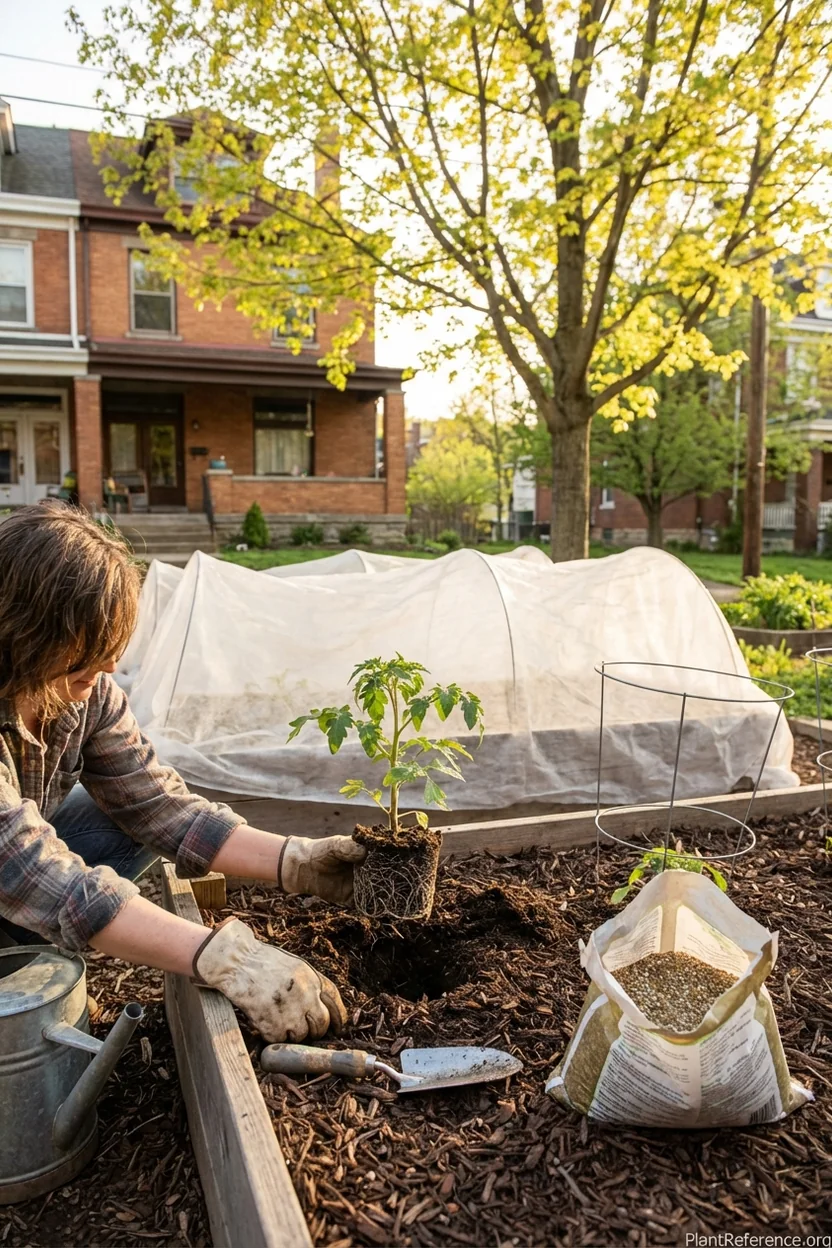
For gardeners wanting to push boundaries, April 24-30 transplanting becomes possible with protection. Use floating row covers, Wall-o-Water plant protectors, or cold frames to buffer against late frost events.
The October 19 first frost date allows late-season varieties like 🌿Solanum lycopersicum 'Brandywine' to fully mature when planted by early May. Calculate backward: 100-day varieties planted May 1 mature by August 9, providing ample harvest time before frost.
Succession Planting Schedule
Pittsburgh's long season supports succession plantings for continuous harvest:
First planting: May 1-8 (main crop)
Second planting: June 1-15 (fall harvest)
Cherry tomatoes: Plant every 3 weeks through June for continuous production
This strategy maximizes the 178-day growing window while spreading harvest timing.
Complete Growing Guide for Pittsburgh's Climate
Pittsburgh's Zone 6b climate presents specific challenges and advantages that require targeted growing strategies. The moderate summers with occasional humidity, variable spring temperatures, and reliable fall weather create unique conditions for tomato cultivation.
Soil Preparation for Western Pennsylvania
Pittsburgh's clay-heavy soils require significant organic matter incorporation. Begin soil preparation 2-3 weeks before transplanting by adding 2-3 inches of compost or aged manure. This improves drainage while providing slow-release nutrients essential for Pittsburgh's growing season.
The region's acidic soils (typically pH 5.5-6.2) benefit from lime applications 4-6 weeks before planting. Target pH 6.0-6.8 for optimal nutrient availability, particularly important for preventing blossom end rot in varieties like 🌿Solanum lycopersicum 'San Marzano'.
Water Management Strategies
Pittsburgh receives 37 inches of annual rainfall, but summer distribution can be uneven. Drip irrigation or soaker hoses provide consistent moisture crucial for preventing stress-related disorders. Mulch heavily with 3-4 inches of organic material to conserve moisture and moderate soil temperature.
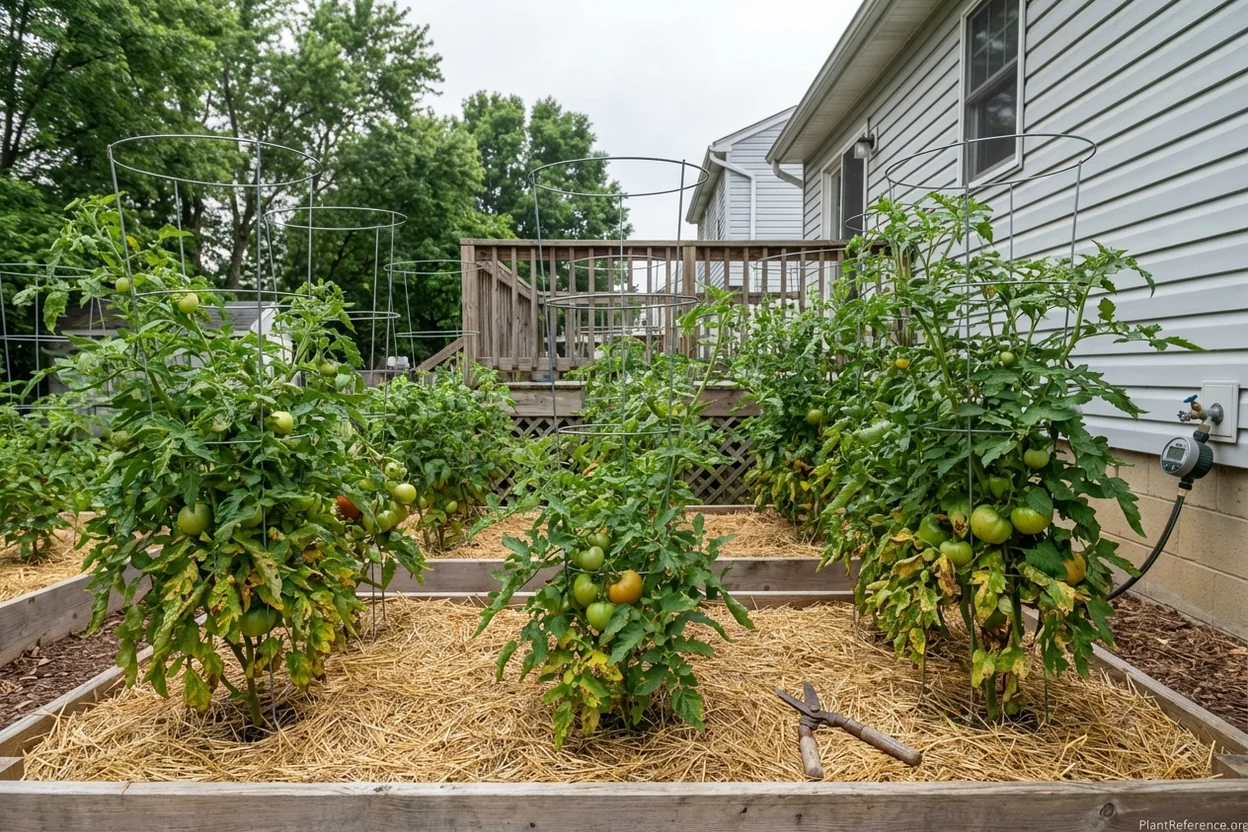
The region's humidity creates favorable conditions for fungal diseases, making proper spacing critical. Allow 24-30 inches between plants to ensure adequate airflow, reducing disease pressure common in Pennsylvania summers.
Fertilization Program
Pittsburgh's growing season requires balanced nutrition management. Apply balanced fertilizer (10-10-10) at transplanting, followed by side-dressing with compost or aged manure every 4-6 weeks through the season.
Calcium supplementation proves particularly important in Pittsburgh due to the region's heavy clay soils that can limit calcium availability. Apply gypsum or calcium chloride early in the season to prevent blossom end rot, especially for paste varieties like 🌿Solanum lycopersicum 'San Marzano'.
Temperature Management
Pittsburgh's spring temperature fluctuations require protective measures for newly transplanted seedlings. Keep row covers or cloches readily available for unexpected cold snaps through mid-May.
Summer temperatures rarely exceed levels that stop fruit set, but afternoon shade during July heat waves can benefit large-fruited varieties like 🌿Solanum lycopersicum 'Brandywine' and 🌿Solanum lycopersicum 'Cherokee Purple'.
Pruning and Support Systems
Pittsburgh's moderate climate supports vigorous indeterminate growth, making proper pruning essential. Remove suckers weekly and prune lower leaves touching the ground to prevent soilborne disease issues common in the region's humid conditions.
Use sturdy 6-foot cages or stakes, as varieties like 🌿Solanum lycopersicum 'Cherokee Purple' can reach 8+ feet in Pittsburgh's favorable growing conditions. Secure supports early to prevent root damage from late installation.
Troubleshooting Pittsburgh-Specific Problems
Western Pennsylvania's unique climate and soil conditions create specific challenges for tomato growers. Understanding these regional issues and their solutions ensures successful harvests despite local obstacles.
Early Blight Management
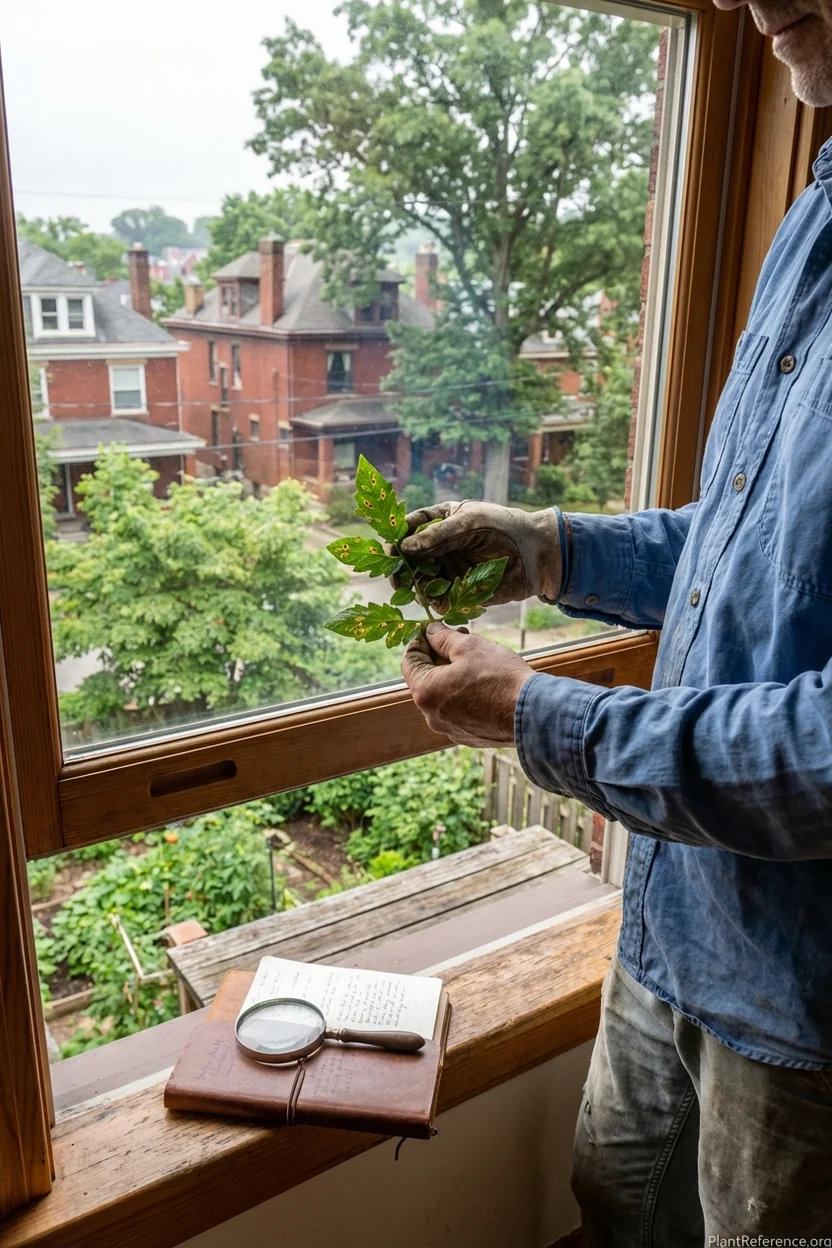
Pittsburgh's humidity creates ideal conditions for Alternaria solani (early blight), the most common foliar disease in the region. This fungal pathogen causes brown spots with concentric rings on lower leaves, eventually defoliating plants if unchecked.
Prevention strategies include proper spacing (24-30 inches), mulching to prevent soil splash, and removing lower leaves that touch the ground. Apply copper-based fungicides or organic alternatives like baking soda spray (1 tablespoon per gallon) at first signs of infection.
Blossom End Rot Prevention
Pittsburgh's clay soils can create calcium availability issues, leading to blossom end rot in varieties like 🌿Solanum lycopersicum 'San Marzano'. This physiological disorder appears as dark, sunken spots on fruit bottoms.
Maintain consistent soil moisture through drip irrigation and deep mulching. Avoid high-nitrogen fertilizers that promote rapid growth, which outpaces calcium uptake. Gypsum applications improve calcium availability in Pittsburgh's heavy soils.
Late Season Disease Pressure
September humidity in Pittsburgh often triggers late blight (Phytophthora infestans), particularly devastating to heirloom varieties like 🌿Solanum lycopersicum 'Brandywine' and 🌿Solanum lycopersicum 'Cherokee Purple'.
Monitor weather forecasts for cool, wet periods and apply preventative copper sprays before conditions favor infection. Harvest mature green fruit before disease pressure peaks, allowing indoor ripening to salvage the crop.
Soil Compaction Issues
Pittsburgh's clay soils compact easily, restricting root development and water infiltration. Symptoms include stunted growth, yellowing leaves, and poor fruit development despite adequate fertility.
Improve soil structure with annual organic matter additions (3-4 inches of compost). Avoid walking on wet soil and consider raised beds in areas with severe compaction. Cover crops in off-season areas add organic matter while improving soil structure.
Late Spring Frost Damage
Unexpected late frosts occasionally occur after the April 24 average date, damaging newly transplanted seedlings. Symptoms include blackened leaf tips, wilted foliage, and stunted growth.
Keep row covers or sheets readily available through mid-May. Water plants thoroughly before expected frost to increase thermal mass around roots. Damaged plants often recover if stems remain green, though harvest timing may be delayed.
Hornworm Infestations
Tomato hornworms (Manduca quinquemaculata) are particularly problematic in Pittsburgh due to the region's favorable breeding conditions. These large green caterpillars can defoliate entire plants quickly.
Hand-picking remains the most effective control, checking plants weekly during July and August. Look for dark droppings beneath plants as evidence of feeding activity. Beneficial wasp parasites (Cotesia congregata) provide natural control when present.
Harvest & Storage in Pennsylvania
Pittsburgh's October 19 first frost date provides excellent timing for harvest completion, but proper techniques maximize yield and quality from the 178-day growing season. Understanding variety-specific harvest indicators and post-harvest handling ensures the best results from your Pittsburgh tomato garden.
Optimal Harvest Timing
🌿Solanum lycopersicum 'Early Girl' and 🌿Solanum lycopersicum 'Stupice' begin producing in late June through July, providing early-season harvests when picked at the "breaker" stage (first color change). These varieties continue producing until frost, offering extended harvest periods ideal for Pittsburgh's long season.
🌿Solanum lycopersicum 'Cherokee Purple' and 🌿Solanum lycopersicum 'Brandywine' reach peak harvest in August through September. Harvest when fruits yield slightly to pressure and display full color development. These heirlooms have thin skins and require gentle handling.
🌿Solanum lycopersicum 'San Marzano' varieties harvest best when fully colored but still firm for processing into sauce or paste. Pittsburgh's September weather provides ideal ripening conditions for these paste tomatoes.
Pre-Frost Harvest Strategies
Monitor weather forecasts beginning in early October. When frost threatens, harvest all mature green tomatoes for indoor ripening. Fruits showing any color change will ripen successfully indoors, while fully green tomatoes can be used for green tomato recipes.
Wrap individual fruits in newspaper and store at 60-70°F for gradual ripening. Check weekly and remove fully ripe fruits. This method extends fresh tomato availability well into November in Pittsburgh.
Storage and Preservation Methods
Fresh storage works best for cherry varieties like 🌿Solanum lycopersicum 'Sungold', which maintain quality for 7-10 days at room temperature. Larger varieties should be used within 3-5 days of harvest for optimal flavor and texture.
Pittsburgh's excellent water quality makes it ideal for canning and preserving. 🌿Solanum lycopersicum 'San Marzano' varieties are particularly well-suited for sauce making, while 🌿Solanum lycopersicum 'Cherokee Purple' excels for fresh eating and salads.
Freezing whole tomatoes provides convenient storage for winter cooking. Simply wash, remove stems, and freeze in bags. The skins slip off easily when thawed, making them perfect for soups and sauces during Pittsburgh's cold winters.
Frequently Asked Questions
Reading about plants and recognising them are different skills. These three build the second.
- Daily PlantIdentify the day’s mystery plant from a close-up photograph.
- Keyed OutWork a dichotomous key, lead by lead, to name a hidden specimen.
- Name That PlantName a specimen from botanical clues dealt hardest first.
Free to play, no account needed
Linda's been growing tomatoes in containers on her suburban Pittsburgh balcony—ever since her kids grew up and she finally had time for hobbies again. She's a medical billing specialist by day and a tomato enthusiast by night and weekend. Linda started documenting her container growing experiments on a simple blog and discovered other renters and condo dwellers were desperate for practical advice. She tests different varieties every season, tracking yields, disease resistance, and flavor in a detailed spreadsheet. Linda's approach is practical and budget-conscious—she saves seeds, reuses containers, and makes her own fertilizer from kitchen scraps. Her specialty is maximizing production in small spaces, and she's perfected the art of growing full-size tomatoes in 5-gallon buckets. She's a Pennsylvania Master Gardener and teaches container growing workshops at her local library.