When to Plant Tomatoes in Anchorage: Complete Guide + Best Varieties for Zone 4b
Pets & Toxicity
Recorded toxicity for plants linked in this guide. An unknown status is not a safety assessment.
Toxic to pets: Stupice tomato, early girl tomato, brandywine tomato and 3 moreDetailsHide
Solanum lycopersicum 'Stupice' — Toxicity Warning
Toxic to petsView Solanum lycopersicum 'Stupice' plant profileSolanum lycopersicum 'Early Girl' — Toxicity Warning
Toxic to petsView Solanum lycopersicum 'Early Girl' plant profileSolanum lycopersicum 'Brandywine' — Toxicity Warning
Toxic to petsView Solanum lycopersicum 'Brandywine' plant profileSolanum lycopersicum 'Sungold' — Toxicity Warning
Toxic to petsView Solanum lycopersicum 'Sungold' plant profileSolanum lycopersicum 'San Marzano' — Toxicity Warning
Toxic to petsView Solanum lycopersicum 'San Marzano' plant profileSolanum lycopersicum 'Cherokee Purple' — Toxicity Warning
Toxic to petsView Solanum lycopersicum 'Cherokee Purple' plant profile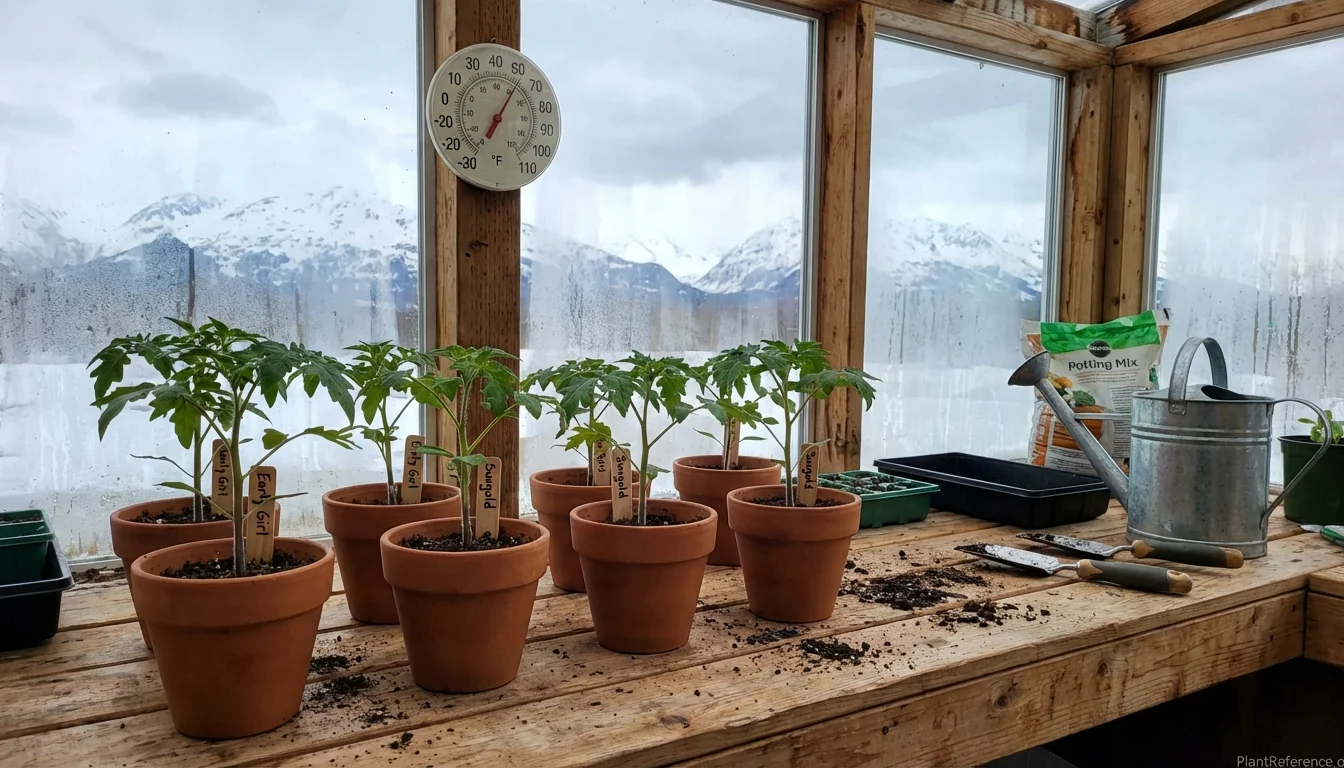
— Image © Plant Reference 2026
Growing tomatoes in Anchorage might seem impossible, but Alaska gardeners have been successfully cultivating these warm-season crops for decades. With Anchorage's Zone 4b climate featuring a last frost date of May 19 and first frost on September 14, you have a precious 118-day growing season that demands strategic planning and variety selection.
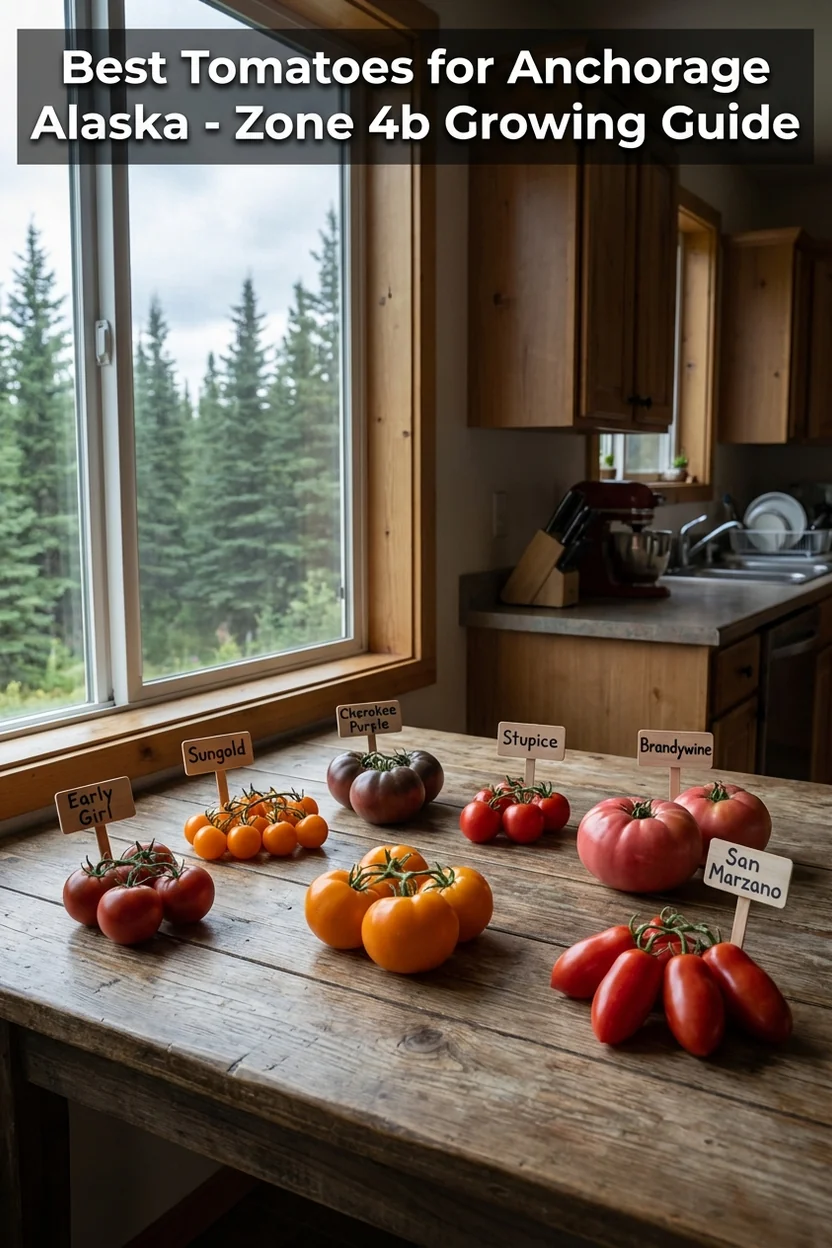
The key to tomato success in Anchorage lies in choosing ultra-early varieties that can set fruit in cool temperatures and mature before Alaska's early fall frost. Varieties like 🌿Solanum lycopersicum 'Stupice' and 🌿Solanum lycopersicum 'Early Girl' thrive in Alaska's unique conditions, while long-season varieties like 🌿Solanum lycopersicum 'Brandywine' require greenhouse protection or season extension techniques.
Introduction: Why Anchorage Works for Tomatoes (Despite the Challenges)
Anchorage's Zone 4b climate presents unique advantages and challenges for tomato cultivation. The city's northern latitude provides nearly 19 hours of daylight during peak growing season, allowing plants to photosynthesize extensively despite cooler temperatures. However, the short 118-day frost-free window means every day counts.
Alaska's maritime climate creates relatively mild summers with average highs of 65-70°F (18-21°C), ideal for preventing heat stress that plagues tomato growers in warmer zones. The challenge lies in soil temperatures that remain cool well into June and the early arrival of fall frosts.
Successful Anchorage tomato growers rely on three critical strategies: starting seeds indoors 6-8 weeks before the last frost, selecting cold-tolerant varieties bred for short seasons, and employing season extension techniques like row covers and cold frames. Many gardeners also utilize the state's abundant greenhouse culture, extending the season significantly.
The volcanic soils around Anchorage, when properly amended, provide excellent drainage and fertility for tomato production. Combined with Alaska's naturally low pest pressure—many common tomato pests cannot survive the harsh winters—gardeners face fewer disease and insect challenges than their counterparts in warmer zones.
Best Tomato Varieties for Anchorage's Zone 4b Climate
Variety selection makes or breaks tomato success in Anchorage. The following six varieties have proven themselves in Alaska's challenging conditions through decades of gardener trials and university research.
Variety | Days to Maturity | Best For | Notes for Anchorage |
|---|---|---|---|
52-60 days | Ultra-early harvest | Sets fruit at 40°F nights, perfect for Alaska | |
50-62 days | Reliable production | Cold-tolerant F1 hybrid, disease resistant | |
55-65 days | Superior flavor | Cherry type, handles cool weather well | |
78-85 days | Paste/processing | Requires season extension in Anchorage | |
75-90 days | Exceptional flavor | Greenhouse recommended for Zone 4b | |
80-100 days | Heirloom quality | Indoor growing essential in Anchorage |
For Ultra-Early Harvest
🌿Solanum lycopersicum 'Stupice' stands as the gold standard for Anchorage tomato growing. This Czech heirloom was specifically bred for cold climates and can set fruit when nighttime temperatures drop to 40°F (4°C). Most Anchorage gardeners consider this variety essential, as it often provides the first ripe tomatoes by mid-July.
🌿Solanum lycopersicum 'Early Girl' offers the reliability of modern hybrid breeding with cold tolerance that rivals heirlooms. Its VFF disease resistance package provides insurance against soil-borne pathogens, while its determinate growth habit makes it manageable in Alaska's short season.
For Best Flavor
🌿Solanum lycopersicum 'Sungold' produces incredibly sweet cherry tomatoes with tropical flavor notes that seem impossible in Alaska's climate. The compact clusters ripen reliably even during cool summers, and the thin skin that causes splitting problems in humid climates actually works well in Anchorage's dry summers.
🌿Solanum lycopersicum 'Cherokee Purple' requires protection but rewards Anchorage gardeners with complex, smoky flavors. Most successful growers start this variety in heated greenhouses and provide season extension through fall.
For Anchorage's Climate Challenges
Alaska gardeners have learned that indeterminate varieties often outperform determinates despite conventional wisdom. The long daylight hours allow indeterminate plants to continue growing and setting fruit throughout the short but intense growing season.
Varieties with "cold-set" genetics perform best in Anchorage. These plants, developed in northern climates, can pollinate and set fruit at temperatures 10-15°F lower than standard varieties, crucial for Alaska's cool nights.
For Beginners
🌿Solanum lycopersicum 'Stupice' and 🌿Solanum lycopersicum 'Early Girl' provide the highest success rates for new Alaska tomato growers. Both varieties forgive cultural mistakes and produce substantial yields even in challenging years.
For Season Extension Growing
🌿Solanum lycopersicum 'San Marzano', 🌿Solanum lycopersicum 'Cherokee Purple', and 🌿Solanum lycopersicum 'Brandywine' require greenhouse protection or intensive season extension but reward dedicated growers with exceptional quality. Many Alaska gardeners grow these varieties specifically for preserving, making the extra effort worthwhile for year-round tomato products.
Specific Planting Dates for Anchorage
Anchorage's Zone 4b climate with a May 19 last frost date requires precise timing for tomato success. The city's short 118-day growing season leaves no margin for error in planting schedules.
Indoor Seed Starting Timeline
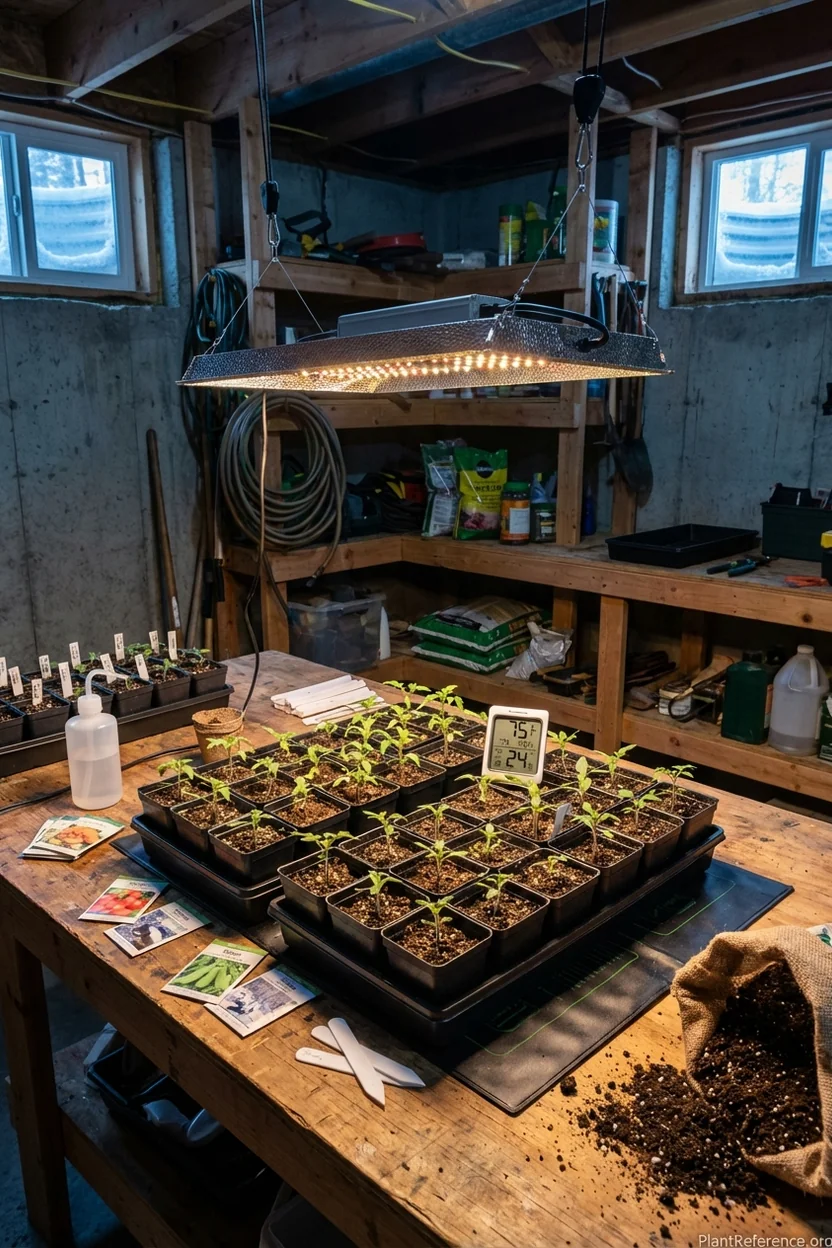
Start seeds indoors: April 7-14
Begin tomato seeds 6-7 weeks before Anchorage's May 19 last frost date. Use bottom heat mats to maintain 75-80°F (24-27°C) soil temperatures, as Alaska homes often remain cool through April. Most successful Anchorage gardeners start seeds by April 7 to ensure robust seedlings ready for transplanting.
Sow seeds in sterile potting mix in 4-inch pots rather than seed trays, as Alaska's short season demands strong root systems from the start. Place containers near south-facing windows supplemented with grow lights, as April daylight hours remain limited.
Transplanting Schedule
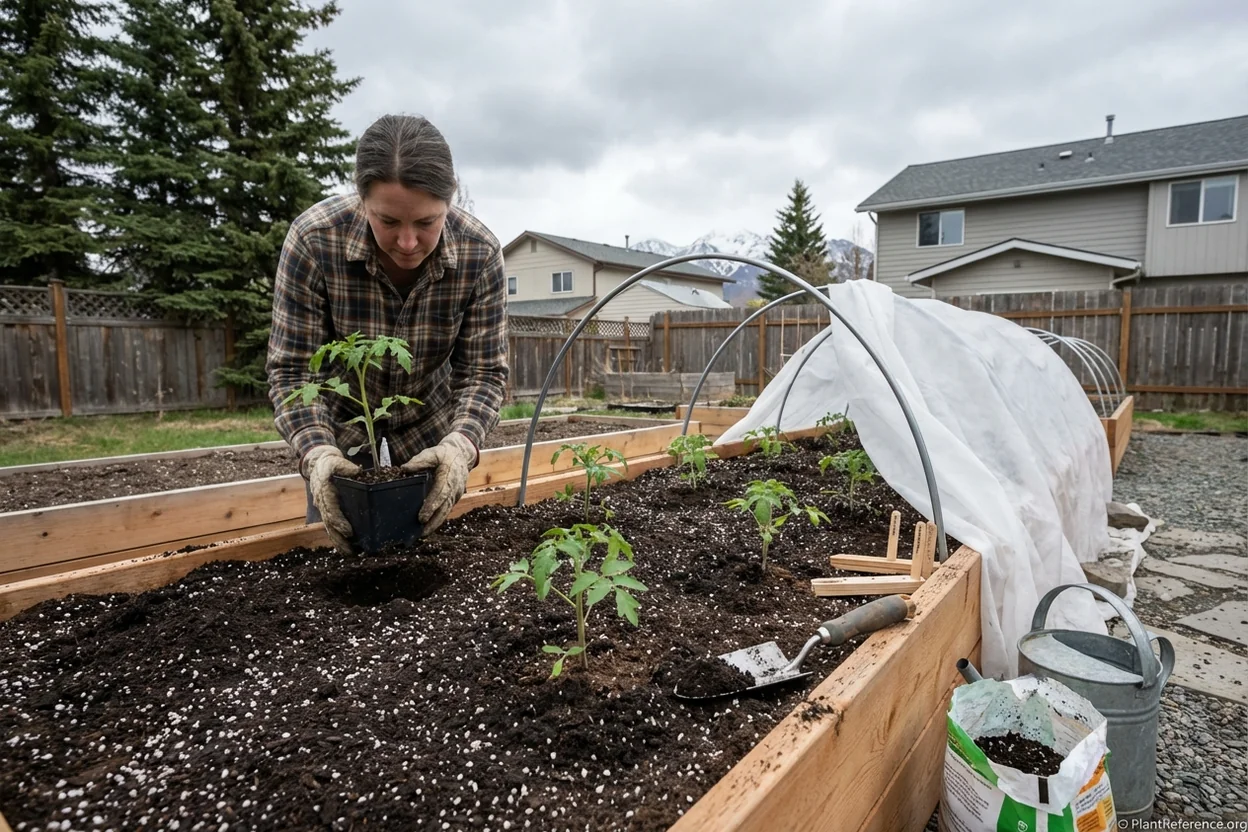
Transplant outdoors: May 26-June 5
Wait until one week after Anchorage's May 19 last frost date to transplant tomatoes outdoors. Soil temperatures must reach 55°F (13°C) for optimal root development, which typically occurs by late May in prepared raised beds.
Monitor nighttime temperatures carefully—if forecasts predict temperatures below 45°F (7°C), delay transplanting or provide protection with row covers or Wall-o-Water plant protectors. Many Anchorage gardeners wait until Memorial Day weekend as a traditional safe planting time.
Harvest Timeline by Variety
🌿Solanum lycopersicum 'Stupice': First harvest July 17-25 (60 days from May 26 transplant) 🌿Solanum lycopersicum 'Early Girl': First harvest July 25-August 5 (62 days from transplant) 🌿Solanum lycopersicum 'Sungold': First harvest August 1-10 (65 days from transplant) 🌿Solanum lycopersicum 'San Marzano': First harvest August 15-25 (80 days from transplant)
These harvest dates assume May 26 transplanting and normal Anchorage weather patterns. Cool summers may delay harvest by 7-10 days, while warm seasons with protective microclimates can advance harvest dates.
Critical Season Management Dates
June 1-15: Install permanent support systems and begin weekly fertilization
July 1: Begin harvest monitoring for early varieties
August 15: Remove lower leaves and suckers to focus energy on ripening existing fruit
September 1: Cover plants if frost threatens, harvest green tomatoes for indoor ripening
Complete Growing Guide for Anchorage
Growing tomatoes successfully in Anchorage requires adapting standard techniques to Alaska's unique climate conditions. The combination of cool temperatures, short seasons, and extreme daylight variations demands specific cultural practices.
Anchorage Climate Challenges
Anchorage's maritime climate creates cool, wet springs that delay soil warming and extend the frost danger period. Average soil temperatures remain below 50°F (10°C) through most of May, requiring raised beds, black plastic mulch, or other heat-accumulating techniques to create suitable growing conditions.
The city's 65-70°F (18-21°C) summer temperatures prevent heat stress but can limit fruit ripening for longer-season varieties. However, nearly 19 hours of daylight during summer solstice compensates for cool temperatures by extending photosynthesis periods significantly.
Wind exposure presents another challenge, as Anchorage's open geography creates desiccating conditions that can stress tomato plants. Successful growers create windbreaks using fencing, companion plantings, or strategic placement near buildings.
Week-by-Week Timeline
Weeks 1-2 (Late May/Early June) Focus on establishment and root development. Water deeply but infrequently to encourage deep rooting. Install permanent support systems immediately, as Alaska's summer winds can topple unsupported plants quickly.
Weeks 3-6 (Mid-June to Early July) Begin weekly fertilization with balanced liquid fertilizer. Remove suckers from indeterminate varieties to focus energy on main stems. Monitor for cutworm damage, common in Alaska's organic soils.
Weeks 7-10 (Mid-July to Early August) Peak growth period coinciding with longest daylight hours. Maintain consistent soil moisture as irregular watering causes fruit cracking. Begin harvesting early varieties like 🌿Solanum lycopersicum 'Stupice'.
Weeks 11-14 (Mid-August to Mid-September) Reduce nitrogen fertilization to encourage fruit ripening rather than leaf growth. Begin protective measures for frost, including row covers and plant cages for heat retention.
Weeks 15-16 (Late September) Harvest aggressively before first frost. Pull entire plants and hang indoors to ripen remaining green fruit, a technique particularly effective in Alaska's dry climate.
Anchorage-Specific Growing Techniques
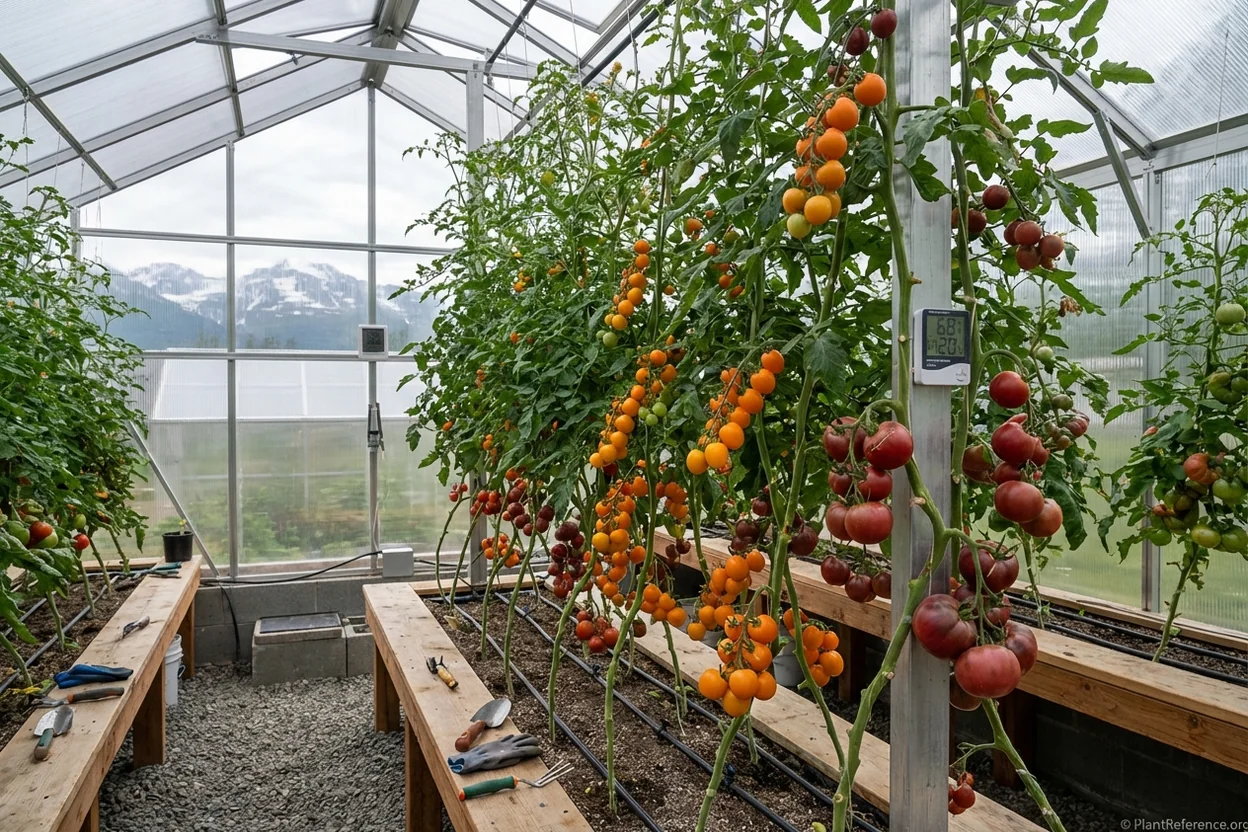
Soil Preparation for Alaska: Anchorage's volcanic soils drain well but often lack organic matter. Amend beds with 3-4 inches (7.5-10 cm) of compost annually and add perlite to improve drainage in clay areas. Test soil pH, as Alaska soils tend toward acidic (pH 5.5-6.0) requiring lime amendments for optimal tomato growth.
Season Extension Methods: Most successful Anchorage growers employ multiple season extension techniques. Clear plastic row covers can add 2-3 weeks to both ends of the season, while Wall-o-Water plant protectors allow planting 2-3 weeks earlier than the traditional date.
Microclimate Creation: Position plants near south-facing walls or other thermal mass that absorbs daytime heat and radiates warmth at night. Many Anchorage gardeners create "tomato corners" using concrete blocks or stones to moderate temperature swings.
Soil Preparation for Anchorage
Alaska's unique soils require specific preparation techniques for successful tomato cultivation. The state's volcanic origin creates naturally well-draining soils, but organic matter content remains low due to slow decomposition rates in cool climates.
Begin soil preparation in fall by incorporating 4-6 inches (10-15 cm) of compost or well-aged manure. This organic matter improves soil structure and provides slow-release nutrients essential for tomato production. Add coarse sand or perlite if drainage seems sluggish, as tomatoes cannot tolerate waterlogged conditions.
Test soil pH annually, as Alaska's naturally acidic soils (pH 5.0-6.0) require lime amendments to reach the optimal 6.0-6.8 range for tomato cultivation. Apply lime in fall to allow winter weathering to incorporate it properly.
Troubleshooting Anchorage-Specific Problems
Anchorage's unique climate creates specific challenges that tomato growers in warmer zones rarely encounter. Understanding these regional issues and their solutions ensures better harvests in Alaska's demanding conditions.
Problem | Symptoms | Likely Cause | Quick Fix |
|---|---|---|---|
Cold Soil Syndrome | Purple leaves, stunted growth, delayed flowering | Soil temperatures below 55°F prevent phosphorus uptake | Use black plastic mulch, delay transplanting until soil reaches 55°F consistently |
Blossom Drop from Cool Nights | Flowers form but drop without setting fruit | Nighttime temperatures below 50°F prevent pollen formation | Use row covers, Wall-o-Water protectors, or greenhouse growing |
Late Season Frost Damage | Blackened foliage and fruit after clear September nights | Early frost before September 14 average date | Monitor forecasts from September 1, provide row covers, harvest green fruit for indoor ripening |
Cold Soil Syndrome
Symptoms: Purple leaves, stunted growth, delayed flowering despite adequate air temperatures
Cause: Soil temperatures below 55°F (13°C) prevent phosphorus uptake and slow root development
Solution: Use black plastic mulch or IRT (Infrared Transmitting) mulch to warm soils 5-10°F (3-6°C) above ambient temperature. Delay transplanting until soil thermometer reads 55°F (13°C) at 4-inch (10 cm) depth consistently for three days. Raised beds warm faster than ground-level plantings in Alaska's climate.
This problem affects 80% of new Anchorage tomato growers who transplant based on air temperature rather than soil conditions. Even when air temperatures reach 60°F (16°C), Alaska's thick organic soils retain cold well into June. Successful growers check soil temperature with a digital thermometer before transplanting.
Blossom Drop from Cool Nights
Symptoms: Flowers form normally but drop off without setting fruit
Cause: Nighttime temperatures below 50°F (10°C) prevent pollen formation and pollination
Solution: Use row covers, Wall-o-Water protectors, or greenhouse growing to maintain nighttime temperatures above 55°F (13°C). Plant near thermal mass like concrete walls or large stones that radiate stored heat at night.
Alaska's maritime climate often produces 45-50°F (7-10°C) nights even in summer, causing this frustrating problem. Varieties like 🌿Solanum lycopersicum 'Stupice' and 🌿Solanum lycopersicum 'Early Girl' tolerate cooler nights better than standard varieties, making them essential for outdoor growing in Anchorage.
Late Season Frost Damage
Symptoms: Blackened foliage and fruit after clear, cold nights in early September
Cause: Anchorage's September 14 average first frost date can arrive 1-2 weeks early in some years
Solution: Monitor weather forecasts closely from September 1 onward. Cover plants with row covers, sheets, or harvest all fruit when frost threatens. Green tomatoes ripen effectively indoors in Alaska's dry climate.
Many Anchorage gardeners lose entire crops to surprise frosts because they don't prepare for season-ending protection. Keep row covers and clips readily available from late August onward, and harvest green fruit at the "mature green" stage (full-size, light green color) for indoor ripening.
Harvest & Storage
Anchorage's short growing season makes harvest timing critical for maximum tomato production. The city's dry climate and moderate temperatures create excellent conditions for both fresh harvest and long-term storage.
Signs of Readiness
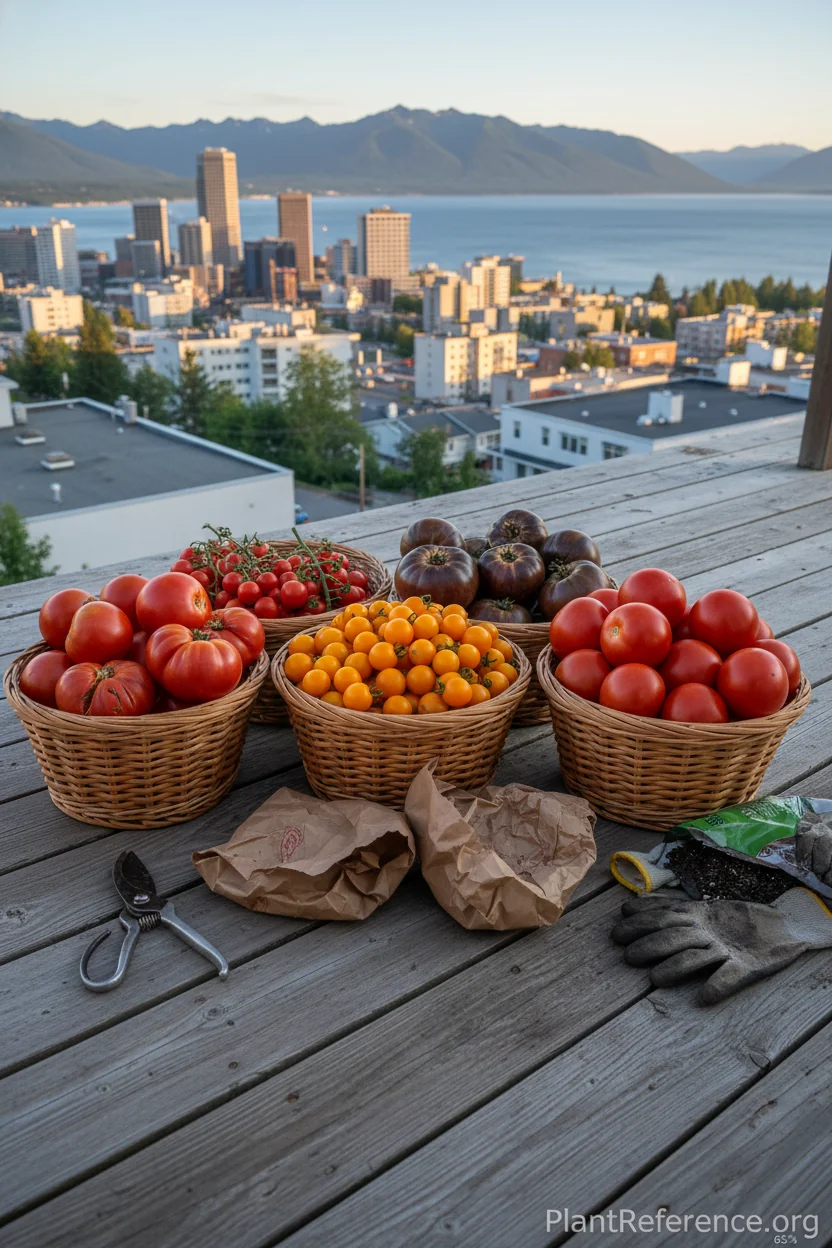
Harvest 🌿Solanum lycopersicum 'Stupice' and 🌿Solanum lycopersicum 'Early Girl' when fruit shows first color change, typically mid-July in Anchorage. These varieties continue ripening off the vine, allowing harvest before Alaska's unpredictable weather damages fruit.
🌿Solanum lycopersicum 'Sungold' cherries should be harvested when orange color develops, though they continue sweetening on the vine if weather permits. Alaska's dry climate prevents the splitting problems common with this variety in humid regions.
For paste varieties like 🌿Solanum lycopersicum 'San Marzano', harvest at the "breaker" stage (light pink color) if frost threatens, or allow full ripening in greenhouse protection.
Harvest Technique
Pick tomatoes during warm afternoon hours when surface moisture has evaporated, reducing storage disease problems. Use clean pruning shears to cut stems rather than pulling fruit, which can damage plants and reduce subsequent yields.
Handle fruit gently, as Alaska-grown tomatoes often have thinner skins due to the cool growing conditions. Place harvested fruit in single layers in shallow containers to prevent bruising.
Expected Harvest Window in Anchorage
Early Varieties (🌿Solanum lycopersicum 'Stupice', 🌿Solanum lycopersicum 'Early Girl'): July 15 - September 15 Mid-Season Varieties (🌿Solanum lycopersicum 'Sungold'): August 1 - September 15 Late Varieties (🌿Solanum lycopersicum 'Cherokee Purple', 🌿Solanum lycopersicum 'Brandywine'): August 15 - September 30 (with protection)
Alaska's dry climate allows extended harvest periods compared to humid regions where diseases force earlier termination. Many gardeners continue harvesting into October with row cover protection.
Storage Recommendations
Store ripe tomatoes at 55-60°F (13-16°C) in Alaska homes, avoiding refrigeration which damages flavor and texture. Alaska's naturally cool indoor temperatures create ideal storage conditions for extending fresh tomato availability.
Green tomatoes harvest well at the "mature green" stage and ripen indoors over 2-4 weeks. Store in single layers in paper bags or cardboard boxes, checking weekly and removing overripe fruit to prevent spoilage spread.
For long-term storage, Alaska gardeners excel at dehydrating and canning tomatoes due to the state's dry climate and strong preservation tradition. Process paste varieties like 🌿Solanum lycopersicum 'San Marzano' into sauce immediately after harvest for best quality.
Frequently Asked Questions
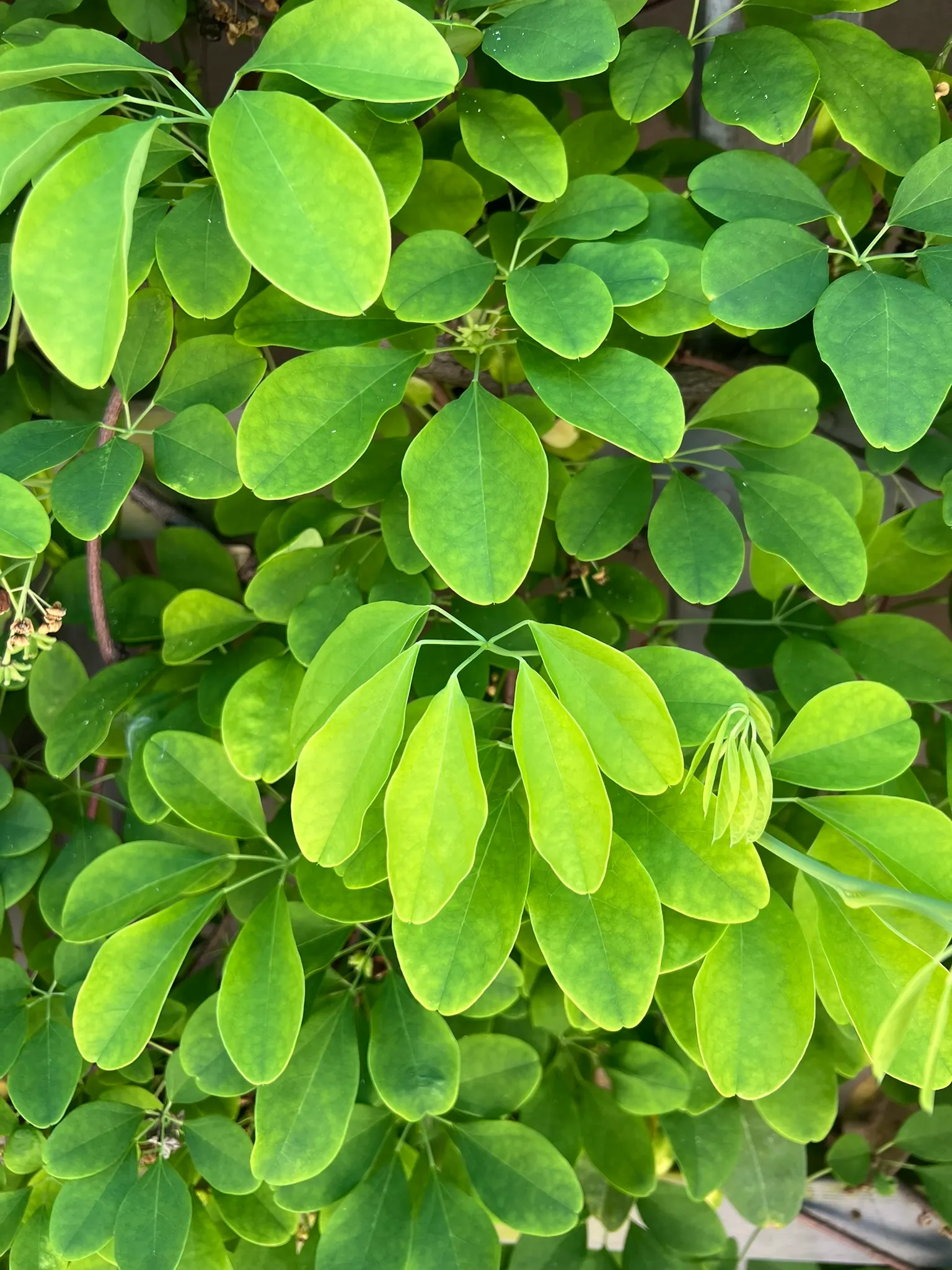
Reading about plants and recognising them are different skills. These three build the second.
- Daily PlantIdentify the day’s mystery plant from a close-up photograph.
- Keyed OutWork a dichotomous key, lead by lead, to name a hidden specimen.
- Name That PlantName a specimen from botanical clues dealt hardest first.
Free to play, no account needed
Tom is a lifelong Alaskan who gardens in Anchorage, where the growing season is short but intense. He works for the state cooperative extension service and has spent years figuring out what works in a climate where the ground freezes deep, the growing season starts in late May, and you get 19 hours of daylight in June. Tom grows cold-hardy vegetables, maintains a collection of boreal-adapted perennials, and experiments with season extension using cold frames and row covers. He writes about the realities of northern gardening—the unique advantages (those long summer days produce remarkable growth) and the genuine limitations. Tom's tone is calm and practical, with the quiet humor of someone who's gardened through Alaskan winters for decades.