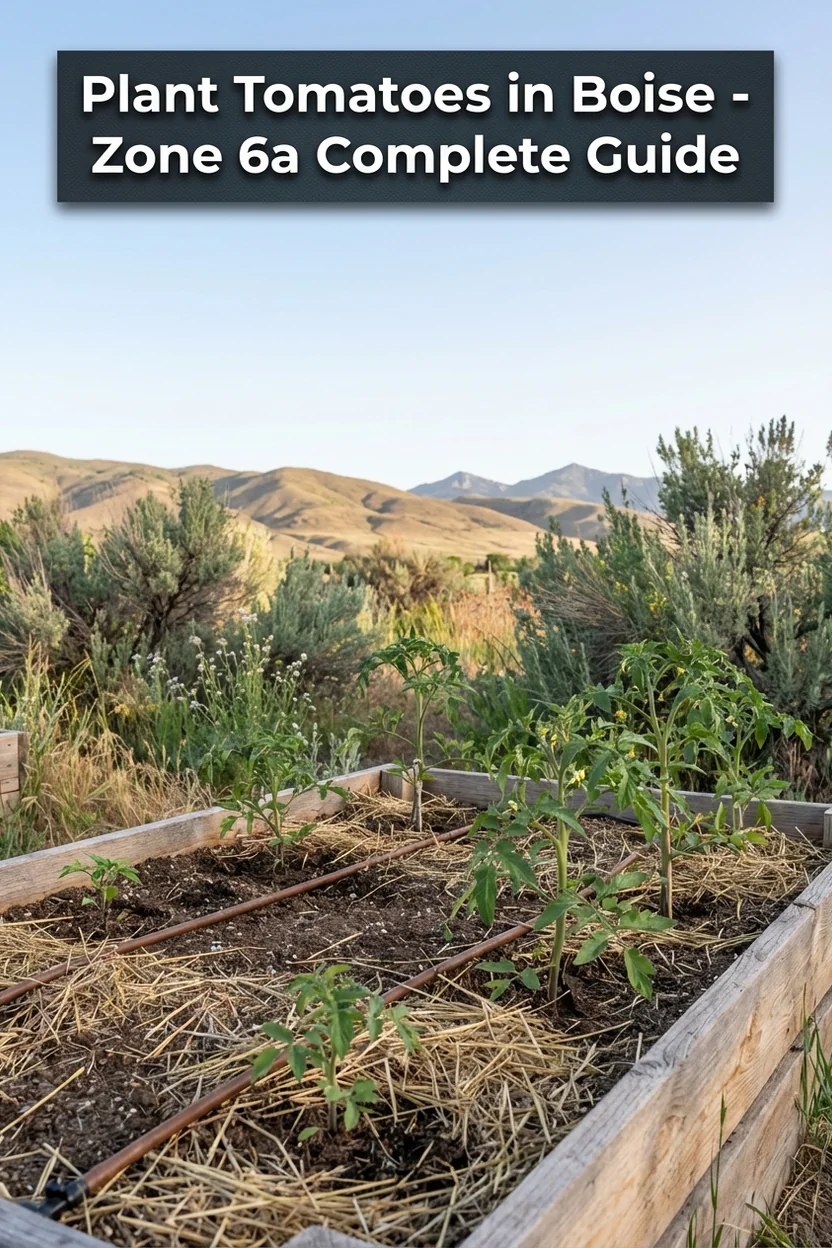
When to Plant Tomatoes in Boise: Complete Guide + Best Varieties for Zone 6a
Pets & Toxicity
Recorded toxicity for plants linked in this guide. An unknown status is not a safety assessment.
Toxic to pets: early girl tomato, Stupice tomato, Sungold cherry tomato and 3 moreDetailsHide
Solanum lycopersicum 'Early Girl' — Toxicity Warning
Toxic to petsView Solanum lycopersicum 'Early Girl' plant profileSolanum lycopersicum 'Stupice' — Toxicity Warning
Toxic to petsView Solanum lycopersicum 'Stupice' plant profileSolanum lycopersicum 'Sungold' — Toxicity Warning
Toxic to petsView Solanum lycopersicum 'Sungold' plant profileSolanum lycopersicum 'Cherokee Purple' — Toxicity Warning
Toxic to petsView Solanum lycopersicum 'Cherokee Purple' plant profileSolanum lycopersicum 'Brandywine' — Toxicity Warning
Toxic to petsView Solanum lycopersicum 'Brandywine' plant profileSolanum lycopersicum 'San Marzano' — Toxicity Warning
Toxic to petsView Solanum lycopersicum 'San Marzano' plant profile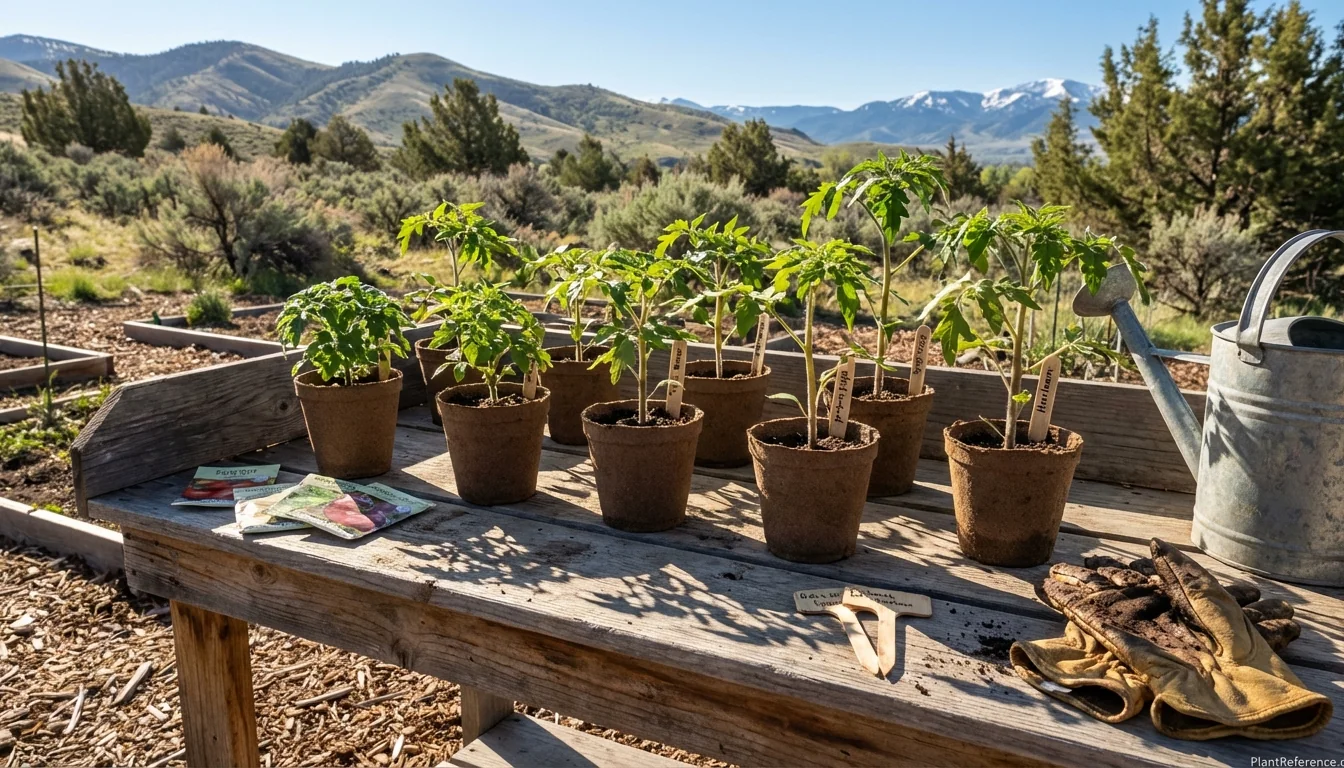
— Image © Plant Reference 2026
Planning when to plant tomatoes in Boise requires understanding how Idaho's Zone 6a climate affects growing success. With Boise's May 5 average last frost date and 158-day growing season ending around October 10, you have excellent opportunities for both early-maturing varieties and longer-season heirlooms that many northern gardeners can't grow successfully.
Why Boise's Zone 6a Climate is Perfect for Tomatoes
Boise offers tomato growers a sweet spot in the mountain west climate spectrum. Unlike the harsh extremes of Zone 3-4 northern climates or the scorching heat of southwestern deserts, Zone 6a provides a Goldilocks environment where virtually all tomato varieties can thrive with proper timing.
The key advantages of growing tomatoes in Boise include moderate summer temperatures that rarely exceed the 90°F (32°C) threshold where tomato pollen becomes sterile, relatively low humidity that reduces fungal disease pressure compared to eastern regions, and intense high-altitude sunlight that promotes excellent fruit development and flavor concentration.
Boise's continental climate does present specific challenges. Late spring frost risk extends into early May, requiring careful timing of outdoor transplanting. The combination of intense UV radiation and low humidity can stress plants if not properly managed through adequate watering and some afternoon shade protection during the hottest summer days.
The 158-day growing season from May 5 to October 10 is substantial enough for most tomato varieties to complete their full growth cycle. Early varieties like 🌿Solanum lycopersicum 'Stupice' and 🌿Solanum lycopersicum 'Early Girl' will produce multiple harvests, while even long-season heirlooms like 🌿Solanum lycopersicum 'Brandywine' can reach maturity if started early enough indoors.
Understanding Boise's microclimates is crucial for success. Gardens in the Boise foothills may experience earlier fall frosts due to elevation and cold air drainage, while protected valley locations often stay frost-free longer. South-facing locations with protection from north winds create the warmest microclimates for extending the season.
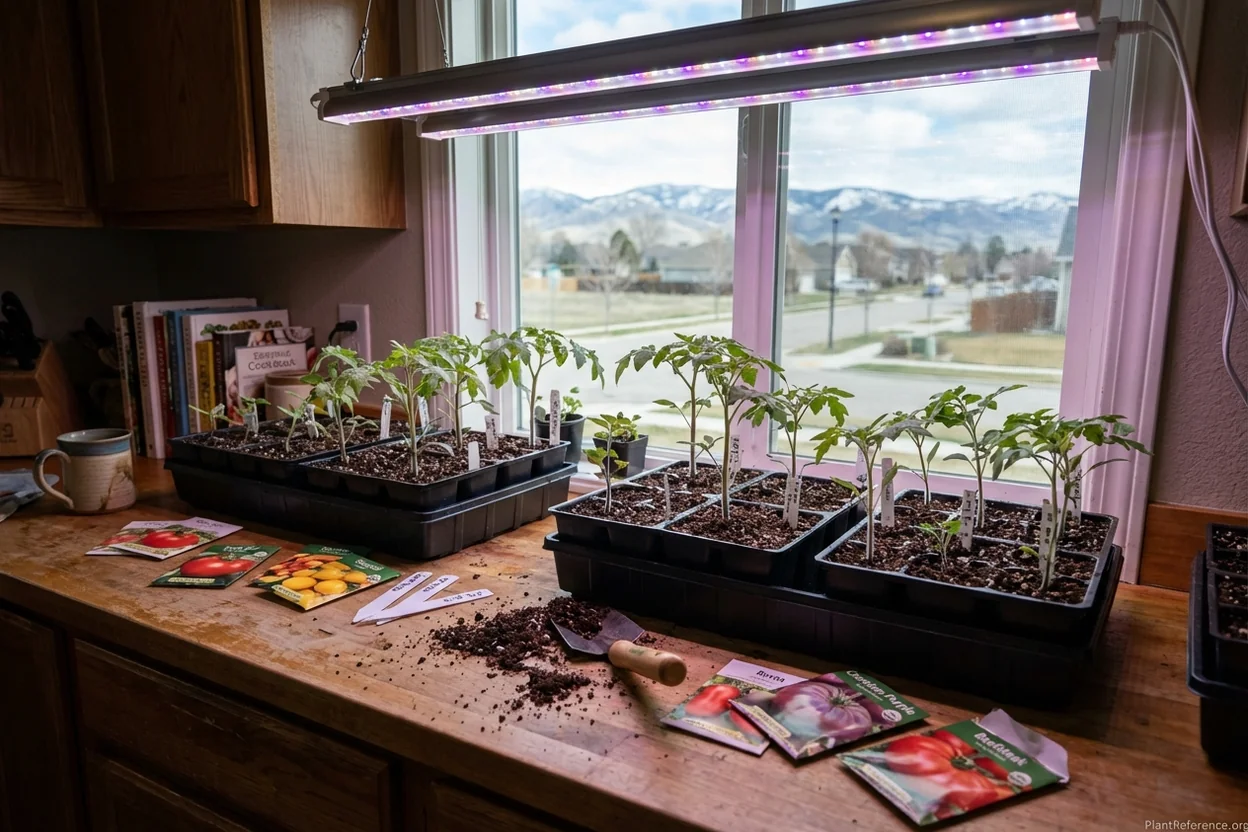
Best Tomato Varieties for Boise's Climate
Selecting the right varieties for Boise's Zone 6a climate maximizes your harvest potential and minimizes weather-related crop failures. The following recommendations are based on performance in similar continental climates with moderate growing seasons.
Variety | Days to Maturity | Best For | Notes for Boise |
|---|---|---|---|
52-60 days | Cold tolerance | Sets fruit at 45°F (7°C), perfect for Boise's cool spring nights | |
50-62 days | Reliable production | Excellent disease resistance, handles Boise's temperature swings | |
55-65 days | Flavor + productivity | High sugar content, resistant to splitting in dry climate | |
75-90 days | Gourmet flavor | Thrives in Boise's moderate humidity, excellent for fresh eating | |
78-85 days | Processing/canning | Perfect for Boise's dry climate, excellent paste variety | |
80-100 days | Premium flavor | Requires careful timing in Boise, needs early indoor start |
For Early Harvest
🌿Solanum lycopersicum 'Stupice' stands out as the ultimate early variety for Boise conditions. This Czech heirloom was bred specifically for cold tolerance and continues setting fruit at temperatures as low as 45°F (7°C), making it invaluable during Boise's cool spring nights in May and June. Plant this variety for your earliest fresh tomatoes, often ready by early July.
🌿Solanum lycopersicum 'Early Girl' provides reliable production with excellent disease resistance packages including Verticillium and Fusarium wilt resistance. This F1 hybrid adapts well to Boise's temperature fluctuations and typically produces continuously from July through October, making it an excellent backbone variety for consistent harvest.
For Best Flavor
🌿Solanum lycopersicum 'Cherokee Purple' excels in Boise's moderate humidity environment where it shows better disease tolerance than in more humid eastern climates. This heirloom produces large, complex-flavored fruits with distinctive purple-brown coloration. The variety originated in similar continental climates and adapts well to Boise's growing conditions.
🌿Solanum lycopersicum 'Brandywine' represents the pinnacle of tomato flavor but requires careful management in Boise. Start seeds by March 24 to ensure transplants are ready for outdoor planting by mid-May. This variety needs the full 158-day season to reach its potential but rewards careful growers with unmatched flavor.
For Boise's Climate Challenges
🌿Solanum lycopersicum 'Sungold' cherry tomatoes handle Boise's intense UV radiation better than many large-fruited varieties while producing exceptional sugar content enhanced by the dry climate. The thick skin resists cracking despite the variety's reputation for splitting in humid climates.
🌿Solanum lycopersicum 'San Marzano' paste tomatoes thrive in Boise's dry conditions where the low humidity reduces disease pressure and allows the plants to develop their characteristic thick flesh and concentrated flavor. This variety is particularly valuable for gardeners interested in canning and preserving.
For Beginners
New tomato growers in Boise should focus on 🌿Solanum lycopersicum 'Early Girl' and 🌿Solanum lycopersicum 'Stupice' for their reliability and forgiveness. These varieties tolerate minor watering inconsistencies and temperature fluctuations better than sensitive heirlooms while still producing excellent harvests.
For Storage and Preserving
🌿Solanum lycopersicum 'San Marzano' and 🌿Solanum lycopersicum 'Cherokee Purple' excel for different preservation methods. San Marzano paste tomatoes are specifically bred for canning and sauce-making, while Cherokee Purple's complex flavor makes exceptional fresh salsas and can be successfully frozen for winter cooking.
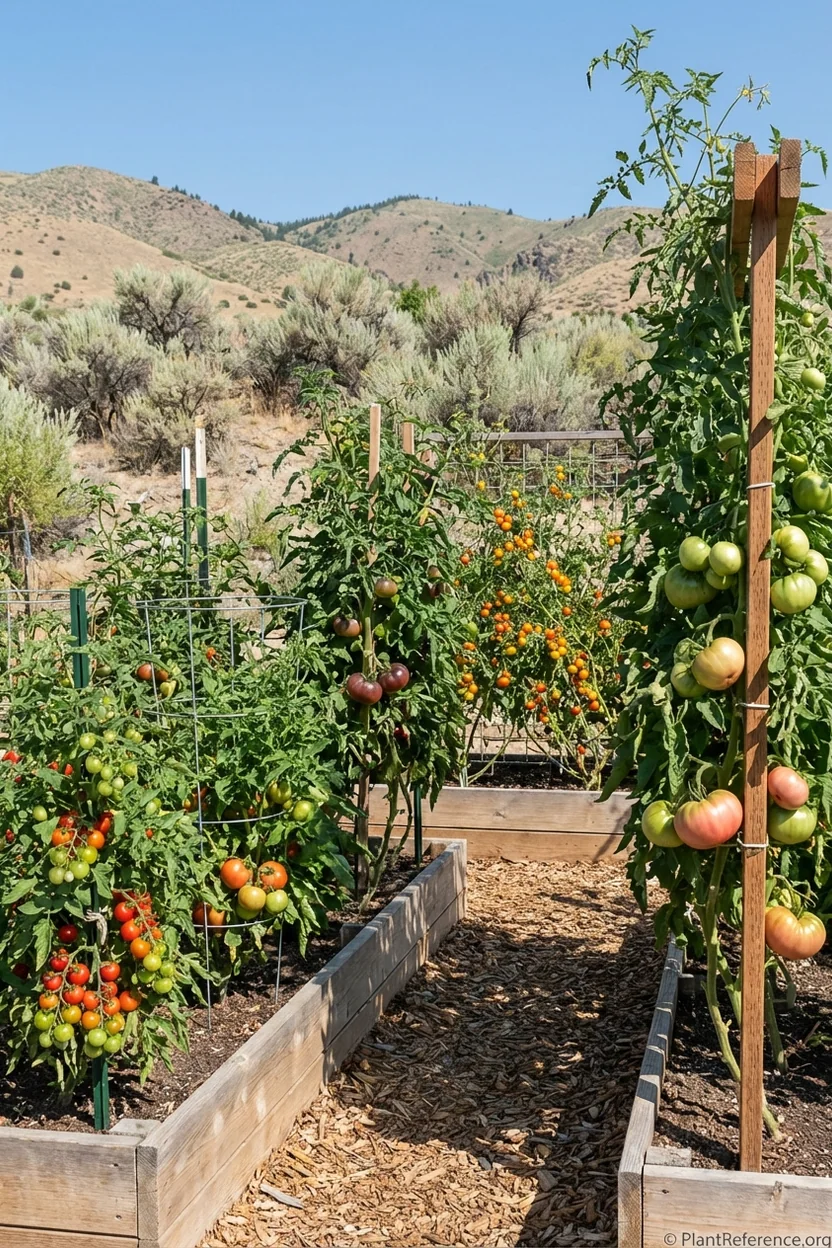
Specific Planting Dates for Boise
Success with tomatoes in Boise depends on precise timing that accounts for both soil temperature and air temperature requirements. Use these specific dates calculated for Zone 6a conditions to maximize your growing season.
Indoor Seed Starting: March 24-31
Start tomato seeds indoors 6-7 weeks before the last frost date. In Boise, begin seed starting between March 24-31 to have robust transplants ready for outdoor planting by mid-May. Seeds germinate best at 75-85°F (24-29°C), so use seed starting heat mats if your home is cooler.
Early varieties like 🌿Solanum lycopersicum 'Stupice' and 🌿Solanum lycopersicum 'Early Girl' can be started as late as March 31 since they mature quickly. Long-season varieties like 🌿Solanum lycopersicum 'Brandywine' and 🌿Solanum lycopersicum 'San Marzano' should be started by March 24 to ensure adequate growing time before the October 10 first frost.
Use high-quality seed starting mix and provide 14-16 hours of light daily using LED grow lights positioned 2-3 inches above seedlings. Transplant seedlings to larger containers (4-inch pots) when they develop their first true leaves, typically 3-4 weeks after germination.
Hardening Off: May 5-12
Begin hardening off transplants during the week following Boise's average last frost date of May 5. This process gradually acclimates indoor-grown seedlings to outdoor conditions including wind, temperature fluctuations, and direct sunlight.
Start by placing transplants outside for 2-3 hours on the first day, choosing a location protected from wind and direct afternoon sun. Gradually increase outdoor exposure by 1-2 hours daily while monitoring weather forecasts for unexpected late frost warnings.
Complete the hardening process over 7-10 days, bringing plants indoors if nighttime temperatures drop below 45°F (7°C). Well-hardened transplants show sturdy stems, compact growth, and slight purple coloration on leaf undersides.
Transplanting Outdoors: May 12-19
Transplant tomatoes outdoors in Boise between May 12-19 when soil temperatures consistently reach 60°F (16°C) and nighttime air temperatures stay above 50°F (10°C). This timing provides a safety buffer of one week beyond the average last frost date.
Check soil temperature using a soil thermometer at 4-inch (10 cm) depth in the morning for three consecutive days. Cold soil below 55°F (13°C) stunts root development and can cause transplant shock that delays growth for weeks.
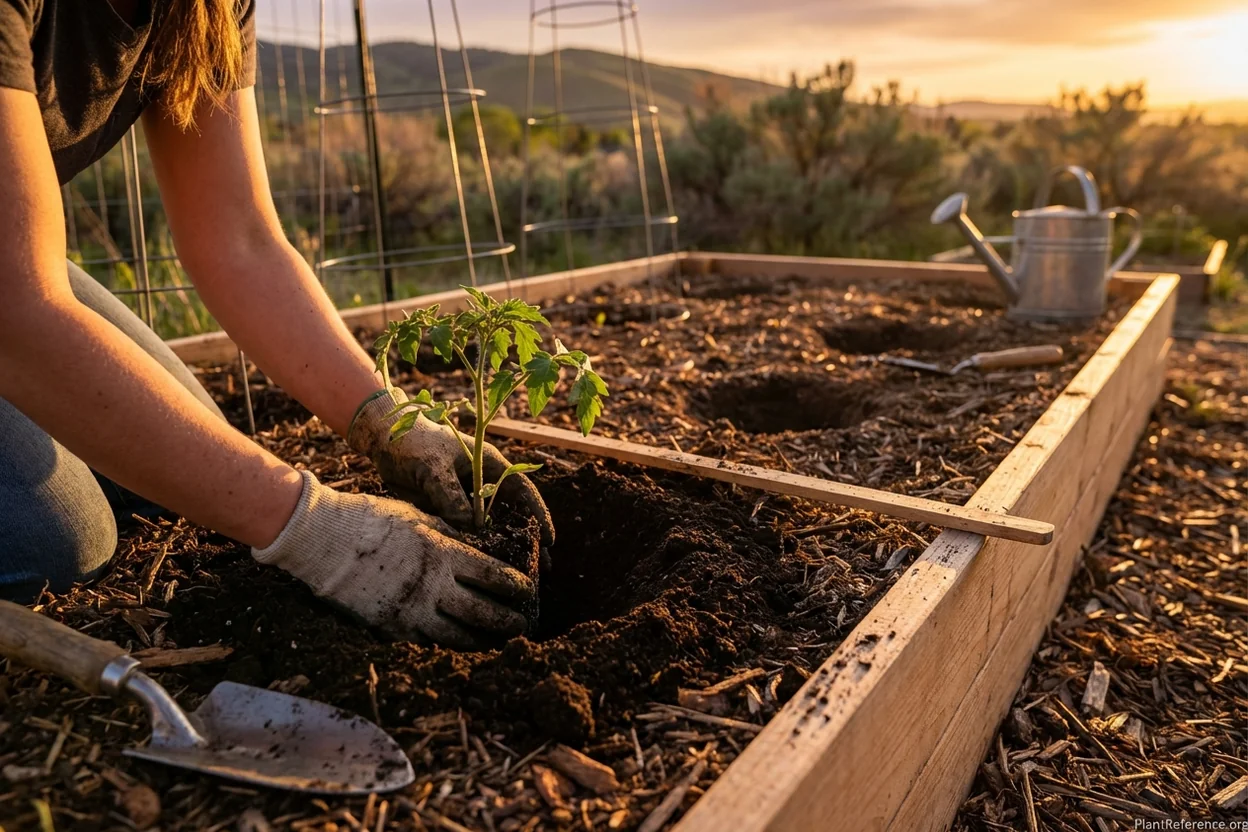
Plant transplants after afternoon temperatures drop below 80°F (27°C) to reduce transplant stress. Water thoroughly at planting and apply 3-4 inches (7-10 cm) of organic mulch around each plant, keeping mulch 2-3 inches (5-8 cm) away from stems.
Timeline by Variety
Ultra-Early Varieties (🌿Solanum lycopersicum 'Stupice', 🌿Solanum lycopersicum 'Early Girl'):
Indoor Start: March 31
Transplant: May 19
First Harvest: July 10-17
Peak Harvest: July 25 - September 15
Season End: October 10
Mid-Season Varieties (🌿Solanum lycopersicum 'Sungold', 🌿Solanum lycopersicum 'Cherokee Purple'):
Indoor Start: March 27
Transplant: May 15
First Harvest: July 20-30
Peak Harvest: August 10 - September 20
Season End: October 10
Long-Season Varieties (🌿Solanum lycopersicum 'San Marzano', 🌿Solanum lycopersicum 'Brandywine'):
Indoor Start: March 24
Transplant: May 12
First Harvest: August 5-15
Peak Harvest: August 25 - October 1
Season End: October 10 (harvest remaining green fruit)
Complete Growing Guide for Boise
Successful tomato cultivation in Boise requires understanding how the continental climate, alkaline soils, and intense UV radiation affect plant growth throughout the season. Follow these zone-specific techniques for maximum yields.
Boise Climate Challenges
Alkaline Soil Management: Boise soils typically test 7.0-8.5 pH, which can lock up essential nutrients like iron, manganese, and phosphorus. Amend planting areas with 2-3 inches (5-8 cm) of compost or aged manure and consider sulfur applications to gradually lower pH toward the ideal 6.0-6.8 range for tomatoes.
UV Intensity: High altitude and low humidity combine to create intense UV radiation that can stress tomato plants and cause sunscald on fruit. Provide afternoon shade during the hottest part of summer using shade cloth (30% shade) or strategic placement near taller plants or structures.
Water Management: Boise's dry climate requires consistent irrigation but well-draining soil to prevent root rot. Install drip irrigation or soaker hoses to maintain even soil moisture while avoiding wet foliage that encourages disease.
Week-by-Week Timeline
Weeks 1-2 (Mid-May): Focus on establishment. Water transplants daily for the first week, then transition to deep watering every 2-3 days. Install tomato cages or stakes at planting to avoid root damage later. Apply 3-4 inches (7-10 cm) of organic mulch.
Weeks 3-4 (Late May): Watch for transplant shock signs including wilting or yellowing lower leaves. Prune suckers (shoots between main stem and branches) weekly to maintain 2-3 main stems. Begin weekly side-dressing with balanced fertilizer (10-10-10).
Weeks 5-8 (June): Rapid vegetative growth period. Increase watering as temperatures rise and plants establish larger root systems. Begin tying plants to supports weekly as they grow. Watch for early pest issues including cutworms and aphids.
Weeks 9-12 (July): First flowering and fruit set. Reduce nitrogen fertilizer and switch to phosphorus-heavy fertilizer (5-10-5) to promote flowering. Maintain consistent soil moisture to prevent blossom end rot. Begin weekly inspection for hornworms.
Weeks 13-16 (August): Peak harvest begins for early varieties. Harvest regularly to encourage continued production. Continue pest monitoring and begin watching for signs of early blight on lower leaves. Prune bottom branches that touch mulch.
Weeks 17-20 (September): Main harvest period for mid and late-season varieties. Begin selective harvesting of mature green fruit if early frost threatens. Reduce watering frequency but maintain soil moisture.
Weeks 21-22 (Early October): Pre-frost preparation. Harvest all mature fruit and large green tomatoes that can ripen indoors. Cover plants if light frost is forecast, or harvest entire plants and hang in garage.
Boise-Specific Growing Techniques
Deep Planting: Boise's intense sun and dry conditions benefit from deep planting techniques. Bury 2/3 of the transplant stem, including several sets of lower leaves. Roots will develop along the buried stem, creating a stronger root system that better accesses soil moisture.
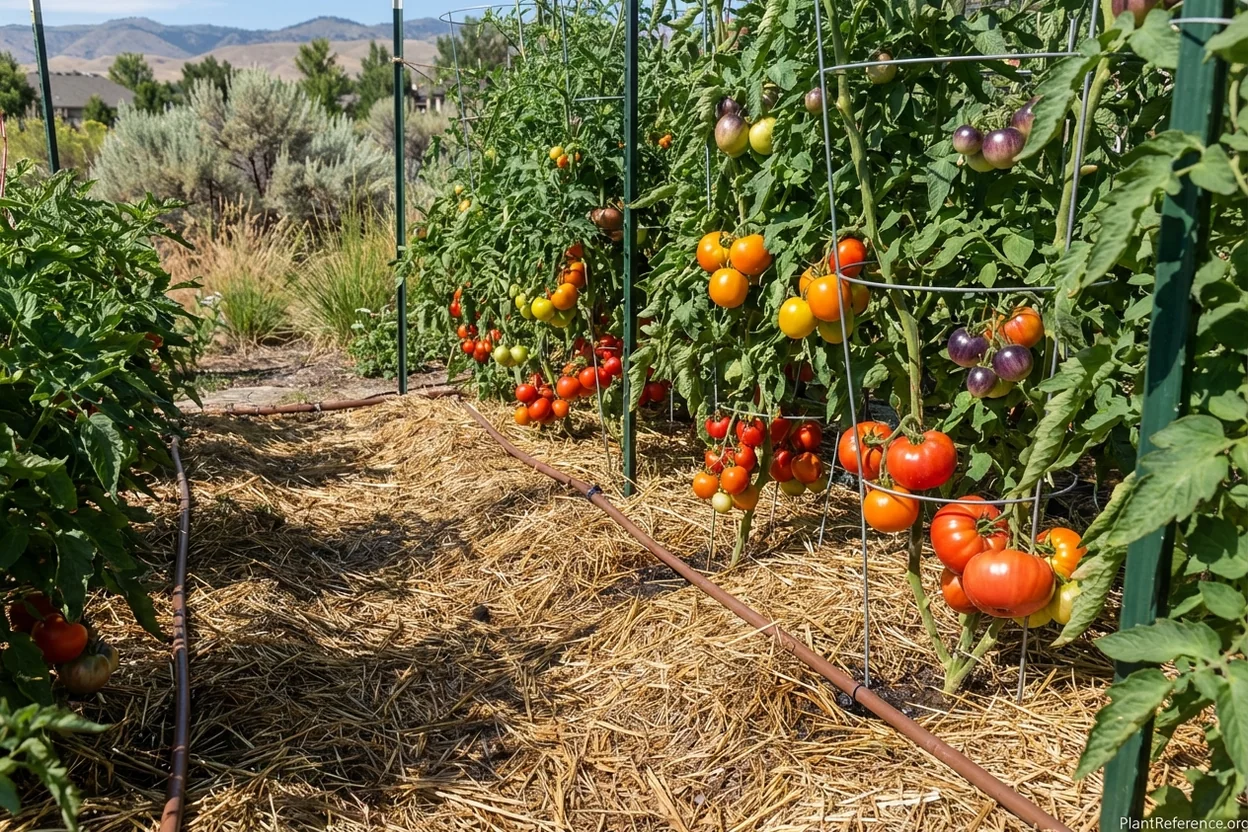
Mulching Strategy: Use 4-6 inches (10-15 cm) of organic mulch (straw, shredded leaves, or grass clippings) to conserve moisture and moderate soil temperature. Keep mulch 3 inches (8 cm) away from plant stems to prevent pest harboring and allow air circulation.
Support Systems: Boise's intense UV and occasional strong winds require robust plant support. Use heavy-duty tomato cages (concrete reinforcing wire) or stake-and-tie systems with soft cloth ties that won't cut into stems during wind events.
Water-Wise Irrigation: Install drip irrigation or soaker hoses on timers to provide consistent moisture without waste. Water deeply 2-3 times per week rather than daily shallow watering. Monitor soil moisture at 4-6 inch (10-15 cm) depth to guide watering decisions.
Soil Preparation for Boise
pH Adjustment: Test soil pH annually and amend with elemental sulfur if above 7.0. Apply sulfur in fall for spring planting, as pH changes occur slowly. Work sulfur into the top 6 inches (15 cm) of soil at rates recommended by soil test results.
Organic Matter Addition: Boise's clay soils benefit from substantial organic matter additions. Work 3-4 inches (8-10 cm) of compost, aged manure, or leaf mold into planting beds each spring. This improves drainage, water retention, and nutrient availability.
Drainage Improvement: Heavy clay soils common in Boise can cause root rot if drainage is poor. Build raised beds 8-12 inches (20-30 cm) high or add coarse sand and compost to improve drainage while maintaining water-holding capacity.
Troubleshooting Boise-Specific Problems
Growing tomatoes in Boise's Zone 6a climate presents unique challenges that require specific solutions adapted to high-altitude continental conditions, alkaline soils, and intense UV radiation.
Sunscald and Heat Stress
Why it happens in Boise: The combination of high altitude (2,700+ feet / 820+ meters elevation) and low humidity creates intense UV radiation that can damage tomato fruit and foliage. Sunscald appears as white or yellowish patches on fruit exposed to direct afternoon sun, particularly during July and August when UV intensity peaks.
Prevention and Solutions: Provide afternoon shade using 30% shade cloth stretched over plants during the hottest part of summer (July-August). Avoid heavy pruning that removes protective leaf canopy. Plant tomatoes on the east side of taller plants or structures to receive morning sun but afternoon protection. Maintain adequate soil moisture to help plants cope with heat stress through improved transpiration.
Choose varieties with dense foliage like 🌿Solanum lycopersicum 'San Marzano' that naturally protect their fruit. Avoid varieties with sparse leaf cover like some cherry types unless grown with shade protection.
Iron Chlorosis in Alkaline Soil
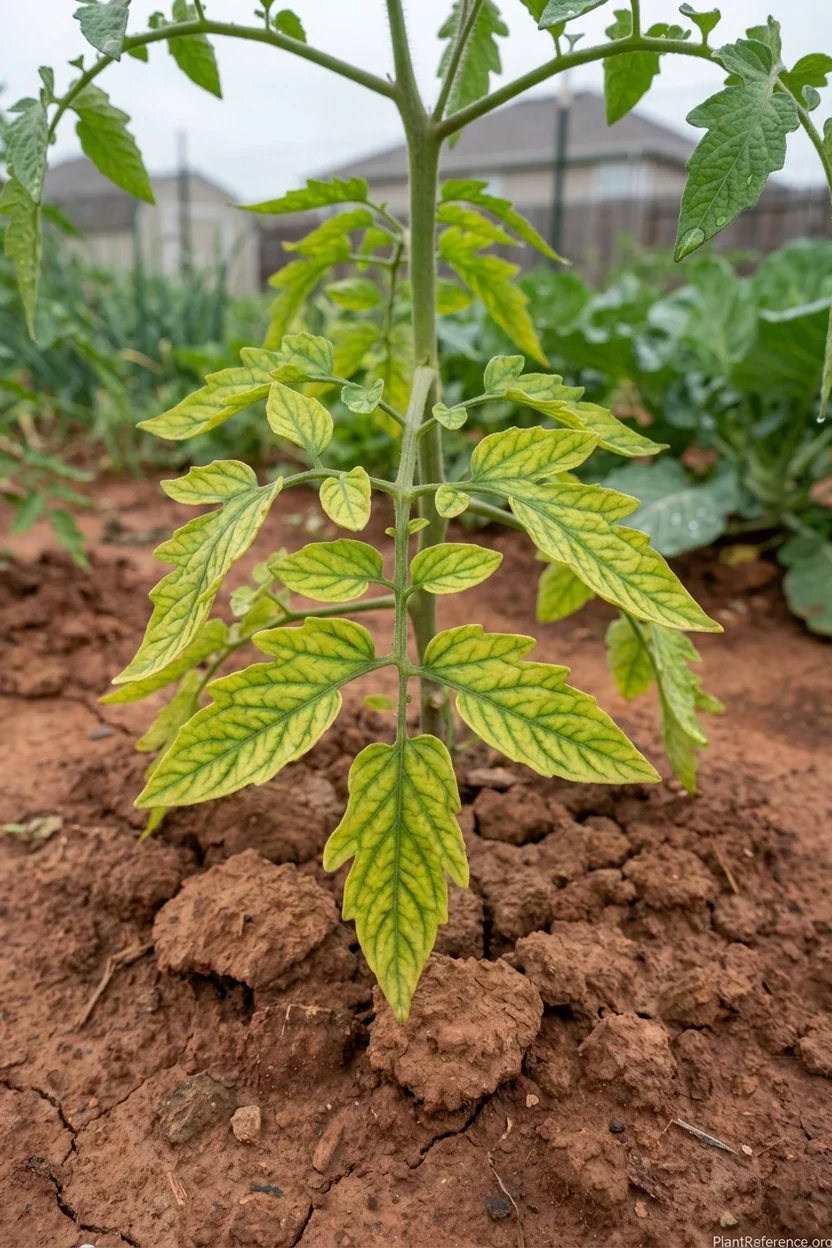
Why it happens in Boise: Boise's naturally alkaline soils (pH 7.5-8.5) bind iron in forms unavailable to plant roots, causing characteristic yellowing leaves with green veins. This condition is particularly common in clay soils and affects tomato productivity and fruit quality.
Prevention and Solutions: Test soil pH annually and apply elemental sulfur to gradually lower pH toward 6.5-7.0. Work 2-3 inches (5-8 cm) of organic compost into planting areas to improve nutrient availability and soil structure. Apply chelated iron fertilizer as both soil and foliar treatments during the growing season.
For immediate relief, spray foliage with liquid iron fertilizer every 2 weeks until new growth shows normal green color. Long-term management requires consistent organic matter additions and pH management through sulfur applications.
Late Spring Frost Damage
Why it happens in Boise: Boise's continental climate includes risk of surprise late frosts through mid-May, occasionally occurring after the average last frost date of May 5. Cold air drainage from the foothills can create localized frost pockets even when valley temperatures remain above freezing.
Prevention and Solutions: Monitor long-range weather forecasts carefully and delay transplanting if extended cold periods are predicted. Keep row covers, Wall O' Water, or blankets available for emergency frost protection through May 31.
Choose microclimates carefully by planting against south-facing walls or near thermal mass like concrete or stone that radiates stored heat. Avoid low-lying areas where cold air settles. If frost damage occurs, don't immediately remove damaged plants as they often recover from the roots if stems are not completely frozen.
Harvest & Storage
Boise's 158-day growing season provides excellent opportunities for multiple harvests from early varieties and substantial yields from long-season types when properly timed and managed.
Signs of Readiness
Color Development: Harvest tomatoes when they show full color development but still feel firm to gentle pressure. In Boise's intense UV environment, fruit often develops excellent color and flavor even when harvested at the "breaker" stage (first blush of color) and allowed to ripen indoors.
Shoulder Feel: Ripe tomatoes yield slightly to pressure near the stem end while maintaining firmness at the blossom end. Overripe fruit feels soft throughout and should be used immediately for cooking or preserving.
Easy Separation: Properly ripe tomatoes separate easily from the stem with gentle upward pressure. Fruit requiring force to remove needs additional ripening time.
Harvest Technique
Daily Collection: During peak harvest (August-September in Boise), inspect plants daily and harvest fruit at optimal ripeness. Regular picking encourages continued production from indeterminate varieties throughout the season.
Stem Handling: Remove fruit with 1/4 inch (6 mm) of stem attached to prevent bacterial entry at the attachment point. Use clean pruning shears for thick stems rather than twisting, which can damage the plant.
Temperature Timing: Harvest during cooler parts of the day (early morning or evening) when fruit temperatures are lower. Hot fruit harvested during midday heat deteriorates faster in storage.
Expected Harvest Window in Boise
Early Varieties: 🌿Solanum lycopersicum 'Stupice' and 🌿Solanum lycopersicum 'Early Girl' typically begin producing harvestable fruit by July 10-15 and continue until the first hard frost around October 10. These varieties often provide 12-14 weeks of continuous harvest.
Mid-Season Varieties: 🌿Solanum lycopersicum 'Sungold' and 🌿Solanum lycopersicum 'Cherokee Purple' begin significant production in late July through early August, with peak harvest occurring in August and September. Expect 10-12 weeks of productive harvest.
Late Varieties: 🌿Solanum lycopersicum 'San Marzano' and 🌿Solanum lycopersicum 'Brandywine' reach peak production in late August through September. While the harvest window is shorter (8-10 weeks), yields per plant are often higher due to larger fruit size and concentrated ripening.
Storage Recommendations
Short-Term Storage: Store ripe tomatoes at room temperature for 3-5 days for peak flavor. Refrigeration extends storage life to 1-2 weeks but reduces flavor quality. Store stem-end down to prevent moisture loss and decay at the stem scar.
Green Tomato Ripening: Before Boise's first frost around October 10, harvest mature green tomatoes for indoor ripening. Wrap individual fruits in newspaper and store in boxes at 60-70°F (16-21°C). Check weekly and remove fruit as it ripens or shows signs of decay.
Long-Term Preservation: Boise's dry climate is excellent for drying tomatoes, particularly paste varieties like 🌿Solanum lycopersicum 'San Marzano'. Slice fruit 1/4 inch (6 mm) thick and dry using food dehydrators or low oven heat (140°F / 60°C). Properly dried tomatoes store 6-12 months in airtight containers.
Freezing Options: Freeze whole ripe tomatoes for winter cooking by removing stems and freezing on trays before transferring to storage bags. Skins slip off easily after thawing. This method preserves flavor better than canning for cooked applications.
Frequently Asked Questions
Reading about plants and recognising them are different skills. These three build the second.
- Daily PlantIdentify the day’s mystery plant from a close-up photograph.
- Keyed OutWork a dichotomous key, lead by lead, to name a hidden specimen.
- Name That PlantName a specimen from botanical clues dealt hardest first.
Free to play, no account needed
Lily is a Master Gardener and high-desert homesteader outside Boise. She and her husband moved to Idaho from the Bay Area and had to completely relearn gardening for a climate with alkaline soil, intense sun, hard freezes, and limited water. Lily now grows a large vegetable garden, maintains a small orchard of cold-hardy fruit trees, and raises cut flowers for the local farmers market. She writes about the specific challenges of intermountain gardening—short seasons, temperature swings, and the importance of soil amendment in high-pH soils. Lily is honest about the learning curve: high-desert gardening is humbling, and she thinks more gardening writers should admit when conditions are genuinely difficult.