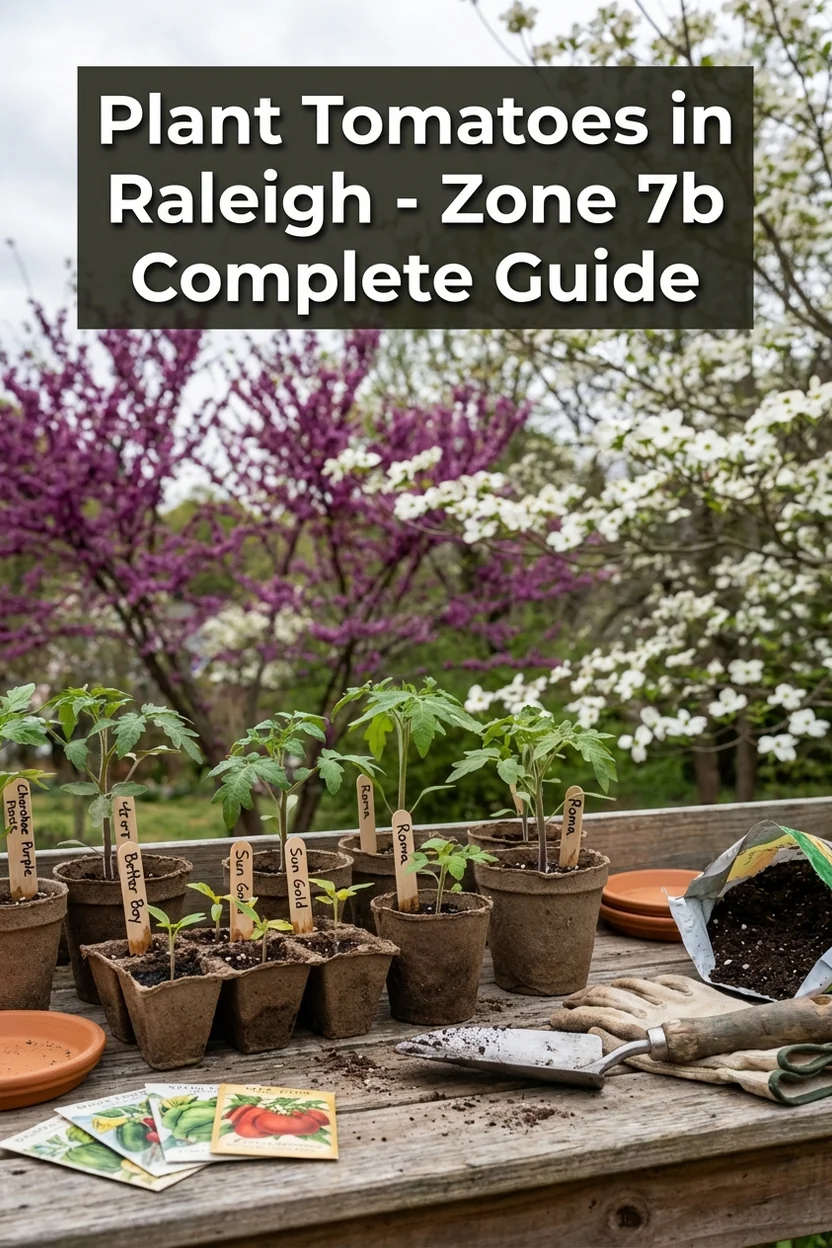
When to Plant Tomatoes in Raleigh: Complete Guide + Best Varieties for Zone 7b
Pets & Toxicity
Recorded toxicity for plants linked in this guide. An unknown status is not a safety assessment.
Toxic to pets: cherokee purple tomato, early girl tomato, Stupice tomato and 3 moreDetailsHide
Solanum lycopersicum 'Cherokee Purple' — Toxicity Warning
Toxic to petsView Solanum lycopersicum 'Cherokee Purple' plant profileSolanum lycopersicum 'Early Girl' — Toxicity Warning
Toxic to petsView Solanum lycopersicum 'Early Girl' plant profileSolanum lycopersicum 'Stupice' — Toxicity Warning
Toxic to petsView Solanum lycopersicum 'Stupice' plant profileSolanum lycopersicum 'Sungold' — Toxicity Warning
Toxic to petsView Solanum lycopersicum 'Sungold' plant profileSolanum lycopersicum 'San Marzano' — Toxicity Warning
Toxic to petsView Solanum lycopersicum 'San Marzano' plant profileSolanum lycopersicum 'Brandywine' — Toxicity Warning
Toxic to petsView Solanum lycopersicum 'Brandywine' plant profile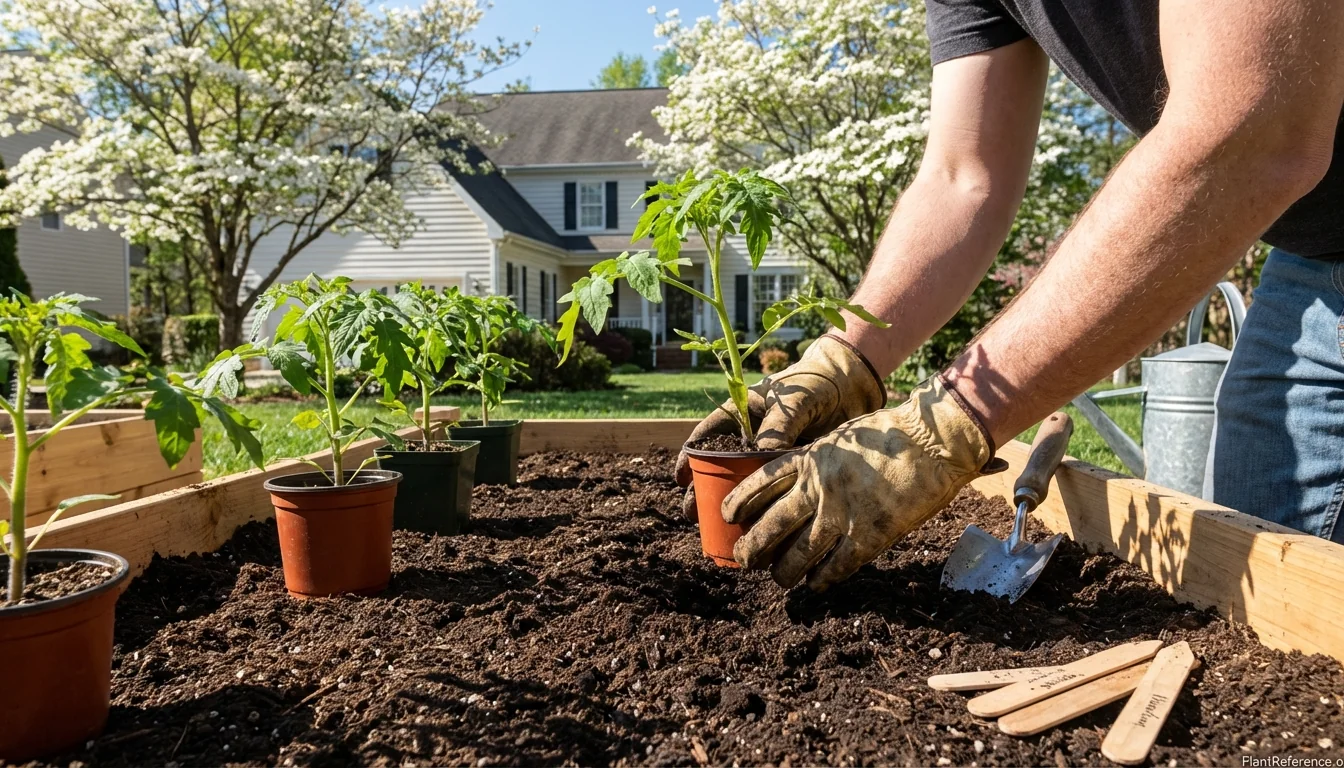
— Image © Plant Reference 2026
If you're wondering when to plant tomatoes in Raleigh, timing is everything in North Carolina's Zone 7b climate. With Raleigh's last frost typically occurring April 4 and first frost around November 4, you have a generous 214-day growing season—but success depends on working with our humid subtropical climate rather than against it.
I've been growing tomatoes in North Carolina for over three decades, and I'll tell you straight: Raleigh's climate offers tremendous opportunities if you time things right. Our long growing season means you can grow both early varieties for summer harvest and plant a second fall crop. But our humidity and summer heat also create specific challenges that newcomers often struggle with.
The key to success in Raleigh is understanding that we essentially have two tomato seasons: spring-planted for summer harvest, and mid-summer planted for fall harvest. This strategy helps you work around July and August heat that can shut down fruit production and creates the perfect environment for foliar diseases.
Best Tomato Varieties for Raleigh's Zone 7b Climate
After testing dozens of varieties in North Carolina gardens, I can tell you which tomatoes actually thrive here versus which ones just survive. Our humid summers and variable spring weather demand specific traits: disease tolerance, heat resilience, and the ability to set fruit in less-than-perfect conditions.
Variety | Days to Maturity | Best For | Notes for Raleigh |
|---|---|---|---|
75-90 days | Flavor, humidity tolerance | Originally from Tennessee, handles Southeast humidity better than most heirlooms | |
50-62 days | Quick harvest, reliability | Sets fruit in cool springs, finishes before peak summer diseases | |
52-60 days | Early season, fall crops | Cold-tolerant for early spring, continues producing into November | |
55-65 days | Cherry tomatoes, disease resistance | TMV resistance crucial in humid climates, prolific producer | |
78-85 days | Paste tomatoes, canning | Requires consistent watering to prevent blossom end rot in NC heat | |
80-100 days | Gourmet flavor | Challenging in humid climates, requires preventive disease management |
'Cherokee Purple' stands out as my top recommendation for Raleigh gardeners. This heirloom originated in Tennessee's similar climate and shows remarkable tolerance to our humidity-related fungal issues. Unlike 'Brandywine' and other moisture-sensitive heirlooms, 'Cherokee Purple' continues producing through July heat waves that shut down other varieties.
'Early Girl' earns its place as the most reliable variety for beginners. Its genetic ability to set fruit at temperatures as low as 40°F (4°C) means it starts producing early in our variable spring weather. More importantly, it typically finishes its main harvest before Early Blight becomes severe in mid-summer.
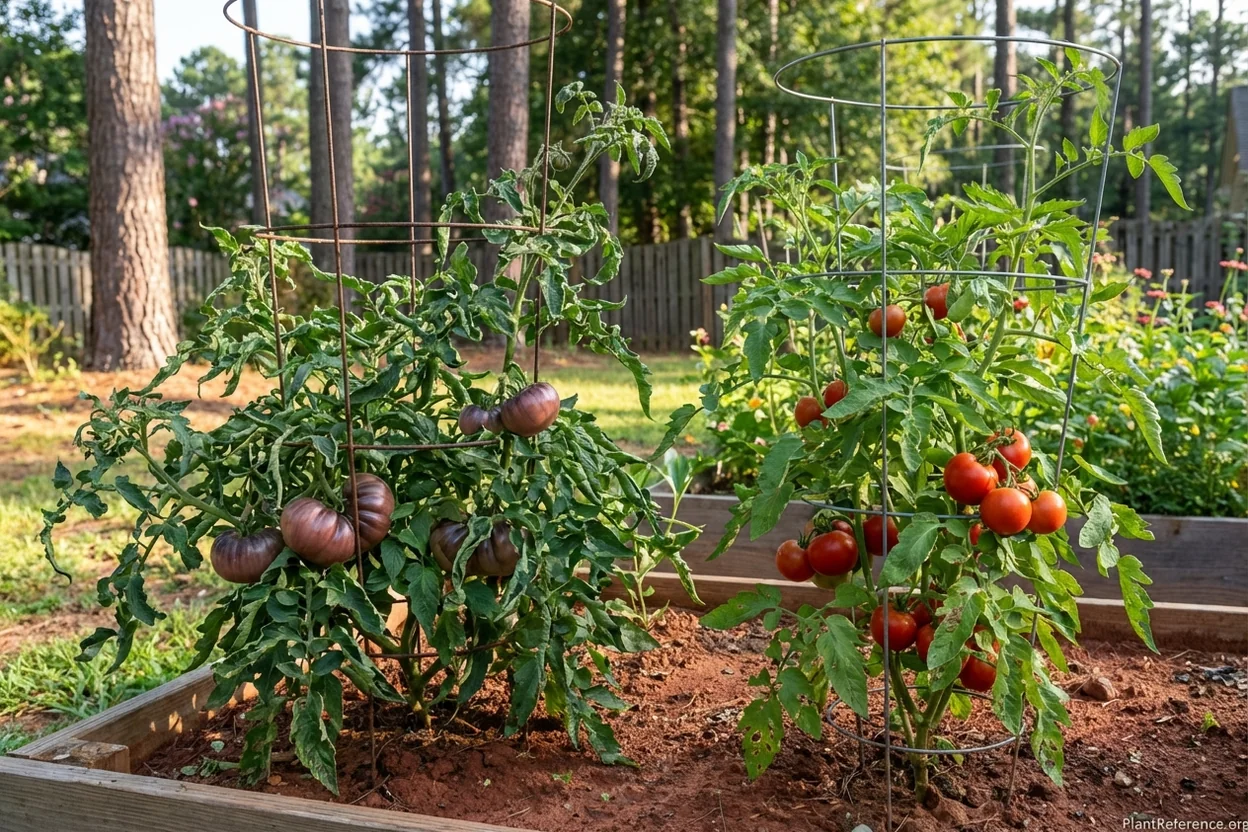
For cherry tomatoes, 'Sungold' dominates in Raleigh gardens. Its resistance to Tobacco Mosaic Virus becomes critical in our humid environment where virus-carrying insects remain active longer than in drier climates. The exceptional sweetness—often exceeding 9 Brix—makes it worth growing despite its tendency to split after summer thunderstorms.
Paste tomato enthusiasts should focus on 'San Marzano', but understand it requires more attention in our climate. The variety's susceptibility to Blossom End Rot increases in North Carolina's heat, demanding consistent soil moisture and adequate calcium levels. I recommend drip irrigation and 3-4 inches (7-10 cm) of organic mulch to maintain steady soil conditions.
Specific Planting Dates for Raleigh Tomatoes
Raleigh's Zone 7b classification means our average last frost falls around April 4, but smart gardeners plan for variability. Late cold snaps can occur through mid-April, while some years see the last frost in late March. Here's my proven timeline based on decades of North Carolina growing.
Indoor Seed Starting: March 1-8
Start your seeds indoors 6-8 weeks before the transplant date. In Raleigh, this means sowing seeds during the first week of March. Use a heated seed starting mat to maintain 75-80°F (24-27°C) soil temperature for optimal germination. Most varieties germinate within 5-7 days under these conditions.
I recommend starting early varieties like 🌿Solanum lycopersicum 'Early Girl' and 🌿Solanum lycopersicum 'Stupice' on March 1, while heat-loving varieties like 🌿Solanum lycopersicum 'Cherokee Purple' can wait until March 8. This staggered approach extends your harvest window.
Transplant Outdoors: April 11-18
The safest transplant window begins April 11—one week after our average last frost date. This buffer protects against late cold snaps that occasionally hit Raleigh through mid-April. However, if you're using season extension techniques like Wall-o-Water or row covers, you can transplant as early as April 4.
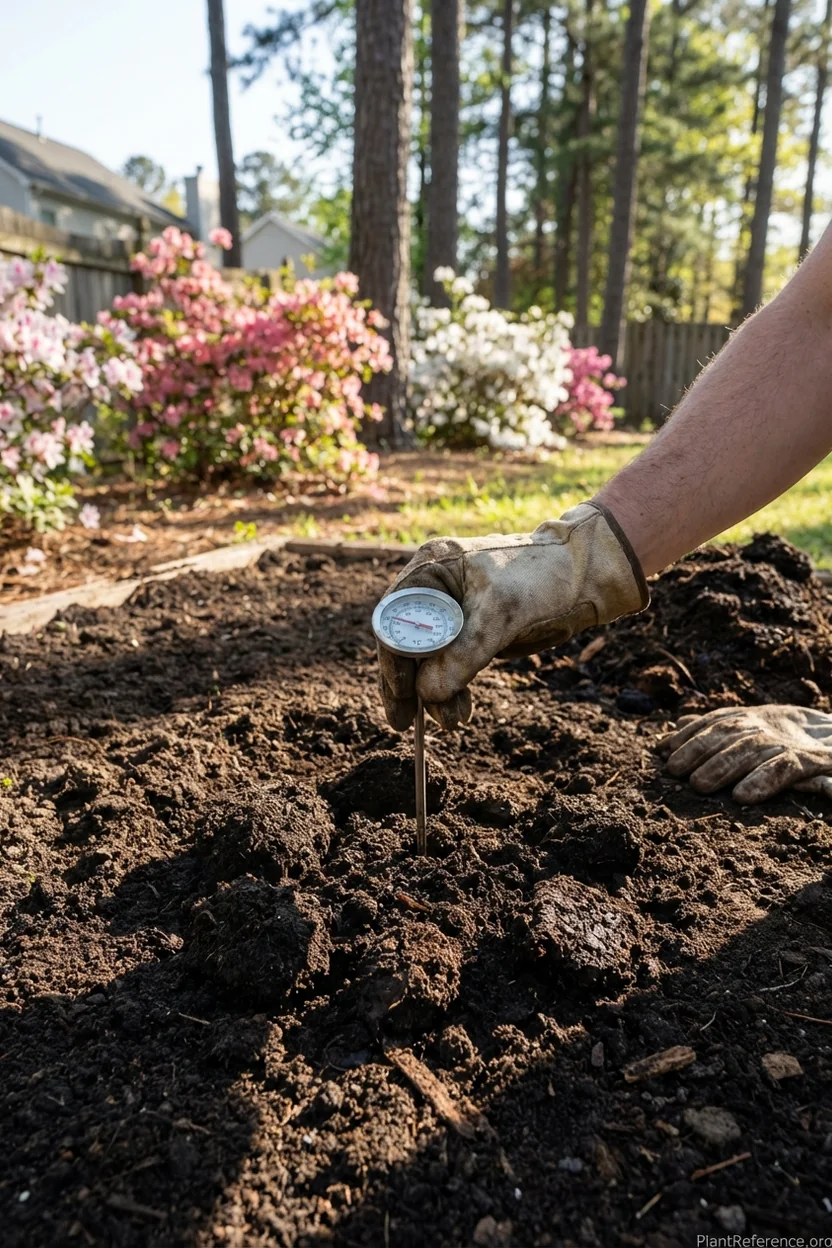
Soil temperature matters more than air temperature. Wait until soil reaches 60°F (16°C) at 4-inch (10 cm) depth for consistent growth. Cold soil below 55°F (13°C) prevents proper root development and phosphorus uptake, causing purple-tinged leaves and stunted growth.
Fall Planting: July 15-25
Raleigh's long growing season allows a productive fall crop. Start seeds indoors July 15 for transplanting in mid-August, or direct seed in the garden July 25. Fall tomatoes avoid summer disease pressure and often produce better-quality fruit as humidity levels drop in October.
Calculate your fall planting date by counting backward from November 4 (first frost) minus the variety's days to maturity. For example, 🌿Solanum lycopersicum 'Early Girl' (60 days) should be transplanted by September 5 to mature before frost, meaning seed starting around July 15.
Season Extension Opportunities
Raleigh gardeners can extend the season on both ends. Spring protection using row covers or cold frames allows transplanting 1-2 weeks earlier. Fall protection with the same methods can extend harvest 2-3 weeks past first frost, often into late November for cherry varieties.
Complete Growing Guide for Raleigh Gardens
Success in North Carolina requires adapting general tomato advice to our specific climate challenges: high humidity, intense summer heat, afternoon thunderstorms, and red clay soil that either drains poorly or becomes concrete-hard when dry.
Soil Preparation for North Carolina Clay
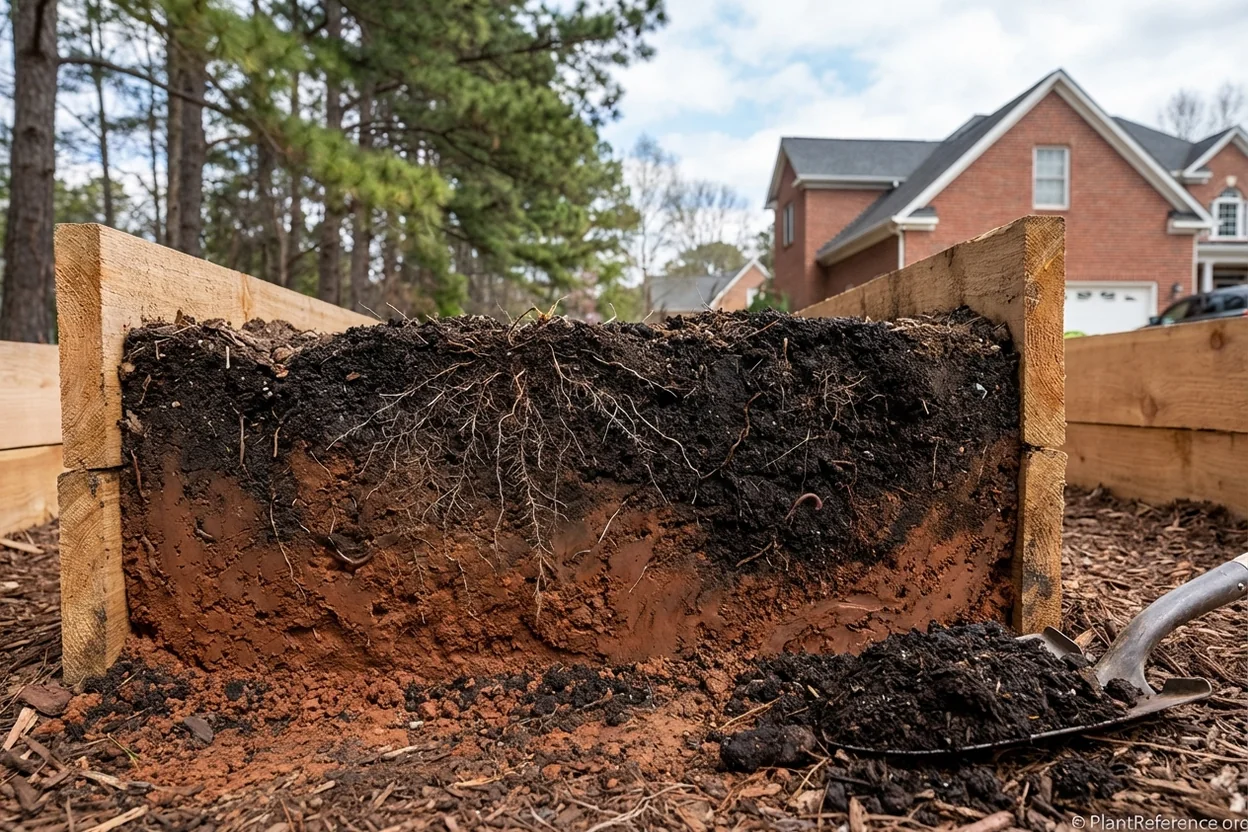
Most Raleigh properties sit on red clay soil that presents unique challenges for tomato growing. Pure clay holds too much water during our rainy periods but becomes impermeable when dry. The solution isn't fighting the clay—it's improving it.
Soil Amendment Strategy:
Work 2-3 inches (5-7 cm) of aged compost into existing soil rather than replacing it entirely. This improves drainage during wet periods while increasing water retention during dry spells. Add coarse sand (not fine sand, which creates concrete) if drainage remains poor.
Test soil pH, which typically runs 6.8-7.2 in Raleigh area clay. Tomatoes prefer 6.0-6.8 pH for optimal nutrient uptake. If pH exceeds 7.0, work in sulfur at rates recommended by soil test results—usually 1-2 pounds per 1,000 square feet (0.5-1 kg per 100 square meters).
Planting and Spacing
Space plants 24-36 inches (60-90 cm) apart in Raleigh's humid climate to ensure good air circulation. Crowded plants invite fungal diseases that thrive in our summer humidity. Plant slightly deeper than the root ball, burying 2/3 of the stem to encourage additional root development.
Mulching is non-negotiable in North Carolina. Apply 3-4 inches (7-10 cm) of organic mulch (straw, shredded leaves, or grass clippings) around each plant, keeping mulch 2 inches (5 cm) away from the stem. This moderates soil temperature swings, retains moisture during dry periods, and prevents soil-borne disease spores from splashing onto leaves during thunderstorms.
Watering and Fertigation
Raleigh's rainfall pattern—wet springs, dry summers punctuated by thunderstorms, then variable fall weather—demands a flexible watering approach. Aim for 1-2 inches (2.5-5 cm) of water weekly, including rainfall.
Drip irrigation or soaker hoses work best because they keep water off the foliage, reducing disease pressure. Water early morning to allow plants to dry before evening, when humidity promotes fungal spore germination.
During our typical July-August dry periods, clay soil becomes increasingly difficult to rewet once it dries completely. Consistent, moderate watering prevents this cycle better than infrequent heavy watering that runs off hardened soil surface.
Fertilization Schedule
North Carolina's long growing season and warm soil accelerate nutrient cycling, requiring more frequent fertilization than northern climates. Use a balanced approach that supports vigorous growth without promoting excessive foliage at the expense of fruit production.
Pre-plant: Work 2-3 inches (5-7 cm) of aged compost into soil along with balanced organic fertilizer (10-10-10) at package rates.
Growing season: Side-dress with compost or balanced fertilizer every 3-4 weeks through July. Reduce nitrogen in August to encourage fruit ripening rather than continued vegetative growth.
Calcium supplementation becomes critical during rapid growth phases to prevent Blossom End Rot, especially in paste varieties like 🌿Solanum lycopersicum 'San Marzano'. Gypsum (calcium sulfate) provides calcium without raising pH in our already alkaline clay soils.
Troubleshooting Raleigh-Specific Tomato Problems
Growing tomatoes in North Carolina's humid subtropical climate presents predictable challenges. Understanding these regional issues helps you prevent problems rather than react to them after damage occurs.
Early Blight (Alternaria solani)
The Problem: This fungal disease appears as dark spots with concentric rings on lower leaves, typically starting in June as humidity and temperatures rise. Left unchecked, it defoliates plants from bottom to top, reducing yield and fruit quality.
Raleigh-Specific Factors: Our combination of warm temperatures (75-85°F/24-29°C) and high humidity creates perfect conditions for Early Blight spore germination. Afternoon thunderstorms spread spores through water splash.
Prevention Strategy: Apply 3-4 inches (7-10 cm) of organic mulch to prevent soil-borne spores from splashing onto lower leaves. Remove lower branches to improve air circulation. Begin preventive copper fungicide applications in May, before symptoms appear.
Treatment: Remove affected leaves immediately and dispose in trash, not compost. Increase air circulation by pruning suckers and lower branches. Apply approved organic fungicides (copper, baking soda, or biological controls) on a 7-14 day schedule through summer.
Blossom End Rot
The Problem: Dark, sunken spots on the blossom end of fruit, particularly common in paste varieties and during rapid growth periods. This physiological disorder results from inconsistent calcium uptake, not soil calcium deficiency.
Raleigh-Specific Factors: Clay soil's tendency to cycle between waterlogged and concrete-hard creates inconsistent water uptake. Summer thunderstorms followed by drought stress interrupt calcium transport to developing fruit.
Prevention Strategy: Maintain consistent soil moisture through mulching and regular watering. In clay soil, this means watering more frequently with smaller amounts rather than occasional deep soaking that clay cannot absorb.
Heat Stress and Poor Fruit Set
The Problem: Tomato pollen becomes sterile when temperatures exceed 90°F (32°C) during the day or 75°F (24°C) at night. July and August heat commonly causes blossom drop and poor fruit set in Raleigh.
Raleigh-Specific Factors: Our July-August combination of high temperatures and humidity often creates conditions where plants stop producing fruit for 3-4 weeks.
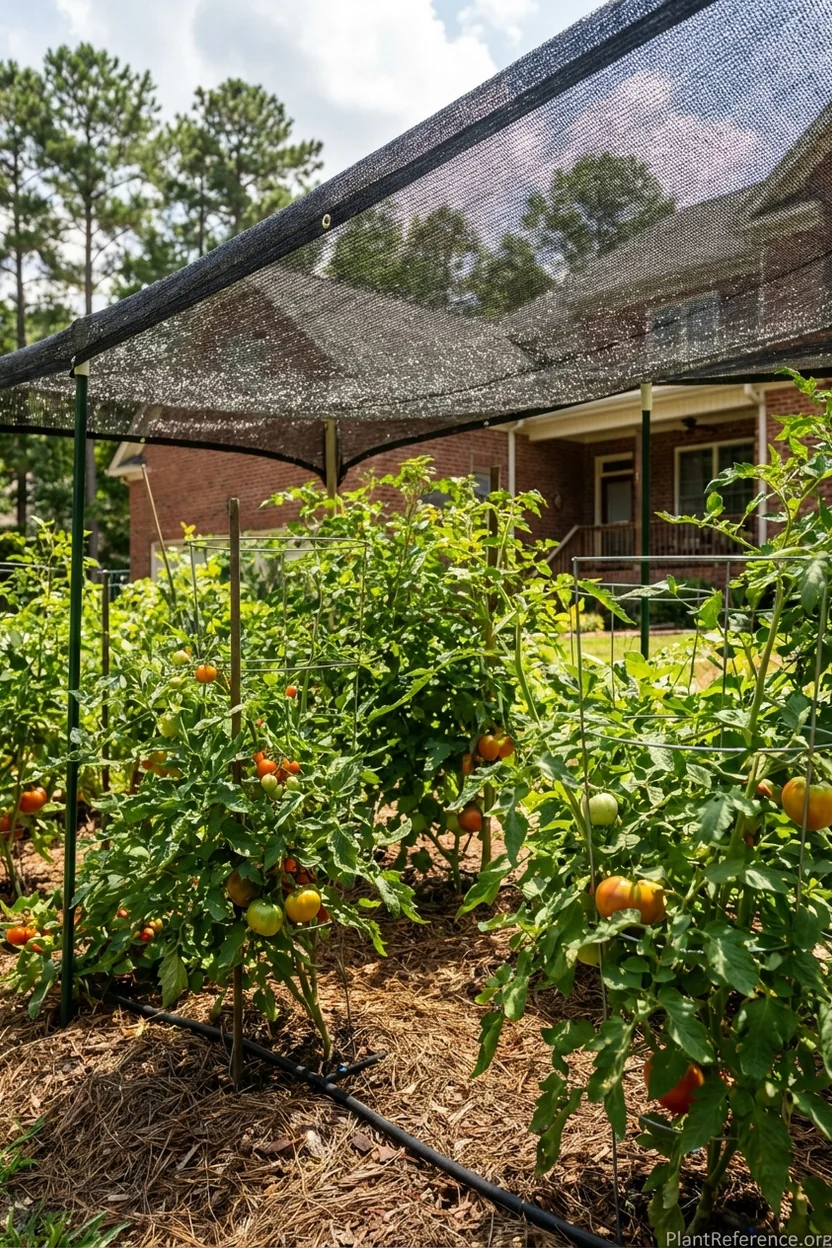
Management Strategy: Plant early varieties like 🌿Solanum lycopersicum 'Early Girl' to harvest before peak heat stress. Use 30% shade cloth during extreme heat waves. Maintain consistent soil moisture to help plants cope with heat stress.
Tobacco Mosaic Virus (TMV)
The Problem: Virus transmitted by handling plants after tobacco use or contact with infected plants. Symptoms include mottled yellow-green leaves and stunted growth.
Raleigh-Specific Factors: North Carolina's tobacco-growing history means TMV persists in some soils and can be unknowingly transmitted by gardeners handling tobacco products.
Prevention: Choose TMV-resistant varieties like 🌿Solanum lycopersicum 'Sungold' if you've had problems. Wash hands thoroughly before handling plants, especially if you use tobacco products. Sterilize tools between plants when pruning or harvesting.
Harvest & Storage in North Carolina
Raleigh's hot, humid summers create both opportunities and challenges for tomato harvest and storage. Understanding how our climate affects fruit quality helps you time harvest for best flavor and longest storage life.
Peak Harvest Timing: Most varieties reach peak production in June and early July, before extreme heat stress. Cherry varieties like 🌿Solanum lycopersicum 'Sungold' continue producing through summer if provided adequate water and occasional shade during heat waves.
Harvest Indicators: Pick fruit at the "breaker" stage (first color change) during periods of high humidity or before thunderstorms to prevent splitting and bacterial soft rot. Ripe fruit in 80°F+ (27°C) temperatures with high humidity deteriorates rapidly.
Storage Strategy: Green and breaker-stage fruit ripens perfectly indoors at 65-70°F (18-21°C). This technique extends harvest season and improves fruit quality during unfavorable weather. Store fruit in single layers to prevent accelerated ripening from ethylene concentration.
Fall Harvest: September and October often produce the highest-quality fruit of the year as humidity drops and temperatures moderate. Fall-planted crops avoid summer disease pressure and frequently outperform spring plantings in both yield and flavor.
Frequently Asked Questions
Reading about plants and recognising them are different skills. These three build the second.
- Daily PlantIdentify the day’s mystery plant from a close-up photograph.
- Keyed OutWork a dichotomous key, lead by lead, to name a hidden specimen.
- Name That PlantName a specimen from botanical clues dealt hardest first.
Free to play, no account needed
Rachel is a garden writer and photographer based in Raleigh who covers the Piedmont region of North Carolina. She has a journalism background and got into gardening after buying her first house and realizing she had no idea what any of the plants in her yard were. That curiosity led to a Master Gardener certification and eventually a garden writing career. Rachel is especially interested in native plants of the Southeast, seasonal color, and the challenge of gardening in red clay soil. Her photography background means she pays attention to how gardens look through the seasons—she thinks about visual composition as much as plant health. She writes clearly and directly, without the breathless enthusiasm that makes a lot of garden writing hard to trust.