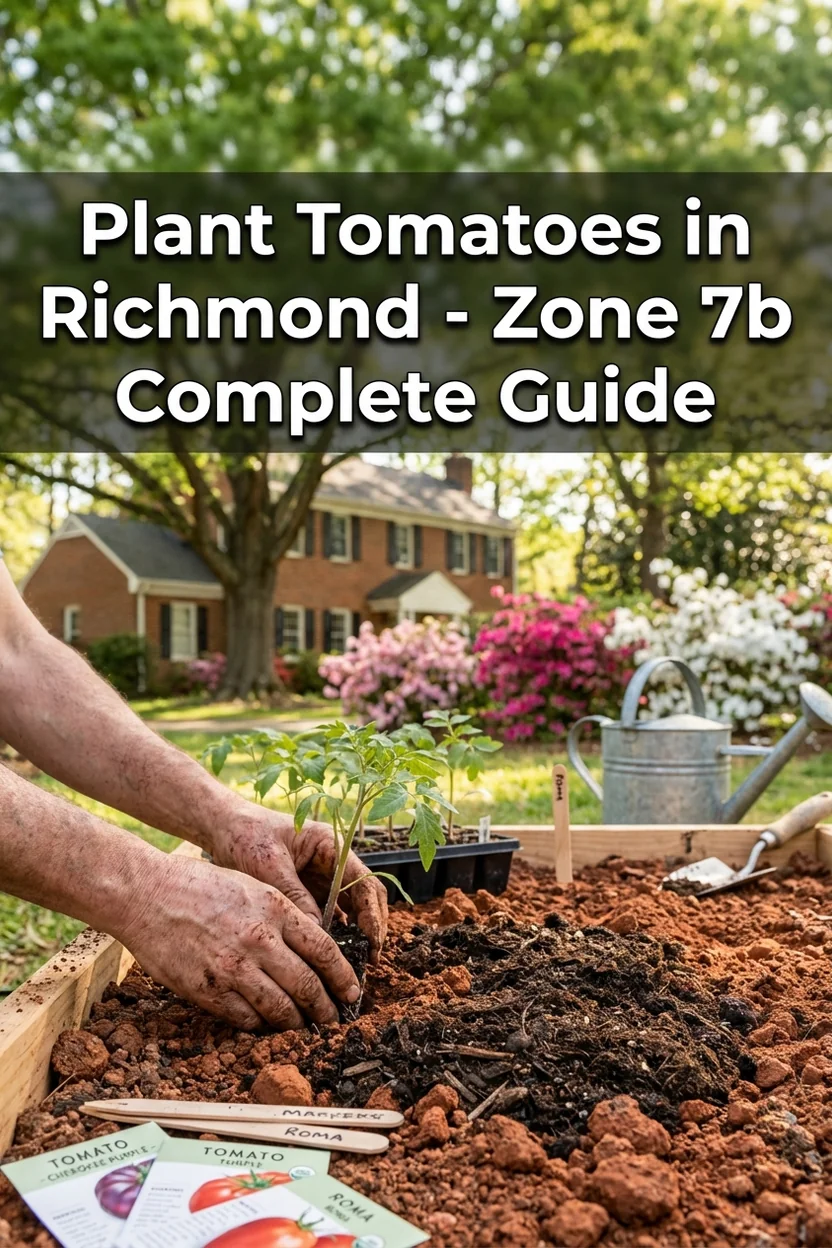
When to Plant Tomatoes in Richmond: Complete Guide + Best Varieties for Zone 7b
Pets & Toxicity
Recorded toxicity for plants linked in this guide. An unknown status is not a safety assessment.
Toxic to pets: early girl tomato, cherokee purple tomato, Sungold cherry tomato and 3 moreDetailsHide
Solanum lycopersicum 'Early Girl' — Toxicity Warning
Toxic to petsView Solanum lycopersicum 'Early Girl' plant profileSolanum lycopersicum 'Cherokee Purple' — Toxicity Warning
Toxic to petsView Solanum lycopersicum 'Cherokee Purple' plant profileSolanum lycopersicum 'Sungold' — Toxicity Warning
Toxic to petsView Solanum lycopersicum 'Sungold' plant profileSolanum lycopersicum 'San Marzano' — Toxicity Warning
Toxic to petsView Solanum lycopersicum 'San Marzano' plant profileSolanum lycopersicum 'Brandywine' — Toxicity Warning
Toxic to petsView Solanum lycopersicum 'Brandywine' plant profileSolanum lycopersicum 'Stupice' — Toxicity Warning
Toxic to petsView Solanum lycopersicum 'Stupice' plant profile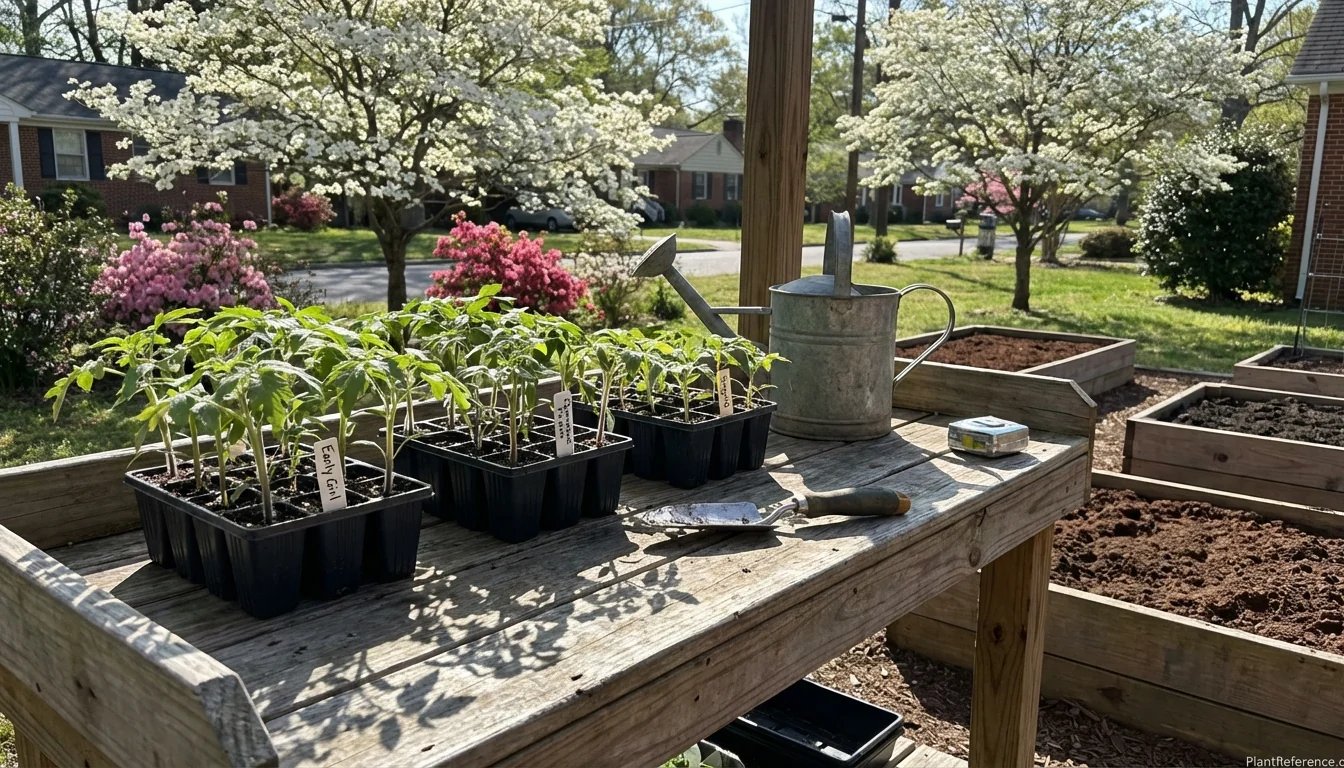
— Image © Plant Reference 2026
Richmond gardeners have a significant advantage with Zone 7b's generous 193-day growing season, allowing both spring and fall tomato crops. I've been helping Virginia gardeners succeed with tomatoes for decades, and the key is matching varieties to our humid subtropical climate and working with our clay soils rather than against them.
Best Tomato Varieties for Richmond's Climate
Richmond's Zone 7b presents unique opportunities and challenges. Our long growing season supports both determinate and indeterminate varieties, but high humidity creates significant disease pressure. After forty years of Virginia gardening, I've learned which varieties consistently deliver despite our challenging summers.
The Richmond area's clay soils retain moisture well—sometimes too well. This makes disease-resistant varieties crucial for consistent harvests. Our hot, humid summers favor fungal pathogens, while spring's unpredictable weather can stress young plants.
Variety | Days to Maturity | Best For | Notes for Richmond |
|---|---|---|---|
50-62 days | Quick spring harvest | Excellent disease resistance package for Virginia humidity | |
75-90 days | Premium flavor | Originated in this climate region; shows natural adaptation | |
55-65 days | Continuous harvest | Cherry type resists cracking in Richmond's variable rainfall | |
78-85 days | Sauce making | Requires consistent watering in clay soils | |
80-100 days | Exceptional flavor | High maintenance; needs fungicide program | |
52-60 days | Early season | Cold tolerance for spring planting insurance |
'Cherokee Purple' deserves special attention in Richmond. This variety originated in similar climatic conditions and shows remarkable adaptation to our humidity levels. While most large-fruited heirlooms struggle with foliar diseases, 'Cherokee Purple' maintains better leaf health throughout the season.
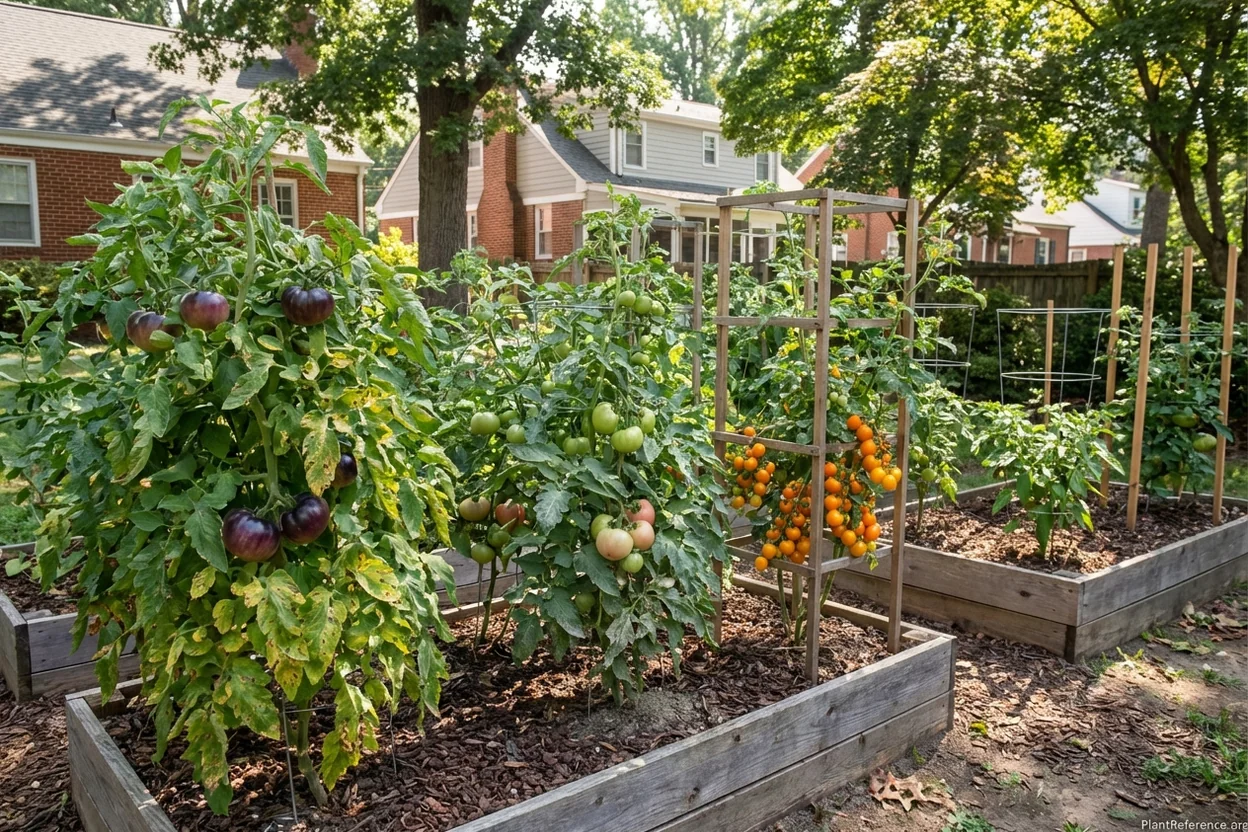
'Early Girl' serves as Richmond's insurance policy. Its VFF disease resistance package handles our soil-borne pathogens effectively, and rapid maturity ensures harvest before late-summer disease pressure peaks. This variety consistently produces in Richmond's challenging conditions.
For cherry tomatoes, 'Sungold' excels in our climate. Its thin skin, which causes problems in arid climates, actually helps in Richmond's humidity by allowing better gas exchange and reducing fungal pressure on the fruit surface.
Specific Planting Dates for Richmond
Richmond's April 14 last frost date provides the foundation for all timing decisions, but microclimates within the metropolitan area can vary by 7-10 days. Areas near the James River experience slightly later frosts, while elevated locations often warm earlier.
Indoor Seed Starting Timeline:
Start seeds March 15-22 for optimal transplant timing. This provides 6-7 weeks of indoor growth, creating sturdy seedlings ready for Richmond's variable spring weather.
Seeds require 75-85°F soil temperature for germination. In Richmond's cool March weather, bottom heat mats are essential. Germination typically occurs in 5-7 days with proper temperature control.
Transplant Schedule:
Primary transplant window: May 5-12. This timing provides a safety buffer after our April 14 average last frost while ensuring plants establish before summer heat stress.
For risk-tolerant gardeners, April 28-May 5 transplanting is possible with protection methods. Use Wall-o-Water or similar protection for cold snaps.
Season Extension Options:
Richmond's long growing season supports a fall crop. Start seeds June 20-30 for August 10-20 transplanting. Fall crops often outperform spring plantings due to reduced disease pressure and moderate autumn temperatures.
Complete Growing Guide for Richmond
Soil Preparation for Clay Soils:
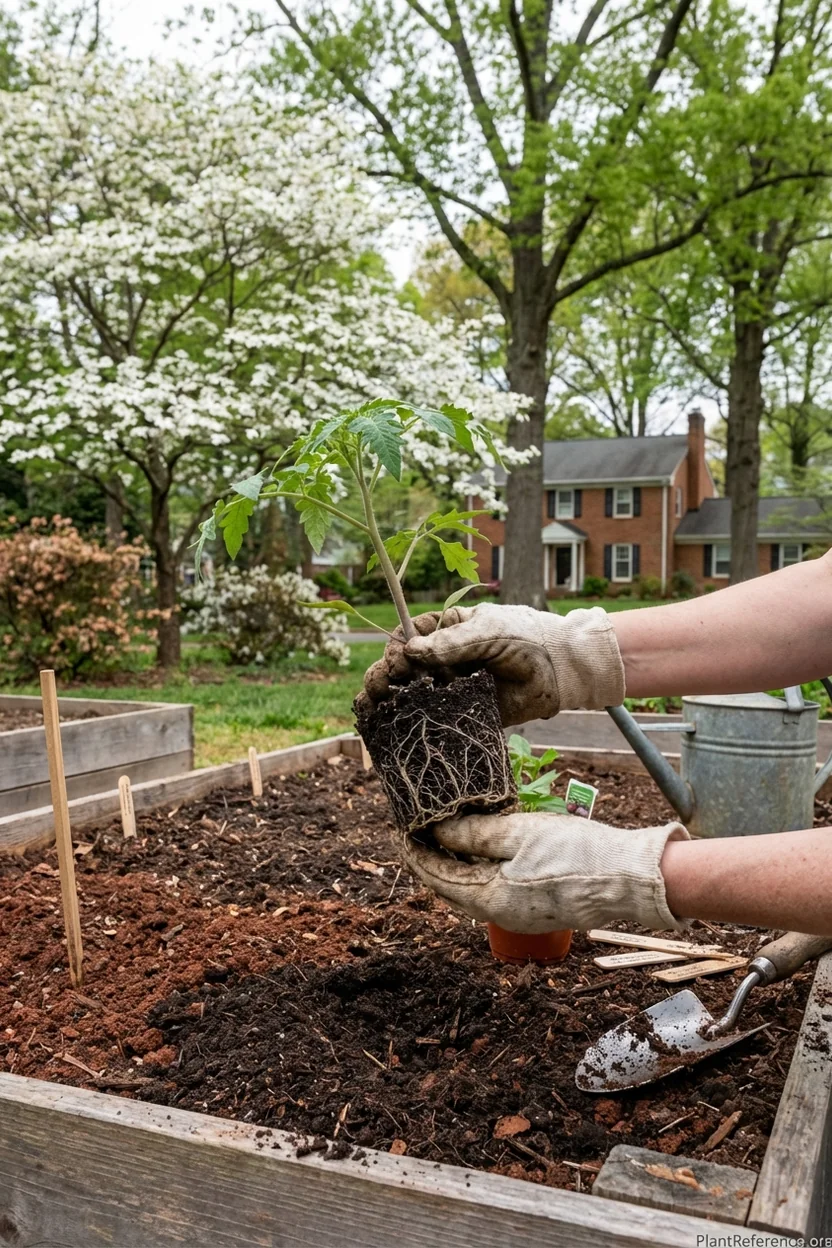
Richmond's clay soil requires specific amendments for tomato success. Our heavy clay retains nutrients well but can become waterlogged, creating conditions favoring root rot and bacterial wilt.
Pre-planting soil treatment (March-April):
Add 2-3 inches of coarse compost to raised beds
Incorporate perlite or coarse sand to improve drainage
Test soil pH; Richmond clay often runs 6.8-7.2, ideal for tomatoes
Create raised beds 8-12 inches tall to ensure drainage
Cover prepared beds with black plastic in April to warm soil
Plant Spacing and Support:
Richmond's high humidity demands excellent air circulation. Space plants wider than typical recommendations:
Indeterminate varieties: 30-36 inches apart
Determinate varieties: 24-30 inches apart
Row spacing: minimum 4 feet for air movement
Install support systems at planting time
Watering Strategy for Clay Soils:
Clay soil's water retention characteristics require modified watering approaches:
Early season (May-June): Water deeply twice weekly rather than daily light watering. Clay soils hold moisture at root level while surface appears dry.
Mid-season (July-August): Consistent moisture prevents blossom end rot in varieties like 🌿Solanum lycopersicum 'San Marzano'. Drip irrigation works best in clay soils.
Mulching Protocol:
Richmond's variable rainfall makes mulching critical:
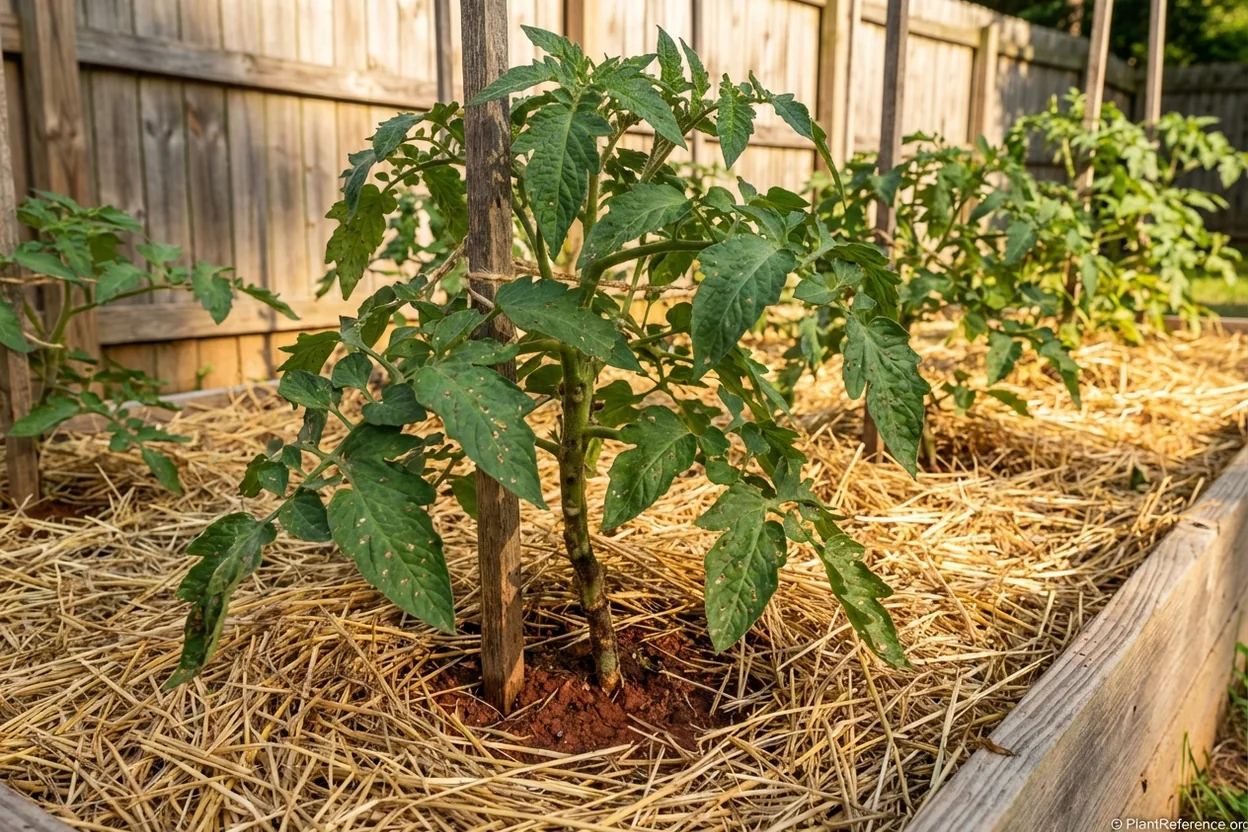
Apply 3-4 inches of organic mulch after soil warms
Use straw or shredded leaves rather than wood mulch
Keep mulch 2-3 inches from plant stems
Replace mulch mid-season as it decomposes
Fertilization Schedule:
Virginia's clay soils are naturally fertile but may lack available nutrients due to pH and compaction:
Pre-plant: Incorporate balanced organic fertilizer (10-10-10) at soil preparation.
Side-dressing schedule:
First application: 3 weeks after transplanting
Second application: At first fruit set
Monthly thereafter until August 15
Troubleshooting Richmond-Specific Problems
Richmond's humid subtropical climate creates predictable challenges. Understanding these patterns helps prevent problems rather than treating them after occurrence.
Early Blight Management:
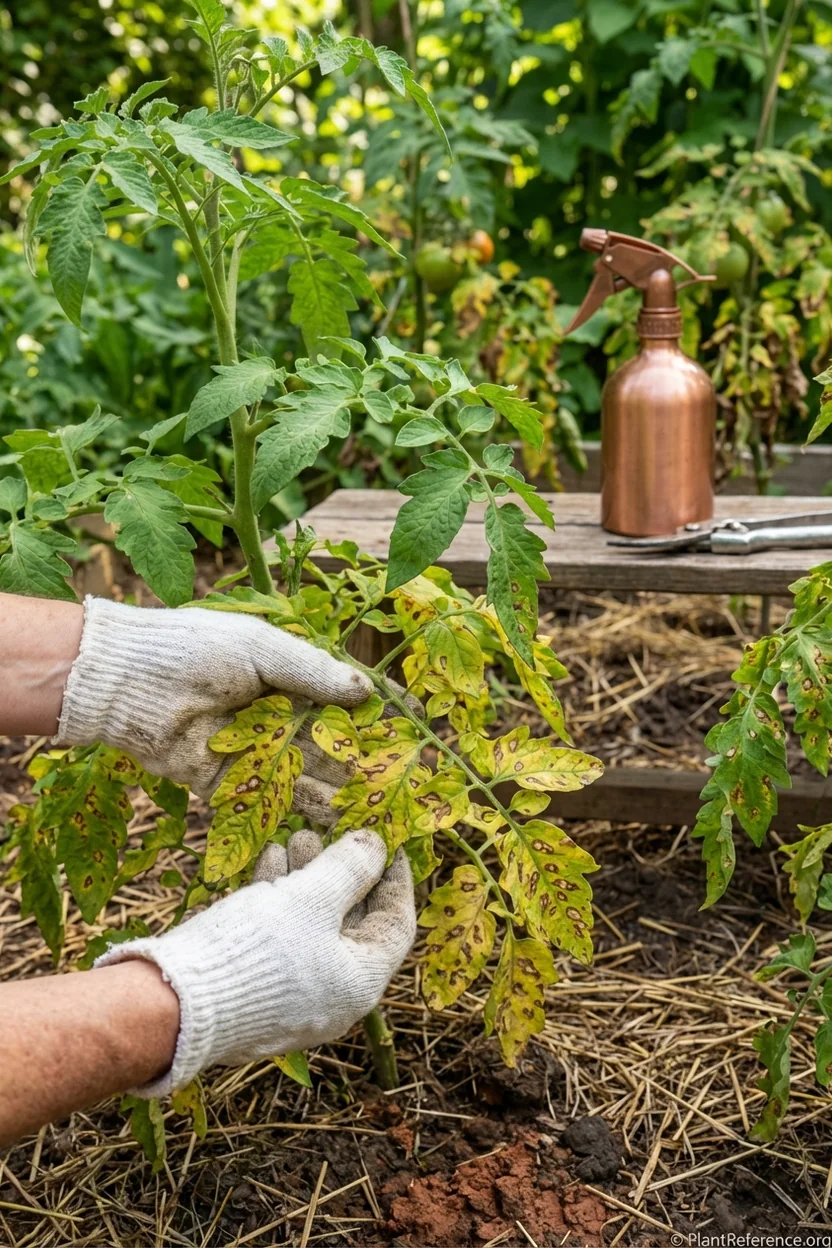
Early Blight (Alternaria solani) is Richmond's most persistent tomato disease. High humidity and warm temperatures create ideal conditions for this fungal pathogen.
Prevention strategies:
Remove lower leaves touching soil or mulch
Ensure adequate spacing for air circulation
Apply preventive copper fungicides every 14 days starting in June
Water at soil level, never on leaves
Remove infected plant debris immediately
🌿Solanum lycopersicum 'Brandywine' shows extreme susceptibility to Early Blight in Richmond's climate. Success with this variety requires aggressive preventive treatments.
Bacterial Wilt Issues:
Richmond's clay soils can harbor Ralstonia solanacearum, causing bacterial wilt. This soil-borne pathogen is more common in areas with poor drainage.
Identification: Rapid wilting of green, healthy-looking leaves during hot days, with no recovery overnight.
Management: No chemical cure exists. Improve drainage, rotate crops, and consider resistant rootstocks for valuable heirloom varieties.
Blossom End Rot in Clay Soils:
🌿Solanum lycopersicum 'San Marzano' frequently develops blossom end rot in Richmond due to calcium transport issues in clay soils.
Root cause: Inconsistent moisture prevents calcium uptake, not soil calcium deficiency.
Solution: Maintain consistent soil moisture through drip irrigation and heavy mulching. Clay soils hold water but release it slowly to plants.
Heat Stress Management:
Richmond's July-August temperatures often exceed 90°F with high humidity, causing blossom drop and reduced fruit set.
Provide afternoon shade during peak summer
Maintain consistent deep watering
Avoid pruning during heat waves (leaves provide fruit protection)
Consider shade cloth for sensitive varieties like 🌿Solanum lycopersicum 'Brandywine'
Harvest & Storage
Richmond's extended growing season allows multiple harvest strategies. Understanding optimal timing maximizes both yield and quality from each variety.
Harvest Timing by Variety:
🌿Solanum lycopersicum 'Early Girl' begins producing in late June, providing Richmond's first ripe tomatoes. Harvest when fruits show full color but remain firm.
🌿Solanum lycopersicum 'Cherokee Purple' reaches maturity in late July. The characteristic purple-brown color develops gradually; harvest when fruits yield slightly to gentle pressure.
🌿Solanum lycopersicum 'Sungold' produces continuously from July through October. Daily picking prevents splitting during Richmond's variable rainfall periods.
End-of-Season Management:
Richmond's October 24 average first frost allows extended harvests, but late-season diseases can reduce quality. By September 15, top all indeterminate plants to redirect energy toward ripening existing fruit.
Green Tomato Handling:
Richmond's long season usually allows most fruit to ripen naturally, but green tomatoes inevitably remain at season's end. Harvest mature green tomatoes (full-sized, showing white color change at blossom end) before temperatures drop below 50°F.
Store green tomatoes in single layers in cardboard boxes at 65-70°F. Check weekly and remove ripening fruit. Properly stored green tomatoes continue ripening through November.
Storage for Fresh Use:
Ripe tomatoes store best at 55-65°F, not refrigerated. Richmond's moderate autumn temperatures allow basement or garage storage for 1-2 weeks.
Preservation Methods:
Richmond's abundant harvests often exceed fresh consumption capacity. 🌿Solanum lycopersicum 'San Marzano' excels for sauce making, while 🌿Solanum lycopersicum 'Cherokee Purple' provides exceptional flavor for fresh salsa and preserves.
Water bath canning works well for high-acid varieties. Pressure canning allows preservation of lower-acid heirlooms safely.
FAQ
When exactly should I start tomato seeds indoors in Richmond?
Start seeds March 15-22 for Richmond's optimal timing. This provides 6-7 weeks of indoor growth before the May 5-12 transplanting window. Earlier seeding creates leggy plants, while later seeding doesn't allow sufficient establishment time before summer heat stress. Use bottom heat mats to maintain 75-85°F soil temperature for reliable germination in Richmond's cool March weather.
Can I plant tomatoes earlier than May in Richmond if I use protection?
Yes, risk-tolerant gardeners can transplant April 28-May 5 using protection methods like Wall-o-Water, row covers, or cold frames. However, Richmond's unpredictable spring weather can still damage plants with sudden temperature drops. The traditional May 5-12 window provides better success rates for most gardeners, especially with clay soils that warm slowly.
Which tomato varieties handle Richmond's humidity and clay soil best?
🌿Solanum lycopersicum 'Cherokee Purple' and 🌿Solanum lycopersicum 'Early Girl' show superior performance in Richmond's conditions. 'Cherokee Purple' originated in similar humid southeastern climates and demonstrates natural disease tolerance. 'Early Girl' carries VFF resistance genes that handle soil-borne pathogens common in clay soils. Both varieties manage Richmond's humidity better than most large-fruited heirlooms.
How do I prevent early blight in Richmond's humid summers?
Early blight prevention requires multiple strategies in Richmond: Remove all lower leaves touching soil or mulch, space plants wider (30-36 inches) for air circulation, apply preventive copper fungicides every 14 days starting in June, and water at soil level only. Richmond's clay soils with heavy mulch create perfect conditions for this fungal pathogen, making prevention far more effective than treatment.
When can I plant a fall tomato crop in Richmond?
Start fall tomato seeds June 20-30 for August 10-20 transplanting in Richmond. This timing allows plants to establish before extreme summer heat while providing adequate growing time before the October 24 first frost. Fall crops often outperform spring plantings due to reduced disease pressure and Richmond's mild autumn temperatures.
Do I need to amend Richmond's clay soil for tomatoes?
Richmond's clay soil requires amendments for optimal tomato production. Add 2-3 inches of coarse compost and perlite or coarse sand to improve drainage. Build raised beds 8-12 inches tall to prevent waterlogging. Richmond clay holds nutrients well but can become anaerobic when oversaturated, favoring root rot and bacterial wilt. Good drainage is more critical than fertility in clay soils.
How often should I water tomatoes in Richmond's clay soil?
Water deeply twice weekly rather than daily in Richmond's clay soil. Clay retains moisture at root level while appearing dry on the surface. Inconsistent watering in clay soils causes blossom end rot, especially in varieties like 🌿Solanum lycopersicum 'San Marzano'. Drip irrigation with heavy mulching provides the most consistent moisture levels that clay soils require.
Frequently Asked Questions
Reading about plants and recognising them are different skills. These three build the second.
- Daily PlantIdentify the day’s mystery plant from a close-up photograph.
- Keyed OutWork a dichotomous key, lead by lead, to name a hidden specimen.
- Name That PlantName a specimen from botanical clues dealt hardest first.
Free to play, no account needed
Dot grew up on a small farm in rural Virginia and has maintained a vegetable garden for decades. After retiring from teaching elementary school, she became a Master Gardener volunteer and spends her time mentoring new gardeners at community garden plots in Richmond. She's especially knowledgeable about heirloom varieties, seed saving, and traditional growing methods passed down from her grandmother. Dot's no-nonsense advice comes from extensive trial and error—she's seen every tomato disease, pest problem, and weather disaster imaginable. Her biggest pet peeve is gardeners who overcomplicate simple tasks. "Plants want to grow," she often says. "Your job is to not get in their way."