When to Plant Tomatoes in Charlotte: Complete Guide + Best Varieties for Zone 7b
Pets & Toxicity
Recorded toxicity for plants linked in this guide. An unknown status is not a safety assessment.
Toxic to pets: early girl tomato, cherokee purple tomato, Sungold cherry tomato and 3 moreDetailsHide
Solanum lycopersicum 'Early Girl' — Toxicity Warning
Toxic to petsView Solanum lycopersicum 'Early Girl' plant profileSolanum lycopersicum 'Cherokee Purple' — Toxicity Warning
Toxic to petsView Solanum lycopersicum 'Cherokee Purple' plant profileSolanum lycopersicum 'Sungold' — Toxicity Warning
Toxic to petsView Solanum lycopersicum 'Sungold' plant profileSolanum lycopersicum 'San Marzano' — Toxicity Warning
Toxic to petsView Solanum lycopersicum 'San Marzano' plant profileSolanum lycopersicum 'Brandywine' — Toxicity Warning
Toxic to petsView Solanum lycopersicum 'Brandywine' plant profileSolanum lycopersicum 'Stupice' — Toxicity Warning
Toxic to petsView Solanum lycopersicum 'Stupice' plant profile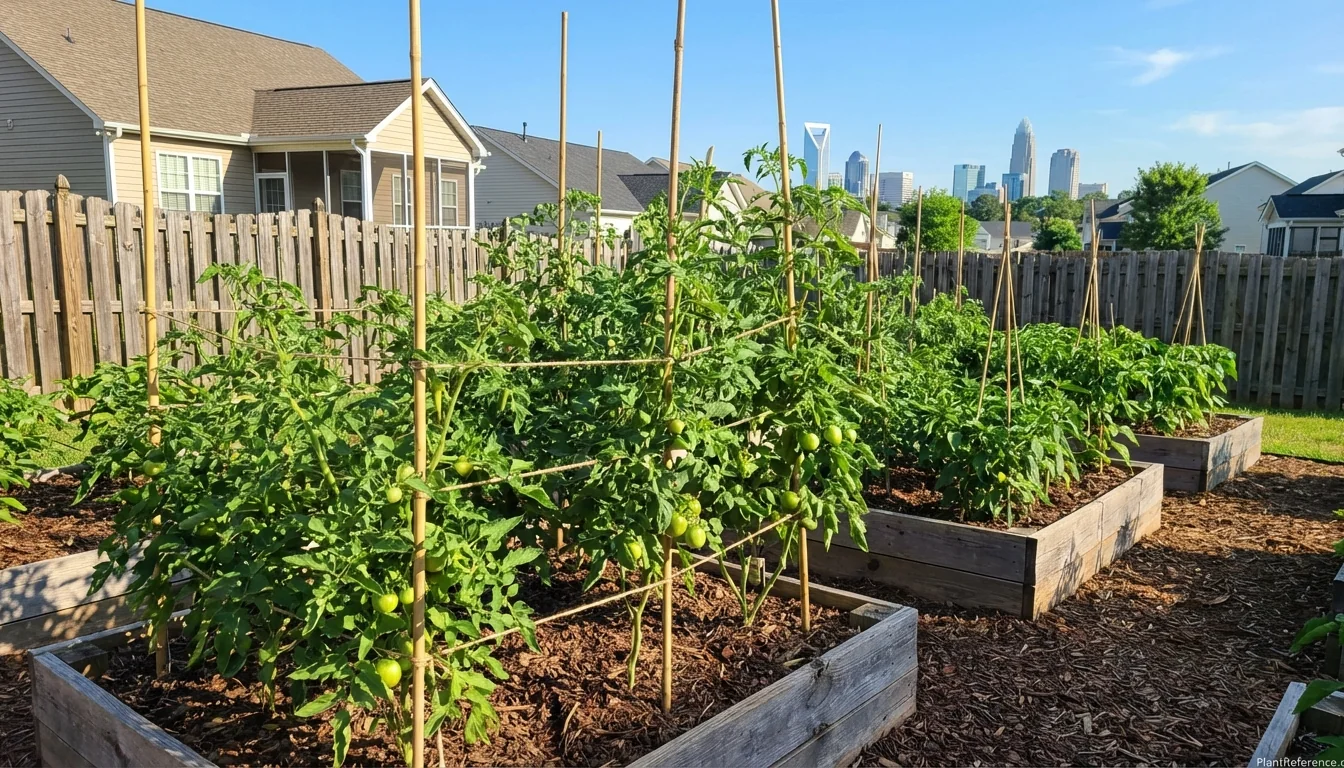
— Image © Plant Reference 2026
Growing tomatoes in Charlotte isn't just about throwing some seeds in the ground and hoping for the best. After forty years of gardening in the South, I can tell you that timing and variety selection make all the difference between a disappointing harvest and baskets full of perfect fruit.
Charlotte's Zone 7b climate offers gardeners a generous 214-day growing season from April 4 to November 4. This extended season means you can grow everything from quick-maturing varieties to large heirloom beefsteaks that need extra time to develop their full flavor. But success depends on understanding our specific challenges: humid summers that encourage disease, occasional late spring cold snaps, and intense August heat that can halt fruit production.
The key is working with Charlotte's climate patterns, not against them. Our mild winters allow for earlier seed starting, while our long, hot summers favor varieties that can handle humidity and heat stress. I've tested dozens of varieties over the decades, and I'll share exactly which ones thrive here and which ones struggle.
Best Tomato Varieties for Charlotte's Zone 7b Climate
Charlotte's climate suits a wide range of tomato varieties, but some perform significantly better than others in our humid, hot summers. Here's what I've learned works best:
Variety | Days to Maturity | Best For | Notes for Charlotte |
|---|---|---|---|
50-62 days | Quick spring harvest | Perfect for beating summer heat, sets fruit in cool spring weather | |
75-90 days | Humid climate tolerance | Originated in Tennessee, handles North Carolina humidity exceptionally well | |
55-65 days | Heat tolerance | Cherry variety that continues producing through Charlotte's hot summers | |
78-85 days | Processing/canning | Excellent for sauce making, harvest before peak heat | |
80-100 days | Cool season flavor | Best grown with afternoon shade protection in Charlotte | |
52-60 days | Cold tolerance | Excellent backup variety for unpredictable spring weather |
Heat-Tolerant Champions
🌿Solanum lycopersicum 'Cherokee Purple' is my top recommendation for Charlotte gardeners. This heirloom variety actually originated in Tennessee, making it naturally adapted to our Southeastern climate. While other large tomatoes struggle with our July and August heat, 'Cherokee Purple' keeps producing. The key is that it developed in similar conditions to what we experience here in North Carolina.
🌿Solanum lycopersicum 'Sungold' cherry tomatoes are unstoppable in Charlotte's heat. Even when August temperatures soar above 95°F and other varieties shut down production, 'Sungold' continues setting fruit. The trade-off is that the thin skin splits easily after summer thunderstorms, so harvest frequently.
Spring Specialists
🌿Solanum lycopersicum 'Early Girl' is essential for Charlotte gardeners who want ripe tomatoes by late May or early June. This variety sets fruit at lower temperatures than most others, meaning it starts producing while nights are still cool in April and early May. By the time the summer heat arrives, you'll have already harvested pounds of fruit.
Heritage Varieties for Flavor
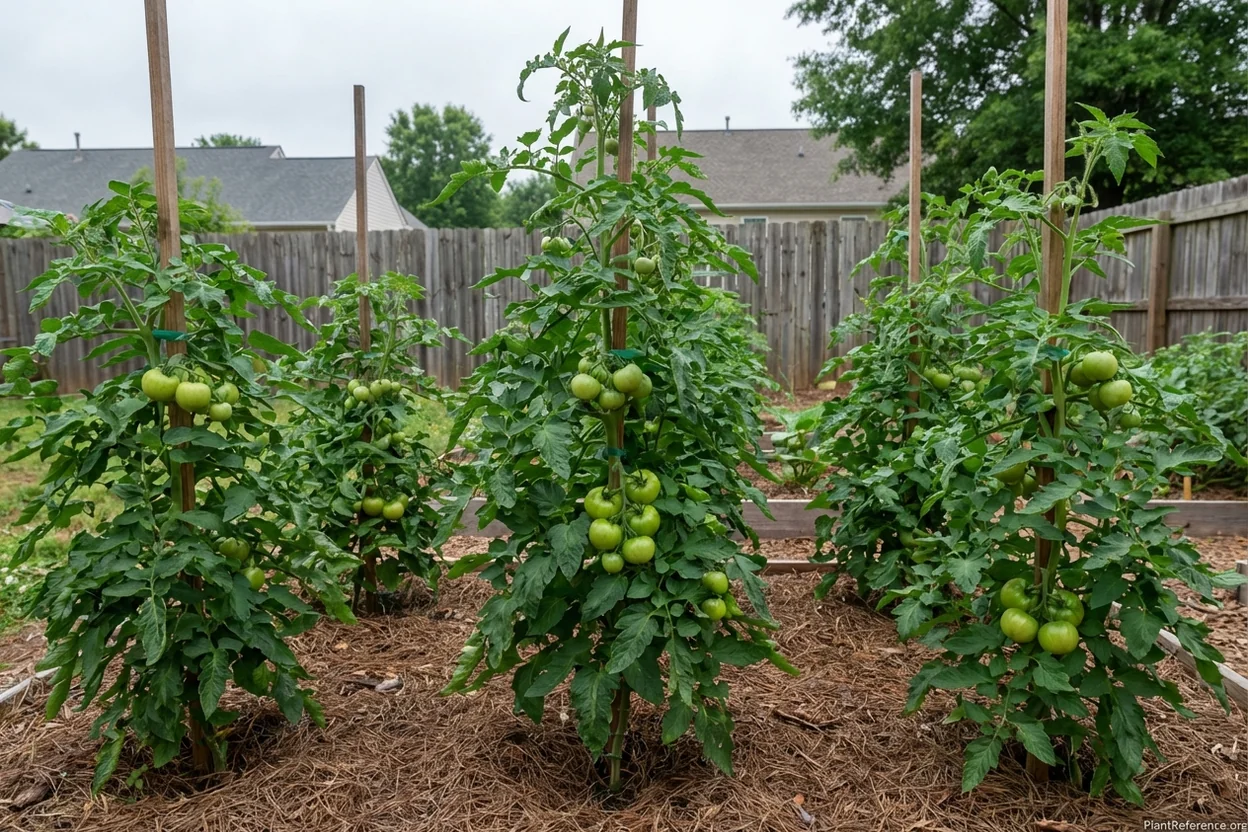
🌿Solanum lycopersicum 'Brandywine' produces the best-tasting tomatoes you'll ever grow, but it requires careful management in Charlotte. The secret is providing afternoon shade during July and August. I plant mine on the east side of my garden where they get morning sun but are shaded by a large oak tree after 2 PM. Without this protection, the leaves wilt and fruit development stalls.
🌿Solanum lycopersicum 'San Marzano' paste tomatoes thrive in Charlotte's long season, giving you plenty of time for the elongated fruits to fully mature. These are perfect for making sauce and canning, but watch for blossom end rot during rapid growth periods in May and June.
Specific Planting Dates for Charlotte Gardeners
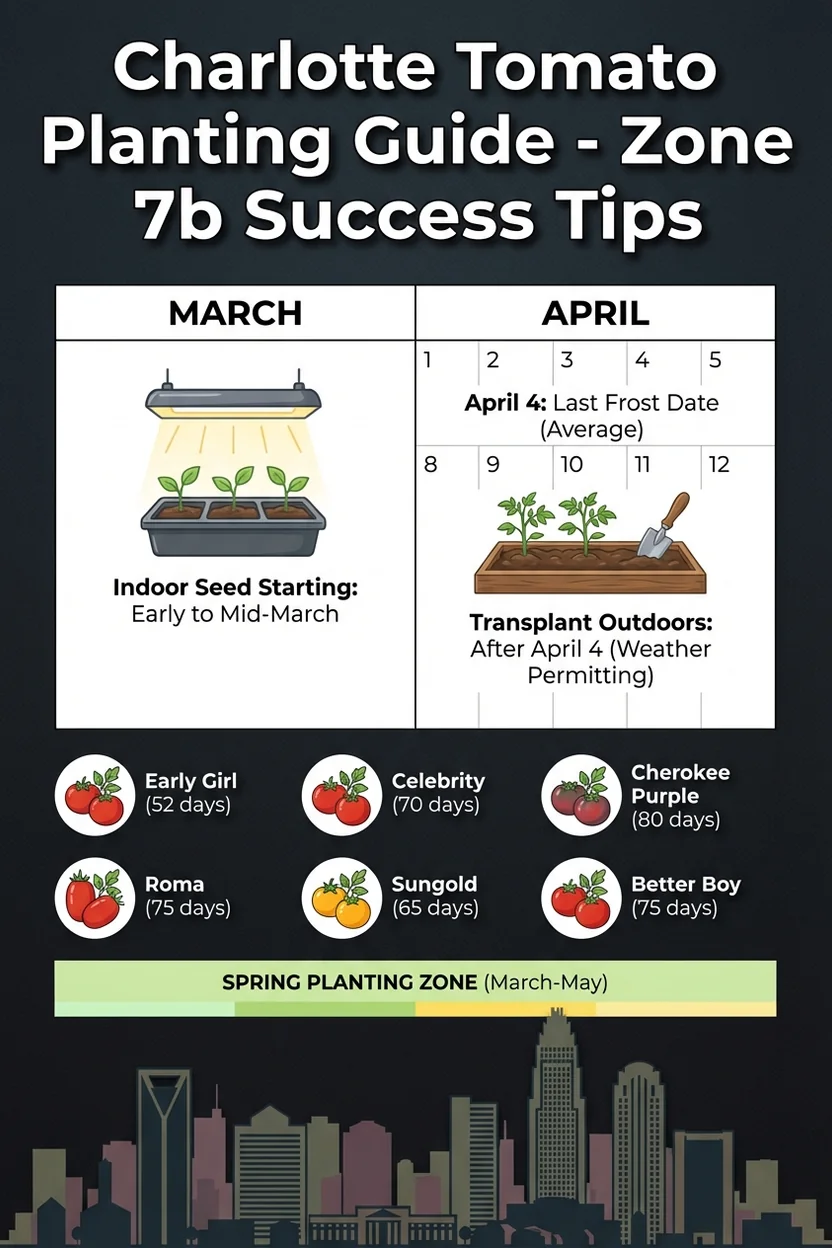
Timing is everything with tomatoes in Charlotte. Our April 4 average last frost date is fairly reliable, but I always add a safety buffer when transplanting outdoors.
Indoor Seed Starting: February 20-27
Start your tomato seeds indoors 6-8 weeks before the last frost date. In Charlotte, this means starting seeds during the third week of February. I use a seed starting mix and keep the soil temperature between 75-85°F using a heat mat. Seeds typically germinate within 7-10 days at these temperatures.
Here's my weekly indoor schedule:
Week 1 (Feb 20-27): Start seeds indoors with bottom heat
Week 3 (Mar 6-13): Pot up seedlings into 4-inch containers
Week 5 (Mar 20-27): Begin hardening off process on warm days
Week 7 (Apr 3-10): Check weather and prepare for transplanting
Transplant Timeline: April 11-18
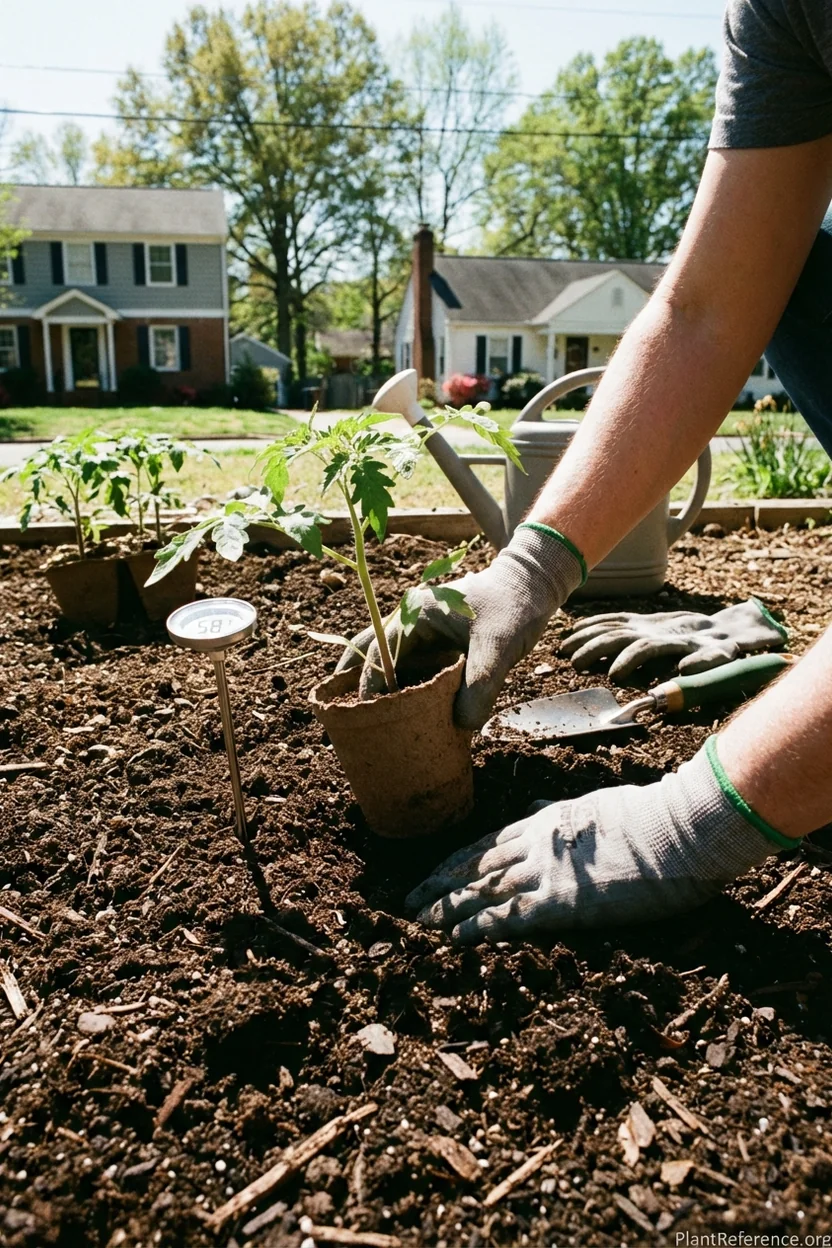
I transplant my tomatoes one week after our average last frost date of April 4. This typically falls between April 11-18, depending on the specific weather forecast. Charlotte occasionally experiences surprise cold snaps in mid-April, so having Wall-o-Water protectors or row covers ready is smart insurance.
The soil temperature should reach 55°F consistently before transplanting. I use a soil thermometer to check this, taking readings at 6 AM for three consecutive days. If the temperature stays above 55°F, the soil is ready.
Critical Date Calculations for Charlotte
Based on Charlotte's April 4 last frost date, here are your key planting dates:
Indoor seeding: February 20-27 (6-8 weeks before last frost)
Transplant preparation: April 3-4 (harden off begins)
Safe transplant window: April 11-18 (1-2 weeks after last frost)
First harvest (Early Girl): May 30-June 15 (50-62 days from transplant)
First harvest (Cherokee Purple): June 25-July 15 (75-90 days from transplant)
End of season: November 4 (first frost date)
Complete Growing Guide for Charlotte's 214-Day Season
Charlotte's long growing season allows for incredible tomato production, but you need to manage the challenges that come with our climate.
Soil Preparation for North Carolina Conditions
Charlotte's red clay soil requires significant amendment for successful tomato growing. I always work in 3-4 inches of compost and coarse sand to improve drainage. Pure clay holds too much water during our frequent spring rains and becomes rock-hard during summer droughts.
Test your soil pH in February. Tomatoes prefer slightly acidic soil between 6.0-6.8, and Charlotte's natural soil tends to be more acidic (5.5-6.0). If your pH is below 6.0, add lime according to soil test recommendations.
Managing Charlotte's Humidity and Disease Pressure
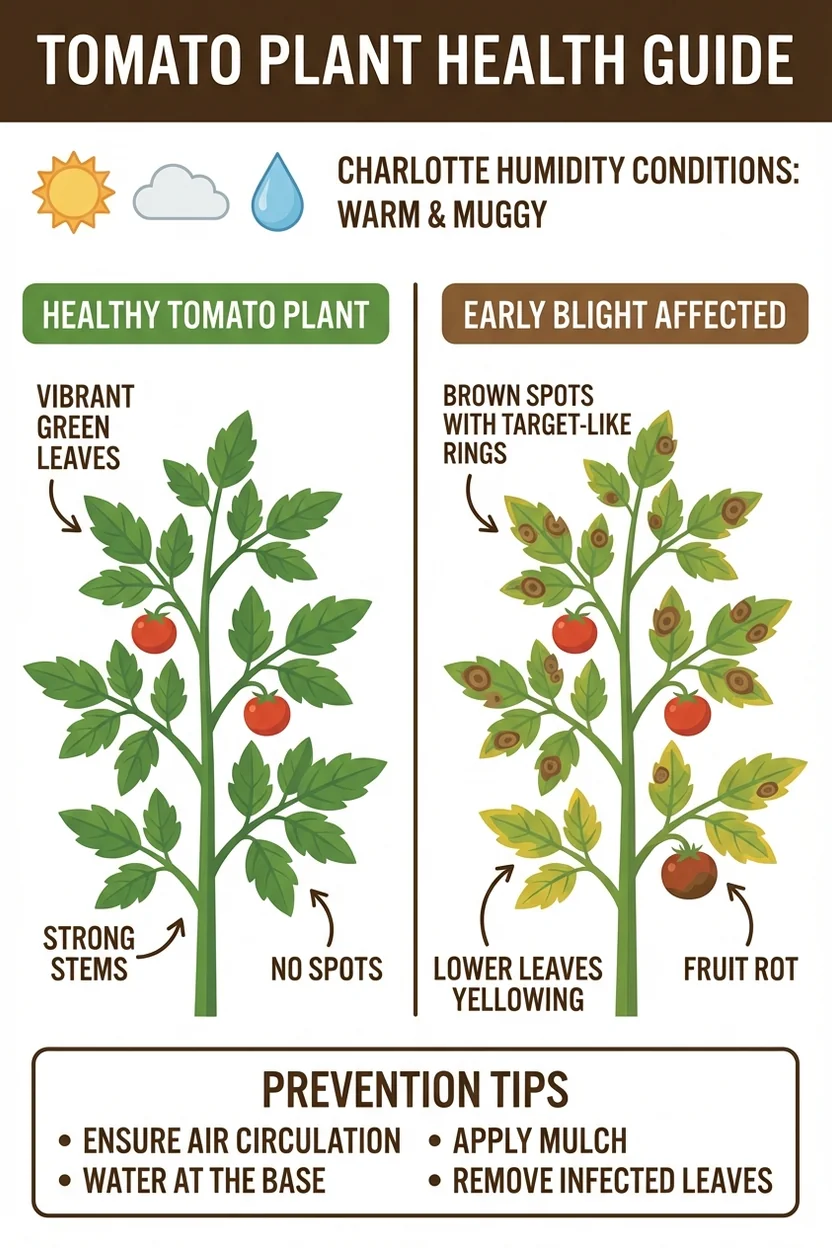
Our humid summers create perfect conditions for fungal diseases, particularly Early Blight and Septoria Leaf Spot. Prevention is your best strategy:
Space plants 36-48 inches apart for air circulation
Apply 3-4 inch layer of organic mulch to prevent soil splash
Water at soil level using drip irrigation or soaker hoses
Remove lower leaves as plants grow to improve airflow
Apply preventive copper fungicide spray every 2-3 weeks starting in May
The key is keeping the leaves as dry as possible. I never use overhead sprinklers on my tomatoes, and I avoid working in the garden when plants are wet from dew or rain.
Heat Management During Charlotte Summers
July and August temperatures regularly exceed 90°F in Charlotte, which can halt fruit production. Here's how I manage heat stress:
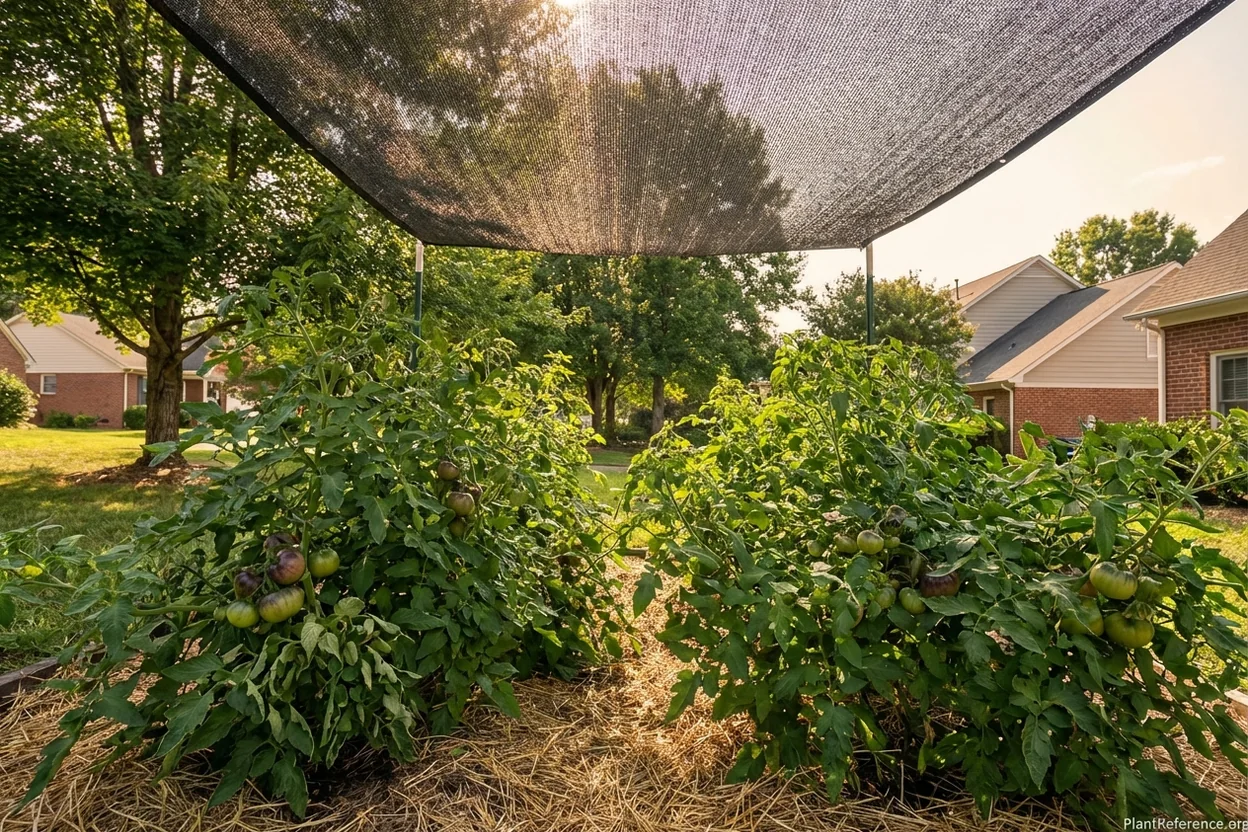
Mulching is critical. I apply 4 inches of straw mulch around each plant in early June. This keeps soil temperatures 10-15 degrees cooler and maintains consistent moisture levels.
Provide afternoon shade for large-fruited varieties like 🌿Solanum lycopersicum 'Brandywine' and 🌿Solanum lycopersicum 'Cherokee Purple'. I use 30% shade cloth stretched between posts, or I plant near structures that provide natural afternoon shade.
Deep, infrequent watering works better than frequent light watering during hot weather. I water 2-3 times per week, giving each plant 1-2 gallons per watering session.
Fertilization for Charlotte's Long Season
With a 214-day growing season, tomatoes need sustained nutrition. I use a two-phase approach:
Phase 1 (April-June): Growth Focus
Apply balanced 10-10-10 fertilizer at transplanting
Side-dress with compost every 3 weeks
Weekly liquid fertilizer (fish emulsion or soluble 20-20-20)
Phase 2 (July-November): Production Focus
Switch to lower nitrogen formula (5-10-10) in July
Increase potassium to improve fruit quality and disease resistance
Continue weekly liquid feeding but reduce nitrogen content
Troubleshooting Charlotte-Specific Growing Problems
Every region has its unique challenges. Here are the problems I see most often in Charlotte gardens and how to solve them:
Late Spring Cold Damage
Even though our average last frost is April 4, we occasionally get surprise cold snaps in mid-to-late April that can damage newly transplanted tomatoes.
Symptoms: Leaves turn white or gray, stems become soft and mushy, growth stops completely.
Prevention: Always have row covers or Wall-o-Water protectors ready. Check the 10-day weather forecast before transplanting.
Recovery: If damage is minor (just leaf edges affected), plants usually recover. If stems are damaged, you'll need to replant.
Blossom End Rot in Clay Soil
Charlotte's heavy clay soil can cause calcium uptake problems, leading to dark, sunken spots on the bottom of fruits.
Symptoms: Dark brown or black spots on the blossom end (bottom) of fruits, especially 🌿Solanum lycopersicum 'San Marzano' and other paste varieties.
Solution: Maintain consistent soil moisture with mulch and drip irrigation. The problem is usually water management, not calcium deficiency.
Early Blight in Humid Conditions
Our humid summers create perfect conditions for this fungal disease that causes brown spots with concentric rings on leaves.
Symptoms: Brown spots with target-like rings on lower leaves, leaves turn yellow and drop off.
Management: Remove affected leaves immediately, improve air circulation, apply copper fungicide preventively.
Heat Stress and Blossom Drop
When temperatures exceed 90°F during the day or 75°F at night, tomato flowers drop off without setting fruit.
Symptoms: Flowers fall off without forming fruit, especially on 🌿Solanum lycopersicum 'Brandywine' and other large-fruited varieties.
Solution: Provide afternoon shade, maintain consistent soil moisture, choose heat-tolerant varieties for July-August production.
Harvest & Storage in North Carolina Heat
Charlotte's hot summers require careful harvest timing to maintain fruit quality. I harvest tomatoes at the first blush of color rather than waiting for full ripeness on the vine. The fruits will complete ripening indoors at room temperature, and you'll avoid problems with heat damage and cracking.
Optimal Harvest Timing by Variety
🌿Solanum lycopersicum 'Early Girl':** Harvest when fruits show pink color at the blossom end. They'll be fully ripe within 2-3 days indoors.
🌿Solanum lycopersicum 'Sungold':** These cherry tomatoes must be harvested daily during peak season. The thin skin splits easily in Charlotte's afternoon thunderstorms.
🌿Solanum lycopersicum 'Cherokee Purple':** Harvest when shoulders begin showing the characteristic dusky purple color. Don't wait for full color development in hot weather.
Storage in Hot, Humid Conditions
Charlotte's summer humidity makes proper storage crucial. Never refrigerate fresh tomatoes—the cold breaks down their cellular structure and ruins the flavor. Instead, store harvested tomatoes at room temperature (65-75°F) in a single layer, stem-side down.
For peak production periods, I ripen tomatoes in batches. Fully green mature tomatoes go in paper bags with a ripe apple to speed ripening. Partially colored fruits stay on the counter to ripen naturally.
Frequently Asked Questions
Frequently Asked Questions
Reading about plants and recognising them are different skills. These three build the second.
- Daily PlantIdentify the day’s mystery plant from a close-up photograph.
- Keyed OutWork a dichotomous key, lead by lead, to name a hidden specimen.
- Name That PlantName a specimen from botanical clues dealt hardest first.
Free to play, no account needed
Sophie is a garden designer in Charlotte who came to the U.S. from France about a decade ago. Her design sensibility blends the structured formality of French garden traditions with the looser, more naturalistic style that works well in the Southeast. She has a degree in landscape architecture and worked at several design firms in Charlotte before going independent. She specializes in year-round garden structure, mixed borders, and creating outdoor spaces that feel intentional without being rigid. Sophie writes about garden design principles, plant combinations, and creating visual interest across seasons—always grounded in what actually grows well in the Piedmont.