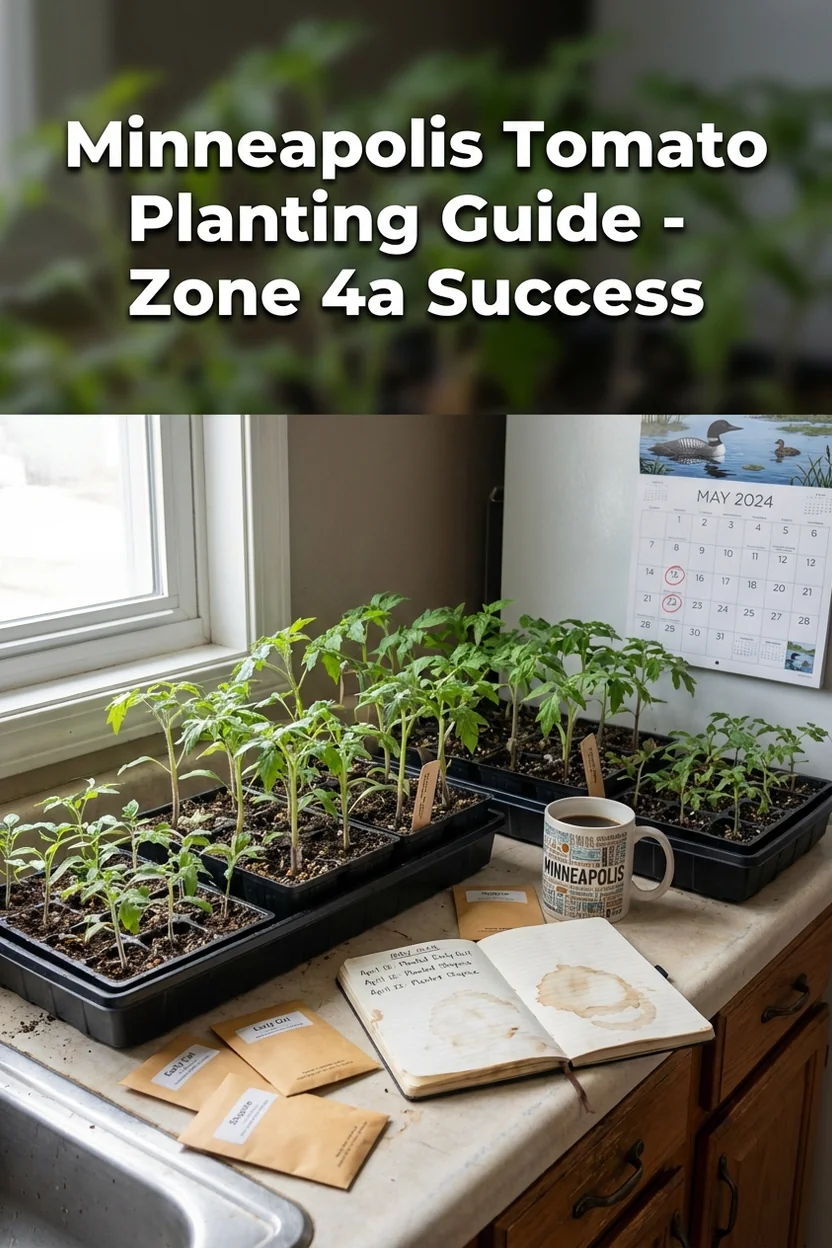
When to Plant Tomatoes in Minneapolis: Complete Guide + Best Varieties for Zone 4a
Pets & Toxicity
Recorded toxicity for plants linked in this guide. An unknown status is not a safety assessment.
Toxic to pets: Stupice tomato, early girl tomato, Sungold cherry tomato and 3 moreDetailsHide
Solanum lycopersicum 'Stupice' — Toxicity Warning
Toxic to petsView Solanum lycopersicum 'Stupice' plant profileSolanum lycopersicum 'Early Girl' — Toxicity Warning
Toxic to petsView Solanum lycopersicum 'Early Girl' plant profileSolanum lycopersicum 'Sungold' — Toxicity Warning
Toxic to petsView Solanum lycopersicum 'Sungold' plant profileSolanum lycopersicum 'Cherokee Purple' — Toxicity Warning
Toxic to petsView Solanum lycopersicum 'Cherokee Purple' plant profileSolanum lycopersicum 'San Marzano' — Toxicity Warning
Toxic to petsView Solanum lycopersicum 'San Marzano' plant profileSolanum lycopersicum 'Brandywine' — Toxicity Warning
Toxic to petsView Solanum lycopersicum 'Brandywine' plant profile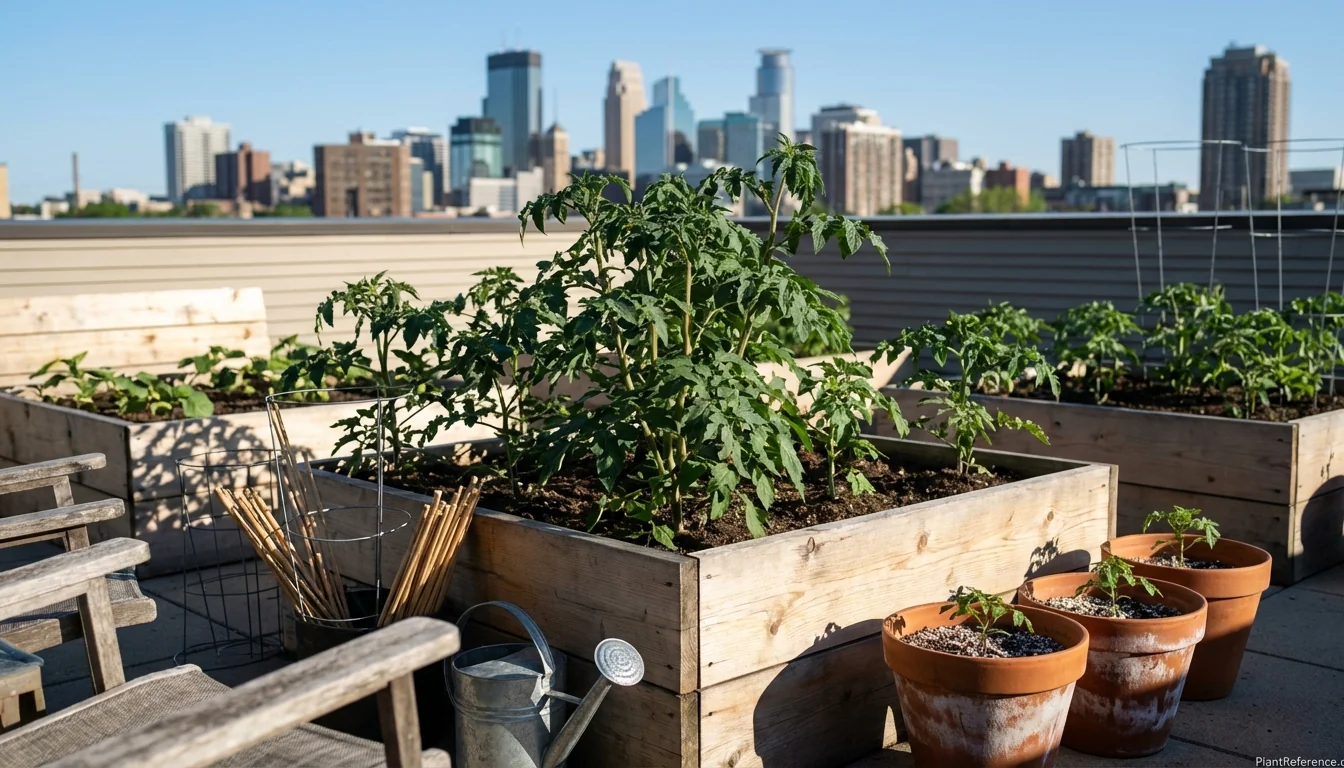
— Image © Plant Reference 2026
Growing tomatoes in Minneapolis might seem challenging, but with proper variety selection and timing, Zone 4a gardeners can enjoy abundant harvests. The key is working with Minnesota's climate rather than against it—choosing cold-tolerant varieties and maximizing the 138-day growing season from May 14 to September 29.
Why Minneapolis Works for Tomatoes (With the Right Approach)
Minneapolis presents unique advantages for tomato cultivation despite its northern latitude. The city's Zone 4a classification means gardeners face cold winters and a short growing season, but summer temperatures regularly reach optimal tomato-growing ranges of 65-85°F (18-29°C). The challenge lies in the compressed timeframe—from the May 14 last frost date to the September 29 first frost, Minneapolis gardeners have exactly 138 days to complete the tomato growing cycle.
The Twin Cities' continental climate creates distinct seasons with hot, humid summers perfect for fruit development. July and August consistently provide the warmth and sunshine tomatoes need, with average highs reaching 82-84°F (28-29°C). However, cool spring conditions require strategic variety selection and season extension techniques.
Minnesota's relatively stable weather patterns work in gardeners' favor once the season begins. Unlike regions prone to late spring freezes or erratic temperature swings, Minneapolis offers predictable frost dates that allow for confident planting schedules.
Best Tomato Varieties for Minneapolis's Zone 4a Climate
Variety selection makes the difference between tomato success and failure in Minneapolis. The 138-day growing season demands cultivars that mature quickly while tolerating cool conditions. Here's the definitive ranking of varieties proven successful in Minnesota's Zone 4a climate:
Variety | Days to Maturity | Best For | Notes for Minneapolis |
|---|---|---|---|
52-60 days | Ultra-early harvest | Sets fruit at 40°F, perfect for Zone 4a | |
50-62 days | Reliable production | Proven performer in short seasons | |
55-65 days | Exceptional flavor | Cherry type, splits in late rain | |
75-90 days | Premium flavor | Requires season extension or warm microclimates | |
78-85 days | Processing/canning | Challenging in Zone 4a, needs protection | |
80-100 days | Heirloom flavor | High risk, requires greenhouse or tunnel |
For Early Harvest
🌿Solanum lycopersicum 'Stupice' stands as the ultimate Minneapolis variety. This Czech heirloom was bred specifically for cold climates and sets fruit reliably when nighttime temperatures drop to 40°F (4°C)—conditions that shut down other varieties. Stupice's 52-60 day maturity means harvest begins in mid-July, well before any threat from early fall frosts.
🌿Solanum lycopersicum 'Early Girl' serves as the reliable workhorse for Minneapolis gardens. This F1 hybrid combines cold tolerance with disease resistance (VFF package), crucial for Minnesota's humid summers. The 50-62 day maturity provides a safety margin even in cool years, and its indeterminate habit ensures continuous harvest through September.
For Best Flavor
🌿Solanum lycopersicum 'Sungold' delivers exceptional taste with 55-65 day maturity. These golden cherry tomatoes achieve remarkable sugar levels (often exceeding 9° Brix) and offer tropical flavor notes. However, Minneapolis gardeners must harvest daily during August and September to prevent splitting from sudden rainstorms.
🌿Solanum lycopersicum 'Cherokee Purple' represents the premium heirloom choice for experienced Minneapolis growers. Its complex, smoky flavor profile justifies the 75-90 day commitment, but success requires starting seeds early (mid-March) and potentially using season extension techniques like row covers or high tunnels.
For Minneapolis's Climate Challenges
Cold Tolerance: 🌿Solanum lycopersicum 'Stupice' and 🌿Solanum lycopersicum 'Early Girl' excel in Minneapolis's variable spring conditions. Both varieties resume growth quickly after cool snaps that would stall heat-loving varieties for weeks.
Disease Resistance: Minnesota's humid summers create ideal conditions for fungal diseases. 🌿Solanum lycopersicum 'Early Girl' and 🌿Solanum lycopersicum 'Sungold' carry genetic resistance to Verticillium wilt, Fusarium wilt, and Tobacco Mosaic Virus—common in Twin Cities gardens.
For Beginners
New Minneapolis gardeners should focus on 🌿Solanum lycopersicum 'Early Girl' and 🌿Solanum lycopersicum 'Stupice'. These varieties forgive timing mistakes, tolerate temperature fluctuations, and produce reliable harvests even in challenging years. Both adapt well to container growing, perfect for renters or those with limited garden space.
For Storage and Preserving
🌿Solanum lycopersicum 'San Marzano' provides the best paste tomatoes for Minneapolis gardeners committed to season extension. While the 78-85 day maturity pushes Zone 4a limits, successful cultivation yields tomatoes perfect for sauce, paste, and canning. Consider growing in containers that can be moved to protected areas during cool spells.
Specific Planting Dates for Minneapolis
Minneapolis's May 14 last frost date and September 29 first frost date create a precise planting window that demands careful timing. Success requires working backwards from these fixed dates to determine optimal seeding and transplanting schedules.
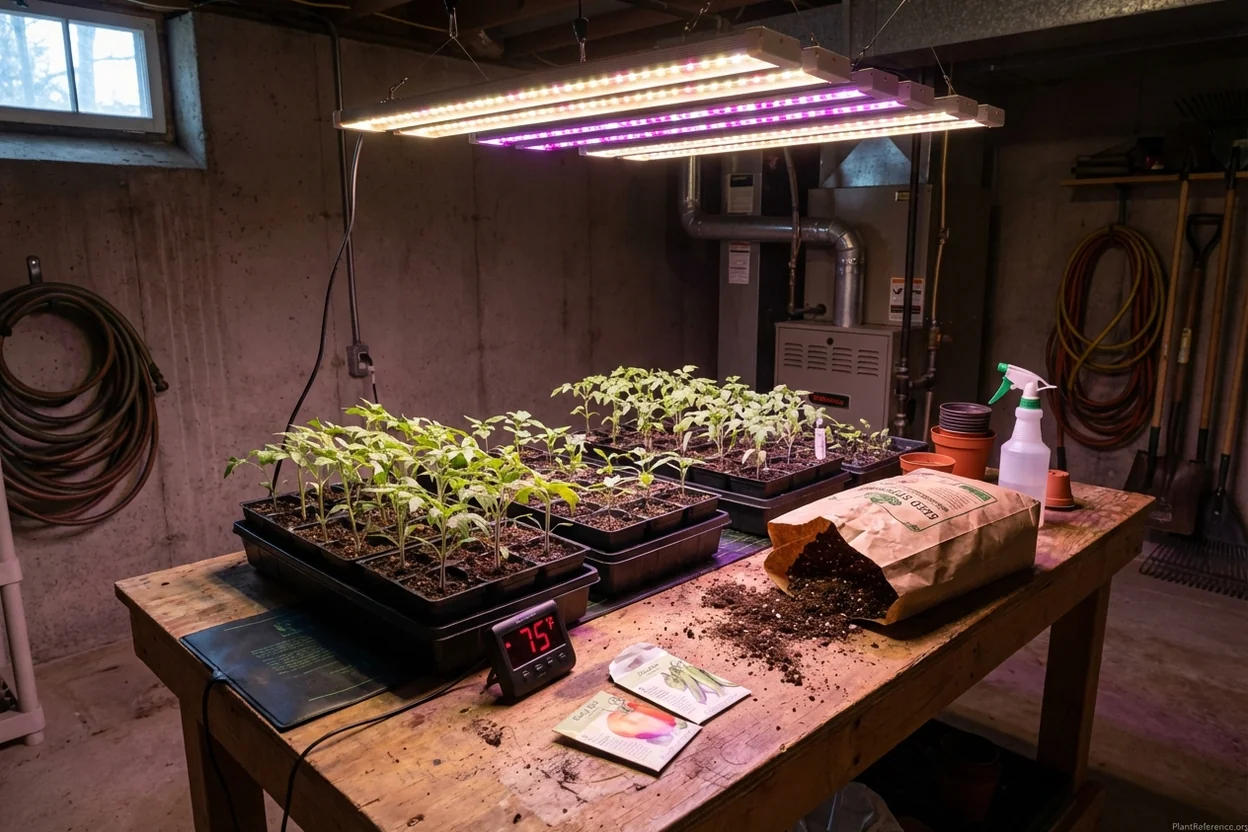
Indoor Seed Starting: March 15-20
Begin seed starting 8 weeks before the last frost date. For Minneapolis, this means March 15-20 provides the optimal window. Starting earlier risks leggy seedlings, while later starts may not provide sufficient time for fruit development before fall frost.
Maintain soil temperature at 70-85°F (21-29°C) using heat mats
Provide 14-16 hours daily light using grow lights or bright south windows
Expect germination in 5-10 days for most varieties
Transplant to larger containers when first true leaves appear (usually 2-3 weeks)
Transplanting Outdoors: May 21-28
Transplant 7-14 days after the last frost date to ensure soil warming and eliminate cold shock risk. For Minneapolis, May 21-28 represents the safe transplanting window. Soil temperatures should consistently reach 55°F (13°C) at 4-inch depth.
Harden off seedlings for 7-10 days before transplanting
Check 10-day weather forecast—avoid transplanting if nighttime lows below 45°F (7°C)
Use row covers, Wall-o-Water, or cloches if cool weather threatens
Plant in raised beds or containers that warm faster than ground-level gardens
Timeline by Variety
Early Varieties (Stupice, Early Girl):
Seeds started: March 15
Transplant: May 21
First harvest: July 15-20
Peak harvest: August 1-31
Final harvest: September 29
Mid-Season Varieties (Sungold):
Seeds started: March 15
Transplant: May 21
First harvest: July 25-30
Peak harvest: August 15 - September 15
Final harvest: September 29
Long-Season Varieties (Cherokee Purple, San Marzano):
Seeds started: March 10-15
Transplant: May 25-28 (after soil fully warms)
First harvest: August 10-25
Peak harvest: September 1-29
Season extension required for full maturity
Complete Growing Guide for Minneapolis
Successfully growing tomatoes in Minneapolis requires adapting techniques to Zone 4a's unique challenges. From soil preparation through harvest, every decision must account for the compressed growing season and variable weather patterns.
Minneapolis Climate Challenges
Late Spring Cold Snaps: Even after the May 14 average last frost, Minneapolis can experience surprise cold nights into early June. The urban heat island effect moderates this somewhat, but suburban and northern metro gardeners face greater risk.
Summer Heat and Humidity: July and August bring ideal tomato weather with temperatures consistently in the 75-85°F (24-29°C) range. However, high humidity creates disease pressure, particularly for fungal infections like early blight and septoria leaf spot.
Early Fall Frost: The September 29 average first frost date can arrive earlier in outlying areas or during clear, calm nights. Experienced Minneapolis gardeners monitor weather forecasts closely starting in early September.
Week-by-Week Minneapolis Timeline
March (Weeks 1-4): Week 3: Start seeds indoors. Set up grow lights in basement or spare room. Maintain 75°F (24°C) soil temperature for optimal germination.
April (Weeks 1-4): Week 2-3: Transplant seedlings to 4-inch pots as first true leaves develop. Begin hardening process during warm afternoons (above 55°F/13°C). Week 4: Prepare garden beds. In Minneapolis clay soil, add compost and create raised beds for better drainage and faster spring warming.
May (Weeks 1-4): Week 1-2: Continue hardening seedlings. Cover garden beds with black plastic or IRT mulch to pre-warm soil. Week 3-4: Transplant window opens May 21. Install supports immediately—indeterminate varieties need 6-foot stakes or strong cages.
June (Weeks 1-4): Active growth phase. Prune suckers on indeterminate varieties. Apply mulch to conserve moisture and suppress weeds. Monitor for early disease symptoms.
July (Weeks 1-4): Week 2-3: First harvest begins for early varieties (Stupice, Early Girl). Remove lower leaves touching soil to prevent disease spread. Week 4: Peak flowering and fruit set. Maintain consistent moisture—Minneapolis clay soil can crack during hot, dry spells.
August (Weeks 1-4): Peak harvest month. Daily picking necessary for cherry varieties. Continue disease management—humid Minneapolis summers favor foliar pathogens.
September (Weeks 1-4): Week 1-2: Late varieties reach maturity. Begin green tomato harvest if frost threatens. Week 3-4: Frost preparation. Cover plants or harvest remaining fruit as September 29 approaches.
Minneapolis-Specific Growing Techniques
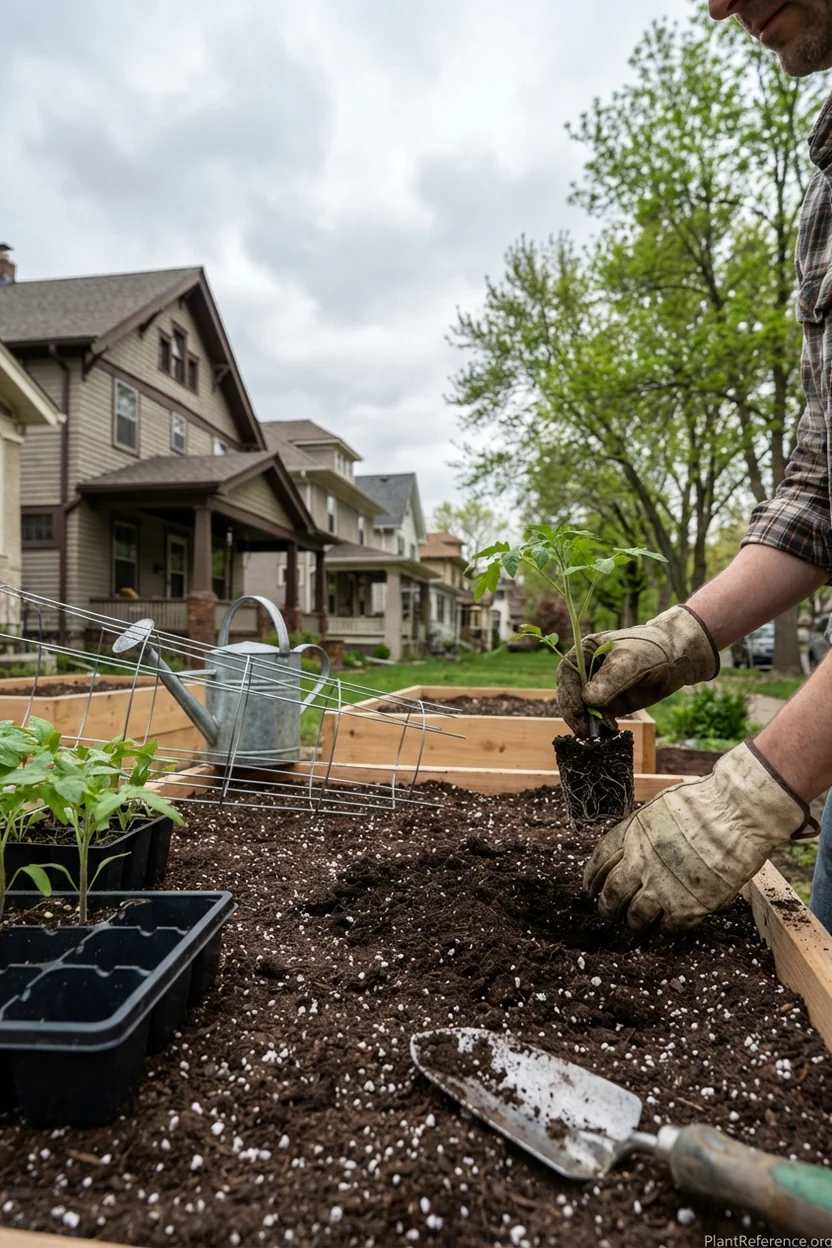
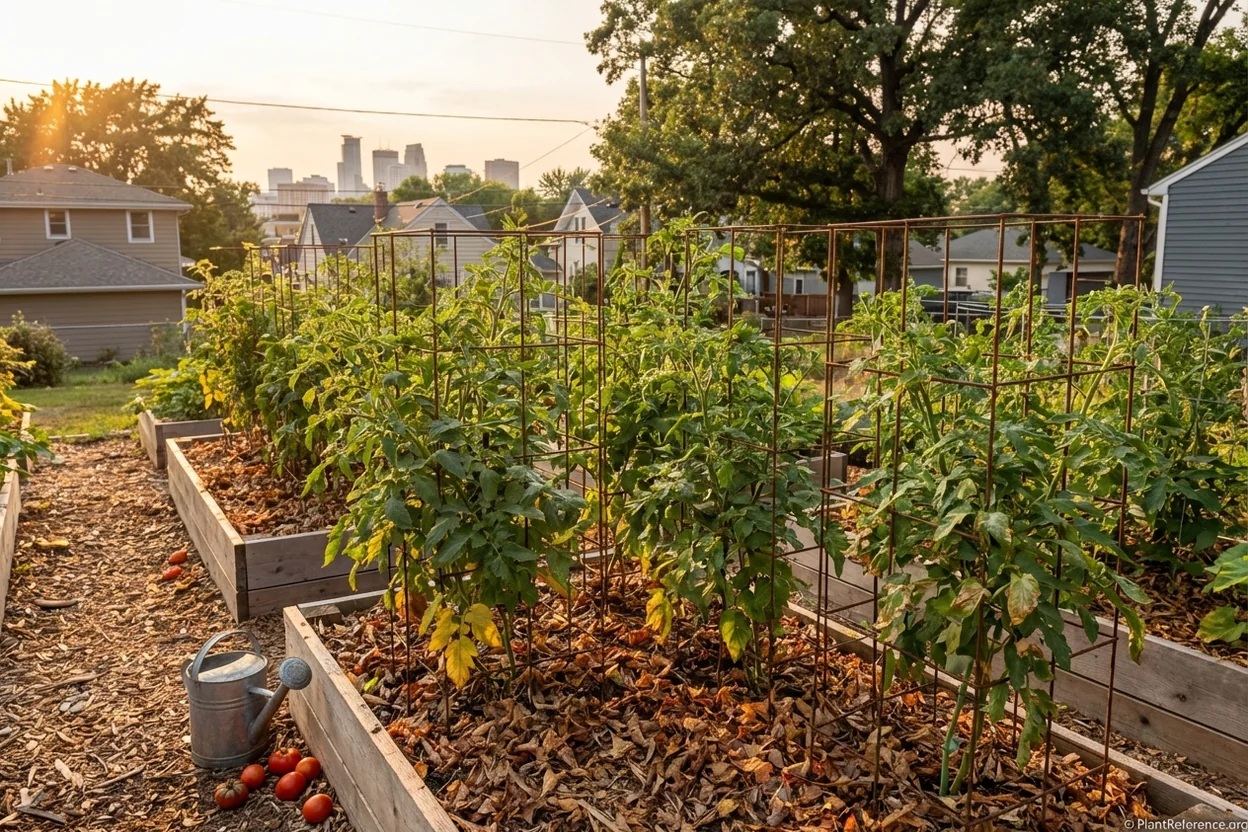
Soil Preparation for Clay: Minneapolis sits on heavy clay soil that warms slowly and drains poorly. Create raised beds 8-12 inches high using compost, aged manure, and coarse sand. This improves drainage and allows earlier planting by warming soil faster.
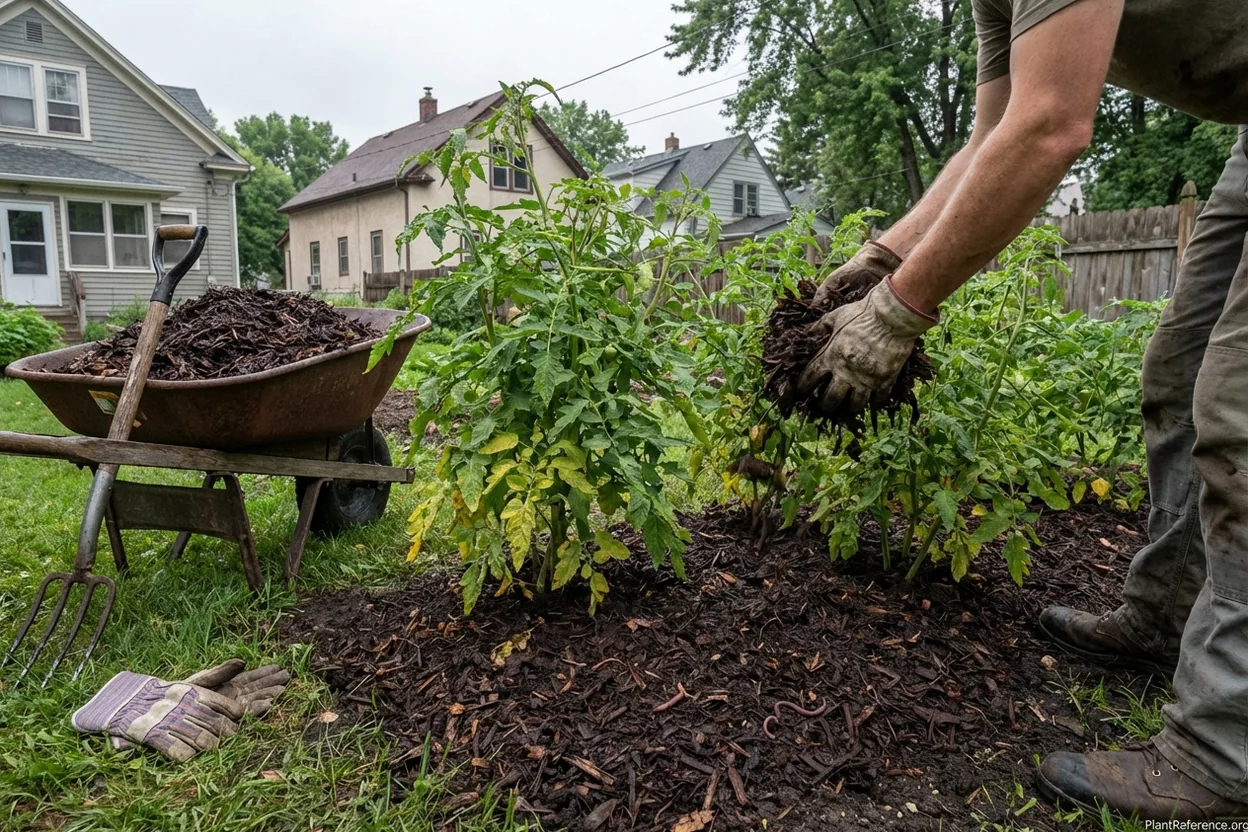
Mulching Strategy: Apply 3-4 inches of organic mulch (shredded leaves, straw) in early June. This conserves moisture during hot July/August periods and prevents soil-borne disease spores from splashing onto lower leaves during Minneapolis's frequent summer thunderstorms.
Disease Prevention: Minnesota's humid summers require proactive fungal disease management. Space plants for good air circulation, water at soil level rather than overhead, and apply preventive copper fungicide sprays every 2-3 weeks starting in July.
Season Extension: Use row covers, high tunnels, or cold frames to extend growing seasons on both ends. Even simple measures like surrounding plants with water-filled containers create microclimates that add 7-14 days to the growing season.
Troubleshooting Minneapolis-Specific Problems
Minneapolis gardeners face three primary challenges that require specific management strategies. Understanding these regional problems and their solutions can mean the difference between harvest success and crop failure.
Late Spring Cold Damage
Problem: Transplants suffer cold shock or frost damage during Minneapolis's variable late spring weather. Even after the May 14 average last frost, temperatures can drop into the 30s through early June.
Why It Happens in Minneapolis: The city's continental climate creates sudden weather shifts. Cold Canadian air masses can drop temperatures 20-30°F overnight, especially in suburban areas lacking urban heat island protection.
Prevention and Solutions: Monitor 10-day weather forecasts religiously during late May and early June. When nighttime temperatures below 40°F (4°C) are predicted, protect plants with:
Row covers supported by hoops (provides 2-4°F protection)
Wall-o-Water season extenders (creates 10-15°F warmer microclimate)
Individual milk jug cloches with tops cut off
Moving container plants into garages or basements overnight
Recovery: Cold-damaged plants show purpling leaves and stunted growth. Rather than replacing them, provide consistent warmth and avoid fertilizing until new growth appears (usually 7-14 days).
Clay Soil Drainage Issues
Problem: Minneapolis's heavy clay soil remains waterlogged after spring snowmelt and summer thunderstorms, causing root rot and yellowing plants.
Why It Happens in Minneapolis: The Twin Cities sit on glacial lake bed clay that can hold water for weeks. Poor drainage stresses tomato roots and creates anaerobic soil conditions perfect for soil-borne pathogens.
Prevention and Solutions: Never plant directly in Minneapolis clay soil. Instead:
Build raised beds 8-12 inches high using 50% compost, 25% quality topsoil, 25% coarse sand or perlite
Install French drains in low-lying areas where water pools
Add 2-3 inches of organic matter annually to improve soil structure over time
Consider container growing in areas with severe drainage problems
Humid Summer Disease Pressure
Problem: Early blight, septoria leaf spot, and late blight rapidly defoliate plants during Minneapolis's humid July and August weather.
Why It Happens in Minneapolis: Frequent thunderstorms combined with overnight humidity above 80% create perfect fungal disease conditions. Spores overwinter in soil and spread via rain splash.
Prevention and Solutions: Implement comprehensive disease management starting at transplant:
Space plants for maximum air circulation (3-4 feet apart minimum)
Apply 3-4 inch organic mulch layer to prevent soil splash
Water at soil level using drip irrigation or soaker hoses
Remove lower branches touching soil by mid-June
Apply preventive copper fungicide every 2-3 weeks starting in July
Choose resistant varieties like Early Girl (VFF resistance) when possible
Varieties with Regional Resistance: 🌿Solanum lycopersicum 'Early Girl' and 🌿Solanum lycopersicum 'Sungold' show better field tolerance to Minneapolis disease pressure than heirloom varieties.
Harvest & Storage
Maximizing harvest from Minneapolis's short growing season requires strategic timing and proper storage techniques. The September 29 first frost date creates urgency for completing harvest while maintaining fruit quality.
Signs of Readiness
Ripe Fruit Indicators: Tomatoes reach peak quality when they develop full color but remain firm. 🌿Solanum lycopersicum 'Early Girl' and 🌿Solanum lycopersicum 'Stupice' turn solid red, while 🌿Solanum lycopersicum 'Cherokee Purple' develops its characteristic dusky purple-brown hue with darker shoulders.
Timing Strategy: Begin harvest in mid-July with early varieties. Pick fruit daily during peak season (August) to encourage continued production. As September approaches and frost threatens, harvest green tomatoes that have reached mature size—they'll ripen indoors.
Harvest Technique for Maximum Storage Life
Morning Harvest: Pick tomatoes in early morning when plants are fully hydrated and fruit temperature is cool. This extends storage life by reducing heat stress and maintaining cellular structure.
Proper Picking Method: Twist and lift fruit gently, leaving the stem attached if possible. For storage varieties like 🌿Solanum lycopersicum 'San Marzano', harvest at the breaker stage (first blush of color) for maximum storage potential.
Green Tomato Harvest: When frost threatens (typically late September in Minneapolis), harvest all green tomatoes larger than ping-pong ball size. These will continue ripening indoors for 2-6 weeks depending on maturity level.
Expected Harvest Window in Minneapolis
Early Varieties (Stupice, Early Girl):
First harvest: July 15-20
Peak production: August 1-31
Final harvest: September 29
Mid-Season Varieties (Sungold):
First harvest: July 25-August 5
Peak production: August 15 - September 20
Final harvest: September 29 or first frost
Late Varieties (Cherokee Purple, San Marzano):
First harvest: August 15-25
Peak production: September 1-29
Season extension often required for full harvest
Storage Recommendations
Ripe Tomato Storage: Store fully ripe tomatoes at room temperature for 3-5 days for peak flavor. Refrigerate only if storage beyond one week is necessary—cold temperatures damage flavor compounds.
Green Tomato Ripening: Wrap individual green tomatoes in newspaper and store in single layers at 60-70°F (15-21°C). Check weekly and remove ripened fruit. Properly stored green tomatoes from Minneapolis gardens can provide fresh fruit through November.
Processing and Preservation: Minneapolis's short season concentrates harvest into August and September. Plan preservation methods in advance: freezing whole tomatoes for winter cooking, making sauce or paste, or dehydrating for year-round use.
Frequently Asked Questions
Reading about plants and recognising them are different skills. These three build the second.
- Daily PlantIdentify the day’s mystery plant from a close-up photograph.
- Keyed OutWork a dichotomous key, lead by lead, to name a hidden specimen.
- Name That PlantName a specimen from botanical clues dealt hardest first.
Free to play, no account needed
Amanda came to gardening through an unexpected route—after developing chronic pain from rheumatoid arthritis in her late 20s, she started researching adaptive gardening techniques that would allow her to continue growing plants without aggravating her condition. Now based in Minneapolis, she writes about accessible gardening, raised bed designs for people with mobility challenges, and ergonomic tools that reduce strain. Amanda completed a certificate in sustainable urban agriculture and volunteers with a nonprofit that builds accessible community gardens. She grows vegetables, herbs, and flowers in waist-high raised beds she designed herself. Her writing focuses on practical solutions that work for real people with real limitations—whether that's arthritis, limited mobility, or just a bad back.