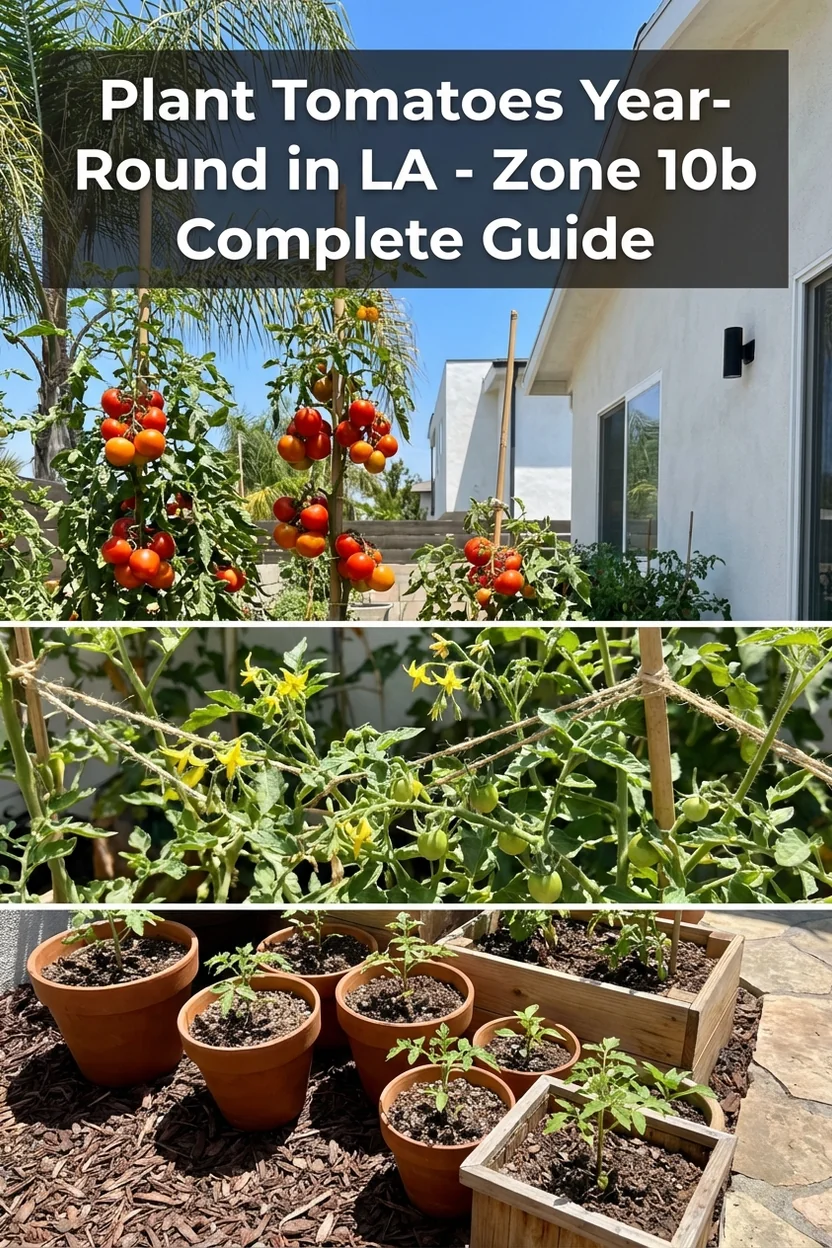
When to Plant Tomatoes in Los Angeles: Complete Guide + Best Varieties for Zone 10b
Pets & Toxicity
Recorded toxicity for plants linked in this guide. An unknown status is not a safety assessment.
Toxic to pets: early girl tomato, Sungold cherry tomato, cherokee purple tomato and 3 moreDetailsHide
Solanum lycopersicum 'Early Girl' — Toxicity Warning
Toxic to petsView Solanum lycopersicum 'Early Girl' plant profileSolanum lycopersicum 'Sungold' — Toxicity Warning
Toxic to petsView Solanum lycopersicum 'Sungold' plant profileSolanum lycopersicum 'Cherokee Purple' — Toxicity Warning
Toxic to petsView Solanum lycopersicum 'Cherokee Purple' plant profileSolanum lycopersicum 'San Marzano' — Toxicity Warning
Toxic to petsView Solanum lycopersicum 'San Marzano' plant profileSolanum lycopersicum 'Brandywine' — Toxicity Warning
Toxic to petsView Solanum lycopersicum 'Brandywine' plant profileSolanum lycopersicum 'Stupice' — Toxicity Warning
Toxic to petsView Solanum lycopersicum 'Stupice' plant profile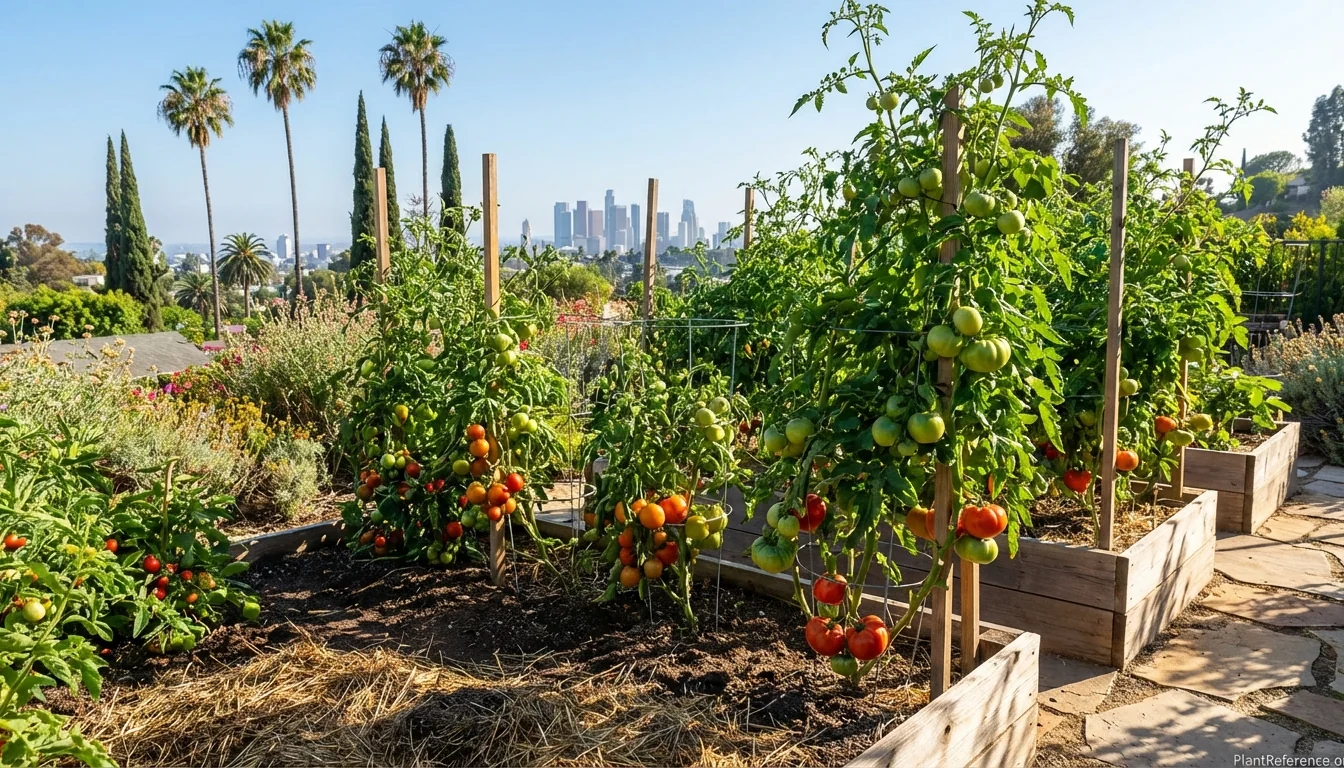
— Image © Plant Reference 2026
Growing tomatoes in Los Angeles means working with one of the most generous climates in America. With 303 growing season days and minimal frost risk, you can plant tomatoes nearly year-round in Zone 10b. The key isn't when you can plant—it's when you should plant for the best results.
After forty years of gardening, I've learned that Los Angeles's Mediterranean climate offers unique opportunities and specific challenges. The nearly frost-free environment means you can harvest fresh tomatoes in December, but summer heat above 90°F (32°C) stops fruit production cold. Smart timing makes all the difference between a struggling plant and baskets full of homegrown tomatoes.
Best Tomato Varieties for Los Angeles's Climate
Los Angeles gardeners have access to varieties that simply won't survive in colder climates, but not every tomato thrives in our hot, dry summers. Here are the proven performers I recommend after decades of testing.
Variety | Days to Maturity | Best For | Notes for Los Angeles |
|---|---|---|---|
50-62 days | Quick harvest, heat tolerance | Sets fruit in cool spring and continues through summer heat | |
55-65 days | Sweet cherry tomatoes | Exceptional flavor, but watch for splitting after rain | |
75-90 days | Premium flavor | Plant early spring for summer harvest before heat stress | |
78-85 days | Sauce and paste | Needs consistent water to prevent blossom end rot | |
80-100 days | Heirloom beefsteak | Challenging in LA heat; try fall planting | |
52-60 days | Cold tolerance | Perfect for winter growing when others fail |
Heat-Tolerant Champions
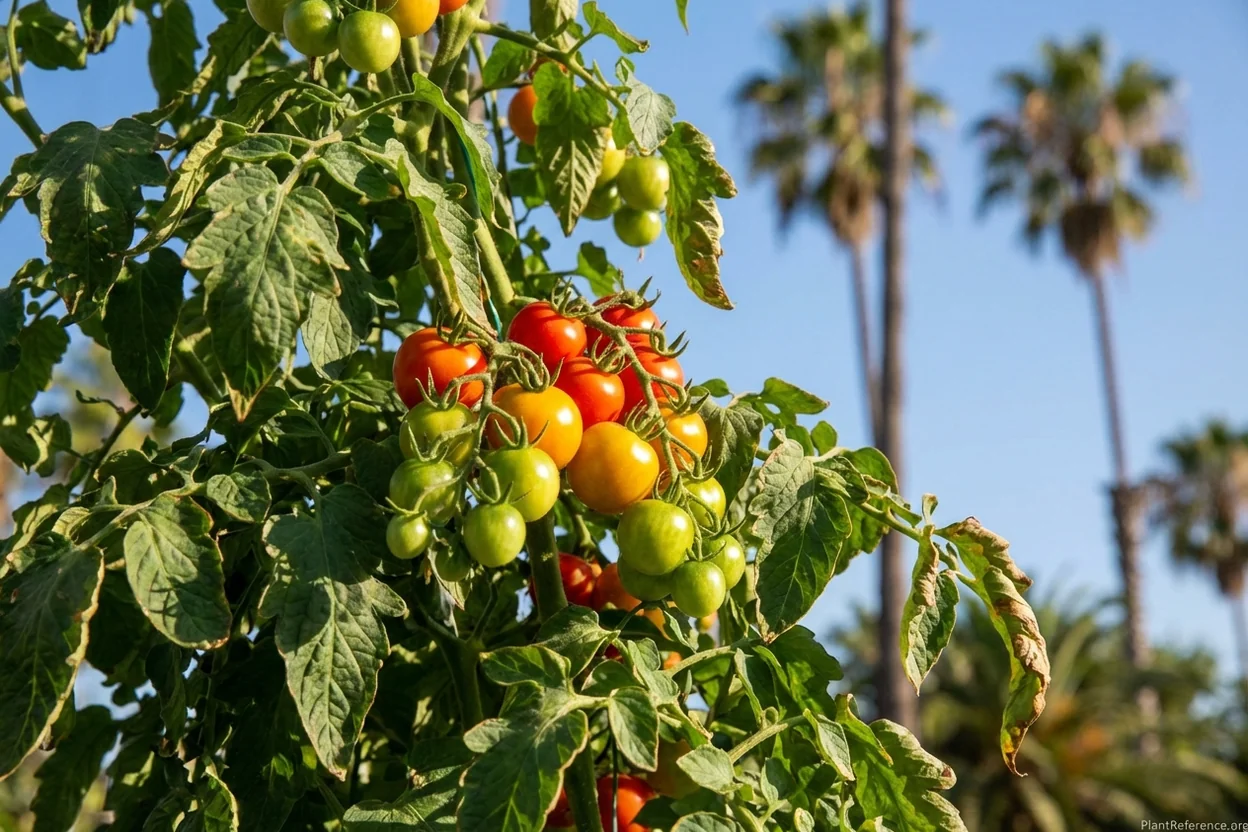
🌿Solanum lycopersicum 'Early Girl' stands out as the workhorse for Los Angeles gardens. This variety sets fruit at temperatures that shut down other tomatoes, continuing production through our notorious September heat waves. I've harvested 🌿Solanum lycopersicum 'Early Girl' tomatoes in 95°F (35°C) weather when my 🌿Solanum lycopersicum 'Brandywine' plants were completely dormant.
🌿Solanum lycopersicum 'Sungold' cherry tomatoes offer exceptional sweetness but require careful water management. These golden gems split easily after unexpected rainfall, so harvest frequently during our winter rainy season.
Premium Flavor Varieties
🌿Solanum lycopersicum 'Cherokee Purple' and 🌿Solanum lycopersicum 'Brandywine' represent the pinnacle of tomato flavor but demand precise timing in Los Angeles. Plant these heirlooms by mid-March to harvest before July heat arrives. Their complex, sweet flavors make the extra effort worthwhile for serious gardeners.
🌿Solanum lycopersicum 'San Marzano' paste tomatoes excel in our climate but require consistent moisture. Los Angeles's low humidity and hot, dry winds can trigger blossom end rot faster than you'd expect.
Year-Round Performers
🌿Solanum lycopersicum 'Stupice' might seem unnecessary in warm Los Angeles, but this cold-tolerant variety shines during our mild winters. When other tomatoes slow down in December and January, 🌿Solanum lycopersicum 'Stupice' keeps producing quality fruit.
Specific Planting Dates for Los Angeles
Los Angeles's Zone 10b climate creates three distinct planting seasons, each with specific advantages and challenges.
Spring Planting Season (Optimal)
Seed Starting Indoors: January 15 - February 28 Start seeds 6-8 weeks before transplant date. Use bottom heat to maintain 75-85°F (24-29°C) for optimal germination.
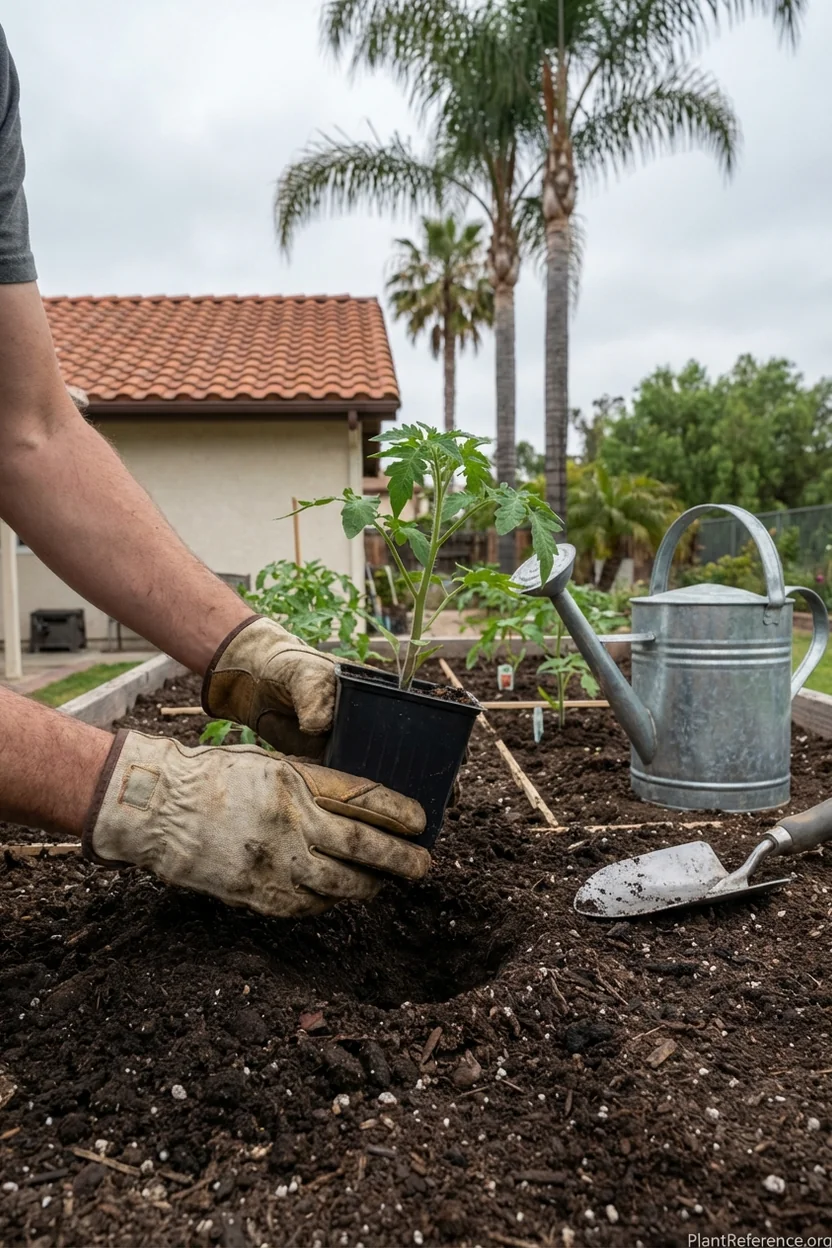
Transplant Outdoors: March 1 - May 31 Transplant after the last frost date of February 14, but soil temperatures matter more than air temperatures. Wait until soil reaches 60°F (15°C) consistently.
First Harvest: April 20 - July 15 Spring plantings provide the longest harvest window and highest yields.
Summer Planting (Advanced Gardeners Only)
Limited Window: June 1 - June 30 Only plant heat-tolerant varieties like 🌿Solanum lycopersicum 'Early Girl' and 🌿Solanum lycopersicum 'Sungold'. Provide afternoon shade and extra water.
Fall Planting Season (Excellent Choice)
Seed Starting: July 1 - August 31 Start indoors during peak heat, then transplant as temperatures moderate.
Transplant Outdoors: September 1 - November 30 Fall plantings often outperform spring crops due to consistent warm weather and reduced pest pressure.
Harvest Window: October 15 - March 15 Fall tomatoes can produce through Los Angeles's mild winter, providing fresh fruit when most gardeners have empty beds.
Winter Possibilities
Limited Season: December 15 - February 28 Plant only 🌿Solanum lycopersicum 'Stupice' or maintain existing fall plantings. Most varieties slow dramatically during short winter days.
Complete Growing Guide for Los Angeles
Successfully growing tomatoes in Los Angeles requires adapting traditional techniques to our unique Mediterranean climate.
Soil Preparation
Los Angeles clay soil challenges many gardeners, but tomatoes actually prefer our slightly alkaline conditions. The key is improving drainage and organic matter content.
Soil Requirements:
pH: 6.2-7.0 (naturally achieved in most LA soils)
Drainage: Critical due to clay content
Organic matter: Add 2-3 inches (5-8 cm) of compost annually
Work compost into clay soil 4-6 weeks before planting. Never work wet clay—wait until soil crumbles in your hand rather than forming a ball.
Watering Strategy
Los Angeles's Mediterranean climate means wet winters and bone-dry summers. Your watering approach must adapt to these extremes.
Spring Watering (March-May): Water deeply twice weekly as plants establish. Reduce frequency as natural rainfall decreases and temperatures rise.
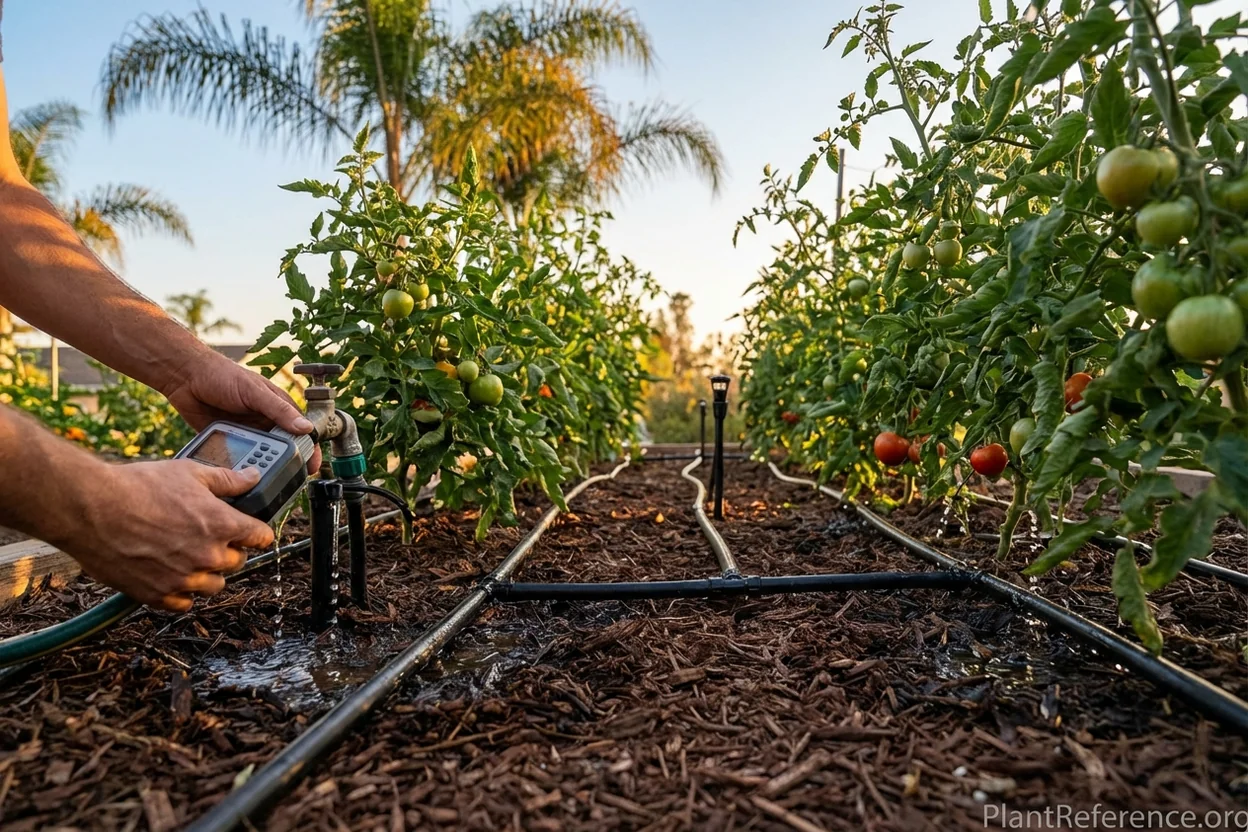
Summer Watering (June-August): Daily watering may be necessary during heat waves. Drip irrigation works best to maintain consistent soil moisture without wetting foliage.
Fall/Winter Watering (September-February): Reduce to weekly watering as temperatures drop and rainfall increases. Overwatering during mild winters causes more problems than underwatering.
Heat Protection
Los Angeles summer temperatures regularly exceed tomato comfort zones. Protecting plants from extreme heat ensures continued production.
Shade Solutions:
Install 30% shade cloth during July-August heat waves
Position plants east of structures for afternoon shade
Use taller plants like corn or sunflowers as natural windbreaks
Create microclimates with strategically placed walls or fences
Fertilizing Schedule
Our year-round growing season requires adjusted fertilizing schedules compared to colder climates.
Spring Feeding (March-May): Apply balanced fertilizer (10-10-10) every 4 weeks as plants establish and begin flowering.
Summer Maintenance (June-August): Reduce nitrogen to prevent excessive foliage growth during heat stress. Focus on phosphorus and potassium for fruit development.
Fall Boost (September-November): Resume regular feeding as temperatures moderate and plants enter second productive phase.
Troubleshooting Los Angeles-Specific Problems
Los Angeles gardeners face unique challenges that don't affect tomato growers in other climates.
Heat Stress and Blossom Drop
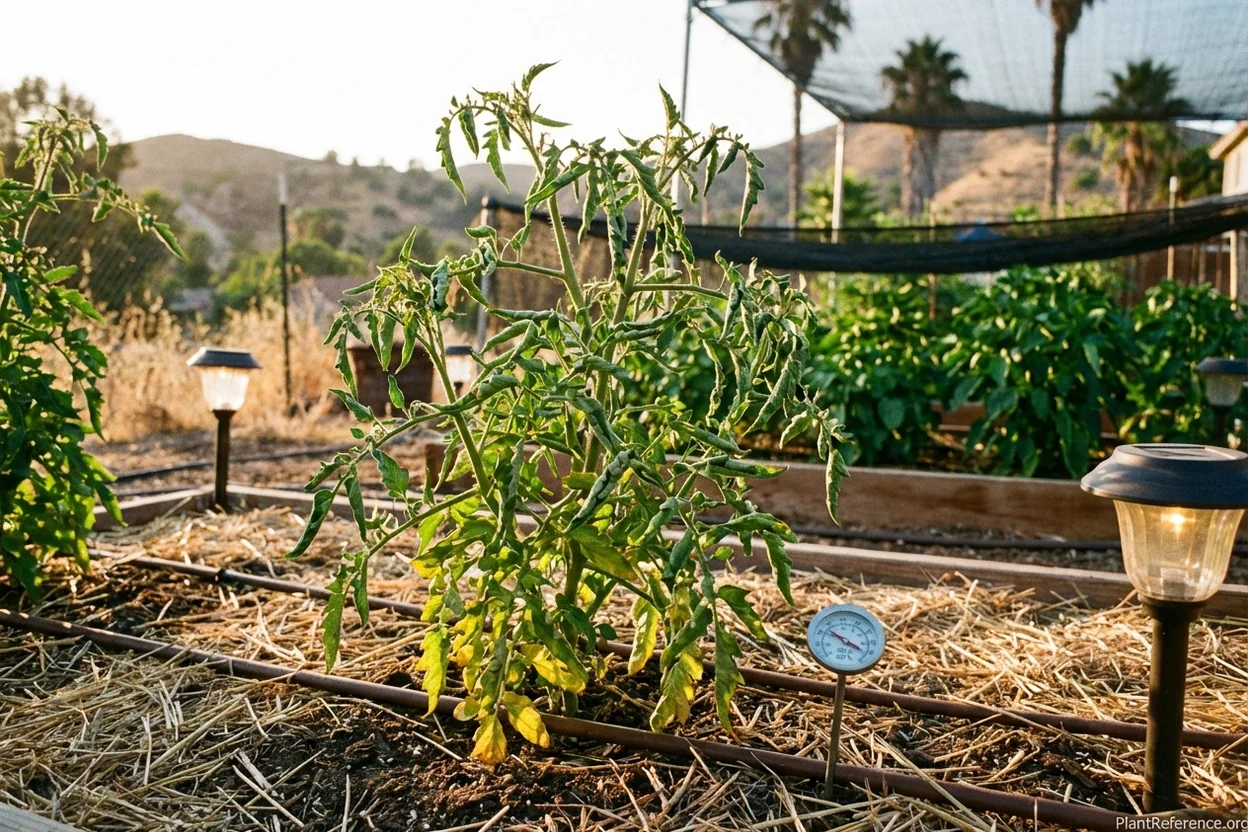
Problem: Flowers drop without forming fruit during summer heat waves. Cause: Temperatures above 90°F (32°C) during the day or 75°F (24°C) at night prevent proper pollination. Solution: Provide afternoon shade and maintain consistent soil moisture. Plant heat-tolerant varieties like 🌿Solanum lycopersicum 'Early Girl' for summer production.
Sunscald
Problem: White or pale patches on fruit exposed to intense sun. Cause: Los Angeles's intense UV radiation damages fruit when protective foliage is insufficient. Solution: Avoid heavy pruning during summer. Maintain adequate leaf cover to shade developing fruit.
Salt Buildup in Clay Soil
Problem: White crusty deposits on soil surface and stunted plant growth. Cause: Los Angeles municipal water contains dissolved salts that accumulate in poorly draining clay soil. Solution: Deep, infrequent watering flushes salts below the root zone. Add gypsum to improve soil structure and drainage.
Winter Fungal Issues
Problem: Leaf spots and wilting during mild, wet winters. Cause: High humidity from marine layer combined with cool temperatures creates ideal fungal conditions. Solution: Improve air circulation, avoid overhead watering, and remove infected plant material promptly.
Harvest & Storage
Los Angeles's extended growing season means fresh tomatoes nearly year-round, but timing your harvest optimizes flavor and storage life.
Optimal Harvest Timing
Spring Crop (April-July): Harvest at full color for maximum flavor. Plants produce heavily during this ideal weather window.
Summer Crop (July-September): Harvest at "breaker" stage (first color change) during extreme heat. Tomatoes finish ripening indoors without heat stress.
Fall/Winter Crop (October-March): Allow full ripening on the vine. Cooler temperatures concentrate sugars and develop complex flavors.
Storage Methods
Fresh Storage: Ripe tomatoes keep 5-7 days at room temperature. Never refrigerate unless fully ripe and consumption is delayed.
Green Tomato Storage: Harvest mature green tomatoes before first frost (December 14 in Los Angeles). Wrap individually in newspaper and store at 65-70°F (18-21°C) to ripen gradually.
Preservation: Los Angeles's abundant harvest season makes canning, sauce-making, and dehydrating worthwhile preservation methods.
Frequently Asked Questions
Reading about plants and recognising them are different skills. These three build the second.
- Daily PlantIdentify the day’s mystery plant from a close-up photograph.
- Keyed OutWork a dichotomous key, lead by lead, to name a hidden specimen.
- Name That PlantName a specimen from botanical clues dealt hardest first.
Free to play, no account needed
Emma runs a small succulent propagation business from her home in San Diego, shipping starter plants and cuttings across the country. She fell into succulents after college when she realized they were the only plants that survived her travel schedule—she was working as a travel nurse at the time. San Diego's mild, dry climate is ideal for outdoor succulent gardens, and Emma's front yard is a living catalog of over 200 varieties. She completed a certificate program in ornamental horticulture and writes about succulent care, propagation techniques, and drought-tolerant garden design. Her writing is calm and reassuring—she knows people feel bad about killing plants, and she wants them to stop worrying so much.