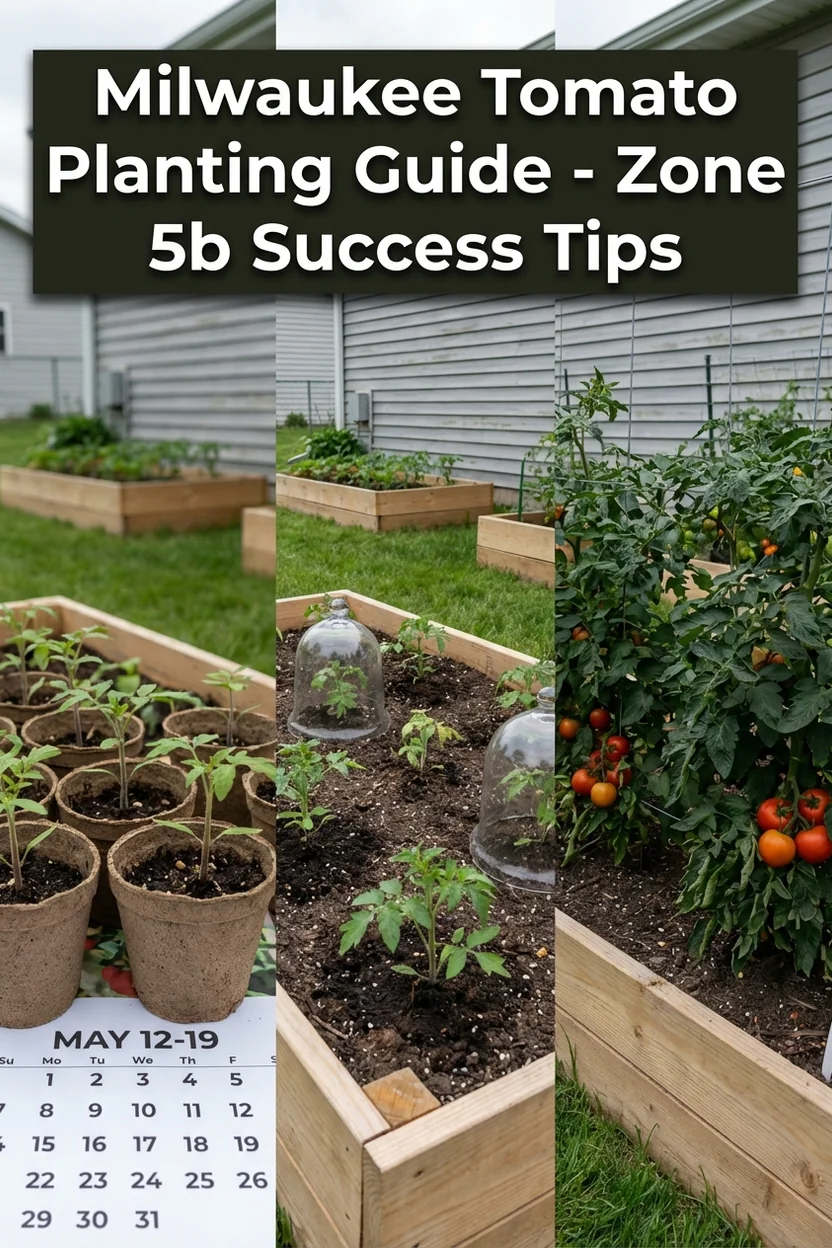
When to Plant Tomatoes in Milwaukee: Complete Guide + Best Varieties for Zone 5b
Pets & Toxicity
Recorded toxicity for plants linked in this guide. An unknown status is not a safety assessment.
Toxic to pets: early girl tomato, Stupice tomato, Sungold cherry tomato and 3 moreDetailsHide
Solanum lycopersicum 'Early Girl' — Toxicity Warning
Toxic to petsView Solanum lycopersicum 'Early Girl' plant profileSolanum lycopersicum 'Stupice' — Toxicity Warning
Toxic to petsView Solanum lycopersicum 'Stupice' plant profileSolanum lycopersicum 'Sungold' — Toxicity Warning
Toxic to petsView Solanum lycopersicum 'Sungold' plant profileSolanum lycopersicum 'Brandywine' — Toxicity Warning
Toxic to petsView Solanum lycopersicum 'Brandywine' plant profileSolanum lycopersicum 'Cherokee Purple' — Toxicity Warning
Toxic to petsView Solanum lycopersicum 'Cherokee Purple' plant profileSolanum lycopersicum 'San Marzano' — Toxicity Warning
Toxic to petsView Solanum lycopersicum 'San Marzano' plant profile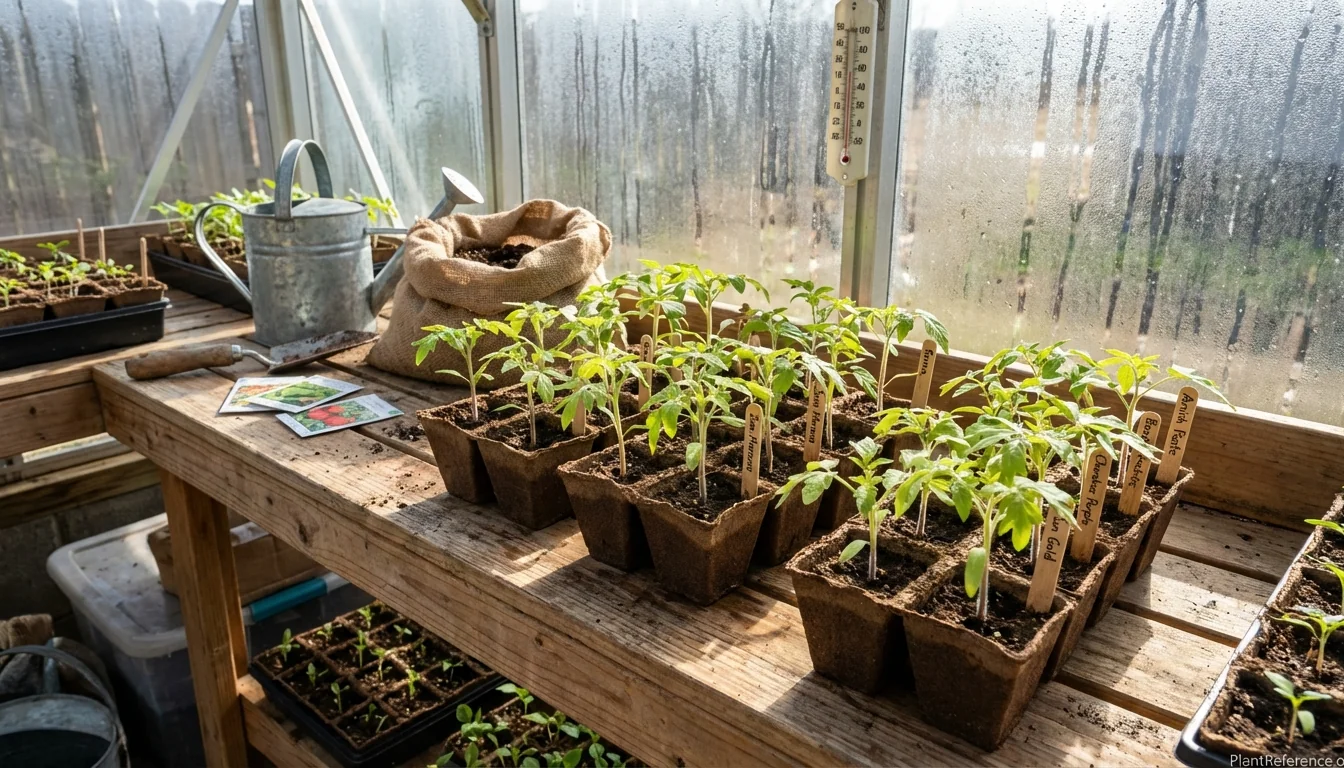
— Image © Plant Reference 2026
Milwaukee's Zone 5b climate presents unique opportunities for tomato growing, but success depends entirely on timing and variety selection. With an average last frost of May 14 and first frost arriving September 30, Milwaukee gardeners enjoy a solid 139-day growing season—enough time for most tomato varieties if you start right.
Introduction
Milwaukee's Lake Michigan climate creates a fascinating microenvironment for tomato cultivation. The lake effect moderates spring temperatures, often delaying the last frost until mid-May, but also extends the fall season by preventing early freezes. This 139-day window is perfect for determinate varieties and manageable for most indeterminates—if you choose varieties suited to Wisconsin's climate patterns.
The key to Milwaukee tomato success lies in understanding that our growing season starts later but often extends longer than inland Wisconsin locations. Lake Michigan's thermal mass keeps September temperatures mild, frequently pushing that first frost date into early October. However, the late spring means indoor seed starting is absolutely critical for heat-loving varieties like 🌿Solanum lycopersicum 'Brandywine' and 🌿Solanum lycopersicum 'Cherokee Purple'.
Milwaukee gardeners should focus on varieties that either mature quickly (🌿Solanum lycopersicum 'Early Girl', 🌿Solanum lycopersicum 'Stupice') or handle cool conditions exceptionally well (🌿Solanum lycopersicum 'Sungold'). The humid summers along Lake Michigan also favor disease-resistant varieties over susceptible heirlooms, though proper spacing and airflow management can overcome many fungal challenges.
This guide covers six proven varieties specifically selected for Milwaukee's unique Zone 5b conditions, with exact planting dates calculated for our May 14 average last frost date and detailed troubleshooting for common Lake Michigan gardening challenges.
Best Tomato Varieties for Milwaukee's Climate
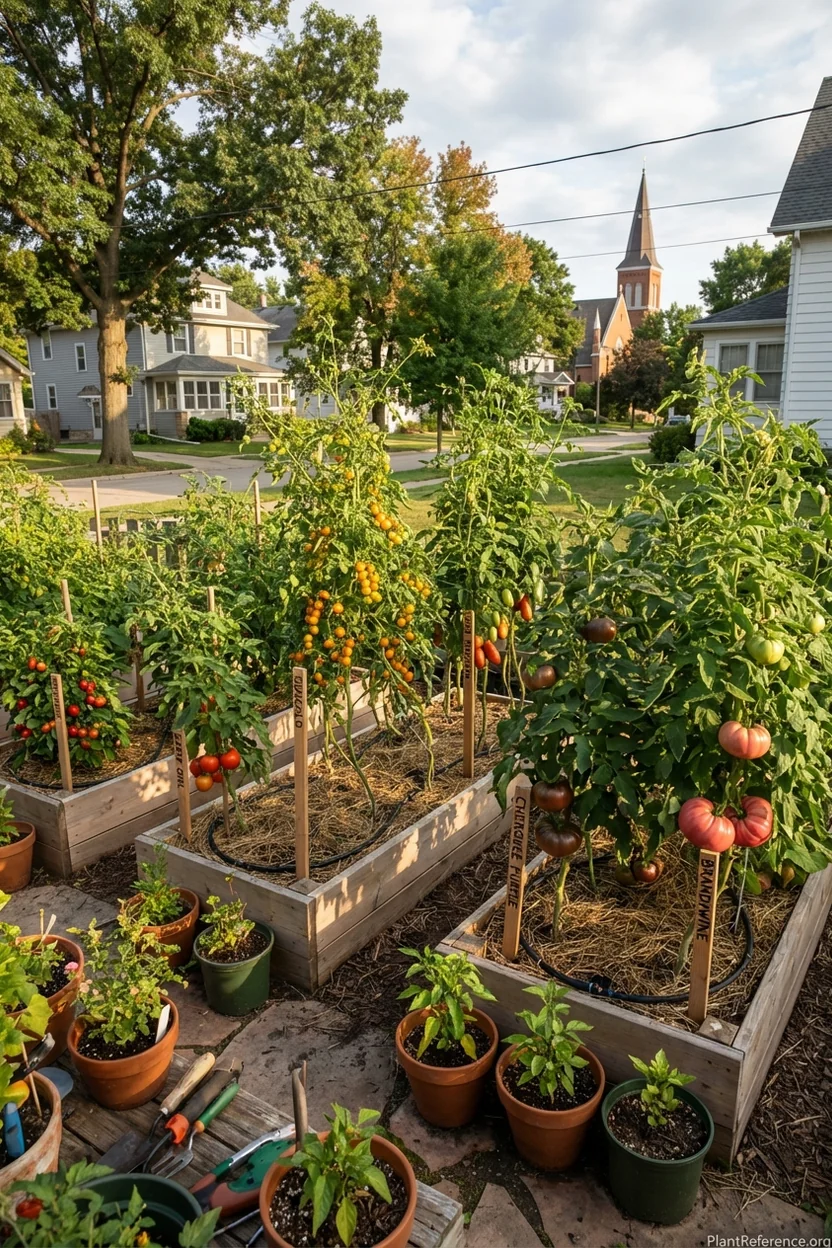
Variety selection makes or breaks your Milwaukee tomato season. After testing dozens of varieties in Wisconsin's Zone 5b climate, these six consistently deliver excellent results while handling our specific challenges: late springs, humid summers, and variable September weather.
Variety | Days to Maturity | Best For | Notes for Milwaukee |
|---|---|---|---|
52-60 days | Ultra-early harvest | Essential for short seasons; sets fruit at 45°F | |
50-62 days | Reliable production | Disease resistant; handles Milwaukee humidity | |
55-65 days | Sweet cherry tomatoes | Splits resistant; perfect for kids | |
78-85 days | Sauce making | Requires season extension or greenhouse | |
75-90 days | Premium flavor | Needs protection from early blight | |
80-100 days | Heirloom beefsteak | High risk; requires season extension |
For Early Harvest
🌿Solanum lycopersicum 'Stupice' remains Milwaukee's most reliable early variety. This Czech heirloom sets fruit at temperatures as low as 45°F, crucial during Milwaukee's variable spring weather. Even in cooler summers, 'Stupice' produces consistently, often yielding ripe tomatoes by July 15 when other varieties are still flowering.
🌿Solanum lycopersicum 'Early Girl' serves as the perfect companion to 'Stupice', offering larger fruit (4-6 ounces vs. 'Stupice's 2-3 ounces) with similar earliness. The F1 hybrid vigor provides excellent disease resistance against the foliar fungal diseases that thrive in Milwaukee's humid lake-effect conditions.
For Best Flavor
🌿Solanum lycopersicum 'Cherokee Purple' delivers exceptional flavor complexity—smoky, sweet, and rich—that commands attention at Milwaukee farmers markets. However, this heirloom requires aggressive disease management in our humid climate. Plant only in well-drained soil with excellent air circulation, and be prepared for preventive fungicide applications.
🌿Solanum lycopersicum 'Brandywine' represents the pinnacle of tomato flavor but demands season extension in Zone 5b. Start seeds by March 15, use wall-o-water protection at transplant, and plan for row covers if September frosts threaten early.
For Milwaukee's Climate Challenges
🌿Solanum lycopersicum 'Sungold' excels in Milwaukee's variable conditions. This golden cherry tomato resists splitting during our frequent summer thunderstorms and continues producing through cool September nights. Kids love the candy-sweet flavor, and the F1 hybrid vigor handles whatever Milwaukee weather delivers.
🌿Solanum lycopersicum 'San Marzano' works well for sauce production but requires careful management. The paste tomato's dense flesh concentrates flavor beautifully, but blossom end rot becomes problematic during Milwaukee's rapid spring growth periods when calcium uptake lags behind fruit expansion.
For Beginners
Start with 🌿Solanum lycopersicum 'Early Girl' and 🌿Solanum lycopersicum 'Sungold'. Both offer disease resistance packages (Verticillium and Fusarium wilts, plus Tobacco Mosaic Virus resistance) that buffer against common mistakes. Their determinate growth habits require less pruning knowledge than sprawling heirlooms.
For Storage and Preserving
🌿Solanum lycopersicum 'San Marzano' excels for sauce, paste, and canning applications. The low moisture content and thick walls maintain texture through thermal processing. For fresh storage, 🌿Solanum lycopersicum 'Cherokee Purple' keeps well if harvested at the breaker stage and ripened indoors during Milwaukee's often-wet September weather.
Specific Planting Dates for Milwaukee
Milwaukee's Zone 5b timing centers around our May 14 average last frost date, but Lake Michigan's influence often extends safe planting into late May. Here's your precise timeline for Milwaukee tomato success:
Indoor Seed Starting: March 31
Start seeds indoors exactly 6-7 weeks before your planned transplant date. For Milwaukee's May 21 transplant window, begin seeds March 31-April 7. Use bottom heat mats to maintain 75-80°F soil temperature for optimal germination.
Earlier varieties like 🌿Solanum lycopersicum 'Stupice' and 🌿Solanum lycopersicum 'Early Girl' can handle slight temperature fluctuations, making them forgiving for beginning seed starters. Heat-loving varieties like 🌿Solanum lycopersicum 'Brandywine' require consistent warmth and may benefit from starting March 24 for the extra growing time.
Transplant Outdoors: May 21-28
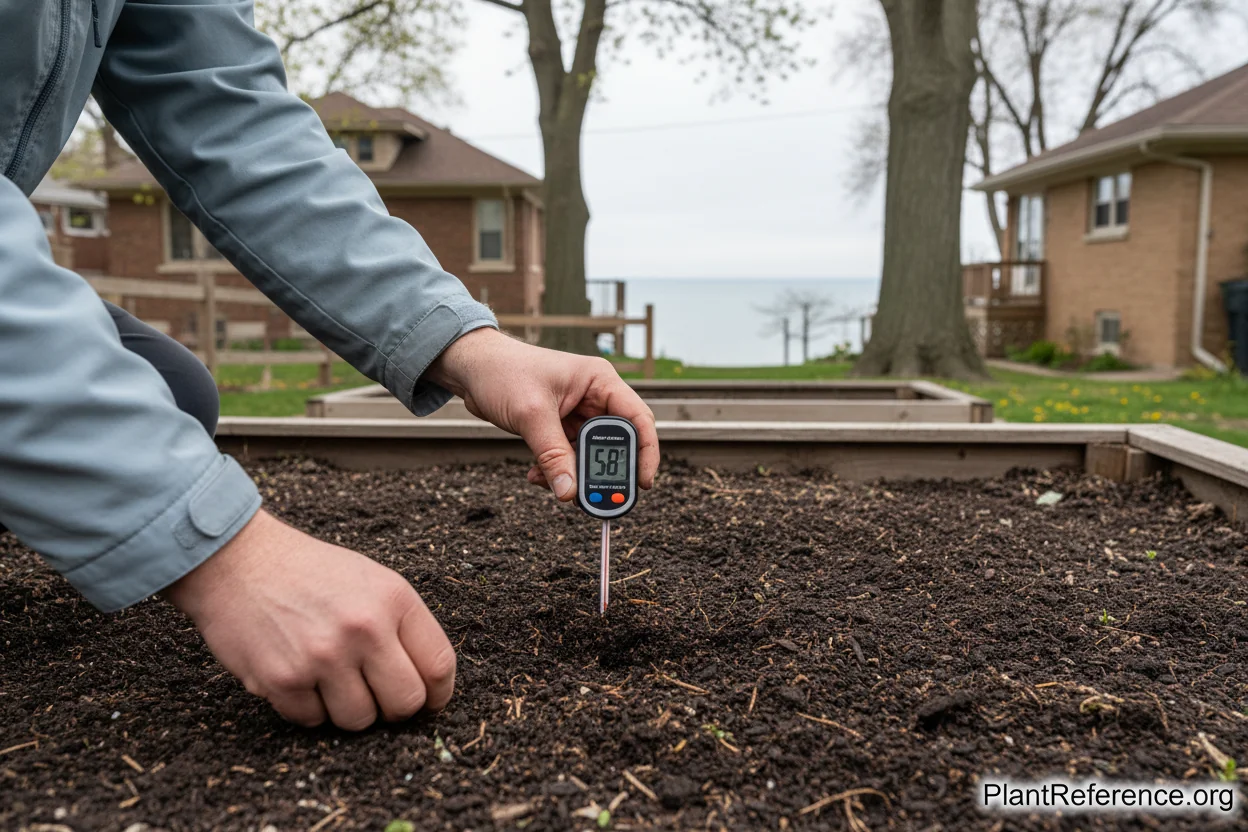
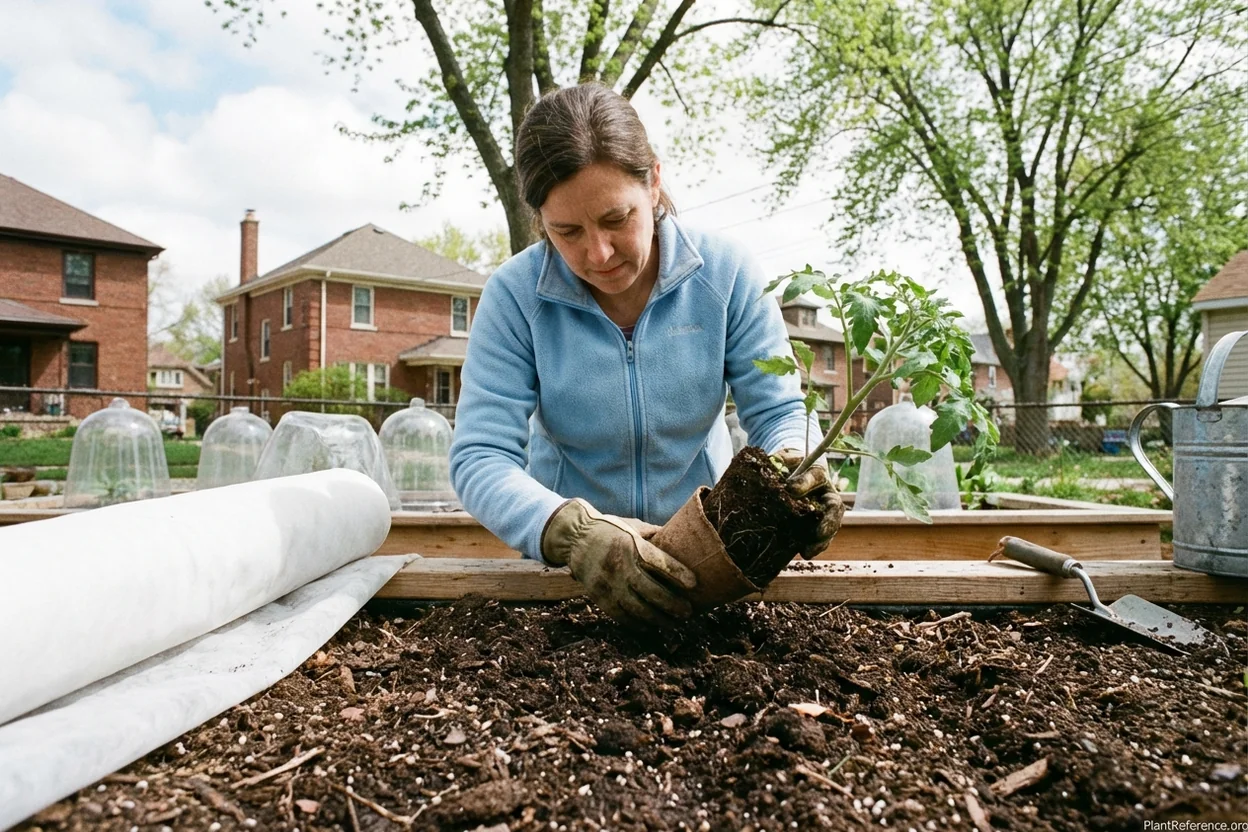
Wait until soil temperatures consistently read above 55°F (13°C) and nighttime air temperatures stay above 45°F (7°C). In Milwaukee, this typically occurs May 21-28, roughly one week after our average last frost date. The lake effect can create microclimates—gardens closer to Lake Michigan may need to wait until May 28, while inland areas often warm earlier.
Use protective measures for the first two weeks outdoors. Wall-o-water protectors, row covers, or even overturned milk jugs create beneficial microclimates during Milwaukee's variable late May weather.
Timeline by Variety
Ultra-Early Varieties 'Stupice', Solanum lycopersicum 'Early Girl')' - Seeds started: March 31 - Transplant: May 21 - First harvest: July 12-19 - Peak harvest: July 25-August 15
Early Varieties 'Sungold')' - Seeds started: April 3 - Transplant: May 24 - First harvest: July 18-25 - Peak harvest: August 1-September 1
Mid-Season Varieties 'San Marzano', Solanum lycopersicum 'Cherokee Purple')' - Seeds started: March 24 - Transplant: May 21 (with protection) - First harvest: August 8-15 - Peak harvest: August 20-September 20
Late Varieties 'Brandywine')' - Seeds started: March 15 - Transplant: May 21 (with extensive protection) - First harvest: August 15-25 - Peak harvest: September 1-30 (if frost holds off)
Complete Growing Guide for Milwaukee
Milwaukee's lake-effect climate creates specific growing conditions that differ significantly from inland Wisconsin locations. Success requires adapting your techniques to our unique microenvironment.
Milwaukee Climate Challenges
Late Spring Warming: Lake Michigan keeps spring temperatures cool longer than inland areas. Soil warming lags 2-3 weeks behind air temperatures, requiring patience with transplant timing. Even after air temperatures reach 60°F consistently, soil may remain at 50°F near the lake.
High Humidity Summers: Lake Michigan creates humidity levels that favor fungal diseases, particularly Early Blight (Alternaria solani) and Septoria Leaf Spot. These diseases thrive in our 70-80% summer humidity combined with warm temperatures.
Variable Fall Weather: September can bring either extended warmth (extending harvest into October) or sudden cold snaps that end the season early. The lake effect works both ways—it can extend your season by two weeks or end it abruptly if arctic air masses override the lake's influence.
Week-by-Week Milwaukee Timeline
Weeks 1-2 (May 21-June 4): Establishment phase. Transplants focus on root development rather than top growth. Maintain consistent soil moisture but avoid overwatering in cool soil. Remove lower leaves that touch soil to prevent soilborne disease uptake.
Weeks 3-4 (June 5-18): Rapid vegetative growth begins as soil temperatures rise above 60°F. Begin weekly feeding with balanced fertilizer (10-10-10). Install cages or stakes now—waiting longer risks root damage.
Weeks 5-8 (June 19-July 16): Peak vegetative growth and flower formation. Begin pruning suckers on indeterminate varieties. 🌿Solanum lycopersicum 'Stupice' and 🌿Solanum lycopersicum 'Early Girl' show first flower clusters.
Weeks 9-12 (July 17-August 13): First fruit set and early harvest begins. 🌿Solanum lycopersicum 'Stupice' typically produces first ripe fruit by July 20 in Milwaukee. Increase watering frequency as fruit swells rapidly.
Weeks 13-16 (August 14-September 10): Peak harvest period for early and mid-season varieties. Monitor for Late Blight if cool, wet nights occur. 🌿Solanum lycopersicum 'Cherokee Purple' and 🌿Solanum lycopersicum 'San Marzano' reach peak production.
Weeks 17-20 (September 11-October 8): Late harvest and season extension. Begin ripening green tomatoes indoors if frost threatens. 🌿Solanum lycopersicum 'Brandywine' finally reaches peak if grown successfully.
Milwaukee-Specific Growing Techniques
Soil Preparation: Milwaukee's heavy clay soils require amendment with compost or aged manure to improve drainage. Work in 2-3 inches of organic matter each spring, as our clay naturally retains too much moisture for optimal tomato root health.
Mulching Strategy: Apply organic mulch (straw, shredded leaves) heavily around plants by June 15 to prevent soil splash-back during summer thunderstorms. Soil splash carries fungal spores from soil to lower leaves, initiating disease cycles.
Watering Management: Deep, infrequent watering works better than daily light watering in Milwaukee's humidity. Water early morning to allow leaves to dry before evening, reducing fungal disease pressure.
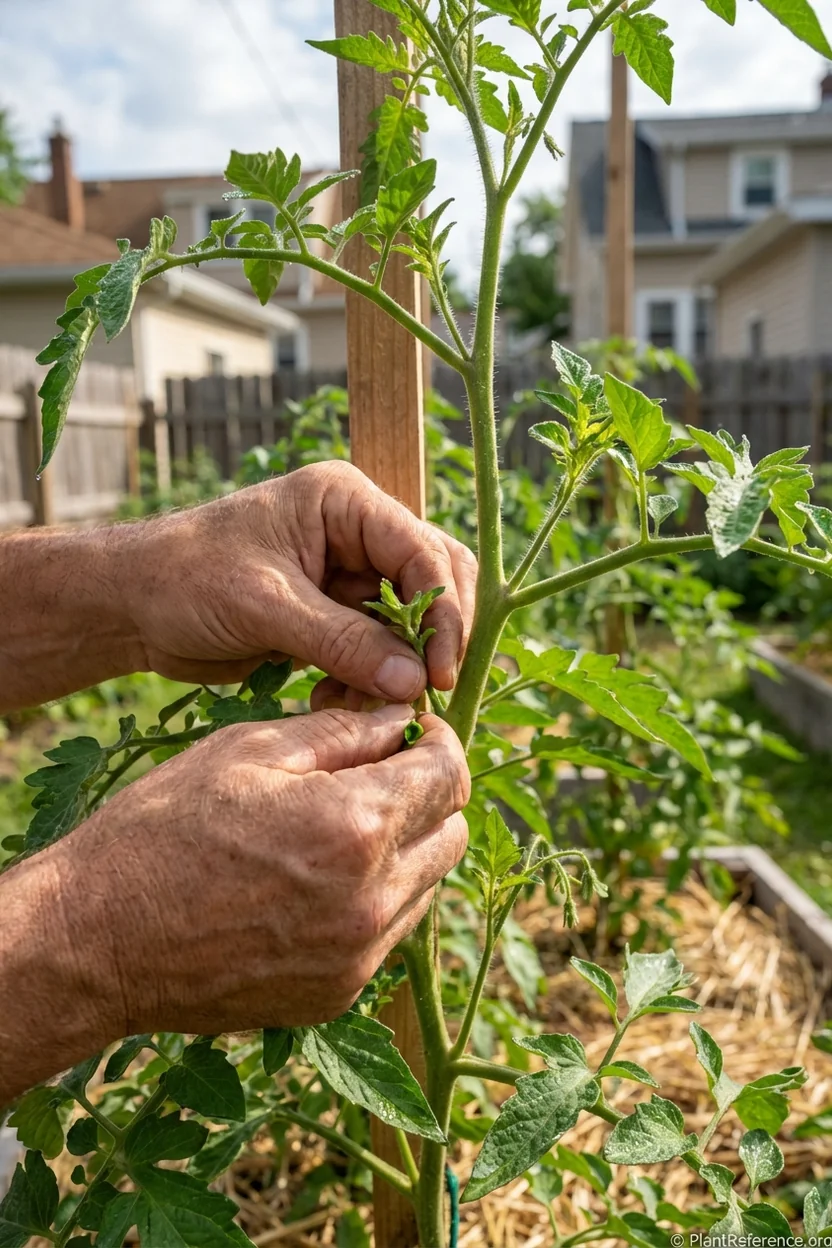
Pruning for Air Circulation: Milwaukee's humidity makes air circulation critical. Prune lower branches up to the first flower cluster, and maintain only 2-3 main stems on indeterminate varieties to improve airflow through the canopy.
Soil Preparation for Milwaukee
Test soil pH in early spring—Milwaukee soils tend toward neutral (pH 6.5-7.0), which suits tomatoes well. If your soil tests above pH 7.5, add sulfur or organic matter to lower pH into the optimal 6.0-6.8 range.
Work raised beds in April when soil crumbles in your hand rather than forming mud balls. Milwaukee's heavy soils benefit from permanent raised bed construction, improving drainage and allowing earlier spring working.
Add compost annually—2-3 inches worked into the top 6 inches of soil. Milwaukee's cold winters slow decomposition, so organic matter doesn't build up as quickly as in warmer climates.
Troubleshooting Milwaukee-Specific Problems
Problem | Symptoms | Likely Cause | Quick Fix |
|---|---|---|---|
Late Blight during cool September | Brown-black lesions with white fuzzy growth on leaf undersides; rapid spread through plant | Phytophthora infestans thriving in Milwaukee's cool, humid fall nights (below 60°F with high humidity) | Harvest all fruit immediately and ripen indoors; dispose of affected plants in garbage, not compost |
Blossom End Rot during rapid spring growth | Dark, sunken spots on fruit bottom; especially affects 🌿Solanum lycopersicum 'San Marzano' and paste varieties | Rapid growth during May-June temperature increases outpaces calcium uptake in Milwaukee's heavy clay soils | Maintain consistent soil moisture with organic mulch; add gypsum (calcium sulfate) in early spring; avoid high-nitrogen fertilizers |
Stunted growth from cold soil | Purple-tinged leaves; slow growth despite warm air temperatures; delayed flowering; plants appear healthy but develop very slowly | Lake Michigan keeps soil at 55°F or below well into June; roots cannot absorb nutrients efficiently in cold soil | Use black plastic or IRT mulch in early May to pre-warm soil; delay transplanting until soil thermometer reads above 55°F at 4-inch depth |
Fungal disease pressure from humidity | White powdery coating (powdery mildew), yellow leaves with spots (Septoria), brown lesions (Early Blight) affecting lower leaves first | Milwaukee's 70-80% summer humidity and lake-effect moisture create ideal fungal disease environment, especially with poor air circulation | Space plants wider than normal; prune lower branches for airflow; avoid overhead watering; apply mulch to prevent soil splash |
Foliar disease spread during wet weather | Rapid progression of leaf spotting and disease; heavy rain followed by humid, warm days accelerate disease | Milwaukee's summer thunderstorms combined with high humidity create 12-18 hour periods of leaf wetness ideal for fungal spore germination | Water early morning only; improve air circulation through aggressive pruning; consider preventive sulfur or fungicide applications if disease in neighborhood |
Milwaukee's Lake Michigan influence creates three recurring problems that differ from typical Wisconsin gardening challenges. Understanding these patterns helps prevent problems before they start.
Problem 1: Late Blight During Cool, Wet Septembers
Why it happens in Milwaukee: Cool nights (below 60°F) combined with high humidity from Lake Michigan create perfect conditions for Phytophthora infestans. This devastating fungal disease can destroy entire crops in 7-10 days.
Identification: Brown-black lesions on leaves with white fuzzy growth on undersides during humid mornings. Unlike Early Blight, Late Blight appears suddenly and spreads rapidly through the entire plant.
Prevention: Choose resistant varieties when available (some 'Mountain' series tomatoes carry resistance genes). Ensure excellent air circulation through proper spacing and pruning. Remove any infected plant material immediately and dispose in garbage, not compost.
Milwaukee-specific solution: If Late Blight appears in your neighborhood (check with local extension), harvest all green tomatoes immediately and ripen indoors. The disease spreads via airborne spores—once it arrives in your area, outdoor plants become very difficult to protect.
Resistant varieties for Milwaukee: While true resistance is rare, 🌿Solanum lycopersicum 'Stupice' and other early varieties often escape Late Blight simply by maturing before September conditions favor the disease.
Problem 2: Blossom End Rot During Rapid Spring Growth
Why it happens in Milwaukee: Rapid temperature increases in late May and early June cause explosive growth that outpaces calcium uptake. Milwaukee's heavy clay soils often have adequate calcium, but rapid growth prevents proper translocation to developing fruit.
Identification: Dark, sunken spots on the bottom (blossom end) of fruit, particularly on 🌿Solanum lycopersicum 'San Marzano' and other paste varieties with elongated shapes.
Prevention: Maintain consistent soil moisture through organic mulching and regular watering. Avoid high-nitrogen fertilizers during fruit set, as nitrogen promotes leaf growth that competes with fruit for calcium.
Milwaukee-specific solution: In clay soils, add gypsum (calcium sulfate) in early spring to provide readily available calcium without altering soil pH. Unlike lime, gypsum works immediately and won't make Milwaukee's naturally neutral soils too alkaline.
Problem 3: Stunted Growth from Cold Soil Temperatures
Why it happens in Milwaukee: Lake Michigan keeps soil temperatures cool well into June. Even when air temperatures reach 70°F, soil may remain at 55°F or below, slowing root function and nutrient uptake.
Identification: Purple-tinged leaves, slow growth despite warm air temperatures, and delayed flowering. Plants appear healthy but develop very slowly compared to expected timelines.
Prevention: Use black plastic mulch or IRT (Infrared Transmitting) mulch in early May to pre-warm soil before transplanting. Remove plastic after soil temperatures stabilize above 60°F and replace with organic mulch.
Milwaukee-specific solution: Delay transplanting until soil thermometer reads consistently above 55°F at 4-inch depth. This may mean waiting until May 28 rather than May 21 in cold springs, but plants will establish faster in warm soil than struggle in cold conditions.
Harvest & Storage
Milwaukee's September weather variability requires flexible harvest strategies. Our 139-day growing season typically allows full maturation of early and mid-season varieties, but late varieties like 🌿Solanum lycopersicum 'Brandywine' often need assistance finishing.
Signs of Readiness
Ripe tomatoes show full color development and yield slightly to gentle pressure at the stem end. 🌿Solanum lycopersicum 'Cherokee Purple' develops its characteristic dusky purple-brown color with green shoulders—don't wait for uniform red coloring that never comes.
Breaker stage tomatoes show color change beginning at the blossom end. In Milwaukee, harvest at this stage if frost threatens or if Late Blight appears in your neighborhood. These tomatoes will ripen indoors with full flavor development.
Mature green tomatoes have reached full size and show a slight color lightening from deep green to pale green. These can ripen indoors but won't develop the same sugar content as vine-ripened fruit.
Harvest Technique
Pick tomatoes in late morning after dew dries but before heat builds up. Leave stems attached when possible—the wound where stems detach provides entry points for decay organisms.
For 🌿Solanum lycopersicum 'Sungold', harvest daily during peak production to prevent splitting from Milwaukee's frequent summer thunderstorms. The thin skins on cherry tomatoes can't handle rapid water uptake from heavy rains.
Handle 🌿Solanum lycopersicum 'Brandywine' and 🌿Solanum lycopersicum 'Cherokee Purple' carefully—these large, soft fruits bruise easily and bruised areas decay rapidly in storage.
Expected Harvest Window in Milwaukee
🌿Solanum lycopersicum 'Stupice' July 12-September 15 (65+ day harvest window)
🌿Solanum lycopersicum 'Early Girl' July 19-September 20 (63+ day harvest window)
🌿Solanum lycopersicum 'Sungold' July 25-September 25 (62+ day harvest window)
🌿Solanum lycopersicum 'San Marzano' August 8-October 1 (54+ day harvest window, if frost holds)
🌿Solanum lycopersicum 'Cherokee Purple' August 15-October 1 (47+ day harvest window, if frost holds)
🌿Solanum lycopersicum 'Brandywine' August 25-October 1 (37+ day harvest window, if frost holds)
Storage Recommendations
Ripe tomatoes store best at 55-60°F, not refrigerated. Milwaukee basements often provide perfect storage conditions during warm September weather.
Green tomatoes ripen best at 65-70°F in single layers, not touching. Check daily and remove any showing soft spots immediately.
For preservation: 🌿Solanum lycopersicum 'San Marzano' excels for sauce and paste. 🌿Solanum lycopersicum 'Cherokee Purple' and 🌿Solanum lycopersicum 'Brandywine' are too valuable for fresh eating to process, but their complex flavors create exceptional salsas and bruschetta toppings.
Milwaukee's humid conditions make dehydrating tomatoes challenging without proper equipment. Focus on freezing, canning, or fresh storage methods that work better in our climate.
Frequently Asked Questions
Reading about plants and recognising them are different skills. These three build the second.
- Daily PlantIdentify the day’s mystery plant from a close-up photograph.
- Keyed OutWork a dichotomous key, lead by lead, to name a hidden specimen.
- Name That PlantName a specimen from botanical clues dealt hardest first.
Free to play, no account needed
Pat has been gardening in Milwaukee for over thirty years, through every kind of Wisconsin weather. She worked as a school librarian and started gardening seriously when her kids were small—she wanted them to know where food came from. Now retired, she's a certified Master Gardener and runs the plant sale at her local garden club every spring. She specializes in cold-hardy perennials, native wildflower meadows, and the art of getting a vegetable garden producing in Wisconsin's short but intense growing season. Pat is practical and patient—she's seen enough Wisconsin winters to know that gardening here is a long game, and she writes with the steady confidence of someone who's been doing this a long time.