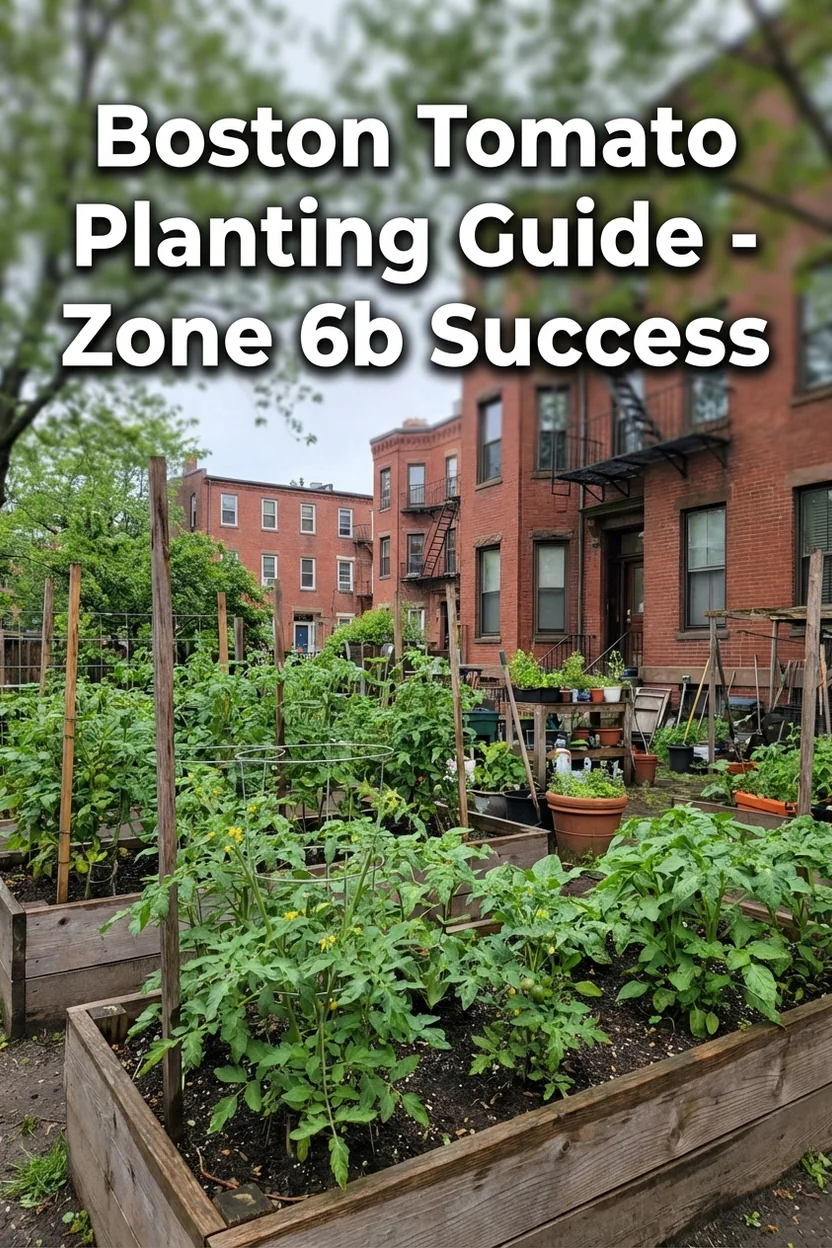
When to Plant Tomatoes in Boston: Complete Guide + Best Varieties for Zone 6b
Pets & Toxicity
Recorded toxicity for plants linked in this guide. An unknown status is not a safety assessment.
Toxic to pets: early girl tomato, brandywine tomato, Stupice tomato and 3 moreDetailsHide
Solanum lycopersicum 'Early Girl' — Toxicity Warning
Toxic to petsView Solanum lycopersicum 'Early Girl' plant profileSolanum lycopersicum 'Brandywine' — Toxicity Warning
Toxic to petsView Solanum lycopersicum 'Brandywine' plant profileSolanum lycopersicum 'Stupice' — Toxicity Warning
Toxic to petsView Solanum lycopersicum 'Stupice' plant profileSolanum lycopersicum 'Sungold' — Toxicity Warning
Toxic to petsView Solanum lycopersicum 'Sungold' plant profileSolanum lycopersicum 'Cherokee Purple' — Toxicity Warning
Toxic to petsView Solanum lycopersicum 'Cherokee Purple' plant profileSolanum lycopersicum 'San Marzano' — Toxicity Warning
Toxic to petsView Solanum lycopersicum 'San Marzano' plant profile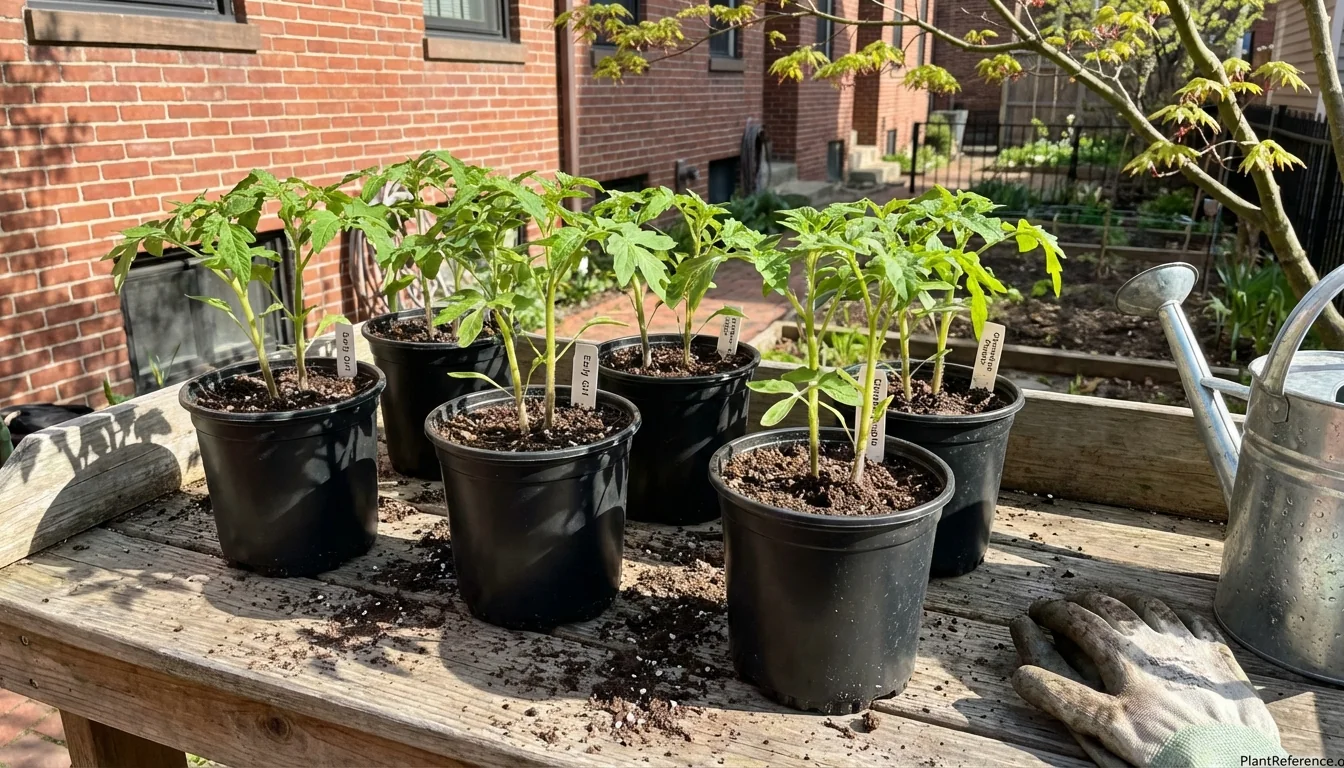
— Image © Plant Reference 2026
Planning to grow tomatoes in Boston? You're in luck—Massachusetts' Zone 6b climate offers one of the best environments on the East Coast for tomato cultivation. With a generous 183-day growing season from April 19 to October 19, Boston gardeners can successfully grow everything from ultra-early varieties to late-season heirlooms that need extended time to develop their complex flavors.
Why Boston's Zone 6b Climate is Perfect for Tomatoes
Boston's moderate maritime climate creates nearly ideal conditions for tomato growing. Unlike the extreme heat of the South or the abbreviated seasons of northern Minnesota, Zone 6b provides the "Goldilocks zone" that tomatoes crave. The city's position along the Atlantic coast moderates temperature swings, preventing the sudden heat spikes that cause blossom drop in inland areas.
The 183-day growing season gives Boston gardeners significant flexibility in variety selection. Early varieties like 🌿Solanum lycopersicum 'Stupice' can be harvested by mid-July, while heat-sensitive heirlooms like 🌿Solanum lycopersicum 'Brandywine' have ample time to mature before the October 19 first frost date.
Boston's average summer temperatures—highs in the 70s to low 80s°F (21-27°C) with nights rarely exceeding 70°F (21°C)—fall within the optimal range for fruit set. This consistency allows for reliable pollination throughout the growing season, something gardeners in hotter climates struggle with during July and August heat waves.
The primary challenge in Boston isn't heat or cold—it's humidity and the associated fungal diseases. The city's proximity to the ocean creates high humidity levels that can promote Early Blight and Late Blight, particularly during wet summers. However, with proper variety selection and preventive management, these issues are entirely manageable. For more information on disease management in humid climates, see Guide to Managing Tomato Diseases.
Best Tomato Varieties for Boston's Climate
Variety selection is crucial for Boston success. The following varieties have proven themselves in Zone 6b conditions, offering different harvest windows and flavor profiles to suit every gardener's preferences.
For Early Harvest (50-65 days)
🌿Solanum lycopersicum 'Early Girl' remains the gold standard for Boston gardeners wanting quick results. This F1 hybrid sets fruit reliably even during cool spring weather when night temperatures dip into the 40s°F (4-7°C). In Boston, 'Early Girl' typically produces its first ripe tomatoes by early to mid-July, beating most other varieties by 2-3 weeks.
🌿Solanum lycopersicum 'Stupice' deserves special recognition as the ultimate cold-climate variety. Originally bred in Czechoslovakia, it thrives in Boston's sometimes unpredictable spring weather. This heirloom consistently outperforms other early varieties when June turns unexpectedly cool. Learn more about Cold-Tolerant Vegetable Varieties for New England.
🌿Solanum lycopersicum 'Sungold' brings unmatched sweetness to the early season. These golden cherry tomatoes often achieve Brix levels exceeding 9.0, rivaling many fruits. The hybrid vigor also provides excellent disease resistance, crucial for Boston's humid summers.
For Best Flavor (75-100 days)
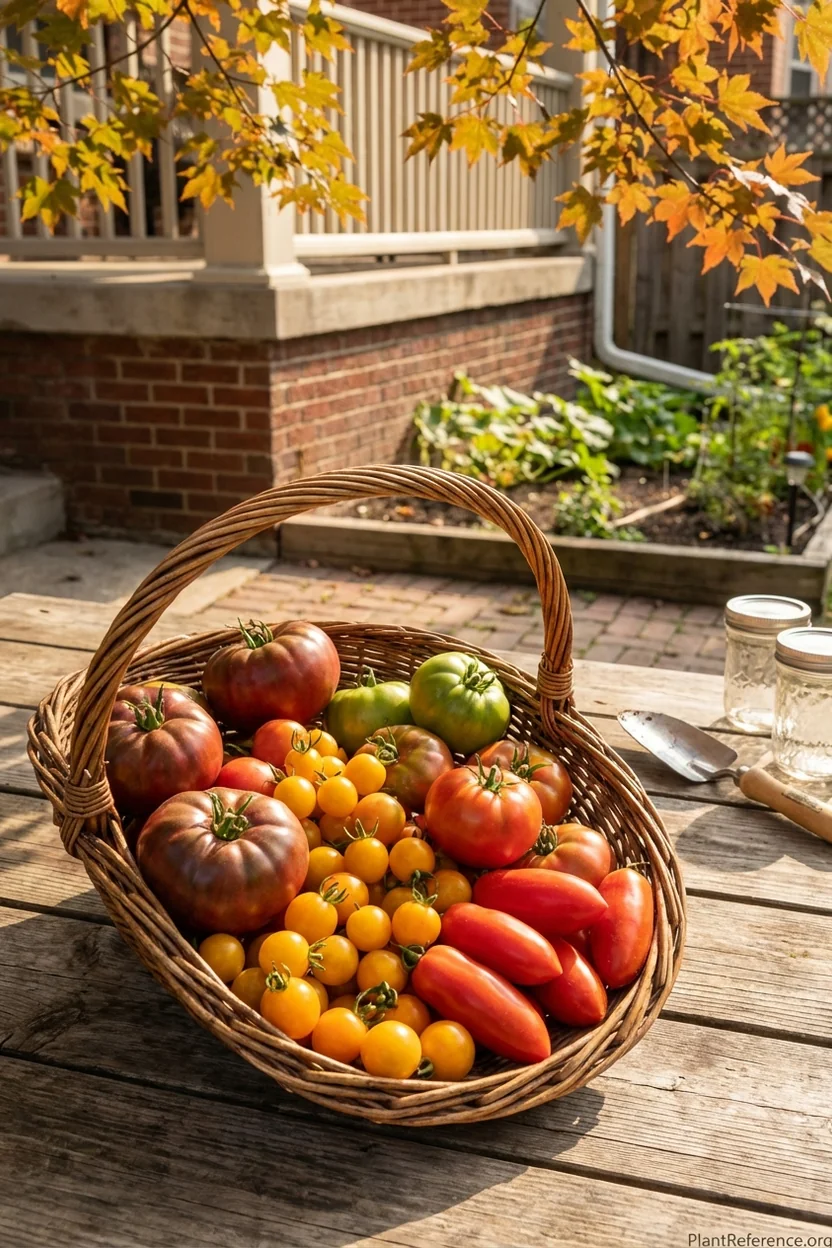
🌿Solanum lycopersicum 'Cherokee Purple' adapts surprisingly well to Boston's climate despite its Southern origins. This heirloom produces large, dusky purple-brown fruits with complex, smoky flavors that have made it a farmers market favorite throughout Massachusetts.
🌿Solanum lycopersicum 'Brandywine' represents the pinnacle of tomato flavor but requires careful management in Boston. The potato-leaf foliage and massive pink fruits need consistent care, but the reward is unparalleled taste complexity. See Heirloom Tomato Growing for Beginners for care tips.
For Boston's Climate Challenges
🌿Solanum lycopersicum 'San Marzano' excels in Boston's moderate climate where extreme heat won't stress the plants. These paste tomatoes thrive in the consistent temperatures, producing abundant harvests perfect for sauce-making.
The disease resistance packages found in modern F1 hybrids become particularly valuable in Boston's humid environment. Varieties carrying VFF (Verticillium, Fusarium wilt races 1 & 2) resistance help ensure successful harvests even during wet summers when soil-borne diseases pressure increases. For detailed information on disease resistance traits, consult Understanding Disease Resistance in Vegetables.
Variety | Days to Maturity | Best For | Notes for Boston |
|---|---|---|---|
52-60 days | Cold tolerance | Ideal for unpredictable Boston springs | |
50-62 days | Quick harvest | Perfect for Zone 6b's 183-day season | |
55-65 days | Sweet flavor | Disease resistance crucial for humid summers | |
75-90 days | Complex flavor | Adapts well to Boston's moderate temperatures | |
78-85 days | Sauce making | Thrives in consistent Zone 6b climate | |
80-100 days | Premium flavor | Requires protection from humidity-related diseases |
Specific Planting Dates for Boston
Boston's April 19 last frost date provides the foundation for all planting calculations. However, successful tomato growing requires working backward from this date to ensure strong, healthy transplants ready for outdoor planting.
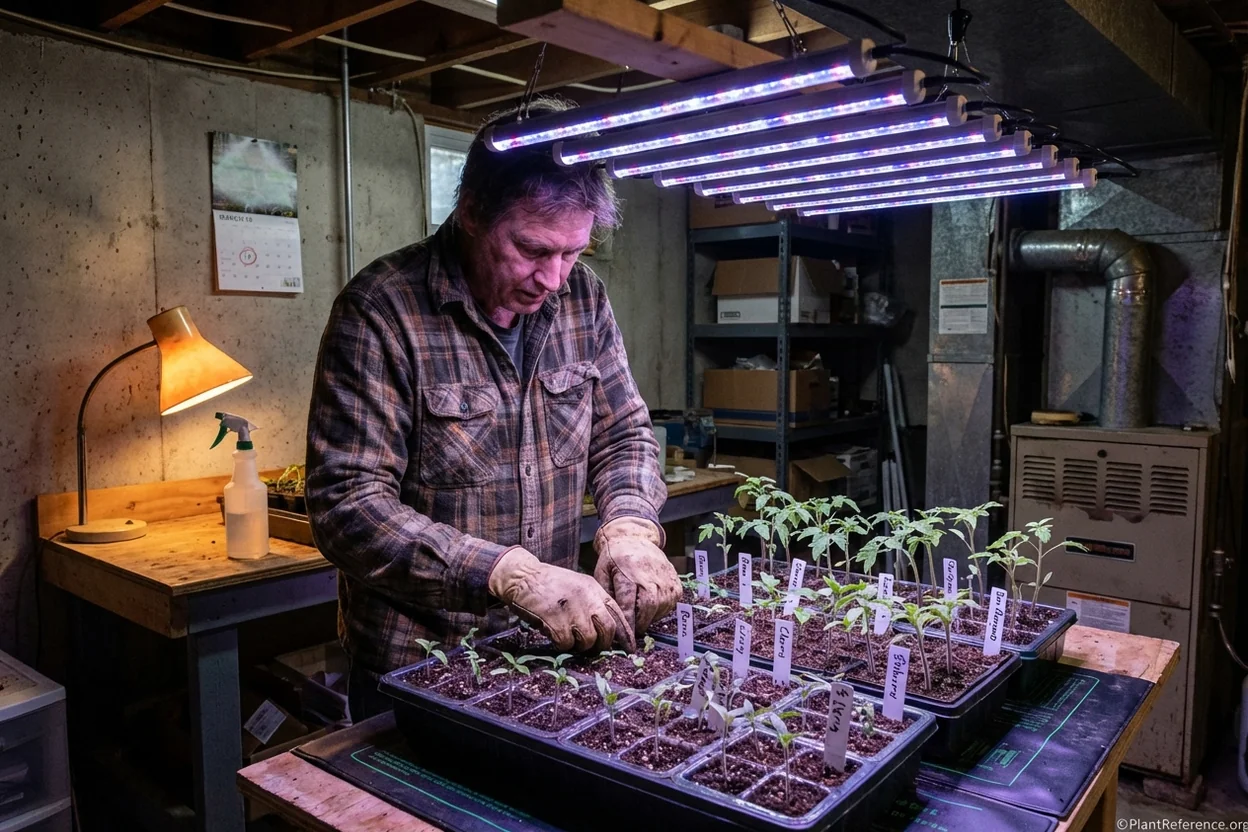
Indoor Seed Starting: March 1-8
Start tomato seeds indoors 6-7 weeks before the last frost date. In Boston, this means beginning seed starting during the first week of March. Starting seeds March 1-8 ensures transplants will be 6-8 weeks old and weather-hardened by the optimal transplanting window.
Use bottom heat to maintain soil temperature at 75-80°F (24-27°C) for fastest germination. Boston's cool March basement temperatures can significantly slow germination without supplemental heat.
Hardening Off: April 20-May 1
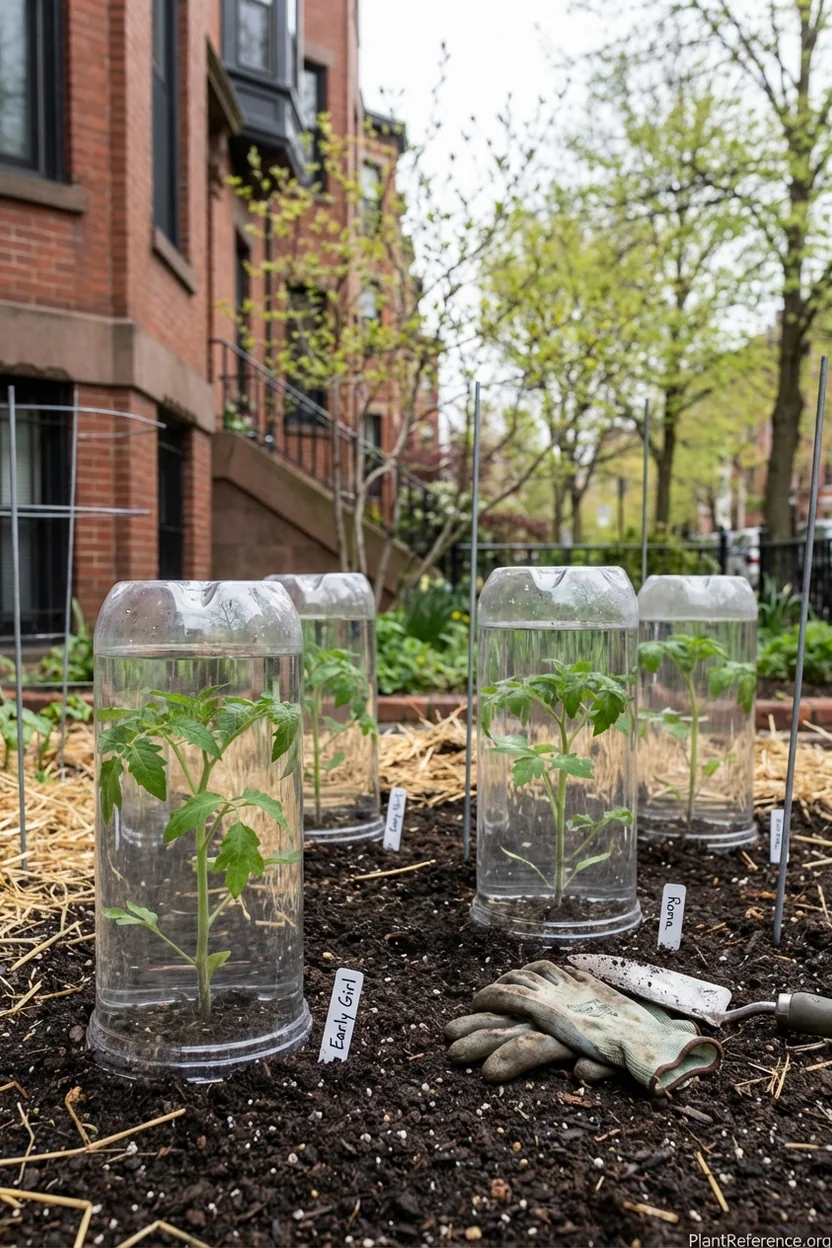
Begin the hardening off process immediately after the April 19 last frost date. Boston's variable spring weather requires a gradual 7-10 day process to acclimate indoor-grown seedlings to outdoor conditions.
Start with 2-3 hours of morning sun exposure, gradually increasing daily exposure while watching weather forecasts carefully. Boston can experience surprise late cold snaps, so be prepared to protect or move plants indoors if temperatures threaten to drop below 45°F (7°C).
Transplanting Outdoors: May 1-8
The optimal transplanting window for Boston opens May 1st and extends through the first week of May. Soil temperatures should reach at least 60°F (16°C) before transplanting—use a soil thermometer to verify rather than guessing.
Plant transplants 24-36 inches (60-90 cm) apart in rows spaced 3-4 feet (90-120 cm) apart. This spacing allows adequate air circulation, crucial for preventing fungal diseases in Boston's humid climate.
Timeline by Variety
Ultra-Early Harvest (Stupice, Early Girl):
Transplant: May 1-8
First harvest: July 1-15
Peak production: July 15-August 15
Mid-Season (Sungold, Cherokee Purple):
Transplant: May 1-8
First harvest: July 15-August 1
Peak production: August 1-September 15
Late Season (San Marzano, Brandywine):
Transplant: May 1-8
First harvest: August 1-20
Peak production: August 20-October 1
Complete Growing Guide for Boston
Boston's Zone 6b climate presents unique opportunities and challenges that require tailored growing strategies. Success depends on managing humidity, maximizing the moderate temperature sweet spot, and preparing for both wet and dry periods.
Boston Climate Challenges
The primary challenge in Boston isn't temperature extremes—it's managing moisture and preventing disease. The city's maritime influence creates humid conditions ideal for fungal pathogens, particularly during July and August when temperatures rise and afternoon thunderstorms are common.
Early Blight (Alternaria solani) poses the greatest threat to Boston tomato crops. This fungal disease thrives in the warm, humid conditions typical of Massachusetts summers. Symptoms first appear as dark spots with concentric rings on lower leaves, eventually causing defoliation that reduces yield and fruit quality.
Late Blight (Phytophthora infestans) presents a more serious but less predictable threat. Cool, wet weather—sometimes occurring during Boston's variable June weather—creates perfect conditions for this devastating disease that can destroy entire crops within days. For prevention strategies, see Preventing Tomato Late Blight in Humid Climates.
Week-by-Week Timeline
May: Establishment Phase
Focus on helping transplants establish strong root systems. Water deeply but infrequently to encourage deep rooting. Install sturdy stakes or cages immediately—Boston's summer thunderstorms can topple unsupported plants.
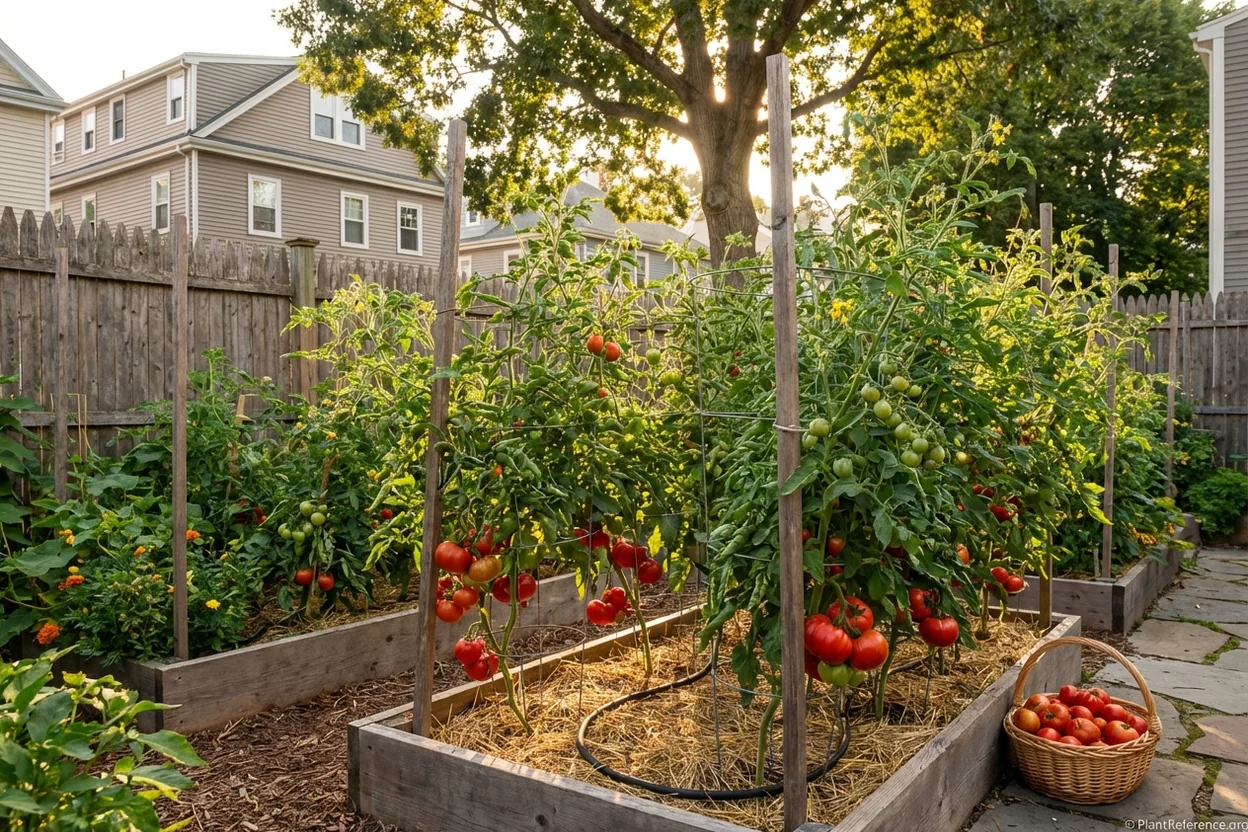
Apply 2-3 inches (5-8 cm) of organic mulch around plants, keeping mulch 2 inches (5 cm) away from stems. Mulching is crucial in Boston to prevent soil splash-back that spreads fungal spores to lower leaves.
June: Vegetative Growth
Indeterminate varieties enter rapid growth phase. Begin weekly pruning of suckers (shoots growing between main stem and branches) to maintain 2-3 main stems per plant. This improves air circulation and reduces disease pressure.
Begin preventive disease management. Apply organic copper fungicide or compost tea every 2 weeks to prevent Early Blight establishment. Boston's June humidity makes prevention far more effective than treatment.
July: Flowering and Fruit Set
Most varieties begin flowering and setting fruit. Monitor for blossom end rot, particularly on paste varieties like 🌿Solanum lycopersicum 'San Marzano'. Maintain consistent soil moisture through drip irrigation or soaker hoses.
Early varieties like 🌿Solanum lycopersicum 'Early Girl' and 🌿Solanum lycopersicum 'Stupice' begin producing ripe fruit. Harvest regularly to encourage continued production.
August: Peak Production
Peak harvest time for most varieties. Monitor cherry varieties like 🌿Solanum lycopersicum 'Sungold' closely—Boston's occasional heavy rains can cause splitting. Harvest at first blush of color if rain is forecast.
Continue aggressive sucker pruning and remove lower leaves showing any disease symptoms. Good sanitation becomes critical as disease pressure increases.
September: Late Season Management
Focus shifts to ripening existing fruit rather than setting new ones. "Top" indeterminate plants by removing growing tips to redirect energy into ripening. Remove all new flower clusters that form after September 1st—they won't have time to mature before frost.
Monitor weather forecasts for first frost warnings. Begin harvesting mature green tomatoes for indoor ripening when frost threatens.
Boston-Specific Growing Techniques
Spacing for Air Circulation: Plant tomatoes 36 inches (90 cm) apart rather than the standard 24 inches (60 cm) recommended for drier climates. Boston's humidity requires maximum air movement to prevent fungal diseases.
Mulching Strategy: Use organic mulch like straw or shredded leaves rather than plastic. Organic mulch helps regulate soil moisture while allowing air exchange—crucial in humid conditions.
Pruning for Disease Prevention: Remove all leaves within 12 inches (30 cm) of soil level by mid-June. This prevents soil-splash contamination during Boston's frequent summer thunderstorms.
Water Management: Install drip irrigation or soaker hoses to water at soil level. Overhead watering increases humidity around foliage and spreads fungal spores.
Soil Preparation for Boston
Boston area soils tend toward clay, requiring amendment for proper drainage. Tomatoes need well-draining soil that retains moisture without becoming waterlogged.
Add 2-3 inches (5-8 cm) of compost and 1 inch (2.5 cm) of coarse sand or perlite to heavy clay soils. This improves drainage while maintaining the moisture retention tomatoes need during hot spells.
Test soil pH—Boston soils often run slightly acidic (pH 6.0-6.5), which is actually ideal for tomatoes. Avoid over-liming unless soil tests indicate pH below 6.0. Learn more about Soil Testing and Amendment for Vegetable Gardens.
Troubleshooting Boston-Specific Problems
Boston gardeners face three primary challenges that can derail tomato crops: Early Blight, blossom end rot during rapid growth periods, and splitting during heavy rain events. Understanding these problems and their prevention is crucial for consistent success.
Early Blight (Most Common Issue)
Early Blight appears as dark spots with concentric rings on lower leaves, typically beginning in July when humidity rises. The fungus spreads rapidly in Boston's warm, humid conditions, causing defoliation that reduces yield and exposes fruit to sunscald.
Why it happens in Boston: The combination of warm temperatures (70-80°F/21-27°C), high humidity above 80%, and frequent thunderstorms creates perfect conditions for Alternaria solani. Boston's dense urban environment often limits air circulation, exacerbating the problem.
Prevention and solutions:
Apply preventive copper fungicide every 2 weeks starting in mid-June
Remove all foliage within 12 inches (30 cm) of ground level to prevent soil splash contamination
Space plants 36 inches (90 cm) apart for maximum air circulation
Choose resistant varieties when possible—🌿Solanum lycopersicum 'Early Girl' shows better tolerance than most heirlooms
Blossom End Rot During Growth Spurts
Blossom end rot appears as dark, sunken spots on the blossom end (opposite the stem) of developing fruit. Despite appearing to be a disease, it's actually a calcium uptake issue caused by inconsistent watering during Boston's variable summer rainfall.
Why it happens in Boston: Boston's weather patterns—periods of heavy rain followed by dry spells—cause fluctuating soil moisture. When plants can't absorb calcium consistently, developing fruits develop the characteristic black rot at the blossom end. Paste varieties like 🌿Solanum lycopersicum 'San Marzano' are particularly susceptible.
Prevention and solutions:
Install drip irrigation or soaker hoses to maintain consistent soil moisture
Mulch heavily to buffer moisture fluctuations
Test soil calcium levels—Boston's acidic soils may need lime to improve calcium availability
Rain Splitting in Cherry Varieties
Cherry tomatoes, particularly 🌿Solanum lycopersicum 'Sungold', split when heavy rain follows dry periods. The rapid water uptake causes internal pressure that exceeds the skin's strength, resulting in radial cracks that invite secondary infections.
Why it happens in Boston: Summer thunderstorms can drop 1-2 inches (2.5-5 cm) of rain in short periods. If soil has been dry, plants rapidly absorb water faster than fruit skins can expand, causing splits.
Prevention and solutions:
Harvest cherry tomatoes at first color change if heavy rain is forecast—they'll ripen indoors
Maintain consistent soil moisture through mulching and regular watering
Consider growing 🌿Solanum lycopersicum 'Sungold' in containers under roof overhangs during peak splitting season
Boston's maritime climate also means higher slug and snail populations compared to drier regions. These pests can destroy seedlings and damage ripe fruit touching the ground. Use organic slug baits (iron phosphate) and maintain clean cultivation to eliminate hiding spots. See Organic Pest Management for Vegetable Gardens for additional strategies.
Harvest & Storage
Boston's generous 183-day growing season allows for extended harvest from early July through the first killing frost around October 19. Understanding proper harvest timing and storage techniques maximizes the value of your tomato crop.
Signs of Readiness
Harvest timing depends on intended use and variety characteristics. For fresh eating, pick tomatoes when they show full color but still feel firm. Overripe tomatoes become mealy and lose their balanced acid-to-sugar ratio.
🌿Solanum lycopersicum 'Cherokee Purple' and other dark varieties can be tricky—look for slight softening and the characteristic dusky purple-brown coloration. The shoulders (top of fruit) should show color change even if the rest appears green.
Cherry varieties like 🌿Solanum lycopersicum 'Sungold' should be harvested daily once production begins. They can go from perfect ripeness to overripe within 24-48 hours during hot weather.
Harvest Technique
Harvest during cooler morning hours when fruits are firm and plants are turgid. Twist and pull ripe fruits gently, or use clean pruning shears to cut the stem just above the fruit.
For sauce varieties like 🌿Solanum lycopersicum 'San Marzano', harvest when fruits feel slightly soft but haven't developed wrinkles. These process better when harvested slightly underripe rather than overripe.
Expected Harvest Window in Boston
Early varieties (Stupice, Early Girl): Begin harvesting July 1-15, continue through August
Mid-season (Sungold, Cherokee Purple): Peak harvest August 1-September 15
Late varieties (San Marzano, Brandywine): Primary harvest August 20-October 1
Plan for final harvest before October 19 first frost. However, Boston's maritime influence sometimes delays the first killing frost into early November, extending the season for cold-tolerant varieties.
Storage Recommendations
Fresh ripe tomatoes store best at 55-60°F (13-16°C)—warmer than refrigerator temperature but cooler than room temperature. A cool basement or unheated garage works well for short-term storage.
For end-of-season green tomatoes, harvest before frost and ripen indoors. Wrap individually in newspaper and store at 65-70°F (18-21°C). Check weekly and remove any that show decay.
Boston gardeners often preserve peak-season harvests through canning, freezing, or dehydrating. 🌿Solanum lycopersicum 'San Marzano' excels for sauce-making, while large slicers like 🌿Solanum lycopersicum 'Cherokee Purple' are perfect for freezing in prepared dishes. For detailed preservation instructions, see Home Canning and Preserving Guide for Tomatoes.
Frequently Asked Questions
Reading about plants and recognising them are different skills. These three build the second.
- Daily PlantIdentify the day’s mystery plant from a close-up photograph.
- Keyed OutWork a dichotomous key, lead by lead, to name a hidden specimen.
- Name That PlantName a specimen from botanical clues dealt hardest first.
Free to play, no account needed
Kevin is a landscape contractor in the Boston area who specializes in cold-climate perennial gardens and hardscaping. He studied landscape design and worked at a prominent nursery on the North Shore before starting his own design-build firm. Kevin's gardens are built to handle New England weather—freeze-thaw cycles, nor'easters, late springs, and heavy snow loads. He's particularly interested in native perennials and shrubs that provide four-season interest without constant maintenance. Kevin writes about cold-hardy plant selection, winter garden structure, and building landscapes that look good even in February.