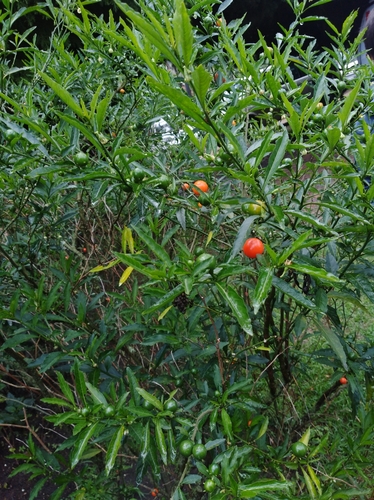
Solanum, Genus, pseudocapsicum, Species,
- Genus & species
jerusalem cherry
Overview
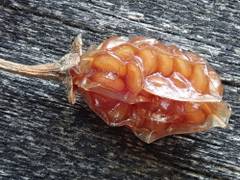
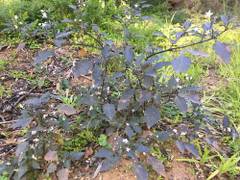
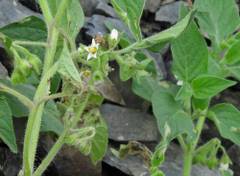
Solanum pseudocapsicum is an evergreen shrub reaching 1-4 feet (30-120 cm) tall and 1-3 feet (30-90 cm) wide, woody at the base and branching into a rounded form. Leaves are lance-shaped to oblong, 2-4 inches (5-10 cm) long, dark green, with wavy margins and a glossy upper surface. White star-shaped flowers about 0.5 inch (1.3 cm) across open singly or in small clusters along the stems through the warm months. Each flower is followed by a round berry 0.4-0.8 inch (1-2 cm) in diameter that ripens from green through yellow to orange-red and persists on the plant for several months. All parts contain solanine and related alkaloids and are toxic to humans and pets if ingested, with the berries holding the highest concentration. The plant grows quickly, reaching mature size within one to two growing seasons, and self-seeds where berries fall. In frost-free regions it behaves as a short-lived perennial shrub; in colder zones it is grown as an annual or moved indoors over winter. Foliage is damaged below about 28°F (-2°C). It naturalizes in disturbed ground and is recorded as a weed in parts of eastern Australia, southern Africa, and the southern United States.
Native Range
Native to South America, from Peru and Ecuador south to Uruguay and southern Brazil. Grows in woodland margins, disturbed ground, and along watercourses at low to middle elevations. Naturalized in many warm-temperate and subtropical regions, including eastern Australia, southern Africa, and the southeastern United States.Suggested Uses
Grown as a container and house plant for its persistent orange-red fruit, and as a bedding shrub in frost-free gardens, spaced 18-24 inches (45-60 cm) apart. All parts are toxic if eaten, which limits its use where young children or pets are present. Self-seeding can lead to naturalized populations in mild climates.How to Identify
Appearance
Size & Dimensions
Height1' - 4'
Width/Spread1' - 3'
Bloom Information
Flowers from late spring through summer, mainly June to September in the Northern Hemisphere and November to March in the Southern Hemisphere. In frost-free climates scattered flowers and fruit can be present year-round. Individual flowers last a few days, and fruit develops over the following 6-10 weeks, colouring from green to orange-red.
Detailed Descriptions
Foliage Description
dark greenGrowing Conditions
Sun Requirements
Requires 4-8 hours of direct sunlight daily
• Full Sun: 6+ hours of direct sunlight
• Partial Shade: 3-6 hours of direct sunlight
• Full Shade: Less than 3 hours of direct sunlight
Care & Maintenance
Care Guide
Grows in full sun to part shade in moist, well-drained soil. Water regularly during establishment and in dry spells; established plants tolerate brief dry periods but drop leaves under prolonged drought. Fruiting is heaviest in full sun. Aphids, whiteflies, and spider mites can occur on indoor and greenhouse plants. The plant self-seeds where fallen berries are left, producing numerous volunteer seedlings. In zones 9-11 it persists for several years; elsewhere it is replaced annually or overwintered indoors.Pruning
Cut back by one-third to one-half in early spring to maintain a compact shape and encourage branching. Remove spent fruit and frost-damaged stems as growth resumes. Plants tolerate hard pruning and regrow from the woody lower stems.Pruning Schedule
Prune: March
early spring
Container Growing
Suitable for container growing
Minimum container size: 2 gallons