Image 1 of 3
Plant Reference
1 / 3
Solanum, Genus, crispum, Species, 'Glasnevin', Cultivar,
- Genus & species
- Cultivar
Glasnevin potato vine
Chile (scrubby woodland and forest margins); cultivar selected at the National Botanic Gardens, Glasnevin, Dublin
Overview
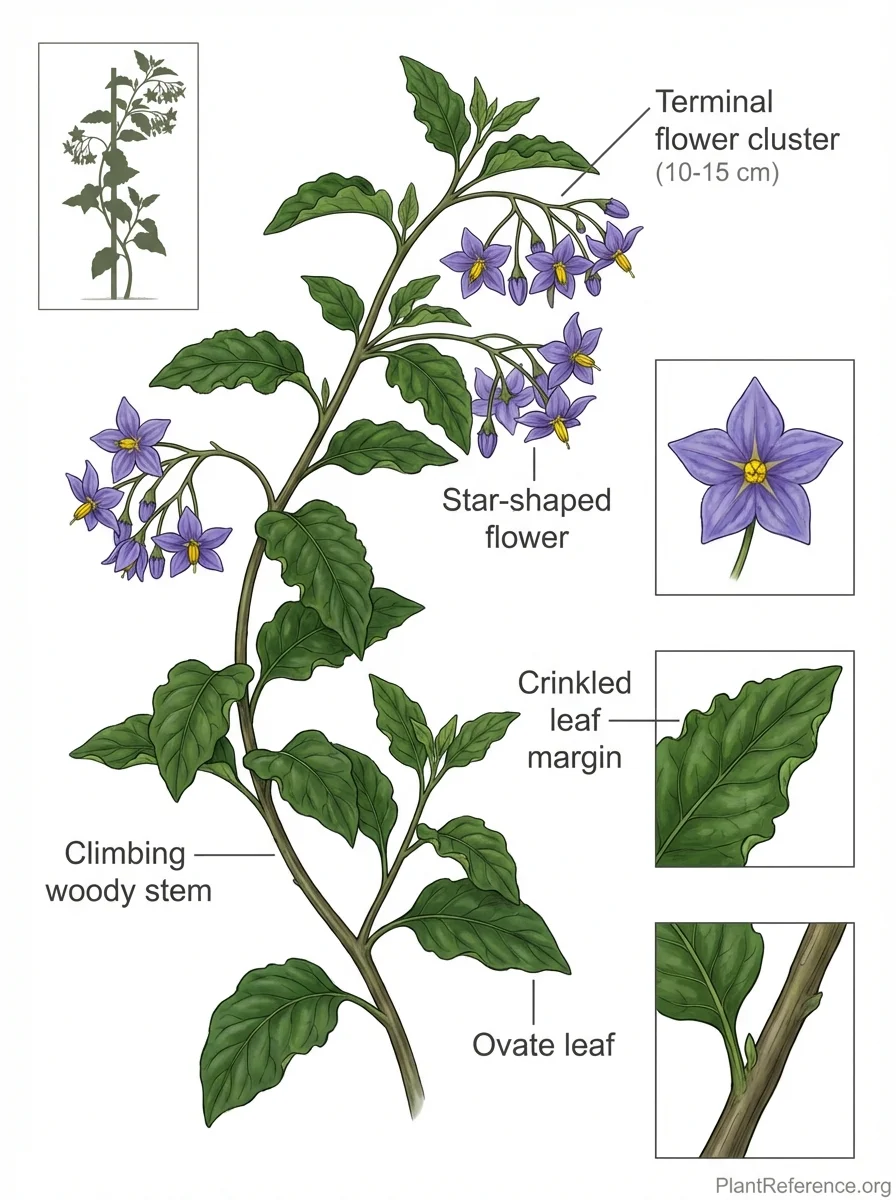
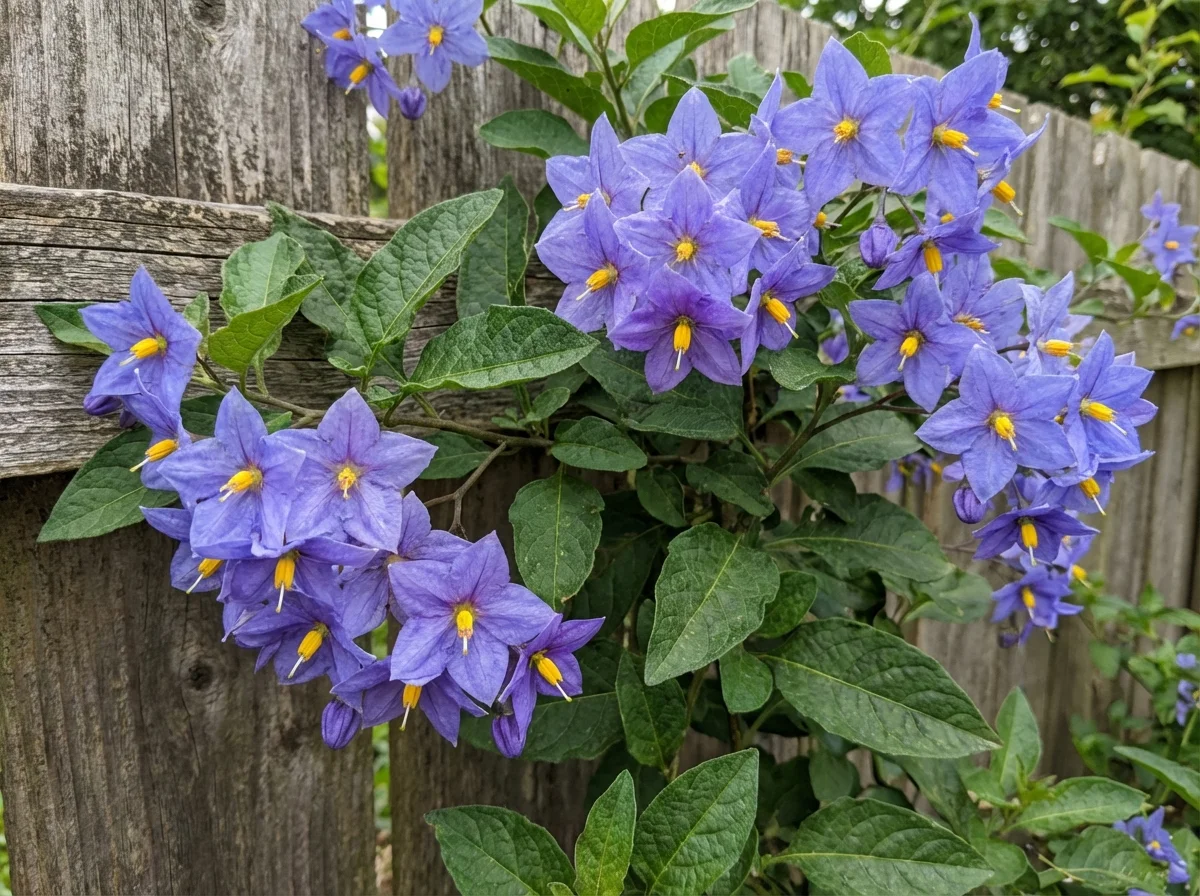
Solanum crispum 'Glasnevin' (syn. 'Autumnale') is a semi-evergreen scrambling shrub reaching 10–15 feet (3–4.5 m) tall with a spread of 6–10 feet (1.8–3 m). The habit is vigorous and scrambling to climbing, without tendrils or adhesive rootlets, so stems require tying to trellis, wires, or wall supports. The species is native to Chile and this cultivar was selected at the National Botanic Gardens, Glasnevin, Dublin, Ireland, in the early 20th century. Ovate to lanceolate dark green leaves 3–5 inches (8–13 cm) long are carried on woody stems; foliage may drop in winters below 20°F (−7°C). Dense clusters 4–6 inches (10–15 cm) across of fragrant star-shaped purple-blue flowers 1 inch (2.5 cm) across with prominent yellow stamens appear from June through October, a 4–5 month window with regular deadheading. The flower shape resembles potato blossoms, reflecting the genus relationship to S. tuberosum. Growth rate is fast at 4–6 feet (1.2–1.8 m) per year. Hardy to zone 8. All parts of the plant contain solanine and related alkaloids; ingestion causes gastrointestinal distress in humans and animals.
Native Range
Solanum crispum is native to Chile, where it grows in scrubby woodland and along forest margins. The cultivar 'Glasnevin' was selected and introduced from the National Botanic Gardens, Glasnevin, Dublin, Ireland, in the early 20th century for its long flowering season and increased cold hardiness over the species type.Suggested Uses
Grown on warm south- or west-facing walls, on fences, and on pergolas in zones 8–10. The long bloom window from June through October fills the late-summer gap where wall shrubs often thin. Combines with Rosa climbers, Clematis viticella cultivars, and large-leaved Hedera. Not suited to containers, exposed cold sites, or regions colder than zone 8. All parts contain solanine; the plant is not grown where children or livestock graze the foliage or fruits.How to Identify
Appearance
Size & Dimensions
Height10' - 15'
Width/Spread6' - 10'
Bloom Information
Dense clusters 4–6 inches (10–15 cm) across of fragrant star-shaped purple-blue flowers 1 inch (2.5 cm) across with yellow stamen cones appear from June through October. The bloom window spans 4–5 months with regular deadheading to remove developing fruits. Fragrance is moderate at close range and carries 3–6 feet (1–2 m) in still air.
Detailed Descriptions
Flower Description
Purple-blue with yellow stamen cones, star-shaped 1 inch in dense clusters 4-6 inches across, fragrantFoliage Description
Dark green, ovate to lanceolate 3-5 inches; semi-evergreen with drop below 20°F (−7°C)Growing Conditions
Sun Requirements
Requires 6-10 hours of direct sunlight daily
• Full Sun: 6+ hours of direct sunlight
• Partial Shade: 3-6 hours of direct sunlight
• Full Shade: Less than 3 hours of direct sunlight
Care & Maintenance
Care Guide
Grows in full sun against a warm sheltered south- or west-facing wall in well-drained soil at pH 6.0–7.5. Hardy to zone 8. Support is required, since stems do not cling on their own; tie new growth to trellis, wires, or wall supports as it extends. Winter temperatures below 20°F (−7°C) cause foliage drop and may kill stems back to ground level, with regrowth from the crown in spring. Fast growth of 4–6 feet (1.2–1.8 m) per year means regular tying and light pruning to keep the plant within bounds. All parts contain solanine alkaloids; ingestion causes gastrointestinal symptoms in humans and pets.Pruning
Prune in early spring (March–April) after frost risk has passed. Cut back frost-damaged stems to firm wood, thin crowded shoots, and tie in selected leaders. Hard renovation pruning to 12 inches (30 cm) is tolerated and stimulates strong regrowth. Regular deadheading during the bloom season extends flowering into October.Pruning Schedule
Prune: March–April
early spring
Toxicity Warning
Toxic to pets and humansBotanical Flashcard