Image 1 of 6
1 / 6
Plant Reference
Solanum, Genus, lycopersicum, Species, 'Black Krim', Cultivar,
- Genus & species
- Cultivar
Black Krim tomato
Heirloom cultivar from the Crimean Peninsula (Ukraine/Russia); the species S. lycopersicum is native to western South America
Overview
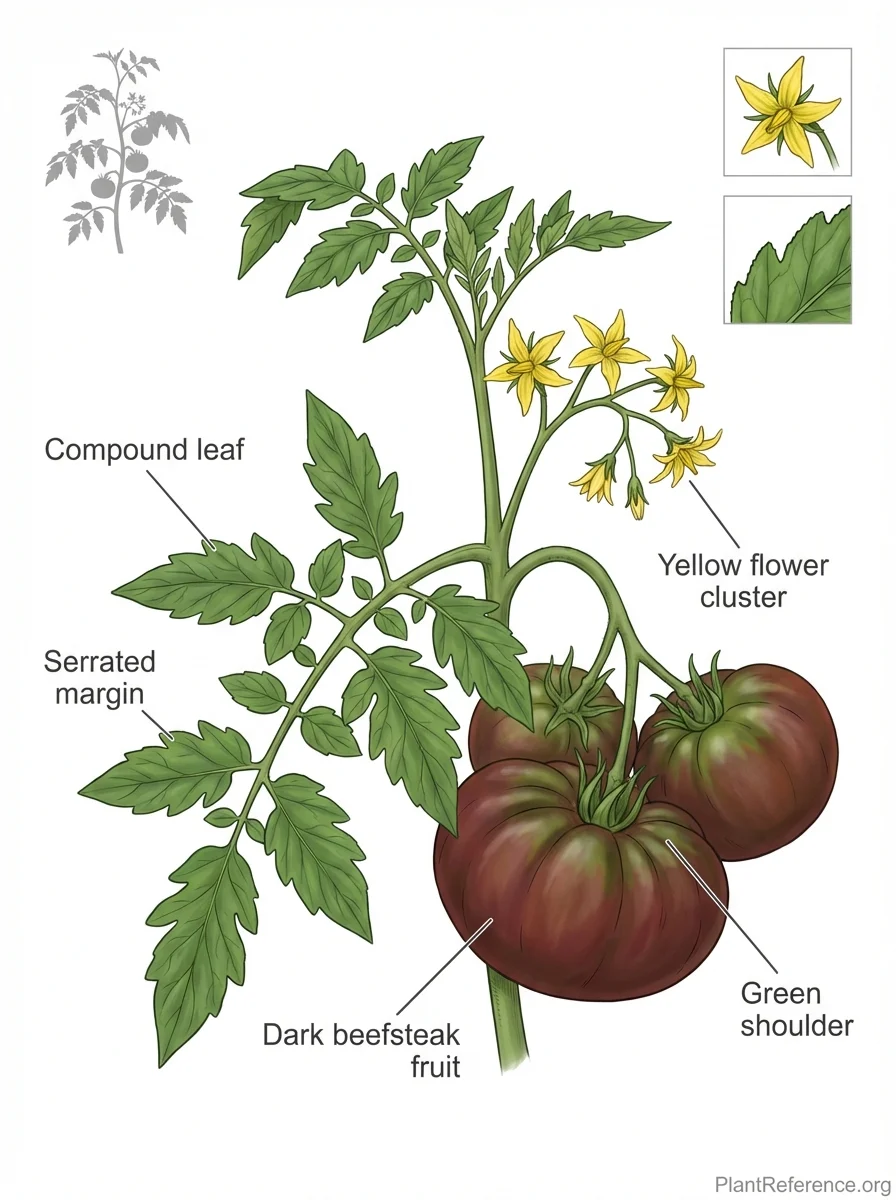
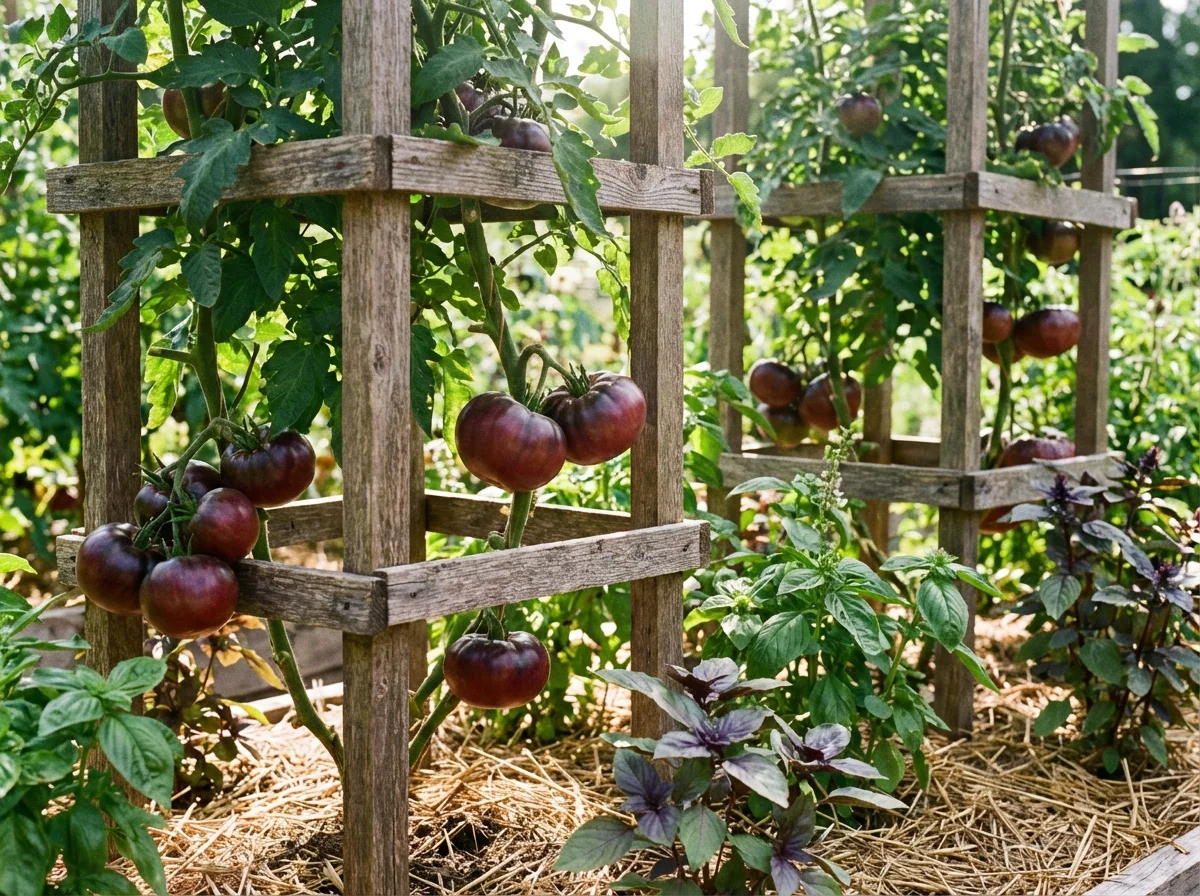
Solanum lycopersicum 'Black Krim' is Black Krim tomato, an indeterminate heirloom growing 72-96 inches (180-240 cm / 6-8 feet) on stakes or cages. Large beefsteak-type fruit 8-12 ounces (225-340 g) with deep burgundy to brownish-black skin, green shoulders, and dark red-purple flesh. The dark skin color is from anthocyanin pigments overlaying the red lycopene. Bright yellow flowers in clusters. In the nightshade family (Solanaceae). From the Crimean Peninsula — 'Krim' is the Russian spelling of Crimea. Introduced to the US seed trade by Lars Olov Rosenstam in the 1990s. Heirloom (open-pollinated): seed can be saved. Indeterminate: requires staking or caging (6-8 feet / 180-240 cm). No hybrid disease resistance: susceptible to late blight (Phytophthora infestans), Fusarium wilt, and cracking. The fruit cracks readily in heavy rain or inconsistent watering. The thin skin bruises easily during handling — not suited to commercial shipping. Start indoors 6 weeks before last frost. All green parts contain solanine — toxic to pets and humans in quantity. Ripe fruit is non-toxic. Full sun. Tender annual. Growth rate is fast.
Native Range
Heirloom cultivar from the Crimean Peninsula (Ukraine/Russia). The species S. lycopersicum is native to western South America (Peru, Ecuador).Suggested Uses
Grown in vegetable gardens and large containers (20 gallons / 76 L). The dark burgundy-black beefsteak fruit. Heirloom — save seeds. Thin skin — not for shipping. No disease resistance. Cracks in rain. Green parts toxic. Tender annual.How to Identify
Appearance
Size & Dimensions
Height6' - 8'
Width/Spread3' - 4'
Bloom Information
Detailed Descriptions
Flower Description
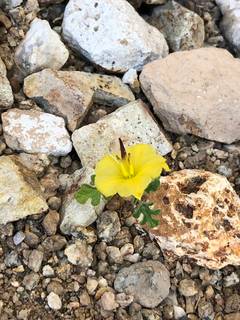
Bright yellow, 5-petaled, in clustersFoliage Description
Medium to dark green, pinnately compound with toothed leaflets, slightly fuzzyGrowing Conditions
Sun Requirements
Requires 6-10 hours of direct sunlight daily
• Full Sun: 6+ hours of direct sunlight
• Partial Shade: 3-6 hours of direct sunlight
• Full Shade: Less than 3 hours of direct sunlight
Care & Maintenance
Care Guide
Full sun (6+ hours). Rich moist soil pH 6.0-6.8. Start indoors 6 weeks early. Stake or cage (indeterminate — 6-8 feet). No disease resistance — susceptible to blight, wilt, cracking. Consistent watering (cracks in rain). Thin skin bruises. Green parts toxic. Tender annual.Pruning
Remove suckers weekly from leaf axils. Remove lower leaves below the first fruit truss. Top the main stem 4-6 weeks before frost. Stake or cage required. 20-gallon (76 L) containers minimum.Pruning Schedule
Prune: June–September
summerfall
Container Growing
Suitable for container growing
Minimum container size: 20 gallons
Toxicity Warning
Toxic to petsPlanting Guide
Planting Methods & Timing
Planting Method
transplant
Indoor Start
6 weeks before last frost
Direct Sow Timing
Not recommended — transplant only
Days to Maturity
69–90 days
Plant Spacing
24 inches
Botanical Flashcard