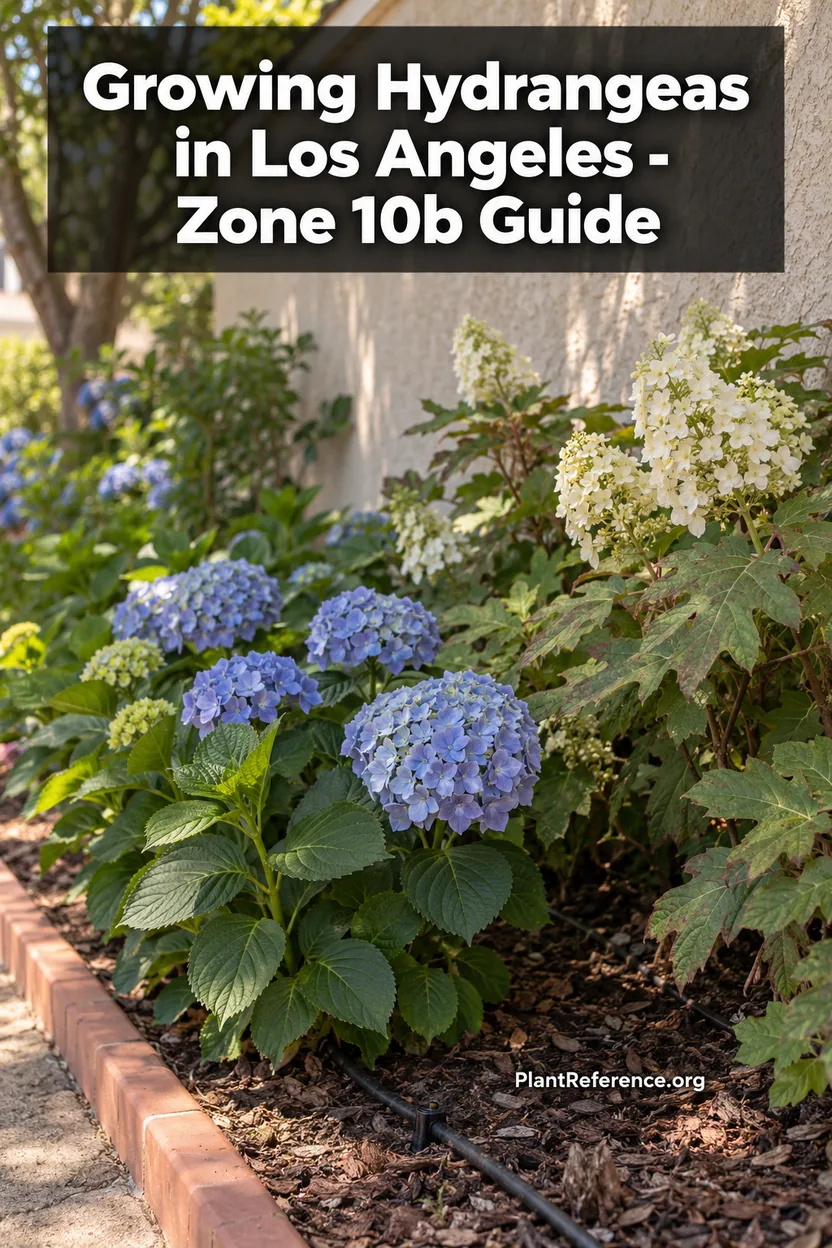
Growing Hydrangeas in Los Angeles: Zone 10b Guide
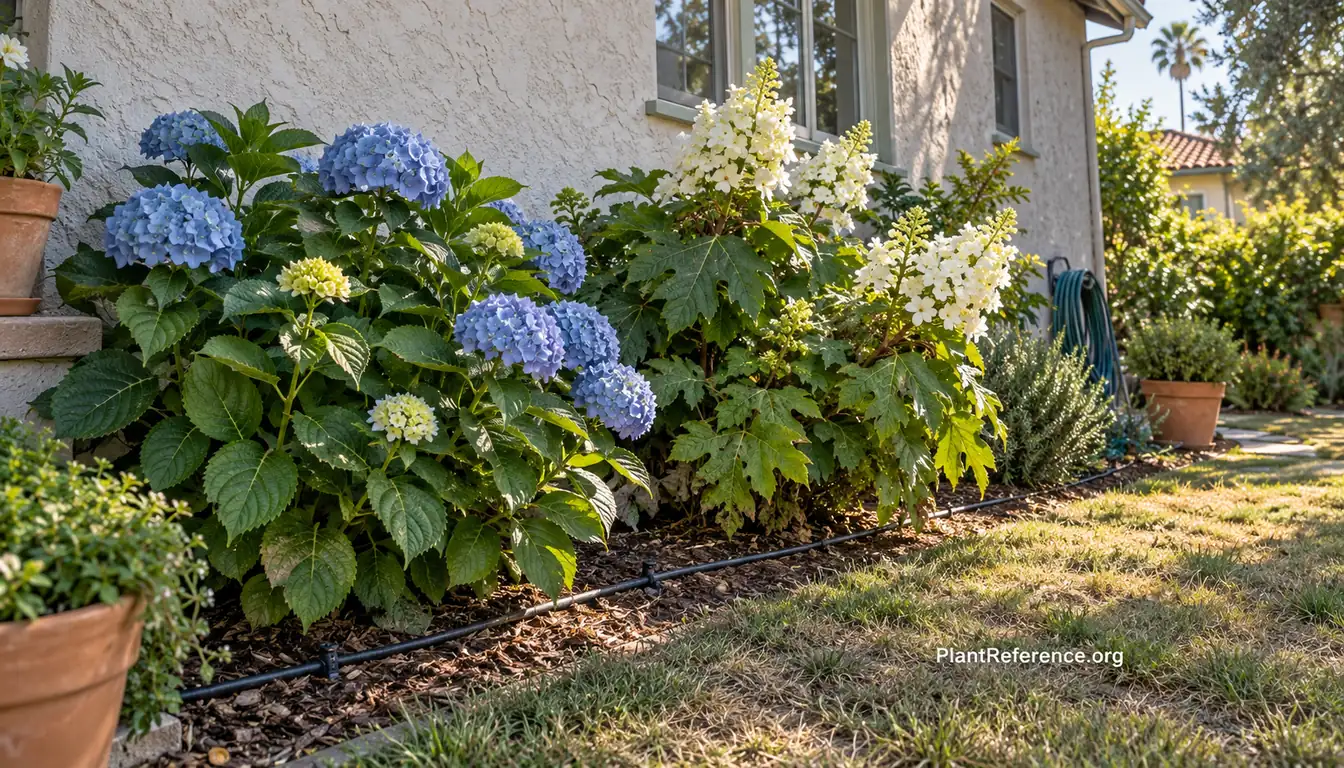
— Image © PlantReference.org 2026
Pets & Toxicity
Recorded toxicity for plants linked in this guide. An unknown status is not a safety assessment.
Toxic to pets: bigleaf hydrangea, BloomStruck Hydrangea, endless summer hydrangea and 4 moreDetailsHide
Hydrangea macrophylla — Toxicity Warning
Toxic to pets and humansView Hydrangea macrophylla plant profileHydrangea macrophylla 'BloomStruck' — Toxicity Warning
Toxic to pets and humansView Hydrangea macrophylla 'BloomStruck' plant profileHydrangea macrophylla 'Endless Summer' — Toxicity Warning
Toxic to pets and humansView Hydrangea macrophylla 'Endless Summer' plant profileHydrangea quercifolia — Toxicity Warning
Toxic to pets and humansView Hydrangea quercifolia plant profileHydrangea quercifolia 'Snow Queen' — Toxicity
Non-toxicView Hydrangea quercifolia 'Snow Queen' plant profileHydrangea paniculata — Toxicity Warning
Toxic to pets and humansView Hydrangea paniculata plant profileHydrangea paniculata 'Limelight' — Toxicity Warning
Toxic to petsView Hydrangea paniculata 'Limelight' plant profileHydrangea arborescens 'Incrediball' — Toxicity Warning
Toxic to petsView Hydrangea arborescens 'Incrediball' plant profileGrowing hydrangeas in Los Angeles is less about winter survival than summer water balance. Zone 10b rarely damages dormant stems, but a cool coastal garden and a hot San Fernando Valley courtyard can behave like different climates. Dry air, alkaline irrigation water, reflected heat, and long rainless summers determine success. Start with a protected site, match the species to the neighborhood, and build irrigation into the plan before planting.
The species distinctions in Hydrangea Types Explained: Pruning, Color & Care Guide matter here. Bigleaf hydrangeas suit cool coastal neighborhoods, while oakleaf and carefully sited panicle hydrangeas cope better with inland warmth. Smooth hydrangeas can work in bright shade but need reliable water. No hydrangea is truly drought tolerant during establishment.
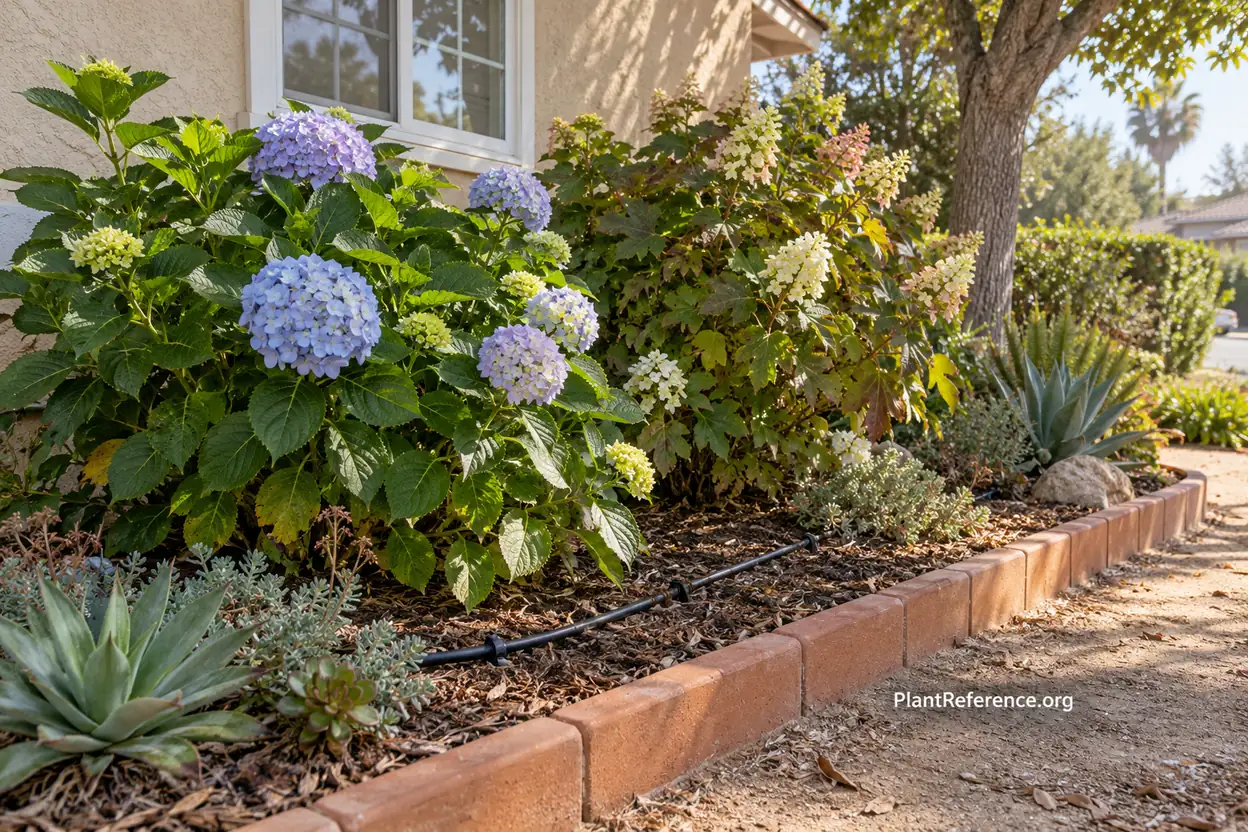
Best Hydrangea Varieties for Los Angeles
Bigleaf hydrangea 🌿Hydrangea macrophylla is the classic choice near the coast, where marine air moderates afternoon temperatures. 🌿Hydrangea macrophylla 'BloomStruck' reaches roughly 3-4 feet (90-120 cm) and flowers on old and new wood, giving it more chances to bloom after accidental pruning. 🌿Hydrangea macrophylla 'Endless Summer' grows about 3-5 feet (90-150 cm) and produces familiar mophead flowers, but it needs unwavering moisture and shelter from hot walls.
Color is not permanent. Bigleaf flowers trend blue only when roots can access aluminum in acidic soil; alkaline soil and water push them toward pink. White cultivars do not change color. How to Change Hydrangea Color: Blue, Pink & Purple explains the chemistry. In much of Los Angeles, a large container filled with an acidic bark-based mix is easier to manage than repeatedly treating an alkaline bed.
Oakleaf hydrangea 🌿Hydrangea quercifolia is a better fit for warm inland sites with filtered light. Hydrangea quercifolia 'Ruby Slippers' stays near 3-4 feet (90-120 cm), develops rose-colored aging flowers, and brings burgundy foliage. 🌿Hydrangea quercifolia 'Snow Queen' reaches about 5-6 feet (1.5-1.8 m) with upright white panicles. Both tolerate short dry spells after establishment better than bigleaf plants, but neither accepts soggy soil.
Panicle hydrangea 🌿Hydrangea paniculata tolerates more sun and a broader pH range, although Los Angeles heat exceeds what many eastern care labels assume. Hydrangea paniculata 'Little Lime' reaches 3-5 feet (90-150 cm) and is easier to shade than a full-size selection. 🌿Hydrangea paniculata 'Limelight' grows 6-8 feet (1.8-2.4 m) and needs room, deep irrigation, and protection from western exposure. Both flower on new wood. Review Panicle Hydrangea Guide: Limelight, Little Lime & More before selecting by bloom color alone.
Smooth hydrangea Hydrangea arborescens appreciates the coolest part of the garden. 🌿Hydrangea arborescens 'Incrediball' grows 4-5 feet (1.2-1.5 m), flowers on new wood, and carries large white heads. Its broad leaves transpire quickly during Santa Ana winds, so reserve it for morning sun or bright open shade with a wide mulched root zone.
Variety | Mature Size | Best Setting | Los Angeles Notes |
|---|---|---|---|
3-4 ft (90-120 cm) | Cool coastal garden | Reblooming habit; requires steady moisture | |
3-5 ft (90-150 cm) | Sheltered morning sun | Protect from reflected heat and alkaline soil | |
Hydrangea quercifolia 'Ruby Slippers' | 3-4 ft (90-120 cm) | Warm filtered shade | Compact and relatively resilient after establishment |
5-6 ft (1.5-1.8 m) | Large woodland-style border | Strong structure; excellent drainage required | |
Hydrangea paniculata 'Little Lime' | 3-5 ft (90-150 cm) | Inland morning sun | New-wood bloom and manageable size |
4-5 ft (1.2-1.5 m) | Cool bright shade | Large flowers; high summer water demand |
Containers provide control over soil mix and placement. They also dry much faster than the ground, especially on balconies and paved patios. A 20-25 gallon (76-95 L) pot is a practical minimum for a compact shrub. Hydrangeas in Pots: Container Care & Winter Protection covers pot sizing and root protection in more detail.
Specific Planting Dates for Los Angeles
The city data places Los Angeles in Zone 10b, with an average last frost around February 15 and first frost around December 15. Those dates define a long season, but hydrangeas do not need warm soil to establish. Cool, moist weather is the advantage. The best planting window is November 1 through February 28, when lower evaporation lets roots expand before summer.
November and December planting works especially well if winter rains begin on time. Irrigate after planting even when rain is forecast, because a nursery root ball can stay dry inside moist surrounding soil. January and February are also dependable. In the coolest coastal neighborhoods, planting can continue into March, but inland gardeners should finish earlier.
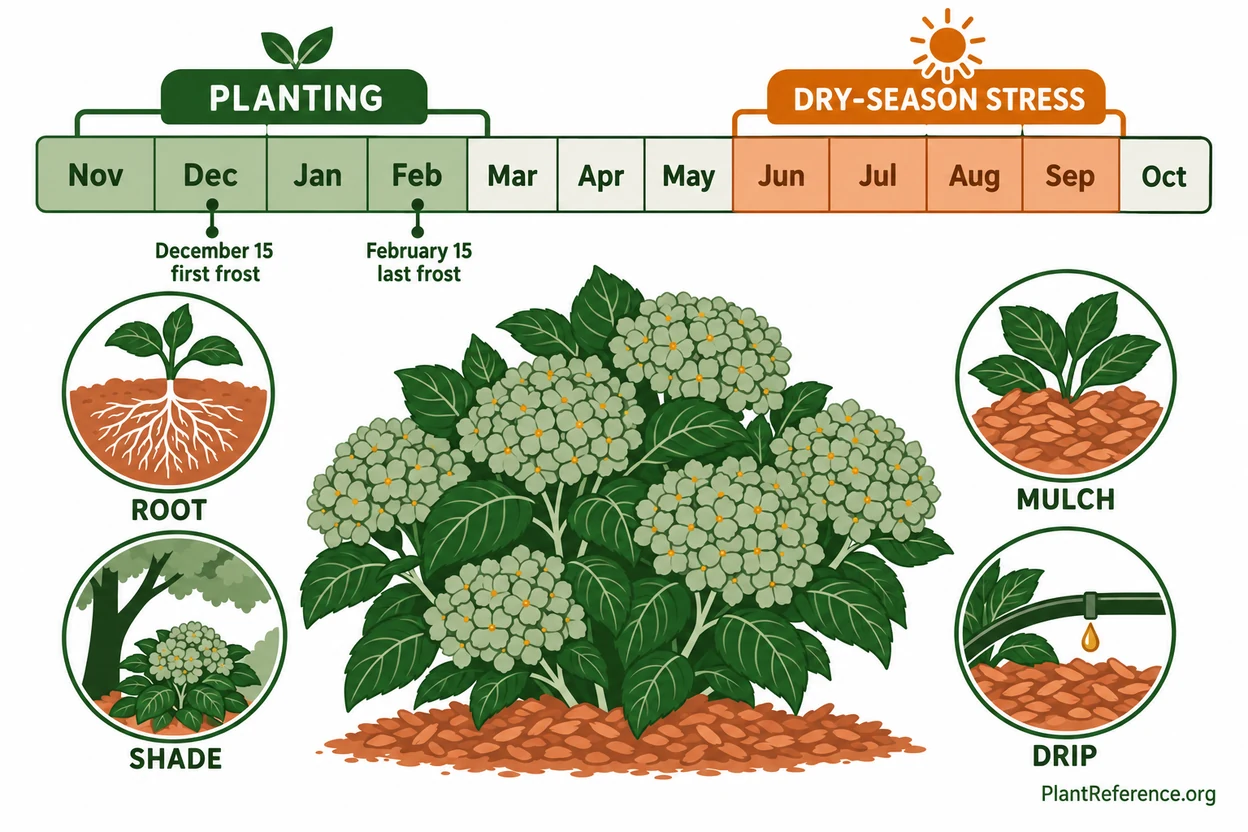
Use this annual schedule:
October: Test irrigation coverage, drainage, and soil pH before buying plants.
November-February: Complete new planting and transplanting during cool weather.
March-April: Finish late coastal planting and begin regular moisture checks.
May-October: Maintain mulch, inspect emitters, and avoid unnecessary transplanting.
September-October: Prepare shaded sites for the next cool-season planting window.
December: Renew mulch after leaf cleanup while keeping stems uncovered.
Do not treat a midsummer nursery sale as a planting deadline. Hold the shrub in bright shade, monitor the pot daily, and install it after temperatures moderate. If the root ball must be planted in spring, disturb it as little as possible and provide temporary shade during heat waves.
Complete Growing Guide for Los Angeles
Read the Neighborhood Before Choosing the Plant
Coastal areas west of the basin receive cooler afternoons, marine clouds, and smaller temperature swings. Bigleaf hydrangeas can bloom for months there. Inland valleys and foothill neighborhoods experience hotter afternoons, lower humidity, and more intense Santa Ana winds. Choose oakleaf or a compact panicle selection, and expect flowers to age faster during hot weather.
An east or northeast wall provides the safest exposure. Aim for three to five hours of morning sun, followed by shade by early afternoon. High, shifting tree shade can work if roots do not compete heavily. Avoid west-facing masonry, south-facing fences, air-conditioner exhaust, artificial turf edges, and pool decking. These surfaces radiate heat into leaves after sunset.
Space shrubs at their mature width so air moves through the canopy and emitters can cover the full root zone. Plan a Perennial Garden That Blooms Spring to Fall can help arrange lower-water companions outside the hydrangea's irrigation basin rather than crowding the crown.
Prepare a Wide, Oxygenated Root Zone
Los Angeles soils vary from sandy coastal ground to dense inland clay, but many are alkaline. Dig a hole two to three times the root-ball width and no deeper than the root ball. Set the top 1 inch (2.5 cm) above grade, roughen glazed sides, and backfill mostly with native soil. Mixing a small pocket of peat or potting mix into clay creates a water-holding bowl instead of durable drainage.
Spread 1-2 inches (2.5-5 cm) of finished compost across the broader bed and blend it into the upper 6-8 inches (15-20 cm). Test drainage with a 12-inch (30 cm) hole. If water remains after 24 hours, create an 8-12 inch (20-30 cm) raised mound or relocate the shrub. Poor Drainage in Raised Beds: Causes and Fixes for Waterlogged Soil explains why oxygen matters as much as moisture.
Irrigate for a Mediterranean Climate
Hydrangeas generally need 1-2 inches (2.5-5 cm) of water weekly, but Los Angeles weather, soil, and municipal watering rules make inches only a starting point. Use dripline or a soaker hose under mulch. Arrange emitters across the expanding root zone, not against the stems. Run long enough to moisten soil 8-12 inches (20-30 cm) deep, then allow the surface to begin drying.
Check soil 2-3 inches (5-8 cm) deep in several places. A meter helps compare areas, but your finger and a narrow trowel confirm texture. Afternoon droop that recovers overnight can be a protective heat response. Leaves still limp at dawn indicate a real imbalance: dry roots, a plugged emitter, saturated soil, or root damage.
Apply 3 inches (8 cm) of shredded bark or arborist chips over the root zone and leave 3 inches (8 cm) clear around stems. Mulch lowers evaporation, buffers root temperature, and improves soil gradually. It cannot compensate for a failed drip zone. Inspect filters and emitters monthly during the dry season.
Manage Alkaline Soil and Irrigation Water
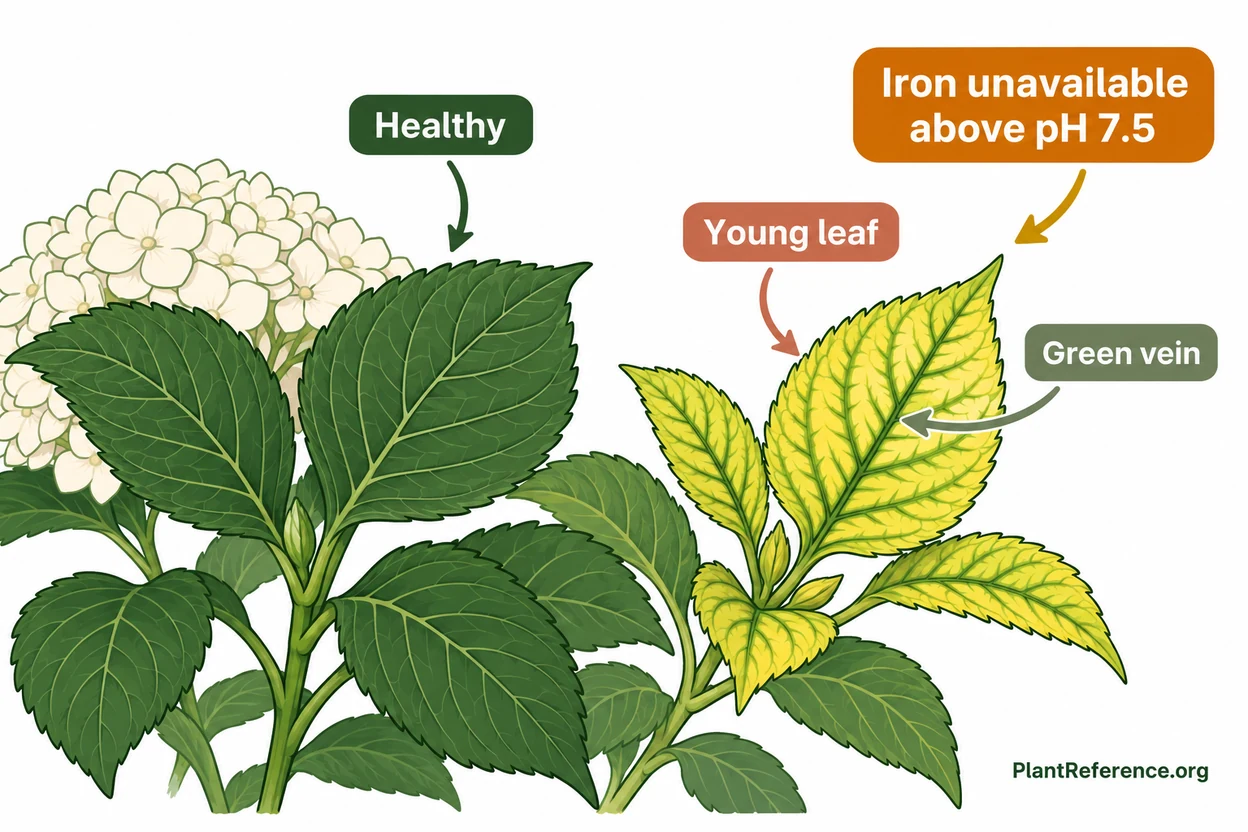
Iron chlorosis appears first on young leaves as yellow tissue between green veins. High pH makes iron chemically unavailable even when soil contains plenty. Test soil before treating. Chelated iron labeled for alkaline conditions may correct symptoms, but it will not solve compacted or waterlogged roots.
Lowering an entire alkaline bed takes time. Incorporate organic matter broadly, use acid-forming fertilizer only when a test supports it, and apply elemental sulfur according to laboratory guidance. Repeated large acid or aluminum applications can injure roots. Raised Bed Soil pH Problems: Testing, Adjusting, and Maintaining Balance offers a measured testing approach.
Feed Lightly and Protect Living Soil
Apply a slow-release balanced fertilizer in late winter only if growth or soil testing shows a need. Excess nitrogen produces large soft leaves that demand more water and can reduce flowering. Stop routine feeding by early summer. Compost and mulch support the soil without forcing vulnerable growth during heat.
Los Angeles dry air usually keeps foliar disease lighter than in the Southeast, so avoid preventive chemical spraying without symptoms. Water at soil level, remove fallen diseased leaves, and allow airflow. Beneficial insects are valuable; broad insecticide use can turn a minor mite problem into a recurring outbreak.
Troubleshooting Los Angeles-Specific Problems
Heat scorch begins at tips and margins, especially on leaves facing afternoon sun. Brown tissue feels crisp rather than spotted. Confirm deep moisture, improve shade, and extend mulch. Do not flood the bed every evening. Saturated roots cannot supply a hot canopy because they lack oxygen.
Salt burn can resemble drought stress. Municipal water and fertilizer salts accumulate when irrigation is frequent but shallow. A white crust on soil or containers supports the diagnosis. Improve drainage and periodically irrigate deeply enough to move salts below active roots, provided local rules and soil drainage allow.
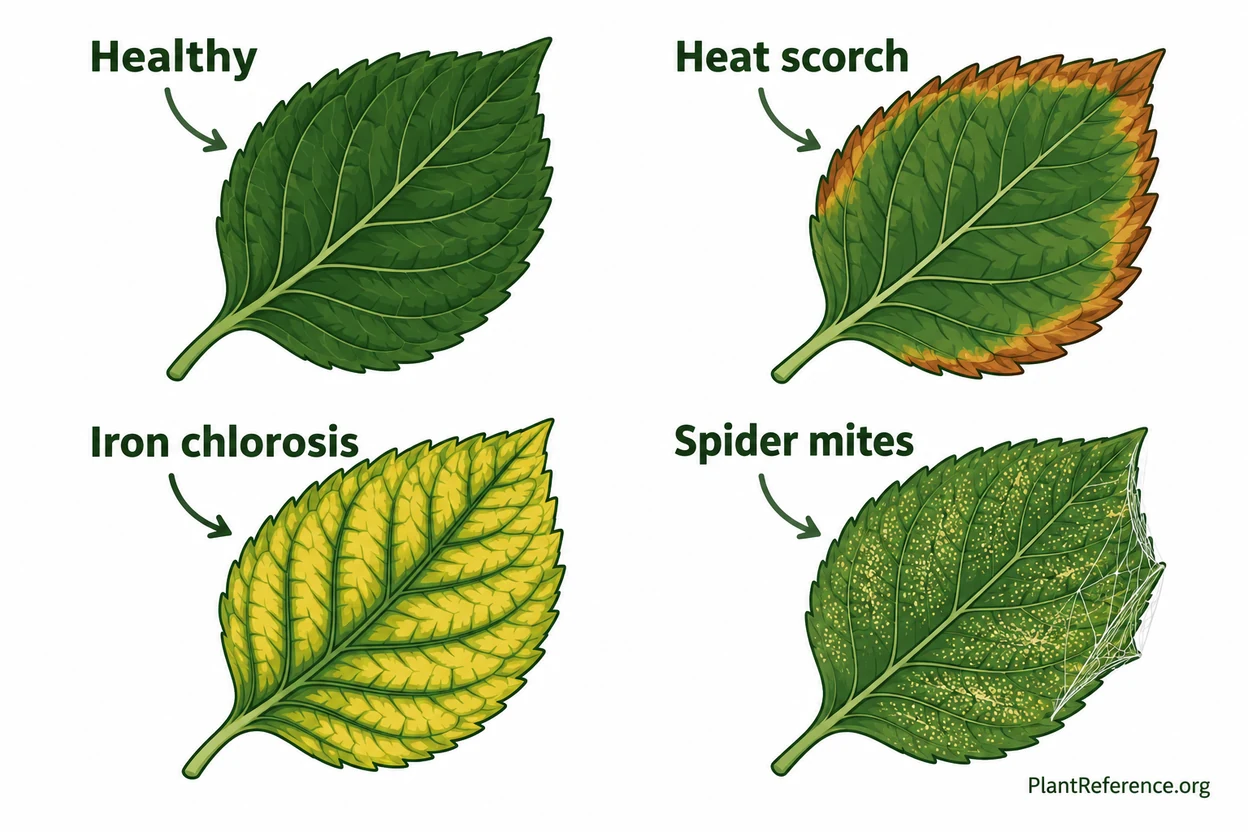
Spider mites favor hot, dry, dusty foliage. Look for pale stippling and fine webbing beneath leaves. Rinse undersides with water early in the day, reduce dust, and reassess before treating. Neem oil can damage heat-stressed leaves if applied in direct sun or high temperatures, so follow the label and test a small area.
Cercospora leaf spot creates purple-brown spots with pale centers and usually begins low in the canopy. It is less relentless in dry Los Angeles air, but shaded wet foliage can still support it. Remove affected fallen leaves and keep irrigation off the canopy. Hydrangea Leaves Turning Brown: Causes and Solutions helps distinguish spots from scorch and dehydration.
A leafy shrub without flowers may have been pruned at the wrong time, overfed, or placed in too much shade. Bigleaf and oakleaf hydrangeas carry most buds on old wood, while panicle and smooth types bloom on new growth. Hydrangea Not Blooming? 7 Causes and the Old Wood Fix and How to Prune Hydrangeas: Old Wood vs New Wood Guide provide the diagnostic sequence.
Flowers, Pruning, and Year-Round Care
Prune according to bloom wood, not the calendar alone. Remove dead, rubbing, or damaged stems at any time. Shape bigleaf and oakleaf plants immediately after flowering and avoid hard winter cuts. Prune panicle and smooth hydrangeas lightly in late winter, keeping a strong framework rather than cutting every stem to the ground.
Los Angeles can produce a long display when spent flowers are removed selectively and moisture remains steady. Reblooming bigleaf types may cycle through flowers in sheltered coastal sites. Inland heat can pause bud development; cooler autumn nights may trigger another flush if the plant stayed healthy.
Cut flowers early in the morning after sepals feel slightly papery. Take 12-18 inch (30-45 cm) stems with clean bypass pruners, remove leaves below the waterline, and place stems immediately in a bucket. For drying, stand mature stems in 1-2 inches (2.5-5 cm) of water and let it evaporate in a cool, shaded room.
Autumn cleanup should be selective. Remove spotted leaves and debris, renew mulch, and check irrigation after Santa Ana winds. Healthy oakleaf foliage and panicle heads can remain for structure. How to Prepare Perennial Gardens for Winter by Species helps coordinate cleanup without stripping the entire border of habitat.
Frequently Asked Questions

Three daily games
Can you name a plant on sight?
Friday’s specimenCrataegus laevigata 'Paul's Scarlet'Reading about plants and recognising them are different skills. These three build the second.
- Daily PlantIdentify the day’s mystery plant from a close-up photograph.
- Keyed OutWork a dichotomous key, lead by lead, to name a hidden specimen.
- Name That PlantName a specimen from botanical clues dealt hardest first.
Free to play, no account needed
Tagged with
Emma runs a small succulent propagation business from her home in San Diego, shipping starter plants and cuttings across the country. She fell into succulents after college when she realized they were the only plants that survived her travel schedule—she was working as a travel nurse at the time. San Diego's mild, dry climate is ideal for outdoor succulent gardens, and Emma's front yard is a living catalog of over 200 varieties. She completed a certificate program in ornamental horticulture and writes about succulent care, propagation techniques, and drought-tolerant garden design. Her writing is calm and reassuring—she knows people feel bad about killing plants, and she wants them to stop worrying so much.