Planting Under Trees: Protect Roots and Choose Plants
— Image © PlantReference.org 2026
Pets & Toxicity
Recorded toxicity for plants linked in this guide. An unknown status is not a safety assessment.
Toxic to pets: silver maple, hostasDetailsHide
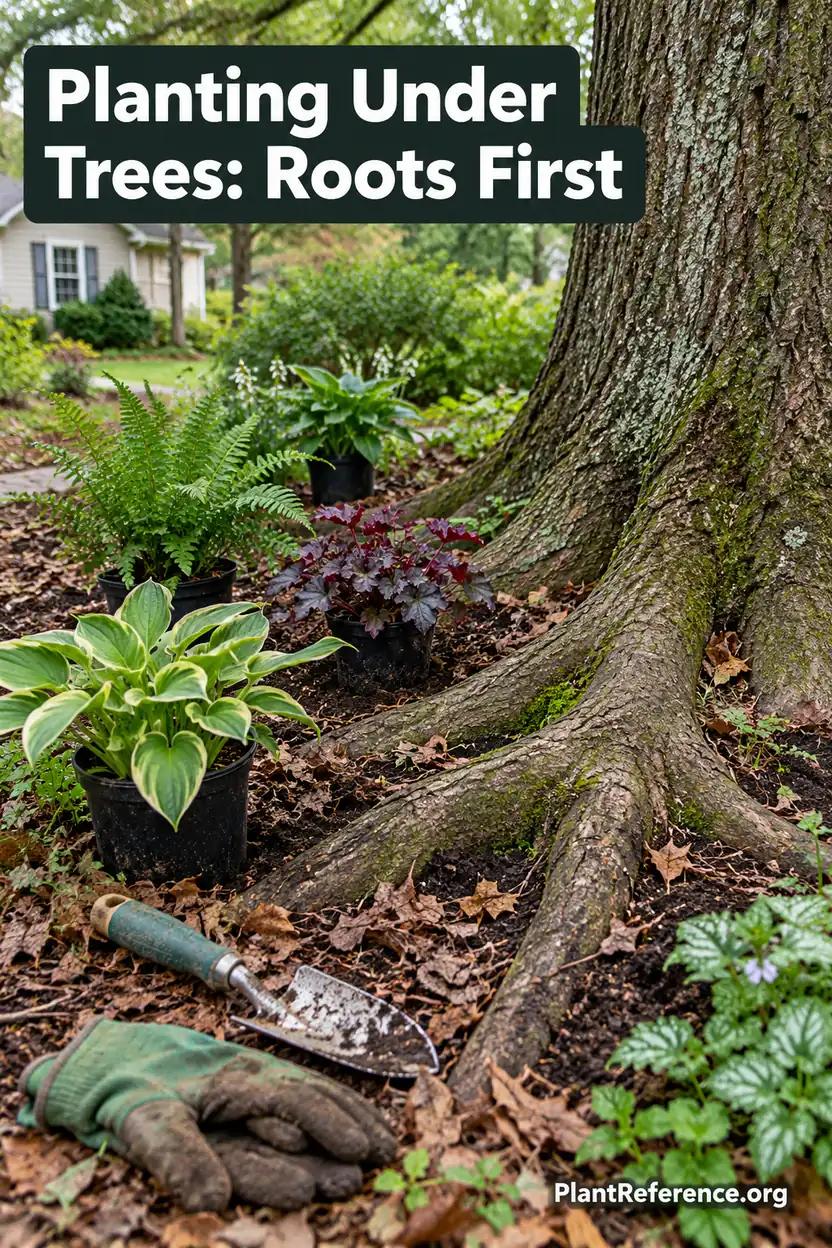
Planting under trees is not the same job as preparing an empty flower bed. The ground already contains an established root system that supplies and supports the tree. Your job is to fit suitable plants into the space that remains—not cut, bury, or replace roots until a planting plan fits.
Planting Under Trees Starts With the Tree
Look up before you look at plant catalogs. Notice the tree's canopy, visible roots, trunk base, and general condition. If the tree has major damage, unusual decline, or a recent change in stability, resolve that concern before spending money on the planting below it.
Is My Tree Dangerous? 10 Warning Signs Every Homeowner Should Know helps you recognize when the project needs professional attention. Do not turn a planting day into an improvised root-pruning job. Root damage can affect more than a tree's appearance, and consequences may not be obvious immediately.
Understand the shallow root zone
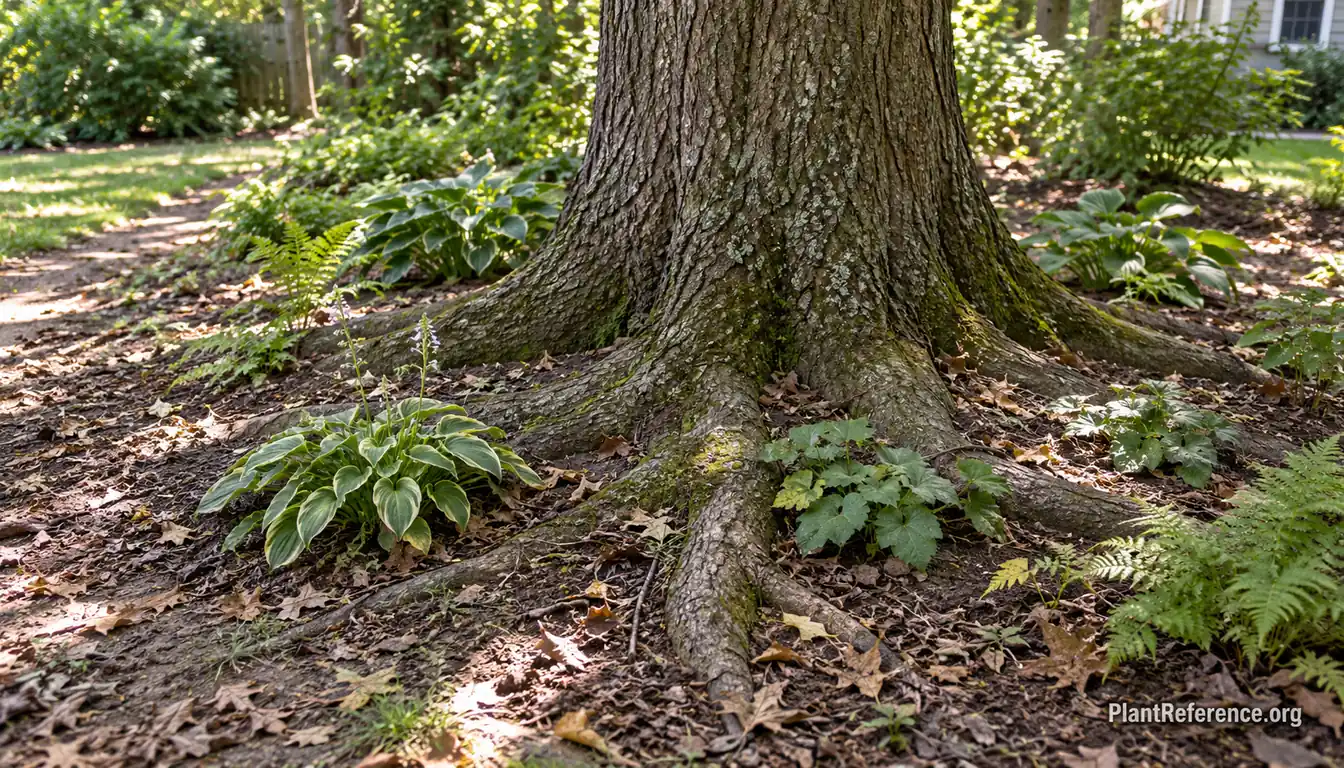
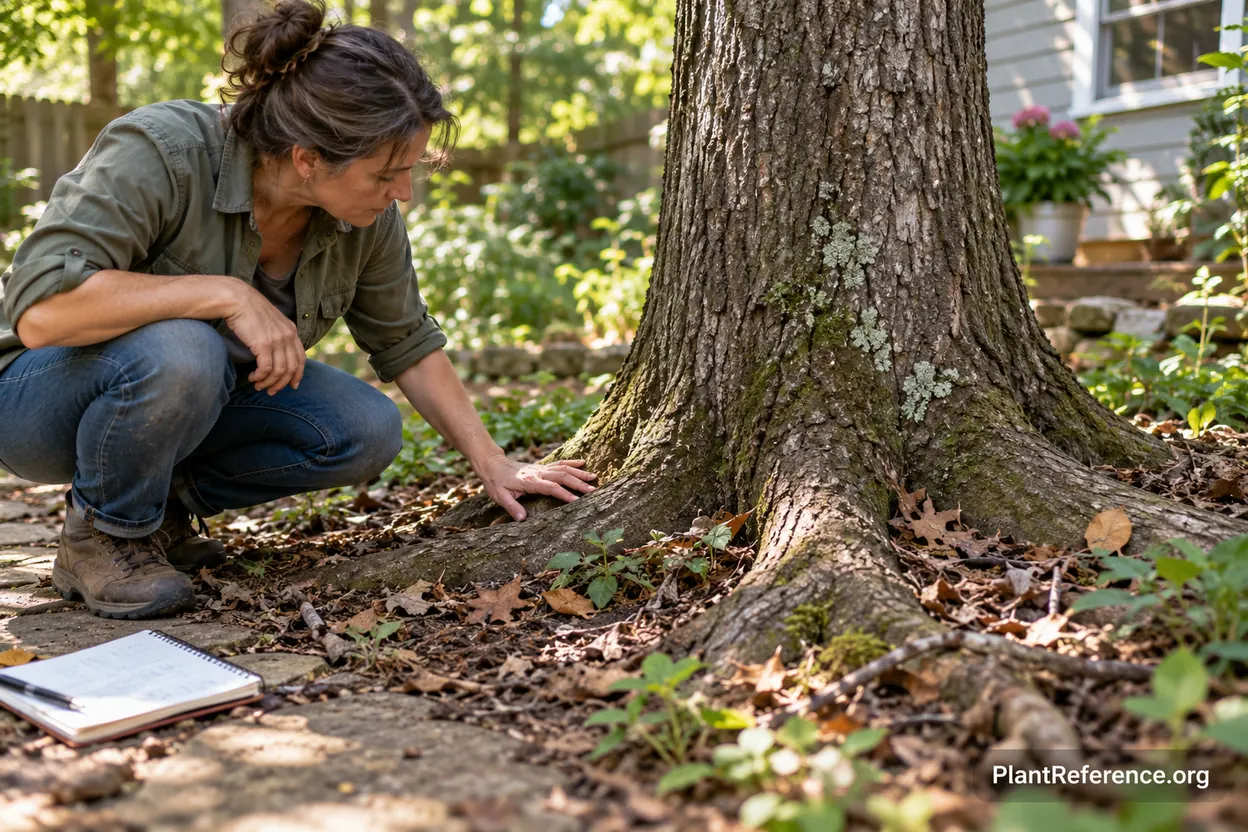
Many tree roots occupy the upper 12–18 inches (30–46 cm) of soil. That includes substantial woody roots and fine absorbing roots. The soil you might normally cultivate for perennials is therefore already doing essential work for the tree.
Roots need oxygen as well as water. Heavy traffic, digging, and changes to soil depth can alter their environment. A root that is inconvenient for your planting hole is not evidence that the tree has spare roots to lose; move the proposed plant instead.
The broader principles in How Much Soil Do Urban Trees Actually Need? The Root Volume Guide explain why usable soil matters. For an existing garden tree, preserving its functioning root zone is the starting point. You cannot compensate for damage by adding fertilizer to the surface afterward.
Compare Root Competition and Plant Choices
Tree species give useful clues, but the actual site makes the decision. Two trees of the same species can have different root patterns because of soil, irrigation, previous construction, and available space. Look for planting pockets rather than assuming that one species permits a full bed beneath its branches.
Silver maple 🌿Acer saccharinum and Norway maple 🌿Acer platanoides are challenging examples because of their competitive surface roots. Birch Betula and poplar Populus can also create strong competition for moisture. A few small plants or a mulched surface may be more successful than a densely planted border.
Tree group | Root-zone concern | Sensible planting approach |
|---|---|---|
Silver and Norway maples | Dense, competitive surface roots | Favor existing gaps, modest planting, or mulch |
Birch and poplar | Shallow roots and summer water competition | Choose suitable plants and monitor establishment moisture |
Oaks, lindens and ashes | Some sites offer more usable understory space | Inspect actual roots before choosing plant sizes |
Douglas fir and hemlock | Surface roots plus shaded growing conditions | Use small planting pockets and evaluate seasonal dryness |
Any stressed or damaged tree | Additional disturbance may compound existing problems | Obtain an assessment before changing the root zone |
Identify before generalizing
If you do not know the tree, start with How to Identify Trees by Their Leaves: Shapes, Margins, and Venation Explained. Identification helps you ask better questions, but it does not replace examining the soil and roots. Avoid turning a broad compatibility list into permission to dig wherever you please.
Douglas fir 🌿Pseudotsuga menziesii and hemlock Tsuga can shade a site year-round. Deciduous trees may let in substantial spring light and much less after leaf expansion. Plan around the light during the understory plant's active growth, not only the appearance of a bare-branched tree in winter.
Match the understory to moisture as well as shade
Western sword fern 🌿Polystichum munitum is a useful candidate for suitable woodland conditions, with dry-shade tolerance once established. Western Sword Fern and Salal Planting Guide provides more detail. Check local hardiness and growing conditions instead of assuming a plant associated with another region will work everywhere.
Hostas 🌿Hosta spp. and other broad-leaved perennials can provide contrast, but do not put moisture-demanding plants into a dry root network merely because they tolerate shade. Ligularia Ligularia, for example, needs consistently moist conditions and is a poor fit for a pocket that repeatedly dries out.
Understory choice | Best use to consider | Limitation to respect |
|---|---|---|
Evergreen fern structure in suitable shade | New plants still require establishment care | |
Broad foliage where moisture is adequate | Mature size and slug pressure vary | |
Lower foliage accents in suitable light | Cultivars differ in heat and exposure tolerance | |
Tricyrtis | Late flowers in a moist shaded pocket | Not a substitute for a dry-shade plant |
Organic mulch without plants | Dense roots or very deep shade | Keep trunk flare clear and avoid excessive depth |
Best Perennials for Shade: 12 Species That Thrive can help build a shortlist, while How to Grow Heuchera (Coral Bells) in Shade Gardens covers a useful foliage group. Choose mature dimensions that fit the space. A small nursery pot is a starting size, not a promise that the plant will stay small.
Prepare the Site Without Burying Roots
Do not build a raised flower bed against the trunk or spread a deep layer of imported soil across the root zone. The research warns that adding more than 4–6 inches (10–15 cm) can seriously disrupt root conditions. That is a warning about damage, not a safe allowance for adding anything below that depth.
Tree tolerance varies with species, condition, soil, and how much of the root area is covered. If your design requires a grade change, consult an arborist before work begins. Keep the original ground level as your reference rather than treating exposed roots as defects that need to disappear.
Improve gradually instead of replacing soil
Leaf mold and composted bark can improve the surface environment over time. They are not instructions to remove existing root-filled soil and replace it with a rich planting mix. Under a mature tree, preserving the roots takes priority over preparing a perfectly uniform bed.
Soil Health 101: How to Build Living, Productive Garden Soil explains the value of organic matter. Apply those principles conservatively here: protect soil structure, limit compaction, and let organic surface material break down gradually. Do not try to create a deep, amended planting trench around the tree.
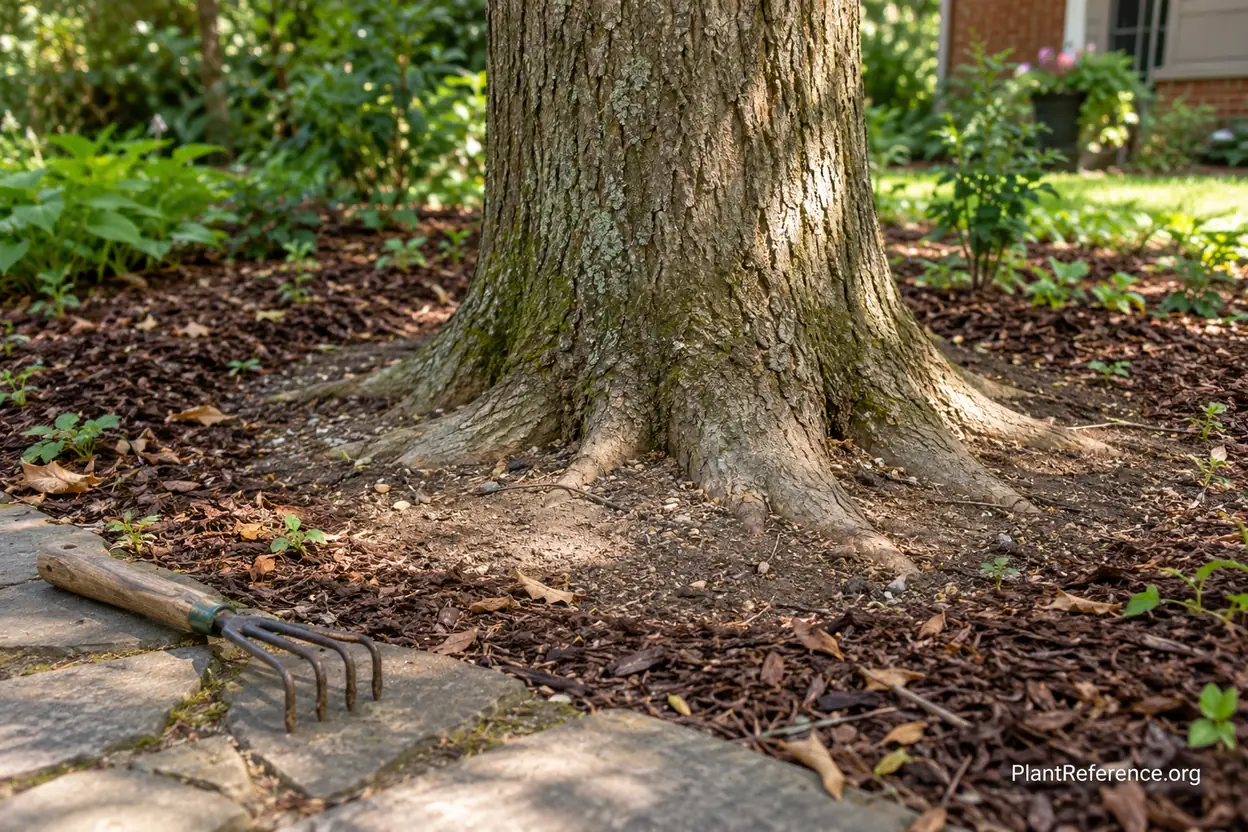
Manage compaction by preventing more of it
Choose a route for people and tools before planting. Repeated foot traffic across damp soil can make a difficult site worse. Keep heavy materials and equipment out of the root zone, and avoid using the trunk area as a temporary storage space during garden work.
If existing compaction is severe, do not solve it by digging out soil around large roots. Ask for a site-specific assessment. A professional may recommend a different approach, a smaller planting area, or leaving the ground undisturbed; all are preferable to sacrificing roots for an immediately tidy bed.
Plant Small Specimens in Existing Gaps
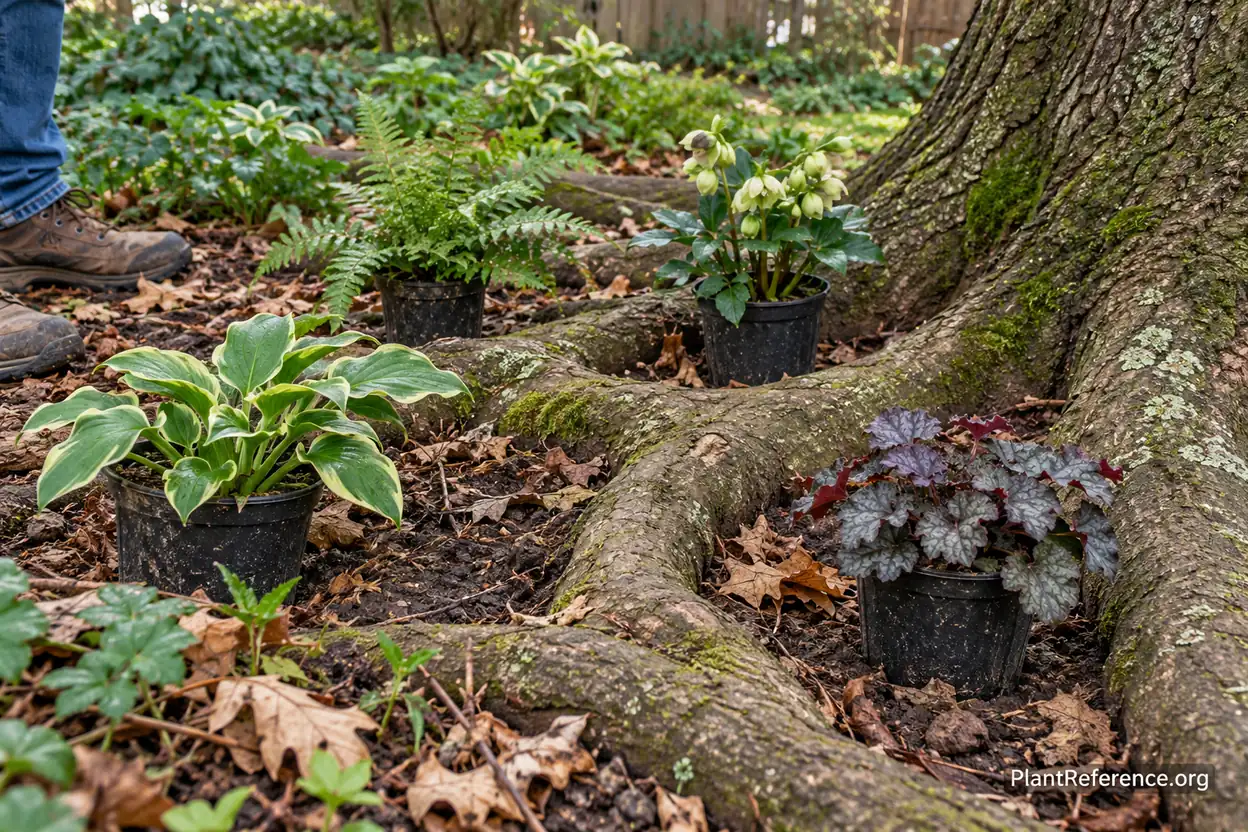
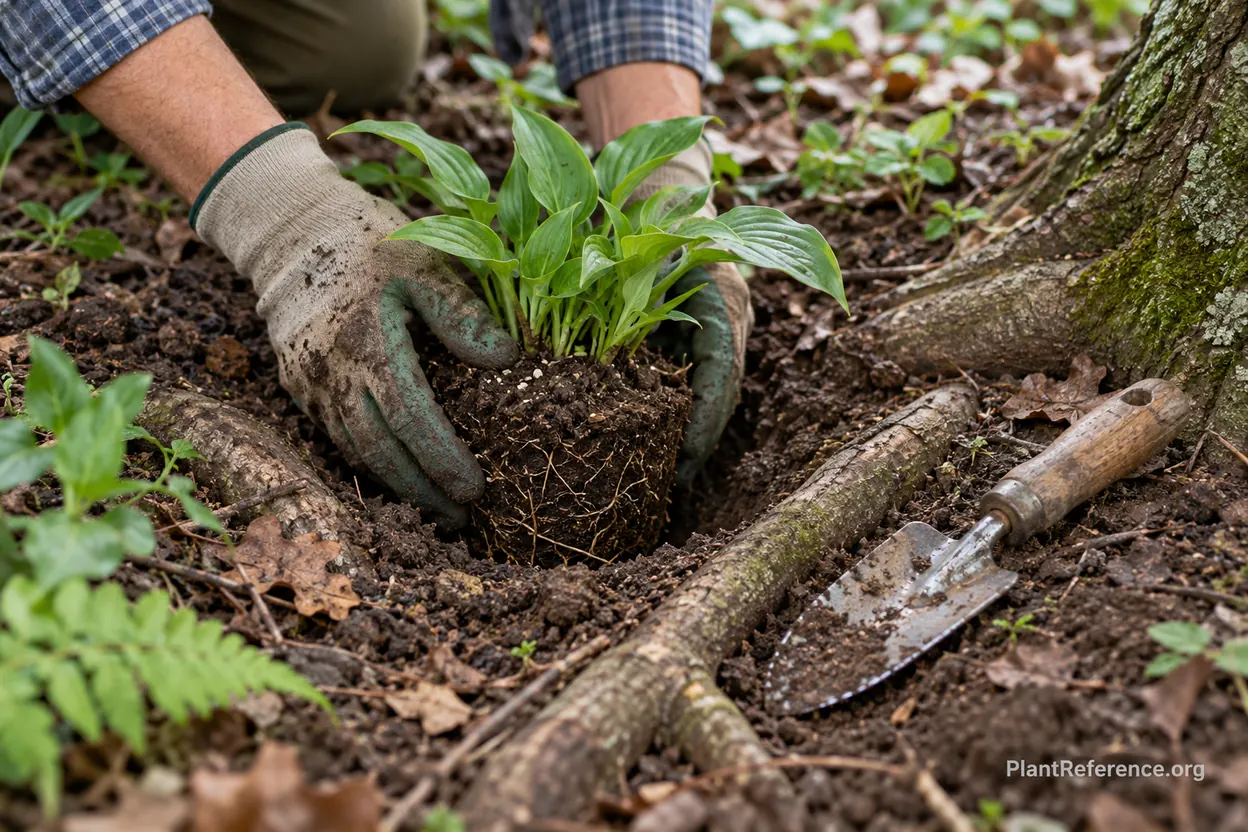
Begin with one manageable area rather than a full circle of plants around the trunk. Set the nursery pots on the ground and evaluate their mature spacing before opening holes. Keep the arrangement flexible because the roots, not the sketch, will determine the final positions.
Use hand tools and work carefully. If you encounter a woody root, stop and shift the planting position. Do not cut through it, lever it upward, or excavate beneath it to make the original layout work. There is no prize for keeping a planting plan perfectly symmetrical.
Confirm that the tree and site are suitable for additional planting.
Locate natural gaps without cutting or excavating around major roots.
Choose small specimens whose root balls fit those spaces.
Keep each plant at its established nursery planting depth.
Backfill gently with the excavated soil rather than packing it hard.
Water the new root ball and leave crowns and tree bark uncovered.
Respect the root ball's depth
The new perennial should not sit in a deep basin simply because a deeper hole was easier to find between roots. Match the hole to the root ball and keep the crown at the appropriate existing planting level. Avoid burying foliage or piling mulch onto the crown after watering settles the soil.
If no suitable pocket exists, do not carve one out with larger tools. Choose a smaller plant, move farther away, or omit that location. A sparse but healthy understory is better than a dense planting that damages the tree and struggles through every dry spell.
Do not remove major branches simply to provide more light for the new bed. Canopy work changes the tree and the habitat beneath it. Prescriptive Pruning: The PPQ Model for Structural Tree Care offers a more deliberate framework than pruning until the flower bed receives the light you hoped for.
Manage Mulch, Water and Establishment
Established trees usually compete more effectively for water than new understory plants. That competition continues after you finish planting. Check the new root ball directly rather than assuming that a recent shower, cool air, or nearby established foliage means its moisture needs are met.
Water according to conditions and the needs of both the new plants and the tree. A moisture-loving understory is not a good reason to keep a tree's root environment constantly wet. If the combination requires incompatible irrigation, change the plant selection instead of trying to satisfy both with one extreme watering routine.
Use mulch as a surface treatment
Composted bark, leaf mold, or suitable aged wood mulch can reduce exposed soil and moderate surface conditions. Spread conservatively, keep trunks and plant crowns clear, and inspect what is already present before adding more. Replenishing a thin surface layer is different from stacking annual applications into a deep blanket.
The catalog's aged hardwood mulch is a supported purchased option, not a requirement. Its recorded price and package are planning information rather than confirmation of today's listing. If suitable material is already available locally, there is no reason to buy a product simply to complete the planting.
Best Composting Method: Hot, Cold, Tumbler, Worm, Bokashi can help you choose how to handle organic garden material. Keep the distinction between finished compost, leaf mold, mulch, and imported soil clear. Their uses overlap, but none should be used to conceal a root flare or justify deep disturbance.
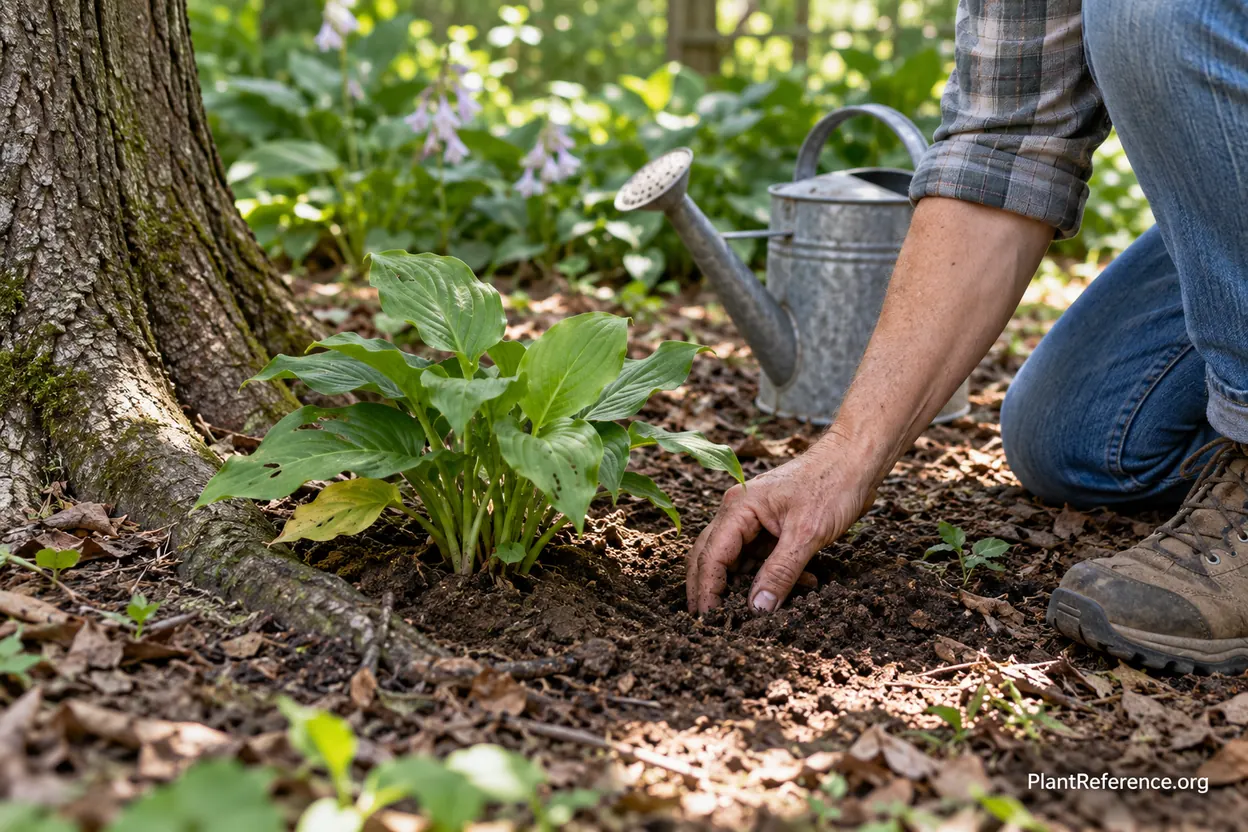
Give establishment time
Dry-shade tolerance develops with an established root system; it does not appear the moment a plant leaves its nursery pot. Watch the planting through its first dry periods, and adjust care as roots develop. Avoid adding more plants before you know how the initial group handles the site.
Keep notes on which pockets dry first, where water lingers, and which plants produce healthy new growth. These observations are more useful than repeatedly applying a general-purpose feed. Nutrition cannot compensate for a plant that never receives enough water or a root zone repeatedly disturbed by maintenance.
Monitor the Tree and Adjust the Understory
Continue looking at the tree as well as the new bed. Record any changes in canopy density, leaf condition, or visible root-zone disturbance. Do not assume a tree problem began with the planting, but do not ignore the timing either; useful records make a professional assessment more informative.
For a larger property or a long-term project, How to Write a Tree Care Plan: The Complete 2026 Guide provides a way to organize observations and maintenance. The understory should fit within the tree's care, not create a separate routine that repeatedly interferes with it.
Reassess when conditions change
A lost limb, neighboring construction, or altered drainage can change the growing conditions beneath a tree. More sun can scorch foliage that developed in shade, while added runoff can create a new wet pocket. Recheck the site before blaming the plant or adding another amendment.
Dense roots may also make some intended planting areas impractical from the start. Leave those areas mulched and use plants where the site can support them. Open space is a valid part of the design, especially when it protects a mature tree that took decades to develop.
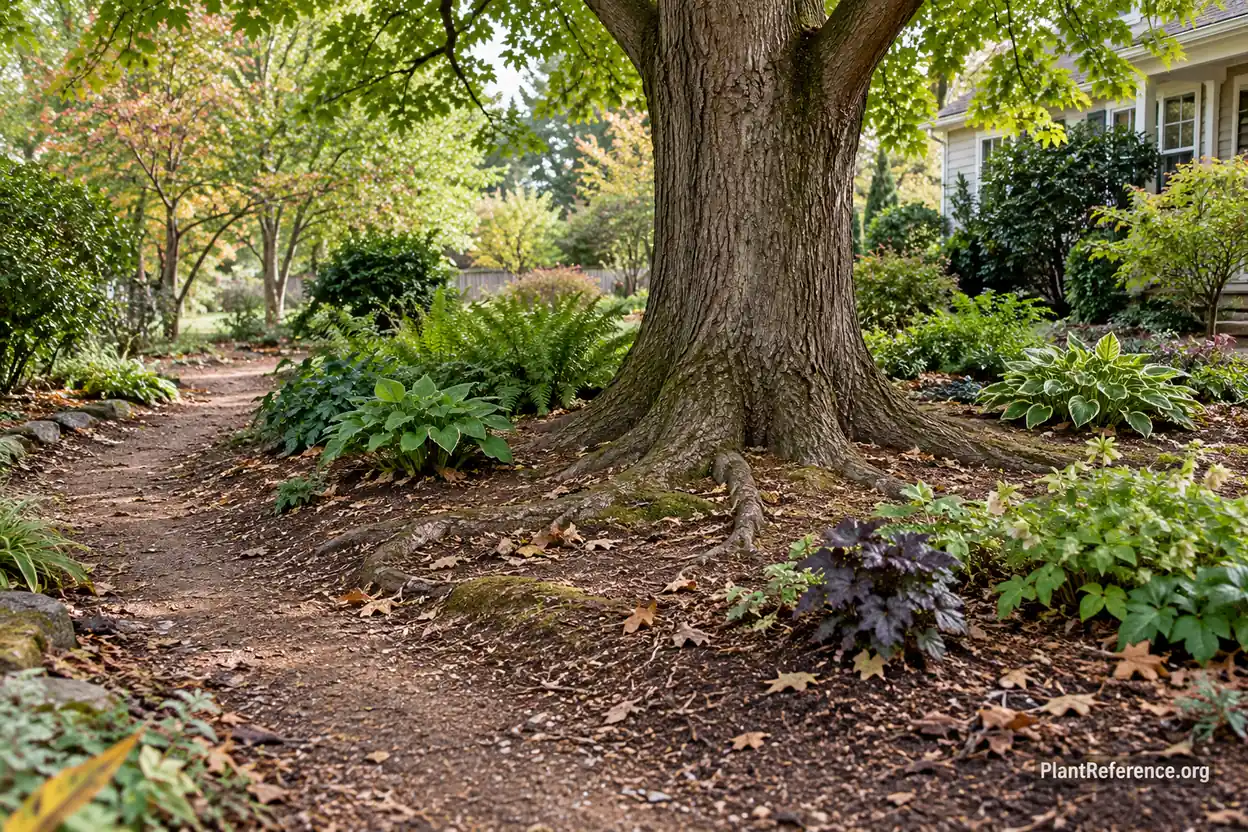
Successful planting under trees leaves the tree's basic conditions intact while adding plants that can share the space. Start small, preserve roots, and expand only where the first planting demonstrates that the site can support it. The goal is a lasting partnership, not an instant flower bed at the tree's expense.
Frequently Asked Questions

Reading about plants and recognising them are different skills. These three build the second.
- Daily PlantIdentify the day’s mystery plant from a close-up photograph.
- Keyed OutWork a dichotomous key, lead by lead, to name a hidden specimen.
- Name That PlantName a specimen from botanical clues dealt hardest first.
Free to play, no account needed
Tagged with
Derek is an arborist and tree care specialist based in Nashville. He spent a decade working for a commercial tree service before starting his own consulting practice focused on residential tree health. His background is in forest management, and he brings that perspective to urban tree care. He's particularly interested in the intersection of native trees and suburban landscapes, helping homeowners understand what's growing in their yards and how to care for it properly. Derek also teaches tree identification walks through local parks. He's straightforward about tree care: most homeowners either ignore their trees completely or prune them incorrectly, and both cost money in the long run.