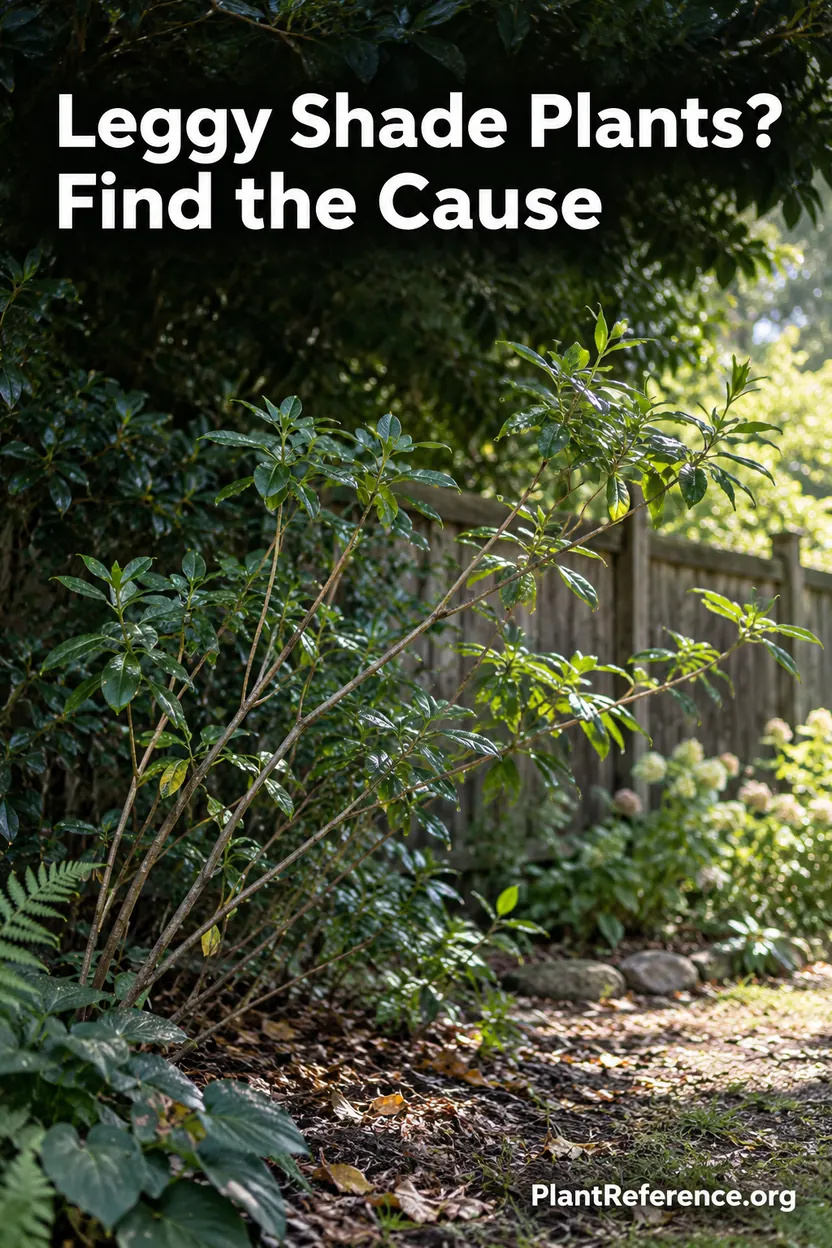
Leggy Plants in Shade: Why Growth and Flowers Falter
— Image © PlantReference.org 2026
Pets & Toxicity
Recorded toxicity for plants linked in this guide. An unknown status is not a safety assessment.
No linked plant is recorded as toxicDetailsHide
Leggy plants in shade often reveal a mismatch between the light a plant receives and the light it needs to grow compactly or flower. Before reaching for fertilizer or cutting everything back, compare shoot shape, soil moisture and the timing of missing blooms: each points toward a different remedy.
Diagnose Leggy Plants in Shade Before Cutting
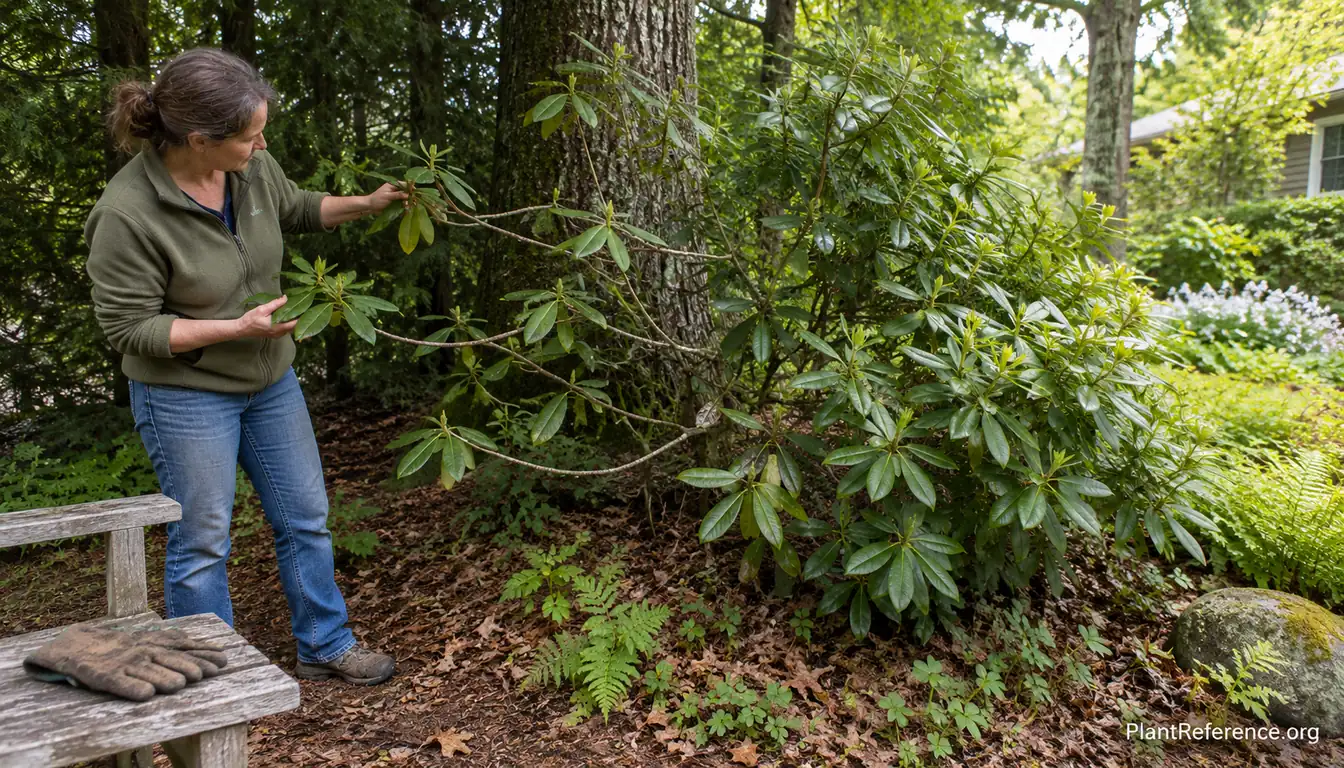
Look for long gaps between leaves, sparse branching and shoots leaning toward an opening. Compare new growth with older growth on the same plant; a change after neighboring trees filled out is more informative than height alone. Some woodland plants naturally have arching stems or widely spaced leaves.
Flowering requires resources beyond merely keeping leaves alive. A shrub can remain green in shade while producing few flower buds, so survival does not prove the location is suitable for bloom. Rhododendrons illustrate this distinction: excessive shade encourages loose growth, while too much direct sun can scorch leaves.
Missing flowers alone do not establish a light problem. Buds that formed and then disappeared suggest browsing, pruning or damage; buds that rotted in wet weather suggest a different diagnosis. Use Why Your Rhododendron Isn't Blooming (and How to Fix It) for that shrub's more specific checks.
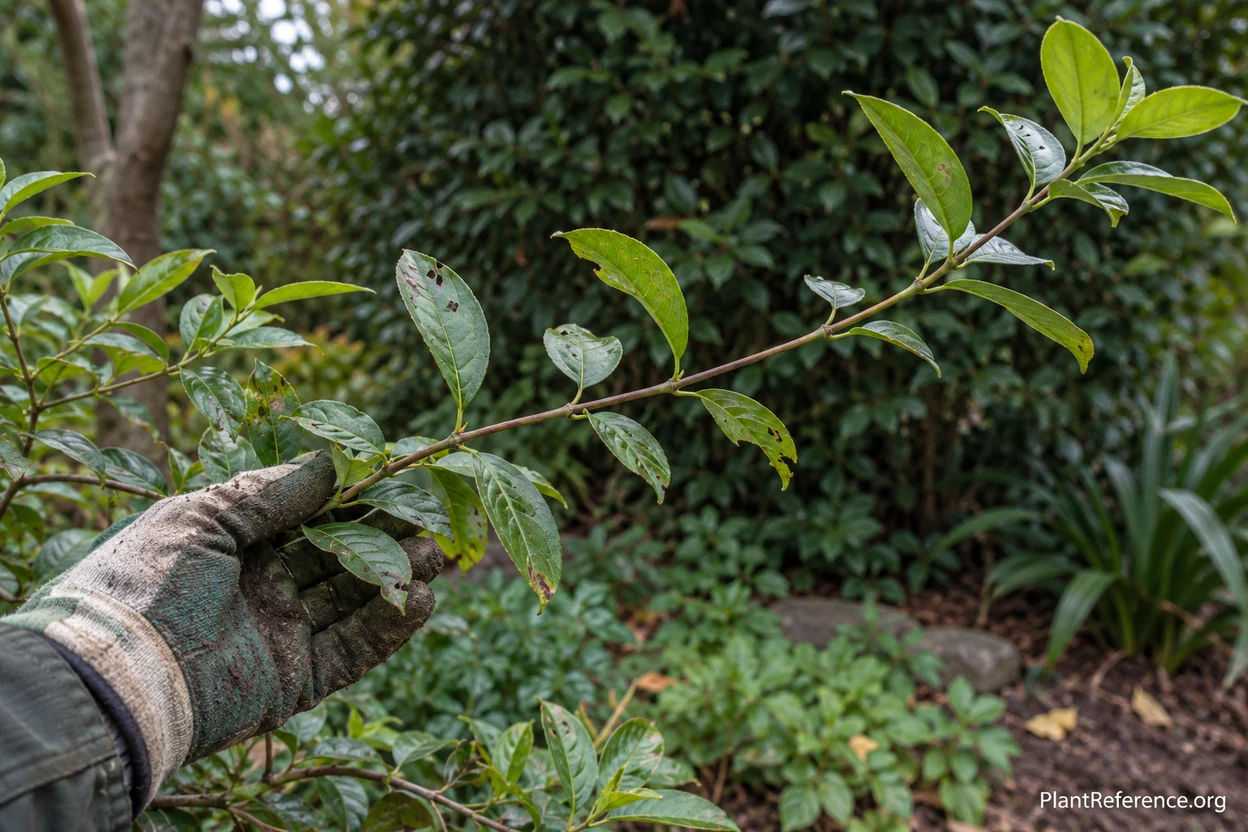
Separate poor growth from normal seasonality
Ask whether the plant should be flowering now. Brunnera blooms in spring, while toad lilies contribute much later in the season; an otherwise healthy plant between bloom periods needs patience, not a corrective treatment. Ferns never produce flowers, regardless of how bright their location becomes.
Map Light at Leaf Level
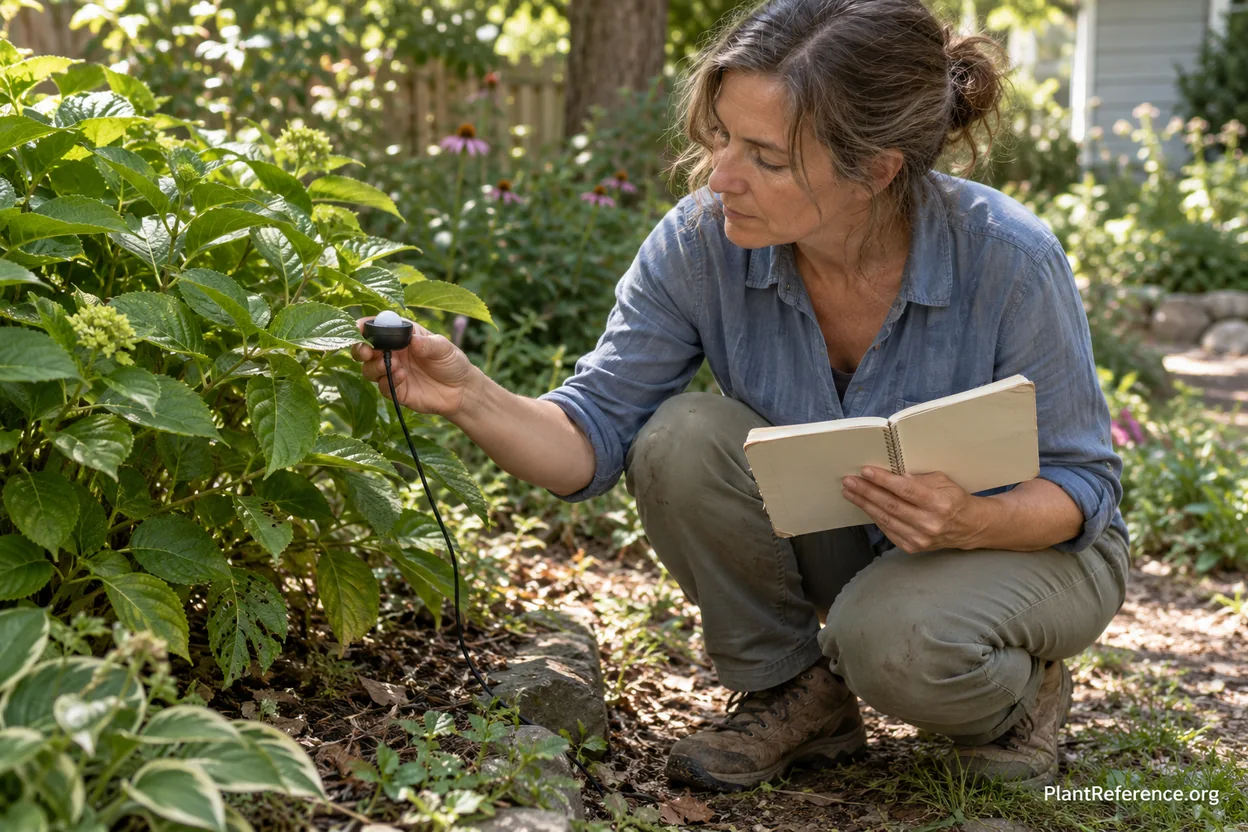
Observe the bed in morning, around midday and later afternoon on several representative days. Record direct sun, moving patches of light and bright open sky; a single photograph cannot capture a canopy's shifting shadow. Repeat after deciduous trees leaf out, because a bright spring bed can become substantially darker in summer.
Bright shade receives useful ambient light even without direct sun. Deep shade under dense evergreens receives much less, so the same “shade tolerant” label does not guarantee equal performance in both places. Hours of sunlight help, but its timing, intensity and the plant's tolerance matter too.
Check the actual leaves, not just the brighter path beside the bed.
Note walls, fences and neighboring shrubs that block sideways light.
Compare the struggling plant with a healthy specimen in a similar soil setting.
Record seasonal changes before deciding to remove an established plant.
A light meter can help compare positions when used at the same time and orientation. A lux reading is a snapshot weighted to human vision, not a full daily measurement of plant-usable light; avoid treating one number as a universal flowering threshold. Growing Rhododendrons and Azaleas in the PNW explains the balance between shelter and useful light for those shrubs.
Separate Root Competition From Low Light
Shade does not guarantee moist soil. Mature trees intercept rainfall and draw water from the same soil occupied by small perennials; many feeder roots lie within the upper 12–18 inches (30–46 cm). Maples, birches and conifers can create particularly demanding understory sites.
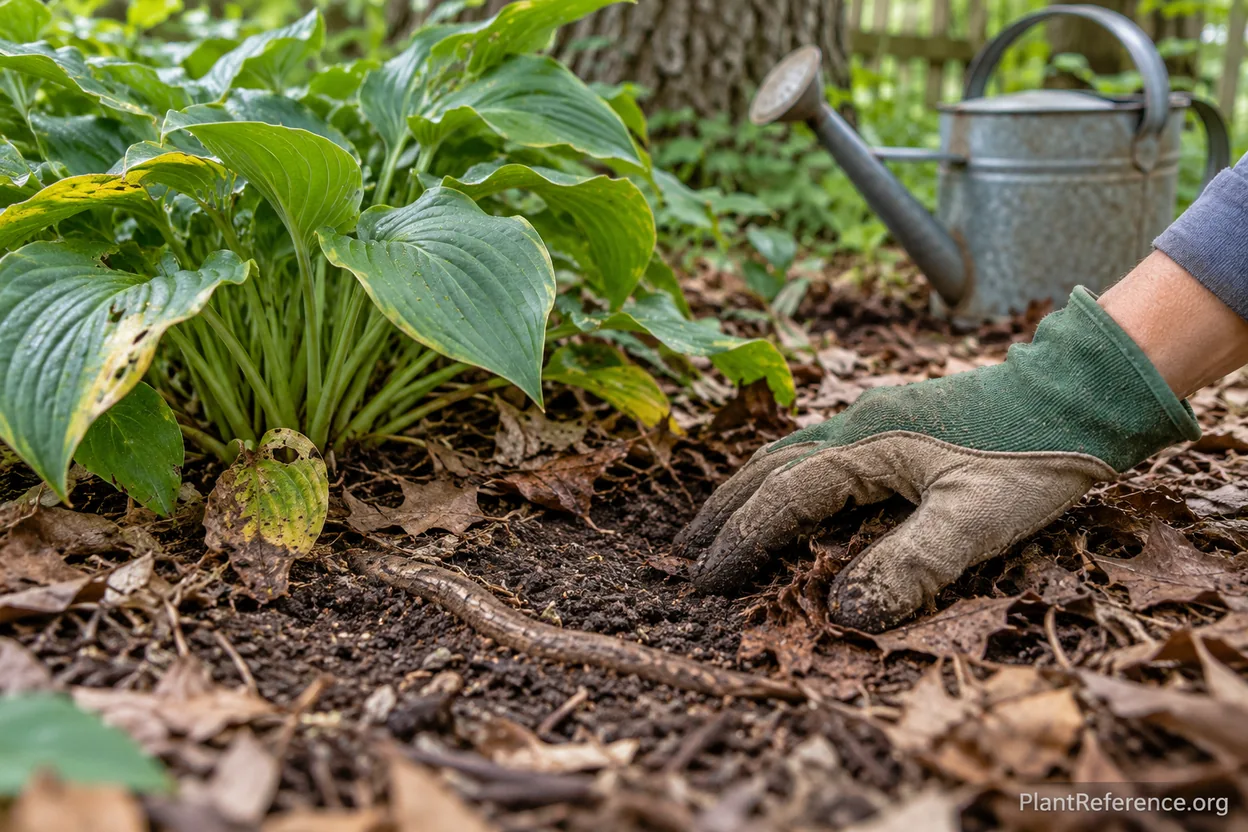
Check gently beneath mulch near the perennial's root ball and again nearby. Dry soil, repeated wilting and weak growth suggest a water-supply problem even when the bed looks cool. Conversely, persistently saturated soil deprives roots of oxygen; extra watering will not repair that condition.
Use How to Test Garden Soil: Jar, Ribbon & pH Tests to distinguish texture and pH questions from assumptions about fertility. If soil condition is the limiting factor, Soil Health 101: How to Build Living, Productive Garden Soil offers a useful broader framework. Neither a handful of compost nor a fertilizer application can supply missing sunlight.
Correct the demonstrated limitation
Water dry root balls slowly and check that moisture actually reaches them rather than running across mulch. Adjust subsequent watering to weather, soil and plant needs instead of imposing a fixed calendar. A thin organic mulch can moderate drying, but keep crowns and trunk flares clear.
Do not sever tree roots, trench around a struggling perennial or bury the root zone beneath imported soil. Those shortcuts trade a small plant problem for a potential tree problem. Where competition is severe, moving the perennial may be safer than trying to rebuild the soil underneath it.
Move or Prune Without Adding Stress
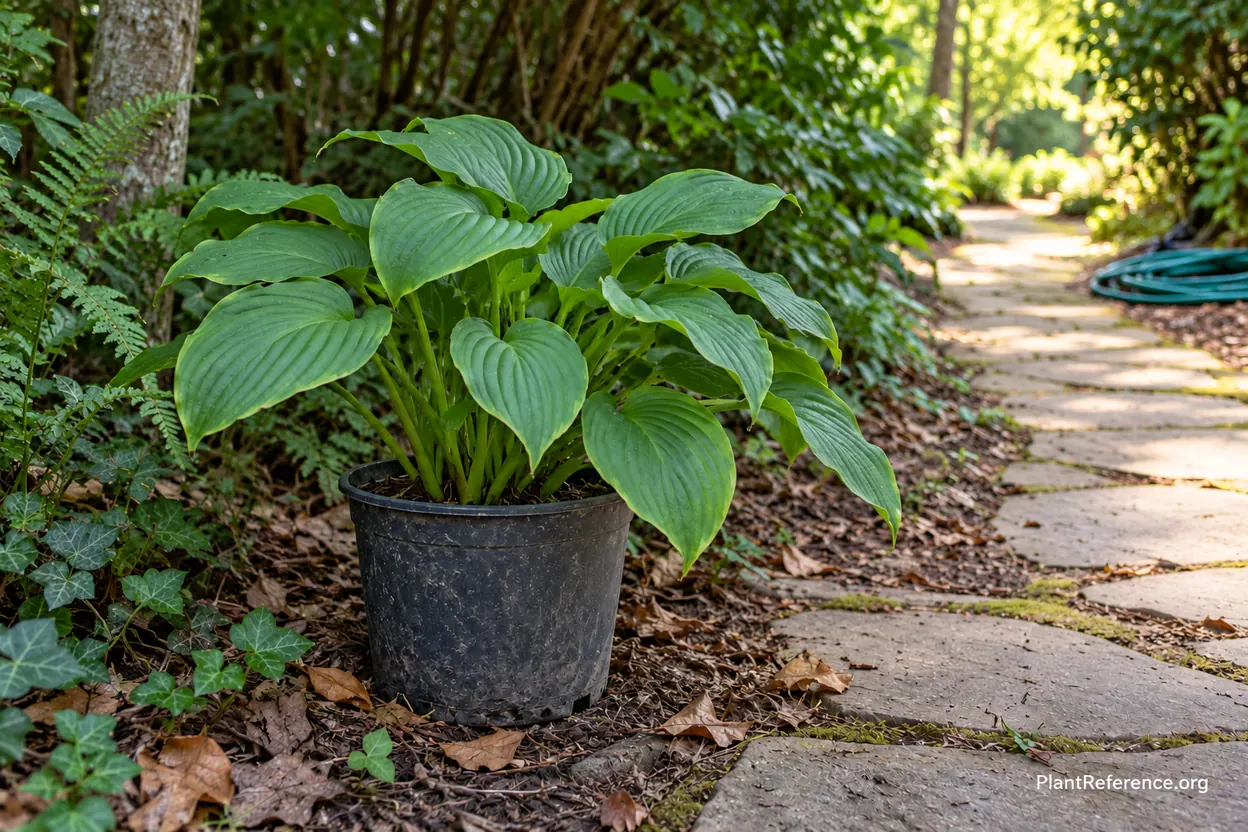
Choose the smallest change that addresses the cause. Move a container toward brighter indirect light, thin a crowding neighboring perennial, or relocate a small plant during a suitable cool planting window. A container trial can help test a brighter position; Container Gardening: Pots, Soil, Water & Yields covers the separate watering needs of pots.
Do not move shade-grown leaves directly into hot afternoon sun. Introduce brighter conditions gradually and monitor the exposed side for bleaching, brown margins or persistent wilting. More light is useful only while the plant can tolerate the accompanying heat and water demand.
Prune for structure, not as a substitute for light
Cutting back an understory shrub does not improve the light reaching its replacement shoots. Identify its pruning requirements first, particularly whether flowers develop on existing wood; poorly timed cuts can remove the buds you hoped to encourage. Avoid severe pruning of a drought-stressed plant.
For overhead branches, consult a qualified arborist rather than topping a tree or removing large limbs to rescue a flower border. The canopy protects other plants and contributes to tree health. Often, moving one shrub is the more proportionate intervention.
Do not add high-nitrogen fertilizer simply because growth looks sparse. Test when there is a reason to suspect a nutrient problem, then follow the result; DIY Organic Fertilizer Blends: A Soil-Test-First Guide explains that decision sequence. Extra nutrients cannot compensate for light that never reaches a leaf.
Replace Leggy Plants in Shade With Better Matches
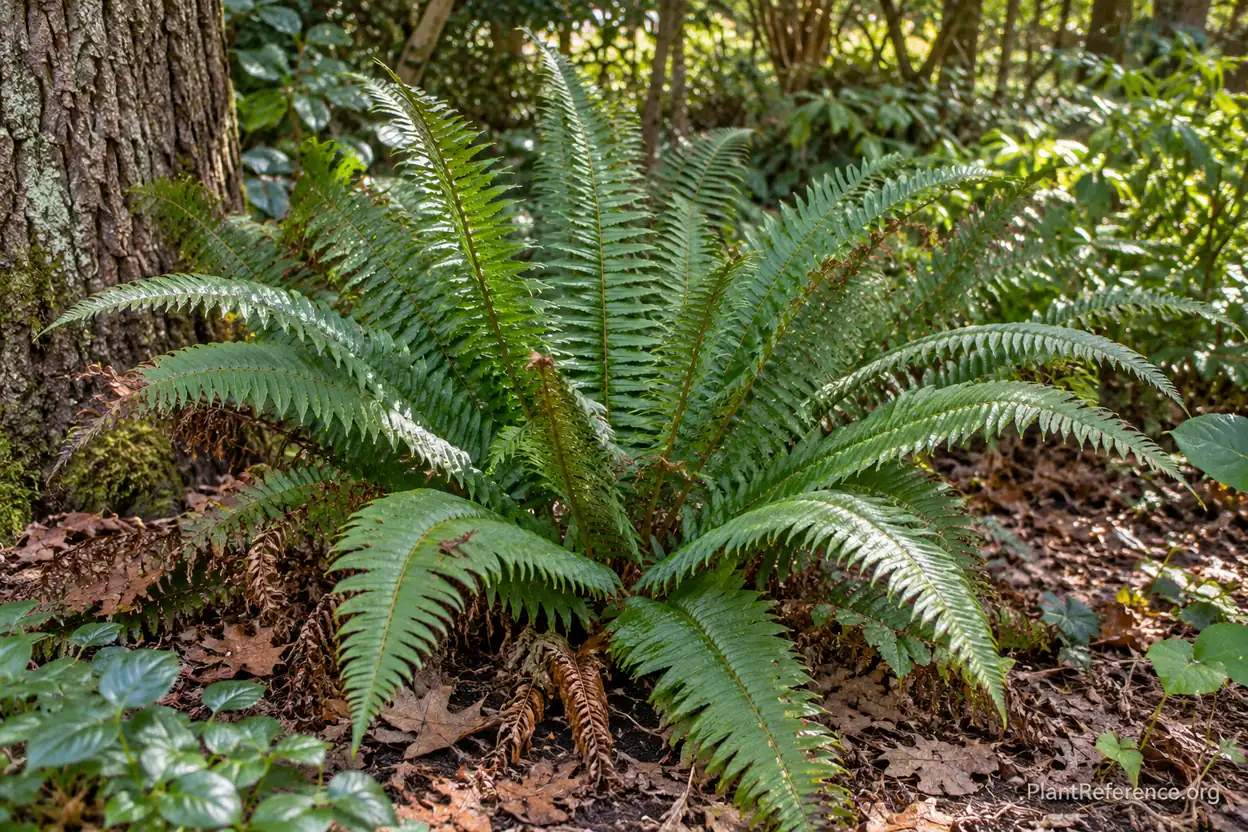
Choose replacements for moisture as well as light. Western sword fern 🌿Polystichum munitum (pol-ee-STIK-um myoo-NEE-tum) offers evergreen structure and tolerates dry shade once established, but still needs establishment care. Moisture-loving ligularia is a poor substitute beneath thirsty tree roots unless that water requirement can genuinely be met.
For brighter shade, compare foliage plants before insisting on a long flower display. Best Perennials for Shade: 12 Species That Thrive provides a starting shortlist, while How to Grow Heuchera (Coral Bells) in Shade Gardens helps match coral bells to the actual exposure. Deep shade may support a simpler mulched planting rather than a densely flowering border.
Site finding | Better next decision | Avoid |
|---|---|---|
Adequate moisture but very low light | Move the flowering plant or choose deeper-shade foliage | Repeated fertilizer applications |
Brighter shade with dry tree roots | Choose compatible dry-shade plants and establish carefully | Moisture-demanding plants without irrigation |
Healthy foliage between bloom seasons | Confirm normal flowering time | Unnecessary hard pruning |
Crowded plants blocking each other | Adjust spacing where roots permit | Cutting major tree roots |
Photograph the plant before intervention, then judge new growth rather than expecting old elongated stems to shorten. Recovery depends on species and season; flowering may not improve until the next normal bud-setting cycle. A compact new shoot is more useful evidence than an immediate burst of leaves after feeding.
Frequently Asked Questions

Reading about plants and recognising them are different skills. These three build the second.
- Daily PlantIdentify the day’s mystery plant from a close-up photograph.
- Keyed OutWork a dichotomous key, lead by lead, to name a hidden specimen.
- Name That PlantName a specimen from botanical clues dealt hardest first.
Free to play, no account needed
Tagged with
Sarah earned her doctorate in plant biology and spent time working in botanical garden education before transitioning to freelance writing and consulting. Now based in Portland, Oregon, she teaches plant identification workshops at local community centers and maintains a modest collection of over 60 houseplants in her small apartment. Sarah specializes in helping beginners understand plant science without the jargon—her approach focuses on practical observation over theory. She's killed her fair share of fiddle leaf figs and finally cracked the code on keeping them alive.