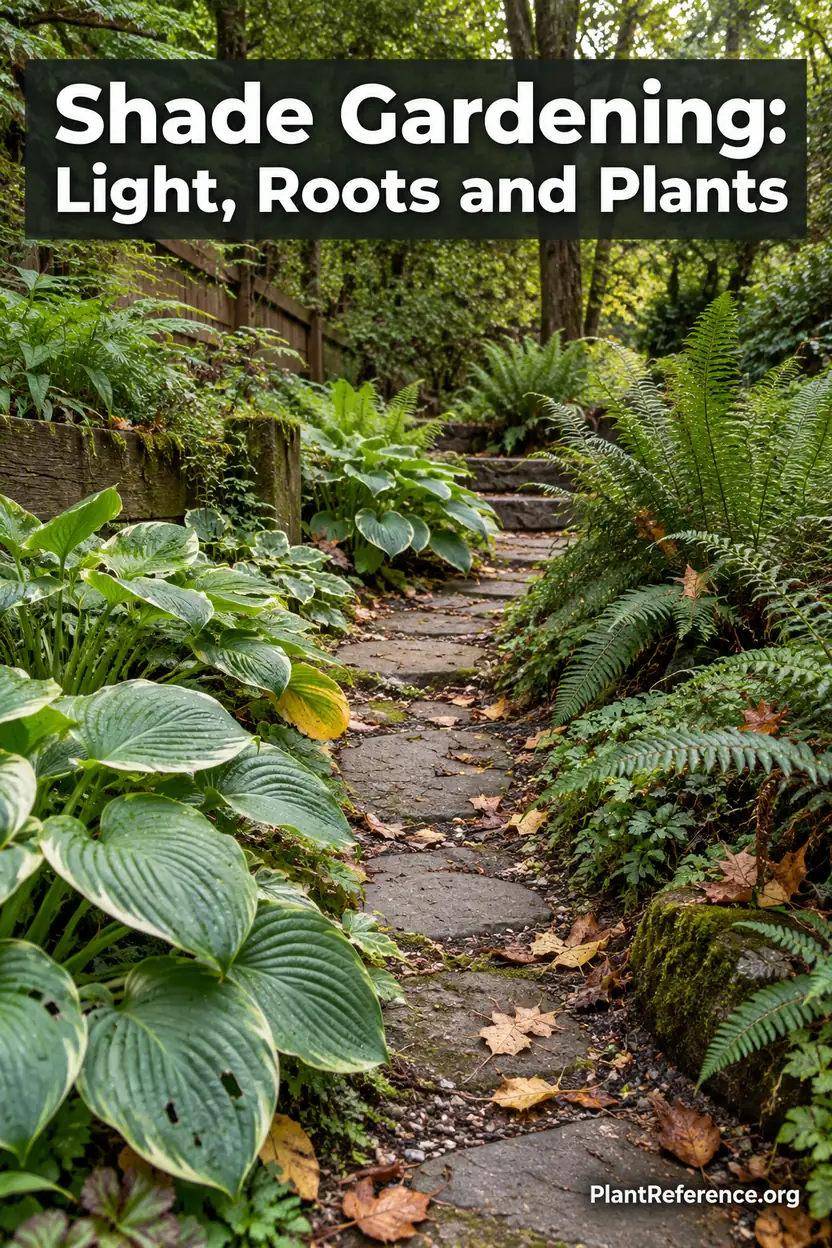
Shade Gardening: A Guide to Light, Roots and Plant Choices
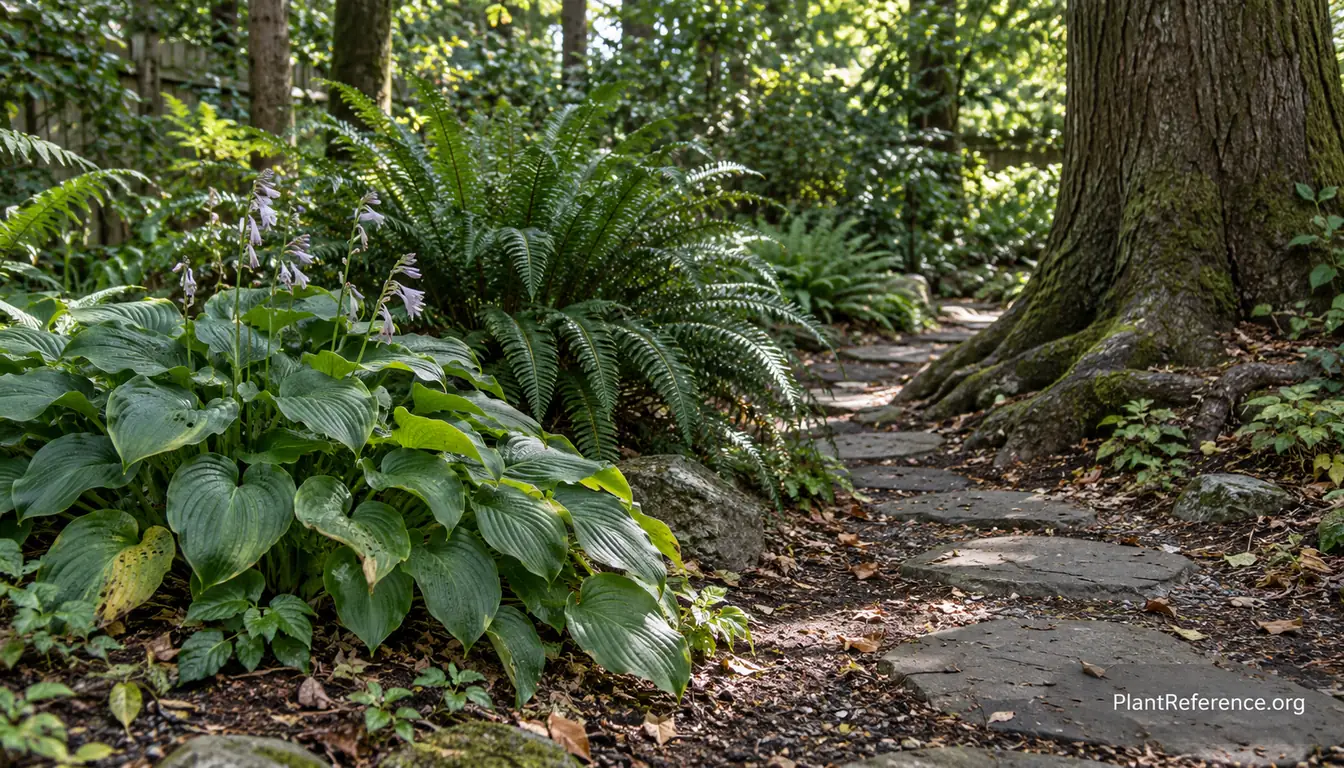
— Image © PlantReference.org 2026
Pets & Toxicity
Recorded toxicity for plants linked in this guide. An unknown status is not a safety assessment.
Toxic to pets: hostas, mountain laurel, Japanese andromeda and 1 moreDetailsHide
Matteuccia struthiopteris — Toxicity
Non-toxic — fiddleheads are edible when properly cookedView Matteuccia struthiopteris plant profileHydrangea quercifolia — Toxicity Warning
Toxic to pets and humansView Hydrangea quercifolia plant profileShade gardening succeeds when you stop treating shade as a single growing condition. A bright north-facing courtyard, a damp woodland edge, and the dry ground beneath a dense evergreen canopy can all lack direct sun, yet support very different plants. Start by recording the light and checking the soil; the plant list comes afterward.
Shade Gardening Starts With a Light Map
Light supplies the energy plants use to build new tissue. Shade-adapted plants can use lower light levels, but that does not mean they grow equally well in every dark corner. The amount of ambient light, the timing of direct sun, and seasonal canopy changes all affect the result.
Walk through the proposed bed in the morning, around midday, and later in the afternoon. Mark where direct sunlight reaches the ground and where light is filtered by leaves. Repeat the observations when deciduous trees are fully leafed out; an inviting spring opening can become a deeply shaded summer pocket.
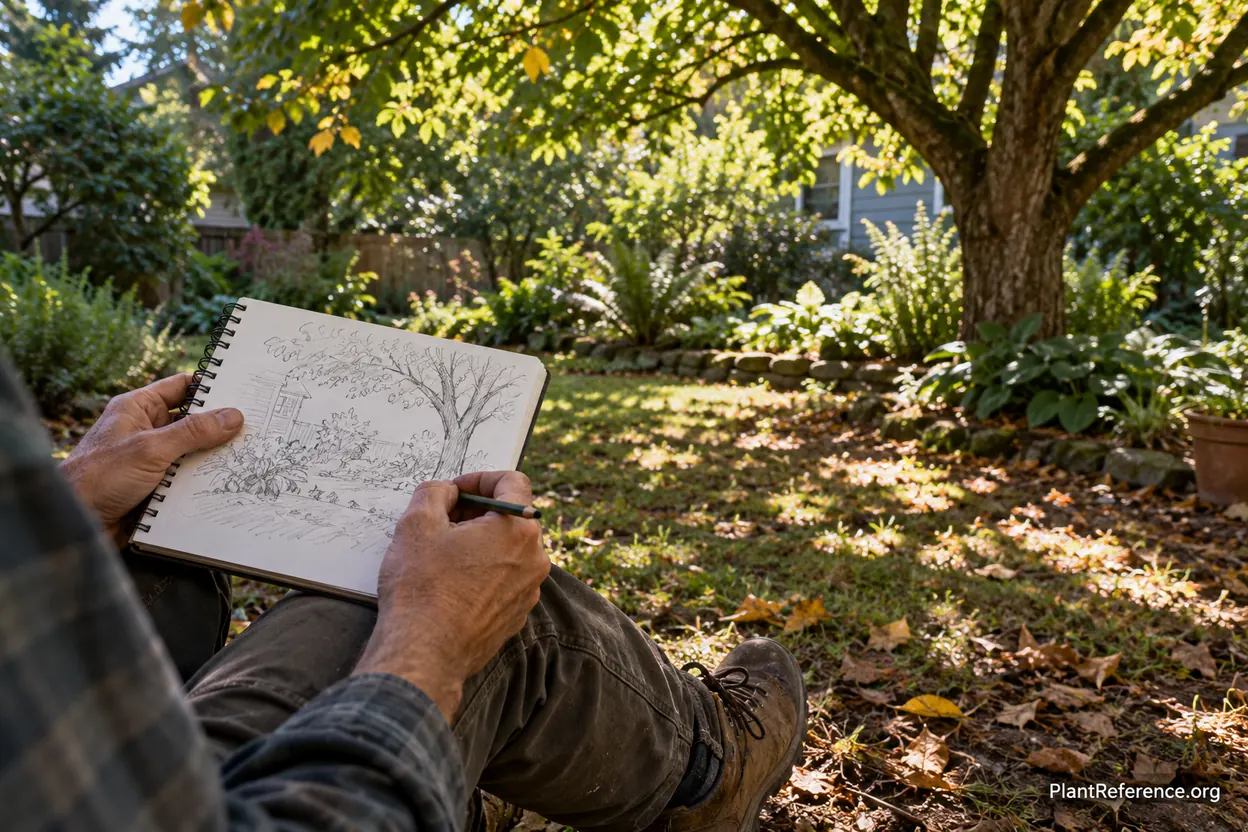
Interpret the label, not just the number
Nursery labels do not use perfectly uniform boundaries for partial shade. Use hours as a starting description and add the timing and intensity of exposure. Four hours of gentle morning light do not create the same leaf temperature or drying pressure as four hours of afternoon sun against a warm wall.
Light description | What you observe | Practical implication |
|---|---|---|
Partial shade | Several hours of direct light, often morning exposure | Many flowering shade plants perform well here |
Dappled shade | Moving sun patches through an open canopy | Light changes throughout the day rather than arriving in one block |
Bright shade | Little direct sun but substantial reflected or ambient light | Can support more growth than the lack of direct sun suggests |
Full shade | Less than about two hours of direct sun | Select genuinely shade-tolerant plants and assess ambient light |
Deep shade | Very little direct or reflected light | Growth and flowering options are restricted; mulch may be the best ground treatment |
A label is a compatibility clue, not a guarantee. Check winter hardiness, mature size, and moisture needs alongside light. Best Perennials for Shade: 12 Species That Thrive provides a useful starting shortlist once you have identified the conditions you actually need to fill.
Understand Moisture and the Shade Microclimate
Shaded ground often stays cooler and loses water more slowly than exposed ground. It can also warm more slowly in spring, delaying visible growth. A perennial that has not emerged alongside plants in a sunny border is not necessarily dead; compare the species and conditions before disturbing it.
The important exception is dry shade beneath established trees. Tree roots take up water efficiently, while the canopy can intercept some rainfall before it reaches the bed. A damp-looking garden after a shower may still contain dry soil around a recently planted root ball.
Separate dry shade from damp shade
Check several locations rather than relying on one reading at the edge of the canopy. Feel the soil near proposed planting pockets and observe how those areas change after rain and through a dry spell. Do not dig exploratory trenches through tree roots to do this; small, careful checks are enough to reveal useful differences.
Pacific Northwest gardens illustrate the seasonal trap especially well: a site can be wet through winter and dry during summer. Selecting only for the winter conditions can leave moisture-loving plants struggling when the growing season is most active. Conversely, a plant that tolerates summer dryness may still need good drainage during prolonged winter rain.
Reduced wind can also keep foliage humid for longer. That helps some plants avoid water stress but can favor disease when foliage is crowded. Plan enough space for mature plants and a route for maintenance rather than filling every visible gap on planting day.
Protect Tree Roots Before Preparing a Bed
The tree is not an obstacle to the shade garden; it creates the conditions that make the garden possible. Many absorbing roots occur in the upper 12–18 inches (30–46 cm) of soil, where a gardener might otherwise dig, cultivate, or replace the soil. Protecting that zone is more important than achieving a perfectly level planting surface.
Avoid rototilling beneath mature trees, cutting substantial roots to fit a shrub, or burying the root flare under a new bed. The root flare is the widening where the trunk transitions into roots. Keep it visible rather than piling soil or mulch against the bark.
Plant in gaps rather than making gaps
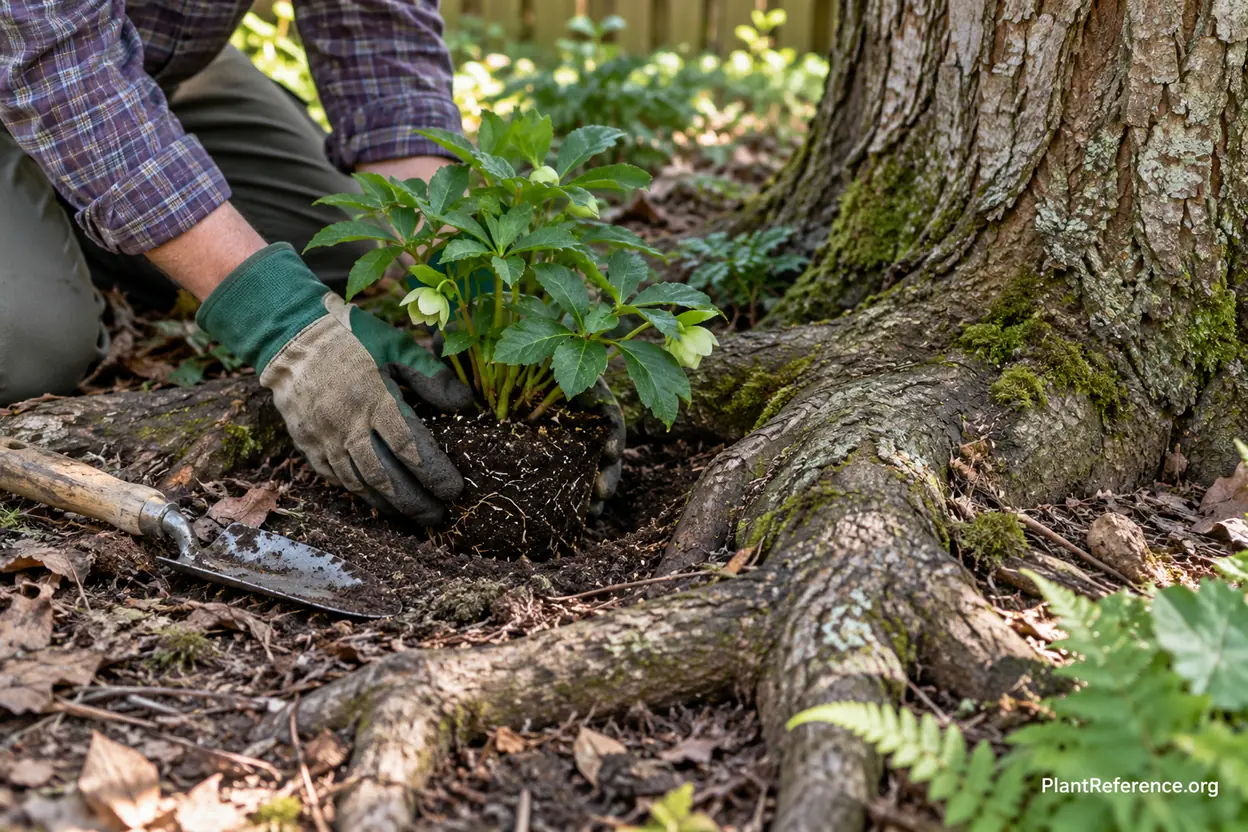
Look for spaces between major roots and use small plants that fit without force. If a woody root blocks the hole, move the hole. A smaller starting plant may establish more successfully than a large specimen whose planting requires damage to the tree or severe disturbance of its own root ball.
Some trees create more difficult planting conditions than others. Dense surface-root networks leave little room for understory plants, so mulch and a few carefully chosen pockets may be a better design than a continuous border. Even beneath trees considered more compatible with understory gardening, inspect the actual roots instead of assuming the species name guarantees space.
Improve the surface gradually
Composted bark and leaf mold can improve the surface environment over time. Do not interpret a suggested soil-fill limit as permission to add a deep blanket over roots: tree tolerance varies, and abrupt grade changes can harm the very canopy you want to keep. Seek an arborist's advice before substantial excavation, filling, or construction near an established tree.
Soil Health 101: How to Build Living, Productive Garden Soil explains organic matter and soil structure more broadly. Under trees, apply those ideas with restraint. Keep foot traffic on a designated route, avoid working wet soil, and do not replace root-filled ground wholesale in an attempt to cure compaction.
Choose Plants by Their Actual Needs
The best plant is not simply the one labeled shade-loving. Match its moisture requirement, mature spread, hardiness, and growth habit to the pocket you have available. A spreading fern can be useful in a large woodland bed and frustrating beside a narrow entrance path.
Western sword fern 🌿Polystichum munitum (pol-ih-STIK-um myoo-NEE-tum) supplies evergreen structure and tolerates dry shade once established in suitable conditions. Newly planted specimens still need establishment care. Western Sword Fern and Salal Planting Guide covers that combination in more detail rather than treating drought tolerance as an excuse to withhold water immediately.
Use ferns for fine texture
Lady ferns 🌿Athyrium filix-femina (uh-THEER-ee-um FY-liks FEM-ih-nuh) provide delicate, lacy texture, while ostrich ferns 🌿Matteuccia struthiopteris (mat-ee-OO-chee-uh stroo-thee-OP-ter-is) can become much larger and spread into colonies. Give the latter room; a plant that reaches roughly 4–6 feet (1.2–1.8 m) changes the scale of a small border.
Maidenhair ferns offer a finer, more delicate appearance, but do not buy one solely because it resembles a fern that thrives in your garden. Confirm the species and its moisture and hardiness requirements. Fern is a growth form, not a single care category.
Plant group | Main design contribution | Site question before buying |
|---|---|---|
Western sword fern | Evergreen fronds and strong structure | Is there room for its mature spread and establishment watering? |
Hostas | Broad leaves and contrasting colors | Can you provide suitable moisture and manage browsing or slugs? |
Coral bells | Foliage color and lower edging | Does the chosen cultivar suit your heat and exposure? |
Brunnera | Silver foliage and blue spring flowers | Is the site protected from harsh sun and excessive drying? |
Ligularia | Bold leaves and summer flower spikes | Can the soil stay consistently moist without waterlogging? |
Toad lilies | Late-season flowers | Is the moist, sheltered planting pocket accessible for viewing? |
Keep familiar foliage plants in proportion
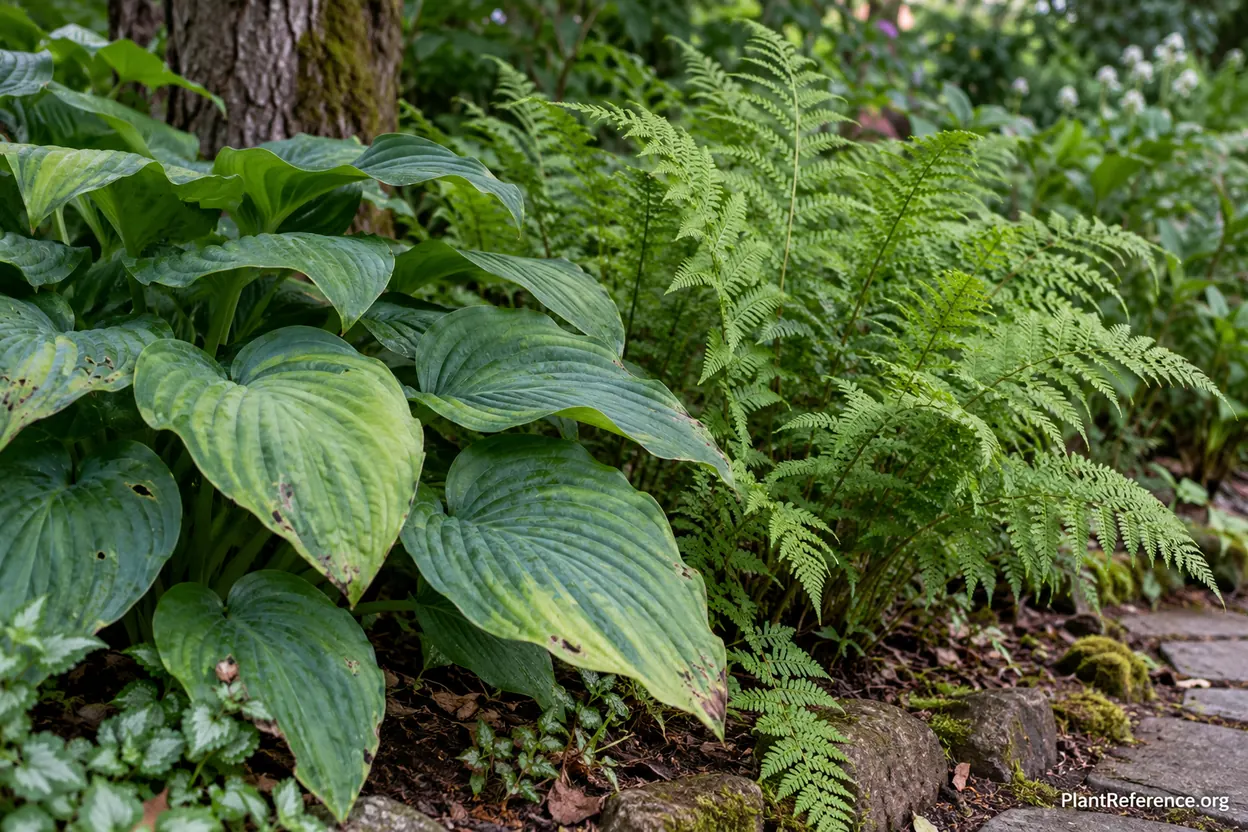
Hostas 🌿Hosta spp. (HOS-tuh) range from small edging plants to substantial leafy clumps. Choose mature dimensions before choosing leaf color. How to Grow Hostas: Varieties, Care & Pest Solutions covers their care and selection without turning the whole shade garden into a single-genus collection.
Coral bells 🌿Heuchera spp. (HYOO-ker-uh) contribute amber, purple, lime, and nearly black foliage. Cultivars differ in heat tolerance and light response, so a color preference should not override the plant's suitability. Use How to Grow Heuchera (Coral Bells) in Shade Gardens for the detailed growing decisions.
Add flowers where conditions support them
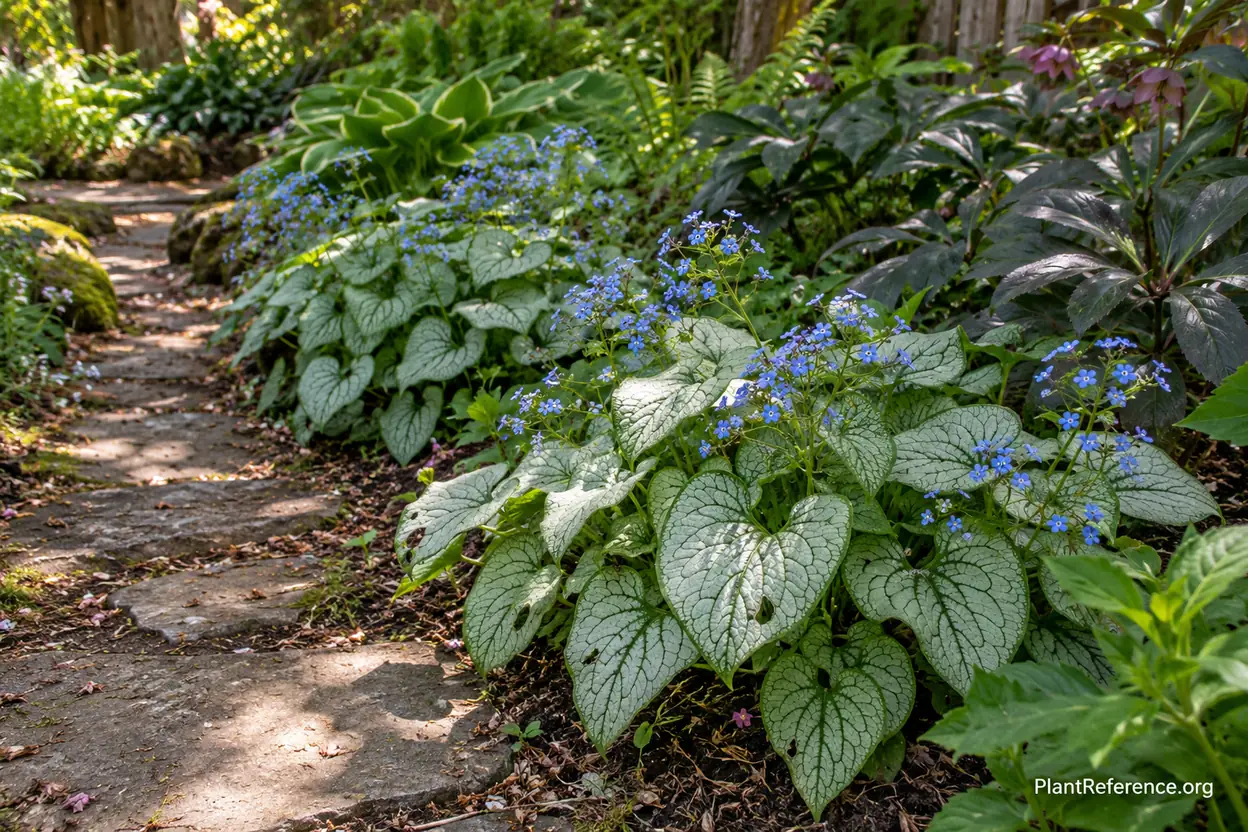
Brunnera 🌿Brunnera macrophylla (BROON-er-uh mak-roh-FIL-uh) offers heart-shaped leaves and small blue spring flowers. Ligularia Ligularia (lig-yoo-LAIR-ee-uh) adds bold foliage and summer flowers but belongs in a consistently moist part of the garden, not the driest pocket beneath competitive roots.
Toad lilies Tricyrtis (try-SER-tis) extend interest into late summer or autumn. Place them where their small flowers can be appreciated from a path. A plant can be healthy and flowering yet contribute little visually if its details are hidden behind a large clump of foliage.
Let shrubs provide the lasting framework
Mountain laurel 🌿Kalmia latifolia (KAL-mee-uh lat-ih-FOH-lee-uh), Japanese pieris 🌿Pieris japonica (PEER-is juh-PON-ih-kuh), and oakleaf hydrangea 🌿Hydrangea quercifolia (hy-DRAYN-juh kwer-sih-FOH-lee-uh) offer different forms of structure and seasonal interest. Check soil requirements and mature size before placing any shrub beneath an established tree.
Rhododendrons Rhododendron (roh-doh-DEN-dron) often suit acidic soil and dappled light, but increasingly deep shade can reduce flowering and encourage open, leggy growth. Growing Rhododendrons and Azaleas in the PNW provides the regional detail. Do not assume that all shrubs associated with woodland conditions need identical soil chemistry or tolerate the darkest exposure.
Design With Texture, Layers and Variegation
Foliage lasts longer than most flowers, so make it carry the design. Begin with the largest elements: existing trees, any suitable shrubs, the path, and the open space you need to use the garden. Then choose a few repeated plant forms rather than one example of every shade plant you like.
Broad leaves read as bold shapes; finely divided fronds look lighter and more intricate. Place them beside one another so both are easier to see. Repeating that pairing along a border gives the eye a pattern to follow without requiring every plant to bloom at once.
Use pale foliage deliberately
White, cream, gold, and silver markings can stand out against darker foliage. They do not manufacture light for a plant, however, and a brightly patterned leaf is not proof that its owner tolerates deep shade. Choose for the site first, then use color to organize the view.
Try a restrained palette in a small garden. One repeated silver accent and one dark-green structural plant can look more coherent than many unrelated colors. Leave enough space around distinctive shapes for their outlines to remain visible as the plants mature.
Know when not to plant
A dense root network or very deep shade may be better left as a mulched space with a clear route around it. Empty ground is not automatically a design failure. It can protect the tree, simplify maintenance, and create visual rest between planted areas.
Moss can also be an intentional feature in suitable damp, shaded settings. It is not a universal lawn substitute for hot, dry, heavily trafficked ground. Before trying another turf renovation, compare your conditions with Best Grass Seed for Shade Under Trees: 5 Species That Actually Work and accept that some places are better suited to something other than grass.
Establish Plants Without Overcorrecting the Site
Start with a small section you can observe closely through its first growing season. This makes it easier to learn where moisture disappears quickly and where the soil stays wet. It also limits the cost of discovering that the attractive planting pocket is more competitive than it looked.
Map seasonal light and identify tree roots before buying plants.
Match moisture needs, hardiness, and mature size to each planting pocket.
Choose small plants where roots restrict the available space.
Plant at the existing root-ball depth without burying crowns or tree flares.
Water the new root zone and check its condition during establishment.
Record growth and moisture changes before making further amendments.
Organic mulch can help moderate surface drying, but apply it conservatively and keep it away from crowns and trunks. Do not stack fresh layers over old ones without checking the total depth. Aged hardwood mulch is one supported purchased option; leaf mold or suitable composted bark may be available locally without needing a packaged product.
Best Composting Method: Hot, Cold, Tumbler, Worm, Bokashi can help you decide how to manage garden materials. Finished compost and leaf mold are useful resources, but neither justifies deep digging through tree roots. Improve the accessible surface gradually and keep the tree's root environment intact.
Water the new roots, not the idea of shade
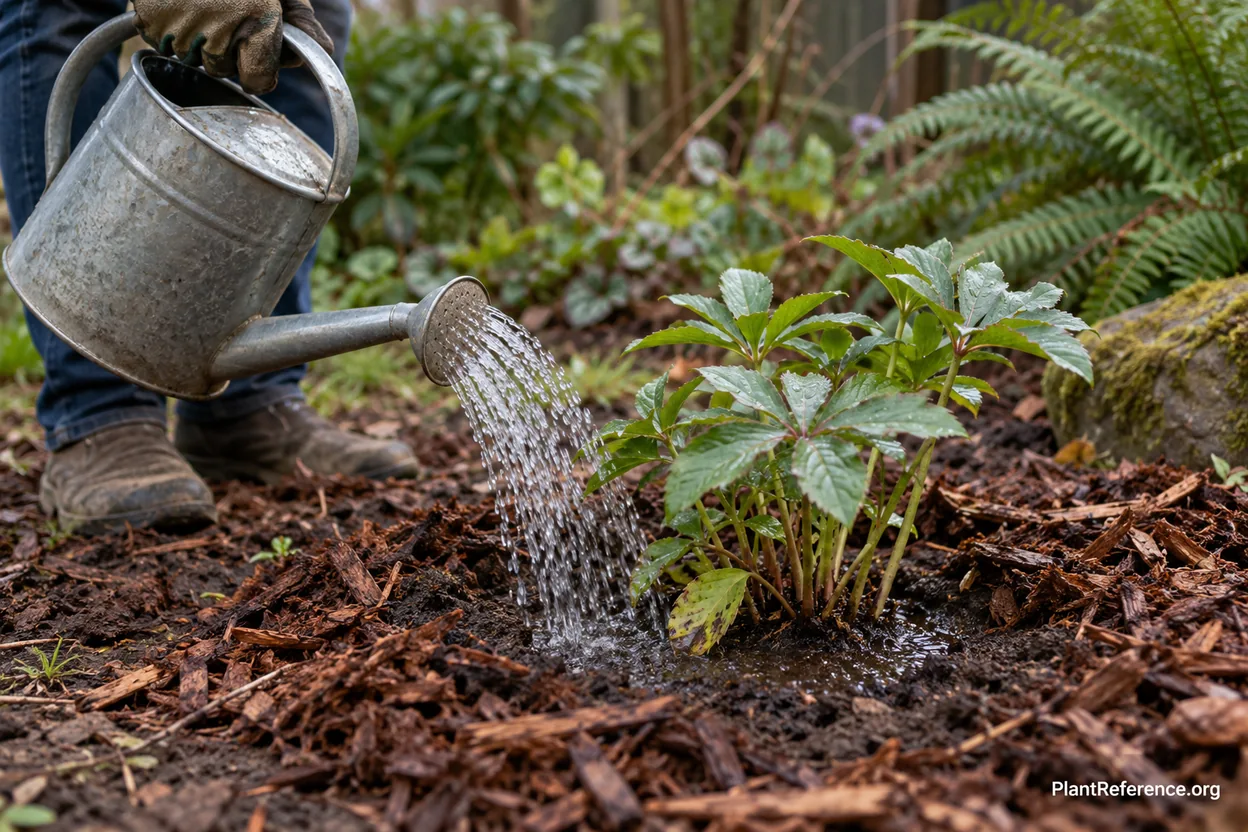
Check the planted root ball as well as surrounding soil. A recently installed plant has not yet developed access to the same soil volume as an established neighbor. Rainfall, mulch, or a nearby thriving fern does not prove the new plant has enough water.
Water when the root zone needs it, then reassess as temperatures, rainfall, and canopy density change. Grouping plants with similar moisture needs makes this easier. Avoid putting a plant that needs steady moisture in the driest spot and expecting frequent rescue watering to remain convenient forever.
Diagnose Pests, Disease and Sudden Changes
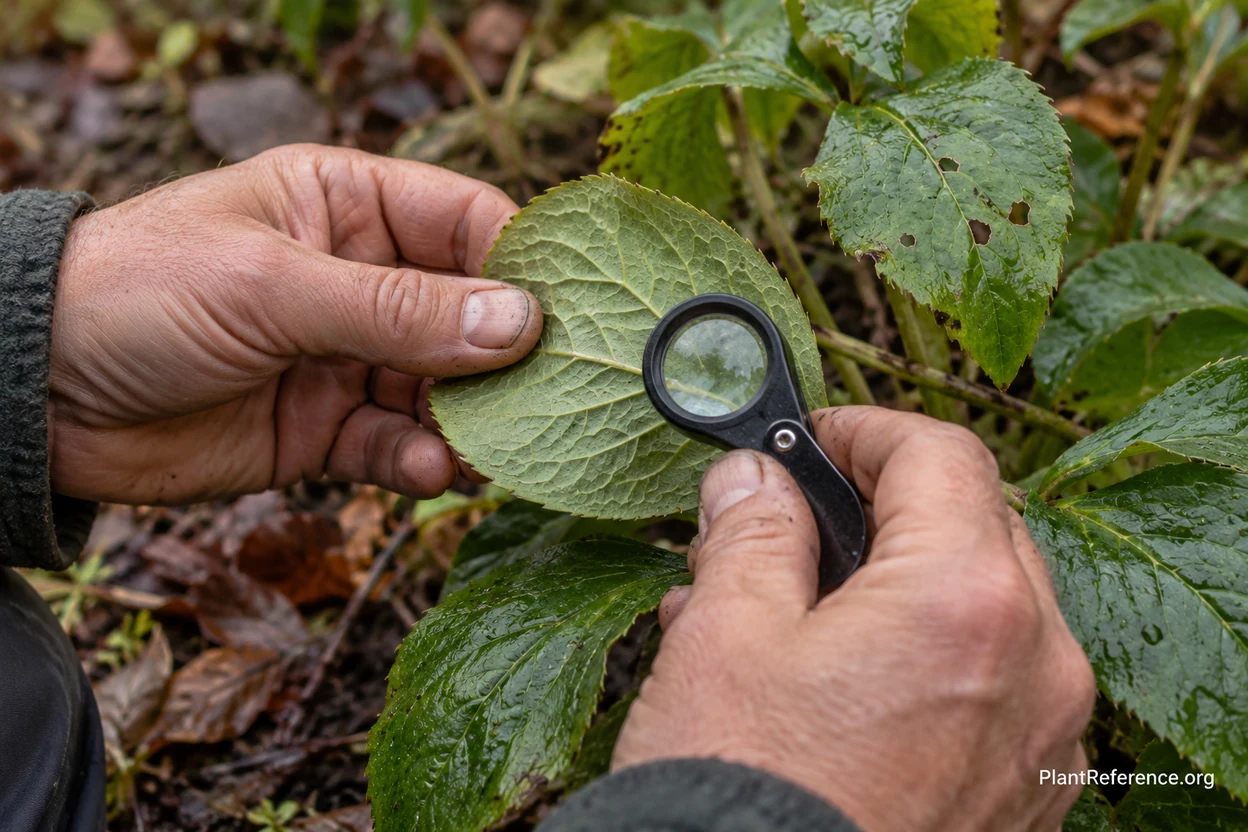
Begin with the pattern of damage. Chewed leaves, notched edges, white coatings, and scorched patches point toward different problems. Check leaf undersides, new growth, and the soil before treating the whole bed. A targeted response is usually more useful than applying several products to an unidentified symptom.
Slugs favor many sheltered, damp gardens. Inspect susceptible foliage and nearby hiding places, and use How to Get Rid of Slugs on Hostas: What Works for plant-specific options. If using bait, follow its label and keep it away from children and pets; a product described as organic is not permission for careless placement.
Root weevils can notch the leaves of broadleaf evergreens, while larvae damage roots. Adult leaf damage alone does not reveal the extent of injury below ground. Confirm the pest and life stage before selecting a control; beneficial nematodes require appropriate soil conditions and product-specific application directions.
Give wet foliage room to dry
Crowded, still air can favor powdery mildew, while cool, wet conditions encourage gray mold on susceptible flowers and buds. Improve spacing, remove affected material where appropriate, and direct irrigation toward the soil. Do not prune the overstory heavily just to solve a small understory problem.
Treat canopy loss as a change in habitat
Shade leaves are often broad and relatively thin, which helps capture limited light but can leave them vulnerable after sudden exposure. When a tree is removed or a major limb falls, formerly sheltered plants may scorch. Temporary shade and careful moisture management can reduce stress while you decide whether relocation is needed.
Leggy growth or weak flowering can also signal insufficient light, but inspect moisture and root competition before reaching that conclusion. Why Your Rhododendron Isn't Blooming (and How to Fix It) shows why a single symptom can have several causes. Feeding more heavily cannot replace missing light or repair damaged roots.
Build a Seasonal Shade Gardening Routine
In spring, record which areas brighten before the canopy closes and which plants emerge later in cool soil. Keep paths clear enough for observation, but avoid stripping away every natural surface material. Watch for early pest damage while leaves are still expanding.
During summer, focus on moisture around new plantings and dry pockets beneath trees. In autumn, note late flowers, spreading clumps, and gaps you want to address. Assess the garden again after leaf fall rather than assuming its winter appearance represents the light available during active growth.
Check for invasive seedlings or climbing vines before they become a large removal project. Avoid pulling established vines out of a tree canopy or damaging bark during removal; use an appropriate local management plan. Deer-resistant plant choices can reduce losses, but resistance is not immunity and does not make toxic plants suitable for every household.
The most useful shade gardening record is simple: what the light did, how the soil behaved, and which plants grew well without repeated rescue. Use that evidence to expand successful combinations. A resilient shade garden develops by matching its living conditions, not by forcing every corner to resemble the same woodland photograph.
Frequently Asked Questions

Reading about plants and recognising them are different skills. These three build the second.
- Daily PlantIdentify the day’s mystery plant from a close-up photograph.
- Keyed OutWork a dichotomous key, lead by lead, to name a hidden specimen.
- Name That PlantName a specimen from botanical clues dealt hardest first.
Free to play, no account needed
Tagged with
Sarah earned her doctorate in plant biology and spent time working in botanical garden education before transitioning to freelance writing and consulting. Now based in Portland, Oregon, she teaches plant identification workshops at local community centers and maintains a modest collection of over 60 houseplants in her small apartment. Sarah specializes in helping beginners understand plant science without the jargon—her approach focuses on practical observation over theory. She's killed her fair share of fiddle leaf figs and finally cracked the code on keeping them alive.