Matteuccia, Genus, struthiopteris, Species,
- Genus & species
ostrich fern
Circumboreal — throughout the Northern Hemisphere including North America, Europe, and Asia
Overview
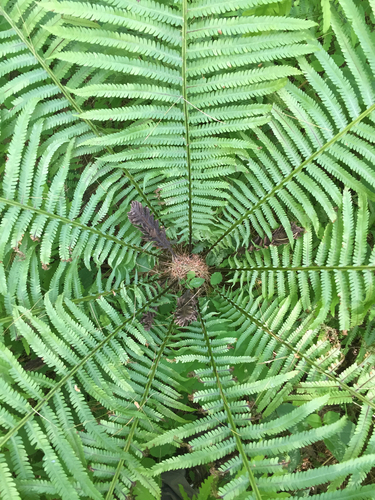
Matteuccia struthiopteris is a tall, vigorous native fern that grows 36–60 inches (90–150 cm) tall from a stout, vase-shaped crown. The species name 'struthiopteris' means 'ostrich feather', describing the large, pinnate sterile fronds that arch outward like ostrich plumes from a central crown, forming a characteristic shuttlecock or vase shape. This is the fiddlehead fern of culinary tradition: the tightly coiled spring fiddleheads are harvested and eaten as a seasonal delicacy in New England, eastern Canada, and northern Europe. Only the fiddleheads of this species are traditionally considered safe to eat, and they must be thoroughly cooked — raw fiddleheads contain a compound that can cause gastrointestinal illness. The species produces two frond types: tall, bright green sterile fronds (the ostrich plumes) that collapse in fall, and shorter, dark brown, stiff fertile fronds that emerge in late summer and persist standing through winter, releasing spores the following spring. The plant spreads aggressively by underground stolons, sending up new crowns at distances of 12–24 inches (30–60 cm) from the parent, forming expanding colonies. In moist, rich soil, the spread can be rapid and difficult to contain. In drier conditions, growth is stunted and the fronds become short and yellowed. The species requires consistently moist to wet soil; it grows naturally along stream banks and in floodplains where periodic flooding occurs. In hot-summer climates (zone 7+), the fronds may brown and collapse by midsummer due to heat stress. Cool, moist climates produce the tallest, most vigorous growth. Deer rarely browse ferns.
Native Range
Matteuccia struthiopteris has a circumboreal distribution, native throughout the Northern Hemisphere — North America (from Newfoundland to Alaska, south to Virginia and Iowa), Europe, and northern Asia. It grows along stream banks, in floodplains, and in moist forests.Suggested Uses
Used in large-scale moist shade plantings, along stream banks, and in naturalized woodland areas where the aggressive spread can colonize open ground. The tall fronds create a vertical structural element in shade. The edible fiddleheads are a springtime culinary attraction. Not suited to small gardens or mixed borders due to aggressive spread. Suited for erosion control along waterways.How to Identify
Appearance
Size & Dimensions
Height3' - 5'
Width/Spread3' - 5'
Reproduction
Dark brown fertile fronds emerge in late summer and persist through winter, releasing spores the following spring. The persistent fertile fronds add winter structural interest.
Detailed Descriptions
Foliage Description
Bright green, pinnate, plume-like, arching from a central crownGrowing Conditions
Sun Requirements
Requires 2-8 hours of direct sunlight daily
• Full Sun: 6+ hours of direct sunlight
• Partial Shade: 3-6 hours of direct sunlight
• Full Shade: Less than 3 hours of direct sunlight
Care & Maintenance
Care Guide
Plant in partial shade to full shade (sun is tolerated only with consistently wet soil). Consistently moist to wet, humus-rich soil is essential — the species grows naturally in floodplains. Water heavily during dry spells; drought causes rapid browning. The aggressive stolon spread requires management — root barriers, planting in spaces where unlimited spread is acceptable, or regular thinning of crowns. In hot climates (zone 7+), midsummer frond decline is expected. Collapsed sterile fronds can be cut in fall; fertile fronds stay standing through winter. When harvesting fiddleheads, no more than one-third of the emerging fiddleheads per crown should be taken, and they must be cooked thoroughly.Pruning
Collapsed sterile fronds can be cut in late fall or early spring. The dark brown fertile fronds stay in place through winter for spore dispersal and structural interest. Stoloniferous spread can be thinned by removing outlying crowns as needed.Pruning Schedule
Prune: March & November
fallearly spring