Image 1 of 4
1 / 4
Plant Reference
Kalmia, Genus, latifolia, Species,
- Genus & species
mountain laurel
Eastern North America — from southern Maine and southern Ontario south to the Florida panhandle and west to Louisiana; most abundant in the southern Appalachian Mountains; acidic rocky woodlands, mountain slopes, and stream banks at low to middle elevations
Overview
Kalmia latifolia is a mounding broadleaf evergreen shrub in the heath family Ericaceae growing 5–15 feet (1.5–4.5 m) tall and 5–15 feet (1.5–4.5 m) wide from a multi-stemmed base that produces a rounded canopy with the foliage held to the branch tips on older plants. The genus name Kalmia honors Pehr Kalm (1716–1779), the Swedish-Finnish botanist and student of Carl Linnaeus who traveled across eastern North America from 1748 to 1751 and who collected and documented the plants of the eastern colonial frontier — Linnaeus named the genus after his student in formal recognition of Kalm's American botanical work. The specific epithet latifolia is from Latin meaning broad-leaved. The species is the state flower of Connecticut and Pennsylvania, an honor that reflects the species' historical and cultural standing in the eastern Appalachian region where the spring bloom of mountain laurel along the Blue Ridge and Allegheny mountain slopes is a regional landmark. Leaves are glossy dark green on the upper surface and yellowish-green beneath, elliptic, leathery, and 2–5 inches (5–13 cm) long, and the leaves curl downward and inward in cold winter weather as a protective response that reduces the leaf surface area exposed to drying wind and that limits winter desiccation; this winter leaf-curl behavior is a reliable visual indicator that ambient temperatures have dropped below approximately 30 °F (−1 °C). White to pink to rose cup-shaped flowers 0.75–1 inch (2–2.5 cm) across with purple banding and spots inside the corolla open in dense terminal corymbs of 20–50 or more individual flowers in May and June across a 3-week bloom period, and each flower carries a catapult pollination mechanism: the 10 stamens are held under tension in small pockets along the inside of the petals, and when a pollinator (typically a bumblebee) lands on the flower the stamens spring outward from their pockets and dust the insect with pollen, a mechanism not matched by any other shrub genus in cultivation. The purple banding inside the corolla is the source of the alternative common name calico bush. Limitation: all parts of the plant — leaves, stems, flowers, nectar, and roots — contain grayanotoxin, a sodium-channel-binding diterpenoid that is severely toxic to humans, livestock, cats, dogs, and horses if ingested, and even the honey produced from the nectar of Kalmia flowers is toxic (the so-called mad honey of historical accounts from Pontus and the Black Sea region, which referred to the related Rhododendron ponticum but applies equally to Kalmia honey). Grazing livestock losses from K. latifolia ingestion are documented in the southern Appalachian range. The species calls for strictly acidic soil with a pH of 4.5–6.0 and develops chlorosis at higher pH levels — this strict acid soil requirement and the slow growth rate (10–15 years to mature size) are the primary cultural limitations. Not drought-tolerant. Native to eastern North America. Deer-resistant (the grayanotoxin chemistry deters browsing).
Native Range
Native to eastern North America — from southern Maine and southern Ontario south to the Florida panhandle and west to Louisiana — most abundant in the southern Appalachian Mountains where the species forms dense thickets in the understory of oak-hickory and oak-pine forests on acidic rocky woodland soils. The species also occurs on mountain slopes and along stream banks at low to middle elevations across its range, and the spring bloom of mountain laurel along the Blue Ridge and Allegheny mountain corridors is a regional landmark of the southern Appalachian flora. The species was introduced to European horticulture by Pehr Kalm during his 1748–1751 expedition and has been cultivated as an ornamental in Britain and continental Europe since the 18th century.Suggested Uses
Used in acidic woodland gardens, rhododendron and azalea companion plantings, naturalistic understory plantings under high deciduous canopy, mountain garden settings, and native-plant gardens of the eastern North American region at 5–15 foot (1.5–4.5 m) spacing between plants in USDA zones 4 through 9. The catapult-stamen flower mechanism, the 3-week May–June bloom in pink-to-white cup-shaped flowers with purple banding, the year-round glossy leathery evergreen foliage, and the species' standing as the state flower of Connecticut and Pennsylvania combine for a high-value ornamental shrub in acidic woodland positions where the cultural conditions match the species' native habitat. Alkaline soil positions, dry-summer regions without irrigation, and full-sun positions with hot afternoon exposure are unsuitable because of the strict acid soil requirement, the moisture requirement, and the species' shade preference. Gardens with grazing livestock (particularly sheep, goats, and cattle), gardens where children, cats, dogs, or horses may access the foliage or flowers, and apiaries where the bees may forage on Kalmia flowers should account for the severe grayanotoxin toxicity of all plant parts and of the honey produced from the nectar.How to Identify
Appearance
Size & Dimensions
Height5' - 15'
Width/Spread5' - 15'
Bloom Information
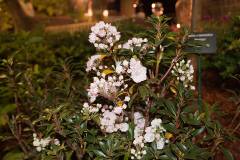
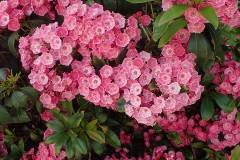
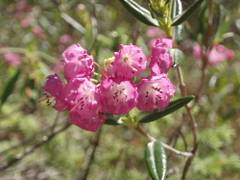
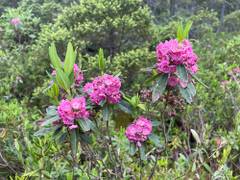
White to pink to rose cup-shaped flowers 0.75–1 inch (2–2.5 cm) across with purple banding and spots inside the corolla open in dense terminal corymbs of 20–50 or more individual flowers in May and June across a 3-week bloom period. Each flower carries a catapult pollination mechanism: the 10 stamens are held under tension in small pockets along the inside of the petals, and when a pollinator (typically a bumblebee) lands on the flower the stamens spring outward from their pockets and dust the insect with pollen — this mechanism is found in no other shrub genus in cultivation. Bumblebees and other native bees are the primary pollinators, and the honey produced from the nectar is toxic to humans because of the grayanotoxin content of the nectar (the historical mad honey of the Black Sea region referred to the related Rhododendron ponticum but applies equally to Kalmia honey).
Detailed Descriptions
Flower Description
white to pink to rose with purple banding and spots inside the corolla; cup-shaped (saucer-shaped) flowers 0.75-1 inch (2-2.5 cm) across carried in dense terminal corymbs of 20-50 or more individual flowers; each flower has 10 stamens that are held under tension in pockets along the inside of the petals — when a pollinator lands on the flower, the stamens spring outward from their pockets and dust the insect with pollen, a catapult pollination mechanism that is not matched by any other shrub genus in cultivation; the purple banding and spots on the corolla are the source of the alternative common name calico bushFoliage Description
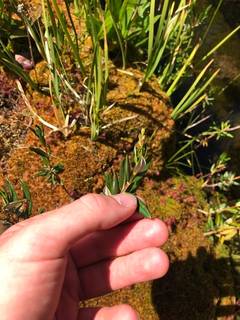
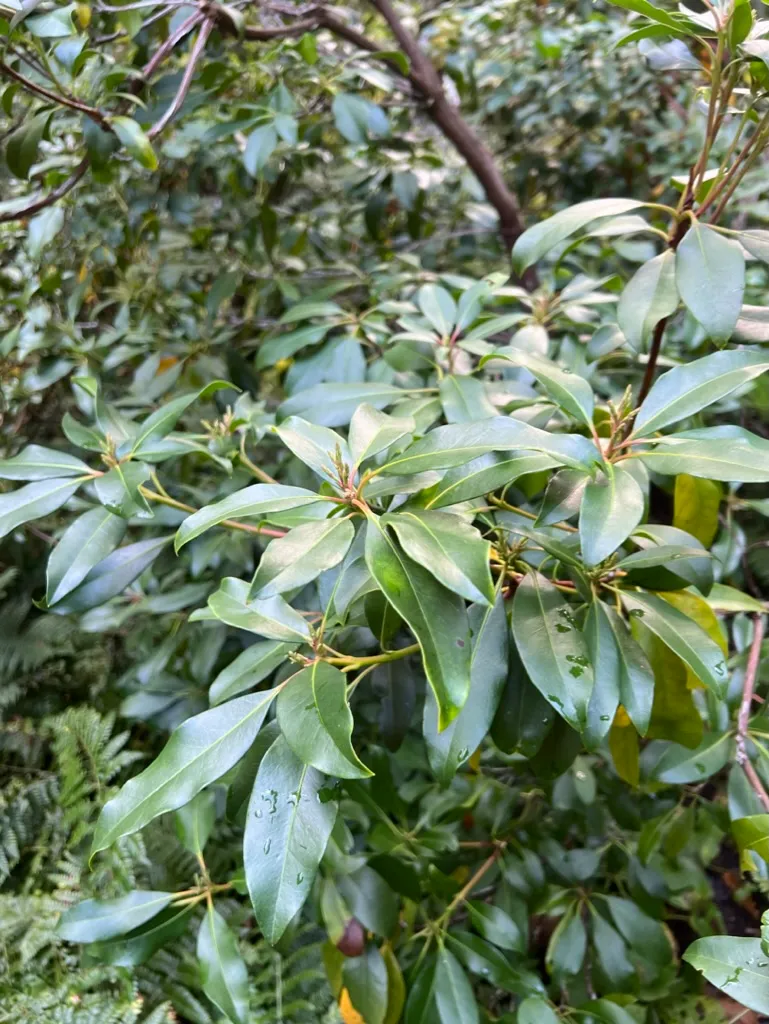
glossy dark green on the upper surface and yellowish-green beneath; elliptic leathery leaves 2-5 inches (5-13 cm) long carried in alternate or whorled arrangement along the stems; the leaves curl downward and inward in cold winter weather as a protective response that reduces the leaf surface area exposed to drying wind and that limits winter desiccation, and the leaves unfurl when temperatures rise; evergreen year-roundGrowing Conditions
Sun Requirements
Requires 3-6 hours of direct sunlight daily
• Full Sun: 6+ hours of direct sunlight
• Partial Shade: 3-6 hours of direct sunlight
• Full Shade: Less than 3 hours of direct sunlight
Care & Maintenance
Care Guide
Site in part shade with 3–6 hours of direct sun per day, ideally as dappled light under a high deciduous canopy that supplies morning sun and afternoon shade, in well-drained acidic loam or sandy soil with a strictly acidic pH of 4.5–6.0 — the species develops chlorosis at higher pH levels and calls for naturally acidic native soil or sustained acidification through pine-needle mulch and elemental-sulfur amendment to maintain the low pH at the root zone. The species is not drought-tolerant and calls for consistent moisture through the growing season, particularly during the bud-setting period in summer when next year's flower buds form on the plant. Spent flower clusters are deadheaded immediately after the bloom (in June) to redirect resources from seed production into next year's flower bud development, and this single seasonal task is the most consequential cultural intervention for sustained heavy bloom from year to year. Growth rate is slow at 6–12 inches per year, and full mature size is reached only after 10–15 years from a young plant. All parts contain grayanotoxin and are severely toxic to humans, livestock, cats, dogs, and horses if ingested — even the honey from the nectar is toxic. Deer-resistant. Hardy in USDA zones 4–9.Pruning
Spent flower clusters are deadheaded immediately after the bloom finishes (in June) by snapping or cutting the spent corymb at the base, taking care not to damage the new growth that emerges from below the flower cluster — this single seasonal task redirects resources from seed production into next year's flower bud development and is the most consequential cultural intervention for sustained heavy bloom from year to year. Light shape-correcting pruning is done at the same window after bloom. The species tolerates hard renovation pruning back to bare wood and produces regrowth from latent buds within 2–3 growing seasons, but the slow underlying growth rate (6–12 inches per year) means that bare gaps in the canopy take several years to refill after heavy cutback.Pruning Schedule
Prune: June
late spring